1
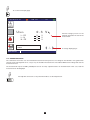
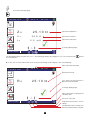
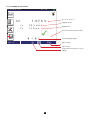
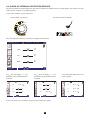
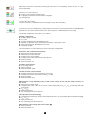
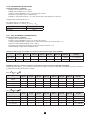
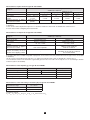
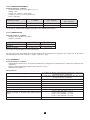
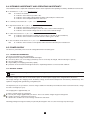
3.9.3. CONFIGURING THE MEASUREMENT Before starting the measurement, you can configure it by modifying the parameters displayed: To select measurement of Zi (line impedance measurement) or of DV (measurement of the voltage drop in the cables, for the C.A. 6117 only). Here, you must select Zi. To compensate for the resistance of the measurement leads, for measurements of low values (see §3.16). To activate or deactivate the smoothing of the signal. (Ik) The device proposes choosing the voltage for the Ik calculation from among the following values: ULN (the measured voltage value), the voltage of the old standard (for example 220 V), the voltage of the current standard (for example 230 V). Depending on the voltage ULN measured, the device proposes the following choices: if 170<ULN<270 V: ULN, 220 V, or 230 V. if 90<ULN<150 V: ULN, 110 V or 127 V. if 300<ULN<500 V: ULN, 380 V or 400 V. To deactivate the alarm. Z-R To activate the alarm on Zi. Ω kΩ Ik 050.00 To activate the alarm on Ik. A 010.00 kA ISC To set the alarm threshold (see § 3.17). As default, the threshold is set to 50 W. To set the alarm threshold (see §3.17). As default, the threshold is set to 10 kA. To activate the alarm on Isc (for the C.A. 6117 only). A 023.00 kA To adjust the alarm threshold (see § 3.17). The default threshold is 23 A. If there is an alarm on Isc, the fuse characteristics menu is displayed. Choice of type of fuse: gG, B, C, or D. Choice of rated current, IN: all standardized values between 2 and 1250 A. The delay (the duration of application of IN before the fuse blows): 0.1 s, 0.2 s, 0.4 s, 5 s and 35 minutes. The device then deduces Isc from this and displays it. 6% Before the measurement: to display the measurements already recorded. During or after the measurement: to record it. The direction of the arrow indicates whether you can make a reading (arrow pointing out) or a recording (arrow pointing in). The percentage indicates the quantity of memory already used. 36