1
Miscellaneous METAPOST Macros
Matej Košı́k
April 15, 2011
Abstract
Technical communication with people is critical, and harder than communicating with the
machines. METAPOST is a high-level declarative and macro programming language. Due to
its unusual domain (drawing pictures) bare code fragments often look like cryptic gibberish.
In this document we try to prove that it is possible to write comprehensible METAPOST
code1 .
Contents
1 Various constants
2
2 tanforward(expr p, t, d)
2
3 tanbackward(expr p, t, d)
3
4 perpright(expr p, t, d)
3
5 perpleft(expr p, t d)
4
6 drawkarrow expr path text t
5
7 drawtwowaykarrow expr path text t
10
8 drawinfinite expr path text t
11
9 drawhatched closedpath text t
13
Copyright and License
1
hmisc.mp 1i≡
% Additional macros for use with METAPOST
% Copyright (C) 2007 Matej Kosik <[email protected]>
1 Disclaimer:
2a ⊲
I do not explain METAPOST language here. You can refer for example to [1, 3].
1
April 15, 2011
%
%
%
%
%
%
%
%
%
%
%
%
%
%
1
2a
misc.nw
2
This program is free software; you can redistribute it and/or modify
it under the terms of the GNU General Public License as published by
the Free Software Foundation; either version 2 of the License, or
(at your option) any later version.
This program is distributed in the hope that it will be useful,
but WITHOUT ANY WARRANTY; without even the implied warranty of
MERCHANTABILITY or FITNESS FOR A PARTICULAR PURPOSE. See the
GNU General Public License for more details.
You should have received a copy of the GNU General Public License along
with this program; if not, write to the Free Software Foundation, Inc.,
51 Franklin Street, Fifth Floor, Boston, MA 02110-1301 USA.
Various constants
hmisc.mp 1i+≡
color yellow, cyan;
⊳ 1 10a ⊲
yellow := red + green;
cyan := green + blue;
2
tanforward(expr p, t, d)
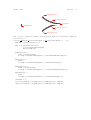
The purpose of this macro is illustrated on figure below:
z1 = tanforward(p, t, 1cm)
z0 = point t of p
p
If we have a path p and we choose some time t, then z0 are coordinates of a point along the
curve p in time t. The tanforward macro computes coordinates of the point z1 . Point z1 is on
a tangent constructed in point z0 . It is in 1cm distance from point z0 .
2b
hmisc.mp 2bi+≡
3a ⊲
def tanforward(expr p, t, d) =
(d,0) rotated (angle direction t of p) shifted (point t of p)
enddef;
April 15, 2011
3
misc.nw
3
tanbackward(expr p, t, d)
The tanforward macro returns coordinates along the tangent in positive direction, this tanbackward
macro returns coordinates of a point in the opposite direction. See the figure below:
z0 = point t of p
z1 = tanbackward(p, t, 1cm)
p
3a
hmisc.mp 2bi+≡
⊳ 2b 3b ⊲
def tanbackward(expr p, t, d) =
(d,0) rotated (180 + angle direction t of p) shifted (point t of p)
enddef;
4
perpright(expr p, t, d)
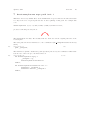
The purpose of this macro is illustrated on figure below:
z1 = perpright(p, t, 1cm)
z0 = point t of p
p
If we have a path p and we choose some time t, then z0 are coordinates of a point along the
curve p in time t. The perpright macro computes coordinates of the point z1 . Point z1 is at
the end of an abscissa beginning in point z0 which has length l and it is perpendicular to the
path p.
3b
hmisc.mp 2bi+≡
⊳ 3a 4 ⊲
def perpright(expr p, t, l) =
(l,0) rotated ((angle direction t of p) - 90) shifted (point t of p)
enddef;
April 15, 2011
5
misc.nw
4
perpleft(expr p, t d)
It is very similar to perpright except coordinates in the opposite direction are returned. See
the figure below:
z0 = point t of p
z1 = perpleft(p, t, 1cm)
p
4
hmisc.mp 2bi+≡
⊳ 3b 5 ⊲
def perpleft(expr p, t, l) =
(l,0) rotated ((angle direction t of p) + 90) shifted (point t of p)
enddef;
April 15, 2011
6
misc.nw
5
drawkarrow expr path text t
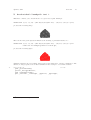
This macro draws an arrow similar to the arrows found in [2]. It can be used in the same way as
the original drawarrow macro which is part of the plain format. Here are some example usages:
u := 1cm;
drawkarrow
drawkarrow
drawkarrow
drawkarrow
(0,0)--(-u,u)--(-2u,0);
(0,0)--(0,2u) withcolor red;
(0,0)..(u,u)..(2u,0);
(0,0)--(0,-2u) dashed withdots scaled .25;
That is, as you can see, the text after the drawkarrow has analogous meaning as the text after
the original drawarrow macro. It only draws arrowhead in a different way.
Implementation of this macro is fairly delicate, so we will explain things in detail. Let us first
enlarge the arrow and depict its distinct points:
beginnegative
middlenegative
endpoint
beginpoint
middlepositive
beginpositive
The arrow begins in beginpoint and ends in endpoint. These two points are are determined
by the path which is given to this macro as a parameter. Coordinates of all the other points are
computed.
5
The length of the arrowhead is influenced by the karrowheadlength variable. Its default value
is 8 points.
hmisc.mp 2bi+≡
⊳ 4 7a ⊲
karrowheadlength := 8pt;
April 15, 2011
misc.nw
The following figure illustrates the karrowheadlength.
beginnegative
karrowheadlength = 8pt
beginpoint
endpoint
beginpositive
middlenegative
karrowheadlength / 2
endpoint
beginpoint
middlepositive
The karrowheadangle determines the angle shown in the figure below:
beginnegative
karrowheadangle
endpoint
beginpositive
6
April 15, 2011
7a
hmisc.mp 2bi+≡
karrowheadangle := 45;
misc.nw
7
⊳ 5 7b ⊲
% Default head angle of the end point.
The karrowheadmiddleangle determines the angle shown in the figure below:
middlenegative
karrowheadmiddleangle
endpoint
middlepositive
7b
7c
7d
hmisc.mp 2bi+≡
karrowheadmiddleangle := 25;
⊳ 7a 7c ⊲
% Default head angle of the middle point.
Auxiliary variables used for passing values between the main macro and its continuation.
hmisc.mp 2bi+≡
⊳ 7b 7d ⊲
path _mainpath, _positivearrowpath, _negativearrowpath;
hmisc.mp 2bi+≡
⊳ 7c 8 ⊲
def drawkarrow expr p =
begingroup
save subp, endpoint, beginpoint, beginpositive, middlepositive,
beginnegative, middlenegative;
path subp;
pair endpoint, beginpoint, beginpositive, middlepositive,
beginnegative, middlenegative;
hCompute mainpath, positivearrowpath and negativearrowpath 9i
endgroup;
_drawkarrowcontinuation
enddef;
April 15, 2011
misc.nw
8
Continuation of the drawkarrow macro. It will use the computed mainpath, positivearrowpath
and negativearrowpath. It will also use (several times) the text which follows the path expression that follows the drawkarrow macro invocation. That is, consider the following statement:
drawkarrow (0,0)--(0,-2u) dashed withdots scaled .25;
When drawkarrow macro is expanded, the drawkarrow (0,0)--(0,-2u) tokens are removed
from the input stream. Immediately before invocation of the drawkarrowcontinuation, the
input stream looks as follows:
dashed withdots scaled .25;
And this rest (up to the nearest semicolon) is consumed by the drawkarrowcontinuation macro
and this text will be within this macro available under name t.
8
hmisc.mp 2bi+≡
def _drawkarrowcontinuation text t =
draw _mainpath t;
draw _positivearrowpath t;
draw _negativearrowpath t
enddef;
⊳ 7d 10b ⊲
April 15, 2011
misc.nw
9
beginnegative
middlenegative
endpoint
beginpoint
middlepositive
beginpositive
The code below computes the distinct points shown in the figure above. The value of subp path
is denoted in green.
9
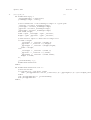
hCompute mainpath, positivearrowpath and negativearrowpath 9i≡
endpoint := point length p of p;
(7d)
subp := p cutbefore fullcircle
scaled (2*karrowheadlength)
shifted endpoint;
middlepositive :=
point (.5*length subp)
of (subp rotatedaround(endpoint, (.5*karrowheadmiddleangle)));
beginpositive :=
point 0
of (subp rotatedaround(endpoint, (.5*karrowheadangle)));
middlenegative :=
point (.5*length subp)
of (subp rotatedaround(endpoint, (-.5*karrowheadmiddleangle)));
beginnegative :=
point 0
of (subp rotatedaround(endpoint, (-.5*karrowheadangle)));
_mainpath := p;
_positivearrowpath := beginpositive..middlepositive..endpoint;
_negativearrowpath := beginnegative..middlenegative..endpoint;
April 15, 2011
7
misc.nw
10
drawtwowaykarrow expr path text t
This macro has a very similar effect as the drawkarrow except for that the arrowhead is drawn
not only at the end of a given path but also at the beginning of that path. For example this
code:
drawtwowaykarrow (0,0)..(7.5mm,7.5mm)..(15mm,0) withcolor red;
produces a following two-way arrow:
The implementation is lazy. We actually draw two k-arrows. On the original path and on the
reversed path.
10a
10b
The value passed from the main macro to the continuation (the mainpath identifier is already
taken).
hmisc.mp 1i+≡
⊳ 2a
path __mainpath;
The main macro (which consumes the path expression) followed by its continuation which swallows the rest of the text up to the first semicolon.
hmisc.mp 2bi+≡
⊳ 8 11 ⊲
def drawtwowaykarrow expr p =
__mainpath := p;
drawtwowaykarrowcontinuation
enddef;
def drawtwowaykarrowcontinuation text t =
drawkarrow __mainpath t;
drawkarrow reverse __mainpath t
enddef;
April 15, 2011
8
misc.nw
11
drawinfinite expr path text t
This macro can be used for drawing paths whose middle (mid-time) contains a mark which tells
the reader that it is “infinite” or it was not drawn in its entirety. This macro can be used in a
similar way as normal draw macro which is part of the plain format. With expression such as:
drawinfinite (0,0)--(3cm,0);
you can produce the following:
Let us enlarge the mark in the middle of this kind of path and denote distinct points:
z2
z0
middlepoint
z1
z3
11
hmisc.mp 2bi+≡
inflen := .2cm;
infwidth := .4cm;
⊳ 10b 13 ⊲
% The length (along the line/curve) of the sign.
% The width (perpendicularly to the line/curve).
% Auxiliary variables used for passing values between the main macro
% and its continuation.
path _mainpath, _firstpath, _secondpath;
def drawinfinite expr p =
save middlepoint, middletime, tangent, pathlength,_middlepath,
middlepathlength;
pair middlepoint;
path tangent, _middlenondrawncircle, _firsthalfpath, _secondhalfpath,
_middlepath;
save z; pair z[];
pathlength := length p;
middlepathlength := pathlength / 2;
middlepoint := point middlepathlength of p;
_firsthalfpath := subpath (0, middlepathlength) of p;
_secondhalfpath := subpath (middlepathlength, pathlength) of p;
_middlenondrawncircle := fullcircle scaled inflen shifted middlepoint;
z0 = _firsthalfpath intersectionpoint _middlenondrawncircle;
April 15, 2011
misc.nw
z1 = _secondhalfpath intersectionpoint _middlenondrawncircle;
_middlepath := z0--z1;
middlepathlength := length _middlepath;
z2 = perpleft(_middlepath, middlepathlength / 4, infwidth / 2);
z3 = perpright(_middlepath, middlepathlength * 3 / 4, infwidth / 2);
_middlepath := z0--z2--middlepoint--z3--z1;
_drawinfinitecontinuation
enddef;
def _drawinfinitecontinuation text t =
draw _firsthalfpath cutafter _middlenondrawncircle t;
draw _middlepath t;
draw _secondhalfpath cutbefore _middlenondrawncircle t
enddef;
12
April 15, 2011
9
misc.nw
13
drawhatched closedpath text t
This macro enables you to hatch interior of a given closed path. Example:
drawhatched (0,0)..(0,30)..{dir 45}(30,60){dir -45} ..(60,30)..(60,0)--cycle;
produces the following image
The text after the path expression influences the drawing of particular hatches. I.e.
drawhatched (0,0)..(0,30)..{dir 45}(30,60){dir -45} ..(60,30)..(60,0)--cycle
withcolor red withpen pencircle scaled 2pt;
produces the following figure:
13
Auxiliary variables used for passing values between the main macro and its continuation. The
underscore was prepended before their identifiers in the attempt to avoid name clashes2 .
hmisc.mp 2bi+≡
⊳ 11 14 ⊲
path _pictureboundary;
picture _unclippedhatches;
path _boundingrectangle;
pair _lowerleft, _lowerright, _upperleft, _upperright;
2 Which
are, unfortunately, not excluded.
April 15, 2011
14
hmisc.mp 2bi+≡
def drawhatched expr p =
_unclippedhatches := nullpicture;
_boundingrectangle := bbox p;
misc.nw
14
⊳ 13
% Reveal dimensions of the bounding rectangle of a given path.
_lowerleft = llcorner _boundingrectangle;
_lowerright = lrcorner _boundingrectangle;
_upperleft = ulcorner _boundingrectangle;
_upperright = urcorner _boundingrectangle;
save width, height;
width = xpart _lowerright - xpart _lowerleft;
height = ypart _upperleft - ypart _lowerleft;
% Find smallest square to which that rectangle fits.
if width < height:
_lowerright := _lowerleft + (height,0);
_upperleft := _lowerleft + (0,height);
_upperright := _lowerleft + (height,height);
width := height;
else:
_lowerright := _lowerleft + (width,0);
_upperleft := _lowerleft + (0,width);
_upperright := _lowerleft + (width,width);
height := width;
fi;
_pictureboundary := p;
drawhatchedcontinuation
enddef;
def drawhatchedcontinuation text t =
% Draw the hatches.
for i=width step -.15cm until -width:
addto _unclippedhatches contour _lowerleft+(0,i)--_upperright-(i,0)--cycle withpen penc
endfor
clip _unclippedhatches to _pictureboundary;
draw _unclippedhatches
enddef;
April 15, 2011
misc.nw
15
References
[1] John D. Hobby. A User’s Manual for METAPOST, April 1994.
[2] Donald E. Knuth. The Art of Computer Programming: Fundamental Algorithms, volume 1.
Addison-Wesley Publishing Co., Reading, Massachusetts, 2 edition, 1973.
[3] Urs Oswald. METAPOST: A Very Brief Tutorial, October 2002.