1
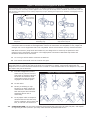
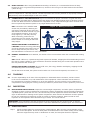
Figure 2 - Unintentional Disengagement (Roll-out)
If the connecting element that a snap hook (shown) or carabiner attaches to is undersized or irregular in shape, a situation
could occur where the connecting element applies a force to the gate of the snap hook or carabiner. This force may cause the
gate (of either a self-locking or a non-locking snap hook) to open, allowing the snap hook or carabiner to disengage from the
connecting point.
Small ring or
other
non-compatibly
shaped element
1. Force is applied to the
snap hook.
2. The gate presses against the
connecting ring.
3. The gate opens allowing the
snap hook to slip off.
2.3 MAKING CONNECTIONS: Only use self-locking snap hooks and carabiners with this equipment. Only use
connectors that are suitable to each application. Ensure all connections are compatible in size, shape and
strength. Do not use equipment that is not compatible. Ensure all connectors are fully closed and locked.
DBI‑SALA connectors (snap hooks and carabiners) are designed to be used only as specified in each
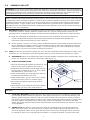
product’s user’s instructions. See Figure 3 for inappropriate connections. DBI‑SALA snap hooks and
carabiners should not be connected:
A. To a D‑ring to which another connector is attached.
B. In a manner that would result in a load on the gate.
NOTE: Large throat opening snap hooks should not be connected to standard size D‑rings or similar objects
which will result in a load on the gate if the hook or D‑ring twists or rotates. Large throat snap hooks are
designed for use on fixed structural elements such as rebar or cross members that are not shaped in a way that
can capture the gate of the hook.
C. In a false engagement, where
features that protrude from the
snap hook or carabiner catch on
the anchor and without visual
confirmation seems to be fully
engaged to the anchor point.
Figure 3 - Inappropriate Connections
D. To each other.
E. Directly to webbing or rope
lanyard or tie-back (unless the
manufacturer’s instructions for
both the lanyard and connector
specifically allows such a
connection).
F. To any object which is shaped or
dimensioned such that the snap
hook or carabiner will not close and
lock, or that roll-out could occur.
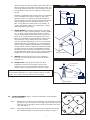
2.4 STRUCTURE LOAD: The structure supporting these anchorage points must be rigid, flat pitch, and capable
of supporting at least 5,000 lbs. (22.2 kN) in the direction of potential fall arrest.
3