1
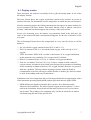
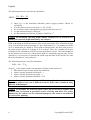
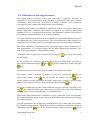
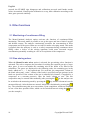
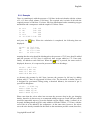
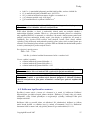
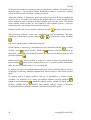
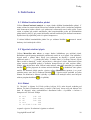
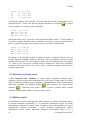
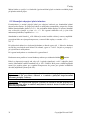
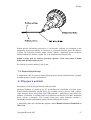
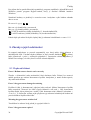
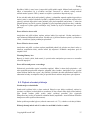
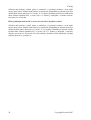
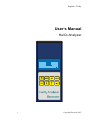
English 4.1 Display modes Upon activation, the analyzer is normally in the O2/He measuring mode, in one of the two display formats. The basic format shows the oxygen and helium content in the mixture in percent in separate lines and, for information, also the temperature at which the gas was measured. After the measuring begins, the helium concentration may appear in square brackets for several seconds in the basic format. This means that the result is interim, with lower accuracy. When the brackets disappear, the accuracy of the result is final. In case of a measuring error, for instance at a pneumatic shock in the inlet hose, the value of the measured helium concentration disappears for the time of duration of the error state. The well-arranged format shows the composition in a way used by divers to call the mixtures: Air: air with the oxygen content between 20.5 % and 21.5 %. EAN, for instance EAN 36, is air enriched with oxygen, in this case up to 36 % oxygen. TMX, for instance TMX 18/45, is trimix or the mixture of air, oxygen and helium, in this particular case containing 18 % oxygen and 45 % helium. Heliox, for instance Heliox 16 % O2, is a mixture of oxygen and helium. Foul Air, for instance Foul Air (10 % O2), is foul or vitiated air with a reduced oxygen content. It cannot be mixed with gases designed for preparation of breathing mixes commonly available to the diver (air, oxygen, helium); therefore, its presence indicates a problem. This may include ongoing corrosion inside the bottle or contamination of the mix with argon, carbon dioxide or another gas. Such air cannot be used for breathing under any circumstances. In addition to the mix composition, this well-arranged format shows approximate values of the maximum operating depth (MOD) and an equivalent narcotic depth (END). MOD indicates the depth to which the diver can dive for a short time under otherwise ideal conditions. The limit of partial oxygen pressure equal to 1.6 Ata is used in the calculation, and seawater and the static pressure at sea level are taken into account. This reading is for orientation only, and for an actual dive it must be calculated using the data of the specific dive. Copyright Divesoft 2007 7