1
Preliminary Report On
Design Rationale, Syntax, and Semantics of
LSL:
A Specification Language for Program
Auralization∗
David B. Boardman
Aditya P. Mathur
August 30, 1993
Abstract
The need for specification of sound patterns to be played during program execution arises in contexts where program auralization is useful. We present a language
named LSL (Listen Specification Language) designed for specifying program auralization. Specifications written in LSL and included in the program to be auralized are
preprocessed by an LSL preprocessor. The preprocessed program when compiled and
executed generates MIDI or voice data sent through a MIDI interface to a synthesizer
module, or via audio channels, to an audio processor, which transforms the notes or
voice into audible sound. LSL has the generality to specify auralization of a variety of
occurrences during program execution. It derives its broad applicability from its few
generic elements that when adapted to any procedural programming language, such
as C, C++ , or Ada, enable the writing and use of LSL specifications for auralizing
sequential, parallel, or object oriented programs in that language. We view LSL as
a useful tool for building general purpose multimedia applications and for research in
program auralization.
∗
This work was supported in part by an educational supplement from the National Science Foundation
No. CCR 9102311 and 9123502-CDA. The authors are with Software Engineering Research Center and
Department of Computer Sciences, Purdue University, W. Lafayette, IN 47907. Aditya P. Mathur can be
contacted at (317)494-7822 or via email at [email protected]. David Boardman can be contacted via email
at [email protected].
1
Contents
1 Introduction
5
2 The need for LSL
6
3 Basic definitions and LSL requirements
3.1 ASPECs and realizations . . . . . . . . . . . . . . . . . . . . . . . . . . . . .
7
7
3.2
Occurrence space characterization . . . . . . . . . . . . . . . . . . . . . . . .
8
3.3
Sound space characterization . . . . . . . . . . . . . . . . . . . . . . . . . . .
9
3.4
Programming language independence . . . . . . . . . . . . . . . . . . . . . .
9
4 Features and syntax of LSL
9
4.1
Constants, variables, and types . . . . . . . . . . . . . . . . . . . . . . . . .
11
4.2
Sound pattern specification
. . . . . . . . . . . . . . . . . . . . . . . . . . .
17
4.3
4.4
Event notification . . . . . . . . . . . . . . . . . . . . . . . . . . . . . . . . .
Data tracking . . . . . . . . . . . . . . . . . . . . . . . . . . . . . . . . . . .
17
21
4.5
Activity monitoring . . . . . . . . . . . . . . . . . . . . . . . . . . . . . . . .
22
4.6
Timed events . . . . . . . . . . . . . . . . . . . . . . . . . . . . . . . . . . .
23
4.7
4.8
Playback synchronization . . . . . . . . . . . . . . . . . . . . . . . . . . . . .
Assignments, loops, and conditionals . . . . . . . . . . . . . . . . . . . . . .
24
25
4.9
Controlling auralization state . . . . . . . . . . . . . . . . . . . . . . . . . .
25
4.10 Event, data, and activity classes . . . . . . . . . . . . . . . . . . . . . . . . .
27
4.11 Embedding LSL commands . . . . . . . . . . . . . . . . . . . . . . . . . . .
28
5 Examples of LSL/C use
29
6 LSL in a programming environment
35
6.1
LSL editor . . . . . . . . . . . . . . . . . . . . . . . . . . . . . . . . . . . . .
36
7 An LSL implementation outline
7.1 LSL preprocessor . . . . . . . . . . . . . . . . . . . . . . . . . . . . . . . . .
37
38
7.2
Graphic interface . . . . . . . . . . . . . . . . . . . . . . . . . . . . . . . . .
39
7.3
The LSL sound library . . . . . . . . . . . . . . . . . . . . . . . . . . . . . .
40
8 Summary
40
Acknowledgements
41
2
Appendix : Syntax of LSL
43
9 LSL Syntax Conventions
43
10 Lexical Conventions
50
11 Static Semantics
53
3
List of Figures
1
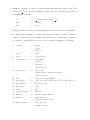
A domain-based view of program auralization. The ASPEC in this example
consists of four occurrence and sound pattern pairs as shown. (ei , si ) are
2
elements of the specified mapping. . . . . . . . . . . . . . . . . . . . . . . . .
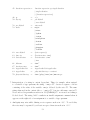
Occurrence space characterization in LSL. . . . . . . . . . . . . . . . . . . .
8
10
3
Structure of an LSL specification containing one module.. . . . . . . . . . . .
12
4
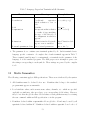
Sample activity patterns specifiable in LSL. E1, E2, and E3 denote events.
5
Start and End denote the start and end of program execution. . . . . . . .
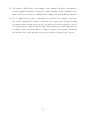
Use of LSL in a programming environment. . . . . . . . . . . . . . . . . . . .
23
35
6
LSLed in a programming environment. . . . . . . . . . . . . . . . . . . . . .
38
List of Tables
1
Primitive types in LSL. . . . . . . . . . . . . . . . . . . . . . . . . . . . . . .
14
2
Attributes in LSL. . . . . . . . . . . . . . . . . . . . . . . . . . . . . . . . .
15
3
Sample note values using LSL duration attributes. . . . . . . . . . . . . . . .
16
4
5
Default values of run time parameters. . . . . . . . . . . . . . . . . . . . . .
Keywords and codes for LSL event specifiers in C. . . . . . . . . . . . . . . .
17
20
6
Predefined functions in LSL. . . . . . . . . . . . . . . . . . . . . . . . . . . .
21
7
Language Dependent Terminals in LSL Grammar. . . . . . . . . . . . . . . .
53
4
1
Introduction
The idea of using sound to understand program behavior and to analyze data using sound
has been reported by several researchers. By program and data auralization we refer to,
respectively, the activity of mapping aspects of program execution or properties of data to
sound1 . A survey of the use of sound in understanding program behavior or analyzing data
collected from experiments or generated by a program is reported by Francioni and Jackson [7]. It is believed, and has been demonstrated in a few cases, that the use of sound can
enhance program understanding. Yeung [18] proposed the use of sound to recognize multivariate analytical data. Francioni and Jackson [7] used program auralization to understand
the runtime behavior of parallel programs. Brown and Hershberger [4] auralized some of
their animations generated using the Zeus animation system. In his doctoral dissertation,
Edwards [6] built and evaluated a word processor with an audio interface for use by visually
handicapped users. Gaver [8, 9] proposed the use of auditory icons for use as a part of Apple’s
interface on the Macintosh machines.
It has been noted by researchers that in most situations program output is visual. Programming environments and applications developed so far have attempted to use visual
media to a great extent [2]. Though research in the use of audio in workstations [11, 14]
has been on the rise, audio remains a distant second to visual media. However, with the
availability of low cost audio devices such as synthesizer modules and sound digitizers and
the provision of sound generators in workstations, audio is within reach of most PC and
workstation users.
We have designed a language that simplifies the task of specifying which occurrences
during program execution are to be auralized and how. The language is named Listen
Specification Language, abbreviated as LSL. Listen is the name of our project to investigate possible uses of sound in programming environments and software based applications.
The need for LSL, its syntax, use, and current implementation status are described in the
remaining sections. Section 2 outlines the need for specifications of program auralizations
and LSL. Language requirements and the underlying rationale are presented in Section 3.
Essential features of LSL are presented in Section 4. Examples illustrating the use of LSL
in various applications are given in Section 5. Section 6 explains how LSL can mesh with
a programming environment. An implementation strategy for LSL is outlined in Section 7.
Current status of LSL implementation is reported in Section 8. A summary and preliminary
conclusions regarding the utility of LSL appear in Section 8.
1
We include human voice in this context.
5
2
The need for LSL
Our research is concerned with the investigation of various uses of sound in programming
environments. Some generic questions we ask and seek answers to are listed below.
1. How useful is sound in debugging programs ?
2. How useful is sound in program understanding ?
3. Can program auralization be used to improve the quality of simulations of various
kinds such as telephone networks, mechanical systems, and biological systems ?
4. How can sound be used to make programming environments usable by, in particular, the visually handicapped with the same ease as by individuals without such a
handicap ?
As mentioned above, researchers have attempted to obtain answers to similar questions. We
believe that significant progress remains to be made before sound is used widely in various
programming related tasks.
While investigating answers to the above questions, we encountered a need for a general
purpose mechanism to specify the auralization of programs. In the absence of such a mechanism, auralization is done by editing the source code and adding calls to library procedures
that generate sound. For example, suppose that a parallel program to be executed on a machine with 1000 processors is to be auralized. The auralization should be such that whenever
an even numbered processor sends data, a sound with timbre characteristic T1 is generated
and whenever an odd numbered processor sends data a sound with timbre T2 is generated.
When so auralized, a listener will be able to distinguish between data sends by even and
odd numbered processors. Assuming that one has access to a library routine gen sound to
generate sound with a specific timbre, one can edit the program and add calls with appropriate parameters to gen sound at all places where a data send occurs. This could become
an inconvenient task if communication statements are distributed over many procedures in
a large program spread over several source files. The task could be simplified if one could
formally specify the auralization mentioned above. Such a specification and the program to
be auralized could be preprocessed automatically to generate a source program with code
inserted for the desired auralization. Any change in auralization will then require a change
only to the specification and not to the source of the parallel program.
As another example, consider the task of debugging a distributed system that controls
various functions of an automobile. It is desired to auralize the program so that each call
to a control procedure, e.g. to procedure gear change, is identified by a suitable sound.
6
As above, one may edit the source to achieve the desired effect. Another alternative is
to formally specify the above auralization requirement and use preprocessing to add the
necessary code.
A more difficult situation arises when the value of one or more variables is to be monitored.
Suppose that we want to monitor the value of a variable x in a program. Whenever this
variable exceeds a predetermined value a sound should be generated. Again, one may use
an editor to add a few lines of code at all places in the program where x has been defined.
An easier alternative appears to be to formalize the above auralization and preprocess it.
During further development of the software if one decides to monitor other variables, the
specification can be easily modified as compared to editing the code which might require
careful passes through various source files.
Examples such as the ones above led us to consider designing a language for specifying
auralizations. We note the pioneering work in the design of languages for music [13, 17]. The
main purpose of these languages was to specify music. In their present form, these languages
are not suited to the auralization tasks mentioned above.
3
Basic definitions and LSL requirements
Based on the perceived need for a specification language, we set forth the following idealized
requirements for LSL.
1. Generality: It should be possible to specify any auralization using LSL.
2. Language independence: It should be possible to use LSL with the commonly used
programming languages such as C, C++ , Ada, Pascal, and Fortran.
Below we define basic terms and introduce concepts that help us formalize the above goals.
Our formalization brings reality to the above requirements. LSL satisfies the requirements
with respect to this formalization.
3.1
ASPECs and realizations
To be able to design a language that can specify all possible auralizations, we need a quantification of two domains. Let E be the domain of all those occurrences during the execution
of any program that one may wish to auralize. The nature of such occurrences is discussed
below. Let S be the domain of all possible sound patterns that may be associated with each
element of E. A mapping from E to S is an association of sound patterns in S to occurrences
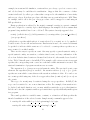
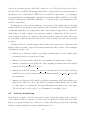
in E. Such a mapping is specified as a set of pairs (e, s) where e ∈ E and s ∈ S. The term
7
(e1, s1)
(e2, s2)
(e3, s3)
(e4, s4)
(e5, s5)
Occurrence space
Sound pattern space
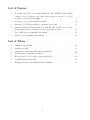
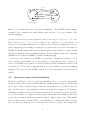
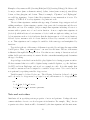
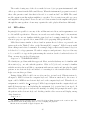
Figure 1: A domain-based view of program auralization. The ASPEC in this example
consists of four occurrence and sound pattern pairs as shown. (ei , si ) are elements of the
specified mapping.
program auralization for a given program P refers to the set {(e1 , s1 ), (e2 , s2 ), . . . , (en , sn )},
where each (ei , si ), 1 ≤ i ≤ n is an association of an occurrence to a sound pattern. A
language L for program auralization is a notation to specify any such mapping for any program. A mapping specified using L is referred to as auralization specification abbreviated as
ASPEC. We assume that specifications are always written with reference to a given, though
arbitrary, program in some programming language. Figure 1 illustrates this view of program
auralization. Note that an ASPEC is a many-to-many mapping.
Let (e, s) be an element of an ASPEC for program P . During the execution of P if
each occurrence e is identified by a sound pattern s, we say that the pair (e, s) has been
realized. An ASPEC for program P is considered realized if all its elements are realized for all
executions of P . We say that an implementation of L for programs in a given programming
language P L is correct if each ASPEC, written in L, for any program P , written in P L is
realized.
3.2
Occurrence space characterization
Ideally, we would like to be able to specify any auralization. To do so, we need to characterize
the space of all possible occurrences that might arise during program execution. Towards this
end we select a three-dimensional space using the orthogonal notions of position, data, and
time. Position refers to any identifiable point in a program. For example, in a C program,
beginning of a function call, end of a function return, start of a while-loop, start of a whileloop body, and start of a condition, are all positions. In general, an identifiable point is any
point in the program at which an executable syntactic entity begins or ends. This implies
that a position cannot be in the middle of an identifier or a constant. In terms of a parse
tree for a given program, any node of the parse tree denotes a position. For example, the
8
subscripted dot (•i ) denotes seven possible positions in the following assignment: •1 X•2 =
•3 X •4 + •5 3 •6 /•7 2.
Data in a program refers to constants allowed in the language of the program being
auralized and the values of program variables. A data relationship is an expression consisting
of constants, variables, and function calls. Time refers to the execution time of the program.
It is measured in units dependent on the system responsible for the execution of the auralized
program. In a heterogeneous system, time is measured in units agreed upon by all elements
of the system.
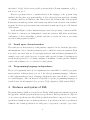
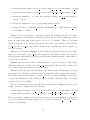
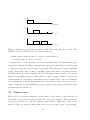
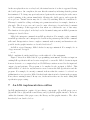
As shown in Figure 2, a three dimensional space is used for specifying occurrences in LSL.
Two kinds of occurrences are distinguished: events and activities. LSL allows an arbitrary
combination of data relationships, positions, and time to specify an event or an activity
associated with program execution.
3.3
Sound space characterization
The sound space is characterized by sound patterns comprised of notes, durations, play styles,
and instruments. Notes of arbitrary durations can be combined to form sound patterns. Each
note can be associated with one of several play styles and with an arbitrary instrument. For
example, a note can be played staccato on a piano with a specified volume. Combining notes
in various ways gives rise to a domain consisting of an infinity of sound patterns. Digitized
sound, such as human voice, is considered a sound pattern.
3.4
Programming language independence
The second requirement stated above is significant as we want LSL to be usable by programmers regardless of their preference for one or the other programming language. Adherence
to this requirement has produced a language which in the strict sense should be considered
as a meta-language. One can therefore adapt LSL to specific programming languages as
described later. In all examples below, we use a C [12] adaptation of LSL termed LSL/C.
4
Features and syntax of LSL
The salient features of LSL are reviewed next. Details of LSL syntax and semantics appear in
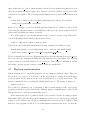
the Appendix. An LSL program is known as a specification. Each specification is composed
of one or more specification modules. Each specification module is composed of zero or more
specification definitions and one main specification. A specification module, a specification
definition, and a main specification are analogous to, respectively, a module, a procedure,
9
Figure 2: Occurrence space characterization in LSL.
10
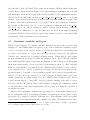
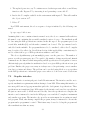
and a module body in a Modula-2 [15] program. As an example of LSL specification structure
consider the specification listed in Figure 3. It begins with begin auralspec and ends with
end auralspec. Each module begins with a header identified by the specmodule keyword
followed by the module name such as spec module 1, spec module 2, and so on in this
example. A module header is followed by applicability constraints which specify parts of the
program to which the specifications are to be applied. Then come declarations of variables
used in this module followed by zero or more specification definitions such as spec def 1,
spec def 2, and so on. Global variables are shared between various modules. Variables
and specification definitions to be exported (imported) are listed in the export (import)
declaration. Variables declared in the program being auralized can also be used inside LSL
specifications. These are known as external variables.
4.1
Constants, variables, and types
LSL is a typed language. It contains constants, variables, and types just as several other
languages do. An identifier name is a sequence of one or more characters consisting of upper
or lower case letters, digits, and the underscore ( ). The first character in an identifier must
be a letter or an underscore. Upper and lower case letters are treated as being different.
Variables and constants can be assigned arbitrary names. Values likely to arise during
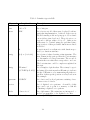
program auralization are grouped together into primitive types. Table 1 lists the primitive
types available in LSL. Values of type note and pattern are enclosed in quotes to distinguish
them from variable names. A note is specified by indicating its pitch e.g. “E4b” indicates
E-flat above the middle C on a piano keyboard. Attributes listed in Table 2 can be added to
a note separated by a colon (:). A pattern is a sequence of notes and voices2 played in the
specified sequence. A sequence of notes within a pattern can be enclosed in parentheses to
indicate a blocked chord also referred to as a chord pattern. A variable name can be used
within a pattern by preceding it with a dot. For example, if the identifier cmajor denotes
a chord pattern, then p:= “.cmajor E5” denotes a pattern consisting of the value of cmajor
followed by the note E5. Just as values could be printed or displayed in computer programs,
we say that values of type note and pattern could be played back during the execution of
an auralized program.
The set of key signatures constitutes the type ksig. Pre- or user-defined functions are
used to manipulate values of type ksig. Constants of type ksig are enclosed inside double
quotes and can be assigned to variables of the same type. A key signature could be predefined
or user defined. A predefined key signature consists of two parts: a key name and a modifier.
2
Throughout this work data of type “voice” refers to digitized sound. Thus, for example, both digitized
voice and digitized guitar sound are characterized as voice data.
11
begin auralspec
specmodule myprog auralize
/* This module contains specifications to auralize myprog procedure.
*/
/* Applicability constraints, if any, come here.
*/
/* Declarations for variables global and external to this module .
*/
specdef specdef 1 (parameters);
/* Declarations of parameters, local variables, and functions. */
begin specdef 1
..
.
end spec specdef 1;
spec-def spec def 2 (parameters);
/* Declarations of parameters, local variables, and functions. */
begin specdef 2
..
.
end specdef 2;
..
.
specdef specdef n (parameters);
/* Declarations of parameters, local variables, and functions. */
begin specdef n
..
.
end specdef n;
begin myprog auralize;
/* Specifications for module myprog auralize. */
..
.
end myprog auralize;
/* Other module specifications. */
..
.
end auralspec.
Figure 3: Structure of an LSL specification containing one module..
12
Examples of key names are Eb (denoting E flat) and C# (denoting C sharp). Modifiers could
be major, minor (same as harmonic minor), lydian, ionian (same as major), mixolydian,
dorian, aeolian, phrygian, and locrian. Thus, for example, “C#:minor” and “E:phrygian”
are valid key signatures. A user defined key signature is any enumeration of notes. For
example, “C D Eb G A” is a key signature of a pentatonic scale.
The set of time signatures constitutes the type tsig. Constants of type tsig are enclosed
within parentheses. A time signature consists of two parts: the beat structure and the note
that takes one beat. For example, (4:4) is a simple time signature indicating 4 beats to a
measure with a quarter note of one beat in duration. A more complex time signature is
(3+2+2:8) which indicates a beat structure of 3+2+2 with an eigth note taking one beat.
A beat structure such as 3+2+2 indicates that the first measure is of 3 beats in duration,
followed by two measures each of 2 beats duration, followed by a measure of 3 beats and
so on. Time signatures can be assigned to variables of the same type and manipulated by
functions.
Type file is the set of file names. A filename is specified by enclosing the name within
double quotes. Thus, “your name please.v” can serve as a file name. The use of file names
is illustrated through LSL examples below. Note that we use a string of characters enclosed
within double quotes in a variety of contexts. It is the context that unambiguously determines
the type of a string.
A special type voice has been included to play digitized voice during program execution.
We have assumed that voice will be digitized using a suitable digitizer, e.g. the Audiomedia II [5] card from Digidesign, and stored as a sample in a file. It is this sample that
becomes a constant and can be assigned to a variable of type voice. Voice can be used in
note patterns by specifying variables of type voice.
Variables must be declared before use. The following declaration declares body begin
and body end to be of type note, loop begin, loop end, and measure to be of type pattern.
var
body begin, body end: note;
loop begin, loop end, measure: pattern;
Note and rest values
Attributes aid in specifying various properties of notes and patterns. Perhaps the most
common attribute of a note or a chord sequence is its duration. For example, “E4:q” denotes
a quarter note whose duration will be determined by the time signature and the metronome
13
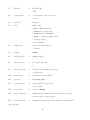
Table 1: Primitive types in LSL.
Keyword
Sample values
Description
−20 or 76
“E4b”
Set of integers.
Set of notes; not all of these may be played back in a
particular implementation. A subset of the notes is
labelled starting at A0 and going up to C8 as found
on an 88-key piano keyboard. These 88 notes correspond to integer values of 0 to 87. Other notes
values may be obtained using the predefined function inttonote. Other predefined functions are listed
in Table 6.
R
A rest is treated as a silent note with duration specified by a duration attribute.
tsig
(3:8) or (3+2+2:4)
Set of pairs of values denoting a time signature. The
first element in the pair specifies the beat structure
i.e. the number of beats per measure. The second element is the note value that corresponds to one beat.
The beat structure could be complex as explained in
the text.
ksig
“Eb:minor”
Set of k-tuples of pitch values. The set may be speci“(C D E F# G A B)” fied using abbreviations such as Eb:minor to indicate
the key of Eb minor or by enumerating all pitches regardless of their specific position on a keyboard as in
the example.
pattern
“G3E3C4”
Set of note and/or chord patterns consisting of zero
or more notes or chords.
†
voice
Set of digitized voice patterns. A variable of this
type can be set to point to a memory or disk file
containing a digitized voice pattern.
file
“done-voice.v”
Set of file names. File extensions are interpreted. .c
is for C program files, .v for digitized voice files.
†
Any digitized sound in a suitable format, e.g. AIFF [3].
int
note
14
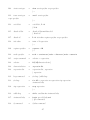
Table 2: Attributes in LSL.
Code
Applicability
Description
Indicates a full note .
Indicates a half note.
Indicates quarter note.
Indicates eight note.
Indicates sixteenth note.
Specifies the MIDI† channel on which to play.
Indicates one or more play styles.
Specifies which instrument is to play.
Metronome setting. This is applicable only to patterns.
Notes not part of a pattern are played for a duration determined by global metronome setting. A metronome
setting specified for a pattern takes priority over any
global setting only while this pattern is played.
ptime Note, pattern
Specifies the exact time in seconds to play the note or a
pattern.
†
MIDI is an acronym for Musical Instrument Digital Interface.
f
h
q
e
s
chan
play
inst
mm
Note
Note
Note
Note
Note
Note, pattern
Note
Note, pattern
Pattern
15
Table 3: Sample note values using LSL duration attributes.
Note value
Attribute
combinations
Quarter note
Eight note
Sixteenth note
Thirty second note
Sixtyfourth note
Dotted half note
Dotted quarter note
Dotted eigth note
q or hh
hq
hhq or qq
hhhq
hhhhq or ss
h+q
q+hq
hq+hhq
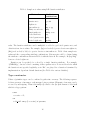
value. The duration attributes can be multiplied or added to get dotted quarter note, and
other fractions of note values. For example, (hq) read as half of quarter denotes an eight note,
(hhq) read as half of half of a quarter denotes a sixteenth note. Table 3 lists sample note
values and the corresponding attribute combinations. Various rests could be obtained using
the attribute combinations shown in Table 3 with the letter R. For example, “R:(hq+hhq)”
denotes a dotted eight rest.
Duration can be specified for a chord by a single duration attribute. For example,
“(C4E4G4):q” denotes a chord consisting of three quarter notes. Notes and chords for which
the duration is not specified explicitly, as in “E4”, are played for a duration determined by
implementation dependent default durations (See Table 4 for various defaults.).
Type constructor
Values of primitive types can be combined together into an array. The following sequence
declares an array of measures, each measure being a pattern. Elements of an array can be
accessed by subscripting. Thus tclef staff [k+1] refers to the (k+1)th element of tclef staff
which is of type pattern.
const
scoresize = 25;
var
tclef staff: array [1..scoresize] of pattern;
16
Table 4: Default values of run time parameters.
Item
Default value
Metronome
Key signature
Time signature
Channel
Instrument code
Note duration
Play mode
q=120
C major
(4:4)
1
1
q
discrete for notify
discrete for dtrack
continuous for atrack
“C4”
Pitch
4.2
Sound pattern specification
The play command is used to specify what sounds are to be generated when some part of
a program is executed. The general syntax3 of play is:
play <playlist>
where <playlist> is a list consisting of one or more notes and patterns specified using constants, variables, and function calls. Key and time signatures are some of the parameters
that may be specified. Elements of <playlist> can be separated by a comma (,) or a parallel
(k) sign. An example of play command appears below.
play (loop background k (func call, no parameters)) with mm q =120, inst = “piano”;
The above play when executed will play the sound associated with the variable loop background
together with a sequence of sounds denoted by the variables func call and no parameters.
Default key and time signatures will be used. The metronome will be set to play 120 quarter
notes per minute and the notes will be played using a piano sound.
4.3
Event notification
A useful characteristic of LSL is its ability to specify events to be auralized. A programmer
may formulate an event to be auralized in terms of the application. However, such a specification is translated in terms of program position, data, and time as described earlier. For
3
Syntactic entities are enclosed in < and >. Optional entities are enclosed in { and }. For a complete
syntax of LSL see Appendix.
17
example, in an automobile simulator, events such as gear change, speed set, resume cruise,
and oil check may be candidates for auralization. Suppose that the occurrence of these
events is indicated by calls to procedures that correspond to the simulation of an activity
such as gear change. It is these procedure calls that serve as event indicators to LSL. Thus,
for example, such a call to the gear change procedure could be mapped to sound using an
LSL specification.
Event specification is achieved by the notify command. notify is a generic command
and can be adapted to a variety of procedural languages. In examples below we assume that
programs being auralized have been coded in C. The syntax of notify appears below:
notify {<all-selective>} {<label-parameter>} <event-specifier> {<sound specifier>}
{<scope-specifier>}
<all-selective> specifies which subset of events selected by a notify are to be auralized.
Possible event codes are all and selective. If selective is used, one or more labels must
be specified to indicate which events are to be selected. <event-specifier> specifies one or
more events to be notified aurally.
There are five ways to specify an event. One may specify a general syntactic entity, a
special syntactic entity, an assertion, a relative timed event, and any combination of the
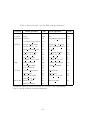
above four. Relative timed events are discussed in Section 4.6; other methods are described
below. Table 5 lists all event codes in LSL/C. For example, while-statement-enter is an event
specifier; the corresponding event occurs once each time a while statement is executed. The
start and termination of program execution serve as events.
The expression (x < y) serves as a special syntactic entity. The associated event occurs
whenever the expression (x<y) is executed. An assertion such as (x + y) > (p + q) also
specifies an event which occurs whenever the assertion evaluates to false. If e1 and e2 are
two events specified using any of the above approaches, then (e1 and e2 ) and (e1 or e2 ) are
also events.
The scope of a notify may be restricted using the <scope-specifier>. In LSL/C, the
scope can be restricted to one or more functions or files. For example, if an assertion is to
be checked only inside function sort, one may suitably restrict the scope to that function.
Labels can be used in conjunction with scope restrictions to specify arbitrarily small regions
in a program.
The sound specifier is a variable name, constant, or a function call that specifies the
intended auralization of the selected events. Sample notify commands appear below.
1. notify all rule=while loop body begin using body begin;
notify all rule= while loop body end using body end;
18
2. notify selective label = special loop rule=while loop body begin using body begin;
notify selective label = special loop rule=while loop body end using body end;
3. notify all instance= “++count” and “search(x)” using count or search in func =
“search”, “report”;
4. notify all assertion = (x<y k p≥q) using assertion failed;
5. notify all rule = conditional expression and assertion = odd(x) using cond sound
in filename = “myfile.c”;
Example 1 above specifies two event types, namely the beginning and end of a whileloop body using two general purpose syntactic specifiers. It also indicates that all positions
in the program where such events could occur are to be auralized. Thus, a C program
auralized using the above notify will generate the sound corresponding to the variables
body begin and body end, respectively, whenever the beginning and end of a while-loop
body are executed.
Example 2 is the same as Example 1 except that the event selection is selective. Thus,
any loop body labelled by special loop will be auralized. Any syntactic entity can be labelled
in the program being auralized by placing an LSL label command in front of that entity as
described in Section 4.11.
Example 3 specifies the execution of the statements ++count and search(x) as the events.
When any of these two events occur, count or search is played. However, these events are to
be recognized only inside functions search and report.
Example 4 above specifies an event which occurs whenever the condition (x<y k p≥q) is
not satisfied. Note that this condition is based on variables in the program being auralized.
When this condition is not satisfied, assertion failed is to be played. Example 5 shows how
to specify the auralization of all conditional expressions that occur in file myfile.c only when
condition odd(x) is not satisfied.
The all and selective tags can restrict any event selection. Multiple labels are used
within one notify command as in the following.
notify selective label = loop 1, loop 2 rule=while loop body begin using body begin;
notify selective label = special loop rule= while loop body end using body end;
The above notify commands specify the same type of events as in Example 2 except that
loop body begins and ends that contain any one of the two labels loop 1 and loop 2 will be
selected for auralization.
19
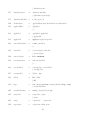
Table 5: Keywords and codes for LSL event specifiers in C.
Category
Event specifier
Code†
Event specifier
Program
start
start
end
Expression variable
var
assignment expression
conditional expression cex
Iteration
iteration statement
ist
iteration body begin
iteration body end
ibe
while statement enter
while statement exit
wsx
do while
for statement enter
fre
for statement exit
while body begin
wbb
while body end
for body begin
fbb
for body end
do while body begin
dbb
do while body end
Jump
jump statement
jmp
continue statement
break statement
bst
return statement
goto statement
gst
Selection
selection statement
sst
if statement
if then part
itp
if else part
switch statement
sst
switch body begin
switch body end
sbe
Functions function call
fnc
function entry
function return
fnr
†
Event specifiers and their abbreviated codes can be used interchangeably to specify a rule in a notify statement.
20
Code†
end
aex
ibb
wse
dow
frx
wbe
fbe
dbe
cst
rst
ist
iep
sbb
fne
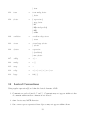
Table 6: Predefined functions in LSL.
Function name
Mapping
intton
int → note
ntoint
nabove
note → int
note × ksig → note
nbelow
note × ksig → note
naboveh
nbelowh
circlen
note → note
note → note
ksig → ksig
circlep
ksig → ksig
sectotick
int → int
4.4
Description
Converts an integer to a note. Integers in the
inclusive range 0 to 87 get converted to notes A0
to C8.
Converts a note to an integer.
Returns the note above the input in the given
scale.
Returns the note below the input in the given
scale.
Returns the note one half step above the input.
Returns the note one half step below the input.
Returns the next key signature in the circle of
fifths. Valid only for predefined key signatures.
Returns the previous key signature in the circle of
fifths. Valid only for predefined key signatures.
Converts seconds to system dependent ticks.
Data tracking
Event notification consists of specifying one or more events and reporting them aurally during
program execution. There are applications wherein changes to values of variables need to be
monitored. It is certainly possible to specify assignments to such variables as events and then
report the execution of these assignments aurally. Such reporting is, however, independent
of the data being assigned. To obtain data dependent auralization, LSL provides the dtrack
command. The syntax of dtrack appears below.
dtrack <track-id-list> <sound-specifier> {<mode-specifier>}
{<start-event-spec>} {<term-event-spec>}
Using dtrack, one or more variables can be tracked. For the variable to be tracked, an initial
value can optionally be specified using the init keyword. The type of the initial value must
match that of the variable to be tracked. The initial value may also be captured immediately
after the execution of an assignment labelled using an LSL label.
As in notify, a <sound-specifier> specifies the sound to be used while tracking the
variables. Here we introduce another method for specifying sounds which is particularly
useful in conjunction with the dtrack command. A sound pattern whose characteristics
21
depend on program generated data will be referred to as a Value Dependent Aural Pattern
and abbreviated as VDAP. The using clause in the <sound-specifier> specifies the name of
the function, say f , that emits a VDAP based on variables being tracked. f is a language
dependent function containing LSL commands for auralization. Thus, in LSL/C, f is a valid
C function interspersed with LSL commands. f is executed after each assignment to the
variable being tracked.
Tracking may be carried out in continuous or discrete mode. In continuous mode, tracking
begins at the start of program execution, unless specified otherwise. A note pattern is emitted
continuously until there is a change in the value of the variable being monitored. When the
value changes, a newly computed note pattern is emitted continuously. In discrete mode,
a note pattern is emitted once whenever the tracked variable changes its value. In discrete
mode tracking begins the first time the tracked variable changes its value after program
execution.
Tracking can also be controlled using <start-event> and <term-event>. Start and terminating events are specified, respectively, using the when and until clauses. A few examples
of dtrack use appear below.
1. dtrack speed; will track variable speed using an initial value of 0 and default sound
parameters such as note pitch and volume.
2. dtrack crash init=false; will track crash assuming an initial value of false.
3. dtrack x capture=x reset; will track x after capturing its initial value at the assignment labelled by the LSL label x reset
4. dtrack mouse and color using color mouse melody (&mouseval, &colorval) ; will track
variables mouse and color using a user defined function named color mouse melody with
two parameters.
5. dtrack speed when speed>65 until x≤65 mode=continuous; will begin tracking speed
whenever its value exceeds 65 and will stop tracking it immediately after its value
becomes equal to or less than 65. Tracking will resume if the start event occurs again.
The discreet mode can be used to avoid resumption of tracking of speed.
4.5
Activity monitoring
An activity is a sequence of actions between two events. An activity begins at the occurrence
of an event and ends at occurrence of a later event. As mentioned earlier, start and termination of program execution are considered as events. LSL allows specification of tracking
arbitrary activities using the atrack command given below.
22
Sound
End
Start
E
Start
E1
E2
Start
E1
E2
Program execution
Sound
End
Program execution
End
Program execution
Sound
E3
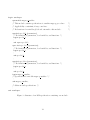
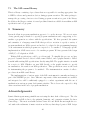
Figure 4: Sample activity patterns specifiable in LSL. E1, E2, and E3 denote events. Start
and End denote the start and end of program execution.
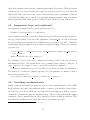
atrack { when <event-specifier> } { until <event-specifier> }
<sound-specifier> {<mode-specifier>}
<event-specifier>, <sound-specifier>, and <mode-specifier> have the same meaning as in
the dtrack command. Tracking begins when the event specified immediately following when
occurs (start event) and stops when the event specified following until occurs (terminating
event). If the start event is omitted, tracking begins at the start of program execution.
Tracking ends at program termination if the terminating event is omitted. If both the
start and terminating events are omitted then the entire program execution is tracked. In
continuous mode, an activity begins whenever the starting event occurs and terminates
at the terminating event. In the discrete mode, an activity occurs as above but does not
resume. Using the start and terminating events one may specify a variety of activity tracking
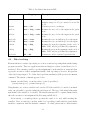
patterns as shown in Figure 4.
4.6
Timed events
LSL provides a powerful mechanism to auralize timed events. time is a special variable in
LSL which denotes the time spent from the start of program execution. Time is measured
in system dependent ticks; each tick being the smallest unit by which time could be incremented. Thus, any expression using time can be used as a timed event. As an example,
23
suppose that the gear change function must be invoked in a program in less than 60 seconds
after the program execution begins. It is desired to playback variable bad program if this
condition is not satisfied. The following notify illustrates how to write this specification in
LSL.
notify rule = function call: gear change and assertion=time ≤ sectotick(60)
using bad program mode = discrete;
In the above example, sectotick is an LSL predefined function to convert seconds to ticks.
Notice that the expression time > sectotick(60) is a valid way to specify an event as described
earlier while discussing the syntax of notify.
It is often required to specify time relative to the occurrence of some event. This can be
done in LSL using relative timed events as shown below.
rtime = <expression> after <event-specifier>
Consider the use of this mechanism in the following example for tracking an event.
dtrack when (rtime = sectotick(30)) after rule = function call: missile launch
until rule= function return: target hit using missile in motion;
The above dtrack can be read as “Begin tracking 30 seconds after the function missile launch
has been called and terminate tracking when the function target hit returns. The tracking
sound is defined by the LSL variable missile in motion. Thus, using a combination of time
and rtime, one may specify a variety of timed events for auralization.
4.7
Playback synchronization
Synchronization mode controls the playback of notes during program execution. There are
two such modes: program or metronome. In the program mode, playback is synchronized
to the program. In the metronome mode it is synchronized to a global metronome. The
syncto command is used for setting the synchronization mode. The syntax of syncto is:
syncto <sync-to>
The <sync-to> parameter can be program or mm for synchronization with, respectively,
program execution or a global metronome. Multiple syncto commands may be placed in an
LSL specification to alter the synchronization mode.
In the metronome mode, a buffer holds the notes generated by the executing program.
When this buffer is full and the program attempts to send a note for playback, the playback
routine does not return control to the program until the received note can be buffered. This
may slow down program execution. To avoid this situation in metronome mode, one may use
24
the noslow parameter such as in the command syncto mm q=120, noslow. When the noslow
parameter has been specified, playback routine discards notes that are received when the
buffer is full. This could cause some events or data tracking to pass by unauralized. The size
of the playback buffer can be controlled by setting the bufsize parameter such as in syncto
mm=120, bufsize=1000 which specifies a buffer size that will hold at least 1000 notes.4
4.8
Assignments, loops, and conditionals
An assignment command has the general syntax shown below.
identifier {<subscript list>}:= <expression>;
where identifier is the name of a variable. Expression is any valid expression that evaluates to
the type of the identifier on the left of the assignment. <subscript list> is a list of subscripts
used for selecting array elements if the identifier denotes an array. Loops can be formulated
in an LSL specification using the for and while constructs. Syntax of these two constructs
is given below.
for <for index> := <init expression> to <final expression> {step <step expression>}
<spec sequence>
while <condition> do <spec sequence>;
The semantics of each of the above commands are similar to that of the for and while
statements in Pascal. All expressions in a for command must evaluate to integers. A
<spec sequence> is a sequence of zero or more LSL specification commands.
Conditional commands are provided in LSL for selectively specifying an auralization.
The syntax of a conditional command appears below. Its semantics are similar to that of
the if statement in Pascal.
if <condition> then <spec sequence> {else <spec sequence>}
4.9
Controlling auralization state
During execution, an auralized program can be in one of two auralization states: ON or OFF.
In the ON state any sound data resulting from the occurrence of an auralized event is sent to
the sound processor. In the OFF state any such sound data is suppressed. LSL provides two
commands to dynamically alter the auralization state. These are the turn and the toggle
commands. These commands have no effect when placed inside an LSL specification. They
may affect the auralization state when placed inside the auralized program.
4
Each note belonging to a chord counts as one note.
25
Using turn is one way to switch sounds on or off. turn on switches the sound on
and turn off switches it off. The command may be placed anywhere inside the auralized
program. Upon the start of program execution, the auralization state is ON. The turn
command takes effect immediately after it is executed. Sound channels can be switched off
selectively by specifying the channel number as in turn off chan=4; switches off any sound
on channel 4.
Another way to turn the sound on or off is with the toggle command. The syntax of
toggle is given below.
toggle {id} <toggle-source> = constant
where <toggle-source> could be the MIDI or computer keyboard indicated, respectively, by
the keywords midi and keysig. The constant is a string containing the toggle note from the
MIDI keyboard and the toggle key from the computer keyboard. When specified, id denotes
the name of a class (defined below) of events, activities, and data items to be affected by
this command.
During program execution, the auralization state can be toggled using the source specified
in the command. For example, if the middle C on a MIDI keyboard is the toggle source,
tapping the middle C once, after program execution begins, turns the sound off. Tapping it
again turns it on. Input from the toggle source is processed only when an auralized event
occurs. When such an event occurs, an LSL library routine is invoked to check for a pending
toggle request. If a request is pending, the auralization state is switched to OFF if it is ON,
or to ON if it is OFF.
A program may contain both turn and toggle commands. A turn might change the
auralization state to off only to be switched back to on by a toggle. This is certainly one useful
scenario. Note that whereas turn commands are placed into the code prior to compilation
and do not provide the user any control after compilation, the toggle command permits
dynamic changes to the auralization state. The toggle default in LSL is the space bar on
the computer keyboard. Thus, even when no toggle is specified in a program, auralization
state may be toggled using the space bar.
Regardless of the auralization state, note values are generated and sent to the library
routine responsible for playback. It is this library routine that decides, based on the current
auralization state, if the received notes are to be played or not. In the metronome sync mode,
all notes emitted are buffered in a special playback buffer maintained by the library routine.
The buffered notes are removed from the buffer when their turn comes for playback. This is
determined by the current metronome setting. When playback resumes due to a toggle or
a turn changing the auralization state to on, the notes are played back in accordance with
26
the metronome setting. In program sync mode, notes received by the library routine are
discarded if playback is turned off.
4.10
Event, data, and activity classes
An event class5 consists of one or more events. A notify command specifies one or more
events which may occur at several positions inside a program and several times during
program execution. Events specified in one or more notify commands constitute an event
class. Similarly, a data class is a collection of one or more variables. A dtrack command
specifies one or more variables to be tracked. Variables specified in one or more dtrack
commands constitute a data class. An activity class is defined similarly with respect to
activities specified in one or more atrack commands. A class that consists of at least two
elements of different types, e.g. event and activity, or event and data, or data and activity,
is known as a mixed class.
It is possible for a user to define each of the above classes in an LSL specification. This
is done by naming one or more notify, dtrack, and atrack commands. Any of these three
commands can be named using the following syntax:
id1 ::id2 ::. . . ::idn ::command
where each subscripted id above denotes a name and command denotes any event, data, or
activity specification command. Multiple commands can share a name. Each id, when used
as the name of a command, is treated as the name of a class. The class so named consists
of events, data, or activities specified in the commands named by id. One command can be
assigned multiple names. This makes it easy to define classes that are not disjoint. Consider
the following example.
function related::notify rule=function call;
function related::notify rule=function return;
data related::dtrack a and b and c;
special::data related::dtrack p and q;
The above three commands have been named to identify three classes. Class function related
consists of events that correspond to function calls and return. Another class named data related
consists of data items a, b,c, p, and q. Yet another class named special consists of data items
p and q.
The notion of a class can be used to model abstraction during program auralization. For
5
Classes defined in this section have no intentional relationship with the notion of classes in C++ and
object oriented programming literature.
27
example, consider the auralization of tractor control software. The programmer may like
to group all the events into two classes. One class consists of events that correspond to
engine control. Another class consists of events that correspond to the control of paraphernalia attached to the tractor, e.g. a seeding device. By simply using the event specification
mechanism of LSL there is no way to explicitly incorporate these classes into an LSL specification. The mechanism of naming a command, as described above, however, does provide
a convenient means for defining classes.
Once defined, classes of events can be accessed at an abstract level using their names.
For example, during the execution of an auralized program, it is possible to interact with
the LSL run-time system and turn off the auralization of all events within a class. It is also
possible to request LSLed (described in Section 6.1 below) to provide a comprehensive list of
classes and their individual elements. Thus the use of classes enables a user to interact with
an auralized program in terms of “high level” occurrences, e.g. events, instead of dealing
with syntax based definitions.
4.11
Embedding LSL commands
LSL commands can be embedded in C programs inside comments. The LSL preprocessor
recognizes an LSL command embedding if the first token beginning with a letter immediately
following the comment begin delimiter (/*) is LSL:. Immediately following the delimiter,
a sequence of LSL commands can be placed enclosed within the begin and end delimiters.
For an example of such an embedding see Example 6 on page 32. The LSL commands so
embedded are translated to C code by the LSL preprocessor. LSL commands such as play
and notify get translated into calls to library functions. Other LSL commands, such as
assignments and dtrack commands get translated into more complex C code.
It is possible to identify specific constructs of a C program by labelling. A label is placed
inside a comment by using the keyword label as the first keyword starting with a letter
immediately following the comment start delimiter. Thus, for example, /* label=here,
onemore */ provides two labels here and onemore for possible use by the LSL preprocessor.
The following example shows how to label the beginning and end of a loop.
..
.
while (c = getchar()!=eof)
{
/*label=special loop This is an LSL label for the beginning of loop body. */
++nc;
..
.
28
/*label=special loop This is an LSL label for the end of loop body. */
}
5
Examples of LSL/C use
We now present a few examples illustrating the use of LSL. Each example consists of a
problem statement and a solution using LSL/C. In each example we assume that, unless
specified otherwise, default values are used for various sound related parameters such as
MIDI channel, timbre, volume, and metronome value.
Example 1
It is desired to auralize all loops in a C program. Loops will be identified by the while-do
constructs. On entry to a loop, note C4 is to be played for half a measure duration. Each
time control reaches the start and end of a loop body, notes E4 and G4 are to be played,
respectively. On loop exit, note C5 is to be played for a full measure. The following LSL/C
specification meets the above auralization requirements.
begin auralspec
specmodule loop auralize
var
l begin, l end, b begin, b end: note;
begin loop auralize
l begin:= “C4:h”; l end:= “C5:f”;
b begin:= “E4:q”; b end:= “G4:q”;
notify all rule = while statement enter using l begin;
notify all rule = while statement exit using l end;
notify all rule = while body begin using b begin;
notify all rule = while body end using b end;
end loop auralize;
end auralspec.
Example 2
An automobile contains a distributed microcontroller network. The software to control
this network and other automobile functions is to be tested and debugged. All calls to
29
functions gear change, oil check, and weak battery are to be auralized by playing suitable
sound patterns. The following LSL/C specification meets this auralization requirement.
begin auralspec
specmodule call auralize
var
gear change pattern, oil check pattern, battery weak pattern: pattern;
begin call auralize
gear change pattern:= “F2G2F2G2F2G2C1:qq”+ “C1:f”;
oil check pattern:= “F6G6:h”;
battery weak pattern:= “A2C2A2C2”;
notify all rule = function call: “gear change” using gear change pattern;
notify all rule = function call: “oil check” using oil check pattern;
notify all rule = function call: “battery weak” using battery weak pattern;
end call auralize;
end auralspec.
Example 3
A parallel program consists of a procedure MAIN which, after initialization, loads each of N
processors with a copy of program SOLVE. On each processor, SOLVE aids in the solution
of a partial differential equation using a discretization of a multidimensional input domain.
During execution SOLVE communicates with its neighboring processors by placing calls to
procedures nread (for read from a processor) and nwrite (for write to a processor). It is
desired to auralize this program so that calls to nread and nwrite are reported by suitable
sound patterns. Only calls that originate from even numbered processors are to be auralized.
The following LSL/C specification meets the above requirements.
begin auralspec
specmodule par processing
external even, processor num;
var
read pattern, write pattern: pattern;
begin par processing
read pattern:= “G5”;
write pattern:= “C4”;
30
notify all rule = function call: “nread” and even(processor num) using read pattern ;
notify all rule = function call: “nwrite” and even(processor num)using write pattern ;
end par processing;
end auralspec.
Example 4
An editor accepts commands for text editing. After having executed a command, a voice
message saying “Done” is to be generated. Assume that after receiving an edit command that
is to be voiced as above, the editor invokes a function named process command to process
the input command. The following LSL/C specification meets the above requirement.
begin auralspec
specmodule editor auralize
var
done voice: voice;
myfilename: file;
begin editor auralize
filename := “done-container.v”;
done voice:= filename;
notify all rule =function return: “process command” using done voice;
end editor auralize;
end auralspec.
Example 5
It is desired to auralize all labelled assignments in 10 files named file-1.c, file-2.c, and so on
through file-10.c. Assignments in the first of these files are to be notified by playing a C4,
the next by playing a D4, then by E4, and so on using successive notes in the C-major scale.
The following LSL/C specification meets this requirement.
begin auralspec
specmodule for loop
const
num of files = 10;
31
var
first note, next note: note;
next file: int;
filenames: array [1..num of files] of file;
specdef init file names();
begin init file names
filenames[1] := “file-1.c”; filenames[2] := “file-2.c”;
filenames[3] := “file-3.c”; filenames[4] := “file-4.c”;
filenames[5] := “file-5.c”; filenames[6] := “file-6.c”;
filenames[7] := “file-7.c”; filenames[8] := “file-8.c”;
filenames[9] := “file-9.c”; filenames[10] := “file-10.c”;
end init file names;
begin for loop
next file:=1; next note:=first note;
init file names();
for next file:=1 to num of files do
begin
notify selective label = this assign rule=assignment expression using next note
in filename = filenames[next file];
next note := nabove(next note, “C:major”);
end
end for loop;
end auralspec.
The above LSL/C specification uses an LSL function to insert all file names into an
array. The for loop then steps through each file name to specify the desired auralization.
Successive notes are obtained using a predefined function named nabove which takes a note
as an argument and returns the next note a full step above on a given scale.
Example 6
This example illustrates how dtrack can be used with VDAP (Value Dependent Aural
Pattern) to track arbitrary functions of program variables. Suppose that it is desired to
track the dynamic relationship between two variables named rock remain and dist remain.
rock remain represents the number of rockets remaining to be fired and dist remain the
remaining distance to be travelled. Each time a rocket is fired the count of remaining
rockets reduces by 1. The distance remaining to be travelled is updated by some process in
32
the program.
It is desired to emit a continuous audible sound only while the remaining distance
(dist remain) is more than the critical distance (crit dist) and the number of remaining
rockets rock remain is less than the critical rocket count (crit rock). An LSL specification to
achieve the above auralization consists of two parts. One part is an LSL specification module
containing a dtrack command. This command specifies the use of a VDAP function named
crit dist track for tracking dist remain. The second part is the definition of a C function
named crit dist track which has embedded LSL commands. The entire LSL specification
module appears below.
begin auralspec
VDAP begin
crit dist track ( int *distval, *rockval);
{ /* This is a C function. distval is a pointer to
dist remain and rockval is a pointer to rock remain. */
if ((*distval > crit distance) && (*rockval < crit rock))
{ /* LSL:
begin
play grave note with inst=bass, mode=continuous, chan=4;
end
*/ }
else
{ /* LSL:
begin
turn off chan=4;
end
*/ }
}
VDAP end;
specmodule emergency sound
applyto filename = dist compute.c;
const
grave note = “G2”;
begin emergency sound
dtrack dist remain and rock remain using crit dist track (&dist remain, &rock remain );
end emergency sound;
end auralspec.
33
While processing the above LSL module, the LSL preprocessor adds calls to the C function crit dist track, together with the specified parameters, immediately after each program
statement that could possibly alter the value of dist remain or rock remain. The preprocessor also translates the LSL commands inside a VDAP to C code. The function so obtained
is placed in suitable file for compilation by the C compiler. The preprocessor does not check
for the correctness of the VDAP.
Example 7
A recursive function named factorial is to be auralized in such a way that each call to factorial
generates a note with pitch proportional to the depth of recursion. The first call to factorial
should generate C4; successive calls should generate one note higher in the C-major scale.
The return sequence from factorial should play the notes back in the opposite order. The
following LSL specification meets the above requirements.
begin auralspec
VDAP begin
fact enter ( )
{ /* LSL:
begin
note to play = nabove (note to play, “C:major”);
play note to play
end;
*/ }
fact exit ( )
{ /* LSL:
begin
note to play = nbelow (note to play,“C:major”);
play note to play;
end
*/ }
}
VDAP end;
specmodule fact auralize
var
note to play: note;
begin fact auralize
34
note to play:= “B3”; /* The next note is C4.*/
notify all rule = function entry: “factorial” using fact enter();
notify all rule = function return: “factorial” using fact exit();
end fact auralize;
end auralspec.
The above specification contains two VDAP functions, namely fact enter and fact exit.
Each call to and return from factorial results in, respectively, the execution of fact enter and
fact exit resulting in the desired playback.
6
LSL in a programming environment
LSL is designed to fulfill complex demands for program auralization. In a programming
environment, one may use LSL to auralize parts of a program during the testing and debugging phase or auralize an application to meet auralization requirements stated at the
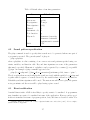
beginning of the development cycle. As shown in Figure 5, there are at least three different
ways a software developer could use LSL. An expert in the use of LSL could write an LSL
specification or add LSL commands to the program itself and preprocess the program as
shown in Figures 5(a) and (b). Alternately, as in Figure 5(c), a graphical interface could be
used to ease the task of specifying auralization. This interface accepts and translates user
commands to LSL specifications. Specifications so generated are internal to the interface
and hidden from a novice user.
LSL Library
LSL specification
Program
LSL Preprocessor
Compile/Link
Object code
(a)
LSL Library
Program
Graphic interface
for specifying
auralization
Compile/Link
Object code
(b)
LSL Library
Program with
LSL commands
LSL Preprocessor
Compile/Link
Object code
(c)
Figure 5: Use of LSL in a programming environment.
35
The result of using any of the above methods is an object program instrumented with
calls to procedures from the LSL sound library. When the instrumented program is executed,
these calls generate sound data that is directed to a sound module 6 via MIDI. The sound
module output is sent through an amplifier to a speaker. Voice is sent via an audio processor
and amplifier to the speakers. Non-voice and voice data are mixed at the amplifier and played
through the same speakers. A user may organize the audio playback hardware differently.
6.1
LSL editor
In principle it is possible to use any of the well known text editors, such as gnuemacs or vi
to edit an LSL specification. However, in several cases such editing may be inconvenient;
specially so for one not familiar with the piano keyboard or music terminology. For this
reason we propose a special editor, named LSLed, for preparing LSL specifications.
LSLed has features similar to those found in syntax-directed editors on personal computers such as the Think C editor on the Macintosh [16] computer7 . LSLed is most useful
when editing sound related commands. For example, suppose that variable named drag-icon
is declared to be of type pattern. We wish to assign a sound pattern to drag-icon. One way
to do so would be to type in the pattern using the notation described earlier in Section 4.1.
Thus, one may type in the following text:
drag-icon := “C2D2E2F2G2A2B2C3”;
We identify two problems with this approach. First, an individual may not be familiar with
the notation (e.g. one who asks the question: What is C2 ?) Second, one may be familiar
with the notation but would like to experiment with various sounds and just play the sound
pattern on an electronic keyboard instead of converting it to the textual notation. LSLed
helps overcome these problems.
During editing, LSLed could be in one of two modes: text and aural. When in text mode,
all input to LSLed is from the computer keyboard. When in aural mode, the source of
input could be MIDI via an electronic keyboard or the computer keyboard. When the above
assignment to variable drag icon is typed, LSLed expects input from the computer keyboard
until all characters up to and including the assignment (:=) operator have been typed. It
then adds a double quote to indicate the starting of a string and prompts the user to play
the pattern on the electronic keyboard. At this point the editor screen would display, among
other characters:
drag icon := “
6
The LISTEN system currently uses Proteus/3 World from E-mu Systems as the sound module. The
Audiomedia II card from Digidesign is used for voice sampling and playback.
7
Macintosh is a trademark of Apple Computer, Inc..
36
As the user plays the notes on a keyboard, the textual version of each note appears following
the double quotes. On completion, the user hits the return key indicating that the pattern
has terminated. To change any previously entered pattern, the user merely places the cursor
at the beginning of the pattern immediately following the double quotes, and repeats the
above process. Textual version may also be edited by switching LSLed to textual mode.
This may be useful for adding or altering note parameters such as, for example, duration or
play style. The above process can be used to enter other types of sound related constants
too. The advantage of this approach is clear when one considers the ease of data entry.
The duration of notes played on the keyboard is determined using various LSLed parameter
settings not described here.
LSLed also interprets commands in an LSL specification. For example, a play command
in an LSL specification can be interpreted to hear how the patterns specified in the command
will sound. Interpretation of more complex commands such as notify and dtrack are also
possible via the graphic interface as described in Section 7.
As LSL is a typed language, LSLed checks for any type mismatch. For example, if x is
of type note and one types:
x:= 4;
LSLed complains about the invalid type on the right side of the assignment.
Figure 6 shows how LSLed fits in a programming environment. It takes as input an
existing LSL specification file and creates an updated or a new file. LSLed obtains its input
from an electronic or a computer keyboard. LSL library routines are used for the input and
output of sound patterns. The program to be auralized is also an input to LSLed. This
enables LSLed to check for any interaction errors between the LSL specification and the
program. For example, if a notify command indicates that the events to be selected are
within function icon-operation, LSLed checks if such a function indeed exists in the program.
If not, then a warning is issued. In any case, checks such as these are also made during LSL
specification preprocessing.
7
An LSL implementation outline
An LSL implementation consists of four software components: (i) an LSL preprocessor,
(ii) an LSL editor, (iii) an LSL sound library, and (iv) an LSL graphic interface. Below we
outline the elements of the preprocessor, the library, and the graphic interface. The editor
has already been described above.
37
LSL Library
LSL specification
file
LSLed
Program to be
auralized
Electronic
keyboard
Computer
keyboard
Figure 6: LSLed in a programming environment.
7.1
LSL preprocessor
The task of the preprocessor is to instrument the program to be auralized with calls to sound
library procedures. The instrumentation is guided by the LSL specification. In the absence
of any specifications, the preprocessor may be required to process LSL commands embedded
within the program.
The preprocessor takes an LSL specification and a program P as input and produces the
instrumented version PL of P . PL is then compiled and linked to the library routines using
the traditional C compiler and linker. This generates an object program with auralization
commands compiled in. The following steps provide a high level view of the sequence of
actions taken by the preprocessor to transform P into PL .
1. Parse each source file F that is input to the preprocessor. This results in a parse tree
T for source file F , whose nodes are typed. Using the type information, it is possible
to examine a node of T and determine what syntactic construct it represents.
During the construction of T , identify any LSL commands. Replace each command by
an appropriate call to a sound library procedure. This call now becomes a part of T .
2. Begin parsing the LSL specification if one has been supplied. If there is no LSL specification then go to step 3. Otherwise, for each notify or dtrack command encountered,
say C, do the following:
(a) Traverse T and identify syntactic constructs that match the event specification
in C. To each syntactic construct S so identified, add an appropriate call to the
sound library procedure that will generate the sound specified in C. This step
updates T .
38
3. The updated parse tree, say T 0 contains new nodes that represent calls to sound library
function calls. Deparse T 0 by traversing it and generating a source file F 0 .
4. Invoke the C compiler available in the environment with input F 0 . This will result in
the object version of F 0 .
5. Delete F 0 .
In a UNIX environment, the above sequence of steps is initiated by the following command:
lp -spec aspec.l -file icons.c
Assuming that icons.c contains a function named main, the above command will result in a
file named a.out containing the executable auralized version of icons.c. The auralization will
be done using the LSL specifications contained in the file aspec.l. For programs spread over
several files, makefiles [10], and the make command can be used. The lp command can be
embedded in the makefile. For programs that need to be auralized, calls to the C compiler
may be replaced by calls to lp. Recall from Section 4 that applicability constraints may be
used to restrict the scope of LSL specifications within a source file.
The above algorithm may perform multiple passes over the parse tree. The number of
passes over the program parse tree T is equal to the number of times notify and dtrack
commands are encountered while interpreting an LSL specification. Development of a more
efficient single pass algorithm for auralization based on a given LSL specification is an open
problem. Further, the preprocessor may not always succeed in performing correct auralization due to pointers and aliases. The problem can be resolved using labels or scope specifiers
in the LSL specification to inform the preprocessor where to look for an event or data item.
7.2
Graphic interface
A graphic interface is an integral part of an LSL environment. The interface enables one to
specify auralization requirements without having to learn LSL. When using this interface, a
user uses pull-down and pop-up menus that guide the development of specifications. These
specifications are transformed into LSL syntax by the interface and saved in a specification
file just as a user would do if LSL was used directly. Once the specification is complete, the
interface can be instructed to invoke the LSL preprocessor and the C compiler to instrument
and auralize a program. The interface also provides an environment for executing an auralized program. Thus, after having compiled the program, it may be instructed to execute the
program under programmer’s control. This feature may be used to debug the program and
alter auralizations when necessary.
39
7.3
The LSL sound library
This is a library consisting of procedures that are responsible for sending appropriate data
to MIDI or other sound generation devices during program execution. The entire package to
manage the processing of notes received during program execution is a part of the library.
In addition, the library consists of several predefined functions callable from within an LSL
specification and a C program.
8
Summary
Research efforts in program auralization appear to be on the increase. We are not aware
of any general purpose method to specify program auralizations and a supporting tool to
auralize a program in accordance with the specifications. We have presented the syntax
and semantics of a language named LSL that provides a notation to specify a variety of
program auralizations. LSL is generic and needs to be adapted to the programming language
of an environment in which programs are expected to be auralized. A language specific
implementation of LSL serves as a tool to auralize programs. We have presented the design
of LSL/C, a C adaptation of LSL.
Writing LSL specifications could be a tedious task. To simplify the process, we have
proposed a syntax directed editor for LSL, named LSLed, and a graphic interface. LSLed
is useful while writing LSL specifications directly using LSL. The graphic interface is useful
for a novice to LSL. Whether one uses LSL directly or the graphic interface to specify
an auralization, the result is an LSL specification. This specification serves as the basis
for instrumenting the program to be auralized. The instrumentation consists of calls to
procedures from LSL sound library.
The implementation of various parts of the LSL environment is currently underway as
part of the LISTEN project. Once different components of this environment are available
and integrated we will be sufficiently equipped to conduct experiments with the use of
auralization in various program development activities. The tools are also expected to help
other researchers in the area of program auralization.
Acknowledgements
Ronnie Martin spent many painful hours reviewing the first draft of this report. The idea
of using time in LSL is due to the guitarist, humorist, and computer scientist, Professor
Vernon Rego. The most wonderful teachers Verna Abe and Helen Brown taught the second author the rudiments of music notation and theory that shaped parts of LSL design.
40
Will Montgomery and Neil Herzinger answered endless MIDI related questions. Our thanks
go to all these individuals.
References
[1] A. V. Aho, R. Sethi, and J. D. Ullman. Compilers: Principles, Techniques, and Tools.
Addison-Wesley Publishing Company, Reading, MA, 1986.
[2] A. L. Ambler and M. M. Burnett. Influence of visual technology on the evolution of
language environments. IEEE Computer, 22(10):9–22, 1989.
[3] Apple Computer, Inc. Inside Macintosh, Volume VI. Addison-Wesley Publishing Company, Reading, MA, 1992.
[4] M. H. Brown and J. Hershberger. Color and sound in algorithm animation. Computer,
25(12):52–63, December 1992.
[5] Digidesign, Inc. Sound designer II: User’s Guide, 1992.
[6] A. D. N. Edwards. Soundtrack: An auditory interface for blind users. Human-Computer
Interaction, 4(1):45–66, 1989.
[7] J. M. Francioni and J. A. Jackson. Breaking the silence: Auralization of parallel program
behavior. Technical Report TR 92-5-1, Computer Science Department, University of
Southwestern Louisiana,, 1992.
[8] W. W. Gaver. Using sound in computer interfaces. Human-Computer Interaction,
2:167–177, 1986.
[9] W. W. Gaver. The sonicfinder: An interface that uses auditory icons. Human-Computer
Interaction, 4(1):67–94, 1989.
[10] Computer Systems Research Group. UNIX User’s Reference Manual (URM). USENIX
Association, 4 1986.
[11] R. Kamel, K. Emami, and R. Eckert. Px: Supporting voice in workstations. IEEE
Computer, 23(8):73–80, 1990.
[12] B. W. Kernighan and D. M. Ritchie. The C Programming Language. Prentice-Hall,
Englewood Cliffs, NJ, 1988.
41
[13] P. S. Langston. Little languages for music. Computing Systems, 3(2):193–282, Spring
1990.
[14] L. F. Ludwig, N. Pincever, and M. Cohen. Extending the notion of a window system
to audio. IEEE Computer, 23(8):66–72, 1990.
[15] R. Sethi. Programming Languages: Concepts and Constructs. Addison-Wesley Publishing Company, Reading, MA, 1989.
[16] Symantec. Think C User Manual, chapter The Editor. Symantec Corporation, Cupertino, CA, 1991.
[17] T. Thompson. Keynote - a language and extensible graphic editor for music. Computing
Systems, 3(2):331–358, Spring 1990.
[18] E. S. Yeung. Pattern recognition by audio representation of multivariate analytical data.
Analytical Chemistry, 52(7):1120–1123, June 1980.
42
9
LSL Syntax Conventions
The syntax of LSL is described below using a modified form of BNF[1]. Nonterminals are
in italics, keywords in teletype font, and lexical symbols in bold font. Alternates of a
nonterminal are separated by the | symbol.
1.
lsl-spec
→
begin auralspec
spec-module-list
end auralspec.
2.
3.
spec-module-list
→
spec-module-list spec-module
| spec-module
5.
spec-module
→
specmodule id
program-id-list
global-interaction-list
declarations
spec-def-list
VDAP-list
begin id
spec-def-body
end id;
→
6.
program-id-list
external ext-id-list;
|
8.
global-interaction-list
→
global-interactions global-interaction-list
|
10.
global-interactions →
interact-id id-list;
11.
interact-id
→
import | export
13.
spec-def-list
→
spec-def spec-def-list
|
15.
VDAP-list
→
VDAP-spec VDAP-list
|
17.
VDAP-spec
→
VDAP begin
l- function
VDAP end;
43
18.
spec-def
→
specdef id (spec-par-list)
declarations
begin id
spec-def-body
end id;
19.
spec-def-body
→
spec-command spec-def-body
| spec-command
21.
spec-command
→
named-command
| unnamed-command
23.
named-command
→
name-tag-list unnamed-command
24.
name-tag-list
→
id :: name-tag-list
| id ::
26.
unnamed-command →
set-globals-command
| play-command
| notify-command
| dtrack-command
| atrack-command
| assign-command
| loop-command
| if-command
| specdef-use-command
| VDAP-call-command
| turn-command
| toggle-command
| sync-command
39.
set-globals-command→
40.
global-par-list
→
global-par-list, global-par
| global-par
42.
global-par
→
score-const-id
| device-const-id
44.
play-command
→
play play-list;
45.
play-list
→
pattern-specifier k play-list
set global-par-list;
44
| pattern-specifier && play-list
| play-list
48.
pattern-specifier
→
id
| constant
| specdef-use-command
| VDAP-call-command
| pattern-specifier play-pars
| ( play-list )
54.
play-pars
→
with tagged-list
55.
tagged-list
→
tagged-list, tags
| tags
57.
tags
→
score-const-id
| device-const-id
59.
score-const-id
→
score-tag = const-id
| mm mmspec
| mode-specifier
62.
const-id
→
constant
| dotted-id
64.
dotted-id
→
.id
65.
score-tag
→
keysig
| timesig
67.
device-tag-list
→
device-const-id , device-tag-list
| device-const-id
69.
device-const-id
→
device-tag = const-id
70.
device-tag
→
chan | inst
72.
notify-command
→
notify all-selective label-parameter event-specifier
sound-specifier scope-specifier;
73.
all-selective
→
all | selective | 76.
label-parameter
→
label = label-list
|
45
78.
label-list
→
label-list, id
| id
80.
event-specifier
→
event-specifier connector event
| event
82.
connector
→
and | or
84.
event
→
rule = id
| rule = id:instance-list
| instance = instance-list
| assertion = l- condition
| rtime = expression after event
| (event-specifier)
| event (first)
91.
instance-list
→
instance-list && instance
| instance
93.
instance
→
string
94.
sound-specifier
→
using play-list
|
96.
scope-specifier
→
in tagged-scope-list
|
98.
tagged-scope-list
→
tagged-scope-list and tagged-scope
| tagged-scope
100.
tagged-scope
→
scope-tag = scope-tagid-list
101.
scope-tag
→
filename | func
103.
scope-tagid-list
→
scope-tagid-list, scope-tagid
| scope-tagid
105.
scope-tagid
→
selector | string
107.
dtrack-command
→
dtrack dtrack-id-list start-event-spec term-event-spec
sound-specifier scope-specifier;
108.
atrack-command
→
atrack start-event-spec term-event-spec sound-specifier
scope-specifier;
46
109.
start-event-spec
→
when event-specifier scope-specifier
|
111.
term-event-spec
→
until event-specifier
scope-specifier
|
113.
ext-id-list
→
ext-id-list , l- id
| l- id
115.
dtrack-id-list
→
dtrack-id-list and dtrack-id
| dtrack-id
117.
dtrack-id
→
l- id init-value capture-specifier scope-specifier
118.
init-value
→
init = l- expression
|
120.
capture-specifier
→
capture = id
|
122.
mode-specifier
→
mode = continuous | mode = discrete | mode = sustain
125.
assign-command
→
selector := expression;
126.
selector
→
id | id[element-selector]
128.
element-selector
→
expression-list
129.
expression-list
→
expression-list , expression
| expression
131.
loop-command
→
for-loop | while-loop
133.
for-loop
→
for id := expression to expression step-expression
statement-body
134.
step-expression
→
step expression
|
136.
while-loop
→
while condition do statement-body
137.
statement-body
→
begin spec-def-body end
| spec-command;
139.
if-command
→
if-then-command
47
| if-then-else-command
→
141.
if-then-command
if condition then statement-body
142.
if-then-else-command
→
if condition then statement-body else statement-body
143.
specdef-use-command
→
id (actual-par-list);
| id ( );
145.
actual-par-list
→
actual-par-list, actual-par
| actual-par
147.
actual-par
→
expression
148.
spec-par-list
→
id-list | 150.
VDAP-call-command
→
151.
turn-command
→
turn on-off device-tag-list;
152.
on-off
→
on
| off
154.
toggle-command
→
toggle toggle-source = constant;
155.
toggle-source
→
keyboard
l- id (l- actual-parameter-list);
| midi
157.
sync-command
→
syncto sync-to-id;
158.
sync-to-id
→
program
| sync-par-list
160.
sync-par-list
→
sync-par-list, sync-par
| sync-par
162.
sync-par
→
bufsize = const
| noslow
| mmkeyword
| mmkeyword mmspec
166.
mmkeyword
→
mm | mmabs | mmrel
169.
mmspec
→
duration-expression = const
170.
duration-expression →
duration-expression duration-factor
| duration-expression + duration-factor
48
| duration-factor
→
173.
duration-factor
duration-attribute
| (duration-expression)
175.
duration-attribute →
180.
declarations
→
applicability const-declaration var-declaration
181.
applicability
→
apply-list
f|h|q|e|s
|
183.
apply-list
→
apply-list; apply-decl
| apply-decl
185.
apply-decl
→
applyto tagged-scope-list;
186.
const-declaration
→
const const-list;
|
188.
const-list
→
const-val-pair const-list
| const-val-pair
190.
const-val-pair
→
id = constant ;
191.
var-declaration
→
var var-decl-list;
|
193.
var-decl-list
→
var-type-list ; var-decl-list
| var-type-list
195.
var-type-list
→
id-list : type
196.
id-list
→
id , id-list
| id
198.
type
→
int | note | pattern | voice | file | ksig | tsig
| array-declarator
206.
array-declarator
→
array [ range-list ] of type
207.
range-list
→
range-list , range
| range
209.
range
→
expression .. expression
210.
expression
→
expression addop term
49
| term
212.
term
→
term mulop factor
| factor
214.
factor
→
( expression )
| unop factor
| id
| id(actual-par-list)
| id( )
| const
220.
condition
→
condition relop cterm
| cterm
222.
cterm
→
cterm logop cfactor
| cfactor
224.
cfactor
→
expression
| (condition)
| not cfactor
227.
addop
→
+|−
229.
mulop
→
∗|/
231.
unop
→
−
232.
relop
→
< | > | <= | = | >= | <>
238.
logop
→
&& | k
10
Lexical Conventions
Using regular expressions[1] we define the lexical elements of LSL.
1. Comments are enclosed inside /* and */. Comments may not appear within a token.
A comment within another comment is not allowed.
2. char denotes any ASCII character.
3. One or more spaces separates tokens. Spaces may not appear within tokens.
50
4. An id is a sequence of letters or digits with the first character being a letter. The
underscore ( ) can be used in an identifier. Upper and lower case letters are treated as
being different in an id.
)∗ letter ( letter | digit |
id
→
(
letter
→
[a-zA-Z]
digit
→
[ 0-9 ]
)∗
5. A keyword may not be used as an id. Upper and lower case are treated differently.
6. A constant can be an integer or a string. An integer is a sequence of digits. A string is a
sequence of characters enclosed within double quotes. As a constant can be interpreted
in a variety of ways in LSL, we provide below a complete grammar for constants.
1.
constant
→
integer
| string
|time-sig
4.
integer
→
digit+
5.
string
→
“char-sequence”
6.
char-sequence
→
note-sequence
| key-sig
| file-name
| function-name
10. note-sequence
→
(note | .id)+
| (note-sequence: attribute-sequence)
| (note-sequence)
14. note
→
note-generic note-modifier
15. note-generic
31. note-modifier
→
→
c|d|e|f|g|a|b|r|C|D|E|F|G|A|B|R
flat-sharp∗ octave
32. flat-sharp
→
b|#
34. octave
→
[ 0-8 ]
35. attribute-sequence →
36. attribute
→
37. duration
→
attribute+
duration tagged-value-list∗
simple-duration
| ( duration-expression )
39. simple-duration
→
f|h|q|e|s
| ptime = integer
51
45. duration-expression →
duration-expression op simple-duration
| simple-duration
| ( duration-expression )
48. op
50. key-sig
→
→
+|
pre-defined
| user-defined
52. pre-defined
→
note:mode
53. mode
→
major
| minor
| lydian
| ionian
| mixolydian
| dorian
| aeolian
| phrygian
62. user-defined
→
| locrian
(note-sequence)
63. time-sig
→
(beat-structure : int)
64. beat-structure
→
beat-structure + int
66. filename
→
| int
char+
67. function-name
→
char+
68. tagged-value-list
→
tagged-value-list tagged-value
69. tagged-value
70. play-attribute-tag
→
→
play-attribute-tag = constant
chan | play | inst | mm | mm mmspec
7. Interpretation of a string is context dependent. Thus, for example, when assigned
to a variable of type pattern, the string “.cmajor C5” denotes a sequence of notes
consisting of the value of the variable .cmajor followed by the note C5. The same
string when used in the context file = “.cmajor C5” denotes a file name .cmajor C5.
Notes enclosed in parentheses such as in “G3 (C4E4G4) C5” are treated as forming a
blocked chord. The string “hello” results in an invalid assignment command when it
appears on the right side of an assignment to a variable of type pattern.
8. Ambiguity may arise while defining a note sequence such as in “cbb”. To avoid this,
the notes may be separated by at least one space character such as in “cb b”.
52
Table 7: Language Dependent Terminals in LSL Grammar.
Terminal
Meaning
Conditional
expression
which evaluates to true or
false.
l-id
Identifier
l-expression
An expression that evaluates
to a value of type matching
the type of the left side of
the assignment in which it
appears.
l- function
A function invoked for tracking one or more variables.
l- actual-parameter-list List of actual parameters.
l-condition
Example from C
(x < y && p > q)
drag icon
(min − val ∗ 2)
Any C function definition.
int x, int * y
9. The grammar above contains some terminals prefixed by l-. Such terminals denote
language specific constructs. A complete list of such terminals appears in Table 7.
These terminal symbols may be nonterminals or terminals in the grammar of the
language L of the auralized program. The LSL preprocessor attempts to parse over
the strings corresponding to such symbols. These strings are parsed by the compiler
for L.
11
Static Semantics
The following constraints apply to LSL specifications. These are not indicated by the syntax.
1. All identifiers must be declared before use. Identifiers that belong to the auralized
program must appear as externals.
2. Local attribute values, such as metronome values, channels, etc. which are specified
explicitly as attributes, take precedence over corresponding global values. However,
they do not alter the global values. Global values of such parameters may be set using
the set command within an LSL specification or in the program.
3. Identifiers declared within a specmodule M are global to M and may be used by all
specdefs declared within M . Identifiers declared within a specdef S are local to S
53
and may not be used by other specdefs or in any other specmodule. Identifiers may
be exported by an specmodule for use by any other module by explicitly mentioning
it in an export declaration. A module may use an identifier exported by another
module by explicitly importing it using the import declaration. All program variables
used in an specdef or a specmodule body must be specified as externals. Program
identifiers, global to a VDAP definition, need not be declared. However, all such
identifiers must be declared in the context wherein VDAP will be placed and compiled
by the C compiler.
4. A VDAP specification must be a valid C function when using LSL/C.
5. The formal and actual parameters must match in number and type between a specification definition and its use.
6. All matching begins and ends must match in the identifiers that follow the corresponding keyword. Thus, for example, a begin gear which matches with an end change will
be flagged as a warning because gear and change do not match.
7. LSL has default values for various parameters such as metronome, channel, and instrument.
8. The expression in a relative timed event must evaluate to a positive integer or else a
run time warning is issued. A relative timed event is ignored if it occurs after program
execution terminates.
9. A file or function specified in a scope tag must exist for the program to be auralized.
10. While monitoring an activity or data, tracking will terminate upon program termination if the start event occurs after the terminating event.
11. An expression in a range-list must evaluate to an integer and must not contain any
variable names. Subscript expressions that evaluate to a value outside the specified
range are not allowed.
12. If both the initial value and the capture location are specified for a variable to be
tracked, LSL will attempt to satisfy both requirements. Thus, the variable will be
initialized at an appropriate point during program execution. Its value will also be
captured as specified. The value captured will override any previous value of the
variable.
54
13. The syntax of LSL allows for the naming of any command. However, only names of
notify, dtrack, and atrack correspond to classes. Naming of other commands is permitted to allow referencing of commands while editing or reading an LSL specification.
14. Use of toggle may give rise to ambiguities at run time. For example, if the space
key on the computer keyboard has been specified as a toggle source and the executing
program requests for input data, it is not clear if the space character should be treated
as a toggle request or input to the program. The user may avoid such ambiguities by
selecting a toggle source that will not be required as input to the program. Alternately,
the user may rely on the run time window based monitor to input toggle requests.
55