1
QUALITY CONTROL
Quality control procedures monitor the performance of the assay. Laboratories must establish the number,
type and frequency of testing control materials according to guidelines or requirements of local, provincial,
state and/or federal regulations or accreditation organizations. For general QC guidance, the user may wish
to refer to CLSI MM03 and C24.14,15 The procedure described below may be employed, if appropriate,
based on local policies and procedures.
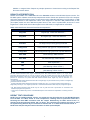
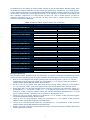
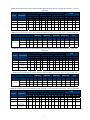
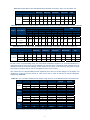
1. External Positive and Negative Controls are not used by the BD MAX System software for the purpose
of sample test result interpretation. External Controls are treated as if they were patient samples. (Refer
to Table 1 for the interpretation of External Control assay results.)
2. One (1) External Positive Control and one (1) External Negative Control should be run at least daily
until adequate process validation is achieved on the BD MAX System in each laboratory setting.
Reduced frequency of control testing should be in accordance with applicable regulations.
3. The External Positive Control is intended to monitor for substantial reagent failure. The External
Negative Control is used to detect reagent or environmental contamination (or carry-over) by target
nucleic acids.
4. Control strains should be tested according to guidelines or requirements of local, state, provincial
and/or federal regulations or accreditation organizations in order to monitor the effectiveness of the
entire analytical process. Various types of external controls are recommended to allow the user to
select the most appropriate for their laboratory quality control program.
5. Suspension(s) of QC bacterial strains from commercially available sources such as the ATCC™ can be
used for QC purposes. The External Control strains listed below or previously characterized samples
known to be positive or negative for the gene targets found in the BD MAX Enteric Bacterial Panel can
be used:
a. External Positive Control: prepare a suspension of the following ATCC strains:
• Salmonella enterica subsp. enteric serovar Typhimurium (ATCC 14028) containing the SpaO
gene target.
• Shigella sonnei (ATCC 9290) containing the ipaH gene target.
• E. coli, stx1 (ATCC 43890) containing the stx1 gene target.
• Campylobacter jejuni subsp. jejuni (ATCC 33291) containing the Campylobacter specific tuf
gene sequence variants.
b. External Negative Control: Express a 10 μL loop of saline in the SBT.
For Salmonella, Shigella and E. coli, inoculate organisms onto Trypticase Soy Agar with 5% Sheep
Blood plates. Incubate 18-24 h in ambient conditions. For Campylobacter jejuni, inoculate onto
Brucella Agar with 5% Sheep Blood, Hemin and Vitamin K1. Incubate 2-3 days in a microaerophilic
environment, or until there is sufficient growth to prepare the McFarland dilution. All plates must be
prepared fresh daily.
For preparation of the External Positive Control, re-suspend individual isolates in saline solution to a
turbidity of 0.5 McFarland (~1 X 10⁸ CFU/mL). Perform serial dilutions with saline to obtain a
suspension of ~1.0 X 10⁶ CFU/mL (for Salmonella spp., Shigella spp., or E. coli organisms) or
~1.0 X 10⁵ CFU/mL (for Campylobacter spp.). Inoculate a SBT with a 10 µL loop of the bacterial
suspension. Process and test as a sample (refer to the Sample Preparation and BD MAX System
Operation sections). All external controls should yield the expected results [positive for External
Positive Control, negative for External Negative Control and no failed external controls (Unresolved
or Indeterminate results)]. Alternate culture storage conditions should be validated by individual
laboratories as appropriate.
6. An External Negative Control that yields a positive test result is indicative of a sample handling and/or
contamination problem. Review the sample handling technique to avoid mix-up and/or contamination.
An External Positive Control that yields a negative result is indicative of a sample handling/preparation
problem. Review the sample handling/preparation technique.
7. An External Control that yields an Unresolved, Indeterminate or Incomplete test result is indicative of a
reagent or a BD MAX System failure. Check the BD MAX System monitor for any error messages.
Refer to the System Error Summary section of the BD MAX System User’s Manual for interpretation of
warning and error codes. If the problem persists, use reagents from an unopened pouch or use a new
BD MAX Enteric Bacterial Panel.
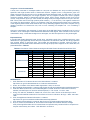
8. Each BD MAX Enteric Bacterial Extraction Tube contains a Sample Processing Control (SPC) which is
a plasmid containing a synthetic target DNA sequence. The SPC monitors the efficiency of DNA
capture, washing and elution during the sample processing steps, as well as the efficiency of DNA
amplification and detection during PCR analysis. If the SPC result fails to meet the acceptance criteria,
the result of the sample will be reported as Unresolved; however, any positive (POS) assay results will
be reported and no targets will be called NEG. An Unresolved result is indicative of sample-associated
7