Transcript
Reference Electrode Storage
MR-9230 11/07/04
Order No. MF-2079 = RE-5B Reference Electrode, 3/pkg.
(7 cm x 6 mm OD), 3/pkg.
Order No. MF-2078 = RE-6 Reference Electrode
(3.1 cm x 6 mm OD), 3/pkg.
Order No. MR-5275 = Storage Vial
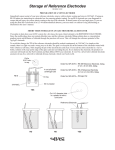
Drill a
3/16" hole
in cap
4 cm tall plastic
centrifuge tube
RE-6
O-ring
50 mL beaker
3 M NaCL
YES
Cut 1/4" diameter hole
in a plastic lid with a
cork borer
Reference Electrode
NO
NO
YES
PREPARATION OF A NEW ELECTRODE
Immediately upon receipt of your new reference electrode, remove
yellow plastic coating and store in 3M NaCl. If using an RE-5B please
see instructions in electrode box for removing plastic coating. For an
RE-6 electrode use your fingernail to scrape and pull away the yellow
plastic coating at the tip of the electrode. It should come off as one large
piece. If you are using the short RE-6 electrode in an LC-44 electrochemical detector, your next task is to add an O-ring and bushing as
illustrated in the user’s manual.
SHORT TERM STORAGE OF AN
ELECTROCHEMICAL DETECTOR
If you plan to shut down your LCEC system for a few days, the most
critical element is the REFERENCE ELECTRODE. Since the mobile
phase does not contain chloride ions, and the reference electrode filling
solution does, a concentration gradient exists and diffusion of chloride
through the junction will occur. This will change the reference potential
of theAg/AgCl electrode.
To avoid this change, the TIP of the reference electrode should be
soaked continuously in 3 M NaCl. As simple as this sounds, there is a
right way and a wrong way to do this. The goal is to keep the frit at the
bottom of the electrode wetted with NaCl solution at all times, while
keeping the pin of the electrode dry and clean. If you seal the entire
electrode in a vial or bottle, solution will creep up the edge of the glass
and start corroding the pin. If you immerse the electrode, the products of
corrosion will leach into the NaCl solution and then diffuse INTO your
electrode. It won’t be a silver/silver chloride electrode anymore (it may
be a silver/silver chloride-ferrous electrode, which won’t work well).