1
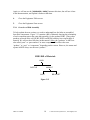
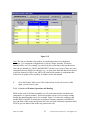
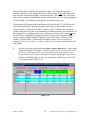
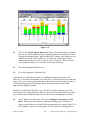
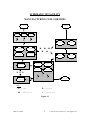
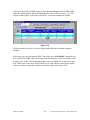
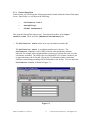
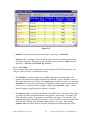
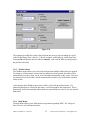
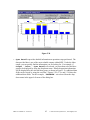
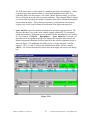
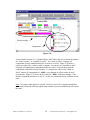
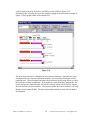
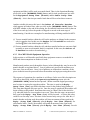
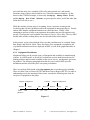
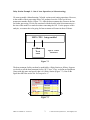
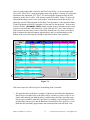
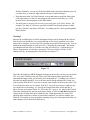
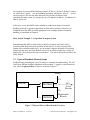
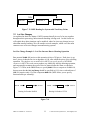
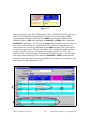
We will now use Figure 6.3 to explain how MPX models failures and repairs. At time 100, a repair was completed and the equipment began processing products. At time 110, the lot was completed and it left the machine. The equipment was idle until time 115, when another lot arrived. At time 118 the equipment failed again, and was “down” until time 125. In the above chart, the “time to failure” is the time from the completion of the last repair (at time 100) to the failure occurrence (at time 118), excluding the idle time, so in this case, the time to failure is 13 time units (118-100 + [115-110] = 13). Using this example, we can now explain several points about how MPX models breakdowns: • The value of MTTF is the average of the “time to failure” illustrated above. Note particularly that MPX assumes equipment may fail only when it is busy, i.e. in set-up or run mode for a lot. (The only exception to this is a “Delay Station,” described in the next chapter.) • The value of MTTR is the average of the repair time, that is, the time from the occurrence of failure to the time when the repair is completed. • Each piece of equipment is assumed to fail independently of the others in the group. The value of MTTF is the average time to failure for one piece of equipment in the group. The same applies to repairs and MTTR. • The time units for the MTTF and MTTR data are the same as the Operations Time Unit. This means that if your run times and setup times are listed in minutes, then the MTTF and MTTR must also be specified in minutes. (Note: To remind the user of the units needed for MTTF and MTTR, MPX displays this unit in the Equipment data screen, in both the Form and the Table formats.) • The value of MTTF is a real number and must be greater than 0. The value of MTTR must be a non-negative real number; a value of 0 is allowed. To model equipment that does not fail, specify any MTTF greater than 0, and a MTTR of 0. • For users interested in more theoretical aspects, we mention that MPX assumes an exponential distribution for the failure and repair times. The exponential distribution is generally accepted as a good model for unexpected failures. Another reason for this choice is that the exponential distribution only requires specification of the mean. Our experience with a vast number of manufacturing systems is that few plants have good detailed data on each occurrence of time between failures and time to repair of equipment, and thus even determining the average values (MTTF and MTTR) can be difficult. A model using any other distribution would require knowing more parameters, such as the standard deviation, or the entire distribution, which might be too difficult for most factories. In keeping with the goal of RMT, in MPX we have chosen the exponential distribution to help illustrate the overall impact of failures without overburdening the user with need for data collection. MPX User Manual for Version 4.3 14 2003 Network Dynamics Inc., Framingham, MA