1
I. What is LAI?
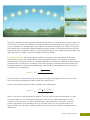
Leaf Area Index ( LAI ) quantifies the amount of leaf material in a canopy. By definition, it is the ratio of onesided leaf area per unit ground area. LAI is unitless because it is a ratio of areas. For example, a canopy
with an LAI of 1 has a 1:1 ratio of leaf area to ground area (Fig. 1a). A canopy with an LAI of 3 would have
a 3:1 ratio of leaf area to ground area (Fig. 1b).
Globally, LAI is highly variable. Some desert ecosystems have an LAI of less than 1, while the densest
tropical forests can have an LAI as high as 9. Mid-latitude forests and shrublands typically have LAI values
between 3 and 6.
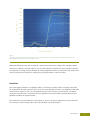
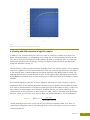
Seasonally, annual and deciduous canopies and croplands can exhibit large variations in LAI. For example,
from seeding to maturity, maize LAI can range from 0 to 6. Obviously, LAI is a useful metric for describing
both spatial and temporal patterns of canopy growth and productivity.
a
Ground Area = 1 m2
Leaf Area = 1 m2
LAI=Leaf Area: Ground Area = 1:1 = 1
b
Ground Area = 1 m2
Leaf Area = 3 m2
LAI=Leaf Area: Ground Area = 3:1 = 3
Figure I. Conceptual diagram of a plant canopy where (a) LAI = 1 or (b) LAI = 3.
I
Defining LAI