1
may not see the sections containing, for example, job performance evaluations. We refer again to the Petri
net structure in Figure 2 to represent this scenario. Let places s3 through s5 have job evaluations as their
images under mapping Cl as discussed earlier, the structure speci
es that the three are to be displayed
concurrently. Places s12 and s13 also contain privileged information, and their contents are to be displayed
simultaneously after the evaluations have been read. The rest of the employment record (s2 , s6 through
s9 , and s11 ) is unrestricted information. Places s1 and s10 are special \access control" places that serve to
separate the classes of reader during browsing. On this document, readers of class P de
ne a hypertext with
initial Petri net marking M0P = (1100000001000), whereas readers of class R de
ne a hypertext with initial
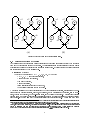
marking M0R = (0100000000000). The initial marking shown in Figure 2 is that of class P. The reachability
graph resulting from this marking is shown in Figure 6(a). Having a token in each of places s1 and s2 enables
transition t1 . This in turn allows readers of class P to select the button Bl (t1) and thereby read the job
performance evaluations. Readers of class R do not start with a token in the access control place s1 , and a
scan of the reachability graph for their initial hypertext state, shown in Figure 6(b), shows that no token
can ever be there. Since transition t1 is never enabled for readers of class R, the evaluations can never be
browsed.
Readers of class P can also choose to leave the restricted portion of the hypertext by selecting the button
Bl (t10 ) after reading the evaluations at places s3 through s5 . The token in access control place s10 allows
them to re-enter the restricted section at a later point. Firing transition t7 replaces this access control token.
Class R readers will never have a token in place s10, so they will always be excluded from sections s12 and
s13 of the hypertext (again see Figure 6(b)). Note that for both access control places in this example, the
net structure is such that ring the transitions they guard replaces their respective tokens.
A third class of reader can be de
ned on this hypertext: semi-restricted (class S). Readers of class S can
see the salary information contained in places s12 and s13 , but they cannot see the performance evaluations
in places s3 through s5 . This restriction can be created by giving readers of class S an initial marking
M0S = (0100000001000). An examination of the reachability graph for this marked hypertext shows that the
token in access control place s10 will allow a reader to re transition t7 , but that transition t1 can never be
enabled.
The structure of this simple example suggests the following strategy for constructing hypertexts with
access control classes. First, outline the access control classes for the hypertext. Next, construct a collection
of sub-hypertexts, each having a separate Petri net structure and each intended to be read in its entirety by
access control class members. Next, for each sub-hypertext, decide which of the classes can browse it. Finally,
using the hierarchy in the Trellis model, construct a top-level hypertext that has one place representing each
sub-hypertext and that is connected with the desired browsing patterns. Add one access control place for
each sub-hypertext place, connected like the ones in Figure 2 as input and output to the transitions before
and after the sub-hypertext place. For each access control class, prescribe an initial marking that includes
a token in the access control place of every sub-hypertext the class is allowed to browse.
4.5 Tailored versions of a hypertext
Tailored versions of a hypertext are useful when each is to contain information speci
c to a separate environment. Portions of the contents of the documents in a collection of such tailored versions are common
to all of the versions and other portions are speci
c to one or to a subset of the documents. An example
of a situation in which a tailored document set would be useful is to describe the invocation and use of a
piece of software that runs on a number of dierent computers or operating systems. A similar situation
is to support dierent user groups with dierent kinds of expertise (for example, a spreadsheet might be
described for a user community that was expert in computer use or alternately for a group that was expert
in accounting principles).
While each version could be maintained as a separate hypertext, a more attractive design is to take
advantage of the commonality of structure and content in the collection of tailored versions, and to represent
the collection as a single Petri net. The issue of representation and of speci
cation of appropriate alternate
choices for content is exactly the same issue discussed in the previous section on access control in browsing,
17