1
export-names When non-nil, sets the default value to t for the two options
above.
cache If specified with the group options, when non-nil, the fixture values are
cached at their first use, and re-applied at subsequent fixture application
rather than being recalculated.
When a fixture is attached to a test or test group, each NAME defined in that fixture becomes available in the body of that test or group as if let*-bound to the
corresponding FORM. A fixture in one set may refer back to other fixtures in the
same set (again à la let*) but forward references are not allowed.The four arguments :startup, :finish, :setup and :cleanup specify forms which are run
everytime the fixture is applied to a group or test. The :startup (respectively
:finish) form is run before fixtures are bound (after their bindings are released). These forms are useful, for example, to initialize a database connection
from which the fixture values are drawn. The :setup form is run after inclusion
of names from fixture sets, but before any tests from the group. The :cleanup
form is normally run after the test completes, but while the fixtures are still in
scope. Normally, the :cleanup form will not be run if the :setup form raises
an error, and the :finish form will not be run if the :startup form raises an
error; although the user is able to select (perhaps unwisely) a restart which disregards the error.The names of a fixture and the names it binds can be exported
from the package where the fixture is defined using the export-bound-names
and export-fixture-name arguments. The default value of both is the value of
export-names, whose default value is nil.The cache option, if non-nil, directs
NST to evaluate a fixture’s form one single time, and re-use the resulting value
on subsequent applications of the fixture. Note that if this value is mutated
by the test cases, test behavior may become unpredictable! However this option can considerably improve performance when constant-valued fixtures are
applied repeatedly. Caching may be set on or off (the default is off) for the
entire fixture set, and the setting may vary for individual fixtures.Examples of
fixture definitions:
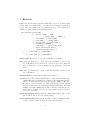
(def-fixtures f1 ()
(c 3)
(d ’asdfg))
(def-fixtures f2 (:special ((:fixture f1)))
(d 4)
(e ’asdfg)
(f c))
(def-fixtures f3 ()
((:cache t)
g (ackermann 1 2))
((:cache nil) h (factorial 5)))
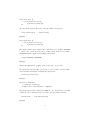
To cause a side-effect among the evaluation of a fixture’s name definitions, nil
can be provided as a fixture name. In uses of the fixture, NST will replace nil
3