1
Proprietary Statement
This manual contains proprietary information of POSline. It is intended solely for the
information and use of parties operating and maintaining the equipment described herein. Such proprietary
information may not be used, reproduced, or disclosed to any other parties for any other purpose without the
expressed written permission of POSline.
Product Improvements
Continuous improvement of products is a policy of POSline. All specifications and signs are
subject to change without notice.
FCC Compliance Statement
NOTE: This equipment has been tested and found to comply with the limits for a Class B digital device, pursuant
to Part 15 of the FCC Rules. These limits are designed to provide reasonable protection against harmful
interference in a residential installation. This equipment generates, uses, and can radiate radio frequency energy
and, if not installed and used in accordance with the instructions, may cause harmful interference to radio
communications. However, there is no guarantee that the interference will not occur in a particular installation. If
this equipment does cause harmful interference to radio or television reception, which can be determined by
turning the equipment off and on, the user is encouraged to try to correct the interference by one or more of the
following measures: ■ Reorient or relocate the receiving antenna. ■ Increase the separation between the
equipment and the receiver. ■Connect the equipment into an outlet on a circuit different than that to which the
receiver is connected..
■Consult the dealer or an experience Radio/TV technician for help.
NOTE: This unit was tested with shielded cables on the peripheral devices. Shielded cables must be used with
the unit to insure compliance. The user is cautioned that any changes or modifications not expressly approved by
POSline could void the user’s authority to operate the equipment.
Liability Disclaimer
POSline takes steps to assure that its published engineering specifications and manuals are
correct; however, errors do occur. POSline reserves the right to correct any such errors and
disclaims liability resulting therefrom.
A Letter to Our Customers
Dear Customers,
Congratulation on selecting an POSline printer! We believe
soon you will find that you have made a cleverest choice!
This booklet is a small gift from us. It is intended for helping you to
know your printer better, then further to optimize it. Basically, this
booklet contains two parts: operation guidance and related valuable
information.
In the part of the operation guidance, we will furnish you with a lot of
complementary illustrations, so you may pick up those operation guides
more quickly.
In the latter chapters of Trouble Shooting, Maintenance as well as
Reference Technical information, which we think, you may need them
just in case. Therefore, for your quick reference, we try to table them as
much as possible.
Enjoy your reading and have a good time with your printer!
No Liability for Consequential Damage
In no event shall POSline or anyone else involved in the creation, production,
or delivery of the accompanying product (including hardware and software) be liable for any
damages whatsoever (including, without limitation, damages for loss of business profits,
business interruption, loss of business information, or other pecuniary loss) arising out of the
use of or the results of use of or inability to use such product, even if POSline
has been advised of the possibility of such damages
Best wishes,
POSline
Page
Checking Your Box....................................................................1
Power Supply............................................................................. 3
Parts and Features..........................................................…….....5
Loading the Ribbon............................................………............9
Loading the Media......................................................……......14
Operator Controls..........................................................…........25
Performing Calibration .............................................................27
Printing Configuration Report...................................................27
Resetting the Printer........................................................…......28
Hooking up the Printer and the Computer..........................…...29
Communicate with the Printer..........................................….....32
Troubleshooting................................................................….....44
Caring for Your Printer............................................................. 48
Reference Technical Information.......................................... ....51
Appendix I-Installing Despenser Kit..................................… ...60
Appendix II -Installing Cutter................................................. ..66
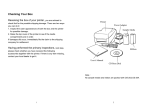
Checking Your Box
Receiving the box of your printer, you are advised to
Printer
Power Adapter
check first for the possible shipping damage. There are two ways you can
do it:
1. Inspect the outer appearances of both the box and the printer for possible
damage.
2. Raise the top cover of the printer to see if the media compartments are in
order.
If damages did occur, immediately file the claim to the shipping company
for settlement.
Sample Media
Having performed the primary inspections, next step,
Ribbon
please check whether you have received the following accessories together
with the printer. If there is any item missing, contact your local dealer to get
it.
User’s Manual
CD Rom Disk
Note :
No sample media and ribbon are packed with ITD400X.
1
2
Power Supply
WARNING:
NEVER OPERATE THE PRINTER AND POWER SUPPLY IN
AN AREA WHERE THEY CAN GET WET.
1. The Power Adapter has a barrel connector on one end that
must be inserted into the power jack on the back of the printer.
2. Plug the other end of the cord into an appropriate AC electrical
outlet.
3. When plugging the connector into power jack, please leave the
power switch at "O" position and don't touch the 36 pin parallel
connector.
AC Electrical Outlet
Power Jack
Power Switch
Barrel Connector
Cord
Power Adapter
OS-204/214/314 ITD400X, Y, Z
ITD400W
3
4
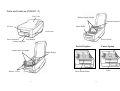
Parts and Features (ITD400Y, Z)
Top Cover
Ribbon Supply Holder
Thermal Printhead
H Cover
Platen Roller
Power Switch
Power Indicator
Feed Button
Ready Indicator
Power Switch
Peel-Off Option
Ribbon Pick-up Holder
Cutter Option
Media Hanger
Release Levers
Cutter
White Plastic Roller
5
6
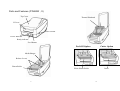
Parts and Features (ITD400W , X)
Top Cover
Thermal Printhead
H Cover
Power Switch
Power Indicator
Ready indicator
Feed Button
Peel-Off Option
Cutter Option
Media Hanger
Release Levers
Platen Roller
White Plastic Roller
7
Cutter
8
Loading the Ribbon (ITD400Y, Z)
Media Compartment
Note:
This section is not applicable to the direct thermal printing.
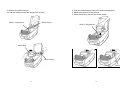
1. Lift the top cover to expose the media compartment.
2. Unlatch the print head module by pushing the two white release
levers on the sides toward the rear.
3. Turn over the print head module to expose the ribbon supply
holder.
Print Head Module
Release Lever
Release Lever
Ribbon Supply Holder
9
10
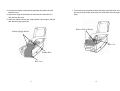
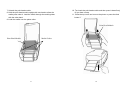
4. Unwrap the ribbon roll pack and separate the ribbon roll and
the bare core.
5. Attach the edge of the ribbon on the bare core and wind it a
little bit onto the core.
6. Insert the ribbon roll into the supply holder. (first snap in the left
side and then the right side)
7. Turn back the print head module and then insert the bare core
into the pick-up holder.(first snap in the left side, then the right
side)
Ribbon Pick-up Holder
Ribbon Supply Holder
Bare Core
Ribbon Roll
Bare Core
11
12
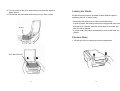
8. Turn the wheel of the print head module to ensure the ribbon is
tightly wound.
9. Press down the print head module firmly till you hear a snap.
Loading the Media
OS Series printers can be operated in three different options:
standard, peel-off, or with a cutter.
- Standard mode allows you to collect each label freely.
- In peel-off mode, the backing material is being peeled away from
the label as it is printed. After the former label is removed, the
next one will be printed.
- In cutter mode, the printer automatically cuts the label after it is
printed.
Wheel
Standard Mode
1. Lift the top cover to expose the media compartment.
Print Head Module
13
14
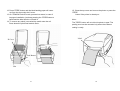
2. Remove the media hanger.
3. Load the media roll onto the hanger from the left.
Media Compartment
Media Hanger
4. Click the media hanger back to the media compartment.
5. Move the media roll to the left end.
6. Move the shield to the left next to the media.
Media Compartment
Media Roll
Media Roll
Media Hanger
Shield
15
16
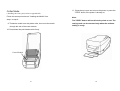
7. Unlatch the print head module.
8. Hold the print head module upright with one hand to allow the
media pass under it. Lead the media through the media guides
with the other hand.
9. Lead the media over the platen roller.
10. Turn back the print head module and then press it down firmly
till you hear a snap.
11. Close the top cover and turn on the printer or press the feed
button if the printer is already on.
Print Head Module
Print Head Module
Media Guides
Feed Button
17
18
Peel Off Mode
(Installing the dispenser kit, please refer to the Appendix I)
Follow the common procedure of "Loading the Media"of Standard
Mode from step 1 to step 8.
10. Trim the edge of the label backing paper with scissor or knife.
11. Lead the backing paper over the dispenser bar, then thread it
back into the slot between the dispenser bar and H cover,
ensuring that it is inserted between white plastic roller and
platen roller.
9. Remove approximately 6" long labels from the label backing
paper.
Peeler Sensor
Media Guides
H Cover
Dispenser Bar
Backing Paper
19
20
12. Press "FEED" button and the label backing paper will come
out from the slot under the H cover.
13. On ITD400W Peel-Off mode, powered on status, in case of
improper installation, just keep pressing the "FEED"button to
back-feed the label stock to re-install it.
14. To remove any slack, just rewind the media onto the roll.
Press down the print head module firmly.
15. Close the top cover and turn on the printer or press the
"FEED"
button if the printer is already on.
Note :
The "FEED" button will not drive the printer to peel. The
peeling work can be executed only when the software
setting is ready.
Label
H Cover
Feed Button
Slot
21
22
Cutter Mode
( Installing the cutter, please refer to Appendix II )
Follow the same procedure as "Loading the Media" from
step 1 to step 8.
11. Close the top cover and turn on the printer or press the
"FEED" button if the printer is already on.
Note:
The "FEED" button will not drive the printer to cut. The
9. Thread the media over the platen roller, then route the media
through the slot of the cutter module.
cutting work can be executed only when the software
setting is ready.
10. Press down the print head module firmly.
Cutter Module
23
24
Operator Controls
Power Switch
Controls printer power
On-normal operation
Off-the power should be turned off before connect or disconnect
the communication cables and power cables
Top Cover
Feed Button
Advance the label media to first printing position
Press-to advance a label
Press-takes the printer out of a "pause" condition
Press-back feed the label to correct label installation, in case that
label is not properly installed. (for ITD4000 Peel-Off mode only)
Keep pressing while turning on the power- to print out a
configuration profile
Ready Indicator
Show the printers status
Green-printer is ready to operate
Blinking-printer is paused
Power Indicator
Ready Indicator
Feed Button
Power indicator
Shows the power and error status
Off-printer power off
Green-printer power on
Blinking-error occurs
25
26
Power Switch
Performing Calibration
1. Keep pressing the feed button while turning on the power, until
the printing motor becomes activated.
2. The calibration has been performed while the printer
automatically feed label stock for certain length.
Note:
This step is very important and must always be carried
out whenever media is being changed. Failure to do so
will result in miss-detection of the label sensor.
Printing Configuration Report
Resetting the Printer to Factory
Default Settings
1. Turn on the printer and wait for 5 or more seconds.
2. Press "Feed" button for about 10 seconds, then the "Ready"
indicator and "Power" indicator will go off in order.
3. While two indicators become lit again, release the feed button.
4. At this moment, the printer will feed the label stock 12 inches in
length, and come back to the factory default settings.
Note :
All settings are stored in non-volatile E2PROM and
cannot be destroyed even turn off the printer.
1. Keep pressing the feed button while turning on the power, until
the printing motor becomes activated.
2. After feeding 12-inch blank media, the printing motor will
suspend for one second, then it will print out the configuration
profile. This profile states the firmware version, ROM checksum,
RS232, thermal transfer/direct thermal settings, hardware
configuration and font types.
3. At PPLB emulation, the printer will enter character dump mode.
To exit from dump mode, just press the feed button again.
27
28
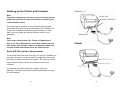
Hooking up the Printer and Computer
ITD400X, Y, Z
Note :
The power supply barrel connector must be inserted into the
power jack on the back of the printer before connecting the
communication cables.
This printer comes with both a nine-pin Electronics Industries
Association (EIA) RS-232 serial data interface (for ITD400W, it is
six pin) and a standard Centronics parallel interface. In either
case, you must supply the required interface cable for your
application.
Note :
This printer complies with FCC "Rules and Regulations" ,
Part 15, for Class B Equipment, using fully shielded six-foot
data cables. Use of longer cables or unshielded cables may
increase radiated emissions above the Class B limits.
Power Jack
RS232 Serial Port
Parallel Port
ITD400W
Serial (RS-232) Interface Requirements
The required cable must have a nine-pin "D" type (for ITD400W, six
pin) male connector on one end, which is plugged into the mating
serial port located on the back of the printer. The other end of this
signal interface cable connects to a serial port at the host
computer.
For technical and pinout information, please refer to the
Reference Technical Information-Interface Specification on page
55 of this booklet.
29
30
Parallel Interface Requirements
Communicate with the Printer
The required cable (IEEE 1284-compliant is recommended) must
have a standard 36-pin parallel connector on one end, which is
plugged into the parallel port located on the back of the printer.
The other end of the parallel interface cable connects to the
printer connector at the host computer. For pinout information,
refer to the Reference Technical Information- Interface
Specification . Serial and Parallel Cabling requirements.
The bundled printer driver can be applied to all the applications
under Windows 2000/98/XP, and Windows NT. Through this
driver you may run any popular software applications e.g.
MS-Word and print out the contents by this label printer as long as
they are for Windows.
Data cables must be of fully shielded construction and fitted with
metal or metalized connector shells. Shielded cables and
connectors are required to prevent radiation and reception of
electrical noise.
Before installation
1. Check the contents of the driver to ensure it is complete.
2. Make a backup copy of this driver.
3. Read the README.TXT file for installation guide and change
notices.
To minimize electrical noise pickup in the cable:
■Keep data cables as short as possible (6 [1.83m]
recommended).
■Do not tightly bundle the data cables with power cords.
■Do not tie the data cables to power wire conduits.
Notes :
1. Using Centronics allows for a much higher speed
communication than the use of a serial.
2. It is not necessary to set the switch or send any command
to select the parallel or serial port . The printer can
automatically detect it.
3. The default settings can be read from the configuration
report.
31
32
Installing Driver
1. Click the "Start" button.
2. Select "Settings", then select "Printers" and double click the
"Add Printer" icon. Click "Next".
3. Click the "Network" or "Local" button and click the "Next"
button.
4. Click "Have Disk", click the pull-down menu to select CD ROM
driver path.
5. Click "Browse" button.
6. Select the proper directory for installation:
-WIN XP
-WIN98
-WIN2000
-NT4.0
Notes :
1. If you are just updating your driver, make sure to delete the
previous version first.
2. If you install a new bar code application software like
ArgoBar, LabelView or CodeSoft, the Label Dr. 200 (or
Label Dr. 300) driver should be activated and set as the
current printer driver:
ArgoBar
File → New→ Select Printer→ Label Dr. on LPT1:→ OK
LabelView
File→ Select Printer→ Label Dr. on LPT1:→ OK
CodeSoft
File→ Printer→ Windows→ Label Dr. on LPT1:→ OK
7. The driver name "Label Dr. 200" (or Label Dr.300) will appear
in the "List of Printers", click "Next".
8. Select the communication port for the label printer. For parallel
port, select "LPT1 :", "LPT2 :" or "LPT3 :" , for serial port select
"COM1 :" or "COM2 :".
9. After the related files have been copied to your system, the
installation is complete.
10. If you need to print from the label printer, set "Label Dr. 200"(or
Label Dr.300) as the Default Printer.
33
LabelMatrix
File→ Printer Setup →Label Dr. on LPT1:→ OK
34
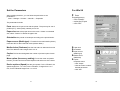
Set the Parameters
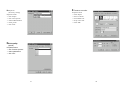
For Win 98
After installing the driver, you can follow the path below to set
parameters:
Start →Settings→ Printers→ Label Dr.→ Properties
▀ Ports
Properties menu
→ click "Details"
→ select the IO port
→ click "OK"
The parameters include:
Ports Select the IO port to link with the printer. The port may be one of
parallel (LPT), serial (COM), network port or file.
Paper size Select the proper size on the menu. If there is no desired
size, select "Custom" to define the paper size.
Orientation Set portrait or landscape according to the print direction.
Paper source (Media type) T/T stands for thermal transfer (ribbon)
mode and D/T for direct thermal mode (without ribbon).
Media choice (Darkness) Set the heat value or darkness from this
field. The darkness value ranges from 0 to 15.
Copies This function designates the number of printed copies of each
page.
More option (Accessory setting) To use the cutter and peeler
function you still need to enter More Options and select one of the items.
Device options (Speed) Set the print speed. For the ITD400Y, the
speed ranges from 1 to 3 IPS, for the ITD400Y, Z ranges from 1 to 2
IPS, for the ITD400W ranges from 1 to 4 IPS.
35
▀ Paper size
▀ Orientation
▀ Paper source
(Media type)
▀ Media choice
(Darkness)
▀ Copies
Properties menu
→click "Paper"
→click each item to select
desired parameter
→click "OK".
36
▀ Output bin
▀ Create a new size
(Accessory setting)
Properties menu
→ click "Paper"
→ click "more option"
→ select Enable/without
→ cutter, peeler
→ click "OK"
Properties menu
→ click "Paper"
→ select "Custom"
→ User-Define size
→ set up a new size
→ click "OK"
▀Print quality
(Speed)
Properties menu
→ click "Device Options"
→ select parameters
→ click "OK"
37
38
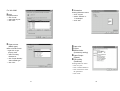
For Win 2000
▀ Orientation
▀ Ports
Properties menu
→ click "Ports"
→ select the IO port
→ click "OK"
Printing Reference menu
→ click "Layout"
→ select "Portrait" or
"Landscape"
→ click "OK"
▀ Paper source
(Media type)
▀Paper size
▀Copies
▀Media choice
(Accessory setting)
▀Paper/Output
(Speed)
▀Print quality
(Darkness)
Back to Printers menu
→right click to get
pop-up menu
→ select "Printing
Reference"
→ click "Paper Quality"
select media type
→ click "OK"
Printing Reference menu
→click "Layout"
→click "Advanced"button
→click each item to select
the parameters
→click "OK"
39
40
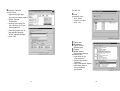
▀Create a new size
Printer menu
→ right click to get popup menu on empty space
→ select "Server
Properties"
→ enter a form name for
the new form in "Form
description for"
→ reset the paper size in
the specific squares
of the "Measurements"
→ click "OK"
For NT 4.0
▀Ports
Properties menu
→ click "Ports"
→ select the IO port
→ click " OK"
▀ Paper size
▀ Orientation
▀ Paper source
(Media type)
▀ Copies
▀ Media choice
(Accessory setting)
Printers menu
→ right click to get
pop-up menu
→ select "Document
Defaults"
→ click "Advanced" button
→ click each item to
select desired
parameter
41
42
▀ Paper/Output (Speed)
▀ Print quality (Darkness)
Default Document menu
→ Click "Advanced".
→ Click each item to
select desired
parameter.
→ Click "OK".
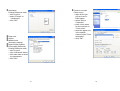
For Win XP
▀ Ports
Properties menu
→ Click "Ports".
→ Select the IO port.
→ Click "OK".
▀ Create a new size
Please refer to the
procedure of create a
new size on Win 2000.
▀ Paper source (Media type)
Back to Printers menu
→ Label Dr.
→ Right click to get
pop-up menu.
→ Select "Printing
Reference".
→ Click "Paper Quality".
→ Select media type.
→ Click "OK".
43
44
▀ Orientation
Printing Reference menu
→ Click "Layout".
→ Select "Portrait" or
"Landscape".
→ Click "OK".
▀ Create a new size
Printer menu
→ Right click to get
pop-up menu in
blank space.
→ Select "Server
Properties".
→ Enter a form name
for the new form in
"Form name”.
→ Reset the paper size
in the specific
squares of the "Form
description"
→ Click "OK".
▀ Paper size
▀ Copies
▀ Media choice
(Accessory setting)
▀ Paper/Output (Speed)
▀ Print quality (Darkness)
Printing Reference menu
→ Click "Layout".
→ Click "Advanced" button.
→ Click each item to select
the parameters.
→ Click "OK".
45
46
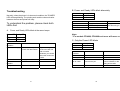
B. Power and Ready LEDs blink alternately
Troubleshooting
Normally, when the printer is in abnormal condition, the "POWER"
LED will keep blinking. The printing work and the communication
between the host and printer will stop.
To understand the problem, please check both
LEDs first:
Power LED
ON
OFF
Ready LED
OFF
ON
Possible Problems
Ribbon out
Ribbon jam
Ribbon sensor error
Solutions
Remarks
Not applicable to
Supply the ribbon roll
direct thermal type.
Recover the jam
Replace the ribbon sensor
A. Power and Ready LEDs blink at the same tempo
Note:
**For models ITD4000, ITD400X such error will never occur.
Power LED Ready LED
ON
ON
OFF
OFF
Possible
Problems
Miss-detect the gap
C. Only the Power LED blinks
Solutions
. Check the label path
. Check the label sensor
Remarks
If you are using
continuous label roll
and run under
Windows, you should
select the continuous
media.
Power LED
ON
OFF
Label stock out
. Supply the label roll out
Label stock not
installed
Label jam
. Install the label roll
Possible
Problems
Serial IO error
Memory full
Cutter failed, or
jam at cutter
. Recover the jam
Hardware error
47
Ready LED
ON
ON
Solutions
Remarks
. Check the baud rate
Add the extension RAM
. Check the cutter
. Recover the jam
Not for Centronics
Call for service
48
It occurred, only when
cutter is installed, or the
setting of the cutter
Poor printout quality.
D. Miscellaneous
The host shows "Printer Time out"
1. Check if the communication cable(parallel or serial) is connected
securely to your parallel or serial port on the PC and to the
connector on the printer at the other end.
2. Check if the printer pow er is turned on.
If the power cord is connected, the power switch is at position "I" and
the power LED has still not illuminated, check the fuse inside the
power adapter case.
The data has been sent, but there is no output from the printer. Check
the active printer driver, if Label Dr. for your Windows system and the
label printer has been selected.
. The ribbon may not be qualified.
. The media may not be qualified.
. Adjust the Darkness(heat temperature).
. Slow down the print speed.
. Refer to the next chapter and clean the related spare parts.
Recovery
To continue your print jobs after the abnormal conditions have been
corrected, simply press the panel button or restart the printer. Make sure
that the LED is not blinking and remember to resend your files.
Vertical streaks in the printout usually indicate a dirty or faulty print
head.(Refer to the following example)
Clean the print head first, if they still persist, replace the print head.
49
50
Caring for Your Printer
Clean the following areas of the printer after 8 rolls of label stocks
have been used. In each case, use a cotton bud dampened with
alcohol. Do not soak the cotton bud excessively.
Note :
Always switch off the power before cleaning.
Cleaning
Thermal Print Head
Thermal paper stock and ribbon will release debris on the print
head and degrade printing quality. Clean the print head with
methanol or isopropyl alcohol with a cotton bud. Do not touch
the heater element with your fingers. Debris or dirt on the roller
should be cleaned with alcohol.
Replacing Thermal Print Head
1. Switch off the power and wait for both LEDs to go off.
2. Unlatch the print head module.
3. Remove the ribbon.
4. Push the print head firmly into the casing and shift it to the left.
It will release from the module.
5. Disconnect the print head cable.
6. Dissemble the print head and the mounting bracket by
releasing screws.
7. Replace with new print head, then resemble the print head
module in reverse order. Be careful not to touch the print head
elements.
Paper Sensor
Debris or dirt on the paper sensor will cause a miss-read or
unstable detection of the label gap. Clean with a cotton bud
dampened with alcohol.
51
52
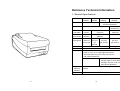
Reference Technical Information
1. General Specifications
Specification
Model
Model
ITD400Y
ITD400Z
Print method
Direct thermal
and thermal transfer
Resolution
203 DPI (8 dots/mm)
300 DPI
(12 dots/mm)
Maximum
2.83 in.
4.13in.
4.25 in.
print width
(72mm)
(105 mm)
(108 mm)
Maximum
10 in.
8 in.
14 in. (356mm)
print length
(254mm)
(204mm)
2 inches
3 inches
Maximum
3.5 inches 2 inches
(51 mm)
(76 mm)
(51 mm)
print speed
(88 mm)
per second
per second
per
per second
second
Onboard RAM
512 K bytes
2 M bytes
Rotation
0, 90, 180 and 270, 4 direction rotations
Media type I. Direct thermal:
paper or vinyl, vinyl, visible light and infrared
scannable label, tag, stock, butt cut or die cut,
with various adhesives.
X
II. All above media, plus thermal
transfer paper or vinyl labels
and tags, butt cut or die cut,
with various adhesives.
Maximum 4.3 in.(109mm) outside diameter, 1 in.(25 mm) inside
diameter
label roll
diameter
Label indexing
Black stripe and gap
53
Model
Model
ITD4000
ITD400X
Direct thermal
54
Ribbon types
Ribbon size
Dimension
Weight
Electrical
Wax, Wax/Resin and Resin
OD 1.45 in. (37 mm); ID 0.5 in. (12.7mm); Length11
W5.3 x D9.0
x H6.4 in.
1.2Kg
(2.6 lbs)
FCC
class A
21VAC
W7.3 x D10.9 x H6.0 in
1.7 kg
(3.74 lbs)
FCC class B
1.9 kg
(4.1 lbs)
FCC class A
19VAC
Or DC24V (min 2.5A), 50/60Hz
CE, UL and CUL approved.
40°F ~ 100°F (4°C ~ 38°C)
Operating
temperature
Storage
40°F ~ 140°F (4°C ~ 60°C)
temperature
Humidity
15~85% RH
Optional
● Serial (RS232) cable
Accessories ● External media stacker
(for media roll with max. 8-inch OD)
● Dispenser Kit
● Cutter
● Flash memory
● Font board
● Extension RAM ++
(0.5M for models 204/214/314 only)
● RTC board
● USB-Interface
● Standalone KDU-ArgoKee
● Network print server-ArgoNet
55
2. Fonts, Bar Codes and Graphics Specification
The specifications of fonts, bar codes and graphics depend on the
printer emulation. The emulation is a printer programming
language, through which the host can communicate with your
printer. There are two printer programming languages for models
203/204/214/314, they are PPLAand PPLB.
Printer Programming Language A, PPLA
Specification
General fonts
Smooth fonts
Model
Model
Model
Model
ITD4000
ITD400X
ITD400Y
ITD400Z
7 alpha-numeric fonts, OCR A and OCR B ASD
4, 6, 8, 10,
12, 14 and 18
points
USASCII, UK, German, French, Italian, Spanish,
Swedish, and Danish/Norwegian
Symbol sets
for fonts
smooth
Courier fonts 8 symbol set (PC, PC-A,PC-B EAMA-94,
Roman8, Legal, Greek and Russian)
X
Soft fonts
Downloadable PCL fonts
Font
expandability
1x1 to 24x24
Bar code
Code 39, Code 93, Code 128/subset A,B,C, Codabar,
types
Interleave 2 of 5, UPC A/E/2 and 5 add-on, EAN-8/13,
UCC/EAN-128, Postnet, Plessey, HBIC, Telepen and
FIM. MaxiCode and PDF417 (2D symbologies).
Graphics
PCX, BMP, IMG and HEX formats
56
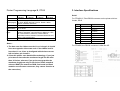
Printer Programming Language B, PPLB
3. Interface Specifications
Specification
Serial
Model
Model
Model
Model
ITD4000
ITD400X
ITD400Y
ITD400Z
General fonts 5 fonts with different point sizes
Symbol sets 8 bits: code page 437, 850, 852, 860, 863 and 865. 7
(Code pages) bits: USA, British, German, French, Danish, Italian,
Spanish, Swedish and Swiss.
Soft fonts
Downloadable soft fonts
Font
expandability 1x1 to 24x24
Bar code
Code 39(checksum), Code 93, Code 128/ subset A,B,C,
types
Codabar, Interleave 2 of 5(checksum), Matrix 25, UPC
A/E 2 and 5 add-on, EAN-8/13, Code 128UCC,
UCC/EAN, Postnet, German Postcode. MaxiCode and
PDF417 (2D symbologies)
Graphics
PCX and binary raster
For ITD400X,Y,Z the RS232 connector on the printer side is a
female, DB-9.
Pin
1
2
3
5
6
7
8
9
Direction
In
In
Out
Out
Out
In
Out
Definition
DSR
RxData
TxData
Ground
DTR
RTS
CTS
+5V
Notes :
1. The bare core for ribbon must be 11 cm in length. It should
have two opposite slits at two ends. If the ribbon itself is
less than 11 cm, it has to be aligned with the bare core at
left end when you install it.
2. Since this printer uses band buffer technology, if you just
print texts or barcodes the maximum length can be more
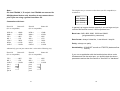
than 30 inches, whereas if you print many graphics the
maximum length can only be few inches under standard
onboard RAM.(The extension RAM, font board and flash
modules use the same connector, they cannot function at
the same time.)
57
For ITD4000, the RS232 connector is Mini Dim 6P.
58
Note :
Pin 9 on ITD400X, Y, Z and pin 1 on ITD4000 are reserved for
KDU(keyboard device unit), therefore do not connect these
pins if you are using a general host like a PC.
Connection with host:
Host 25S
Printer 9P
(PC or compatible)
Host 9S
Printer 9P
(PC or compatible)
DTR 20
DSR 6
TX 2
RX 3
CTS 5
RTS 4
GND 7
DTR 4
DSR 6
TX 3
RX 2
CTS 8
RTS 7
GND 5
……
……
……
……
……
……
……
1 DSR
6 DTR
2 RX
3 TX
7 RTS
8 CTR
5 GND
……
……
……
……
……
……
……
1 DSR
6 DTR
2 RX
3 TX
7 RTS
8 CTS
5 GND
Alternatively you can just connect the 3 wires in the following way.
Host 25S
Printer 9P
(PC or compatible)
Host 9S
Printer 9P
(PC or compatible)
TX 2
RX 3
GND 7
pin 4
pin 5
pin 6
pin 20
TX 3
RX 2
GND 5
pin 4
pin 6
pin 7
pin 8
…… 2 RX
…… 3 TX
…… 5 GND
59
…… 2 RX
…… 3 TX
…… 5 GND
The simplest way to connect to other hosts (not PC compatible) or
terminals is:
Printer
Pin 2- RxData
Pin 3- TxData
Pin 5- Ground
………
………
………
Terminal/Host
TxData
RxData
Ground
In general, as long as the data quantity is not too large and you
use Xon/Xoff as flow control, it will be problem free.
Baud rate: 2400, 4800, 9600, 19200 and 38400.
(programmable by command)
Data format : always 8 data bits, 1 start bit and 1 stop bit.
Parity : always non parity
Handshaking : XON/XOFF as well as CTS/RTS (hardware flow
control).
If you run an application with the bundled printer driver under
Windows and use the serial port, you should check the above
parameters and set the flow control to "Xon/Xoff "or "hardware".
60
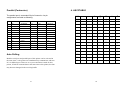
Parallel (Centronics)
4. ASCIITABLE
The parallel port is a standard 36-pin Centronics. Its pin
assignments are listed as following.
Pin
1
2
3
4
5
6
7
8
9
10
11t
12
Direction
In
In
In
In
In
In
In
In
In
Out
Out
Out
Definition
/STROBE
Data1
Data 2
Data3
Data4
Data5
Data6
Data7
Data8
/ACK
BUSY
PE
Pin
13
14,15
16
17
18NC
19~30
31
32
33~36
Direction
Out
Out
-
Definition
SELECT
NC
Ground
Ground
Ground
NC
/Fault
NC
NUL
61
P
'
P
!
"
1
2
A
B
Q
R
a
b
q
r
XOFF
#
3
C
S
c
s
$
4
D
T
d
t
%
5
E
U
e
u
ACK
&
6
F
V
f
v
BEL
‛
7
G
W
g
w
BS
(
8
H
X
h
x
)
9
I
Y
i
y
*
J
Z
j
z
+;
:
;
K
[
k
{
FF
,
<
L
\
1
I
CR
-
=
M
]
m
}
NAK
ESC
Both the serial port and parallel port of this printer can be activated at
the same time, i.e the printer can simultaneously communicate with two
PC via different port. However as no port contention is made for this
printer, if both PC transmit data at the same time to this printer, the data
may become damaged in the receiving buffer.
@
SON XON
STX
LF
Auto Polling
0
SO
RS
.
>
N
^
n
~
SI
US
/
?
O
_
o
DEL
62
Appendix I - Installing Dispenser Kit
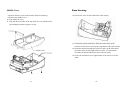
1. Turn off the printer power and unplug the printer.
2. Unwrap the PC bag of dispenser kit to take out the screw, the shaft,
the plastic roller, the dispenser bar, the direction label and the peeler
sensor cable.
6. Route the peeler sensor cable through the guides along the left side of
the top cover.
7. Fix the sensor cable and sensor board with Loctite-444 instant
adhesive or equivalent.
Top Cover
3. Take off the top cover of the printer.
4. The peeler sensor cable has a sensor board at one end and a connector
at the other end.
5. Mount the two little holes of the sensor board on the two spines at
left upper corner inside the top cover, keeping the cable at the left.
63
64
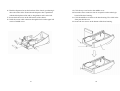
Middle Cover
Base Housing
8. Release the two screws at the bottom of the base housing.
9. Remove the middle cover.
10. Take off the H Cover.
11. Tape the direction label on the top of the H cover with the arrow
sign heading toward the opposite of you.
12. Release the screw on the left bracket of the chassis.
13. Unlatch the print head module. Hook the white roller on the
brackets of the chassis, ensuring the long thinner end at the left side.
14. Guide the shaft go through the respective holes on the left bracket,
the white roller, and the right bracket in order. (To smooth this
procedure, better hold the white roller with one hand.)
15. Secure the attached screw at right bracket of the chassis to fix the
shaft.
65
66
16. Hook the dispenser bar on the brackets of the chassis, positioning it
above the white roller. Ensure that the dispenser bar is paralleled
with the black platen roller and it's long thinner end is at the left.
17. Secure back the screw on the left bracket of the chassis.
18. Guide the sensor cable connector through the hole on the upper left
corner of middle cover.
67
19. Click the top cover back to the middle cover.
20. Insert the sensor connector into its receptacle on the main logic
board of the base housing.
21. Click the middle cover back to the base housing. First click in the
front part then the rear.
22. Secure the two screws at the bottom of the base housing.
68
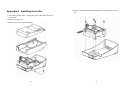
Appendix II - Installing the Cutter
4. Remove the whole print head assembly by releasing 4 screws at its
feet.
1. Turn off the printer power, unplug the power cable and Centronics /
Serial cable.
2. Remove the top cover.
3. Remove two screws at base housing.
69
70
5. Add a driver IC to U19 on the main board.
6. Secure four attached screws for the cutter.
7. Plug the cutter's connector into the PCB's header connector (JP13).
8. Reinstate the print head assembly by securing back the 4 screws.
9. Click back the middle cover.
10. Secure two screws back at base housing.
11. Click back the top cover.
71