1
2 Quickstart
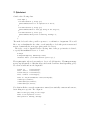
Consider the following class:
class Impl {
void dance(Dancer p, Stage q) {
printComment("Dance is an expression of art!");
}
void dance(Person p, Stage q) {
printComment("What is that guy doing on the stage?");
}
void dance(Person p, Place q) {
printComment("That person is dancing. Strange.");
}
}
The methods describe three possible responses to a combination of arguments. We would
like to use real multimethods so that, even if statically we deal with generic Persons and
Places, dynamically the most appropriate method is chosen.
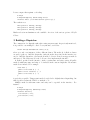
The way to create a dispatcher is the following: first of all a proper interface is defined,
to specify that multimethods are to be used.
@ PolyD
@ DispatchingPolicy (MultiDisp.class)
interface Dance { void dance(Person p,Place q); }
The tag @PolyD is only used as a marker to denote a PolyD interface. The @DispatchingPolicy tag informs the toolkit that all specified methods will use that dispatching policy.
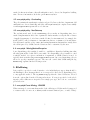
We can now build and use the dispatcher:
Person
Place
Person
Place
joe
office
nureyev
bolshoi
=
=
=
=
new
new
new
new
Person();
Place();
Dancer();
Stage();
Dance d = PolyD.build(Dance.class,new Impl());
d.dance(joe,bolshoi);
d.dance(nureyev,bolshoi);
d.dance(nureyev,office);
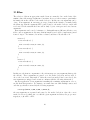
Note that in all three cases the arguments to dance() are statically a Person and a Place,
but nothing more specific. The output is:
What is that guy doing on the stage?
Dance is an expression of art!
That person is dancing. Strange.
2