1
Code of Practice for Safe Use of Tower Cranes
10.9.2
On own base (without bogies or wheels)
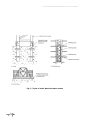
The crane base should be assembled in the correct orientation relative to
surrounding structures and construction work (see sub-section 10.9.1 above). It
should be set level, adequately packed and supported on suitable material, and
grouted in to ensure even distribution of load. Holding down devices should be
tightened and the whole assembly checked for correct positioning and plumb.
10.9.3
Rail-mounted cranes
The rail track should be checked for correct gauge and level before the crane
base is assembled. For reasons similar to those given in sub-section 10.9.1
above, the crane base should be assembled on the rails in the correct orientation.
Driven bogies and/or sliding axles should be correctly positioned in relation to
rail curves in accordance with the manufacturer's instructions.
10.9.4
Climbing cranes
Where the crane is used initially on an expendable in-situ base or on its own
base without bogies or wheels, the precautions given in sub-sections 10.9.1 and
10.9.2 above should be observed. In all cases care should be taken at the time
of installation to ensure that the tower is correctly orientated and that climbing
equipment is correctly positioned and attached.
10.9.5
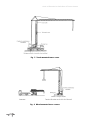
Truck, trailer and crawler-mounted tower cranes
These are usually erected by a self-erection procedure. The manufacturer's
instructions should be strictly followed, and general precautions given in this
section should be observed where applicable.
44
10.10
Erection of tower
10.10.1
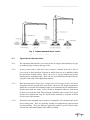
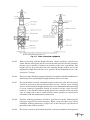
When the base or chassis has been set up, the tower (which may include the
slewing gear and tower head) is then erected and attached to it using a second
crane or a self-erection procedure. In either case the tower should be correctly
orientated within the base section.
10.10.2
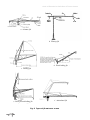
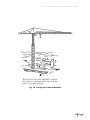
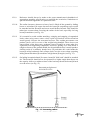
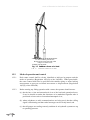
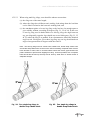
Where the jib is attached to the tower head before the tower is raised from
horizontal to the vertical position, some means, such as a plank or board should
be placed beneath the outer end of the jib to ensure that it can move freely across
the ground as the tower is raised.
10.10.3
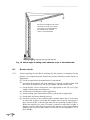
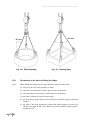
Where a second crane is used for erection, the number of sections in any tower
sub-assembly should be minimum as to eliminate excessive stresses in the
assembly when it is raised from the horizontal to the vertical position. It is
recommended that jib-ties are attached before the jib is raised and positioned
at the top of the tower section. When a tower section or sub-assembly has been