1
DSHEAR: MS User's Manual
© 2013 Geocomp Corp.
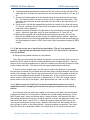
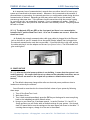
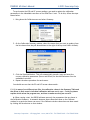
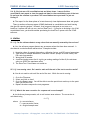
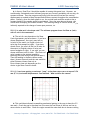
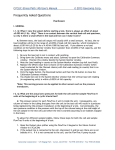
For a square sample, the area correction factor is
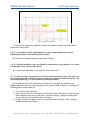
F = 1−
where: Δh = horizontal displacement,
B = sample side dimension.
∆h
B
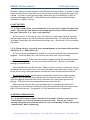
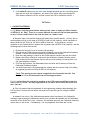
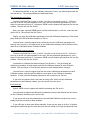
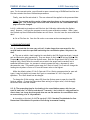
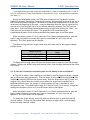
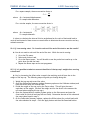
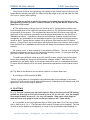
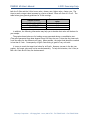
For a circular sample, the area correction factor is
where: Δh = horizontal displacement,
D = sample diameter.
It is best to calculate the internal friction angle based on the ratio of horizontal load to
vertical load instead of shear stress to normal stress to eliminate the area correction and any
related correction.
III-4. Q: I am running a test. Do I need to wait until the end of the test to see the results?
A: You do not need to wait until the end of the test. While the test is running:
1. Go to the File menu.
2. Select and click on Load.
3. Go to the Report menu. You will be able to see the partial test results up to the
point when you did the Load.
4. Repeat the above steps as the test progresses.
III-5. Q: Is it possible to take into account the effect of the top cap’s weight when running
a shear test?
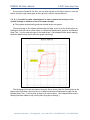
A: Yes, by increasing the offset value to match the resulting vertical force due to the
weight of the top cap. The following steps will guide you through doing this.
1. Weigh the top cap and record the value.
2. Open the Calibration Summary window (Summary option on the Calibrate window) and
note the Factor value for Vertical Load.
3. Divide the weight of the top cap by the Factor value. This will give the count
equivalent of the weight. (Be sure the weight unit for the factor is the same as the
unit used when weighing the top cap.)
4. Open the System Monitor window (System option on the View menu) and note the
count value for Vertical load (top left text field). Determine the sum of this value and
the count value found in step 3.
5. On the Calibration Summary window, replace the Offset value (for vertical load) with
the value obtained in step 4. Click the Apply button and then the Download button.
Geocomp Corporation · 125 Nagog Park · Acton, MA 01720 · Tel 978-635-0012 · Fax 978-635-0266