1
Language and Debugging Support for Multi-Agent and Spatial Simulation
Niko Simonson
Sean Wessels
Munehiro Fukuda∗
Computing & Software Systems
University of Washington, Bothell,
18115 NE Campus Way, Bothell, WA 98011
Abstract
The MASS (Multi-Agent Spacial Simulation) library facilitates parallelization of applications that are viewed as
interaction among up to millions of agents behaving over
a shared virtual space and that are thus fitted to simulation of ecological, social, and physical mechanisms. The library invokes user-defined functions of all agents and array
elements as well as exchanges data among them in parallel. The key to success of this library implementation is to
accelerate function invocation with preprocessor-generated
code and to facilitate an application debugging environment. This paper presents the design strategy, implementation, and usability of the MASS library preprocessor and
debugger.
1
Introduction
Multi-agent individual-based models view computation
as interaction among agents and individuals, each autonomously behaving in a shared simulation environment.
They have been used for years to simulate ecological, social, and physical mechanisms that are generally difficult
only with mathematical formulae. To parallelize these models, we are developing the MASS (Multi-Agent Spatial Simulation) library that updates the status of all objects at once
with the callAll method and exchanges data among all objects at once with exchangeAll method. These methods are
attributed as (1) one-sided parallel communication from the
main function to all array elements and (2) one-sided parallel communication from each element. Therefore, MASS
benefits not only multi-agent models but also data-intensive
computation with its parallelization.
We implemented MASS in Java from the viewpoint of
its widely used and convenient graphics features. However, due to Java’s nature as well as the multi-agents’ behavioral complexity, MASS encounters the following four
∗ Corresponding author. Email: [email protected], Phone:
1-425-352-3459, Fax: 1-425-352-5216
challenges: (1) parallelization is killed by the slow Java
reflection that is used to identify a user function called
from callAll/exchangeAll; (2) exchangeAll incurs substantial communication overhead if applied to computationally
fine-grained elements; (3) a programmer needs to check
inter-element communication flow at an application level;
and (4) agent migration is difficult to keep track of at a user
level.
To address these problems, we have developed a
language preprocessor and GUI-based debugger for the
MASS library. The preprocessor inserts additional code
in a given application for calling a user function from
callAll/exchangeAll without using Java reflection and for
transferring multi-element data in bulk. The debugger runs
between a user application and the underlying MASS library to capture all the library calls so that it graphically
shows each object’s status, monitors inter-object communication, keeps track of agent migration, and stops/resumes
the user program at a break point.
This paper describes the preprocessor-assisted MASS
performance improvement and library extension, presents
the features and internal design of the MASS debugger, and
demonstrates the uniqueness and usability of these software
tools in comparison with related work.
2
2.1
MASS Library
Execution Model
Places and Agents are keys to the MASS library. Places
is a multi-dimensional array of elements that are dynamically allocated over a cluster of multi-core computing
nodes. Each element called a place, is pointed to by a set
of network-independent array indices, and is capable of exchanging information with any other place objects. Agents
are a set of execution instances that can reside on a place,
migrate to any other place with array indices, and interact
with other agent objects as well as multiple places.
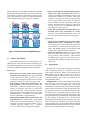
As shown in Figure 1, parallelization with the MASS library uses a set of multithreaded communicating processes
that are forked over a cluster and are connected to each other
through ssh-tunneled TCP links. The library spawns the
same number of threads as the number of CPU cores per
node. Those threads take charge of method call and information exchange among places and agents in parallel.
Application
Yaxis
A Bag of Agents
Agents
Agents
Agents
(x,y)
Xaxis
System Memory
System Memory
mnode0.uwb.edu
mnode1.uwb.edu
Thread 2
Thread 3
Thread 1
Thread 0
CPU Core 3
CPU Core 2
Process Rank 2
CPU Core 1
CPU Core 3
CPU Core 2
socket
CPU Core 0
Thread 2
Thread 3
Thread 0
Thread 1
Process Rank 1
CPU Core 1
CPU Core 3
socket
CPU Core 0
Thread 3
Thread 1
Thread 2
CPU Core 2
CPU Core 1
Process Rank
0
CPU Core 0
MASS Library
Thread 0
Places
System Memory
LAN
mnode2.uwb.edu
Figure 1. Parallel execution with MASS library
2.2
Library Specification
A user designs behaviors of a place and an agent by extending the Place and Agent base classes respectively, populates them through the Places and Agents classes, and performs their computation through the following methods.
Places Class
• public Places( int handle, [String primitive,] String
className, Object argument, int... size ) instantiates
a shared array with size from className or a primitive data type as passing an argument to the className
constructor. This array receives a user-given handle.
• public Object[] callAll( String functionName, Object[] arguments ) calls the method specified with
functionName of all array elements as passing arguments[i] to element[i], and receives a return value
from it into Object[i]. Calls are performed in parallel among multi-processes/threads. In case of a multidimensional array, i is considered as the index when
the array is flattened to a single dimension.
• public Object[] callSome( String functionName, Object[] argument, int... index ) calls a given method
of one or more selected array elements. If index[i] is
not negative, it indexes a particular element, a row, or
a column. If index[i] is negative, say −x, it indexes
every xt h element. Calls are performed in parallel.
• public void exchangeAll( int handle, String functionName, Vector<int[]> destinations) calls from all elements a given method of all destination elements, each
indexed with a different Vector element. Each vector
element, say destination[] is an array of integers where
destination[i] includes a relative index (or a distance)
on the coordinate i from the current caller to the callee
element. The caller passes its outMessage[] data member to the callee as a set of arguments, and receives
return values in its inMessage[].
• public void exchangeSome( int handle, String functionName, Vector<int[]> destinations, int... index)
calls each of the elements indexed with index[]. The
rest of the specification is the same as exchangeAll().
Agents Class
• public Agents( int handle, String className, Object
argument, Places places, int population ) instantiates
a set of agents from className, passes the argument to
their constructor, associates them with a given Places
matrix, and distributes them over these places, based
on map() that is defined within the Agent class.
• public void manageAll() updates each agent’s status,
based on its latest calls of migrate(), spawn(), kill(),
sleep(), wakeup(), and wakeupAll(). These methods
are defined in the Agent base class and may be invoked from other functions through callAll() and exchangeAll().
2.3
Design Issues
From the user viewpoint, Places and Agents are theoretically considered as an array or a collection of Place and
Agent objects respectively. However, their underlying implementation is not so simple in order to not only serve
as a general simulation framework but also to work over
a distributed-memory cluster. We need to address the two
design challenges below:
Language Issues: Unless a user implements base methods of the Place or Agent class, Places and Agents do not
know any methods of a user-defined class. This in turn
means that the callAll/Some and exchangeAll/Some methods
cannot invoke a user function simply through object casting. Instead we need to use Java reflection to interrogate a
user-defined class. The problem is that the reflection works
one order slower than a direct function call in general. This
slow performance kills parallelization where MASS calls
the same function of all objects at once. To pursue both
naming flexibility and high-speed invocation of user functions, we design a Java preprocessor that inserts additional
code to match the names of user functions defined in MASS
methods and the actual function bodies to invoke, so that the
library calls user functions without the reflection.
Debugging Issues: Since Places and Agents may be allocated over a distributed-memory cluster, the status and
execution of their elements is not always visible and traceable where the main program is running. For debugging
purposes, users are responsible to collect remote element
status by manually inserting combinations of callAll/Some
and exchangeAll/Some methods as well as adding additional
graphics code into their application programs. In particular,
it is tedious work for application designers to keep track
of migrating Agent objects over different computing nodes.
We address these debugging issues by designing a wrapper
that covers the original MASS library and facilitates GUIbased debugging features.
The next two sections explain these solutions.
3
3.1
Preprocessor Design
1
2
3
4
5
6
7
8
9
10
11
12
13
14
15
16
17
18
// the original MASS methods
myPlaces.exchangeAll(h, exchangeArray, neighbors);
myPlaces.callAll(putArray, args);
// preprocessor-generated code to jump user functions
public static final int exchangeArrayP_ = 0;
public static final int putArrayP_
= 1;
myPlaces.exchangeAll(h, exchangeArrayP_, neighbors);
myPlaces.callAll(putArrayP_, arggs);
public Object callMethod(int funcId, Object args) {
switch(funcId) {
case exhangeArrayP_: return exchageArray(args);
case putArrayP_:
return putArray(args);
}
return null;
}
Figure 2. Two MASS methods and their
preprocessor-generated code
Library Extension
We extend MASS to avoid Java reflection and to accelerate message exchange among Place objects as follows:
Eliminating Java Reflection: Given a function name in
the MASS methods, we need to quickly identify its function body to invoke. A trivial but naive idea is to store user
function names in a symbol table at compile time and thereafter to compare each symbol table entry with a function
name specified in a MASS method each time it is invoked at
run time. The problem is repetitive string comparisons that
may weigh more than actual computation at each place or
agent. Instead we use integer comparisons where user function names found in MASS methods receive a different integer, (i.e., a function id) at compile time and a MASS method
invokes the user function corresponding to a given function
id. Figure 2 shows preprocessor-generated example code
that jumps from two MASS methods to a different user
function: two user function names such as “exchangeArray” and “putArray” in exchangeAll() and callAll() (lines 12) receive a function ID respectively (lines 6-7); the original
exchangeAll() and callAll() calls the preprocessor-generated
callMethod() (line 12); and the control branches off to the
corresponding user function, based on the function id (lines
14-15).
Exchanging Each Place’s Boundary Information:
The MASS library originally assumes that a Place object is
used as an individual element of a distributed array. However, the cost for exchangeAll/Some is substantial to finegrained computation at each Place object, because data
exchange generally takes place with multiple neighbors.
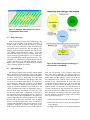
Therefore, a user wants to include a collection of array elements in each Place object that then exchanges its boundary elements (or shadow elements) in fewer packets with
neighbors as shown in Figure 3. This reduces the frequency
of communication over an entire array while increasing the
Figure 3. Communication among neighboring
Place objects
computation amount per Place. A new MASS library function named exchangeBulk exchanges such boundary information among neighboring Places. As shown in Figure 4,
we achieve it by translating exchangeBulk into a combination of exchangeAll and callAll (lines 6-7): the former calls
a given function of all neighboring Place objects to retrieve
their boundary information, and the latter put the information into the local Place’s boundary space. The MASS preprocessor assumes that a user defines exchangeArray and
putArray, where Array is a user-defined Place object, each
actually achieving data retrieval and saving operations. If
not, the preprocessor generates simple stub functions (lines
9-15). Thereafter, it converts this pair of exchangeAll and
callAll into those calling the user functions with their function IDs as described in Figure 2.
3.2
Design Strategies
We design and implement the MASS preprocessor,
based on the following two strategies. First, we use an
existing Java compiler-compiler tools: JavaCC and JJTree
1
2
3
4
5
6
7
8
9
10
11
12
13
14
15
// A new MASS method to exchange boundary data
myPlaces.exchangeBulk(h, Array, neighbors);
ExchangeOptimizer ReflectionOptimizer
MASSOptimizer
UnparseVisitor
Java Grammar
// preprocessor-generated exchange/callAll from
// exchangeBulk
myPlaces.exchangeAll(h, "exchangeArray", neighbors);
myPlaces.callAll(h, "putArray", neighbors);
public Object exchangeArray(Object src) {
return (Object)Array.getBoundary((int[])src);
}
public Object putArray(Object arg) {
Array.putBoundary(inMessages);
return null;
}
Figure 5. MASS preprocessor implementation
Code
Manual
Preprocessor
Figure 4. exchangeBulk and its preprocessor
generated code
for parsing and optimizing MASS user programs. Second, we carry out two passes of MASS program translation: pass 1 converts exchangeBulk into a combination of
exchangeAll/callAll, and pass 2 generates additional code
to call a user function from a MASS library method with
its function ID. The following details an implementation of
our MASS preprocessor.
3.3
Implementation
The preprocessor performs its optimizations by running
the input code through a Java parser. The parser emits tokens in response to the input code. Actions are taken on
specific tokens to check conditions, set flags, and modify output. A grammar defines a roughly correct version
of Java. It has been modified to create Abstract Syntax
trees. From the grammar, a parser is generated (as UnparseVisitor.java) which by default will output any input which
matches the Java language as defined by the grammar. As
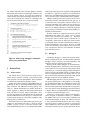
shown in Figure 5, the parse methods can be overwritten
with MASSOptimizer, ExchangeBulkOptimizer, or ReflectionOptimizer to perform MASS optimizations. For example, when parsing a MethodDeclaration token, a flag will
be set to indicate that a new method is being parsed and that
a new scope must be placed on the stack. Subsequently, if
a ResultType token is parsed while the MethodDeclaration
flag remains set, the return type of the parsed method can
be recorded. These optimizers in Figure 5 set flags in their
visit() methods and implement the logic to respond to those
conditions in their find(Token) methods.
The preprocessor has been tested on some MASS
programs including two-dimensional wave simulation
(Wave2D) and three-dimensional computational fluid dynamics (CFD). The verification and performance evaluation
has been conducted by comparing manually-translated versus preprocessor-generated code. Figure 6 demonstrated the
competitive performance of preprocessor-generated code in
Total
exchangeAll
9730.5 ms
4605.25 ms
9785 ms
4366.25 ms
Wave2D
callAll
1505.5 ms
1705.75 ms
Code
Total
Manual
9730.5 ms
Preprocessor
9785 ms
CFD
Figure 6. Preprocessor-generated code execution
Wave2D and CFD when running the code four times on a
64-bit 2.27GHz Intel Core.
4
Debugger Design
A simple debugging program was implemented to assist
MASS developers. Currently, the debugger uses the multithreaded Java version of MASS. It allows users to view a
logical arrangement of their computational spaces’ values
through a 2D or 3D graphical view.
4.1
Debugging Features
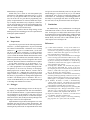
The basic objective of the debugger is to display the contents of computational nodes in a human-understandable
format, as shown in Figure 7. Its features are designed to
support this goal:
•
•
•
•
•
•
•
Displays results in a flat view or hawk’s eye view.
Opens windows to display additional dimensionality.
Allows debugging in code or in GUI.
Sets break points and defines iteration points.
Advances to next break point or by iteration.
Shows communication between logical nodes.
Saves and restores computational values.
The developer can set break points in program iteration.
This differs from traditional debugging code break points,
and is more akin to setting break points based on variable
values. However, the developer can specify when in the
driving code that an iteration occurs, allowing a more finegrained approach than might be initially apparent.
Figure 7. Debugger GUI’s hawk’s eye view of
computational node values.
4.2
Design Strategies
Design of the debugger followed a twofold strategy. The
debugger wraps functions of the MASS class library as
shown in Figure 8, and development is driven by the need
for features to show information in terms of the MASS application developer’s perspective. The development of the
debugger relied on an iterative approach that focused on design, planning, and prioritization of features. A basic goal
is to implement features as simply as possible. Early in the
process it became apparent that there were two challenges:
accessing MASS and creating the graphical interface. Comparing the two, using MASS was simpler than creating the
graphics, but had yet to be thoroughly explored. The debugger is the first application to demonstrate that multiple
classes can utilize MASS concurrently.
4.3
Figure 8. Interaction between the debugger, a
user application, and MASS.
Implementation
The debugger program exists separately from the MASS
library. Therefore, it is not affected by changes in the MASS
implementation that don’t affect MASS function signatures.
In effect, it serves as an intermediary layer that wraps
MASS functions. In addition to the debugger class, there
are classes for graphical control objects: the display windows and buttons. When data is returned from the MASS
classes, in addition to returning the data to the user, the debugger also instantiates graphical objects using Java’s awt
classes, and displays the results. The organization of the results are based on the user-defined sizes of the arrays that
are passed to MASS when it is initialized. In this context,
the implementation of the debugging features only has to
use simple private counters and Booleans to keep track of iterations and breakpoints. When a breakpoint is hit, further
function calls to MASS are suspended. Since all MASS
results are returned in single arrays, there is no latency in
updating individual node results from the debugger or user
perspective. Depiction of exchange results are more difficult, because MASS does not provide return values for
them. The user provides a vector of relative node coordinates where data is exchanged. The debugger applies the
vector to each computational node to determine the coordinates where the data exchange occurred, and shows the
last computation (from a MASS CallAll function) as the
data that is sent. Checkpoints take the return values from
a computation and store them in a file. The file is read back
into an array of objects when the checkpoint is restored, and
passed to MASS. It is important to note that this method of
restoring a checkpoint is only valid if the user’s places do
not rely on local resources, such as a local system clock, for
their calculations. The debugger offers three general types
of public methods, as shown in the sample code of a simple
driver application in Figure 9:
• MASS-equivalent functions with identical signatures
• MASS-equivalent functions with extended signatures
for the debugger
• Debugger-only functions, such as setting break points.
The MASS functions with extended signatures combine
MASS-equivalent functions with debugger functions, trading fewer function calls for ones with more parameters.
Control buttons also implement debugger functions for features such as advancing one iteration or continuing to the
next break point while the user’s program is running.
1
2
3
4
5
6
7
8
9
10
11
12
13
14
15
16
17
18
19
20
21
22
23
24
25
26
}
all data with virtual processors in parallel. Although MASS
and EPP use a preprocessor approach for parallelization,
EPP focuses on multithreading, whereas the MASS preprocessor extends its scope to hybrid SMP cluster computing.
MPIPP is another preprocessor tool that converts a userdefined data structure into MPI-derived data types [6]. It
is similar that our exchangeBulk() function converts a certain range of boundary array elements to Place.outMessage
as well as Place.inMessages back to the original elements.
However, our MASS preprocessor is different in generating get() and put() methods to automate entire boundary-toboundary element transfers.
Javassist facilitates a compiler-assisted Java bytecode
manipulation that defines new classes, freezes existing
classes, and customizes class members [1]. Therefore,
Javassist can works as another option to optimize the exchangeBulk() function and to match user function names
in the MASS library and their actual function bodies, by
directly manipulating a user program. However, it would
be the same amount of work required if our preprocessor
were redesigned to introspect and manipulate all MASS
keywords with Javassist.
// end debugger operations and clean up graphics
debugger.finish();
5.2
// Initialization of MASS through debugger
debugger.degubInit(totalSize, totalDimensions,
‘‘DebuggerDriver’’, threads, 0, 999);
// Pure debugger functions
debugger.setTotalIterations(iterations);
debugger.setBreakPoint(20);
debugger.setStopOnBreakPoint(true);
// Use of MASS through debugger
while(!debugger.isFinished()) {
// MASS-equivalent function called through
// debugger (shows results in GUI by default)
debugger.debugCallAll(0, (Object[])null);
// ...with iteration set separately
debugger.iterate();
// MASS function with debugger parameters
// (ticks iterator shows results in GUI)
debugger.debugIterateCallAll(0, (Object[])null,
true);
Figure 9. Code using debugger; breakpoint
set for every 20 iterations
5
5.1
Related Work
Preprocessors
Our MASS library and preprocessor design involves
library-assisted parallel execution, preprocessor-assisted
code generation, and code manipulation. Those techniques
are found in the following four language systems.
Parallel Java Library promotes hybrid SMP cluster programming in Java by combining multithreaded programming constructs and MPI-based message-passing functions [4]. MASS and Parallel Java libraries both take a
similar approach in hiding all underlying parallelization
work with their Java library classes and methods. However, the major difference is that MASS does not distinguish
shared and distributed memory but gives a consistent view
of multi-agents running on a shared array regardless of underlying memory architectures.
Extensible PreProcessor (EPP) defines plug-ins for generating tiny data-parallel Java code [3], where the special
modifier “parallel” given to a Java class generates additional multithreading code in its run() method that handles
Debuggers
The MASS debugger is a framework-oriented, librarybased, visualization-focused, and data-parallel application
debugger. In these categories, we found similarities to and
differences from the following four products.
Hadoop and the MASS debugger are both frameworkoriented debugging utilities. Hadoop uses a Java class based
on the JUnit3 test case and performs testing using a virtual
map cluster [8]. The MASS debugger debugs through the
actual execution of the MASS program, as MASS controls
where its computational spaces run. Hadoop Test Case output is console output, shown through the user’s IDE. MASS
debugger output uses its own graphical interface.
MPI Debugging Interface is used to provide the conceptual message passing state of the program [2]. The debugger implementation studies the communicator queues; the
MASS equivalent of these are the parameters of its major
functions. Both applications conclude that accessing the library class must be led by the debugger. Specific interfaces
to display data are not implemented by the MPI debugger
in contrast to the MASS debugger’s GUI.
TotalView is a feature-heavy, commercial debugging interface designed for distributed software [7]. TotalView,
like MASS, makes use of a GUI for data visualization but
lacks concurrent display of values. The TotalView software
is more sophisticated than MASS but also more complicated, and is not free. MASS, in contrast, is geared specifically to MASS users and is currently free. Using TotalView
with MASS would strip away all the abstraction that the
MASS library is providing.
Global Arrays are a means to solve data-parallel jobs,
and intersects with MASS’s application areas [5]. It gives
the user very fine-grained control over the data objects it
uses, but at the cost of a great deal of programming complexity in implementation. In contrast, MASS aims explicitly to simplify and abstract away complexity. Global Arrays do not in themselves provide explicit debugging tools;
while the MASS debugger is an extension of MASS that
does not currently exist in Global Arrays.
In summary, we believe that our design strategy for the
MASS preprocessor and debugger fits user requirements for
multi-agent spatial simulation.
6
6.1
Future Work
7
Conclusions
The MASS library eases parallelization of multi-agent
individual-based models as well as data-intensive applications. In this paper, we analyzed the current issues in code
development and execution with the library, addressed them
with our preprocessor approach and debugger design. The
MASS library and tools will be made available upon an
email request sent to [email protected].
Preprocessor
At present our preprocessor has the following limitations
and issues: (1) MASS applications to be processed should
not contain a method named “callMethod” or use a trailing
underscore (“ ”) as part of a method name; (2) all methods to be called from callAll/Some or exchangeAll/Some
must accept the same set of parameters in the same order;
(3) user-owned non-MASS methods should not have names
identical to MASS methods; and (4) MASS variables may
not be recognized if they are cast or assigned to other classes
at runtime. We believe that these limitations are acceptable.
As our future work items, we are developing C, C++,
and CUDA-C versions of the MASS library. Since C and
C++ allow programmers to use dynamic linking and function pointers, we do not see any necessity of developing a
MASS preprocessor for them. However, CUDA-C has its
own extensions to C. Although these extensions are quite
unique to GPUs, we are planning to develop a preprocessor
that assists C programmers in running MASS applications
on GPUs. Our ultimate goal is to facilitate a Java or C++
version of the MASS library for GPU computation through
a cascading code translation to CUDA-C.
6.2
will give the user more flexibility. However, the goal of the
MASS debugger is to provide an easy way to view MASS
computations, not to become a commercial debugger with
a full feature set. Consequently, certain debugger features:
the ability to step through code and to set break points in
the code itself, are not prioritized for future development.
Debugger
Currently, the MASS debugger focuses on the step-bystep display of computational node data and communication. The limitations include: (1) agents and their migration
are not displayed; (2) the interface is still only a proof-ofconcept design; (3) break points are not based on computational node values; and (4) analysis and step-through of the
developer code itself is not implemented.
Implementation of agent status and migration view is the
immediate next step in terms of future development. The
interface must be improved for the overall user experience.
Allowing break points based on computational node values
References
[1] S. Chiba and M. Nishizawa. An easy-to-use toolkit for efficient java bytecode translators. In Proc. of 2nd Int’l Conf.
on Generative Programming and Component Engineering GPCE’03, volume LNCS 2830, pages 364–376, Erfurt, Germany, September 2003. Springer-Verlag.
[2] J. Cownie and W. Gropp. A standard interface for debugger
access to message queue information in MPI. In Proc. of Recent Advances in Parallel Virtual Machine and Message Passing Interface, 6th European PVM/MPI Users’ Group Meeting
- PVMMPI’99, volume LNCS 1697, pages 51–58, Barcelona,
Spain, September 1999. Springer.
[3] Y. Ichisugi and Y. Roudier. The extensible Java preprocessor kit and a tiny data-parallel Java. In Proc. of the Scientific Computing in Object-Oriented Parallel Environments ISCOPE’97, volume LNCS 1343, pages 153–163, Marina del
Rey, CA, December 1997. Springer-Verlag.
[4] A. Kaminsky. Parallel Java: A unified API for shared memory
and cluster parallel programming in 100% Java. In Proc. 21st
IEEE Int’l Parallel and Distributed Processing Symposium IPDPS, pages 1–8, Long Beach, CA, March 2007. IEEE-CS.
[5] M. Krishnan, B. Palmer, A. Vishnu, S. Krishnamoorthy,
J. Daily, and D. Chavarria. The global arrays user manual.
Technical report number pnnl-13130, Pacific Northwest National Laboratory, Richland, WA, November 2010.
[6] E. Renault and C. Parrot. MPI pre-processor: generating MPI
derived datatypes from C datatypes automatically. In Proc.
2006 Int’l Conf. on Parallel Processing Workshops, pages
248–256, Columbus, OH, September 2006. IEEE CS.
[7] Rogue Wave Software, Inc. Totalview. User Guide Version
8.9.2, Boulder, Colorado, November 2011.
[8] J. Venner. Pro Hadoop, chapter 7, Unit Testing and Debugging, pages 207–237. Apress, New York, NY, 2009.