1
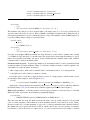
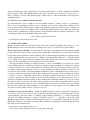
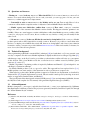
specification ::= declaration . . . declaration %% rule . . . rule [ %% Objective Caml code ]
declaration ::= %{ Objective Caml code %}
%parameter < uid : Objective Caml module type >
%token [ < Objective Caml type > ] uid . . . uid
%nonassoc uid . . . uid
%left uid . . . uid
%right uid . . . uid
%type < Objective Caml type > lid . . . lid
%start [ < Objective Caml type > ] lid . . . lid
rule ::= [ %public ] [ %inline ] lid [ ( id, . . . , id ) ] : [ | ] group | . . . | group
group ::= production | . . . | production { Objective Caml code } [ %prec id ]
production ::= producer . . . producer [ %prec id ]
producer ::= [ lid = ] actual
actual ::= id [ ( actual, . . . , actual ) ] [ ? | + | * ]
Figure 1. Syntax of grammar specifications
Identifiers (id) coincide with Objective Caml identifiers, except they are not allowed to contain the quote (’)
character. Following Objective Caml, identifiers that begin with a lowercase letter (lid) or with an uppercase
letter (uid) are distinguished.
Comments are C-style (surrounded with /* and */, cannot be nested), C++-style (announced by // and
extending until the end of the line), or Objective Caml-style (surrounded with (* and *), can be nested). Of
course, inside Objective Caml code, only Objective Caml-style comments are allowed.
Objective Caml type expressions are surrounded with < and >. Within such expressions, all references to
type constructors (other than the built-in list, option, etc.) must be fully qualified.
4.
Syntax of grammar specifications
The syntax of grammar specifications appears in Figure 1. (For compatibility with ocamlyacc, some specifications that do not fully adhere to this syntax are also accepted.)
4.1 Declarations
A specification file begins with a sequence of declarations, ended by a mandatory %% keyword.
4.1.1 Headers
A header is a piece of Objective Caml code, surrounded with %{ and %}. It is copied verbatim at the beginning
of the .ml file. It typically contains Objective Caml open directives and function definitions for use by the
semantic actions. If a single grammar specification file contains multiple headers, their order is preserved.
However, when two headers originate in distinct grammar specification files, the order in which they are copied
to the .ml file is unspecified.
4.1.2 Parameters
A declaration of the form:
%parameter < uid : Objective Caml module type >
causes the entire parser to become parameterized over the Objective Caml module uid, that is, to become
an Objective Caml functor. If a single specification file contains multiple %parameter declarations, their
order is preserved, so that the module name uid introduced by one declaration is effectively in scope in the
declarations that follow. When two %parameter declarations originate in distinct grammar specification files,
the order in which they are processed is unspecified. Last, %parameter declarations take effect before %{ . . .