1
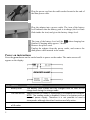
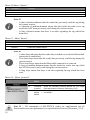
When a new EID transponder is successfully read, the green light flashes and the reader
stores the ID code in its internal memory after its first reading (and if the option “duplicate
search” is activated) with the current date and time (if the option is activated).
The number of read ID codes in the current session is increased.
The buzzer and the vibrator will sound and/or vibrate with every scan.
Note 2 –The ‘Date and Time Stamp’, and the sound/vibration features are options
that can be turned on or off according to your specific applications.
Each time a tag is scanned, the identification code is transmitted automatically via the USB
cable, the RS232 cable, or Bluetooth®.
Tips for efficient reading
Tag reader efficiency is often linked with reading distance. The device's read distance
performance is affected by the following factors:
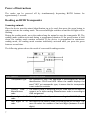
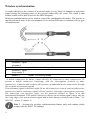
1. Transponder orientation: to obtain maximum reading distance, the axes of the
transponder and reader antenna coils must be optimally orientated as shown in Figure
2.
2. Transponder quality: Each transponder manufacturer uses their own unique
manufacturing process. Consequently, it is normal to find that many common
transponders from different manufacturers have different read range performance
levels.
3. Animal movement: If the animal moves too quickly, the transponder may not be
located in the read zone long enough for the ID code information to be obtained.
4. Transponder type: HDX and FDX-B transponders generally have similar reading
distances, but tag manufacturers and environmental factors such as RF interferences
may affect overall tag performances.
5. Nearby metal objects: Metal objects located near a transponder or reader may
attenuate and distort the magnetic fields generated in the RFID systems therefore,
reducing the reading distance. An example, an ear tag against a squeeze chute
significantly reduces the read distance.
6. Electrical noise interference: The operating principle of RFID transponders and
readers is based on electromagnetic signals. Other electromagnetic phenomena, such
as radiated electrical noise from other RFID tag readers, or computer screens may
interfere with RFID signal transmission and reception, therefore, reducing the read
distance.
7. Transponder/reader interference: Several transponders in the reception range of the
reader, or other readers that emit excitation energy close by may adversely affect
reader performance or even prevent the reader from operating.
8. Discharged battery pack: As the battery pack discharges, the power available to
activate the field becomes weaker, which in turn reduces the read range field.
8