1
AVoCS 2007
Comparing State Spaces in
Automatic Security Protocol Verification
Cas Cremers Pascal Lafourcade
Department of Computer Science, ETH Zurich, 8092 Zurich, Switzerland
Abstract
Many tools exist for automatic security protocol verification, and most of them have their own particular
language for specifying protocols and properties. Several protocol specification models and security properties have been already formally related to each other. However, there is an important difference between
verification tools, which has not been investigated in depth before: the explored state space. Some tools
explore all possible behaviors, whereas others explore strict subsets, often by using so-called scenarios. Ignoring such differences can lead to wrong interpretations of the output of a tool. We relate the explored
state spaces to each other and find previously unreported differences between the various approaches.
We apply our study of state space relations in a performance comparison of several well-known automatic
tools for security protocol verification. We model a set of protocols and their properties as homogeneously
as possible for each tool. We analyze the performance of the tools over comparable state spaces. This
work enables us to effectively compare these automatic tools, i.e. using the same protocol description and
exploring the same state space. We also propose some explanations for our experimental results, leading to
a better understanding of the tools.
Keywords: Automatic Verification, Security Protocol, State Space, Performance, Tools
1
Introduction
Cryptographic protocols form an essential ingredient of current network communications. These protocols use cryptographic primitives to ensure secure communications over insecure networks. The networks are insecure in two ways: there can
be attackers analyzing or influencing network traffic, and communication partners
might be either dishonest or compromised by an attacker. Despite the relatively
small size of the protocols it is very difficult to design them correctly, and their
analysis is complex. The canonical example is the famous Needham-Schroeder protocol [32], that was proven secure by using a formalism called BAN logic. Seventeen years later G. Lowe [27], found a flaw by using an automatic tool known as
Casper/FDR. The flaw was not detected in the original proof because of different
assumptions on the intruder model. However, the fact that this new attack had
escaped the attention of the experts was an indication of the underestimation of
the complexity of protocol analysis. This example has shown that automatic verification is critical for assessing the security of such cryptographic protocols, because
humans can not reasonably verify their correctness.
This paper is electronically published in
Electronic Notes in Theoretical Computer Science
URL: www.elsevier.nl/locate/entcs
A few years later it was proven that the security problem is in fact undecidable [1,
24] even for restricted cases (see e.g. [19] for a survey). This inherent undecidability
is one of the major challenges for automatic verification. For instance, in the tool
used by Lowe, undecidability was addressed by restricting the type of protocol
behaviours that were explored. The protocol that Lowe investigated has two roles,
and these may be performed any number of times, by an unbounded number of
agents. Lowe used his tool to check a very specific setup, known as a scenario.
Instead of exploring all possible protocol behaviours, the protocol model given to
the tool considers a very small subset, in which there are only a few instances of
each role. Furthermore, the initiator role is always performed by a different agent
than the responder role. The attack that Lowe found fits exactly in this scenario.
However, if there would have been an attack that requires the intruder to exploit
two instances of the responder role, Lowe would not have found this particular
attack with the tool. Addressing this problem, he managed to give a manual proof
for the repaired version of the protocol, which states that if there exists any attack
on that protocol, then there exists an attack within the scenario. Ideally, we would
not need such manual proofs, and explore the full state space of the protocol, or at
least a significant portion of it.
Since then, many automatic tools based on formal analysis techniques have
been presented for the verification of cryptographic protocols [2, 7, 12, 13, 18, 20,
29, 30, 31, 34, 35]. These tools address undecidability in different ways: either by
restricting the protocol behaviours similar to the approach used by Lowe, or by
using abstraction methods. However the restrictions put on the protocol behaviour
are rarely discussed or compared to the related work. Moreover, the tools provide
very different mechanisms to implicitly restrict the protocol behaviours, and the
relations between these mechanisms has not been investigated yet.
This work started out as an investigation into the relative performance of protocol verification tools. Given the number of security protocol verification tools, it is
rather surprising that there exists hardly any comparison studies between different
tools. In each tool paper the authors propose some tests about their tools’ efficiency, by describing the performance of the tool for a set of protocols. These tests
implicitly use behaviour restrictions, which are often not specified and sometimes
are designed specifically to include known attacks on the tested protocols. Choosing
different restrictions has a very clear impact on the accuracy as well as the performance of verification process. In particular, imposing stronger restrictions on the
protocol behaviour implies that fewer behaviours need to be explored, which means
that for most tools verification time will be exponentially lower.
Here we address two distinct, but very closely related problems. First, we discuss
types of behaviour restriction models used by protocol verification tools, which we
will also refer to as the explored state space. We show how these different state
spaces are related to finding, or missing, attacks on protocols, and show how to
match up certain state space types. Second, we use the knowledge gained about
state spaces to perform a tool performance case study, where we try to match up
the exact restrictions used in each tool, and compare their performance on similar
state spaces. This leads to new insights in the performance of the tools.
Related work
To the best of our knowledge, the difference between state spaces in security protocol
analysis has not investigated before. However, some work exists on comparing the
performance of different security protocol analysis tools.
In [37], a large set of protocols is verified using the Avispa tool suite [2] and
timing results are given. As the Avispa tool suite consists of four back end tools,
this effectively works as a comparison between these four tools. However, this
test does not detail the behavioural restrictions that were used. Furthermore, no
conclusions about the results are drawn.
A qualitative comparison between Avispa and Hermes [13] is presented in [25] .
Unfortunately this test is not very detailed and leads only to some general advice
for users of these two tools.
We conjecture that tests as performed here, have not been done before because
of the amount of work involved in setting up comparable test cases, and the amount
of detailed knowledge required for using each tool. In fact, we believe that a number
of researchers in this field have neglected to compare their work with other tools,
at any deeper level than just citing from publications.
Outline
In Section 2 we describe and relate some of the different state spaces considered in
protocol analysis. In Section 3 we present our performance comparison experiments.
We describe the choice of tools and test setup. We then discuss the results of the
analysis before we move to the conclusions and future work in the last section.
2
State spaces in security protocol analysis
2.1
Process model
We first give a high-level description of the protocol verification problem in terms of
processes. It is not our intent to go into full detail but only to provide the required
knowledge for understanding the state space restrictions in the remainder of this
paper. For further details we refer the reader to e.g. [20].
A security protocol is defined as a set of communicating processes, typically
called “roles”. Any of these roles can be performed any number of times in parallel.
A role usually consists of a sequence of send and receive events, and implicit or
explicit generation of fresh values such as nonces or session keys. The network is
considered to be insecure. This is modeled as a single “intruder” named e and
represented by the process q. The intruder can take messages from the network,
manipulate them, insert messages into the network, or generate fresh values.
We introduce some notation for describing composition of processes. We write
P ||Q to denote the parallel composition of processes P and Q. We denote by P ∗ the
parallel composition of any number of P processes, i.e. P ∗ = P ||P ||P || . . .. Using
this notation, the full protocol system describing a protocol with two roles (r1, r2)
and the intruder process is given by q||r1∗ ||r2∗ . This system exhibits all possible
behaviours of the protocol in presence of an active intruder.
For basic security properties such as authentication and secrecy we can define
behaviours of the system as all possible execution traces. We denote the set of all
possible traces of the protocol as Traces. If there exists an attack on the abstract
protocol, it is represented in this set. Conversely, if no trace in Traces exhibits an
attack, there is no attack on the abstract protocol.
2.2
Restricting the state space
Because of undecidability or efficiency concerns, protocol analysis tools usually apply some restrictions on the system and do not explore all elements from the set
Traces.
Definition 2.1 Terminology.
•
A run is a single (possibly partial) instance of a role, performed by an agent (this
notion is known under various names in protocol models, e.g. “regular strand”,
“process”, or “thread”).
•
A run description of a protocol with |R| roles is a set of roles. An element of
a run description is of the form r(a1 , a2 , . . . , a|R| ), where r denotes the role that
the run is performing. The parameters ax denote the assignment of agents ax to
each role x. A symbolic run description contains variables, whereas a concrete
run description does not contain variables.
•
A Scenario is a multiset of run descriptions. S denotes the set of all possible
scenarios and Sc the set of concrete scenarios in which no variables occur.
Alternatively, one may view a run description as a process that performs a
particular role and in which the choice of agents (both the executing agent and the
expected communication partners) is explicitly encoded by the parameters. A trace
of a protocol is an interleaving of runs and (possibly) intruder events.
Example 2.2 The concrete scenario {r1(a, e), r2(a, b)} for the Needham-Schroeder
protocol exhibits the man-in-the-middle attack. The first process is an initiator run
(denoted by r1), performed by a, talking to a compromised agent e. The second
process is a responder run (r2), performed by b, who thinks he is talking to a. Note
that the same attack occurs when we substitute a by b. In fact, the attack exists
for the following symbolic scenario {r1(X, e), r2(X, Y )}. Note that both scenarios
above do not cover the following scenario: {r1(a, e), r1(a, b)} which corresponds to
two runs that are both performing the initiator role. In particular, there are traces
in the second scenario that are not in the third scenario, and vice versa. Thus, if we
evaluate the second scenario, we might get completely different results than with
the third scenario.
2.3
State space classes
A restriction on the behaviour of a process model changes its state space. Thus,
we can view a protocol behaviour restriction as a representation of exploring an
alternative state space for the protocol. We identify a set of possible state spaces
representing classes of protocol behaviour restrictions.
Definition 2.3 Let n be an integer, and let s be a scenario.
•
Traces is the set of all traces (possible executions of the protocol) of any length,
and any combination of agents.
•
MaxRuns(n) is the set of traces with at most n runs.
•
Scenario(s) is the set of traces with at most the runs defined in the scenario s.
Thus, the multiset of runs in each trace are by definition a subset of s.
•
RepScen(s) is the set of traces built only with runs that are present in s. The
runs defined by the scenario s can be executed any number of times. In other
words, each run in each trace corresponds to an element of s.
Each restriction above effectively restricts the state space of a process model.
When we talk about the correctness of a protocol, we refer to the full set of possible
behaviours, denoted by Traces. As we will see in Section 3, most tools do not cover
this set.
2.4
Relations between state space restrictions
For the set of scenarios S, we have the following relations:
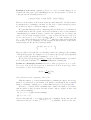
∀n ∈ N : MaxRuns(n) ⊂ Traces
∀s ∈ S : Scenario(s) ⊂ Traces
∀s ∈ S : RepScen(s) ⊆ Traces
∃s ∈ S : RepScen(s) = Traces
(1)
(2)
(3)
(4)
Proof. The relations (1), (2) and (3) above are immediate consequences of the
definitions, as the left hand sides imply restrictions on the full set Traces. For
relation (4) we have that if the scenario s includes all possible process descriptions,
the repetition of the processes in s effectively amounts to the full set of behaviours
without any restrictions.
2
We write |s| to denote the number of elements of the scenario s. Relating the
scenario-based approaches to the bounding of runs, we have that:
∀s ∈ S : Scenario(s) ⊆ MaxRuns(|s|)
(5)
Observe that if the scenario contains |s| runs, the resulting traces will never contain
more, and thus this included in MaxRuns(|s|).
The next formula expresses that there exist no concrete scenarios that correspond exactly to a MaxRuns trace set.
∀n ∈ N∗ , s ∈ Sc : Scenario(s) 6= MaxRuns(n)
(6)
Proof. For any n > 0, MaxRuns(n) contains a trace with n runs. So, it will also
contain a trace containing n instances of the first role, and also a trace containing
n instances of the second role. To match MaxRuns(n) to Scenario(s), s must also
contain exactly n runs. Because we are considering only concrete scenarios, we need
to define in s the first case (n times the first role). However, by this definition of s
we have excluded the second type of traces with only the second role.
2
Furthermore, under the assumption that we have a finite number of agents we
have that
∀n ∈ N, ∃k : ∃s1 , . . . , sk ∈ Sc :
k
[
Scenario(si ) = MaxRuns(n)
(7)
i=1
The last formula expresses that if we have finite agents, we can simply enumerate
all possible run descriptions of n runs, and turn them into scenario sets. The result
of this formula is that we can match up the trace sets of MaxRuns and Scenario by
unfolding. This opens up a way to make the state spaces uniform.
2.5
Generation of uniform state spaces
Starting from a state space described using MaxRuns(n) for an integer n, we generate a set of concrete scenarios that exactly covers the same state space, by using
Formula (7). Further parameters involved in the generation of this set of scenarios
are the number of roles of the protocol and the number of agents.
Required number of agents
In protocol verification it is common to use two honest agents and a single untrusted
(compromised) agent. In general, attacks might require more agents, depending on
the protocol under investigation and the exact property one wants to verify. A
number of results related to this can be found with proofs in [17]. We recall the
results of this paper that we use here:
•
Only a single dishonest (compromised) agent e, is enough.
•
For the verification of secrecy, only a single honest agent a is sufficient.
•
For the verification of authentication, we only need two honest agents a and b.
For example, for a single honest agent a and a single compromised agent e, for a
protocol with roles {r1, r2}, we have that:
MaxRuns(1) =
[
k∈{a,e}
[
Scenario({r1(a, k)}) ∪
Scenario({r2(k, a)})
k∈{a,e}
yielding a set of four scenarios.
Computing the minimal number of concrete scenarios
For a given integer n, we can derive the minimal size of a set M of concrete scenarios,
S
such that s∈M s = MaxRuns(n). This minimal size of M directly corresponds to
determining the minimal value of k in Formula (7).
For a single agent (involved in the verification of secrecy), the generation of a
set of concrete scenarios is a trivial application of the binomial coefficient. For two
agents or more the situation is not so simple. In particular, the generation of the
set is complicated by the fact that the scenario sets are considered equivalent up to
renaming of the honest agents.
Example 2.4 [Renaming equivalence] Let P be a protocol with a single role r1.
Consider the state space space MaxRuns(2) for two honest agents a, b. Then, we
could generate the following scenario set:
{r1(a), r1(a)} , {r1(a), r1(b)} , {r1(b), r1(b)}
However, as the names of the honest agents are interchangeable, the last scenario
is equivalent up to renaming to the first one. In order to verify security properties,
we would need only to consider the first two scenarios.
We generalize this approach by considering |R| roles in the protocol description.
we assume that we have two agents a and b and one intruder. Let n be the parameter
of MaxRuns(n) for which we want to generate the equivalent set of scenarios. In
order to choose a run description X(a1 , . . . , a|R| ), we have |R| choices for the role
X, two choices for a1 a or b and 3 possible values: a, b or the attacker for each
a2 , . . . , a|R| , and we find there are 2∗|R|∗3(|R|−1) different possible run descriptions.
Now we have to choose a multiset of n run descriptions among this set of all possible
runs descriptions. We use the following formula:
2 ∗ |R| ∗ 3(|R|−1) + n − 1
n
However, this does not take into account that scenarios are equal up to the renaming
of the (honest) agents. For example, we observe that {r1(a, b), r2(b, a)} is equivalent
to {r1(b, a), r2(a, b)} under the renaming {a → b, b → a}.
We now use a group theory result to compute the minimal number of scenarios
n!
and Burnside’s lemma [14].
needed. We just recall that nk = k!(n−k)!
Lemma 2.5 (Burnside’s lemma) Let G be a finite group that acts on a set X.
For each g in G let X g denote the set of elements in X that are fixed by g. Then
the number of orbits, denoted |X/G|, is:
|X/G| =
1 X g
|X |
|G|
g∈G
where |X| denotes the cardinality of the set X.
Thus the number of orbits (a natural number or infinity) is equal to the average
number of points fixed by an element of G (which consequently is also a natural
number or infinity). A simple proof of this lemma was proposed by Bogard [10].
We have to consider all the renamings and compute the number of scenarios
that are stable by this operation. Because we have only two agents, we have only
two possible renamings:
(i) {a → a, b → b} (the trivial renaming)
(ii) {a → b, b → a}
Observe first that |G| = 2 because we have two renamings. In the first case, all
(|R|−1)
elements are fixed so we have 2∗|R|3 n +n−1 possibilities. In the second case,
the fixed elements are multisets of the size n where the terms are associated by
two and of their arguments are of the form a, x1 , . . . , x|R|−1 or b, x1 , . . . , x|R|−1 . It
corresponds to choosing a multiset of n2 elements in a set where the first parameter
is fixed, i.e, in a set of cardinality |R| ∗ 3(|R|−1) . Notice that if n is odd the second
set is empty because in this case there is no way to get a fixed element using the
second renaming.
Lemma 2.5 leads to the following formula, where ǫn is 0 if n is odd and 1
otherwise. k(n, |R|) is the minimal number of scenarios k for Formula (7).
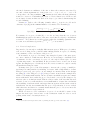
k(n, |R|) =
2∗|R|∗3(|R|−1) +n−1
n
+ ǫn
2
−1
|R|∗3(|R|−1) + n
2
n
2
(8)
For instance for a protocol with |R| = 2 roles, we have that the set of traces
MaxRuns(2) is equal to the union of the trace sets defined by k(2, 2) = 42 different
scenarios. 1 Note that if we would not have taken
the renaming equivalence into
2−1
account, we would instead generate 2∗2∗3 2 +2−1 = 78 scenarios.
2.6
Practical implications
In general, tools can explore radically different state spaces. With protocol verification, we are looking for two possible results: finding attacks on a protocol or having
some assurance of the correctness of the protocol.
If an attack on a protocol is found, any unexplored parts of the state space
are often considered of little interest. However, if one is trying to establish a level
of assurance for the correctness of a protocol, the explored state space becomes
of prime importance. As established in the previous section, even for two honest
agents, the simplest protocols already need 42 concrete scenarios to explore exactly
all attacks involving two runs.
In many cases, protocol models attempt to increase the coverage of small (i.e.
involving few runs) attacks by including a scenario with a high number of runs.
This process is very error prone: as an example we mention that in the Avispa
modeling [4] of the TLS protocol [33] a large scenario is used in the example files,
which covers many small attacks, but not scenarios in which an agent can communicate with itself. As a result, the protocol is deemed correct by the Avispa tools,
whereas other tools find an attack. This is a direct result of the fact that the used
scenario does not cover all attacks for even a small number of runs. One can discuss
the feasibility of such an attack, and argue that an agent would not start a session
with herself, but the fact remains that the protocol specification does not exclude
this behaviour, and therefore certainly means that the protocol does not meet the
security properties for its specification.
When one uses a tool for verification of a protocol one should be aware of the
impact the state space choices have on the verification result, in order to avoid
getting a false sense of security from a tool.
1
Interested readers can inspect this scenario by running ’Scenario.py’ in the test archive [21].
3
Experiments
In this section we use the state space analysis of Section 2 to perform a comparison
between several tools on a set of well-known cryptographic protocols considering the
same state space. We first discuss some of the choices made for these experiments,
after which we give the results of the tests and discuss them.
3.1
Settings
Tool selection
We have compared tools that we could freely download and for which a Linux
command-line version exists. Consequently, we had to exclude some tools. In
particular, we cannot confirm the results of Athena [35] and NRL [30] as these tools
are not available. We do not compare Hermes [13] because the current version of
the tool has only a web interface, which is unsuitable for performance testing. We
also do not consider the Murphi [31] tool since the current version does not seem
to be compatible with any compiler version we had available.
Currently we have used the most recent versions of the following six tools:
Avispa (Version: 1.1) consists of the following four tools that take the same input
language called HLPSL [2]:
· CL-Atse: (Version: 2.2-5) Constraint-Logic-based Attack Searcher applies constraint solving with simplification heuristics and redundancy elimination techniques [36].
· OFMC: (Version of 2006/02/13) The On-the-Fly Model-Checker employs symbolic techniques to perform protocol falsification as well as bounded verification,
by exploring the state space in a demand-driven way. OFMC 2 implements a
number of optimizations, including constraint reduction, which can be viewed
as a form of partial order reduction [5].
· Sat-MC: (Version: 2.1, 3 April 2006) The SAT-based Model-Checker builds a
propositional formula encoding all the possible traces (of bounded length) on
the protocol and uses a SAT solver [3].
· TA4SP: (Version of Avispa 1.1) Tree Automata based on Automatic Approximations for the Analysis of Security Protocols approximates the intruder knowledge by using regular tree languages and rewriting to produce under- and overapproximations [11].
The first three Avispa tools (CL-Atse, OFMC and Sat-MC) take a concrete scenario (as required by the HLPSL language) and consider all traces of Scenario(s).
The last Avispa backend, TA4SP, also takes a HLPSL scenario, but verifies the
state space that considers any number of repetitions of the runs defined in the
scenario, yielding RepScen(s). TA4SP is based on overapproximations and hence
might find false attacks. As no trace is ever reconstructed by TA4SP, the user has
no indication of whether the output “attack” corresponds to a false or true attack.
Furthermore, there is a “level” parameter that influences whether just to use the
2 OFMC can also consider symbolic scenarios. However, this feature cannot be used through the common
Avispa input language HLPSL, but requires changing the Intermediate Format (IF) description of the
protocol. Therefore we have not considered this option here, but will do so in future extensions of this
work.
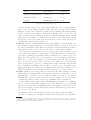
Tools
State spaces
Constraints
CL-Atse,Sat-MC,TA4SP
Scenario(s)
s ∈ Sc
OFMC,ProVerif
Scenario(s)
s∈S
Scyther
MaxRuns(n), Traces
n∈N
Table 1
State spaces explored by the tools
overapproximation (level = 0), or underapproximations of the overapproximation
(level > 0). In the Avispa default setting only level 0 is explored by default,
which in our test cases would have resulted in never finding any attacks, finding
in 57% of all cases “inconclusive”, and in the remaining 43% “correct”. For our
tests, we start at level 0 and increase the level parameter until it yields a result
that is not “inconclusive”, or until we hit the time bound. This usage pattern
is suggested both by the authors in [11] as well as by the output given by the
backend when used from the Avispa tool.
ProVerif: (Version: 1.13pl8) analyzes an unbounded number of runs by using overapproximation and represents protocols by Horn clauses. ProVerif [7, 9] accepts
two kind of input files: Horn clauses and a subset of the Pi-calculus. For uniformity with the other tools we choose to model protocols in the Pi-calculus.
ProVerif takes a description of a set of processes, where each defined processes
can be started any number of times. The tool uses an abstraction of fresh nonce
generation, enabling it perform unbounded verification for a class of protocols.
When ProVerif is given a protocol description, one of four things can happen.
First, the tool can report that the property is false, and will yield an attack
trace. Second, the property can be proven correct. Third, the tool reports that
the property cannot be proved, for example when a false attack is found. Fourth,
the tool might not terminate. It is possible to describe protocols in such a way
that RepScen(s) is correctly modeled, resulting in the exploration of Traces. Note
that the examples provided with ProVerif in general do not consider Traces.
Scyther: (Version: 1.0-beta6) verifies bounded and unbounded number of runs,
using a symbolic analysis with a backwards search based on (partially ordered)
patterns [20]. 3 Scyther does not require the input of scenarios. It explores
MaxRuns(n) or Traces: in the first case, even for small n, it can often draw
conclusions for Traces. In the second case, termination is not guaranteed.
In the default setup Scyther explores MaxRuns(5), is guaranteed to terminate,
and one of the following three situations can occur. First, the tool can establish
that the property holds for MaxRuns(5) (but not necessarily for Traces). Second,
the property is false, and an attack trace is shown. Third, the property can be
proven correct for Traces.
A summary of the tools and their respective state spaces is given in Table 1.
In order to compare the tools fairly, we match up the state spaces. As a candidate
3 Note that one of the authors is the author of the Scyther tool. We have tried to stay as objective as
possible. However, given the lack of comparative studies in this area, we feel that performing a thorough
comparison like this is better than not doing it.
for a common state space, any unbounded set (Traces, RepScen) is not suitable.
Furthermore, as Scenario can be used to simulate MaxRuns, but not the other way
around, we choose MaxRuns as the common denominator of the selected tools. We
automatically generate for each number of runs n the corresponding input files to
perform a fair time comparison over MaxRuns(n). Note that the time measurements
for the tools only include their actual running times, and does not include the time
needed for the generation of the input files.
Security properties
In the tests we analyze secrecy of nonces and session keys, i.e. is it possible that an
intruder learns a secret, as well as authentication, i.e. ensuring that an agent communicates with another agent and not with the intruder. For each of the selected
tools, secrecy can be modeled. This is not the case for authentication. TA4SP
cannot model authentication at all. Other tools provide support for varying notions of authentication, ranging from several forms of agreement [28] to synchronisation [23]. As an exception, we have not modeled authentication properties for
ProVerif although it supports authentication [8]. In the test archive there is a
file ’proverif-authentication.txt’ which gives some of the underlying reasons for this
choice.
Protocol test set
We consider a number of well-known protocols found in the literature [16, 15, 26, 4].
We select a set that can be modeled in all tools, which excludes protocols that use
e.g. algebraic properties. We have restricted ourselves to the following four protocols
: the famous Needham-Schroeder [32] using public keys, and the corrected version
by Lowe [27], EKE [6] which uses symmetric and asymmetric encryption, and finally
TLS [33] as an example of a larger protocol.
Final setup details
With respect to verification of multiple properties, we observe that some tools can
test multiple properties at once, some cannot, and some stop verification at the first
property where an attack is found and therefore do not evaluate all properties. We
decide to analyze just one security property at a time. Thus we create appropriate
files for each tool to check each security property for each protocol.
Producing all the input files requires intimate knowledge of each tool in order to
create comparable protocol descriptions. Guided by our results of the previous section, we automatically construct input files for the right scenarios for each protocol
and for each tool. This involves the generation of all concrete scenarios to match
the state space of a given number of runs. In such cases, we generate all scenarios
(ignoring renaming equivalences) in the first phase, and filter out scenarios that are
equivalent under renaming in the second phase. The resulting number of scenarios matches exactly with the theoretical number computed in the previous section.
For practical purposes we use a time limit of 30 seconds for each security property
considered.
All our tests can be reproduced: all used scripts and models are downloadable
from [21], and we have only used freely downloadable tools and well-known proto-
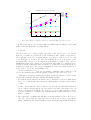
Needham-Schroeder : secrecy of na and nb for A,B
1000
CL-Atse
OFMC
ProVerif
Sat-MC
Scyther
TA4SP
100
time (s) 10
1
0.1
1
2
3
4
5
6
7
number of runs
Fig. 1. Time efficiency comparison of the tools on Needham-Schroeder [32], for secrecy
cols. The tests have been performed using an AMD Sempron 3000 processor with
1GB of ram and the Linux operating system.
3.2
Results
We used each tool to verify security properties of the selected protocols. In the
first set of results we present the total verification time, which corresponds to
the total time needed for verifying all the properties of each protocol, for each
tool. In Figure 1, we show the time for verifying the secrecy properties of the
Needham-Schroeder protocol as a function of the number of runs n of the explored
MaxRuns(n) state space. When a tool reaches the time limit, no conclusion can be
drawn about the verification time and hence no points (and connecting lines) are
displayed for such cases. For a better visualisation of the exponential behaviour of
some of the tools, we use a logarithmic scale.
In the technical report [22] we give further comments, time results for both
secrecy and authentication and the graphs obtained for the other protocols.
This time performance analysis shows that overall, the fastest tool is ProVerif,
then Scyther, TA4SP, CL-Atse, OFMC and finally Sat-MC.
•
ProVerif shows the fastest performance due to abstraction of nonces. This allows
the tool to obtain an efficient verification result quickly for an unbounded number
of runs.
•
Scyther outperforms the other bounded tools, and the fact that full verification
can be achieved means that it can often achieve the same performance as tools
based on abstraction methods. For some protocols, no full verification can be
performed, and the tool exhibits exponential verification time with respect to the
number of runs.
•
The behaviour of OFMC and CL-Atse is mostly similar for the tested protocols. We observe that the curves produced by these two tools are exponential,
which confirms the theoretical results for their underlying algorithms. Finally we
observe that CL-Atse is somewhat faster than OFMC for higher numbers of runs.
•
Sat-MC also has an exponential behaviour and is slower than CL-Atse and OFMC
for lower numbers of runs. In particular, Sat-MC has proven to be especially slow
for the more complex protocol TLS. In contrast, for the smaller protocols we
found that Sat-MC starts slower, but its time curve is less steep than that of CLAtse and OFMC, causing the curves to cross for particular setups. Consequently,
for some protocols and a high number of runs Sat-MC can be more efficient than
CL-Atse and OFMC, which can be observed in the graphs for the EKE protocol
found in the technical report [22].
3.3
Discussion
During these tests we ran into many peculiarities of the selected tools. We highlight
the issues we least expected.
In general, the modeling phase has proven to be time-consuming and error-prone,
even though we already knew the abstract protocols well. Modeling the protocols
in ProVerif took us significantly more time than for the other tools. Furthermore,
in the protocol description files provided with the tool, we have not found any
modeling of the famous protocol Needham-Schroeder which considers all the possible
interactions between the different principals, but only examples which model some
particular scenarios.
Avispa has a common input language called HLPSL for the four backend tools.
This has the benefit of allowing the user to use different tools based on a single
protocol modeling. However, in HLPSL, the link between agents and their keys is
usually hard-coded in the scenarios, making the protocol descriptions unsuitable for
unbounded verification, as one cannot in general predict how these links should be
for further role instances (outside of the given scenario).
Even in this limited test, we found two instances where TA4SP indicates that a
property of a protocol is false, where we expected the property to hold (see technical
report [22] for details). Because no traces are produced by the tool, we are unable
to investigate this further.
We realize that each of the tools has its particular strengths in other features
than just performance on simple protocols. However, the focus of this research is
clearly on the efficiency only. Furthermore, our tests involve only one particular
efficiency measure, and there are certainly other efficiency measures (e.g. mapping
all state spaces to symbolic scenarios, and many others) that we expect would lead
to slightly different results. However, given that no research has ever been performed
before on this topic, we see our tests as a base case for others to work from.
4
Conclusion
We have for the first time analyzed the state space models used in automatic security
protocol analysis. The analysis shows the relations between the various models,
revealing that protocol analysis tools actually explore by default very different state
spaces. This can lead to a false sense of security, because if a tool states that no
attack is found, only the explored state space is considered, and other attacks might
have been missed.
Next, we match up the state spaces in order to have different tools explore
similar state spaces, where we take into account that traces are considered equal up
to renaming of honest agents. This leads to a result relating the number of concrete
scenarios needed to cover all traces of a protocol involving a particular number of
runs.
We applied these theoretical results to a performance comparison of several automatic protocol verification tools. Rather unexpectedly, such a performance comparison has never been performed before. We modeled four well-known protocols
identically for each tool, and verify the protocols using the tools on similar state
spaces to obtain a fair performance comparison. The resulting scripts and data
analysis programs are available from [21].
The performance results show that ProVerif is the fastest of the tools under
consideration for this set of protocols, and that its approximation techniques are
effective. Scyther comes in as a very close second, and has the advantage of not
using approximations. CL-Atse and OFMC (with concrete sessions) are close to
each other, and are the most efficient of the Avispa tools, followed by Sat-MC. For
a higher number of runs of simple protocols, it seems that Sat-MC can become more
efficient than the two other tools. In some cases TA4SP can complement the other
Avispa tools, but in general it is significantly slower than the other tools that can
handle unbounded verification (Scyther and ProVerif), and has the added drawback
of not being able to show attack traces.
As future work we would like to include some other tools into the analysis,
e.g. Casper/FDR [29, 34] CoProVe [18], Hermes [13], STA [12], or the symbolic
sessions specification for other tools. To improve the reliability of the tests it would
be interesting to investigate a wider range of protocols.
References
[1] R. Amadio and W. Charatonik. On name generation and set-based analysis in the Dolev-Yao model.
In CONCUR’02, volume 2421 of LNCS, pages 499–514, 2002.
[2] A. Armando, D. Basin, Y. Boichut, Y. Chevalier, L. Compagna, J. Cuellar, P. H. Drielsma, P.-C. Heám,
O. Kouchnarenko, J. Mantovani, S. Mödersheim, D. von Oheimb, Michael R., J. Santiago, M. Turuani,
L. Viganò, and L. Vigneron. The AVISPA tool for the automated validation of internet security
protocols and applications. In Proc. of CAV’2005, LNCS 3576, pages 281–285. Springer, 2005.
[3] A. Armando and L. Compagna. An optimized intruder model for SAT-based model-checking of security
protocols. In A. Armando and L. Viganò, editors, ENTCS, volume 125, pages 91–108. Elsevier Science
Publishers, March 2005.
[4] AVISPA Project. AVISPA protocol library. Available at http://www.avispa-project.org/.
[5] D. Basin, S. Mödersheim, and L. Viganò. An On-The-Fly Model-Checker for Security Protocol Analysis.
In Proc. of ESORICS’03, volume 2808 of LNCS, pages 253–270. 2003.
[6] S.M. Bellovin and M. Merritt. Encrypted Key Exchange: Password-based protocols secure against
dictionary attacks. In SP ’92: Proc. of the 1992 IEEE Symposium on Security and Privacy, page 72.
IEEE Comp. Soc., 1992.
[7] B. Blanchet. An efficient cryptographic protocol verifier based on prolog rules. In Proc. CSFW’01,
pages 82–96. IEEE Comp. Soc. Press, 2001.
[8] B. Blanchet. From secrecy to authenticity in security protocols. In Proc. 9th International Static
Analysis Symposium (SAS), pages 342–359. Springer, 2002.
[9] B. Blanchet. Cryptographic Protocol Verifier User Manual, 2004.
[10] K. P. Bogart. An obvious proof of Burnside’s Lemma. Am. Math. Monthly, 98(12):927–928, 1991.
[11] Y. Boichut, P.-C. Héam, O. Kouchnarenko, and F. Oehl. Improvements on the Genet and Klay
technique to automatically verify security protocols. In Proc. AVIS’04, April 2004.
[12] M. Boreale. Symbolic trace analysis of cryptographic protocols. In Proc. 28th International Colloquium
on Automata, Languages and Programming (ICALP), LNCS. Springer, 2001.
[13] L. Bozga, Y. Lakhnech, and M. Perin. HERMES: An Automatic Tool for Verification of Secrecy in
Security Protocols. In Computer Aided Verification, 2003.
[14] W. Burnside. Theory of groups of finite order. Cambridge University Press., 1897.
[15] M. Burrows, M. Abadi, and R. Needham. A logic of authentication. In Proc. 12th ACM Symposium
on Operating System Principles (SOSP’89), pages 1–13. ACM Press, 1989.
[16] J.
Clark
and
J.
Jacob.
A
survey
of
authentication
http://www.cs.york.ac.uk/∼ jac/papers/drareviewps.ps, 1997.
protocol
literature.
[17] H. Comon-Lundh and V. Cortier. Security properties: two agents are sufficient. Science of Computer
Programming, 50(1-3):51–71, 2004.
[18] R. Corin and S. Etalle. An improved constraint-based system for the verification of security protocols.
In Proc. 9th International Static Analysis Symposium (SAS), volume 2477 of LNCS, pages 326–341.
Springer, Sep 2002.
[19] V. Cortier, S. Delaune, and P. Lafourcade. A survey of algebraic properties used in cryptographic
protocols. Journal of Computer Security, 14(1):1–43, 2006.
[20] C.J.F. Cremers. Scyther - Semantics and Verification of Security Protocols.
Eindhoven University of Technology, 2006.
Ph.D. dissertation,
[21] C.J.F.
Cremers
and
P.
Lafourcade.
Protocol
tool
comparison
http://people.inf.ethz.ch/cremersc/downloads/performancetest.tgz.
test
archive.
[22] C.J.F. Cremers and P. Lafourcade. Comparing state spaces in automatic security protocol verification,
April 2007. Technical Report 558, Department of Computer Science, ETH Zurich.
[23] C.J.F. Cremers, S. Mauw, and E.P. de Vink. Injective synchronisation: An extension of the
authentication hierarchy. Theoretical Computer Science, 2006.
[24] N. Durgin, P. Lincoln, J. Mitchell, and A. Scedrov. Undecidability of bounded security protocols. In
Proc. Workshop FMSP’99, 1999.
[25] M. Hussain and D. Seret. A comparative study of security protocols validation tools: HERMES vs.
AVISPA. In InProc. ICACT’06, volume 1, pages 303– 308, 2006.
[26] F.
Jacquemard.
Security
protocols
http://www.lsv.ens-cachan.fr/spore/index.html.
open
repository.
Available
[27] G. Lowe. An attack on the Needham-Schroeder public key authentication protocol.
Processing Letters, 56(3):131–133, November 1995.
at
Information
[28] G. Lowe. A hierarchy of authentication specifications. In Proc. 10th IEEE Computer Security
Foundations Workshop (CSFW), pages 31–44. IEEE Computer Society, 1997.
[29] G. Lowe. Casper: a compiler for the analysis of security protocols. J. Comput. Secur., 6(1-2):53–84,
1998.
[30] C. Meadows. Language generation and verification in the NRL protocol analyzer. In Proc. CSFW’96,
pages 48–62. IEEE Comp. Soc. Press, 1996.
[31] J.C. Mitchell, M. Mitchell, and U. Stern. Automated analysis of cryptographic protocols using Murphi.
In IEEE Symposium on Security and Privacy, May 1997.
[32] R. Needham and M. Schroeder. Using encryption for authentication in large networks of computers.
Communication of the ACM, 21(12):993–999, 1978.
[33] L. C. Paulson. Inductive analysis of the internet protocol TLS. ACM Trans. Inf. Syst. Secur., 2(3):332–
351, 1999.
[34] A. W. Roscoe. Modelling and verifying key-exchange protocols using CSP and FDR.
Symposium on Foundations of Secure Systems, 1995.
In IEEE
[35] D. Song, S. Berezin, and A. Perrig. Athena: A novel approach to efficient automatic security protocol
analysis. Journal of Computer Security, 9(1/2):47–74, 2001.
[36] M. Turuani. The CL-Atse protocol analyser. In Proc. RTA’06, LNCS, August 2006.
[37] L. Viganò. Automated security protocol analysis with the AVISPA tool. ENTCS, 155:61–86, 2006.