1
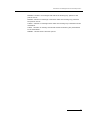
Dialogic® DSI SS7G41 Signaling Server DPC The Destination Point Code who’s status the concerned point code needs to be informed about. If set to ANY the Concerned Point Code will be concerned about all point codes in the network context. If explicitly configured, the DPC must have already been configured as one of the following: A DPC associated with an MTP Route, A DPC associated with a SIGTRAN Route, A DPC associated with a SIGTRAN Remote Application Server, An OPC associated with an MTP Link Set, or an OPC associated with a SIGTRAN Local Application Server. CONC_DOMAIN The Concerned Domain that is to be notified of the change in status. Possible values are: o AS The Concerned Entity is an Application Server which has been configured as a SIGTRAN Remote Application Server. o NETWORK The Concerned Entity is an Adjacent Point Code in the NETWORK domain. o UPART The Concerned Entity is a User Part (identified by Service Indicator). The User Part associated with the Service Indicator should already be specified on a routing origin command. CONC_NC The Network Context in which the Concerned Entity exists. For ASP entities it must be the same NC as that used on the ASLINK. If not specified, CONC_NC defaults to the same value as NC. CONC_ENT The Concerned Entity which is a reference to a specific entity in the Concerned Domain which will be informed of the change in status of the DPC. If CONC_DOMAIN=NETWORK then CONC_ENT is the adjacent point code that needs to be notified. If set to ANY then all point codes in the CONC_NC will be informed. If CONC_DOMAIN=AS then CONC_ENT is the Remote Application Server (RAS) that is concerned about the status of the DPC. If set to ANY then all Remote Application Servers in the CONC_NC will be informed. If CONC_DOMAIN=UPART then CONC_ENT is the Service Indicator (SI). 14 ALIAS An Alias for the Destination Point Code that will be presented to the affected entity as the Point Code that has changed state. NONE or Number from 0 to 16777215. An Alias Point Code may be used for example when a change in state for a particular point code in one network should be represented as a change in state for a point code that exists in a different network. If an Alias point code is specified the DPC must be explicitly defined. ALIAS defaults to NONE if not specified.