1
Safety guidelines
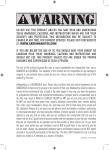
Using a kite is dangerous and can cause severe injuries.
Before use, carefully read this manual.
Release of liability
By assembling or using this CrazyFly kiteboarding product (further named only as product), you agree that you have
read and understood the CrazyFly kiteboarding manual (further named only as manual) before using this product. You
also agree that you will ensure any other user of this product to read and understand this manual before allowing this
person to use this product.
Assumption of risk
Using this product involves certain inherent risks, dangers and hazards, and can cause severe injuries, damage, or
death to both the user and to nonuser third party. The user of this product assumes and accepts any and all risks related
to the usage of this product. The risk of using this product can be greatly reduced by acquiring training lessons in an
accredited kiteboarding school, following the guideline principals of this manual and by using common sense.
For your safety and the safety of others:
•• We strongly advice every user of this equipment to take professional lessons in an accredited kitesurfing school.
•• Always be extremely careful when using this equipment.
•• The safest way to use this equipment is on water.
•• You are responsible for yourself and others when using this product.
•• Always use the safety system in case of an emergency.
•• Always use the right kite size for your ability and wind conditions. Do not over estimate your abilities. Be aware that
strong gusts can be life threatening.
•• Never kite in stormy weather and strong gusts. The kite may attract lightning.
•• Never kite when there are obstacles downwind of you.
•• Never kite in off or on shore wind conditions.
•• Never kite under the effect of drugs and alcohol.
•• Never kite alone.
•• Never kite without a safety system.
•• Never tie yourself to the kite permanently. You should always be able to let go of the kite rapidly in a case of emergency.
•• Do not try to grab a kite by its lines. Under tension, they can be as lethal as a razor blade.
•• Do not use this kite as a flying device or a floating device.
Meaningful tips for your safety and the safety of others:
1. Helmet, life vest and harness. It is highly recommended to wear a helmet, life vest and a harness when learning to
kite and using this product. The harness should be comfortable and of strong manufacture.
2. Choose your practice spot carefully. The best spot for learning to use this product is an accredited kiteboarding
school. When choosing a spot after taking kiteboarding lesson in an accredited kiteboarding school, look for:
•• The least crowded place (but do not kite alone).
•• Spot which is free of obstacles, such as houses, trees, electric lines, cars etc. Always consider enough room for
error.
•• Shallow water with sideshore winds.
•• It is always good to have a safety boat near by.
3. Check for weather and wind conditions. Check with the local weather forecast. Look for the wind direction and
speed, which might change during the day. You should not ride in stormy weather or strong gusts. The kite may
attract lighting.
4. Respect other kiters. Always look around you and pay attention to other kiters. Do not hesitate to help others
launch or land their kites. Never unwind your kite line on top of others’. Never land your kite on top of someone’s
lines, it may cause danger.
5. Respect people standing by. Always inform spectators about the power of the kite and the potential risk for them
when staying downwind from a kite surfer.
6. Learn to use your safety system. Always check carefully before flying this kite, if the safety system is not worn out
and works properly. Learn how to use the push away safety system. Never fly this kite without the safety system,
which allows you to kill rapidly the power of the kite. Use a safety leash which connects you to the kite. This leash
should also be releasable for cases of emergency.
www.crazyflykites.com
3