1
The OCaml system
release 4.00
Documentation and user’s manual
Xavier Leroy,
Damien Doligez, Alain Frisch, Jacques Garrigue, Didier Rémy and Jérôme Vouillon
July 26, 2012
Copyright © 2012 Institut National de Recherche en Informatique et en Automatique
2
Contents
I
An introduction to OCaml
9
1 The
1.1
1.2
1.3
1.4
1.5
1.6
1.7
1.8
1.9
core language
Basics . . . . . . . . . . . . . . . .
Data types . . . . . . . . . . . . . .
Functions as values . . . . . . . . .
Records and variants . . . . . . . .
Imperative features . . . . . . . . .
Exceptions . . . . . . . . . . . . . .
Symbolic processing of expressions
Pretty-printing and parsing . . . .
Standalone OCaml programs . . . .
2 The
2.1
2.2
2.3
2.4
2.5
module system
Structures . . . . . . . . . . . . .
Signatures . . . . . . . . . . . . .
Functors . . . . . . . . . . . . . .
Functors and type abstraction . .
Modules and separate compilation
3 Objects in OCaml
3.1
Classes and objects .
3.2
Immediate objects . .
3.3
Reference to self . . .
3.4
Initializers . . . . . .
3.5
Virtual methods . . .
3.6
Private methods . . .
3.7
Class interfaces . . .
3.8
Inheritance . . . . . .
3.9
Multiple inheritance .
3.10 Parameterized classes
3.11 Polymorphic methods
3.12 Using coercions . . .
3.13 Functional objects . .
3.14 Cloning objects . . .
3.15 Recursive classes . .
.
.
.
.
.
.
.
.
.
.
.
.
.
.
.
.
.
.
.
.
.
.
.
.
.
.
.
.
.
.
.
.
.
.
.
.
.
.
.
.
.
.
.
.
.
.
.
.
.
.
.
.
.
.
.
.
.
.
.
.
.
.
.
.
.
.
.
.
.
.
.
.
.
.
.
.
.
.
.
.
.
.
.
.
.
.
.
.
.
.
.
.
.
.
.
.
.
.
.
.
.
.
.
.
.
.
.
.
.
.
.
.
.
.
.
.
.
.
.
.
.
.
.
.
.
.
.
.
.
.
.
.
.
.
.
.
.
.
.
.
.
.
.
.
.
.
.
.
.
.
.
.
.
.
.
.
.
.
.
.
.
.
.
.
.
.
.
.
.
.
.
.
.
.
.
.
.
.
.
.
.
.
.
1
.
.
.
.
.
.
.
.
.
.
.
.
.
.
.
.
.
.
.
.
.
.
.
.
.
.
.
.
.
.
.
.
.
.
.
.
.
.
.
.
.
.
.
.
.
.
.
.
.
.
.
.
.
.
.
.
.
.
.
.
.
.
.
.
.
.
.
.
.
.
.
.
.
.
.
.
.
.
.
.
.
.
.
.
.
.
.
.
.
.
.
.
.
.
.
.
.
.
.
.
.
.
.
.
.
.
.
.
.
.
.
.
.
.
.
.
.
.
.
.
.
.
.
.
.
.
.
.
.
.
.
.
.
.
.
.
.
.
.
.
.
.
.
.
.
.
.
.
.
.
.
.
.
.
.
.
.
.
.
.
.
.
.
.
.
.
.
.
.
.
.
.
.
.
.
.
.
.
.
.
.
.
.
.
.
.
.
.
.
.
.
.
.
.
.
.
.
.
.
.
.
.
.
.
.
.
.
.
.
.
.
.
.
.
.
.
.
.
.
.
.
.
.
.
.
.
.
.
.
.
.
.
.
.
.
.
.
.
.
.
.
.
.
.
.
.
.
.
.
.
.
.
.
.
.
.
.
.
.
.
.
.
.
.
.
.
.
.
.
.
.
.
.
.
.
.
.
.
.
.
.
.
.
.
.
.
.
.
.
.
.
.
.
.
.
.
.
.
.
.
.
.
.
.
.
.
.
.
.
.
.
.
.
.
.
.
.
.
.
.
.
.
.
.
.
.
.
.
.
.
.
.
.
.
.
.
.
.
.
.
.
.
.
.
.
.
.
.
.
.
.
.
.
.
.
.
.
.
.
.
.
.
.
.
.
.
.
.
.
.
.
.
.
.
.
.
.
.
.
.
.
.
.
.
.
.
.
.
.
.
.
.
.
.
.
.
.
.
.
.
.
.
.
.
.
.
.
.
.
.
.
.
.
.
.
.
.
.
.
.
.
.
.
.
.
.
.
.
.
.
.
.
.
.
.
.
.
.
.
.
.
.
.
.
.
.
.
.
.
.
.
.
.
.
.
.
.
.
.
.
.
.
.
.
.
.
.
.
.
.
.
.
.
.
.
.
.
.
.
.
.
.
.
.
.
.
.
.
.
.
.
.
.
.
.
.
.
.
.
.
.
.
.
.
.
.
.
.
.
.
.
.
.
.
.
.
.
.
.
.
.
.
.
.
.
.
.
.
.
.
.
.
.
.
.
.
.
.
.
.
.
.
.
.
.
.
.
.
.
.
.
.
.
.
.
.
.
.
.
.
.
.
.
.
.
.
.
.
.
.
.
.
.
.
.
.
.
.
.
.
.
.
.
.
.
.
.
.
.
.
.
.
.
.
.
.
.
.
.
.
.
.
.
.
.
.
.
.
.
.
.
.
.
.
.
.
.
.
.
.
.
.
.
.
.
.
.
.
.
.
.
.
.
.
.
.
.
.
.
.
.
.
.
.
.
.
.
.
.
.
.
.
.
.
.
.
.
.
.
.
.
.
.
.
.
.
.
.
.
.
.
.
.
.
.
.
.
.
.
.
.
.
.
.
.
.
.
.
.
.
.
.
.
.
.
.
.
.
.
.
.
.
.
.
.
11
11
12
13
14
16
18
19
20
23
.
.
.
.
.
25
25
26
27
29
31
.
.
.
.
.
.
.
.
.
.
.
.
.
.
.
33
33
36
37
38
38
40
42
43
44
44
47
50
54
55
58
2
3.16
3.17
Binary methods . . . . . . . . . . . . . . . . . . . . . . . . . . . . . . . . . . . . . . 58
Friends . . . . . . . . . . . . . . . . . . . . . . . . . . . . . . . . . . . . . . . . . . . 60
4 Labels and variants
63
4.1
Labels . . . . . . . . . . . . . . . . . . . . . . . . . . . . . . . . . . . . . . . . . . . 63
4.2
Polymorphic variants . . . . . . . . . . . . . . . . . . . . . . . . . . . . . . . . . . . 69
5 Advanced examples with classes and
5.1
Extended example: bank accounts .
5.2
Simple modules as classes . . . . .
5.3
The subject/observer pattern . . .
II
modules
. . . . . . . . . . . . . . . . . . . . . . . . . . .
. . . . . . . . . . . . . . . . . . . . . . . . . . .
. . . . . . . . . . . . . . . . . . . . . . . . . . .
The OCaml language
6 The
6.1
6.2
6.3
6.4
6.5
6.6
6.7
6.8
6.9
6.10
6.11
6.12
OCaml language
Lexical conventions . . . . . . . . . . . . . . .
Values . . . . . . . . . . . . . . . . . . . . . .
Names . . . . . . . . . . . . . . . . . . . . . .
Type expressions . . . . . . . . . . . . . . . .
Constants . . . . . . . . . . . . . . . . . . . .
Patterns . . . . . . . . . . . . . . . . . . . . .
Expressions . . . . . . . . . . . . . . . . . . .
Type and exception definitions . . . . . . . . .
Classes . . . . . . . . . . . . . . . . . . . . . .
Module types (module specifications) . . . . .
Module expressions (module implementations)
Compilation units . . . . . . . . . . . . . . . .
73
73
79
85
89
.
.
.
.
.
.
.
.
.
.
.
.
.
.
.
.
.
.
.
.
.
.
.
.
.
.
.
.
.
.
.
.
.
.
.
.
.
.
.
.
.
.
.
.
.
.
.
.
.
.
.
.
.
.
.
.
.
.
.
.
7 Language extensions
7.1
Integer literals for types int32, int64 and nativeint
7.2
Streams and stream parsers . . . . . . . . . . . . . . .
7.3
Recursive definitions of values . . . . . . . . . . . . . .
7.4
Range patterns . . . . . . . . . . . . . . . . . . . . . .
7.5
Assertion checking . . . . . . . . . . . . . . . . . . . . .
7.6
Lazy evaluation . . . . . . . . . . . . . . . . . . . . . .
7.7
Local modules . . . . . . . . . . . . . . . . . . . . . . .
7.8
Recursive modules . . . . . . . . . . . . . . . . . . . . .
7.9
Private types . . . . . . . . . . . . . . . . . . . . . . . .
7.10 Local opens . . . . . . . . . . . . . . . . . . . . . . . .
7.11 Record notations . . . . . . . . . . . . . . . . . . . . .
7.12 Explicit polymorphic type annotations . . . . . . . . .
7.13 Locally abstract types . . . . . . . . . . . . . . . . . .
7.14 First-class modules . . . . . . . . . . . . . . . . . . . .
7.15 Recovering the type of a module . . . . . . . . . . . . .
7.16 Substituting inside a signature . . . . . . . . . . . . . .
.
.
.
.
.
.
.
.
.
.
.
.
.
.
.
.
.
.
.
.
.
.
.
.
.
.
.
.
.
.
.
.
.
.
.
.
.
.
.
.
.
.
.
.
.
.
.
.
.
.
.
.
.
.
.
.
.
.
.
.
.
.
.
.
.
.
.
.
.
.
.
.
.
.
.
.
.
.
.
.
.
.
.
.
.
.
.
.
.
.
.
.
.
.
.
.
.
.
.
.
.
.
.
.
.
.
.
.
.
.
.
.
.
.
.
.
.
.
.
.
.
.
.
.
.
.
.
.
.
.
.
.
.
.
.
.
.
.
.
.
.
.
.
.
.
.
.
.
.
.
.
.
.
.
.
.
.
.
.
.
.
.
.
.
.
.
.
.
.
.
.
.
.
.
.
.
.
.
.
.
.
.
.
.
.
.
.
.
.
.
.
.
.
.
.
.
.
.
.
.
.
.
.
.
.
.
.
.
.
.
.
.
.
.
.
.
.
.
.
.
.
.
.
.
.
.
.
.
.
.
.
.
.
.
.
.
.
.
.
.
.
.
.
.
.
.
.
.
.
.
.
.
.
.
.
.
.
.
.
.
.
.
.
.
.
.
.
.
.
.
.
.
.
.
.
.
.
.
.
.
.
.
.
.
.
.
.
.
.
.
.
.
.
.
.
.
.
.
.
.
.
.
.
.
.
.
.
.
.
.
.
.
.
.
.
.
.
.
.
.
.
.
.
.
.
.
.
.
.
.
.
.
.
.
.
.
.
.
.
.
.
.
.
.
.
.
.
.
.
.
.
.
.
.
.
.
.
.
.
.
.
.
.
.
.
.
.
.
.
.
.
.
.
.
.
.
.
.
.
.
.
.
.
.
.
.
.
.
.
.
.
.
91
91
95
97
99
103
103
106
117
120
126
130
133
.
.
.
.
.
.
.
.
.
.
.
.
.
.
.
.
.
.
.
.
.
.
.
.
.
.
.
.
.
.
.
.
.
.
.
.
.
.
.
.
135
. 135
. 135
. 135
. 137
. 137
. 137
. 138
. 138
. 139
. 142
. 142
. 143
. 143
. 145
. 146
. 147
3
7.17
7.18
III
Explicit overriding in class definitions . . . . . . . . . . . . . . . . . . . . . . . . . . 148
Generalized algebraic datatypes . . . . . . . . . . . . . . . . . . . . . . . . . . . . . 149
The OCaml tools
8 Batch compilation (ocamlc)
8.1
Overview of the compiler . .
8.2
Options . . . . . . . . . . . .
8.3
Modules and the file system
8.4
Common errors . . . . . . .
153
.
.
.
.
.
.
.
.
.
.
.
.
.
.
.
.
.
.
.
.
.
.
.
.
.
.
.
.
.
.
.
.
.
.
.
.
.
.
.
.
.
.
.
.
.
.
.
.
.
.
.
.
.
.
.
.
.
.
.
.
.
.
.
.
.
.
.
.
.
.
.
.
.
.
.
.
.
.
.
.
155
. 155
. 156
. 164
. 164
9 The
9.1
9.2
9.3
9.4
9.5
9.6
toplevel system (ocaml)
Options . . . . . . . . . . . . . . . . . . . . . . .
Toplevel directives . . . . . . . . . . . . . . . . .
The toplevel and the module system . . . . . .
Common errors . . . . . . . . . . . . . . . . . .
Building custom toplevel systems: ocamlmktop .
Options . . . . . . . . . . . . . . . . . . . . . . .
.
.
.
.
.
.
.
.
.
.
.
.
.
.
.
.
.
.
.
.
.
.
.
.
.
.
.
.
.
.
.
.
.
.
.
.
.
.
.
.
.
.
.
.
.
.
.
.
.
.
.
.
.
.
.
.
.
.
.
.
.
.
.
.
.
.
.
.
.
.
.
.
.
.
.
.
.
.
.
.
.
.
.
.
.
.
.
.
.
.
.
.
.
.
.
.
.
.
.
.
.
.
.
.
.
.
.
.
.
.
.
.
.
.
.
.
.
.
.
.
10 The
10.1
10.2
10.3
10.4
runtime system (ocamlrun)
Overview . . . . . . . . . . . . . . .
Options . . . . . . . . . . . . . . . .
Dynamic loading of shared libraries
Common errors . . . . . . . . . . .
.
.
.
.
.
.
.
.
.
.
.
.
.
.
.
.
.
.
.
.
.
.
.
.
.
.
.
.
.
.
.
.
.
.
.
.
.
.
.
.
169
170
172
174
174
175
175
.
.
.
.
.
.
.
.
.
.
.
.
.
.
.
.
.
.
.
.
.
.
.
.
.
.
.
.
.
.
.
.
.
.
.
.
.
.
.
.
.
.
.
.
.
.
.
.
.
.
.
.
.
.
.
.
.
.
.
.
.
.
.
.
.
.
.
.
.
.
.
.
.
.
.
.
.
.
.
.
.
.
.
.
.
.
.
.
177
. 177
. 178
. 180
. 180
11 Native-code compilation (ocamlopt)
11.1 Overview of the compiler . . . . . . . . . . .
11.2 Options . . . . . . . . . . . . . . . . . . . . .
11.3 Common errors . . . . . . . . . . . . . . . .
11.4 Running executables produced by ocamlopt
11.5 Compatibility with the bytecode compiler .
.
.
.
.
.
.
.
.
.
.
.
.
.
.
.
.
.
.
.
.
.
.
.
.
.
.
.
.
.
.
.
.
.
.
.
.
.
.
.
.
.
.
.
.
.
.
.
.
.
.
.
.
.
.
.
.
.
.
.
.
.
.
.
.
.
.
.
.
.
.
.
.
.
.
.
.
.
.
.
.
.
.
.
.
.
.
.
.
.
.
.
.
.
.
.
.
.
.
.
.
.
.
.
.
.
.
.
.
.
.
183
183
184
192
192
193
12 Lexer and parser generators (ocamllex, ocamlyacc)
12.1 Overview of ocamllex . . . . . . . . . . . . . . . . .
12.2 Syntax of lexer definitions . . . . . . . . . . . . . . .
12.3 Overview of ocamlyacc . . . . . . . . . . . . . . . . .
12.4 Syntax of grammar definitions . . . . . . . . . . . . .
12.5 Options . . . . . . . . . . . . . . . . . . . . . . . . . .
12.6 A complete example . . . . . . . . . . . . . . . . . . .
12.7 Common errors . . . . . . . . . . . . . . . . . . . . .
.
.
.
.
.
.
.
.
.
.
.
.
.
.
.
.
.
.
.
.
.
.
.
.
.
.
.
.
.
.
.
.
.
.
.
.
.
.
.
.
.
.
.
.
.
.
.
.
.
.
.
.
.
.
.
.
.
.
.
.
.
.
.
.
.
.
.
.
.
.
.
.
.
.
.
.
.
.
.
.
.
.
.
.
.
.
.
.
.
.
.
.
.
.
.
.
.
.
.
.
.
.
.
.
.
.
.
.
.
.
.
.
.
.
.
.
.
.
.
195
195
196
200
200
203
203
205
.
.
.
.
.
.
.
.
.
.
.
.
.
.
.
.
13 Dependency generator (ocamldep)
207
13.1 Options . . . . . . . . . . . . . . . . . . . . . . . . . . . . . . . . . . . . . . . . . . . 207
13.2 A typical Makefile . . . . . . . . . . . . . . . . . . . . . . . . . . . . . . . . . . . . . 208
4
14 The
14.1
14.2
14.3
14.4
14.5
browser/editor (ocamlbrowser)
Invocation . . . . . . . . . . . . . .
Viewer . . . . . . . . . . . . . . . .
Module browsing . . . . . . . . . .
File editor . . . . . . . . . . . . . .
Shell . . . . . . . . . . . . . . . . .
15 The
15.1
15.2
15.3
15.4
documentation generator (ocamldoc)
Usage . . . . . . . . . . . . . . . . . . . .
Syntax of documentation comments . . .
Custom generators . . . . . . . . . . . .
Adding command line options . . . . . .
16 The debugger (ocamldebug)
16.1 Compiling for debugging . .
16.2 Invocation . . . . . . . . . .
16.3 Commands . . . . . . . . . .
16.4 Executing a program . . . .
16.5 Breakpoints . . . . . . . . .
16.6 The call stack . . . . . . . .
16.7 Examining variable values .
16.8 Controlling the debugger . .
16.9 Miscellaneous commands . .
16.10 Running the debugger under
.
.
.
.
.
.
.
.
.
.
.
.
.
.
.
.
.
.
.
.
.
.
.
.
.
.
.
.
.
.
.
.
.
.
.
.
.
.
.
.
.
.
.
.
.
.
.
.
.
.
.
.
.
.
.
.
.
.
.
.
.
.
.
.
.
.
.
.
.
.
.
.
.
.
.
.
.
.
.
.
.
.
.
.
.
.
.
.
.
.
.
.
.
.
.
.
.
.
.
.
.
.
.
.
.
.
.
.
.
.
.
.
.
.
.
.
.
.
.
.
.
.
.
.
.
.
.
.
.
.
211
. 211
. 212
. 212
. 213
. 213
.
.
.
.
.
.
.
.
.
.
.
.
.
.
.
.
.
.
.
.
.
.
.
.
.
.
.
.
.
.
.
.
.
.
.
.
.
.
.
.
.
.
.
.
.
.
.
.
.
.
.
.
.
.
.
.
.
.
.
.
.
.
.
.
.
.
.
.
.
.
.
.
.
.
.
.
.
.
.
.
.
.
.
.
.
.
.
.
.
.
.
.
215
. 215
. 222
. 231
. 234
.
.
.
.
.
.
.
.
.
.
.
.
.
.
.
.
.
.
.
.
.
.
.
.
.
.
.
.
.
.
.
.
.
.
.
.
.
.
.
.
.
.
.
.
.
.
.
.
.
.
.
.
.
.
.
.
.
.
.
.
.
.
.
.
.
.
.
.
.
.
.
.
.
.
.
.
.
.
.
.
.
.
.
.
.
.
.
.
.
.
.
.
.
.
.
.
.
.
.
.
.
.
.
.
.
.
.
.
.
.
.
.
.
.
.
.
.
.
.
.
.
.
.
.
.
.
.
.
.
.
.
.
.
.
.
.
.
.
.
.
.
.
.
.
.
.
.
.
.
.
.
.
.
.
.
.
.
.
.
.
.
.
.
.
.
.
.
.
.
.
.
.
.
.
.
.
.
.
.
.
.
.
.
.
.
.
.
.
.
.
.
.
.
.
.
.
.
.
.
.
.
.
.
.
.
.
.
.
.
.
.
.
.
.
.
.
.
.
.
.
.
.
.
.
.
.
.
.
.
.
.
.
.
.
.
.
.
.
.
.
.
.
.
.
.
.
.
.
.
.
.
.
.
.
.
.
.
.
.
.
.
.
.
.
.
.
.
.
.
.
235
235
235
236
237
240
240
241
242
245
245
.
.
.
.
.
.
.
.
.
.
.
.
.
.
.
.
.
.
.
.
.
.
.
.
.
.
.
.
.
.
.
.
.
.
.
.
.
.
.
.
.
.
.
.
.
.
.
.
.
.
.
.
.
.
.
.
.
.
.
.
.
.
.
.
.
.
.
.
.
.
.
.
.
.
.
.
.
.
.
.
.
.
.
.
.
.
.
.
.
.
.
.
.
.
.
.
.
.
.
.
.
.
.
.
.
.
.
.
247
247
248
248
249
ocamlbuild compilation manager
Features of ocamlbuild . . . . . . .
Limitations . . . . . . . . . . . . . . .
Using ocamlbuild . . . . . . . . . . .
Appendix: Motivations . . . . . . . .
Appendix: Summary of default rules
.
.
.
.
.
.
.
.
.
.
.
.
.
.
.
.
.
.
.
.
.
.
.
.
.
.
.
.
.
.
.
.
.
.
.
.
.
.
.
.
.
.
.
.
.
.
.
.
.
.
.
.
.
.
.
.
.
.
.
.
.
.
.
.
.
.
.
.
.
.
.
.
.
.
.
.
.
.
.
.
.
.
.
.
.
.
.
.
.
.
.
.
.
.
.
.
.
.
.
.
.
.
.
.
.
.
.
.
.
.
.
.
.
.
.
.
.
.
.
.
.
.
.
.
.
.
.
.
.
.
251
251
252
252
264
265
19 Interfacing C with OCaml
19.1 Overview and compilation information . . . .
19.2 The value type . . . . . . . . . . . . . . . . .
19.3 Representation of OCaml data types . . . . .
19.4 Operations on values . . . . . . . . . . . . . .
19.5 Living in harmony with the garbage collector
19.6 A complete example . . . . . . . . . . . . . . .
19.7 Advanced topic: callbacks from C to OCaml .
.
.
.
.
.
.
.
.
.
.
.
.
.
.
.
.
.
.
.
.
.
.
.
.
.
.
.
.
.
.
.
.
.
.
.
.
.
.
.
.
.
.
.
.
.
.
.
.
.
.
.
.
.
.
.
.
.
.
.
.
.
.
.
.
.
.
.
.
.
.
.
.
.
.
.
.
.
.
.
.
.
.
.
.
.
.
.
.
.
.
.
.
.
.
.
.
.
.
.
.
.
.
.
.
.
.
.
.
.
.
.
.
.
.
.
.
.
.
.
.
.
.
.
.
.
.
.
.
.
.
.
.
.
.
.
.
.
.
.
.
.
.
.
.
.
.
.
267
267
273
274
277
280
284
287
. . . .
. . . .
. . . .
. . . .
. . . .
. . . .
. . . .
. . . .
. . . .
Emacs
17 Profiling (ocamlprof )
17.1 Compiling for profiling . . . .
17.2 Profiling an execution . . . . .
17.3 Printing profiling information
17.4 Time profiling . . . . . . . . .
18 The
18.1
18.2
18.3
18.4
18.5
.
.
.
.
.
.
.
.
.
.
.
.
5
19.8
19.9
19.10
19.11
IV
Advanced example with callbacks . . . . . . . .
Advanced topic: custom blocks . . . . . . . . .
Advanced topic: multithreading . . . . . . . . .
Building mixed C/OCaml libraries: ocamlmklib
.
.
.
.
.
.
.
.
.
.
.
.
.
.
.
.
.
.
.
.
.
.
.
.
.
.
.
.
.
.
.
.
.
.
.
.
.
.
.
.
.
.
.
.
.
.
.
.
.
.
.
.
.
.
.
.
.
.
.
.
.
.
.
.
.
.
.
.
.
.
.
.
.
.
.
.
.
.
.
.
The OCaml library
291
293
298
300
303
20 The core library
305
20.1 Built-in types and predefined exceptions . . . . . . . . . . . . . . . . . . . . . . . . 305
20.2 Module Pervasives : The initially opened module. . . . . . . . . . . . . . . . . . . 308
21 The standard library
21.1 Module Arg : Parsing of command line arguments. . . . . . . . . . . . . . .
21.2 Module Array : Array operations. . . . . . . . . . . . . . . . . . . . . . . . .
21.3 Module Buffer : Extensible string buffers. . . . . . . . . . . . . . . . . . . .
21.4 Module Callback : Registering OCaml values with the C runtime. . . . . .
21.5 Module Char : Character operations. . . . . . . . . . . . . . . . . . . . . . .
21.6 Module Complex : Complex numbers. . . . . . . . . . . . . . . . . . . . . . .
21.7 Module Digest : MD5 message digest. . . . . . . . . . . . . . . . . . . . . .
21.8 Module Filename : Operations on file names. . . . . . . . . . . . . . . . . .
21.9 Module Format : Pretty printing. . . . . . . . . . . . . . . . . . . . . . . . .
21.10 Module Gc : Memory management control and statistics; finalised values. . .
21.11 Module Genlex : A generic lexical analyzer. . . . . . . . . . . . . . . . . . .
21.12 Module Hashtbl : Hash tables and hash functions. . . . . . . . . . . . . . .
21.13 Module Int32 : 32-bit integers. . . . . . . . . . . . . . . . . . . . . . . . . .
21.14 Module Int64 : 64-bit integers. . . . . . . . . . . . . . . . . . . . . . . . . .
21.15 Module Lazy : Deferred computations. . . . . . . . . . . . . . . . . . . . . .
21.16 Module Lexing : The run-time library for lexers generated by ocamllex. . .
21.17 Module List : List operations. . . . . . . . . . . . . . . . . . . . . . . . . .
21.18 Module Map : Association tables over ordered types. . . . . . . . . . . . . . .
21.19 Module Marshal : Marshaling of data structures. . . . . . . . . . . . . . . .
21.20 Module MoreLabels : Extra labeled libraries. . . . . . . . . . . . . . . . . .
21.21 Module Nativeint : Processor-native integers. . . . . . . . . . . . . . . . . .
21.22 Module Oo : Operations on objects . . . . . . . . . . . . . . . . . . . . . . .
21.23 Module Parsing : The run-time library for parsers generated by ocamlyacc.
21.24 Module Printexc : Facilities for printing exceptions. . . . . . . . . . . . . .
21.25 Module Printf : Formatted output functions. . . . . . . . . . . . . . . . . .
21.26 Module Queue : First-in first-out queues. . . . . . . . . . . . . . . . . . . . .
21.27 Module Random : Pseudo-random number generators (PRNG). . . . . . . . .
21.28 Module Scanf : Formatted input functions. . . . . . . . . . . . . . . . . . .
21.29 Module Set : Sets over ordered types. . . . . . . . . . . . . . . . . . . . . .
21.30 Module Sort : Sorting and merging lists. . . . . . . . . . . . . . . . . . . . .
21.31 Module Stack : Last-in first-out stacks. . . . . . . . . . . . . . . . . . . . . .
21.32 Module StdLabels : Standard labeled libraries. . . . . . . . . . . . . . . . .
.
.
.
.
.
.
.
.
.
.
.
.
.
.
.
.
.
.
.
.
.
.
.
.
.
.
.
.
.
.
.
.
.
.
.
.
.
.
.
.
.
.
.
.
.
.
.
.
.
.
.
.
.
.
.
.
.
.
.
.
.
.
.
.
.
.
.
.
.
.
.
.
.
.
.
.
.
.
.
.
.
.
.
.
.
.
.
.
.
.
.
.
.
.
.
.
.
.
.
.
.
.
.
.
.
.
.
.
.
.
.
.
.
.
.
.
.
.
.
.
.
.
.
.
.
.
.
.
327
329
332
335
337
337
338
339
340
343
355
360
361
367
370
373
375
377
382
385
387
392
395
395
396
397
400
402
404
413
416
417
418
6
21.33
21.34
21.35
21.36
Module
Module
Module
Module
Stream : Streams and parsers. . . . . . . . . .
String : String operations. . . . . . . . . . . .
Sys : System interface. . . . . . . . . . . . . .
Weak : Arrays of weak pointers and hash tables
. . . . . . . . . .
. . . . . . . . . .
. . . . . . . . . .
of weak pointers.
.
.
.
.
.
.
.
.
.
.
.
.
.
.
.
.
.
.
.
.
.
.
.
.
421
422
426
430
22 The unix library: Unix system calls
435
22.1 Module Unix : Interface to the Unix system . . . . . . . . . . . . . . . . . . . . . . 435
22.2 Module UnixLabels: labelized version of the interface . . . . . . . . . . . . . . . . 469
23 The
23.1
23.2
23.3
num library: arbitrary-precision rational arithmetic
471
Module Num : Operation on arbitrary-precision numbers. . . . . . . . . . . . . . . . 471
Module Big_int : Operations on arbitrary-precision integers. . . . . . . . . . . . . 475
Module Arith_status : Flags that control rational arithmetic. . . . . . . . . . . . 479
24 The str library: regular expressions and string processing
481
24.1 Module Str : Regular expressions and high-level string processing . . . . . . . . . . 481
25 The
25.1
25.2
25.3
25.4
25.5
threads
Module
Module
Module
Module
Module
library
Thread : Lightweight threads for Posix 1003.1c and Win32. . .
Mutex : Locks for mutual exclusion. . . . . . . . . . . . . . . . .
Condition : Condition variables to synchronize between threads.
Event : First-class synchronous communication. . . . . . . . . .
ThreadUnix : Thread-compatible system calls. . . . . . . . . . .
.
.
.
.
.
.
.
.
.
.
.
.
.
.
.
.
.
.
.
.
.
.
.
.
.
487
. 488
. 490
. 490
. 491
. 493
26 The graphics library
495
26.1 Module Graphics : Machine-independent graphics primitives. . . . . . . . . . . . . 496
27 The dynlink library: dynamic loading and linking of object files
505
27.1 Module Dynlink : Dynamic loading of object files. . . . . . . . . . . . . . . . . . . 505
28 The LablTk library: Tcl/Tk GUI interface
509
28.1 Module Tk : Basic functions and types for LablTk . . . . . . . . . . . . . . . . . . . 510
29 The bigarray library
517
29.1 Module Bigarray : Large, multi-dimensional, numerical arrays. . . . . . . . . . . . 518
29.2 Big arrays in the OCaml-C interface . . . . . . . . . . . . . . . . . . . . . . . . . . 533
V
Appendix
537
Index to the library . . . . . . . . . . . . . . . . . . . . . . . . . . . . . . . . . . . . . . . 539
Index of keywords . . . . . . . . . . . . . . . . . . . . . . . . . . . . . . . . . . . . . . . . 554
Foreword
This manual documents the release 4.00 of the OCaml system. It is organized as follows.
• Part I, “An introduction to OCaml”, gives an overview of the language.
• Part II, “The OCaml language”, is the reference description of the language.
• Part III, “The OCaml tools”, documents the compilers, toplevel system, and programming
utilities.
• Part IV, “The OCaml library”, describes the modules provided in the standard library.
• Part V, “Appendix”, contains an index of all identifiers defined in the standard library, and
an index of keywords.
Conventions
OCaml runs on several operating systems. The parts of this manual that are specific to one
operating system are presented as shown below:
Unix:
This is material specific to the Unix family of operating systems, including Linux and
MacOS X.
Windows:
This is material specific to Microsoft Windows (2000, XP, Vista, Seven).
License
The OCaml system is copyright © 1996–2012 Institut National de Recherche en Informatique et
en Automatique (INRIA). INRIA holds all ownership rights to the OCaml system.
The OCaml system is open source and can be freely redistributed. See the file LICENSE in the
distribution for licensing information.
The present documentation is copyright © 2012 Institut National de Recherche en Informatique
et en Automatique (INRIA). The OCaml documentation and user’s manual may be reproduced and
distributed in whole or in part, subject to the following conditions:
• The copyright notice above and this permission notice must be preserved complete on all
complete or partial copies.
7
8
Foreword
• Any translation or derivative work of the OCaml documentation and user’s manual must be
approved by the authors in writing before distribution.
• If you distribute the OCaml documentation and user’s manual in part, instructions for obtaining the complete version of this manual must be included, and a means for obtaining a
complete version provided.
• Small portions may be reproduced as illustrations for reviews or quotes in other works without
this permission notice if proper citation is given.
Availability
The complete OCaml distribution can be accessed via the Web site http://caml.inria.fr/. This
Web site contains a lot of additional information on OCaml.
Part I
An introduction to OCaml
9
Chapter 1
The core language
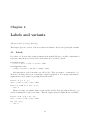
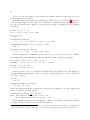
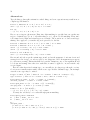
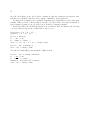
This part of the manual is a tutorial introduction to the OCaml language. A good familiarity with
programming in a conventional languages (say, Pascal or C) is assumed, but no prior exposure to
functional languages is required. The present chapter introduces the core language. Chapter 2 deals
with the module system, chapter 3 with the object-oriented features, chapter 4 with extensions to
the core language (labeled arguments and polymorphic variants), and chapter 5 gives some advanced
examples.
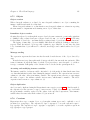
1.1
Basics
For this overview of OCaml, we use the interactive system, which is started by running ocaml from
the Unix shell, or by launching the OCamlwin.exe application under Windows. This tutorial is
presented as the transcript of a session with the interactive system: lines starting with # represent
user input; the system responses are printed below, without a leading #.
Under the interactive system, the user types OCaml phrases terminated by ;; in response to
the # prompt, and the system compiles them on the fly, executes them, and prints the outcome of
evaluation. Phrases are either simple expressions, or let definitions of identifiers (either values or
functions).
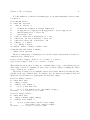
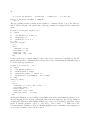
# 1+2*3;;
- : int = 7
# let pi = 4.0 *. atan 1.0;;
val pi : float = 3.14159265358979312
# let square x = x *. x;;
val square : float -> float = <fun>
# square(sin pi) +. square(cos pi);;
- : float = 1.
The OCaml system computes both the value and the type for each phrase. Even function parameters
need no explicit type declaration: the system infers their types from their usage in the function.
Notice also that integers and floating-point numbers are distinct types, with distinct operators: +
and * operate on integers, but +. and *. operate on floats.
11
12
# 1.0 * 2;;
Error: This expression has type float but an expression was expected of type
int
Recursive functions are defined with the let rec binding:
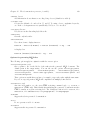
# let rec fib n =
#
if n < 2 then n else fib(n-1) + fib(n-2);;
val fib : int -> int = <fun>
# fib 10;;
- : int = 55
1.2
Data types
In addition to integers and floating-point numbers, OCaml offers the usual basic data types:
booleans, characters, and character strings.
# (1 < 2) = false;;
- : bool = false
# 'a';;
- : char = 'a'
# "Hello world";;
- : string = "Hello world"
Predefined data structures include tuples, arrays, and lists. General mechanisms for defining
your own data structures are also provided. They will be covered in more details later; for now, we
concentrate on lists. Lists are either given in extension as a bracketed list of semicolon-separated
elements, or built from the empty list [] (pronounce “nil”) by adding elements in front using the
:: (“cons”) operator.
# let l = ["is"; "a"; "tale"; "told"; "etc."];;
val l : string list = ["is"; "a"; "tale"; "told"; "etc."]
# "Life" :: l;;
- : string list = ["Life"; "is"; "a"; "tale"; "told"; "etc."]
As with all other OCaml data structures, lists do not need to be explicitly allocated and deallocated
from memory: all memory management is entirely automatic in OCaml. Similarly, there is no
explicit handling of pointers: the OCaml compiler silently introduces pointers where necessary.
As with most OCaml data structures, inspecting and destructuring lists is performed by patternmatching. List patterns have the exact same shape as list expressions, with identifier representing
unspecified parts of the list. As an example, here is insertion sort on a list:
# let rec sort lst =
#
match lst with
#
[] -> []
#
| head :: tail -> insert head (sort tail)
Chapter 1. The core language
13
# and insert elt lst =
#
match lst with
#
[] -> [elt]
#
| head :: tail -> if elt <= head then elt :: lst else head :: insert elt tail
# ;;
val sort : 'a list -> 'a list = <fun>
val insert : 'a -> 'a list -> 'a list = <fun>
# sort l;;
- : string list = ["a"; "etc."; "is"; "tale"; "told"]
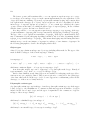
The type inferred for sort, 'a list -> 'a list, means that sort can actually apply to lists
of any type, and returns a list of the same type. The type 'a is a type variable, and stands for
any given type. The reason why sort can apply to lists of any type is that the comparisons (=,
<=, etc.) are polymorphic in OCaml: they operate between any two values of the same type. This
makes sort itself polymorphic over all list types.
# sort [6;2;5;3];;
- : int list = [2; 3; 5; 6]
# sort [3.14; 2.718];;
- : float list = [2.718; 3.14]
The sort function above does not modify its input list: it builds and returns a new list containing the same elements as the input list, in ascending order. There is actually no way in OCaml
to modify in-place a list once it is built: we say that lists are immutable data structures. Most
OCaml data structures are immutable, but a few (most notably arrays) are mutable, meaning that
they can be modified in-place at any time.
1.3
Functions as values
OCaml is a functional language: functions in the full mathematical sense are supported and can
be passed around freely just as any other piece of data. For instance, here is a deriv function that
takes any float function as argument and returns an approximation of its derivative function:
# let deriv f dx = function x -> (f(x +. dx) -. f(x)) /. dx;;
val deriv : (float -> float) -> float -> float -> float = <fun>
# let sin' = deriv sin 1e-6;;
val sin' : float -> float = <fun>
# sin' pi;;
- : float = -1.00000000013961143
Even function composition is definable:
# let compose f g = function x -> f(g(x));;
val compose : ('a -> 'b) -> ('c -> 'a) -> 'c -> 'b = <fun>
# let cos2 = compose square cos;;
val cos2 : float -> float = <fun>
14
Functions that take other functions as arguments are called “functionals”, or “higher-order
functions”. Functionals are especially useful to provide iterators or similar generic operations over
a data structure. For instance, the standard OCaml library provides a List.map functional that
applies a given function to each element of a list, and returns the list of the results:
# List.map (function n -> n * 2 + 1) [0;1;2;3;4];;
- : int list = [1; 3; 5; 7; 9]
This functional, along with a number of other list and array functionals, is predefined because it is
often useful, but there is nothing magic with it: it can easily be defined as follows.
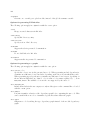
# let rec map f l =
#
match l with
#
[] -> []
#
| hd :: tl -> f hd :: map f tl;;
val map : ('a -> 'b) -> 'a list -> 'b list = <fun>
1.4
Records and variants
User-defined data structures include records and variants. Both are defined with the type declaration. Here, we declare a record type to represent rational numbers.
# type ratio = {num: int; denom: int};;
type ratio = { num : int; denom : int; }
# let add_ratio r1 r2 =
#
{num = r1.num * r2.denom + r2.num * r1.denom;
#
denom = r1.denom * r2.denom};;
val add_ratio : ratio -> ratio -> ratio = <fun>
# add_ratio {num=1; denom=3} {num=2; denom=5};;
- : ratio = {num = 11; denom = 15}
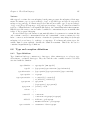
The declaration of a variant type lists all possible shapes for values of that type. Each case is
identified by a name, called a constructor, which serves both for constructing values of the variant
type and inspecting them by pattern-matching. Constructor names are capitalized to distinguish
them from variable names (which must start with a lowercase letter). For instance, here is a variant
type for doing mixed arithmetic (integers and floats):
# type number = Int of int | Float of float | Error;;
type number = Int of int | Float of float | Error
This declaration expresses that a value of type number is either an integer, a floating-point number,
or the constant Error representing the result of an invalid operation (e.g. a division by zero).
Enumerated types are a special case of variant types, where all alternatives are constants:
# type sign = Positive | Negative;;
type sign = Positive | Negative
# let sign_int n = if n >= 0 then Positive else Negative;;
val sign_int : int -> sign = <fun>
Chapter 1. The core language
15
To define arithmetic operations for the number type, we use pattern-matching on the two numbers involved:
# let add_num n1 n2 =
#
match (n1, n2) with
#
(Int i1, Int i2) ->
#
(* Check for overflow of integer addition *)
#
if sign_int i1 = sign_int i2 && sign_int(i1 + i2) <> sign_int i1
#
then Float(float i1 +. float i2)
#
else Int(i1 + i2)
#
| (Int i1, Float f2) -> Float(float i1 +. f2)
#
| (Float f1, Int i2) -> Float(f1 +. float i2)
#
| (Float f1, Float f2) -> Float(f1 +. f2)
#
| (Error, _) -> Error
#
| (_, Error) -> Error;;
val add_num : number -> number -> number = <fun>
# add_num (Int 123) (Float 3.14159);;
- : number = Float 126.14159
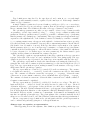
The most common usage of variant types is to describe recursive data structures. Consider for
example the type of binary trees:
# type 'a btree = Empty | Node of 'a * 'a btree * 'a btree;;
type 'a btree = Empty | Node of 'a * 'a btree * 'a btree
This definition reads as follow: a binary tree containing values of type 'a (an arbitrary type) is
either empty, or is a node containing one value of type 'a and two subtrees containing also values
of type 'a, that is, two 'a btree.
Operations on binary trees are naturally expressed as recursive functions following the same
structure as the type definition itself. For instance, here are functions performing lookup and
insertion in ordered binary trees (elements increase from left to right):
# let rec member x btree =
#
match btree with
#
Empty -> false
#
| Node(y, left, right) ->
#
if x = y then true else
#
if x < y then member x left else member x right;;
val member : 'a -> 'a btree -> bool = <fun>
# let rec insert x btree =
#
match btree with
#
Empty -> Node(x, Empty, Empty)
#
| Node(y, left, right) ->
#
if x <= y then Node(y, insert x left, right)
#
else Node(y, left, insert x right);;
val insert : 'a -> 'a btree -> 'a btree = <fun>
16
1.5
Imperative features
Though all examples so far were written in purely applicative style, OCaml is also equipped with
full imperative features. This includes the usual while and for loops, as well as mutable data
structures such as arrays. Arrays are either given in extension between [| and |] brackets, or
allocated and initialized with the Array.create function, then filled up later by assignments. For
instance, the function below sums two vectors (represented as float arrays) componentwise.
# let add_vect v1 v2 =
#
let len = min (Array.length v1) (Array.length v2) in
#
let res = Array.create len 0.0 in
#
for i = 0 to len - 1 do
#
res.(i) <- v1.(i) +. v2.(i)
#
done;
#
res;;
val add_vect : float array -> float array -> float array = <fun>
# add_vect [| 1.0; 2.0 |] [| 3.0; 4.0 |];;
- : float array = [|4.; 6.|]
Record fields can also be modified by assignment, provided they are declared mutable in the
definition of the record type:
# type mutable_point = { mutable x: float; mutable y: float };;
type mutable_point = { mutable x : float; mutable y : float; }
# let translate p dx dy =
#
p.x <- p.x +. dx; p.y <- p.y +. dy;;
val translate : mutable_point -> float -> float -> unit = <fun>
# let mypoint = { x = 0.0; y = 0.0 };;
val mypoint : mutable_point = {x = 0.; y = 0.}
# translate mypoint 1.0 2.0;;
- : unit = ()
# mypoint;;
- : mutable_point = {x = 1.; y = 2.}
OCaml has no built-in notion of variable – identifiers whose current value can be changed by
assignment. (The let binding is not an assignment, it introduces a new identifier with a new
scope.) However, the standard library provides references, which are mutable indirection cells (or
one-element arrays), with operators ! to fetch the current contents of the reference and := to assign
the contents. Variables can then be emulated by let-binding a reference. For instance, here is an
in-place insertion sort over arrays:
# let insertion_sort a =
#
for i = 1 to Array.length a - 1 do
#
let val_i = a.(i) in
#
let j = ref i in
#
while !j > 0 && val_i < a.(!j - 1) do
Chapter 1. The core language
#
#
#
#
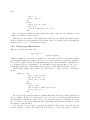
#
17
a.(!j) <- a.(!j - 1);
j := !j - 1
done;
a.(!j) <- val_i
done;;
val insertion_sort : 'a array -> unit = <fun>
References are also useful to write functions that maintain a current state between two calls to
the function. For instance, the following pseudo-random number generator keeps the last returned
number in a reference:
# let current_rand = ref 0;;
val current_rand : int ref = {contents = 0}
# let random () =
#
current_rand := !current_rand * 25713 + 1345;
#
!current_rand;;
val random : unit -> int = <fun>
Again, there is nothing magical with references: they are implemented as a single-field mutable
record, as follows.
# type 'a ref = { mutable contents: 'a };;
type 'a ref = { mutable contents : 'a; }
# let (!) r = r.contents;;
val ( ! ) : 'a ref -> 'a = <fun>
# let (:=) r newval = r.contents <- newval;;
val ( := ) : 'a ref -> 'a -> unit = <fun>
In some special cases, you may need to store a polymorphic function in a data structure, keeping
its polymorphism. Without user-provided type annotations, this is not allowed, as polymorphism
is only introduced on a global level. However, you can give explicitly polymorphic types to record
fields.
# type idref = { mutable id: 'a. 'a -> 'a };;
type idref = { mutable id : 'a. 'a -> 'a; }
# let r = {id = fun x -> x};;
val r : idref = {id = <fun>}
# let g s = (s.id 1, s.id true);;
val g : idref -> int * bool = <fun>
# r.id <- (fun x -> print_string "called id\n"; x);;
- : unit = ()
# g r;;
called id
called id
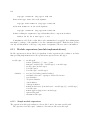
- : int * bool = (1, true)
18
1.6
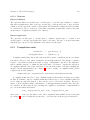
Exceptions
OCaml provides exceptions for signalling and handling exceptional conditions. Exceptions can
also be used as a general-purpose non-local control structure. Exceptions are declared with the
exception construct, and signalled with the raise operator. For instance, the function below for
taking the head of a list uses an exception to signal the case where an empty list is given.
# exception Empty_list;;
exception Empty_list
# let head l =
#
match l with
#
[] -> raise Empty_list
#
| hd :: tl -> hd;;
val head : 'a list -> 'a = <fun>
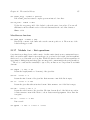
# head [1;2];;
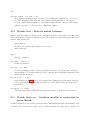
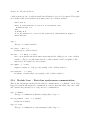
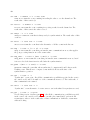
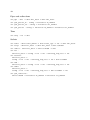
- : int = 1
# head [];;
Exception: Empty_list.
Exceptions are used throughout the standard library to signal cases where the library functions
cannot complete normally. For instance, the List.assoc function, which returns the data associated with a given key in a list of (key, data) pairs, raises the predefined exception Not_found when
the key does not appear in the list:
# List.assoc 1 [(0, "zero"); (1, "one")];;
- : string = "one"
# List.assoc 2 [(0, "zero"); (1, "one")];;
Exception: Not_found.
Exceptions can be trapped with the try. . . with construct:
# let name_of_binary_digit digit =
#
try
#
List.assoc digit [0, "zero"; 1, "one"]
#
with Not_found ->
#
"not a binary digit";;
val name_of_binary_digit : int -> string = <fun>
# name_of_binary_digit 0;;
- : string = "zero"
# name_of_binary_digit (-1);;
- : string = "not a binary digit"
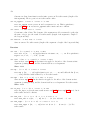
The with part is actually a regular pattern-matching on the exception value. Thus, several
exceptions can be caught by one try. . . with construct. Also, finalization can be performed by
trapping all exceptions, performing the finalization, then raising again the exception:
Chapter 1. The core language
19
# let temporarily_set_reference ref newval funct =
#
let oldval = !ref in
#
try
#
ref := newval;
#
let res = funct () in
#
ref := oldval;
#
res
#
with x ->
#
ref := oldval;
#
raise x;;
val temporarily_set_reference : 'a ref -> 'a -> (unit -> 'b) -> 'b = <fun>
1.7
Symbolic processing of expressions
We finish this introduction with a more complete example representative of the use of OCaml
for symbolic processing: formal manipulations of arithmetic expressions containing variables. The
following variant type describes the expressions we shall manipulate:
# type expression =
#
Const of float
#
| Var of string
#
| Sum of expression * expression
#
| Diff of expression * expression
#
| Prod of expression * expression
#
| Quot of expression * expression
# ;;
(*
(*
(*
(*
e1
e1
e1
e1
+
*
/
e2
e2
e2
e2
*)
*)
*)
*)
type expression =
Const of float
| Var of string
| Sum of expression * expression
| Diff of expression * expression
| Prod of expression * expression
| Quot of expression * expression
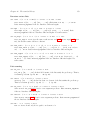
We first define a function to evaluate an expression given an environment that maps variable
names to their values. For simplicity, the environment is represented as an association list.
# exception Unbound_variable of string;;
exception Unbound_variable of string
# let rec eval env exp =
#
match exp with
#
Const c -> c
#
| Var v ->
#
(try List.assoc v env with Not_found -> raise(Unbound_variable v))
#
| Sum(f, g) -> eval env f +. eval env g
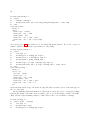
#
| Diff(f, g) -> eval env f -. eval env g
20
#
#
| Prod(f, g) -> eval env f *. eval env g
| Quot(f, g) -> eval env f /. eval env g;;
val eval : (string * float) list -> expression -> float = <fun>
# eval [("x", 1.0); ("y", 3.14)] (Prod(Sum(Var "x", Const 2.0), Var "y"));;
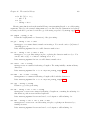
- : float = 9.42
Now for a real symbolic processing, we define the derivative of an expression with respect to a
variable dv:
# let rec deriv exp dv =
#
match exp with
#
Const c -> Const 0.0
#
| Var v -> if v = dv then Const 1.0 else Const 0.0
#
| Sum(f, g) -> Sum(deriv f dv, deriv g dv)
#
| Diff(f, g) -> Diff(deriv f dv, deriv g dv)
#
| Prod(f, g) -> Sum(Prod(f, deriv g dv), Prod(deriv f dv, g))
#
| Quot(f, g) -> Quot(Diff(Prod(deriv f dv, g), Prod(f, deriv g dv)),
#
Prod(g, g))
# ;;
val deriv : expression -> string -> expression = <fun>
# deriv (Quot(Const 1.0, Var "x")) "x";;
- : expression =
Quot (Diff (Prod (Const 0., Var "x"), Prod (Const 1., Const 1.)),
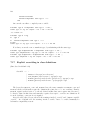
Prod (Var "x", Var "x"))
1.8
Pretty-printing and parsing
As shown in the examples above, the internal representation (also called abstract syntax ) of expressions quickly becomes hard to read and write as the expressions get larger. We need a printer and
a parser to go back and forth between the abstract syntax and the concrete syntax, which in the
case of expressions is the familiar algebraic notation (e.g. 2*x+1).
For the printing function, we take into account the usual precedence rules (i.e. * binds tighter
than +) to avoid printing unnecessary parentheses. To this end, we maintain the current operator
precedence and print parentheses around an operator only if its precedence is less than the current
precedence.
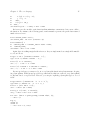
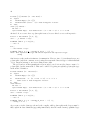
# let print_expr exp =
#
(* Local function definitions *)
#
let open_paren prec op_prec =
#
if prec > op_prec then print_string "(" in
#
let close_paren prec op_prec =
#
if prec > op_prec then print_string ")" in
#
let rec print prec exp =
(* prec is the current precedence *)
#
match exp with
#
Const c -> print_float c
Chapter 1. The core language
#
#
#
#
#
#
#
#
#
#
#
#
#
#
#
#
#
#
| Var v -> print_string v
| Sum(f, g) ->
open_paren prec 0;
print 0 f; print_string
close_paren prec 0
| Diff(f, g) ->
open_paren prec 0;
print 0 f; print_string
close_paren prec 0
| Prod(f, g) ->
open_paren prec 2;
print 2 f; print_string
close_paren prec 2
| Quot(f, g) ->
open_paren prec 2;
print 2 f; print_string
close_paren prec 2
in print 0 exp;;
21
" + "; print 0 g;
" - "; print 1 g;
" * "; print 2 g;
" / "; print 3 g;
val print_expr : expression -> unit = <fun>
# let e = Sum(Prod(Const 2.0, Var "x"), Const 1.0);;
val e : expression = Sum (Prod (Const 2., Var "x"), Const 1.)
# print_expr e; print_newline();;
2. * x + 1.
- : unit = ()
# print_expr (deriv e "x"); print_newline();;
2. * 1. + 0. * x + 0.
- : unit = ()
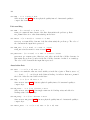
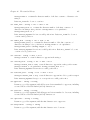
Parsing (transforming concrete syntax into abstract syntax) is usually more delicate. OCaml
offers several tools to help write parsers: on the one hand, OCaml versions of the lexer generator
Lex and the parser generator Yacc (see chapter 12), which handle LALR(1) languages using pushdown automata; on the other hand, a predefined type of streams (of characters or tokens) and
pattern-matching over streams, which facilitate the writing of recursive-descent parsers for LL(1)
languages. An example using ocamllex and ocamlyacc is given in chapter 12. Here, we will use
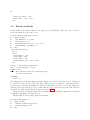
stream parsers. The syntactic support for stream parsers is provided by the Camlp4 preprocessor,
which can be loaded into the interactive toplevel via the #load directives below.
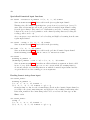
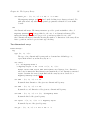
# #load "dynlink.cma";;
# #load "camlp4o.cma";;
Camlp4 Parsing version 4.00.0
# open Genlex;;
# let lexer = make_lexer ["("; ")"; "+"; "-"; "*"; "/"];;
val lexer : char Stream.t -> Genlex.token Stream.t = <fun>
22
For the lexical analysis phase (transformation of the input text into a stream of tokens), we use a
“generic” lexer provided in the standard library module Genlex. The make_lexer function takes
a list of keywords and returns a lexing function that “tokenizes” an input stream of characters.
Tokens are either identifiers, keywords, or literals (integer, floats, characters, strings). Whitespace
and comments are skipped.
# let token_stream = lexer(Stream.of_string "1.0 +x");;
val token_stream : Genlex.token Stream.t = <abstr>
# Stream.next token_stream;;
- : Genlex.token = Float 1.
# Stream.next token_stream;;
- : Genlex.token = Kwd "+"
# Stream.next token_stream;;
- : Genlex.token = Ident "x"
The parser itself operates by pattern-matching on the stream of tokens. As usual with recursive descent parsers, we use several intermediate parsing functions to reflect the precedence
and associativity of operators. Pattern-matching over streams is more powerful than on regular
data structures, as it allows recursive calls to parsing functions inside the patterns, for matching
sub-components of the input stream. See the Camlp4 documentation for more details.
#
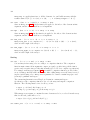
#
#
#
#
#
#
#
#
#
#
#
#
#
#
#
#
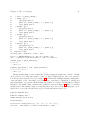
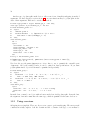
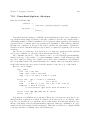
let rec parse_expr = parser
[< e1 = parse_mult; e = parse_more_adds e1 >] -> e
and parse_more_adds e1 = parser
[< 'Kwd "+"; e2 = parse_mult; e = parse_more_adds (Sum(e1, e2)) >] -> e
| [< 'Kwd "-"; e2 = parse_mult; e = parse_more_adds (Diff(e1, e2)) >] -> e
| [< >] -> e1
and parse_mult = parser
[< e1 = parse_simple; e = parse_more_mults e1 >] -> e
and parse_more_mults e1 = parser
[< 'Kwd "*"; e2 = parse_simple; e = parse_more_mults (Prod(e1, e2)) >] -> e
| [< 'Kwd "/"; e2 = parse_simple; e = parse_more_mults (Quot(e1, e2)) >] -> e
| [< >] -> e1
and parse_simple = parser
[< 'Ident s >] -> Var s
| [< 'Int i >] -> Const(float i)
| [< 'Float f >] -> Const f
| [< 'Kwd "("; e = parse_expr; 'Kwd ")" >] -> e;;
val parse_expr : Genlex.token Stream.t -> expression = <fun>
val parse_more_adds : expression -> Genlex.token Stream.t -> expression =
<fun>
val parse_mult : Genlex.token Stream.t -> expression = <fun>
val parse_more_mults : expression -> Genlex.token Stream.t -> expression =
<fun>
val parse_simple : Genlex.token Stream.t -> expression = <fun>
# let parse_expression = parser [< e = parse_expr; _ = Stream.empty >] -> e;;
val parse_expression : Genlex.token Stream.t -> expression = <fun>
Chapter 1. The core language
23
Composing the lexer and parser, we finally obtain a function to read an expression from a
character string:
# let read_expression s = parse_expression(lexer(Stream.of_string s));;
val read_expression : string -> expression = <fun>
# read_expression "2*(x+y)";;
- : expression = Prod (Const 2., Sum (Var "x", Var "y"))
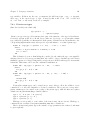
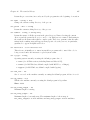
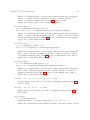
A small puzzle: why do we get different results in the following two examples?
# read_expression "x - 1";;
- : expression = Diff (Var "x", Const 1.)
# read_expression "x-1";;
Exception: Stream.Error "".
Answer: the generic lexer provided by Genlex recognizes negative integer literals as one integer
token. Hence, x-1 is read as the token Ident "x" followed by the token Int(-1); this sequence
does not match any of the parser rules. On the other hand, the second space in x - 1 causes the
lexer to return the three expected tokens: Ident "x", then Kwd "-", then Int(1).
1.9
Standalone OCaml programs
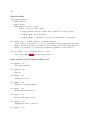
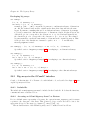
All examples given so far were executed under the interactive system. OCaml code can also be compiled separately and executed non-interactively using the batch compilers ocamlc and ocamlopt.
The source code must be put in a file with extension .ml. It consists of a sequence of phrases, which
will be evaluated at runtime in their order of appearance in the source file. Unlike in interactive
mode, types and values are not printed automatically; the program must call printing functions explicitly to produce some output. Here is a sample standalone program to print Fibonacci numbers:
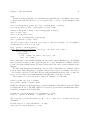
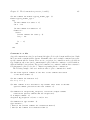
(* File fib.ml *)
let rec fib n =
if n < 2 then 1 else fib(n-1) + fib(n-2);;
let main () =
let arg = int_of_string Sys.argv.(1) in
print_int(fib arg);
print_newline();
exit 0;;
main ();;
Sys.argv is an array of strings containing the command-line parameters. Sys.argv.(1) is thus
the first command-line parameter. The program above is compiled and executed with the following
shell commands:
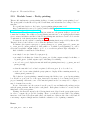
$ ocamlc -o fib fib.ml
$ ./fib 10
89
$ ./fib 20
10946
24
More complex standalone OCaml programs are typically composed of multiple source files, and
can link with precompiled libraries. Chapters 8 and 11 explain how to use the batch compilers
ocamlc and ocamlopt. Recompilation of multi-file OCaml projects can be automated using the
ocamlbuild compilation manager, documented in chapter 18.
Chapter 2
The module system
This chapter introduces the module system of OCaml.
2.1
Structures
A primary motivation for modules is to package together related definitions (such as the definitions
of a data type and associated operations over that type) and enforce a consistent naming scheme
for these definitions. This avoids running out of names or accidentally confusing names. Such a
package is called a structure and is introduced by the struct. . . end construct, which contains an
arbitrary sequence of definitions. The structure is usually given a name with the module binding.
Here is for instance a structure packaging together a type of priority queues and their operations:
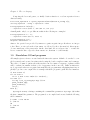
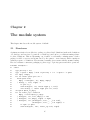
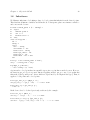
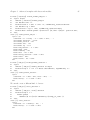
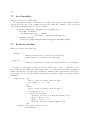
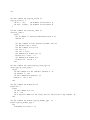
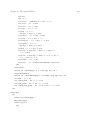
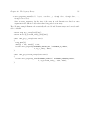
# module PrioQueue =
#
struct
#
type priority = int
#
type 'a queue = Empty | Node of priority * 'a * 'a queue * 'a queue
#
let empty = Empty
#
let rec insert queue prio elt =
#
match queue with
#
Empty -> Node(prio, elt, Empty, Empty)
#
| Node(p, e, left, right) ->
#
if prio <= p
#
then Node(prio, elt, insert right p e, left)
#
else Node(p, e, insert right prio elt, left)
#
exception Queue_is_empty
#
let rec remove_top = function
#
Empty -> raise Queue_is_empty
#
| Node(prio, elt, left, Empty) -> left
#
| Node(prio, elt, Empty, right) -> right
#
| Node(prio, elt, (Node(lprio, lelt, _, _) as left),
#
(Node(rprio, relt, _, _) as right)) ->
#
if lprio <= rprio
#
then Node(lprio, lelt, remove_top left, right)
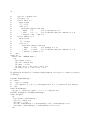
25
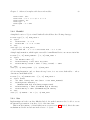
26
#
#
#
#
#
else Node(rprio, relt, left, remove_top right)
let extract = function
Empty -> raise Queue_is_empty
| Node(prio, elt, _, _) as queue -> (prio, elt, remove_top queue)
end;;
module PrioQueue :
sig
type priority = int
type 'a queue = Empty | Node of priority * 'a * 'a queue * 'a queue
val empty : 'a queue
val insert : 'a queue -> priority -> 'a -> 'a queue
exception Queue_is_empty
val remove_top : 'a queue -> 'a queue
val extract : 'a queue -> priority * 'a * 'a queue
end
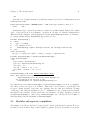
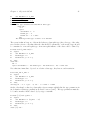
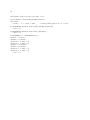
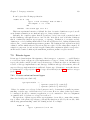
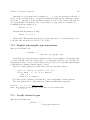
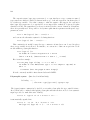
Outside the structure, its components can be referred to using the “dot notation”, that is, identifiers
qualified by a structure name. For instance, PrioQueue.insert is the function insert defined
inside the structure PrioQueue and PrioQueue.queue is the type queue defined in PrioQueue.
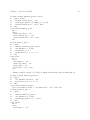
# PrioQueue.insert PrioQueue.empty 1 "hello";;
- : string PrioQueue.queue =
PrioQueue.Node (1, "hello", PrioQueue.Empty, PrioQueue.Empty)
2.2
Signatures
Signatures are interfaces for structures. A signature specifies which components of a structure
are accessible from the outside, and with which type. It can be used to hide some components
of a structure (e.g. local function definitions) or export some components with a restricted type.
For instance, the signature below specifies the three priority queue operations empty, insert and
extract, but not the auxiliary function remove_top. Similarly, it makes the queue type abstract
(by not providing its actual representation as a concrete type).
# module type PRIOQUEUE =
#
sig
#
type priority = int
(* still concrete *)
#
type 'a queue
(* now abstract *)
#
val empty : 'a queue
#
val insert : 'a queue -> int -> 'a -> 'a queue
#
val extract : 'a queue -> int * 'a * 'a queue
#
exception Queue_is_empty
#
end;;
module type PRIOQUEUE =
sig
type priority = int
type 'a queue
val empty : 'a queue
Chapter 2. The module system
27
val insert : 'a queue -> int -> 'a -> 'a queue
val extract : 'a queue -> int * 'a * 'a queue
exception Queue_is_empty
end
Restricting the PrioQueue structure by this signature results in another view of the PrioQueue
structure where the remove_top function is not accessible and the actual representation of priority
queues is hidden:
# module AbstractPrioQueue = (PrioQueue : PRIOQUEUE);;
module AbstractPrioQueue : PRIOQUEUE
# AbstractPrioQueue.remove_top;;
Error: Unbound value AbstractPrioQueue.remove_top
# AbstractPrioQueue.insert AbstractPrioQueue.empty 1 "hello";;
- : string AbstractPrioQueue.queue = <abstr>
The restriction can also be performed during the definition of the structure, as in
module PrioQueue = (struct ... end : PRIOQUEUE);;
An alternate syntax is provided for the above:
module PrioQueue : PRIOQUEUE = struct ... end;;
2.3
Functors
Functors are “functions” from structures to structures. They are used to express parameterized
structures: a structure A parameterized by a structure B is simply a functor F with a formal
parameter B (along with the expected signature for B) which returns the actual structure A itself.
The functor F can then be applied to one or several implementations B 1 . . . Bn of B, yielding the
corresponding structures A1 . . . An .
For instance, here is a structure implementing sets as sorted lists, parameterized by a structure
providing the type of the set elements and an ordering function over this type (used to keep the
sets sorted):
# type comparison = Less | Equal | Greater;;
type comparison = Less | Equal | Greater
# module type ORDERED_TYPE =
#
sig
#
type t
#
val compare: t -> t -> comparison
#
end;;
module type ORDERED_TYPE = sig type t val compare : t -> t -> comparison end
# module Set =
#
functor (Elt: ORDERED_TYPE) ->
#
struct
#
type element = Elt.t
28
#
#
#
#
#
#
#
#
#
#
#
#
#
#
#
#
#
#
#
type set = element list
let empty = []
let rec add x s =
match s with
[] -> [x]
| hd::tl ->
match Elt.compare x hd with
Equal
-> s
(* x is already
| Less
-> x :: s
(* x is smaller
| Greater -> hd :: add x tl
let rec member x s =
match s with
[] -> false
| hd::tl ->
match Elt.compare x hd with
Equal
-> true
(* x belongs to
| Less
-> false
(* x is smaller
| Greater -> member x tl
end;;
in s *)
than all elements of s *)
s *)
than all elements of s *)
module Set :
functor (Elt : ORDERED_TYPE) ->
sig
type element = Elt.t
type set = element list
val empty : 'a list
val add : Elt.t -> Elt.t list -> Elt.t list
val member : Elt.t -> Elt.t list -> bool
end
By applying the Set functor to a structure implementing an ordered type, we obtain set operations
for this type:
# module OrderedString =
#
struct
#
type t = string
#
let compare x y = if x = y then Equal else if x < y then Less else Greater
#
end;;
module OrderedString :
sig type t = string val compare : 'a -> 'a -> comparison end
# module StringSet = Set(OrderedString);;
module StringSet :
sig
type element = OrderedString.t
type set = element list
val empty : 'a list
val add : OrderedString.t -> OrderedString.t list -> OrderedString.t list
val member : OrderedString.t -> OrderedString.t list -> bool
end
Chapter 2. The module system
29
# StringSet.member "bar" (StringSet.add "foo" StringSet.empty);;
- : bool = false
2.4
Functors and type abstraction
As in the PrioQueue example, it would be good style to hide the actual implementation of the
type set, so that users of the structure will not rely on sets being lists, and we can switch later to
another, more efficient representation of sets without breaking their code. This can be achieved by
restricting Set by a suitable functor signature:
# module type SETFUNCTOR =
#
functor (Elt: ORDERED_TYPE) ->
#
sig
#
type element = Elt.t
(* concrete *)
#
type set
(* abstract *)
#
val empty : set
#
val add : element -> set -> set
#
val member : element -> set -> bool
#
end;;
module type SETFUNCTOR =
functor (Elt : ORDERED_TYPE) ->
sig
type element = Elt.t
type set
val empty : set
val add : element -> set -> set
val member : element -> set -> bool
end
# module AbstractSet = (Set : SETFUNCTOR);;
module AbstractSet : SETFUNCTOR
# module AbstractStringSet = AbstractSet(OrderedString);;
module AbstractStringSet :
sig
type element = OrderedString.t
type set = AbstractSet(OrderedString).set
val empty : set
val add : element -> set -> set
val member : element -> set -> bool
end
# AbstractStringSet.add "gee" AbstractStringSet.empty;;
- : AbstractStringSet.set = <abstr>
In an attempt to write the type constraint above more elegantly, one may wish to name the
signature of the structure returned by the functor, then use that signature in the constraint:
# module type SET =
30
#
#
#
#
#
#
#
sig
type element
type set
val empty : set
val add : element -> set -> set
val member : element -> set -> bool
end;;
module type SET =
sig
type element
type set
val empty : set
val add : element -> set -> set
val member : element -> set -> bool
end
# module WrongSet = (Set : functor(Elt: ORDERED_TYPE) -> SET);;
module WrongSet : functor (Elt : ORDERED_TYPE) -> SET
# module WrongStringSet = WrongSet(OrderedString);;
module WrongStringSet :
sig
type element = WrongSet(OrderedString).element
type set = WrongSet(OrderedString).set
val empty : set
val add : element -> set -> set
val member : element -> set -> bool
end
# WrongStringSet.add "gee" WrongStringSet.empty;;
Error: This expression has type string but an expression was expected of type
WrongStringSet.element = WrongSet(OrderedString).element
The problem here is that SET specifies the type element abstractly, so that the type equality
between element in the result of the functor and t in its argument is forgotten. Consequently,
WrongStringSet.element is not the same type as string, and the operations of WrongStringSet
cannot be applied to strings. As demonstrated above, it is important that the type element in
the signature SET be declared equal to Elt.t; unfortunately, this is impossible above since SET
is defined in a context where Elt does not exist. To overcome this difficulty, OCaml provides a
with type construct over signatures that allows enriching a signature with extra type equalities:
# module AbstractSet2 =
#
(Set : functor(Elt: ORDERED_TYPE) -> (SET with type element = Elt.t));;
module AbstractSet2 :
functor (Elt : ORDERED_TYPE) ->
sig
type element = Elt.t
type set
val empty : set
val add : element -> set -> set
val member : element -> set -> bool
Chapter 2. The module system
31
end
As in the case of simple structures, an alternate syntax is provided for defining functors and
restricting their result:
module AbstractSet2(Elt: ORDERED_TYPE) : (SET with type element = Elt.t) =
struct ... end;;
Abstracting a type component in a functor result is a powerful technique that provides a high
degree of type safety, as we now illustrate. Consider an ordering over character strings that is
different from the standard ordering implemented in the OrderedString structure. For instance,
we compare strings without distinguishing upper and lower case.
# module NoCaseString =
#
struct
#
type t = string
#
let compare s1 s2 =
#
OrderedString.compare (String.lowercase s1) (String.lowercase s2)
#
end;;
module NoCaseString :
sig type t = string val compare : string -> string -> comparison end
# module NoCaseStringSet = AbstractSet(NoCaseString);;
module NoCaseStringSet :
sig
type element = NoCaseString.t
type set = AbstractSet(NoCaseString).set
val empty : set
val add : element -> set -> set
val member : element -> set -> bool
end
# NoCaseStringSet.add "FOO" AbstractStringSet.empty;;
Error: This expression has type
AbstractStringSet.set = AbstractSet(OrderedString).set
but an expression was expected of type
NoCaseStringSet.set = AbstractSet(NoCaseString).set
Note that the two types AbstractStringSet.set and NoCaseStringSet.set are not compatible,
and values of these two types do not match. This is the correct behavior: even though both
set types contain elements of the same type (strings), they are built upon different orderings
of that type, and different invariants need to be maintained by the operations (being strictly
increasing for the standard ordering and for the case-insensitive ordering). Applying operations
from AbstractStringSet to values of type NoCaseStringSet.set could give incorrect results, or
build lists that violate the invariants of NoCaseStringSet.
2.5
Modules and separate compilation
All examples of modules so far have been given in the context of the interactive system. However,
modules are most useful for large, batch-compiled programs. For these programs, it is a practi-
32
cal necessity to split the source into several files, called compilation units, that can be compiled
separately, thus minimizing recompilation after changes.
In OCaml, compilation units are special cases of structures and signatures, and the relationship
between the units can be explained easily in terms of the module system. A compilation unit A
comprises two files:
• the implementation file A.ml, which contains a sequence of definitions, analogous to the inside
of a struct. . . end construct;
• the interface file A.mli, which contains a sequence of specifications, analogous to the inside
of a sig. . . end construct.
These two files together define a structure named A as if the following definition was entered at
top-level:
module A: sig (* contents of file A.mli *) end
= struct (* contents of file A.ml *) end;;
The files that define the compilation units can be compiled separately using the ocamlc -c
command (the -c option means “compile only, do not try to link”); this produces compiled interface
files (with extension .cmi) and compiled object code files (with extension .cmo). When all units
have been compiled, their .cmo files are linked together using the ocamlc command. For instance,
the following commands compile and link a program composed of two compilation units Aux and
Main:
$
$
$
$
$
ocamlc
ocamlc
ocamlc
ocamlc
ocamlc
-c
-c
-c
-c
-o
Aux.mli
Aux.ml
Main.mli
Main.ml
theprogram Aux.cmo Main.cmo
#
#
#
#
produces
produces
produces
produces
aux.cmi
aux.cmo
main.cmi
main.cmo
The program behaves exactly as if the following phrases were entered at top-level:
module Aux: sig (* contents of Aux.mli *) end
= struct (* contents of Aux.ml *) end;;
module Main: sig (* contents of Main.mli *) end
= struct (* contents of Main.ml *) end;;
In particular, Main can refer to Aux: the definitions and declarations contained in Main.ml and
Main.mli can refer to definition in Aux.ml, using the Aux.ident notation, provided these definitions
are exported in Aux.mli.
The order in which the .cmo files are given to ocamlc during the linking phase determines the
order in which the module definitions occur. Hence, in the example above, Aux appears first and
Main can refer to it, but Aux cannot refer to Main.
Note that only top-level structures can be mapped to separately-compiled files, but neither
functors nor module types. However, all module-class objects can appear as components of a
structure, so the solution is to put the functor or module type inside a structure, which can then
be mapped to a file.
Chapter 3
Objects in OCaml
(Chapter written by Jérôme Vouillon, Didier Rémy and Jacques Garrigue)
This chapter gives an overview of the object-oriented features of OCaml. Note that the relation
between object, class and type in OCaml is very different from that in mainstream object-oriented
languages like Java or C++, so that you should not assume that similar keywords mean the same
thing.
3.1
Classes and objects
The class point below defines one instance variable x and two methods get_x and move. The
initial value of the instance variable is 0. The variable x is declared mutable, so the method move
can change its value.
# class point =
#
object
#
val mutable x = 0
#
method get_x = x
#
method move d = x <- x + d
#
end;;
class point :
object val mutable x : int method get_x : int method move : int -> unit end
We now create a new point p, instance of the point class.
# let p = new point;;
val p : point = <obj>
Note that the type of p is point. This is an abbreviation automatically defined by the class
definition above. It stands for the object type <get_x : int; move : int -> unit>, listing the
methods of class point along with their types.
We now invoke some methods to p:
# p#get_x;;
- : int = 0
33
34
# p#move 3;;
- : unit = ()
# p#get_x;;
- : int = 3
The evaluation of the body of a class only takes place at object creation time. Therefore, in the
following example, the instance variable x is initialized to different values for two different objects.
# let x0 = ref 0;;
val x0 : int ref = {contents = 0}
# class point =
#
object
#
val mutable x = incr x0; !x0
#
method get_x = x
#
method move d = x <- x + d
#
end;;
class point :
object val mutable x : int method get_x : int method move : int -> unit end
# new point#get_x;;
- : int = 1
# new point#get_x;;
- : int = 2
The class point can also be abstracted over the initial values of the x coordinate.
# class point = fun x_init ->
#
object
#
val mutable x = x_init
#
method get_x = x
#
method move d = x <- x + d
#
end;;
class point :
int ->
object val mutable x : int method get_x : int method move : int -> unit end
Like in function definitions, the definition above can be abbreviated as:
# class point x_init =
#
object
#
val mutable x = x_init
#
method get_x = x
#
method move d = x <- x + d
#
end;;
class point :
int ->
object val mutable x : int method get_x : int method move : int -> unit end
Chapter 3. Objects in OCaml
35
An instance of the class point is now a function that expects an initial parameter to create a point
object:
# new point;;
- : int -> point = <fun>
# let p = new point 7;;
val p : point = <obj>
The parameter x_init is, of course, visible in the whole body of the definition, including methods.
For instance, the method get_offset in the class below returns the position of the object relative
to its initial position.
# class point x_init =
#
object
#
val mutable x = x_init
#
method get_x = x
#
method get_offset = x - x_init
#
method move d = x <- x + d
#
end;;
class point :
int ->
object
val mutable x : int
method get_offset : int
method get_x : int
method move : int -> unit
end
Expressions can be evaluated and bound before defining the object body of the class. This is useful
to enforce invariants. For instance, points can be automatically adjusted to the nearest point on a
grid, as follows:
# class adjusted_point x_init =
#
let origin = (x_init / 10) * 10 in
#
object
#
val mutable x = origin
#
method get_x = x
#
method get_offset = x - origin
#
method move d = x <- x + d
#
end;;
class adjusted_point :
int ->
object
val mutable x : int
method get_offset : int
method get_x : int
method move : int -> unit
end
36
(One could also raise an exception if the x_init coordinate is not on the grid.) In fact, the same
effect could here be obtained by calling the definition of class point with the value of the origin.
# class adjusted_point x_init =
point ((x_init / 10) * 10);;
class adjusted_point : int -> point
An alternate solution would have been to define the adjustment in a special allocation function:
# let new_adjusted_point x_init = new point ((x_init / 10) * 10);;
val new_adjusted_point : int -> point = <fun>
However, the former pattern is generally more appropriate, since the code for adjustment is part
of the definition of the class and will be inherited.
This ability provides class constructors as can be found in other languages. Several constructors
can be defined this way to build objects of the same class but with different initialization patterns;
an alternative is to use initializers, as decribed below in section 3.4.
3.2
Immediate objects
There is another, more direct way to create an object: create it without going through a class.
The syntax is exactly the same as for class expressions, but the result is a single object rather
than a class. All the constructs described in the rest of this section also apply to immediate objects.
# let p =
#
object
#
val mutable x = 0
#
method get_x = x
#
method move d = x <- x + d
#
end;;
val p : < get_x : int; move : int -> unit > = <obj>
# p#get_x;;
- : int = 0
# p#move 3;;
- : unit = ()
# p#get_x;;
- : int = 3
Unlike classes, which cannot be defined inside an expression, immediate objects can appear
anywhere, using variables from their environment.
# let minmax x y =
#
if x < y then object method min = x method max = y end
#
else object method min = y method max = x end;;
val minmax : 'a -> 'a -> < max : 'a; min : 'a > = <fun>
Immediate objects have two weaknesses compared to classes: their types are not abbreviated,
and you cannot inherit from them. But these two weaknesses can be advantages in some situations,
as we will see in sections 3.3 and 3.10.
Chapter 3. Objects in OCaml
3.3
37
Reference to self
A method or an initializer can send messages to self (that is, the current object). For that, self
must be explicitly bound, here to the variable s (s could be any identifier, even though we will
often choose the name self.)
# class printable_point x_init =
#
object (s)
#
val mutable x = x_init
#
method get_x = x
#
method move d = x <- x + d
#
method print = print_int s#get_x
#
end;;
class printable_point :
int ->
object
val mutable x : int
method get_x : int
method move : int -> unit
method print : unit
end
# let p = new printable_point 7;;
val p : printable_point = <obj>
# p#print;;
7- : unit = ()
Dynamically, the variable s is bound at the invocation of a method. In particular, when the class
printable_point is inherited, the variable s will be correctly bound to the object of the subclass.
A common problem with self is that, as its type may be extended in subclasses, you cannot fix
it in advance. Here is a simple example.
# let ints = ref [];;
val ints : '_a list ref = {contents = []}
# class my_int =
#
object (self)
#
method n = 1
#
method register = ints := self :: !ints
#
end;;
Error: This expression has type < n : int; register : 'b; .. > as 'a
but an expression was expected of type 'a
This instance of < n : int; register : 'b; .. > is ambiguous:
it would escape the scope of its equation
You can ignore the first two lines of the error message. What matters is the last one: putting self
into an external reference would make it impossible to extend it through inheritance. We will see
in section 3.12 a workaround to this problem. Note however that, since immediate objects are not
extensible, the problem does not occur with them.
38
# let my_int =
#
object (self)
#
method n = 1
#
method register = ints := self :: !ints
#
end;;
val my_int : < n : int; register : unit > = <obj>
3.4
Initializers
Let-bindings within class definitions are evaluated before the object is constructed. It is also possible
to evaluate an expression immediately after the object has been built. Such code is written as an
anonymous hidden method called an initializer. Therefore, it can access self and the instance
variables.
# class printable_point x_init
#
let origin = (x_init / 10)
#
object (self)
#
val mutable x = origin
#
method get_x = x
#
method move d = x <- x +
#
method print = print_int
#
initializer print_string
#
end;;
=
* 10 in
d
self#get_x
"new point at "; self#print; print_newline()
class printable_point :
int ->
object
val mutable x : int
method get_x : int
method move : int -> unit
method print : unit
end
# let p = new printable_point 17;;
new point at 10
val p : printable_point = <obj>
Initializers cannot be overridden. On the contrary, all initializers are evaluated sequentially. Initializers are particularly useful to enforce invariants. Another example can be seen in section 5.1.
3.5
Virtual methods
It is possible to declare a method without actually defining it, using the keyword virtual. This
method will be provided later in subclasses. A class containing virtual methods must be flagged
virtual, and cannot be instantiated (that is, no object of this class can be created). It still defines
type abbreviations (treating virtual methods as other methods.)
Chapter 3. Objects in OCaml
# class virtual abstract_point x_init =
#
object (self)
#
method virtual get_x : int
#
method get_offset = self#get_x - x_init
#
method virtual move : int -> unit
#
end;;
class virtual abstract_point :
int ->
object
method get_offset : int
method virtual get_x : int
method virtual move : int -> unit
end
# class point x_init =
#
object
#
inherit abstract_point x_init
#
val mutable x = x_init
#
method get_x = x
#
method move d = x <- x + d
#
end;;
class point :
int ->
object
val mutable x : int
method get_offset : int
method get_x : int
method move : int -> unit
end
Instance variables can also be declared as virtual, with the same effect as with methods.
# class virtual abstract_point2 =
#
object
#
val mutable virtual x : int
#
method move d = x <- x + d
#
end;;
class virtual abstract_point2 :
object val mutable virtual x : int method move : int -> unit end
# class point2 x_init =
#
object
#
inherit abstract_point2
#
val mutable x = x_init
#
method get_offset = x - x_init
#
end;;
class point2 :
int ->
object
val mutable x : int
39
40
method get_offset : int
method move : int -> unit
end
3.6
Private methods
Private methods are methods that do not appear in object interfaces. They can only be invoked
from other methods of the same object.
# class restricted_point x_init =
#
object (self)
#
val mutable x = x_init
#
method get_x = x
#
method private move d = x <- x + d
#
method bump = self#move 1
#
end;;
class restricted_point :
int ->
object
val mutable x : int
method bump : unit
method get_x : int
method private move : int -> unit
end
# let p = new restricted_point 0;;
val p : restricted_point = <obj>
# p#move 10;;
Error: This expression has type restricted_point
It has no method move
# p#bump;;
- : unit = ()
Note that this is not the same thing as private and protected methods in Java or C++, which can
be called from other objects of the same class. This is a direct consequence of the independence
between types and classes in OCaml: two unrelated classes may produce objects of the same type,
and there is no way at the type level to ensure that an object comes from a specific class. However
a possible encoding of friend methods is given in section 3.17.
Private methods are inherited (they are by default visible in subclasses), unless they are hidden
by signature matching, as described below.
Private methods can be made public in a subclass.
# class point_again x =
#
object (self)
#
inherit restricted_point x
#
method virtual move : _
#
end;;
Chapter 3. Objects in OCaml
41
class point_again :
int ->
object
val mutable x : int
method bump : unit
method get_x : int
method move : int -> unit
end
The annotation virtual here is only used to mention a method without providing its definition.
Since we didn’t add the private annotation, this makes the method public, keeping the original
definition.
An alternative definition is
# class point_again x =
#
object (self : < move : _; ..> )
#
inherit restricted_point x
#
end;;
class point_again :
int ->
object
val mutable x : int
method bump : unit
method get_x : int
method move : int -> unit
end
The constraint on self’s type is requiring a public move method, and this is sufficient to override
private.
One could think that a private method should remain private in a subclass. However, since the
method is visible in a subclass, it is always possible to pick its code and define a method of the
same name that runs that code, so yet another (heavier) solution would be:
# class point_again x =
#
object
#
inherit restricted_point x as super
#
method move = super#move
#
end;;
class point_again :
int ->
object
val mutable x : int
method bump : unit
method get_x : int
method move : int -> unit
end
Of course, private methods can also be virtual. Then, the keywords must appear in this order
method private virtual.
42
3.7
Class interfaces
Class interfaces are inferred from class definitions. They may also be defined directly and used to
restrict the type of a class. Like class declarations, they also define a new type abbreviation.
# class type restricted_point_type =
#
object
#
method get_x : int
#
method bump : unit
# end;;
class type restricted_point_type =
object method bump : unit method get_x : int end
# fun (x : restricted_point_type) -> x;;
- : restricted_point_type -> restricted_point_type = <fun>
In addition to program documentation, class interfaces can be used to constrain the type of a
class. Both concrete instance variables and concrete private methods can be hidden by a class type
constraint. Public methods and virtual members, however, cannot.
# class restricted_point' x = (restricted_point x : restricted_point_type);;
class restricted_point' : int -> restricted_point_type
Or, equivalently:
# class restricted_point' = (restricted_point : int -> restricted_point_type);;
class restricted_point' : int -> restricted_point_type
The interface of a class can also be specified in a module signature, and used to restrict the inferred
signature of a module.
# module type POINT = sig
#
class restricted_point' : int ->
#
object
#
method get_x : int
#
method bump : unit
#
end
# end;;
module type POINT =
sig
class restricted_point' :
int -> object method bump : unit method get_x : int end
end
# module Point : POINT = struct
#
class restricted_point' = restricted_point
# end;;
module Point : POINT
Chapter 3. Objects in OCaml
3.8
43
Inheritance
We illustrate inheritance by defining a class of colored points that inherits from the class of points.
This class has all instance variables and all methods of class point, plus a new instance variable c
and a new method color.
# class colored_point x (c : string) =
#
object
#
inherit point x
#
val c = c
#
method color = c
#
end;;
class colored_point :
int ->
string ->
object
val c : string
val mutable x : int
method color : string
method get_offset : int
method get_x : int
method move : int -> unit
end
# let p' = new colored_point 5 "red";;
val p' : colored_point = <obj>
# p'#get_x, p'#color;;
- : int * string = (5, "red")
A point and a colored point have incompatible types, since a point has no method color. However,
the function get_x below is a generic function applying method get_x to any object p that has
this method (and possibly some others, which are represented by an ellipsis in the type). Thus, it
applies to both points and colored points.
# let get_succ_x p = p#get_x + 1;;
val get_succ_x : < get_x : int; .. > -> int = <fun>
# get_succ_x p + get_succ_x p';;
- : int = 8
Methods need not be declared previously, as shown by the example:
# let set_x p = p#set_x;;
val set_x : < set_x : 'a; .. > -> 'a = <fun>
# let incr p = set_x p (get_succ_x p);;
val incr : < get_x : int; set_x : int -> 'a; .. > -> 'a = <fun>
44
3.9
Multiple inheritance
Multiple inheritance is allowed. Only the last definition of a method is kept: the redefinition in a
subclass of a method that was visible in the parent class overrides the definition in the parent class.
Previous definitions of a method can be reused by binding the related ancestor. Below, super is
bound to the ancestor printable_point. The name super is a pseudo value identifier that can
only be used to invoke a super-class method, as in super#print.
# class printable_colored_point y c =
#
object (self)
#
val c = c
#
method color = c
#
inherit printable_point y as super
#
method print =
#
print_string "(";
#
super#print;
#
print_string ", ";
#
print_string (self#color);
#
print_string ")"
#
end;;
class printable_colored_point :
int ->
string ->
object
val c : string
val mutable x : int
method color : string
method get_x : int
method move : int -> unit
method print : unit
end
# let p' = new printable_colored_point 17 "red";;
new point at (10, red)
val p' : printable_colored_point = <obj>
# p'#print;;
(10, red)- : unit = ()
A private method that has been hidden in the parent class is no longer visible, and is thus not
overridden. Since initializers are treated as private methods, all initializers along the class hierarchy
are evaluated, in the order they are introduced.
3.10
Parameterized classes
Reference cells can be implemented as objects. The naive definition fails to typecheck:
# class ref x_init =
#
object
Chapter 3. Objects in OCaml
#
#
#
#
45
val mutable x = x_init
method get = x
method set y = x <- y
end;;
Error: Some type variables are unbound in this type:
class ref :
'a ->
object
val mutable x : 'a
method get : 'a
method set : 'a -> unit
end
The method get has type 'a where 'a is unbound
The reason is that at least one of the methods has a polymorphic type (here, the type of the value
stored in the reference cell), thus either the class should be parametric, or the method type should
be constrained to a monomorphic type. A monomorphic instance of the class could be defined by:
# class ref (x_init:int) =
#
object
#
val mutable x = x_init
#
method get = x
#
method set y = x <- y
#
end;;
class ref :
int ->
object val mutable x : int method get : int method set : int -> unit end
Note that since immediate objects do not define a class type, they have no such restriction.
# let new_ref x_init =
#
object
#
val mutable x = x_init
#
method get = x
#
method set y = x <- y
#
end;;
val new_ref : 'a -> < get : 'a; set : 'a -> unit > = <fun>
On the other hand, a class for polymorphic references must explicitly list the type parameters in
its declaration. Class type parameters are listed between [ and ]. The type parameters must also
be bound somewhere in the class body by a type constraint.
# class ['a] ref x_init =
#
object
#
val mutable x = (x_init : 'a)
#
method get = x
#
method set y = x <- y
#
end;;
class ['a] ref :
46
'a -> object val mutable x : 'a method get : 'a method set : 'a -> unit end
# let r = new ref 1 in r#set 2; (r#get);;
- : int = 2
The type parameter in the declaration may actually be constrained in the body of the class definition. In the class type, the actual value of the type parameter is displayed in the constraint
clause.
# class ['a] ref_succ (x_init:'a) =
#
object
#
val mutable x = x_init + 1
#
method get = x
#
method set y = x <- y
#
end;;
class ['a] ref_succ :
'a ->
object
constraint 'a = int
val mutable x : int
method get : int
method set : int -> unit
end
Let us consider a more complex example: define a circle, whose center may be any kind of point. We
put an additional type constraint in method move, since no free variables must remain unaccounted
for by the class type parameters.
# class ['a] circle (c : 'a) =
#
object
#
val mutable center = c
#
method center = center
#
method set_center c = center <- c
#
method move = (center#move : int -> unit)
#
end;;
class ['a] circle :
'a ->
object
constraint 'a = < move : int -> unit; .. >
val mutable center : 'a
method center : 'a
method move : int -> unit
method set_center : 'a -> unit
end
An alternate definition of circle, using a constraint clause in the class definition, is shown below.
The type #point used below in the constraint clause is an abbreviation produced by the definition
of class point. This abbreviation unifies with the type of any object belonging to a subclass of class
point. It actually expands to < get_x : int; move : int -> unit; .. >. This leads to the
following alternate definition of circle, which has slightly stronger constraints on its argument, as
we now expect center to have a method get_x.
Chapter 3. Objects in OCaml
47
# class ['a] circle (c : 'a) =
#
object
#
constraint 'a = #point
#
val mutable center = c
#
method center = center
#
method set_center c = center <- c
#
method move = center#move
#
end;;
class ['a] circle :
'a ->
object
constraint 'a = #point
val mutable center : 'a
method center : 'a
method move : int -> unit
method set_center : 'a -> unit
end
The class colored_circle is a specialized version of class circle that requires the type of the
center to unify with #colored_point, and adds a method color. Note that when specializing a
parameterized class, the instance of type parameter must always be explicitly given. It is again
written between [ and ].
# class ['a] colored_circle c =
#
object
#
constraint 'a = #colored_point
#
inherit ['a] circle c
#
method color = center#color
#
end;;
class ['a] colored_circle :
'a ->
object
constraint 'a = #colored_point
val mutable center : 'a
method center : 'a
method color : string
method move : int -> unit
method set_center : 'a -> unit
end
3.11
Polymorphic methods
While parameterized classes may be polymorphic in their contents, they are not enough to allow
polymorphism of method use.
A classical example is defining an iterator.
# List.fold_left;;
- : ('a -> 'b -> 'a) -> 'a -> 'b list -> 'a = <fun>
48
# class ['a] intlist (l : int list) =
#
object
#
method empty = (l = [])
#
method fold f (accu : 'a) = List.fold_left f accu l
#
end;;
class ['a] intlist :
int list ->
object method empty : bool method fold : ('a -> int -> 'a) -> 'a -> 'a end
At first look, we seem to have a polymorphic iterator, however this does not work in practice.
# let l = new intlist [1; 2; 3];;
val l : '_a intlist = <obj>
# l#fold (fun x y -> x+y) 0;;
- : int = 6
# l;;
- : int intlist = <obj>
# l#fold (fun s x -> s ^ string_of_int x ^ " ") "";;
Error: This expression has type int but an expression was expected of type
string
Our iterator works, as shows its first use for summation. However, since objects themselves are not
polymorphic (only their constructors are), using the fold method fixes its type for this individual
object. Our next attempt to use it as a string iterator fails.
The problem here is that quantification was wrongly located: it is not the class we want to be
polymorphic, but the fold method. This can be achieved by giving an explicitly polymorphic type
in the method definition.
# class intlist (l : int list) =
#
object
#
method empty = (l = [])
#
method fold : 'a. ('a -> int -> 'a) -> 'a -> 'a =
#
fun f accu -> List.fold_left f accu l
#
end;;
class intlist :
int list ->
object method empty : bool method fold : ('a -> int -> 'a) -> 'a -> 'a end
# let l = new intlist [1; 2; 3];;
val l : intlist = <obj>
# l#fold (fun x y -> x+y) 0;;
- : int = 6
# l#fold (fun s x -> s ^ string_of_int x ^ " ") "";;
- : string = "1 2 3 "
As you can see in the class type shown by the compiler, while polymorphic method types must be
fully explicit in class definitions (appearing immediately after the method name), quantified type
Chapter 3. Objects in OCaml
49
variables can be left implicit in class descriptions. Why require types to be explicit? The problem
is that (int -> int -> int) -> int -> int would also be a valid type for fold, and it happens
to be incompatible with the polymorphic type we gave (automatic instantiation only works for
toplevel types variables, not for inner quantifiers, where it becomes an undecidable problem.) So
the compiler cannot choose between those two types, and must be helped.
However, the type can be completely omitted in the class definition if it is already known,
through inheritance or type constraints on self. Here is an example of method overriding.
# class intlist_rev l =
#
object
#
inherit intlist l
#
method fold f accu = List.fold_left f accu (List.rev l)
#
end;;
The following idiom separates description and definition.
# class type ['a] iterator =
#
object method fold : ('b -> 'a -> 'b) -> 'b -> 'b end;;
# class intlist l =
#
object (self : int #iterator)
#
method empty = (l = [])
#
method fold f accu = List.fold_left f accu l
#
end;;
Note here the (self : int #iterator) idiom, which ensures that this object implements the
interface iterator.
Polymorphic methods are called in exactly the same way as normal methods, but you should
be aware of some limitations of type inference. Namely, a polymorphic method can only be called
if its type is known at the call site. Otherwise, the method will be assumed to be monomorphic,
and given an incompatible type.
# let sum lst = lst#fold (fun x y -> x+y) 0;;
val sum : < fold : (int -> int -> int) -> int -> 'a; .. > -> 'a = <fun>
# sum l;;
Error: This expression has type intlist
but an expression was expected of type
< fold : (int -> int -> int) -> int -> 'a; .. >
Types for method fold are incompatible
The workaround is easy: you should put a type constraint on the parameter.
# let sum (lst : _ #iterator) = lst#fold (fun x y -> x+y) 0;;
val sum : int #iterator -> int = <fun>
Of course the constraint may also be an explicit method type. Only occurences of quantified
variables are required.
# let sum lst =
#
(lst : < fold : 'a. ('a -> _ -> 'a) -> 'a -> 'a; .. >)#fold (+) 0;;
val sum : < fold : 'a. ('a -> int -> 'a) -> 'a -> 'a; .. > -> int = <fun>
50
Another use of polymorphic methods is to allow some form of implicit subtyping in method
arguments. We have already seen in section 3.8 how some functions may be polymorphic in the
class of their argument. This can be extended to methods.
# class type point0 = object method get_x : int end;;
class type point0 = object method get_x : int end
# class distance_point x =
#
object
#
inherit point x
#
method distance : 'a. (#point0 as 'a) -> int =
#
fun other -> abs (other#get_x - x)
#
end;;
class distance_point :
int ->
object
val mutable x : int
method distance : #point0 -> int
method get_offset : int
method get_x : int
method move : int -> unit
end
# let p = new distance_point 3 in
# (p#distance (new point 8), p#distance (new colored_point 1 "blue"));;
- : int * int = (5, 2)
Note here the special syntax (#point0 as 'a) we have to use to quantify the extensible part
of #point0. As for the variable binder, it can be omitted in class specifications. If you want
polymorphism inside object field it must be quantified independently.
# class multi_poly =
#
object
#
method m1 : 'a. (< n1 : 'b. 'b -> 'b; .. > as 'a) -> _ =
#
fun o -> o#n1 true, o#n1 "hello"
#
method m2 : 'a 'b. (< n2 : 'b -> bool; .. > as 'a) -> 'b -> _ =
#
fun o x -> o#n2 x
#
end;;
class multi_poly :
object
method m1 : < n1 : 'b. 'b -> 'b; .. > -> bool * string
method m2 : < n2 : 'b -> bool; .. > -> 'b -> bool
end
In method m1, o must be an object with at least a method n1, itself polymorphic. In method m2,
the argument of n2 and x must have the same type, which is quantified at the same level as 'a.
3.12
Using coercions
Subtyping is never implicit. There are, however, two ways to perform subtyping. The most general
construction is fully explicit: both the domain and the codomain of the type coercion must be
Chapter 3. Objects in OCaml
51
given.
We have seen that points and colored points have incompatible types. For instance, they cannot
be mixed in the same list. However, a colored point can be coerced to a point, hiding its color
method:
# let colored_point_to_point cp = (cp : colored_point :> point);;
val colored_point_to_point : colored_point -> point = <fun>
# let p = new point 3 and q = new colored_point 4 "blue";;
val p : point = <obj>
val q : colored_point = <obj>
# let l = [p; (colored_point_to_point q)];;
val l : point list = [<obj>; <obj>]
An object of type t can be seen as an object of type t' only if t is a subtype of t'. For instance,
a point cannot be seen as a colored point.
# (p : point :> colored_point);;
Error: Type point = < get_offset : int; get_x : int; move : int -> unit >
is not a subtype of
colored_point =
< color : string; get_offset : int; get_x : int;
move : int -> unit >
Indeed, narrowing coercions without runtime checks would be unsafe. Runtime type checks might
raise exceptions, and they would require the presence of type information at runtime, which is
not the case in the OCaml system. For these reasons, there is no such operation available in the
language.
Be aware that subtyping and inheritance are not related. Inheritance is a syntactic relation
between classes while subtyping is a semantic relation between types. For instance, the class of
colored points could have been defined directly, without inheriting from the class of points; the
type of colored points would remain unchanged and thus still be a subtype of points.
The domain of a coercion can often be omitted. For instance, one can define:
# let to_point cp = (cp :> point);;
val to_point : #point -> point = <fun>
In this case, the function colored_point_to_point is an instance of the function to_point. This is
not always true, however. The fully explicit coercion is more precise and is sometimes unavoidable.
Consider, for example, the following class:
# class c0 = object method m = {< >} method n = 0 end;;
class c0 : object ('a) method m : 'a method n : int end
The object type c0 is an abbreviation for <m : 'a; n : int> as 'a. Consider now the type
declaration:
# class type c1 =
object method m : c1 end;;
class type c1 = object method m : c1 end
52
The object type c1 is an abbreviation for the type <m : 'a> as 'a. The coercion from an object
of type c0 to an object of type c1 is correct:
# fun (x:c0) -> (x : c0 :> c1);;
- : c0 -> c1 = <fun>
However, the domain of the coercion cannot always be omitted. In that case, the solution is to use
the explicit form. Sometimes, a change in the class-type definition can also solve the problem
# class type c2 = object ('a) method m : 'a end;;
class type c2 = object ('a) method m : 'a end
# fun (x:c0) -> (x :> c2);;
- : c0 -> c2 = <fun>
While class types c1 and c2 are different, both object types c1 and c2 expand to the same object
type (same method names and types). Yet, when the domain of a coercion is left implicit and its
co-domain is an abbreviation of a known class type, then the class type, rather than the object
type, is used to derive the coercion function. This allows leaving the domain implicit in most cases
when coercing form a subclass to its superclass. The type of a coercion can always be seen as
below:
# let to_c1 x = (x :> c1);;
val to_c1 : < m : #c1; .. > -> c1 = <fun>
# let to_c2 x = (x :> c2);;
val to_c2 : #c2 -> c2 = <fun>
Note the difference between these two coercions:
in the case of to_c2, the type
#c2 = < m : 'a; .. > as 'a is polymorphically recursive (according to the explicit recursion in the class type of c2); hence the success of applying this coercion to an object of
class c0. On the other hand, in the first case, c1 was only expanded and unrolled twice to
obtain < m : < m : c1; .. >; .. > (remember #c1 = < m : c1; .. >), without introducing
recursion. You may also note that the type of to_c2 is #c2 -> c2 while the type of to_c1 is
more general than #c1 -> c1. This is not always true, since there are class types for which some
instances of #c are not subtypes of c, as explained in section 3.16. Yet, for parameterless classes
the coercion (_ :> c) is always more general than (_ : #c :> c).
A common problem may occur when one tries to define a coercion to a class c while defining
class c. The problem is due to the type abbreviation not being completely defined yet, and so its
subtypes are not clearly known. Then, a coercion (_ :> c) or (_ : #c :> c) is taken to be the
identity function, as in
# function x -> (x :> 'a);;
- : 'a -> 'a = <fun>
As a consequence, if the coercion is applied to self, as in the following example, the type of self is
unified with the closed type c (a closed object type is an object type without ellipsis). This would
constrain the type of self be closed and is thus rejected. Indeed, the type of self cannot be closed:
this would prevent any further extension of the class. Therefore, a type error is generated when
the unification of this type with another type would result in a closed object type.
Chapter 3. Objects in OCaml
53
# class c = object method m = 1 end
# and d = object (self)
#
inherit c
#
method n = 2
#
method as_c = (self :> c)
# end;;
Error: This expression cannot be coerced to type c = < m : int >; it has type
< as_c : c; m : int; n : int; .. >
but is here used with type c
Self type cannot be unified with a closed object type
However, the most common instance of this problem, coercing self to its current class, is detected
as a special case by the type checker, and properly typed.
# class c = object (self) method m = (self :> c) end;;
class c : object method m : c end
This allows the following idiom, keeping a list of all objects belonging to a class or its subclasses:
# let all_c = ref [];;
val all_c : '_a list ref = {contents = []}
# class c (m : int) =
#
object (self)
#
method m = m
#
initializer all_c := (self :> c) :: !all_c
#
end;;
class c : int -> object method m : int end
This idiom can in turn be used to retrieve an object whose type has been weakened:
# let rec lookup_obj obj = function [] -> raise Not_found
#
| obj' :: l ->
#
if (obj :> < >) = (obj' :> < >) then obj' else lookup_obj obj l ;;
val lookup_obj : < .. > -> (< .. > as 'a) list -> 'a = <fun>
# let lookup_c obj = lookup_obj obj !all_c;;
val lookup_c : < .. > -> < m : int > = <fun>
The type < m : int > we see here is just the expansion of c, due to the use of a reference; we have
succeeded in getting back an object of type c.
The previous coercion problem can often be avoided by first defining the abbreviation, using a
class type:
# class type c' = object method m : int end;;
class type c' = object method m : int end
# class c : c' = object method m = 1 end
# and d = object (self)
#
inherit c
#
method n = 2
54
#
method as_c = (self :> c')
# end;;
class c : c'
and d : object method as_c : c' method m : int method n : int end
It is also possible to use a virtual class. Inheriting from this class simultaneously forces all methods
of c to have the same type as the methods of c'.
# class virtual c' = object method virtual m : int end;;
class virtual c' : object method virtual m : int end
# class c = object (self) inherit c' method m = 1 end;;
class c : object method m : int end
One could think of defining the type abbreviation directly:
# type c' = <m : int>;;
However, the abbreviation #c' cannot be defined directly in a similar way. It can only be defined
by a class or a class-type definition. This is because a #-abbreviation carries an implicit anonymous
variable .. that cannot be explicitly named. The closer you get to it is:
# type 'a c'_class = 'a constraint 'a = < m : int; .. >;;
with an extra type variable capturing the open object type.
3.13
Functional objects
It is possible to write a version of class point without assignments on the instance variables.
The override construct {< ... >} returns a copy of “self” (that is, the current object), possibly
changing the value of some instance variables.
# class functional_point y =
#
object
#
val x = y
#
method get_x = x
#
method move d = {< x = x + d >}
#
end;;
class functional_point :
int ->
object ('a) val x : int method get_x : int method move : int -> 'a end
# let p = new functional_point 7;;
val p : functional_point = <obj>
# p#get_x;;
- : int = 7
# (p#move 3)#get_x;;
- : int = 10
# p#get_x;;
- : int = 7
Chapter 3. Objects in OCaml
55
Note that the type abbreviation functional_point is recursive, which can be seen in the class
type of functional_point: the type of self is 'a and 'a appears inside the type of the method
move.
The above definition of functional_point is not equivalent to the following:
# class bad_functional_point y =
#
object
#
val x = y
#
method get_x = x
#
method move d = new bad_functional_point (x+d)
#
end;;
class bad_functional_point :
int ->
object
val x : int
method get_x : int
method move : int -> bad_functional_point
end
While objects of either class will behave the same, objects of their subclasses will be different. In a
subclass of bad_functional_point, the method move will keep returning an object of the parent
class. On the contrary, in a subclass of functional_point, the method move will return an object
of the subclass.
Functional update is often used in conjunction with binary methods as illustrated in section
5.2.1.
3.14
Cloning objects
Objects can also be cloned, whether they are functional or imperative. The library function Oo.copy
makes a shallow copy of an object. That is, it returns a new object that has the same methods
and instance variables as its argument. The instance variables are copied but their contents are
shared. Assigning a new value to an instance variable of the copy (using a method call) will not
affect instance variables of the original, and conversely. A deeper assignment (for example if the
instance variable is a reference cell) will of course affect both the original and the copy.
The type of Oo.copy is the following:
# Oo.copy;;
- : (< .. > as 'a) -> 'a = <fun>
The keyword as in that type binds the type variable 'a to the object type < .. >. Therefore,
Oo.copy takes an object with any methods (represented by the ellipsis), and returns an object
of the same type. The type of Oo.copy is different from type < .. > -> < .. > as each ellipsis
represents a different set of methods. Ellipsis actually behaves as a type variable.
# let p = new point 5;;
val p : point = <obj>
# let q = Oo.copy p;;
56
val q : point = <obj>
# q#move 7; (p#get_x, q#get_x);;
- : int * int = (5, 12)
In fact, Oo.copy p will behave as p#copy assuming that a public method copy with body {< >}
has been defined in the class of p.
Objects can be compared using the generic comparison functions = and <>. Two objects are
equal if and only if they are physically equal. In particular, an object and its copy are not equal.
# let q = Oo.copy p;;
val q : point = <obj>
# p = q, p = p;;
- : bool * bool = (false, true)
Other generic comparisons such as (<, <=, ...) can also be used on objects. The relation < defines
an unspecified but strict ordering on objets. The ordering relationship between two objects is fixed
once for all after the two objects have been created and it is not affected by mutation of fields.
Cloning and override have a non empty intersection. They are interchangeable when used within
an object and without overriding any field:
# class copy =
#
object
#
method copy = {< >}
#
end;;
class copy : object ('a) method copy : 'a end
# class copy =
#
object (self)
#
method copy = Oo.copy self
#
end;;
class copy : object ('a) method copy : 'a end
Only the override can be used to actually override fields, and only the Oo.copy primitive can be
used externally.
Cloning can also be used to provide facilities for saving and restoring the state of objects.
# class backup =
#
object (self : 'mytype)
#
val mutable copy = None
#
method save = copy <- Some {< copy = None >}
#
method restore = match copy with Some x -> x | None -> self
#
end;;
class backup :
object ('a)
val mutable copy : 'a option
method restore : 'a
method save : unit
end
Chapter 3. Objects in OCaml
57
The above definition will only backup one level. The backup facility can be added to any class by
using multiple inheritance.
# class ['a] backup_ref x = object inherit ['a] ref x inherit backup end;;
class ['a] backup_ref :
'a ->
object ('b)
val mutable copy : 'b option
val mutable x : 'a
method get : 'a
method restore : 'b
method save : unit
method set : 'a -> unit
end
# let rec get p n = if n = 0 then p # get else get (p # restore) (n-1);;
val get : (< get : 'b; restore : 'a; .. > as 'a) -> int -> 'b = <fun>
# let p = new backup_ref 0 in
# p # save; p # set 1; p # save; p # set 2;
# [get p 0; get p 1; get p 2; get p 3; get p 4];;
- : int list = [2; 1; 1; 1; 1]
We can define a variant of backup that retains all copies. (We also add a method clear to manually
erase all copies.)
# class backup =
#
object (self : 'mytype)
#
val mutable copy = None
#
method save = copy <- Some {< >}
#
method restore = match copy with Some x -> x | None -> self
#
method clear = copy <- None
#
end;;
class backup :
object ('a)
val mutable copy : 'a option
method clear : unit
method restore : 'a
method save : unit
end
# class ['a] backup_ref x = object inherit ['a] ref x inherit backup end;;
class ['a] backup_ref :
'a ->
object ('b)
val mutable copy : 'b option
val mutable x : 'a
method clear : unit
method get : 'a
method restore : 'b
58
method save : unit
method set : 'a -> unit
end
# let p = new backup_ref 0 in
# p # save; p # set 1; p # save; p # set 2;
# [get p 0; get p 1; get p 2; get p 3; get p 4];;
- : int list = [2; 1; 0; 0; 0]
3.15
Recursive classes
Recursive classes can be used to define objects whose types are mutually recursive.
# class window =
#
object
#
val mutable top_widget = (None : widget option)
#
method top_widget = top_widget
#
end
# and widget (w : window) =
#
object
#
val window = w
#
method window = window
#
end;;
class window :
object
val mutable top_widget : widget option
method top_widget : widget option
end
and widget : window -> object val window : window method window : window end
Although their types are mutually recursive, the classes widget and window are themselves independent.
3.16
Binary methods
A binary method is a method which takes an argument of the same type as self. The class
comparable below is a template for classes with a binary method leq of type 'a -> bool
where the type variable 'a is bound to the type of self. Therefore, #comparable expands to
< leq : 'a -> bool; .. > as 'a. We see here that the binder as also allows writing recursive
types.
# class virtual comparable =
#
object (_ : 'a)
#
method virtual leq : 'a -> bool
#
end;;
class virtual comparable : object ('a) method virtual leq : 'a -> bool end
Chapter 3. Objects in OCaml
59
We then define a subclass money of comparable. The class money simply wraps floats as comparable
objects. We will extend it below with more operations. We have to use a type constraint on the
class parameter x because the primitive <= is a polymorphic function in OCaml. The inherit
clause ensures that the type of objects of this class is an instance of #comparable.
# class money (x : float) =
#
object
#
inherit comparable
#
val repr = x
#
method value = repr
#
method leq p = repr <= p#value
#
end;;
class money :
float ->
object ('a)
val repr : float
method leq : 'a -> bool
method value : float
end
Note that the type money is not a subtype of type comparable, as the self type appears in contravariant position in the type of method leq. Indeed, an object m of class money has a method
leq that expects an argument of type money since it accesses its value method. Considering m of
type comparable would allow a call to method leq on m with an argument that does not have a
method value, which would be an error.
Similarly, the type money2 below is not a subtype of type money.
# class money2 x =
#
object
#
inherit money x
#
method times k = {< repr = k *. repr >}
#
end;;
class money2 :
float ->
object ('a)
val repr : float
method leq : 'a -> bool
method times : float -> 'a
method value : float
end
It is however possible to define functions that manipulate objects of type either money or money2:
the function min will return the minimum of any two objects whose type unifies with #comparable.
The type of min is not the same as #comparable -> #comparable -> #comparable, as the abbreviation #comparable hides a type variable (an ellipsis). Each occurrence of this abbreviation
generates a new variable.
# let min (x : #comparable) y =
#
if x#leq y then x else y;;
val min : (#comparable as 'a) -> 'a -> 'a = <fun>
60
This function can be applied to objects of type money or money2.
# (min (new money
1.3) (new money 3.1))#value;;
- : float = 1.3
# (min (new money2 5.0) (new money2 3.14))#value;;
- : float = 3.14
More examples of binary methods can be found in sections 5.2.1 and 5.2.3.
Note the use of override for method times. Writing new money2 (k *. repr) instead of
{< repr = k *. repr >} would not behave well with inheritance: in a subclass money3 of money2
the times method would return an object of class money2 but not of class money3 as would be
expected.
The class money could naturally carry another binary method. Here is a direct definition:
# class money x =
#
object (self : 'a)
#
val repr = x
#
method value = repr
#
method print = print_float repr
#
method times k = {< repr = k *. x >}
#
method leq (p : 'a) = repr <= p#value
#
method plus (p : 'a) = {< repr = x +. p#value >}
#
end;;
class money :
float ->
object ('a)
val repr : float
method leq : 'a -> bool
method plus : 'a -> 'a
method print : unit
method times : float -> 'a
method value : float
end
3.17
Friends
The above class money reveals a problem that often occurs with binary methods. In order to interact
with other objects of the same class, the representation of money objects must be revealed, using a
method such as value. If we remove all binary methods (here plus and leq), the representation
can easily be hidden inside objects by removing the method value as well. However, this is not
possible as soon as some binary method requires access to the representation of objects of the same
class (other than self).
# class safe_money x =
#
object (self : 'a)
#
val repr = x
#
method print = print_float repr
Chapter 3. Objects in OCaml
#
#
61
method times k = {< repr = k *. x >}
end;;
class safe_money :
float ->
object ('a)
val repr : float
method print : unit
method times : float -> 'a
end
Here, the representation of the object is known only to a particular object. To make it available to
other objects of the same class, we are forced to make it available to the whole world. However we
can easily restrict the visibility of the representation using the module system.
# module type MONEY =
#
sig
#
type t
#
class c : float ->
#
object ('a)
#
val repr : t
#
method value : t
#
method print : unit
#
method times : float -> 'a
#
method leq : 'a -> bool
#
method plus : 'a -> 'a
#
end
#
end;;
# module Euro : MONEY =
#
struct
#
type t = float
#
class c x =
#
object (self : 'a)
#
val repr = x
#
method value = repr
#
method print = print_float repr
#
method times k = {< repr = k *. x >}
#
method leq (p : 'a) = repr <= p#value
#
method plus (p : 'a) = {< repr = x +. p#value >}
#
end
#
end;;
Another example of friend functions may be found in section 5.2.3. These examples occur when
a group of objects (here objects of the same class) and functions should see each others internal
representation, while their representation should be hidden from the outside. The solution is always
to define all friends in the same module, give access to the representation and use a signature
constraint to make the representation abstract outside the module.
62
Chapter 4
Labels and variants
(Chapter written by Jacques Garrigue)
This chapter gives an overview of the new features in OCaml 3: labels, and polymorphic variants.
4.1
Labels
If you have a look at modules ending in Labels in the standard library, you will see that function
types have annotations you did not have in the functions you defined yourself.
# ListLabels.map;;
- : f:('a -> 'b) -> 'a list -> 'b list = <fun>
# StringLabels.sub;;
- : string -> pos:int -> len:int -> string = <fun>
Such annotations of the form name: are called labels. They are meant to document the code,
allow more checking, and give more flexibility to function application. You can give such names to
arguments in your programs, by prefixing them with a tilde ~.
# let f ~x ~y = x - y;;
val f : x:int -> y:int -> int = <fun>
# let x = 3 and y = 2 in f ~x ~y;;
- : int = 1
When you want to use distinct names for the variable and the label appearing in the type, you
can use a naming label of the form ~name:. This also applies when the argument is not a variable.
# let f ~x:x1 ~y:y1 = x1 - y1;;
val f : x:int -> y:int -> int = <fun>
# f ~x:3 ~y:2;;
- : int = 1
63
64
Labels obey the same rules as other identifiers in OCaml, that is you cannot use a reserved
keyword (like in or to) as label.
Formal parameters and arguments are matched according to their respective labels1 , the absence
of label being interpreted as the empty label. This allows commuting arguments in applications.
One can also partially apply a function on any argument, creating a new function of the remaining
parameters.
# let f ~x ~y = x - y;;
val f : x:int -> y:int -> int = <fun>
# f ~y:2 ~x:3;;
- : int = 1
# ListLabels.fold_left;;
- : f:('a -> 'b -> 'a) -> init:'a -> 'b list -> 'a = <fun>
# ListLabels.fold_left [1;2;3] ~init:0 ~f:(+);;
- : int = 6
# ListLabels.fold_left ~init:0;;
- : f:(int -> 'a -> int) -> 'a list -> int = <fun>
If several arguments of a function bear the same label (or no label), they will not commute
among themselves, and order matters. But they can still commute with other arguments.
# let hline ~x:x1 ~x:x2 ~y = (x1, x2, y);;
val hline : x:'a -> x:'b -> y:'c -> 'a * 'b * 'c = <fun>
# hline ~x:3 ~y:2 ~x:5;;
- : int * int * int = (3, 5, 2)
As an exception to the above parameter matching rules, if an application is total (omitting all
optional arguments), labels may be omitted. In practice, many applications are total, so that labels
can often be omitted.
# f 3 2;;
- : int = 1
# ListLabels.map succ [1;2;3];;
- : int list = [2; 3; 4]
But beware that functions like ListLabels.fold_left whose result type is a type variable will
never be considered as totally applied.
# ListLabels.fold_left (+) 0 [1;2;3];;
Error: This expression has type int -> int -> int
but an expression was expected of type 'a list
When a function is passed as an argument to a higher-order function, labels must match in
both types. Neither adding nor removing labels are allowed.
1
This correspond to the commuting label mode of Objective Caml 3.00 through 3.02, with some additional flexibility on total applications. The so-called classic mode (-nolabels options) is now deprecated for normal use.
Chapter 4. Labels and variants
65
# let h g = g ~x:3 ~y:2;;
val h : (x:int -> y:int -> 'a) -> 'a = <fun>
# h f;;
- : int = 1
# h (+);;
Error: This expression has type int -> int -> int
but an expression was expected of type x:int -> y:int -> 'a
Note that when you don’t need an argument, you can still use a wildcard pattern, but you must
prefix it with the label.
# h (fun ~x:_ ~y -> y+1);;
- : int = 3
4.1.1
Optional arguments
An interesting feature of labeled arguments is that they can be made optional. For optional
parameters, the question mark ? replaces the tilde ~ of non-optional ones, and the label is also
prefixed by ? in the function type. Default values may be given for such optional parameters.
# let bump ?(step = 1) x = x + step;;
val bump : ?step:int -> int -> int = <fun>
# bump 2;;
- : int = 3
# bump ~step:3 2;;
- : int = 5
A function taking some optional arguments must also take at least one non-optional argument.
The criterion for deciding whether an optional argument has been omitted is the non-labeled
application of an argument appearing after this optional argument in the function type. Note that
if that argument is labeled, you will only be able to eliminate optional arguments through the
special case for total applications.
# let test ?(x = 0) ?(y = 0) () ?(z = 0) () = (x, y, z);;
val test : ?x:int -> ?y:int -> unit -> ?z:int -> unit -> int * int * int =
<fun>
# test ();;
- : ?z:int -> unit -> int * int * int = <fun>
# test ~x:2 () ~z:3 ();;
- : int * int * int = (2, 0, 3)
Optional parameters may also commute with non-optional or unlabeled ones, as long as they are
applied simultaneously. By nature, optional arguments do not commute with unlabeled arguments
applied independently.
66
# test ~y:2 ~x:3 () ();;
- : int * int * int = (3, 2, 0)
# test () () ~z:1 ~y:2 ~x:3;;
- : int * int * int = (3, 2, 1)
# (test () ()) ~z:1;;
Error: This expression is not a function; it cannot be applied
Here (test () ()) is already (0,0,0) and cannot be further applied.
Optional arguments are actually implemented as option types. If you do not give a default
value, you have access to their internal representation, type 'a option = None | Some of 'a.
You can then provide different behaviors when an argument is present or not.
# let bump ?step x =
#
match step with
#
| None -> x * 2
#
| Some y -> x + y
# ;;
val bump : ?step:int -> int -> int = <fun>
It may also be useful to relay an optional argument from a function call to another. This can
be done by prefixing the applied argument with ?. This question mark disables the wrapping of
optional argument in an option type.
# let test2 ?x ?y () = test ?x ?y () ();;
val test2 : ?x:int -> ?y:int -> unit -> int * int * int = <fun>
# test2 ?x:None;;
- : ?y:int -> unit -> int * int * int = <fun>
4.1.2
Labels and type inference
While they provide an increased comfort for writing function applications, labels and optional
arguments have the pitfall that they cannot be inferred as completely as the rest of the language.
You can see it in the following two examples.
# let h' g = g ~y:2 ~x:3;;
val h' : (y:int -> x:int -> 'a) -> 'a = <fun>
# h' f;;
Error: This expression has type x:int -> y:int -> int
but an expression was expected of type y:int -> x:int -> 'a
# let bump_it bump x =
#
bump ~step:2 x;;
val bump_it : (step:int -> 'a -> 'b) -> 'a -> 'b = <fun>
# bump_it bump 1;;
Error: This expression has type ?step:int -> int -> int
but an expression was expected of type step:int -> 'a -> 'b
Chapter 4. Labels and variants
67
The first case is simple: g is passed ~y and then ~x, but f expects ~x and then ~y. This is correctly
handled if we know the type of g to be x:int -> y:int -> int in advance, but otherwise this
causes the above type clash. The simplest workaround is to apply formal parameters in a standard
order.
The second example is more subtle: while we intended the argument bump to be of type
?step:int -> int -> int, it is inferred as step:int -> int -> 'a. These two types being
incompatible (internally normal and optional arguments are different), a type error occurs when
applying bump_it to the real bump.
We will not try here to explain in detail how type inference works. One must just understand
that there is not enough information in the above program to deduce the correct type of g or bump.
That is, there is no way to know whether an argument is optional or not, or which is the correct
order, by looking only at how a function is applied. The strategy used by the compiler is to assume
that there are no optional arguments, and that applications are done in the right order.
The right way to solve this problem for optional parameters is to add a type annotation to the
argument bump.
# let bump_it (bump : ?step:int -> int -> int) x =
#
bump ~step:2 x;;
val bump_it : (?step:int -> int -> int) -> int -> int = <fun>
# bump_it bump 1;;
- : int = 3
In practice, such problems appear mostly when using objects whose methods have optional arguments, so that writing the type of object arguments is often a good idea.
Normally the compiler generates a type error if you attempt to pass to a function a parameter
whose type is different from the expected one. However, in the specific case where the expected
type is a non-labeled function type, and the argument is a function expecting optional parameters,
the compiler will attempt to transform the argument to have it match the expected type, by passing
None for all optional parameters.
# let twice f (x : int) = f(f x);;
val twice : (int -> int) -> int -> int = <fun>
# twice bump 2;;
- : int = 8
This transformation is coherent with the intended semantics, including side-effects. That is, if
the application of optional parameters shall produce side-effects, these are delayed until the received
function is really applied to an argument.
4.1.3
Suggestions for labeling
Like for names, choosing labels for functions is not an easy task. A good labeling is a labeling
which
• makes programs more readable,
• is easy to remember,
68
• when possible, allows useful partial applications.
We explain here the rules we applied when labeling OCaml libraries.
To speak in an “object-oriented” way, one can consider that each function has a main argument,
its object, and other arguments related with its action, the parameters. To permit the combination
of functions through functionals in commuting label mode, the object will not be labeled. Its role
is clear from the function itself. The parameters are labeled with names reminding of their nature
or their role. The best labels combine nature and role. When this is not possible the role is to be
preferred, since the nature will often be given by the type itself. Obscure abbreviations should be
avoided.
ListLabels.map : f:('a -> 'b) -> 'a list -> 'b list
UnixLabels.write : file_descr -> buf:string -> pos:int -> len:int -> unit
When there are several objects of same nature and role, they are all left unlabeled.
ListLabels.iter2 : f:('a -> 'b -> 'c) -> 'a list -> 'b list -> unit
When there is no preferable object, all arguments are labeled.
StringLabels.blit :
src:string -> src_pos:int -> dst:string -> dst_pos:int -> len:int -> unit
However, when there is only one argument, it is often left unlabeled.
StringLabels.create : int -> string
This principle also applies to functions of several arguments whose return type is a type variable,
as long as the role of each argument is not ambiguous. Labeling such functions may lead to
awkward error messages when one attempts to omit labels in an application, as we have seen with
ListLabels.fold_left.
Here are some of the label names you will find throughout the libraries.
Label
f:
pos:
len:
buf:
src:
dst:
init:
cmp:
mode:
Meaning
a function to be applied
a position in a string or array
a length
a string used as buffer
the source of an operation
the destination of an operation
the initial value for an iterator
a comparison function, e.g. Pervasives.compare
an operation mode or a flag list
All these are only suggestions, but keep in mind that the choice of labels is essential for readability. Bizarre choices will make the program harder to maintain.
In the ideal, the right function name with right labels sould be enough to understand the
function’s meaning. Since one can get this information with OCamlBrowser or the ocaml toplevel,
the documentation is only used when a more detailed specification is needed.
Chapter 4. Labels and variants
4.2
69
Polymorphic variants
Variants as presented in section 1.4 are a powerful tool to build data structures and algorithms.
However they sometimes lack flexibility when used in modular programming. This is due to the
fact every constructor reserves a name to be used with a unique type. One cannot use the same
name in another type, or consider a value of some type to belong to some other type with more
constructors.
With polymorphic variants, this original assumption is removed. That is, a variant tag does
not belong to any type in particular, the type system will just check that it is an admissible value
according to its use. You need not define a type before using a variant tag. A variant type will be
inferred independently for each of its uses.
Basic use
In programs, polymorphic variants work like usual ones. You just have to prefix their names with
a backquote character `.
# [`On; `Off];;
- : [> `Off | `On ] list = [`On; `Off]
# `Number 1;;
- : [> `Number of int ] = `Number 1
# let f = function `On -> 1 | `Off -> 0 | `Number n -> n;;
val f : [< `Number of int | `Off | `On ] -> int = <fun>
# List.map f [`On; `Off];;
- : int list = [1; 0]
[>`Off|`On] list means that to match this list, you should at least be able to match `Off and
`On, without argument. [<`On|`Off|`Number of int] means that f may be applied to `Off, `On
(both without argument), or `Number n where n is an integer. The > and < inside the variant types
show that they may still be refined, either by defining more tags or by allowing less. As such, they
contain an implicit type variable. Because each of the variant types appears only once in the whole
type, their implicit type variables are not shown.
The above variant types were polymorphic, allowing further refinement. When writing type annotations, one will most often describe fixed variant types, that is types that cannot be refined. This
is also the case for type abbreviations. Such types do not contain < or >, but just an enumeration
of the tags and their associated types, just like in a normal datatype definition.
# type 'a vlist = [`Nil | `Cons of 'a * 'a vlist];;
type 'a vlist = [ `Cons of 'a * 'a vlist | `Nil ]
# let rec map f : 'a vlist -> 'b vlist = function
#
| `Nil -> `Nil
#
| `Cons(a, l) -> `Cons(f a, map f l)
# ;;
val map : ('a -> 'b) -> 'a vlist -> 'b vlist = <fun>
70
Advanced use
Type-checking polymorphic variants is a subtle thing, and some expressions may result in more
complex type information.
# let f = function `A -> `C | `B -> `D | x -> x;;
val f : ([> `A | `B | `C | `D ] as 'a) -> 'a = <fun>
# f `E;;
- : [> `A | `B | `C | `D | `E ] = `E
Here we are seeing two phenomena. First, since this matching is open (the last case catches any
tag), we obtain the type [> `A | `B] rather than [< `A | `B] in a closed matching. Then, since
x is returned as is, input and return types are identical. The notation as 'a denotes such type
sharing. If we apply f to yet another tag `E, it gets added to the list.
# let f1 = function `A x -> x = 1 | `B -> true | `C -> false
# let f2 = function `A x -> x = "a" | `B -> true ;;
val f1 : [< `A of int | `B | `C ] -> bool = <fun>
val f2 : [< `A of string | `B ] -> bool = <fun>
# let f x = f1 x && f2 x;;
val f : [< `A of string & int | `B ] -> bool = <fun>
Here f1 and f2 both accept the variant tags `A and `B, but the argument of `A is int for f1 and
string for f2. In f’s type `C, only accepted by f1, disappears, but both argument types appear
for `A as int & string. This means that if we pass the variant tag `A to f, its argument should
be both int and string. Since there is no such value, f cannot be applied to `A, and `B is the only
accepted input.
Even if a value has a fixed variant type, one can still give it a larger type through coercions.
Coercions are normally written with both the source type and the destination type, but in simple
cases the source type may be omitted.
# type 'a wlist = [`Nil | `Cons of 'a * 'a wlist | `Snoc of 'a wlist * 'a];;
type 'a wlist = [ `Cons of 'a * 'a wlist | `Nil | `Snoc of 'a wlist * 'a ]
# let wlist_of_vlist
l = (l : 'a vlist :> 'a wlist);;
val wlist_of_vlist : 'a vlist -> 'a wlist = <fun>
# let open_vlist l = (l : 'a vlist :> [> 'a vlist]);;
val open_vlist : 'a vlist -> [> 'a vlist ] = <fun>
# fun x -> (x :> [`A|`B|`C]);;
- : [< `A | `B | `C ] -> [ `A | `B | `C ] = <fun>
You may also selectively coerce values through pattern matching.
# let split_cases = function
#
| `Nil | `Cons _ as x -> `A x
#
| `Snoc _ as x -> `B x
# ;;
val split_cases :
[< `Cons of 'a | `Nil | `Snoc of 'b ] ->
[> `A of [> `Cons of 'a | `Nil ] | `B of [> `Snoc of 'b ] ] = <fun>
Chapter 4. Labels and variants
71
When an or-pattern composed of variant tags is wrapped inside an alias-pattern, the alias is given
a type containing only the tags enumerated in the or-pattern. This allows for many useful idioms,
like incremental definition of functions.
# let num x = `Num x
# let eval1 eval (`Num x) = x
# let rec eval x = eval1 eval x ;;
val num : 'a -> [> `Num of 'a ] = <fun>
val eval1 : 'a -> [< `Num of 'b ] -> 'b = <fun>
val eval : [< `Num of 'a ] -> 'a = <fun>
# let plus x y = `Plus(x,y)
# let eval2 eval = function
#
| `Plus(x,y) -> eval x + eval y
#
| `Num _ as x -> eval1 eval x
# let rec eval x = eval2 eval x ;;
val plus : 'a -> 'b -> [> `Plus of 'a * 'b ] = <fun>
val eval2 : ('a -> int) -> [< `Num of int | `Plus of 'a * 'a ] -> int = <fun>
val eval : ([< `Num of int | `Plus of 'a * 'a ] as 'a) -> int = <fun>
To make this even more comfortable, you may use type definitions as abbreviations for orpatterns. That is, if you have defined type myvariant = [`Tag1 int | `Tag2 bool], then the
pattern #myvariant is equivalent to writing (`Tag1(_ : int) | `Tag2(_ : bool)).
Such abbreviations may be used alone,
# let f = function
#
| #myvariant -> "myvariant"
#
| `Tag3 -> "Tag3";;
val f : [< `Tag1 of int | `Tag2 of bool | `Tag3 ] -> string = <fun>
or combined with with aliases.
# let g1 = function `Tag1 _ -> "Tag1" | `Tag2 _ -> "Tag2";;
val g1 : [< `Tag1 of 'a | `Tag2 of 'b ] -> string = <fun>
# let g = function
#
| #myvariant as x -> g1 x
#
| `Tag3 -> "Tag3";;
val g : [< `Tag1 of int | `Tag2 of bool | `Tag3 ] -> string = <fun>
4.2.1
Weaknesses of polymorphic variants
After seeing the power of polymorphic variants, one may wonder why they were added to core
language variants, rather than replacing them.
The answer is twofold. One first aspect is that while being pretty efficient, the lack of static type
information allows for less optimizations, and makes polymorphic variants slightly heavier than core
language ones. However noticeable differences would only appear on huge data structures.
More important is the fact that polymorphic variants, while being type-safe, result in a weaker
type discipline. That is, core language variants do actually much more than ensuring type-safety,
72
they also check that you use only declared constructors, that all constructors present in a datastructure are compatible, and they enforce typing constraints to their parameters.
For this reason, you must be more careful about making types explicit when you use polymorphic
variants. When you write a library, this is easy since you can describe exact types in interfaces,
but for simple programs you are probably better off with core language variants.
Beware also that some idioms make trivial errors very hard to find. For instance, the following
code is probably wrong but the compiler has no way to see it.
# type abc = [`A | `B | `C] ;;
type abc = [ `A | `B | `C ]
# let f = function
#
| `As -> "A"
#
| #abc -> "other" ;;
val f : [< `A | `As | `B | `C ] -> string = <fun>
# let f : abc -> string = f ;;
val f : abc -> string = <fun>
You can avoid such risks by annotating the definition itself.
# let f : abc -> string = function
#
| `As -> "A"
#
| #abc -> "other" ;;
Warning 11: this match case is unused.
val f : abc -> string = <fun>
Chapter 5
Advanced examples with classes and
modules
(Chapter written by Didier Rémy)
In this chapter, we show some larger examples using objects, classes and modules. We review
many of the object features simultaneously on the example of a bank account. We show how modules
taken from the standard library can be expressed as classes. Lastly, we describe a programming
pattern know of as virtual types through the example of window managers.
5.1
Extended example: bank accounts
In this section, we illustrate most aspects of Object and inheritance by refining, debugging, and
specializing the following initial naive definition of a simple bank account. (We reuse the module
Euro defined at the end of chapter 3.)
# let euro = new Euro.c;;
val euro : float -> Euro.c = <fun>
# let zero = euro 0.;;
val zero : Euro.c = <obj>
# let neg x = x#times (-1.);;
val neg : < times : float -> 'a; .. > -> 'a = <fun>
# class account =
#
object
#
val mutable balance = zero
#
method balance = balance
#
method deposit x = balance <- balance # plus x
#
method withdraw x =
#
if x#leq balance then (balance <- balance # plus (neg x); x) else zero
#
end;;
class account :
object
73
74
val mutable balance : Euro.c
method balance : Euro.c
method deposit : Euro.c -> unit
method withdraw : Euro.c -> Euro.c
end
# let c = new account in c # deposit (euro 100.); c # withdraw (euro 50.);;
- : Euro.c = <obj>
We now refine this definition with a method to compute interest.
# class account_with_interests =
#
object (self)
#
inherit account
#
method private interest = self # deposit (self # balance # times 0.03)
#
end;;
class account_with_interests :
object
val mutable balance : Euro.c
method balance : Euro.c
method deposit : Euro.c -> unit
method private interest : unit
method withdraw : Euro.c -> Euro.c
end
We make the method interest private, since clearly it should not be called freely from the outside.
Here, it is only made accessible to subclasses that will manage monthly or yearly updates of the
account.
We should soon fix a bug in the current definition: the deposit method can be used for withdrawing money by depositing negative amounts. We can fix this directly:
# class safe_account =
#
object
#
inherit account
#
method deposit x = if zero#leq x then balance <- balance#plus x
#
end;;
class safe_account :
object
val mutable balance : Euro.c
method balance : Euro.c
method deposit : Euro.c -> unit
method withdraw : Euro.c -> Euro.c
end
However, the bug might be fixed more safely by the following definition:
# class safe_account =
#
object
#
inherit account as unsafe
#
method deposit x =
Chapter 5. Advanced examples with classes and modules
#
#
#
75
if zero#leq x then unsafe # deposit x
else raise (Invalid_argument "deposit")
end;;
class safe_account :
object
val mutable balance : Euro.c
method balance : Euro.c
method deposit : Euro.c -> unit
method withdraw : Euro.c -> Euro.c
end
In particular, this does not require the knowledge of the implementation of the method deposit.
To keep track of operations, we extend the class with a mutable field history and a private
method trace to add an operation in the log. Then each method to be traced is redefined.
# type 'a operation = Deposit of 'a | Retrieval of 'a;;
type 'a operation = Deposit of 'a | Retrieval of 'a
# class account_with_history =
#
object (self)
#
inherit safe_account as super
#
val mutable history = []
#
method private trace x = history <- x :: history
#
method deposit x = self#trace (Deposit x); super#deposit x
#
method withdraw x = self#trace (Retrieval x); super#withdraw x
#
method history = List.rev history
#
end;;
class account_with_history :
object
val mutable balance : Euro.c
val mutable history : Euro.c operation list
method balance : Euro.c
method deposit : Euro.c -> unit
method history : Euro.c operation list
method private trace : Euro.c operation -> unit
method withdraw : Euro.c -> Euro.c
end
One may wish to open an account and simultaneously deposit some initial amount. Although the
initial implementation did not address this requirement, it can be achieved by using an initializer.
# class account_with_deposit x =
#
object
#
inherit account_with_history
#
initializer balance <- x
#
end;;
class account_with_deposit :
Euro.c ->
object
val mutable balance : Euro.c
76
val mutable history : Euro.c operation list
method balance : Euro.c
method deposit : Euro.c -> unit
method history : Euro.c operation list
method private trace : Euro.c operation -> unit
method withdraw : Euro.c -> Euro.c
end
A better alternative is:
# class account_with_deposit x =
#
object (self)
#
inherit account_with_history
#
initializer self#deposit x
#
end;;
class account_with_deposit :
Euro.c ->
object
val mutable balance : Euro.c
val mutable history : Euro.c operation list
method balance : Euro.c
method deposit : Euro.c -> unit
method history : Euro.c operation list
method private trace : Euro.c operation -> unit
method withdraw : Euro.c -> Euro.c
end
Indeed, the latter is safer since the call to deposit will automatically benefit from safety checks
and from the trace. Let’s test it:
# let ccp = new account_with_deposit (euro 100.) in
# let _balance = ccp#withdraw (euro 50.) in
# ccp#history;;
- : Euro.c operation list = [Deposit <obj>; Retrieval <obj>]
Closing an account can be done with the following polymorphic function:
# let close c = c#withdraw (c#balance);;
val close : < balance : 'a; withdraw : 'a -> 'b; .. > -> 'b = <fun>
Of course, this applies to all sorts of accounts.
Finally, we gather several versions of the account into a module Account abstracted over some
currency.
# let today () = (01,01,2000) (* an approximation *)
# module Account (M:MONEY) =
#
struct
#
type m = M.c
#
let m = new M.c
#
let zero = m 0.
Chapter 5. Advanced examples with classes and modules
#
#
#
#
#
#
#
#
#
#
#
#
#
#
#
#
#
#
#
#
#
#
#
#
#
#
#
#
#
#
#
#
#
#
#
#
#
#
#
77
class bank =
object (self)
val mutable balance = zero
method balance = balance
val mutable history = []
method private trace x = history <- x::history
method deposit x =
self#trace (Deposit x);
if zero#leq x then balance <- balance # plus x
else raise (Invalid_argument "deposit")
method withdraw x =
if x#leq balance then
(balance <- balance # plus (neg x); self#trace (Retrieval x); x)
else zero
method history = List.rev history
end
class type client_view =
object
method deposit : m -> unit
method history : m operation list
method withdraw : m -> m
method balance : m
end
class virtual check_client x =
let y = if (m 100.)#leq x then x
else raise (Failure "Insufficient initial deposit") in
object (self) initializer self#deposit y end
module Client (B : sig class bank : client_view end) =
struct
class account x : client_view =
object
inherit B.bank
inherit check_client x
end
let discount x =
let c = new account x in
if today() < (1998,10,30) then c # deposit (m 100.); c
end
end;;
This shows the use of modules to group several class definitions that can in fact be thought of as
a single unit. This unit would be provided by a bank for both internal and external uses. This is
implemented as a functor that abstracts over the currency so that the same code can be used to
provide accounts in different currencies.
The class bank is the real implementation of the bank account (it could have been inlined).
This is the one that will be used for further extensions, refinements, etc. Conversely, the client will
78
only be given the client view.
# module Euro_account = Account(Euro);;
# module Client = Euro_account.Client (Euro_account);;
# new Client.account (new Euro.c 100.);;
Hence, the clients do not have direct access to the balance, nor the history of their own accounts.
Their only way to change their balance is to deposit or withdraw money. It is important to give
the clients a class and not just the ability to create accounts (such as the promotional discount
account), so that they can personalize their account. For instance, a client may refine the deposit
and withdraw methods so as to do his own financial bookkeeping, automatically. On the other
hand, the function discount is given as such, with no possibility for further personalization.
It is important to provide the client’s view as a functor Client so that client accounts can still
be built after a possible specialization of the bank. The functor Client may remain unchanged
and be passed the new definition to initialize a client’s view of the extended account.
# module Investment_account (M : MONEY) =
#
struct
#
type m = M.c
#
module A = Account(M)
#
class bank =
#
object
#
inherit A.bank as super
#
method deposit x =
#
if (new M.c 1000.)#leq x then
#
print_string "Would you like to invest?";
#
super#deposit x
#
end
#
module Client = A.Client
#
end;;
The functor Client may also be redefined when some new features of the account can be given to
the client.
# module Internet_account (M : MONEY) =
#
struct
#
type m = M.c
#
module A = Account(M)
#
class bank =
#
object
#
inherit A.bank
#
method mail s = print_string s
#
end
#
class type client_view =
#
object
#
method deposit : m -> unit
Chapter 5. Advanced examples with classes and modules
#
#
#
#
#
#
#
#
#
#
#
#
#
#
79
method history : m operation list
method withdraw : m -> m
method balance : m
method mail : string -> unit
end
module Client (B : sig class bank : client_view end) =
struct
class account x : client_view =
object
inherit B.bank
inherit A.check_client x
end
end
end;;
5.2
Simple modules as classes
One may wonder whether it is possible to treat primitive types such as integers and strings as
objects. Although this is usually uninteresting for integers or strings, there may be some situations
where this is desirable. The class money above is such an example. We show here how to do it for
strings.
5.2.1
Strings
A naive definition of strings as objects could be:
# class ostring s =
#
object
#
method get n = String.get s n
#
method set n c = String.set s n c
#
method print = print_string s
#
method copy = new ostring (String.copy s)
#
end;;
class ostring :
string ->
object
method copy : ostring
method get : int -> char
method print : unit
method set : int -> char -> unit
end
However, the method copy returns an object of the class ostring, and not an objet of the current
class. Hence, if the class is further extended, the method copy will only return an object of the
parent class.
80
# class sub_string s =
#
object
#
inherit ostring s
#
method sub start len = new sub_string (String.sub s
#
end;;
start len)
class sub_string :
string ->
object
method copy : ostring
method get : int -> char
method print : unit
method set : int -> char -> unit
method sub : int -> int -> sub_string
end
As seen in section 3.16, the solution is to use functional update instead. We need to create an
instance variable containing the representation s of the string.
# class better_string s =
#
object
#
val repr = s
#
method get n = String.get repr n
#
method set n c = String.set repr n c
#
method print = print_string repr
#
method copy = {< repr = String.copy repr >}
#
method sub start len = {< repr = String.sub s
#
end;;
start len >}
class better_string :
string ->
object ('a)
val repr : string
method copy : 'a
method get : int -> char
method print : unit
method set : int -> char -> unit
method sub : int -> int -> 'a
end
As shown in the inferred type, the methods copy and sub now return objects of the same type as
the one of the class.
Another difficulty is the implementation of the method concat. In order to concatenate a string
with another string of the same class, one must be able to access the instance variable externally.
Thus, a method repr returning s must be defined. Here is the correct definition of strings:
# class ostring s =
#
object (self : 'mytype)
#
val repr = s
#
method repr = repr
#
method get n = String.get repr n
Chapter 5. Advanced examples with classes and modules
#
#
#
#
#
#
method
method
method
method
method
end;;
81
set n c = String.set repr n c
print = print_string repr
copy = {< repr = String.copy repr >}
sub start len = {< repr = String.sub s start len >}
concat (t : 'mytype) = {< repr = repr ^ t#repr >}
class ostring :
string ->
object ('a)
val repr : string
method concat : 'a -> 'a
method copy : 'a
method get : int -> char
method print : unit
method repr : string
method set : int -> char -> unit
method sub : int -> int -> 'a
end
Another constructor of the class string can be defined to return an uninitialized string of a given
length:
# class cstring n = ostring (String.create n);;
class cstring : int -> ostring
Here, exposing the representation of strings is probably harmless. We do could also hide the
representation of strings as we hid the currency in the class money of section 3.17.
Stacks
There is sometimes an alternative between using modules or classes for parametric data types.
Indeed, there are situations when the two approaches are quite similar. For instance, a stack can
be straightforwardly implemented as a class:
# exception Empty;;
exception Empty
# class ['a] stack =
#
object
#
val mutable l = ([] : 'a list)
#
method push x = l <- x::l
#
method pop = match l with [] -> raise Empty | a::l' -> l <- l'; a
#
method clear = l <- []
#
method length = List.length l
#
end;;
class ['a] stack :
object
val mutable l : 'a list
method clear : unit
method length : int
82
method pop : 'a
method push : 'a -> unit
end
However, writing a method for iterating over a stack is more problematic. A method fold would
have type ('b -> 'a -> 'b) -> 'b -> 'b. Here 'a is the parameter of the stack. The parameter
'b is not related to the class 'a stack but to the argument that will be passed to the method
fold. A naive approach is to make 'b an extra parameter of class stack:
# class ['a, 'b] stack2 =
#
object
#
inherit ['a] stack
#
method fold f (x : 'b) = List.fold_left f x l
#
end;;
class ['a, 'b] stack2 :
object
val mutable l : 'a list
method clear : unit
method fold : ('b -> 'a -> 'b) -> 'b -> 'b
method length : int
method pop : 'a
method push : 'a -> unit
end
However, the method fold of a given object can only be applied to functions that all have the same
type:
# let s = new stack2;;
val s : ('_a, '_b) stack2 = <obj>
# s#fold (+) 0;;
- : int = 0
# s;;
- : (int, int) stack2 = <obj>
A better solution is to use polymorphic methods, which were introduced in OCaml version 3.05.
Polymorphic methods makes it possible to treat the type variable 'b in the type of fold as universally quantified, giving fold the polymorphic type Forall 'b. ('b -> 'a -> 'b) -> 'b -> 'b.
An explicit type declaration on the method fold is required, since the type checker cannot infer
the polymorphic type by itself.
# class ['a] stack3 =
#
object
#
inherit ['a] stack
#
method fold : 'b. ('b -> 'a -> 'b) -> 'b -> 'b
#
= fun f x -> List.fold_left f x l
#
end;;
class ['a] stack3 :
object
val mutable l : 'a list
Chapter 5. Advanced examples with classes and modules
method
method
method
method
method
end
5.2.2
83
clear : unit
fold : ('b -> 'a -> 'b) -> 'b -> 'b
length : int
pop : 'a
push : 'a -> unit
Hashtbl
A simplified version of object-oriented hash tables should have the following class type.
# class type ['a, 'b] hash_table =
#
object
#
method find : 'a -> 'b
#
method add : 'a -> 'b -> unit
#
end;;
class type ['a, 'b] hash_table =
object method add : 'a -> 'b -> unit method find : 'a -> 'b end
A simple implementation, which is quite reasonable for small hastables is to use an association list:
# class ['a, 'b] small_hashtbl : ['a, 'b] hash_table =
#
object
#
val mutable table = []
#
method find key = List.assoc key table
#
method add key valeur = table <- (key, valeur) :: table
#
end;;
class ['a, 'b] small_hashtbl : ['a, 'b] hash_table
A better implementation, and one that scales up better, is to use a true hash tables. . . whose
elements are small hash tables!
# class ['a, 'b] hashtbl size : ['a, 'b] hash_table =
#
object (self)
#
val table = Array.init size (fun i -> new small_hashtbl)
#
method private hash key =
#
(Hashtbl.hash key) mod (Array.length table)
#
method find key = table.(self#hash key) # find key
#
method add key = table.(self#hash key) # add key
#
end;;
class ['a, 'b] hashtbl : int -> ['a, 'b] hash_table
5.2.3
Sets
Implementing sets leads to another difficulty. Indeed, the method union needs to be able to access
the internal representation of another object of the same class.
This is another instance of friend functions as seen in section 3.17. Indeed, this is the same
mechanism used in the module Set in the absence of objects.
84
In the object-oriented version of sets, we only need to add an additional method tag to return
the representation of a set. Since sets are parametric in the type of elements, the method tag has a
parametric type 'a tag, concrete within the module definition but abstract in its signature. From
outside, it will then be guaranteed that two objects with a method tag of the same type will share
the same representation.
# module type SET =
#
sig
#
type 'a tag
#
class ['a] c :
#
object ('b)
#
method is_empty : bool
#
method mem : 'a -> bool
#
method add : 'a -> 'b
#
method union : 'b -> 'b
#
method iter : ('a -> unit) -> unit
#
method tag : 'a tag
#
end
#
end;;
# module Set : SET =
#
struct
#
let rec merge l1 l2 =
#
match l1 with
#
[] -> l2
#
| h1 :: t1 ->
#
match l2 with
#
[] -> l1
#
| h2 :: t2 ->
#
if h1 < h2 then h1 :: merge t1 l2
#
else if h1 > h2 then h2 :: merge l1 t2
#
else merge t1 l2
#
type 'a tag = 'a list
#
class ['a] c =
#
object (_ : 'b)
#
val repr = ([] : 'a list)
#
method is_empty = (repr = [])
#
method mem x = List.exists ((=) x) repr
#
method add x = {< repr = merge [x] repr >}
#
method union (s : 'b) = {< repr = merge repr s#tag >}
#
method iter (f : 'a -> unit) = List.iter f repr
#
method tag = repr
#
end
#
end;;
Chapter 5. Advanced examples with classes and modules
5.3
85
The subject/observer pattern
The following example, known as the subject/observer pattern, is often presented in the literature
as a difficult inheritance problem with inter-connected classes. The general pattern amounts to the
definition a pair of two classes that recursively interact with one another.
The class observer has a distinguished method notify that requires two arguments, a subject
and an event to execute an action.
# class virtual ['subject, 'event] observer =
#
object
#
method virtual notify : 'subject -> 'event -> unit
#
end;;
class virtual ['subject, 'event] observer :
object method virtual notify : 'subject -> 'event -> unit end
The class subject remembers a list of observers in an instance variable, and has a distinguished
method notify_observers to broadcast the message notify to all observers with a particular
event e.
# class ['observer, 'event] subject =
#
object (self)
#
val mutable observers = ([]:'observer list)
#
method add_observer obs = observers <- (obs :: observers)
#
method notify_observers (e : 'event) =
#
List.iter (fun x -> x#notify self e) observers
#
end;;
class ['a, 'event] subject :
object ('b)
constraint 'a = < notify : 'b -> 'event -> unit; .. >
val mutable observers : 'a list
method add_observer : 'a -> unit
method notify_observers : 'event -> unit
end
The difficulty usually lies in defining instances of the pattern above by inheritance. This can be
done in a natural and obvious manner in OCaml, as shown on the following example manipulating
windows.
# type event = Raise | Resize | Move;;
type event = Raise | Resize | Move
# let string_of_event = function
#
Raise -> "Raise" | Resize -> "Resize" | Move -> "Move";;
val string_of_event : event -> string = <fun>
# let count = ref 0;;
val count : int ref = {contents = 0}
# class ['observer] window_subject =
#
let id = count := succ !count; !count in
86
#
#
#
#
#
#
#
object (self)
inherit ['observer, event] subject
val mutable position = 0
method identity = id
method move x = position <- position + x; self#notify_observers Move
method draw = Printf.printf "{Position = %d}\n" position;
end;;
class ['a] window_subject :
object ('b)
constraint 'a = < notify : 'b -> event -> unit; .. >
val mutable observers : 'a list
val mutable position : int
method add_observer : 'a -> unit
method draw : unit
method identity : int
method move : int -> unit
method notify_observers : event -> unit
end
# class ['subject] window_observer =
#
object
#
inherit ['subject, event] observer
#
method notify s e = s#draw
#
end;;
class ['a] window_observer :
object
constraint 'a = < draw : unit; .. >
method notify : 'a -> event -> unit
end
As can be expected, the type of window is recursive.
# let window = new window_subject;;
val window : < notify : 'a -> event -> unit; _.. > window_subject as 'a =
<obj>
However, the two classes of window_subject and window_observer are not mutually recursive.
# let window_observer = new window_observer;;
val window_observer : < draw : unit; _.. > window_observer = <obj>
# window#add_observer window_observer;;
- : unit = ()
# window#move 1;;
{Position = 1}
- : unit = ()
Classes window_observer and window_subject can still be extended by inheritance. For instance, one may enrich the subject with new behaviors and refine the behavior of the observer.
Chapter 5. Advanced examples with classes and modules
87
# class ['observer] richer_window_subject =
#
object (self)
#
inherit ['observer] window_subject
#
val mutable size = 1
#
method resize x = size <- size + x; self#notify_observers Resize
#
val mutable top = false
#
method raise = top <- true; self#notify_observers Raise
#
method draw = Printf.printf "{Position = %d; Size = %d}\n" position size;
#
end;;
class ['a] richer_window_subject :
object ('b)
constraint 'a = < notify : 'b -> event -> unit; .. >
val mutable observers : 'a list
val mutable position : int
val mutable size : int
val mutable top : bool
method add_observer : 'a -> unit
method draw : unit
method identity : int
method move : int -> unit
method notify_observers : event -> unit
method raise : unit
method resize : int -> unit
end
# class ['subject] richer_window_observer =
#
object
#
inherit ['subject] window_observer as super
#
method notify s e = if e <> Raise then s#raise; super#notify s e
#
end;;
class ['a] richer_window_observer :
object
constraint 'a = < draw : unit; raise : unit; .. >
method notify : 'a -> event -> unit
end
We can also create a different kind of observer:
# class ['subject] trace_observer =
#
object
#
inherit ['subject, event] observer
#
method notify s e =
#
Printf.printf
#
"<Window %d <== %s>\n" s#identity (string_of_event e)
#
end;;
class ['a] trace_observer :
object
constraint 'a = < identity : int; .. >
method notify : 'a -> event -> unit
end
88
and attach several observers to the same object:
# let window = new richer_window_subject;;
val window :
< notify : 'a -> event -> unit; _.. > richer_window_subject as 'a = <obj>
# window#add_observer (new richer_window_observer);;
- : unit = ()
# window#add_observer (new trace_observer);;
- : unit = ()
# window#move 1; window#resize 2;;
<Window 1 <== Move>
<Window 1 <== Raise>
{Position = 1; Size =
{Position = 1; Size =
<Window 1 <== Resize>
<Window 1 <== Raise>
{Position = 1; Size =
{Position = 1; Size =
- : unit = ()
1}
1}
3}
3}
Part II
The OCaml language
89
Chapter 6
The OCaml language
Foreword
This document is intended as a reference manual for the OCaml language. It lists the language
constructs, and gives their precise syntax and informal semantics. It is by no means a tutorial
introduction to the language: there is not a single example. A good working knowledge of OCaml
is assumed.
No attempt has been made at mathematical rigor: words are employed with their intuitive
meaning, without further definition. As a consequence, the typing rules have been left out, by lack
of the mathematical framework required to express them, while they are definitely part of a full
formal definition of the language.
Notations
The syntax of the language is given in BNF-like notation. Terminal symbols are set in typewriter
font (like this). Non-terminal symbols are set in italic font (like that). Square brackets [ . . .]
denote optional components. Curly brackets { . . .} denotes zero, one or several repetitions of
the enclosed components. Curly bracket with a trailing plus sign { . . .}+ denote one or several
repetitions of the enclosed components. Parentheses ( . . .) denote grouping.
6.1
Lexical conventions
Blanks
The following characters are considered as blanks: space, newline, horizontal tabulation, carriage
return, line feed and form feed. Blanks are ignored, but they separate adjacent identifiers, literals
and keywords that would otherwise be confused as one single identifier, literal or keyword.
Comments
Comments are introduced by the two characters (*, with no intervening blanks, and terminated
by the characters *), with no intervening blanks. Comments are treated as blank characters.
Comments do not occur inside string or character literals. Nested comments are handled correctly.
91
92
Identifiers
ident ::= (letter | _) {letter | 0 . . . 9 | _ | '}
letter ::= A . . . Z | a . . . z
Identifiers are sequences of letters, digits, _ (the underscore character), and ' (the single quote),
starting with a letter or an underscore. Letters contain at least the 52 lowercase and uppercase
letters from the ASCII set. The current implementation also recognizes as letters all accented
characters from the ISO 8859-1 (“ISO Latin 1”) set. All characters in an identifier are meaningful.
The current implementation accepts identifiers up to 16000000 characters in length.
Integer literals
integer-literal ::=
|
|
|
[-] (0 . . . 9) {0 . . . 9 | _}
[-] (0x | 0X) (0 . . . 9 | A . . . F | a . . . f) {0 . . . 9 | A . . . F | a . . . f | _}
[-] (0o | 0O) (0 . . . 7) {0 . . . 7 | _}
[-] (0b | 0B) (0 . . . 1) {0 . . . 1 | _}
An integer literal is a sequence of one or more digits, optionally preceded by a minus sign. By
default, integer literals are in decimal (radix 10). The following prefixes select a different radix:
Prefix
0x, 0X
0o, 0O
0b, 0B
Radix
hexadecimal (radix 16)
octal (radix 8)
binary (radix 2)
(The initial 0 is the digit zero; the O for octal is the letter O.) The interpretation of integer literals
that fall outside the range of representable integer values is undefined.
For convenience and readability, underscore characters (_) are accepted (and ignored) within
integer literals.
Floating-point literals
float-literal ::= [-] (0 . . . 9) {0 . . . 9 | _} [. {0 . . . 9 | _}] [(e | E) [+ | -] (0 . . . 9) {0 . . . 9 | _}]
Floating-point decimals consist in an integer part, a decimal part and an exponent part. The
integer part is a sequence of one or more digits, optionally preceded by a minus sign. The decimal
part is a decimal point followed by zero, one or more digits. The exponent part is the character
e or E followed by an optional + or - sign, followed by one or more digits. The decimal part or
the exponent part can be omitted, but not both to avoid ambiguity with integer literals. The
interpretation of floating-point literals that fall outside the range of representable floating-point
values is undefined.
For convenience and readability, underscore characters (_) are accepted (and ignored) within
floating-point literals.
Chapter 6. The OCaml language
93
Character literals
char-literal ::= ' regular-char '
| ' escape-sequence '
escape-sequence ::= \ (\ | " | ' | n | t | b | r)
| \ (0 . . . 9) (0 . . . 9) (0 . . . 9)
| \x (0 . . . 9 | A . . . F | a . . . f) (0 . . . 9 | A . . . F | a . . . f)
Character literals are delimited by ' (single quote) characters. The two single quotes enclose
either one character different from ' and \, or one of the escape sequences below:
Sequence
\\
\"
\'
\n
\r
\t
\b
\space
\ddd
\xhh
Character denoted
backslash (\)
double quote (")
single quote (')
linefeed (LF)
carriage return (CR)
horizontal tabulation (TAB)
backspace (BS)
space (SPC)
the character with ASCII code ddd in decimal
the character with ASCII code hh in hexadecimal
String literals
string-literal ::= " {string-character} "
string-character ::= regular-char-str
| escape-sequence
String literals are delimited by " (double quote) characters. The two double quotes enclose a
sequence of either characters different from " and \, or escape sequences from the table given above
for character literals.
To allow splitting long string literals across lines, the sequence \newline blanks (a \ at end-ofline followed by any number of blanks at the beginning of the next line) is ignored inside string
literals.
The current implementation places practically no restrictions on the length of string literals.
Naming labels
To avoid ambiguities, naming labels in expressions cannot just be defined syntactically as the
sequence of the three tokens ~, ident and :, and have to be defined at the lexical level.
label-name ::= (a . . . z | _) {letter | 0 . . . 9 | _ | '}
label ::= ~ label-name :
optlabel ::= ? label-name :
94
Naming labels come in two flavours: label for normal arguments and optlabel for optional ones.
They are simply distinguished by their first character, either ~ or ?.
Despite label and optlabel being lexical entities in expressions, their expansions ~ label-name :
and ? label-name : will be used in grammars, for the sake of readability. Note also that inside
type expressions, this expansion can be taken literally, i.e. there are really 3 tokens, with optional
spaces beween them.
Prefix and infix symbols
infix-symbol ::= (= | < | > | @ | ^ | | | & | + | - | * | / | $ | %) {operator-char}
prefix-symbol ::= ! {operator-char}
| (? | ~) {operator-char}+
operator-char ::= ! | $ | % | & | * | + | - | . | / | : | < | = | > | ? | @ | ^ | | | ~
Sequences of “operator characters”, such as <=> or !!, are read as a single token from the
infix-symbol or prefix-symbol class. These symbols are parsed as prefix and infix operators inside
expressions, but otherwise behave like normal identifiers.
Keywords
The identifiers below are reserved as keywords, and cannot be employed otherwise:
and
constraint
exception
functor
land
lxor
new
rec
try
with
as
do
external
if
lazy
match
object
sig
type
assert
done
false
in
let
method
of
struct
val
asr
downto
for
include
lor
mod
open
then
virtual
begin
else
fun
inherit
lsl
module
or
to
when
class
end
function
initializer
lsr
mutable
private
true
while
The following character sequences are also keywords:
!=
-.
<]
#
->
=
_
&
.
>
`
&&
..
>]
{
'
:
>}
{<
(
::
?
|
)
:=
??
|]
*
:>
[
}
+
;
[<
~
,
;;
[>
<
[|
Note that the following identifiers are keywords of the Camlp4 extensions and should be avoided
for compatibility reasons.
parser
value
<<
<:
>>
$
$$
$:
Chapter 6. The OCaml language
95
Ambiguities
Lexical ambiguities are resolved according to the “longest match” rule: when a character sequence
can be decomposed into two tokens in several different ways, the decomposition retained is the one
with the longest first token.
Line number directives
linenum-directive ::= # {0 . . . 9}+
| # {0 . . . 9}+ " {string-character} "
Preprocessors that generate OCaml source code can insert line number directives in their output
so that error messages produced by the compiler contain line numbers and file names referring to the
source file before preprocessing, instead of after preprocessing. A line number directive is composed
of a # (sharp sign), followed by a positive integer (the source line number), optionally followed by
a character string (the source file name). Line number directives are treated as blank characters
during lexical analysis.
6.2
Values
This section describes the kinds of values that are manipulated by OCaml programs.
6.2.1
Base values
Integer numbers
Integer values are integer numbers from −230 to 230 − 1, that is −1073741824 to 1073741823. The
implementation may support a wider range of integer values: on 64-bit platforms, the current
implementation supports integers ranging from −262 to 262 − 1.
Floating-point numbers
Floating-point values are numbers in floating-point representation. The current implementation
uses double-precision floating-point numbers conforming to the IEEE 754 standard, with 53 bits of
mantissa and an exponent ranging from −1022 to 1023.
Characters
Character values are represented as 8-bit integers between 0 and 255. Character codes between
0 and 127 are interpreted following the ASCII standard. The current implementation interprets
character codes between 128 and 255 following the ISO 8859-1 standard.
Character strings
String values are finite sequences of characters. The current implementation supports strings containing up to 224 − 5 characters (16777211 characters); on 64-bit platforms, the limit is 257 − 9.
96
6.2.2
Tuples
Tuples of values are written (v1 , . . . , vn ), standing for the n-tuple of values v1 to vn . The current
implementation supports tuple of up to 222 − 1 elements (4194303 elements).
6.2.3
Records
Record values are labeled tuples of values. The record value written { field 1 =v 1 ; . . . ; field n =v n }
associates the value vi to the record field field i , for i = 1 . . . n. The current implementation supports
records with up to 222 − 1 fields (4194303 fields).
6.2.4
Arrays
Arrays are finite, variable-sized sequences of values of the same type. The current implementation
supports arrays containing up to 222 − 1 elements (4194303 elements) unless the elements are
floating-point numbers (2097151 elements in this case); on 64-bit platforms, the limit is 254 − 1 for
all arrays.
6.2.5
Variant values
Variant values are either a constant constructor, or a non-constant constructor applied to a number
of values. The former case is written constr; the latter case is written constr (v 1 ,... ,v n ), where
the v i are said to be the arguments of the non-constant constructor constr. The parentheses may
be omitted if there is only one argument.
The following constants are treated like built-in constant constructors:
Constant
false
true
()
[]
Constructor
the boolean false
the boolean true
the “unit” value
the empty list
The current implementation limits each variant type to have at most 246 non-constant constructors and 230 − 1 constant constructors.
6.2.6
Polymorphic variants
Polymorphic variants are an alternate form of variant values, not belonging explicitly to a predefined
variant type, and following specific typing rules. They can be either constant, written ` tag-name,
or non-constant, written ` tag-name(v).
6.2.7
Functions
Functional values are mappings from values to values.
Chapter 6. The OCaml language
6.2.8
97
Objects
Objects are composed of a hidden internal state which is a record of instance variables, and a set
of methods for accessing and modifying these variables. The structure of an object is described by
the toplevel class that created it.
6.3
Names
Identifiers are used to give names to several classes of language objects and refer to these objects
by name later:
• value names (syntactic class value-name),
• value constructors and exception constructors (class constr-name),
• labels (label-name),
• polymorphic variant tags (tag-name),
• type constructors (typeconstr-name),
• record fields (field-name),
• class names (class-name),
• method names (method-name),
• instance variable names (inst-var-name),
• module names (module-name),
• module type names (modtype-name).
These eleven name spaces are distinguished both by the context and by the capitalization of the
identifier: whether the first letter of the identifier is in lowercase (written lowercase-ident below)
or in uppercase (written capitalized-ident). Underscore is considered a lowercase letter for this
purpose.
98
Naming objects
value-name ::= lowercase-ident
| ( operator-name )
operator-name ::= prefix-symbol | infix-op
infix-op ::= infix-symbol
| * | = | or | & | :=
| mod | land | lor | lxor | lsl | lsr | asr
constr-name ::= capitalized-ident
label-name ::= lowercase-ident
tag-name ::= ident
typeconstr-name ::= lowercase-ident
field-name ::= lowercase-ident
module-name ::= capitalized-ident
modtype-name ::= ident
class-name ::= lowercase-ident
inst-var-name ::= lowercase-ident
method-name ::= lowercase-ident
As shown above, prefix and infix symbols as well as some keywords can be used as value names,
provided they are written between parentheses. The capitalization rules are summarized in the
table below.
Name space
Values
Constructors
Labels
Polymorphic variant tags
Exceptions
Type constructors
Record fields
Classes
Instance variables
Methods
Modules
Module types
Case of first letter
lowercase
uppercase
lowercase
uppercase
uppercase
lowercase
lowercase
lowercase
lowercase
lowercase
uppercase
any
Note on polymorphic variant tags: the current implementation accepts lowercase variant tags in
addition to uppercase variant tags, but we suggest you avoid lowercase variant tags for portability
and compatibility with future OCaml versions.
Chapter 6. The OCaml language
99
Referring to named objects
value-path ::= [module-path .] value-name
constr ::= [module-path .] constr-name
typeconstr ::= [extended-module-path .] typeconstr-name
field ::= [module-path .] field-name
module-path ::= {module-name .} module-name
extended-module-path ::= [extended-module-path .] module-name
| extended-module-path ( extended-module-path )
modtype-path ::= [extended-module-path .] modtype-name
class-path ::= [module-path .] class-name
A named object can be referred to either by its name (following the usual static scoping rules
for names) or by an access path prefix . name, where prefix designates a module and name is
the name of an object defined in that module. The first component of the path, prefix, is either
a simple module name or an access path name 1 . name 2 . . ., in case the defining module is itself
nested inside other modules. For referring to type constructors or module types, the prefix can
also contain simple functor applications (as in the syntactic class extended-module-path above), in
case the defining module is the result of a functor application.
Label names, tag names, method names and instance variable names need not be qualified: the
former three are global labels, while the latter are local to a class.
6.4
Type expressions
typexpr ::=
|
|
|
|
|
|
|
|
|
|
|
|
|
|
' ident
_
( typexpr )
[[?] label-name :] typexpr -> typexpr
typexpr {* typexpr}+
typeconstr
typexpr typeconstr
( typexpr {, typexpr} ) typeconstr
typexpr as ' ident
polymorphic-variant-type
< [..] >
< method-type {; method-type} [; ..] >
# class-path
typexpr # class-path
( typexpr {, typexpr}) # class-path
poly-typexpr ::= typexpr
| {' ident}+ . typexpr
method-type ::= method-name : poly-typexpr
100
The table below shows the relative precedences and associativity of operators and non-closed
type constructions. The constructions with higher precedences come first.
Operator
Type constructor application
*
->
as
Associativity
–
–
right
–
Type expressions denote types in definitions of data types as well as in type constraints over
patterns and expressions.
Type variables
The type expression ' ident stands for the type variable named ident. The type expression _ stands
for an anonymous type variable. In data type definitions, type variables are names for the data type
parameters. In type constraints, they represent unspecified types that can be instantiated by any
type to satisfy the type constraint. In general the scope of a named type variable is the whole toplevel phrase where it appears, and it can only be generalized when leaving this scope. Anonymous
variables have no such restriction. In the following cases, the scope of named type variables is
restricted to the type expression where they appear: 1) for universal (explicitly polymorphic) type
variables; 2) for type variables that only appear in public method specifications (as those variables
will be made universal, as described in section 6.9.1); 3) for variables used as aliases, when the type
they are aliased to would be invalid in the scope of the enclosing definition (i.e. when it contains
free universal type variables, or locally defined types.)
Parenthesized types
The type expression ( typexpr ) denotes the same type as typexpr.
Function types
The type expression typexpr 1 -> typexpr 2 denotes the type of functions mapping arguments of
type typexpr 1 to results of type typexpr 2 .
label-name : typexpr 1 -> typexpr 2 denotes the same function type, but the argument is labeled
label.
? label-name : typexpr 1 -> typexpr 2 denotes the type of functions mapping an optional labeled
argument of type typexpr 1 to results of type typexpr 2 . That is, the physical type of the function
will be typexpr 1 option -> typexpr 2 .
Tuple types
The type expression typexpr 1 * . . . * typexpr n denotes the type of tuples whose elements belong to
types typexpr 1 , . . . typexpr n respectively.
Chapter 6. The OCaml language
101
Constructed types
Type constructors with no parameter, as in typeconstr, are type expressions.
The type expression typexpr typeconstr, where typeconstr is a type constructor with one parameter, denotes the application of the unary type constructor typeconstr to the type typexpr.
The type expression (typexpr 1 , . . . , typexpr n ) typeconstr, where typeconstr is a type constructor with n parameters, denotes the application of the n-ary type constructor typeconstr to the
types typexpr 1 through typexpr n .
Aliased and recursive types
The type expression typexpr as ' ident denotes the same type as typexpr, and also binds the
type variable ident to type typexpr both in typexpr and in other types. In general the scope of
an alias is the same as for a named type variable, and covers the whole enclosing definition. If
the type variable ident actually occurs in typexpr, a recursive type is created. Recursive types for
which there exists a recursive path that does not contain an object or polymorphic variant type
constructor are rejected, except when the -rectypes mode is selected.
If ' ident denotes an explicit polymorphic variable, and typexpr denotes either an object or
polymorphic variant type, the row variable of typexpr is captured by ' ident, and quantified upon.
Polymorphic variant types
polymorphic-variant-type ::= [ [|] tag-spec {| tag-spec} ]
| [> [tag-spec] {| tag-spec} ]
| [< [|] tag-spec-full {| tag-spec-full} [> {` tag-name}+ ] ]
tag-spec ::= ` tag-name [of typexpr]
| typexpr
tag-spec-full ::= ` tag-name [of typexpr] {& typexpr}
| typexpr
Polymorphic variant types describe the values a polymorphic variant may take.
The first case is an exact variant type: all possible tags are known, with their associated types,
and they can all be present. Its structure is fully known.
The second case is an open variant type, describing a polymorphic variant value: it gives the
list of all tags the value could take, with their associated types. This type is still compatible with a
variant type containing more tags. A special case is the unknown type, which does not define any
tag, and is compatible with any variant type.
The third case is a closed variant type. It gives information about all the possible tags and
their associated types, and which tags are known to potentially appear in values. The exact variant
type (first case) is just an abbreviation for a closed variant type where all possible tags are also
potentially present.
102
In all three cases, tags may be either specified directly in the ` tag-name [of typexpr] form,
or indirectly through a type expression. In this last case, the type expression must expand to an
exact variant type, whose tag specifications are inserted in its place.
Full specifications of variant tags are only used for non-exact closed types. They can be understood as a conjunctive type for the argument: it is intended to have all the types enumerated in
the specification.
Such conjunctive constraints may be unsatisfiable. In such a case the corresponding tag may
not be used in a value of this type. This does not mean that the whole type is not valid: one can
still use other available tags.
Object types
An object type < [method-type {; method-type}] > is a record of method types.
Each method may have an explicit polymorphic type: {' ident}+ . typexpr. Explicit polymorphic variables have a local scope, and an explicit polymorphic type can only be unified to an
equivalent one, where only the order and names of polymorphic variables may change.
The type < {method-type ;} .. > is the type of an object whose method names and types
are described by method-type 1 , . . . , method-type n , and possibly some other methods represented
by the ellipsis. This ellipsis actually is a special kind of type variable (called row variable in the
literature) that stands for any number of extra method types.
#-types
The type # class-path is a special kind of abbreviation. This abbreviation unifies with the type of
any object belonging to a subclass of class class-path. It is handled in a special way as it usually
hides a type variable (an ellipsis, representing the methods that may be added in a subclass).
In particular, it vanishes when the ellipsis gets instantiated. Each type expression # class-path
defines a new type variable, so type # class-path -> # class-path is usually not the same as type
(# class-path as ' ident) -> ' ident.
Use of #-types to abbreviate polymorphic variant types is deprecated. If t is an exact variant
type then #t translates to [< t], and #t[> `tag1 . . . `tagk ] translates to [< t > `tag1 . . . `tagk ]
Variant and record types
There are no type expressions describing (defined) variant types nor record types, since those are
always named, i.e. defined before use and referred to by name. Type definitions are described in
section 6.8.1.
Chapter 6. The OCaml language
6.5
103
Constants
constant ::=
|
|
|
|
|
|
|
|
|
|
integer-literal
float-literal
char-literal
string-literal
constr
false
true
()
[]
[||]
` tag-name
The syntactic class of constants comprises literals from the four base types (integers, floatingpoint numbers, characters, character strings), and constant constructors from both normal and
polymorphic variants, as well as the special constants false, true, (), [], and [||], which behave
like constant constructors.
6.6
Patterns
pattern ::=
|
|
|
|
|
|
|
|
|
|
|
|
|
|
|
value-name
_
constant
pattern as value-name
( pattern )
( pattern : typexpr )
pattern | pattern
constr pattern
` tag-name pattern
# typeconstr-name
pattern {, pattern}
{ field = pattern {; field = pattern} [;] }
[ pattern {; pattern} [;] ]
pattern :: pattern
[| pattern {; pattern} [;] |]
lazy pattern
The table below shows the relative precedences and associativity of operators and non-closed
pattern constructions. The constructions with higher precedences come first.
Operator
Constructor application
::
,
|
as
Associativity
–
right
–
left
–
104
Patterns are templates that allow selecting data structures of a given shape, and binding identifiers to components of the data structure. This selection operation is called pattern matching;
its outcome is either “this value does not match this pattern”, or “this value matches this pattern,
resulting in the following bindings of names to values”.
Variable patterns
A pattern that consists in a value name matches any value, binding the name to the value. The
pattern _ also matches any value, but does not bind any name.
Patterns are linear : a variable cannot be bound several times by a given pattern. In particular,
there is no way to test for equality between two parts of a data structure using only a pattern (but
when guards can be used for this purpose).
Constant patterns
A pattern consisting in a constant matches the values that are equal to this constant.
Alias patterns
The pattern pattern1 as value-name matches the same values as pattern1 . If the matching against
pattern1 is successful, the name value-name is bound to the matched value, in addition to the
bindings performed by the matching against pattern1 .
Parenthesized patterns
The pattern ( pattern1 ) matches the same values as pattern1 . A type constraint can appear in a
parenthesized pattern, as in ( pattern1 : typexpr ). This constraint forces the type of pattern1 to
be compatible with typexpr.
“Or” patterns
The pattern pattern1 | pattern2 represents the logical “or” of the two patterns pattern1 and
pattern2 . A value matches pattern1 | pattern2 if it matches pattern1 or pattern2 . The two subpatterns pattern1 and pattern2 must bind exactly the same identifiers to values having the same
types. Matching is performed from left to right. More precisely, in case some value v matches
pattern1 | pattern2 , the bindings performed are those of pattern1 when v matches pattern1 . Otherwise, value v matches pattern2 whose bindings are performed.
Variant patterns
The pattern constr ( pattern1 , . . . , patternn ) matches all variants whose constructor is equal to
constr, and whose arguments match pattern1 . . . patternn . It is a type error if n is not the number
of arguments expected by the constructor.
The pattern constr _ matches all variants whose constructor is constr.
The pattern pattern1 :: pattern2 matches non-empty lists whose heads match pattern1 , and
whose tails match pattern2 .
Chapter 6. The OCaml language
105
The pattern [ pattern1 ; . . . ; patternn ] matches lists of length n whose elements match
pattern1 . . . patternn , respectively. This pattern behaves like pattern1 :: . . . :: patternn :: [].
Polymorphic variant patterns
The pattern ` tag-name pattern1 matches all polymorphic variants whose tag is equal to tag-name,
and whose argument matches pattern1 .
Polymorphic variant abbreviation patterns
If the type [('a,'b, . . . )] typeconstr = [ ` tag-name 1 typexpr 1 | . . . | ` tag-name n typexpr n ]
is defined, then the pattern # typeconstr is a shorthand for the following or-pattern:
( ` tag-name 1 (_ : typexpr 1 ) | . . . | ` tag-name n (_ : typexpr n )). It matches all values of type
[< typeconstr ].
Tuple patterns
The pattern pattern1 , . . . , patternn matches n-tuples whose components match the patterns
pattern1 through patternn . That is, the pattern matches the tuple values (v1 , . . . , vn ) such that
patterni matches vi for i = 1, . . . , n.
Record patterns
The pattern { field 1 = pattern1 ; . . . ; field n = patternn } matches records that define at least
the fields field 1 through field n , and such that the value associated to field i matches the pattern
patterni , for i = 1, . . . , n. The record value can define more fields than field 1 . . . field n ; the values
associated to these extra fields are not taken into account for matching.
Array patterns
The pattern [| pattern1 ; . . . ; patternn |] matches arrays of length n such that the i-th array
element matches the pattern patterni , for i = 1, . . . , n.
106
6.7
Expressions
expr ::=
|
|
|
|
|
|
|
|
|
|
|
|
|
|
|
|
|
|
|
|
|
|
|
|
|
|
|
|
|
|
|
|
|
|
|
|
|
|
|
|
value-path
constant
( expr )
begin expr end
( expr : typexpr )
expr {, expr}+
constr expr
` tag-name expr
expr :: expr
[ expr {; expr} [;] ]
[| expr {; expr} [;] |]
{ field = expr {; field = expr} [;] }
{ expr with field = expr {; field = expr} [;] }
expr {argument}+
prefix-symbol expr
expr infix-op expr
expr . field
expr . field <- expr
expr .( expr )
expr .( expr ) <- expr
expr .[ expr ]
expr .[ expr ] <- expr
if expr then expr [else expr]
while expr do expr done
for ident = expr (to | downto) expr do expr done
expr ; expr
match expr with pattern-matching
function pattern-matching
fun multiple-matching
try expr with pattern-matching
let [rec] let-binding {and let-binding} in expr
new class-path
object class-body end
expr # method-name
inst-var-name
inst-var-name <- expr
( expr :> typexpr )
( expr : typexpr :> typexpr )
{< inst-var-name = expr {; inst-var-name = expr} [;] >}
assert expr
lazy expr
Chapter 6. The OCaml language
argument ::=
|
|
|
|
107
expr
~ label-name
~ label-name : expr
? label-name
? label-name : expr
pattern-matching ::= [|] pattern [when expr] -> expr {| pattern [when expr] -> expr}
multiple-matching ::= {parameter}+ [when expr] -> expr
let-binding ::= pattern = expr
| value-name {parameter} [: typexpr] = expr
parameter ::=
|
|
|
|
|
|
|
pattern
~ label-name
~ ( label-name [: typexpr] )
~ label-name : pattern
? label-name
? ( label-name [: typexpr] [= expr] )
? label-name : pattern
? label-name : ( pattern [: typexpr] [= expr] )
The table below shows the relative precedences and associativity of operators and non-closed
constructions. The constructions with higher precedence come first. For infix and prefix symbols,
we write “*. . . ” to mean “any symbol starting with *”.
Construction or operator
prefix-symbol
.
.(
.[
function application, constructor application, assert, lazy
-. (prefix)
**. . .
lsl
lsr
asr
*. . .
/. . .
%. . .
mod
land
lor
lxor
+. . .
-. . .
::
@. . .
^. . .
=. . .
<. . .
>. . .
|. . .
&. . .
$. . .
&
&&
or ||
,
<:=
if
;
let match fun function try
Associativity
–
–
left
–
right
left
left
right
right
left
right
right
–
right
–
right
–
108
6.7.1
Basic expressions
Constants
Expressions consisting in a constant evaluate to this constant.
Value paths
Expressions consisting in an access path evaluate to the value bound to this path in the current evaluation environment. The path can be either a value name or an access path to a value component
of a module.
Parenthesized expressions
The expressions ( expr ) and begin expr end have the same value as expr. The two constructs are
semantically equivalent, but it is good style to use begin . . . end inside control structures:
if ... then begin ... ; ... end else begin ... ; ... end
and ( . . . ) for the other grouping situations.
Parenthesized expressions can contain a type constraint, as in ( expr : typexpr ). This
constraint forces the type of expr to be compatible with typexpr.
Parenthesized expressions can also contain coercions ( expr [: typexpr] :> typexpr ) (see
subsection 6.7.6 below).
Function application
Function application is denoted by juxtaposition of (possibly labeled) expressions. The expression
expr argument1 . . . argumentn evaluates the expression expr and those appearing in argument1 to
argumentn . The expression expr must evaluate to a functional value f , which is then applied to
the values of argument1 , . . . , argumentn .
The order in which the expressions expr, argument1 , . . . , argumentn are evaluated is not specified.
Arguments and parameters are matched according to their respective labels. Argument order
is irrelevant, except among arguments with the same label, or no label.
If a parameter is specified as optional (label prefixed by ?) in the type of expr, the corresponding
argument will be automatically wrapped with the constructor Some, except if the argument itself
is also prefixed by ?, in which case it is passed as is. If a non-labeled argument is passed, and its
corresponding parameter is preceded by one or several optional parameters, then these parameters
are defaulted, i.e. the value None will be passed for them. All other missing parameters (without
corresponding argument), both optional and non-optional, will be kept, and the result of the
function will still be a function of these missing parameters to the body of f .
As a special case, if the function has a known arity, all the arguments are unlabeled, and their
number matches the number of non-optional parameters, then labels are ignored and non-optional
parameters are matched in their definition order. Optional arguments are defaulted.
In all cases but exact match of order and labels, without optional parameters, the function
type should be known at the application point. This can be ensured by adding a type constraint.
Principality of the derivation can be checked in the -principal mode.
Chapter 6. The OCaml language
109
Function definition
Two syntactic forms are provided to define functions. The first form is introduced by the keyword
function:
function pattern1 -> expr1
| ...
| patternn -> exprn
This expression evaluates to a functional value with one argument. When this function is applied
to a value v, this value is matched against each pattern pattern1 to patternn . If one of these
matchings succeeds, that is, if the value v matches the pattern patterni for some i, then the
expression expr i associated to the selected pattern is evaluated, and its value becomes the value
of the function application. The evaluation of expr i takes place in an environment enriched by the
bindings performed during the matching.
If several patterns match the argument v, the one that occurs first in the function definition is
selected. If none of the patterns matches the argument, the exception Match_failure is raised.
The other form of function definition is introduced by the keyword fun:
fun parameter 1 . . . parameter n -> expr
This expression is equivalent to:
fun parameter 1 -> . . . fun parameter n -> expr
The parameter patterns ~var and ~(var [: typexpr ]) are shorthands for respectively ~var:var
and ~var:(var [: typexpr] ), and similarly for their optional counterparts.
Functions of the form fun ?lab:( pattern = expr 0 ) -> expr are equivalent to
fun ?lab: ident -> let pattern = match ident with Some ident -> ident | None -> expr 0 in expr
where ident is a fresh variable. When expr 0 will be evaluated is left unspecified.
After these two transformations, expressions are of the form
fun [label 1 ] pattern1 -> . . . fun [label n ] patternn -> expr
If we ignore labels, which will only be meaningful at function application, this is equivalent to
function pattern1 -> . . . function patternn -> expr
That is, the fun expression above evaluates to a curried function with n arguments: after applying
this function n times to the values v1 . . . vm , the values will be matched in parallel against the
patterns pattern1 . . . patternn . If the matching succeeds, the function returns the value of expr in
an environment enriched by the bindings performed during the matchings. If the matching fails,
the exception Match_failure is raised.
110
Guards in pattern-matchings
Cases of a pattern matching (in the function, fun, match and try constructs) can include guard
expressions, which are arbitrary boolean expressions that must evaluate to true for the match case
to be selected. Guards occur just before the -> token and are introduced by the when keyword:
function pattern1 [when cond 1 ] -> expr 1
| ...
| patternn [when cond n ] -> expr n
Matching proceeds as described before, except that if the value matches some pattern patterni
which has a guard cond i , then the expression cond i is evaluated (in an environment enriched by
the bindings performed during matching). If cond i evaluates to true, then expr i is evaluated and
its value returned as the result of the matching, as usual. But if cond i evaluates to false, the
matching is resumed against the patterns following patterni .
Local definitions
The let and let rec constructs bind value names locally. The construct
let pattern1 = expr 1 and . . . and patternn = expr n in expr
evaluates expr 1 . . . expr n in some unspecified order, then matches their values against the patterns
pattern1 . . . patternn . If the matchings succeed, expr is evaluated in the environment enriched by
the bindings performed during matching, and the value of expr is returned as the value of the whole
let expression. If one of the matchings fails, the exception Match_failure is raised.
An alternate syntax is provided to bind variables to functional values: instead of writing
let ident = fun parameter 1 . . . parameter m -> expr
in a let expression, one may instead write
let ident parameter 1 . . . parameter m = expr
Recursive definitions of names are introduced by let rec:
let rec pattern1 = expr 1 and . . . and patternn = expr n in expr
The only difference with the let construct described above is that the bindings of names to values
performed by the pattern-matching are considered already performed when the expressions expr 1
to expr n are evaluated. That is, the expressions expr 1 to expr n can reference identifiers that are
bound by one of the patterns pattern1 , . . . , patternn , and expect them to have the same value as
in expr, the body of the let rec construct.
The recursive definition is guaranteed to behave as described above if the expressions expr 1 to
expr n are function definitions (fun . . . or function . . .), and the patterns pattern1 . . . patternn are
just value names, as in:
let rec name 1 = fun . . . and . . . and name n = fun . . . in expr
This defines name 1 . . . name n as mutually recursive functions local to expr.
The behavior of other forms of let rec definitions is implementation-dependent. The current
implementation also supports a certain class of recursive definitions of non-functional values, as
explained in section 7.3.
Chapter 6. The OCaml language
6.7.2
111
Control structures
Sequence
The expression expr 1 ; expr 2 evaluates expr 1 first, then expr 2 , and returns the value of expr 2 .
Conditional
The expression if expr 1 then expr 2 else expr 3 evaluates to the value of expr 2 if expr 1 evaluates
to the boolean true, and to the value of expr 3 if expr 1 evaluates to the boolean false.
The else expr 3 part can be omitted, in which case it defaults to else ().
Case expression
The expression
match
with
|
|
expr
pattern1 -> expr1
...
patternn -> exprn
matches the value of expr against the patterns pattern1 to patternn . If the matching against
patterni succeeds, the associated expression expr i is evaluated, and its value becomes the value of
the whole match expression. The evaluation of expr i takes place in an environment enriched by
the bindings performed during matching. If several patterns match the value of expr, the one that
occurs first in the match expression is selected. If none of the patterns match the value of expr,
the exception Match_failure is raised.
Boolean operators
The expression expr 1 && expr 2 evaluates to true if both expr 1 and expr 2 evaluate to true; otherwise, it evaluates to false. The first component, expr 1 , is evaluated first. The second component, expr 2 , is not evaluated if the first component evaluates to false. Hence, the expression
expr 1 && expr 2 behaves exactly as
if expr 1 then expr 2 else false.
The expression expr 1 || expr 2 evaluates to true if one of expr 1 and expr 2 evaluates to true;
otherwise, it evaluates to false. The first component, expr 1 , is evaluated first. The second
component, expr 2 , is not evaluated if the first component evaluates to true. Hence, the expression
expr 1 || expr 2 behaves exactly as
if expr 1 then true else expr 2 .
The boolean operator & is synonymous for &&. The boolean operator or is synonymous for ||.
112
Loops
The expression while expr 1 do expr 2 done repeatedly evaluates expr 2 while expr 1 evaluates to
true. The loop condition expr 1 is evaluated and tested at the beginning of each iteration. The
whole while . . . done expression evaluates to the unit value ().
The expression for name = expr 1 to expr 2 do expr 3 done first evaluates the expressions expr 1
and expr 2 (the boundaries) into integer values n and p. Then, the loop body expr 3 is repeatedly
evaluated in an environment where name is successively bound to the values n, n + 1, . . . , p − 1,
p. The loop body is never evaluated if n > p.
The expression for name = expr 1 downto expr 2 do expr 3 done evaluates similarly, except that
name is successively bound to the values n, n − 1, . . . , p + 1, p. The loop body is never evaluated
if n < p.
In both cases, the whole for expression evaluates to the unit value ().
Exception handling
The expression
try
with
|
|
expr
pattern1 -> expr1
...
patternn -> exprn
evaluates the expression expr and returns its value if the evaluation of expr does not raise any
exception. If the evaluation of expr raises an exception, the exception value is matched against the
patterns pattern1 to patternn . If the matching against patterni succeeds, the associated expression
expr i is evaluated, and its value becomes the value of the whole try expression. The evaluation of
expr i takes place in an environment enriched by the bindings performed during matching. If several
patterns match the value of expr, the one that occurs first in the try expression is selected. If none
of the patterns matches the value of expr, the exception value is raised again, thereby transparently
“passing through” the try construct.
6.7.3
Operations on data structures
Products
The expression expr 1 , . . . , expr n evaluates to the n-tuple of the values of expressions expr 1 to
expr n . The evaluation order for the subexpressions is not specified.
Variants
The expression constr expr evaluates to the variant value whose constructor is constr, and whose
argument is the value of expr.
For lists, some syntactic sugar is provided. The expression expr 1 :: expr 2 stands for the constructor ( :: ) applied to the argument ( expr 1 , expr 2 ), and therefore evaluates to the list whose
head is the value of expr 1 and whose tail is the value of expr 2 . The expression [ expr 1 ; . . . ; expr n ]
is equivalent to expr 1 :: . . . :: expr n :: [], and therefore evaluates to the list whose elements are
the values of expr 1 to expr n .
Chapter 6. The OCaml language
113
Polymorphic variants
The expression ` tag-name expr evaluates to the polymorphic variant value whose tag is tag-name,
and whose argument is the value of expr.
Records
The expression { field 1 = expr 1 ; . . . ; field n = expr n } evaluates to the record value {f ield1 =
v1 ; . . . ; f ieldn = vn } where vi is the value of expr i for i = 1, . . . , n. The fields field 1 to field n must
all belong to the same record types; all fields belonging to this record type must appear exactly
once in the record expression, though they can appear in any order. The order in which expr 1 to
expr n are evaluated is not specified.
The expression { expr with field 1 = expr 1 ; . . . ; field n = expr n } builds a fresh record with
fields field 1 . . . field n equal to expr 1 . . . expr n , and all other fields having the same value as in the
record expr. In other terms, it returns a shallow copy of the record expr, except for the fields
field 1 . . . field n , which are initialized to expr 1 . . . expr n .
The expression expr 1 . field evaluates expr 1 to a record value, and returns the value associated
to field in this record value.
The expression expr 1 . field <- expr 2 evaluates expr 1 to a record value, which is then modified
in-place by replacing the value associated to field in this record by the value of expr 2 . This operation
is permitted only if field has been declared mutable in the definition of the record type. The whole
expression expr 1 . field <- expr 2 evaluates to the unit value ().
Arrays
The expression [| expr 1 ; . . . ; expr n |] evaluates to a n-element array, whose elements are initialized with the values of expr 1 to expr n respectively. The order in which these expressions are
evaluated is unspecified.
The expression expr 1 .( expr 2 ) returns the value of element number expr 2 in the array denoted
by expr 1 . The first element has number 0; the last element has number n − 1, where n is the size
of the array. The exception Invalid_argument is raised if the access is out of bounds.
The expression expr 1 .( expr 2 ) <- expr 3 modifies in-place the array denoted by expr 1 , replacing element number expr 2 by the value of expr 3 . The exception Invalid_argument is raised if the
access is out of bounds. The value of the whole expression is ().
Strings
The expression expr 1 .[ expr 2 ] returns the value of character number expr 2 in the string denoted
by expr 1 . The first character has number 0; the last character has number n − 1, where n is the
length of the string. The exception Invalid_argument is raised if the access is out of bounds.
The expression expr 1 .[ expr 2 ] <- expr 3 modifies in-place the string denoted by expr 1 ,
replacing character number expr 2 by the value of expr 3 . The exception Invalid_argument is
raised if the access is out of bounds. The value of the whole expression is ().
114
6.7.4
Operators
Symbols from the class infix-symbols, as well as the keywords *, =, or and &, can appear in infix
position (between two expressions). Symbols from the class prefix-symbols can appear in prefix
position (in front of an expression).
Infix and prefix symbols do not have a fixed meaning: they are simply interpreted as
applications of functions bound to the names corresponding to the symbols. The expression
prefix-symbol expr is interpreted as the application ( prefix-symbol ) expr. Similarly, the
expression expr 1 infix-symbol expr 2 is interpreted as the application ( infix-symbol ) expr 1 expr 2 .
The table below lists the symbols defined in the initial environment and their initial meaning.
(See the description of the core library module Pervasives in chapter 20 for more details). Their
meaning may be changed at any time using let ( infix-op ) name 1 name 2 = . . .
Operator
+
- (infix)
- (prefix)
*
/
mod
land
lor
lxor
lsl
lsr
asr
+.
-. (infix)
-. (prefix)
*.
/.
**
@
^
!
:=
=
<>
==
!=
<
<=
>
>=
Initial meaning
Integer addition.
Integer subtraction.
Integer negation.
Integer multiplication.
Integer division. Raise Division_by_zero if second argument is zero.
Integer modulus. Raise Division_by_zero if second argument is zero.
Bitwise logical “and” on integers.
Bitwise logical “or” on integers.
Bitwise logical “exclusive or” on integers.
Bitwise logical shift left on integers.
Bitwise logical shift right on integers.
Bitwise arithmetic shift right on integers.
Floating-point addition.
Floating-point subtraction.
Floating-point negation.
Floating-point multiplication.
Floating-point division.
Floating-point exponentiation.
List concatenation.
String concatenation.
Dereferencing (return the current contents of a reference).
Reference assignment (update the reference given as first argument with
the value of the second argument).
Structural equality test.
Structural inequality test.
Physical equality test.
Physical inequality test.
Test “less than”.
Test “less than or equal”.
Test “greater than”.
Test “greater than or equal”.
Chapter 6. The OCaml language
6.7.5
115
Objects
Object creation
When class-path evaluates to a class body, new class-path evaluates to an object containing the
instance variables and methods of this class.
When class-path evaluates to a class function, new class-path evaluates to a function expecting
the same number of arguments and returning a new object of this class.
Immediate object creation
Creating directly an object through the object class-body end construct is operationally equivalent
to defining locally a class class-name = object class-body end —see sections 6.9.2 and following
for the syntax of class-body— and immediately creating a single object from it by new class-name.
The typing of immediate objects is slightly different from explicitely defining a class in two
respects. First, the inferred object type may contain free type variables. Second, since the class
body of an immediate object will never be extended, its self type can be unified with a closed object
type.
Message sending
The expression expr # method-name invokes the method method-name of the object denoted by
expr.
If method-name is a polymorphic method, its type should be known at the invocation site. This
is true for instance if expr is the name of a fresh object (let ident = new class-path . . .) or if there
is a type constraint. Principality of the derivation can be checked in the -principal mode.
Accessing and modifying instance variables
The instance variables of a class are visible only in the body of the methods defined in the same class
or a class that inherits from the class defining the instance variables. The expression inst-var-name
evaluates to the value of the given instance variable. The expression inst-var-name <- expr assigns
the value of expr to the instance variable inst-var-name, which must be mutable. The whole
expression inst-var-name <- expr evaluates to ().
Object duplication
An object can be duplicated using the library function Oo.copy (see section 21.22). Inside a method,
the expression {< inst-var-name = expr {; inst-var-name = expr} >} returns a copy of self with
the given instance variables replaced by the values of the associated expressions; other instance
variables have the same value in the returned object as in self.
6.7.6
Coercions
Expressions whose type contains object or polymorphic variant types can be explicitly coerced
(weakened) to a supertype. The expression ( expr :> typexpr ) coerces the expression expr to
type typexpr. The expression ( expr : typexpr 1 :> typexpr 2 ) coerces the expression expr from
type typexpr 1 to type typexpr 2 .
116
The former operator will sometimes fail to coerce an expression expr from a type t1 to a type
t2 even if type t1 is a subtype of type t2 : in the current implementation it only expands two levels
of type abbreviations containing objects and/or polymorphic variants, keeping only recursion when
it is explicit in the class type (for objects). As an exception to the above algorithm, if both the
inferred type of expr and typexpr are ground (i.e. do not contain type variables), the former
operator behaves as the latter one, taking the inferred type of expr as typexpr 1 . In case of failure
with the former operator, the latter one should be used.
It is only possible to coerce an expression expr from type typexpr 1 to type typexpr 2 , if the type
of expr is an instance of typexpr 1 (like for a type annotation), and typexpr 1 is a subtype of typexpr 2 .
The type of the coerced expression is an instance of typexpr 2 . If the types contain variables, they
may be instantiated by the subtyping algorithm, but this is only done after determining whether
typexpr 1 is a potential subtype of typexpr 2 . This means that typing may fail during this latter
unification step, even if some instance of typexpr 1 is a subtype of some instance of typexpr 2 . In
the following paragraphs we describe the subtyping relation used.
Object types
A fixed object type admits as subtype any object type including all its methods. The types of the
methods shall be subtypes of those in the supertype. Namely,
< met1 : typ1 ; ... ; metn : typn >
is a supertype of
< met1 : typ01 ; ... ; metn : typ0n ; metn+1 : typ0n+1 ; ... ; metn+m : typ0n+m [; ..] >
which may contain an ellipsis .., if every typi is a supertype of typ0i .
A monomorphic method type can be a supertype of a polymorphic method type. Namely, if
typ is an instance of typ0 , then 'a1 ...'an .typ0 is a subtype of typ.
Inside a class definition, newly defined types are not available for subtyping, as the type abbreviations are not yet completely defined. There is an exception for coercing self to the (exact) type
of its class: this is allowed if the type of self does not appear in a contravariant position in the
class type, i.e. if there are no binary methods.
Polymorphic variant types
A polymorphic variant type typ is subtype of another polymorphic variant type typ0 if the upper
bound of typ (i.e. the maximum set of constructors that may appear in an instance of typ) is
included in the lower bound of typ0 , and the types of arguments for the constructors of typ are
subtypes of those in typ0 . Namely,
[[<] 'C1 of typ1 | ... | 'Cn of typn ]
which may be a shrinkable type, is a subtype of
[[>] 'C1 of typ01 | ... | 'Cn of typ0n | 'Cn+1 of typ0n+1 | ... | 'Cn+m of typ0n+m ]
which may be an extensible type, if every typi is a subtype of typ0i .
Chapter 6. The OCaml language
117
Variance
Other types do not introduce new subtyping, but they may propagate the subtyping of their arguments. For instance, typ1 * typ2 is a subtype of typ01 * typ02 when typ1 and typ2 are respectively
subtypes of typ01 and typ02 . For function types, the relation is more subtle: typ1 -> typ2 is a subtype
of typ01 -> typ02 if typ1 is a supertype of typ01 and typ2 is a subtype of typ02 . For this reason, function
types are covariant in their second argument (like tuples), but contravariant in their first argument.
Mutable types, like array or ref are neither covariant nor contravariant, they are nonvariant, that
is they do not propagate subtyping.
For user defined types, the variance is automatically inferred: a parameter is covariant if it has
only covariant occurences, contravariant if it has only contravariant occurences, variance-free if it
has no occurences, and nonvariant otherwise. A variance-free parameter may change freely through
subtyping, it does not have to be a subtype or a supertype. For abstract and private types, the
variance must be given explicitly, otherwise the default is nonvariant. This is also the case for
constrained arguments in type definitions.
6.8
6.8.1
Type and exception definitions
Type definitions
Type definitions bind type constructors to data types: either variant types, record types, type
abbreviations, or abstract data types. They also bind the value constructors and record fields
associated with the definition.
type-definition ::= type typedef {and typedef }
typedef
::= [type-params] typeconstr-name [type-information]
type-information ::= [type-equation] [type-representation] {type-constraint}
type-equation ::= = typexpr
type-representation ::= = constr-decl {| constr-decl}
| = { field-decl {; field-decl} }
type-params ::= type-param
| ( type-param {, type-param} )
type-param ::= [variance] ' ident
variance ::= +
| constr-decl ::= constr-name
| constr-name of typexpr {* typexpr}
field-decl ::= field-name : poly-typexpr
| mutable field-name : poly-typexpr
type-constraint ::= constraint ' ident = typexpr
118
Type definitions are introduced by the type keyword, and consist in one or several simple
definitions, possibly mutually recursive, separated by the and keyword. Each simple definition
defines one type constructor.
A simple definition consists in a lowercase identifier, possibly preceded by one or several type
parameters, and followed by an optional type equation, then an optional type representation, and
then a constraint clause. The identifier is the name of the type constructor being defined.
The optional type parameters are either one type variable ' ident, for type constructors with
one parameter, or a list of type variables (' ident1 , . . . , ' identn ), for type constructors with several
parameters. Each type parameter may be prefixed by a variance constraint + (resp. -) indicating
that the parameter is covariant (resp. contravariant). These type parameters can appear in the type
expressions of the right-hand side of the definition, restricted eventually by a variance constraint ;
i.e. a covariant parameter may only appear on the right side of a functional arrow (more precisely,
follow the left branch of an even number of arrows), and a contravariant parameter only the left side
(left branch of an odd number of arrows). If the type has either a representation or an equation,
and the parameter is free (i.e. not bound via a type constraint to a constructed type), its variance
constraint is checked but subtyping etc. will use the inferred variance of the parameter, which may
be better; otherwise (i.e. for abstract types or non-free parameters), the variance must be given
explicitly, and the parameter is invariant if no variance was given.
The optional type equation = typexpr makes the defined type equivalent to the type expression
typexpr on the right of the = sign: one can be substituted for the other during typing. If no type
equation is given, a new type is generated: the defined type is incompatible with any other type.
The optional type representation describes the data structure representing the defined type, by
giving the list of associated constructors (if it is a variant type) or associated fields (if it is a record
type). If no type representation is given, nothing is assumed on the structure of the type besides
what is stated in the optional type equation.
The type representation = constr-decl {| constr-decl} describes a variant type. The constructor declarations constr-decl 1 , . . . , constr-decl n describe the constructors associated to this variant
type. The constructor declaration constr-name of typexpr 1 * . . . * typexpr n declares the name
constr-name as a non-constant constructor, whose arguments have types typexpr 1 . . . typexpr n .
The constructor declaration constr-name declares the name constr-name as a constant constructor.
Constructor names must be capitalized.
The type representation = { field-decl {; field-decl} } describes a record type. The field declarations field-decl 1 , . . . , field-decl n describe the fields associated to this record type. The field
declaration field-name : poly-typexpr declares field-name as a field whose argument has type
poly-typexpr. The field declaration mutable field-name : poly-typexpr behaves similarly; in addition, it allows physical modification over the argument to this field. Immutable fields are covariant,
but mutable fields are neither covariant nor contravariant. Both mutable and immutable field
may have an explicitly polymorphic type. The polymorphism of the contents is statically checked
whenever a record value is created or modified. Extracted values may have their types instanciated.
The two components of a type definition, the optional equation and the optional representation,
can be combined independently, giving rise to four typical situations:
Abstract type: no equation, no representation.
When appearing in a module signature, this definition specifies nothing on the type con-
Chapter 6. The OCaml language
119
structor, besides its number of parameters: its representation is hidden and it is assumed
incompatible with any other type.
Type abbreviation: an equation, no representation.
This defines the type constructor as an abbreviation for the type expression on the right of
the = sign.
New variant type or record type: no equation, a representation.
This generates a new type constructor and defines associated constructors or fields, through
which values of that type can be directly built or inspected.
Re-exported variant type or record type: an equation, a representation.
In this case, the type constructor is defined as an abbreviation for the type expression given
in the equation, but in addition the constructors or fields given in the representation remain
attached to the defined type constructor. The type expression in the equation part must agree
with the representation: it must be of the same kind (record or variant) and have exactly the
same constructors or fields, in the same order, with the same arguments.
The type variables appearing as type parameters can optionally be prefixed by + or - to indicate
that the type constructor is covariant or contravariant with respect to this parameter. This variance
information is used to decide subtyping relations when checking the validity of :> coercions (see
section 6.7.6).
For instance, type +'a t declares t as an abstract type that is covariant in its parameter; this
means that if the type τ is a subtype of the type σ, then τ t is a subtype of σ t. Similarly,
type -'a t declares that the abstract type t is contravariant in its parameter: if τ is subtype
of σ, then σ t is subtype of τ t. If no + or - variance annotation is given, the type constructor
is assumed invariant in the corresponding parameter. For instance, the abstract type declaration
type 'a t means that τ t is neither a subtype nor a supertype of σ t if τ is subtype of σ.
The variance indicated by the + and - annotations on parameters are required only for abstract
types. For abbreviations, variant types or record types, the variance properties of the type constructor are inferred from its definition, and the variance annotations are only checked for conformance
with the definition.
The construct constraint ' ident = typexpr allows the specification of type parameters. Any
actual type argument corresponding to the type parameter ident has to be an instance of typexpr
(more precisely, ident and typexpr are unified). Type variables of typexpr can appear in the type
equation and the type declaration.
6.8.2
Exception definitions
exception-definition ::= exception constr-name [of typexpr {* typexpr}]
| exception constr-name = constr
Exception definitions add new constructors to the built-in variant type exn of exception values.
The constructors are declared as for a definition of a variant type.
The form exception constr-name [of typexpr {* typexpr}] generates a new exception, distinct
from all other exceptions in the system. The form exception constr-name = constr gives an
alternate name to an existing exception.
120
6.9
Classes
Classes are defined using a small language, similar to the module language.
6.9.1
Class types
Class types are the class-level equivalent of type expressions: they specify the general shape and
type properties of classes.
class-type ::= class-body-type
| [[?] label-name :] typexpr -> class-type
class-body-type ::= object [( typexpr )] {class-field-spec} end
| class-path
| [ typexpr {, typexpr} ] class-path
class-field-spec ::=
|
|
|
|
inherit class-type
val [mutable] [virtual] inst-var-name : typexpr
method [private] method-name : poly-typexpr
method [private] virtual method-name : poly-typexpr
constraint typexpr = typexpr
Simple class expressions
The expression class-path is equivalent to the class type bound to the name class-path. Similarly,
the expression [ typexpr 1 , . . . typexpr n ] class-path is equivalent to the parametric class type
bound to the name class-path, in which type parameters have been instantiated to respectively
typexpr 1 , . . . typexpr n .
Class function type
The class type expression typexpr -> class-type is the type of class functions (functions from
values to classes) that take as argument a value of type typexpr and return as result a class of type
class-type.
Class body type
The class type expression object [( typexpr )] {class-field-spec} end is the type of a class body. It
specifies its instance variables and methods. In this type, typexpr is matched against the self type,
therefore providing a binding for the self type.
A class body will match a class body type if it provides definitions for all the components
specified in the class type, and these definitions meet the type requirements given in the class type.
Furthermore, all methods either virtual or public present in the class body must also be present in
the class type (on the other hand, some instance variables and concrete private methods may be
omitted). A virtual method will match a concrete method, which makes it possible to forget its
implementation. An immutable instance variable will match a mutable instance variable.
Chapter 6. The OCaml language
121
Inheritance
The inheritance construct inherit class-type provides for inclusion of methods and instance variables from other class types. The instance variable and method types from class-type are added
into the current class type.
Instance variable specification
A specification of an instance variable is written val [mutable] [virtual] inst-var-name : typexpr,
where inst-var-name is the name of the instance variable and typexpr its expected type. The
flag mutable indicates whether this instance variable can be physically modified. The flag virtual
indicates that this instance variable is not initialized. It can be initialized later through inheritance.
An instance variable specification will hide any previous specification of an instance variable of
the same name.
Method specification
The specification of a method is written method [private] method-name : poly-typexpr, where
method-name is the name of the method and poly-typexpr its expected type, possibly polymorphic.
The flag private indicates that the method cannot be accessed from outside the object.
The polymorphism may be left implicit in public method specifications: any type variable which
is not bound to a class parameter and does not appear elsewhere inside the class specification will be
assumed to be universal, and made polymorphic in the resulting method type. Writing an explicit
polymorphic type will disable this behaviour.
Several specifications for the same method must have compatible types. Any non-private specification of a method forces it to be public.
Virtual method specification
Virtual method specification is written method [private] virtual method-name : poly-typexpr,
where method-name is the name of the method and poly-typexpr its expected type.
Constraints on type parameters
The construct constraint typexpr 1 = typexpr 2 forces the two type expressions to be equals. This
is typically used to specify type parameters: they can be that way be bound to a specified type
expression.
6.9.2
Class expressions
Class expressions are the class-level equivalent of value expressions: they evaluate to classes, thus
providing implementations for the specifications expressed in class types.
122
class-expr ::=
|
|
|
|
|
|
|
class-field ::=
|
|
|
|
|
|
|
class-path
[ typexpr {, typexpr} ] class-path
( class-expr )
( class-expr : class-type )
class-expr {argument}+
fun {parameter}+ -> class-expr
let [rec] let-binding {and let-binding} in class-expr
object class-body end
inherit class-expr [as value-name]
val [mutable] inst-var-name [: typexpr] = expr
val [mutable] virtual inst-var-name : typexpr
method [private] method-name {parameter} [: typexpr] = expr
method [private] method-name : poly-typexpr = expr
method [private] virtual method-name : poly-typexpr
constraint typexpr = typexpr
initializer expr
Simple class expressions
The expression class-path evaluates to the class bound to the name class-path. Similarly, the expression [ typexpr 1 , . . . typexpr n ] class-path evaluates to the parametric class bound to the name
class-path, in which type parameters have been instantiated to respectively typexpr 1 , . . . typexpr n .
The expression ( class-expr ) evaluates to the same module as class-expr.
The expression ( class-expr : class-type ) checks that class-type match the type of class-expr
(that is, that the implementation class-expr meets the type specification class-type). The whole
expression evaluates to the same class as class-expr, except that all components not specified in
class-type are hidden and can no longer be accessed.
Class application
Class application is denoted by juxtaposition of (possibly labeled) expressions. It denotes the class
whose constructor is the original constructor applied to the given arguments. The arguments are
evaluated like for expression application, but the constructor itself will only be evaluated when
objects are created. In particular, side-effects caused by the application of the constructor will only
occur at object creation time.
Class function
The expression fun [[?] label-name :] pattern -> class-expr evaluates to a function from values
to classes. When this function is applied to a value v, this value is matched against the pattern
pattern and the result is the result of the evaluation of class-expr in the extended environment.
Chapter 6. The OCaml language
123
Conversion from functions with default values to functions with patterns only works identically
for class functions as for normal functions.
The expression
fun parameter 1 . . . parameter n -> class-expr
is a short form for
fun parameter 1 -> . . . fun parameter n -> expr
Local definitions
The let and let rec constructs bind value names locally, as for the core language expressions.
If a local definition occurs at the very beginning of a class definition, it will be evaluated when
the class is created (just as if the definition was outside of the class). Otherwise, it will be evaluated
when the object constructor is called.
Class body
class-body ::= [( pattern [: typexpr] )] {class-field}
The expression object class-body end denotes a class body. This is the prototype for an object :
it lists the instance variables and methods of an objet of this class.
A class body is a class value: it is not evaluated at once. Rather, its components are evaluated
each time an object is created.
In a class body, the pattern ( pattern [: typexpr] ) is matched against self, therefore provinding
a binding for self and self type. Self can only be used in method and initializers.
Self type cannot be a closed object type, so that the class remains extensible.
Inheritance
The inheritance construct inherit class-expr allows reusing methods and instance variables from
other classes. The class expression class-expr must evaluate to a class body. The instance variables,
methods and initializers from this class body are added into the current class. The addition of a
method will override any previously defined methods of the same name.
An ancestor can be bound by prepending the construct as value-name to the inheritance construct above. value-name is not a true variable and can only be used to select a method, i.e. in an
expression value-name # method-name. This gives access to the method method-name as it was
defined in the parent class even if it is redefined in the current class. The scope of an ancestor
binding is limited to the current class. The ancestor method may be called from a subclass but
only indirectly.
Instance variable definition
The definition val [mutable] inst-var-name = expr adds an instance variable inst-var-name whose
initial value is the value of expression expr. The flag mutable allows physical modification of this
variable by methods.
An instance variables can only be used in the following methods and initializers of the class.
124
Since version 3.10, redefinitions of a visible instance variable with the same name do not create
a new variable, but are merged, using the last value for initialization. They must have identical
types and mutability. However, if an instance variable is hidden by omitting it from an interface,
it will be kept distinct from other instance variables with the same name.
Virtual instance variable definition
Variable specification is written val [mutable] virtual inst-var-name : typexpr. It specifies
whether the variable is modifiable, and gives its type.
Virtual instance variables were added in version 3.10.
Method definition
Method definition is written method method-name = expr. The definition of a method overrides
any previous definition of this method. The method will be public (that is, not private) if any of
the definition states so.
A private method, method private method-name = expr, is a method that can only be invoked
on self (from other methods of the same object, defined in this class or one of its subclasses).
This invocation is performed using the expression value-name # method-name, where value-name
is directly bound to self at the beginning of the class definition. Private methods do not appear
in object types. A method may have both public and private definitions, but as soon as there is a
public one, all subsequent definitions will be made public.
Methods may have an explicitly polymorphic type, allowing them to be used polymorphically
in programs (even for the same object). The explicit declaration may be done in one of three ways:
(1) by giving an explicit polymorphic type in the method definition, immediately after the method
name, i.e. method [private] method-name : {' ident}+ . typexpr = expr; (2) by a forward
declaration of the explicit polymorphic type through a virtual method definition; (3) by importing
such a declaration through inheritance and/or constraining the type of self.
Some special expressions are available in method bodies for manipulating instance variables and
duplicating self:
expr ::= . . .
| inst-var-name <- expr
| {< [inst-var-name = expr {; inst-var-name = expr}] >}
The expression inst-var-name <- expr modifies in-place the current object by replacing the
value associated to inst-var-name by the value of expr. Of course, this instance variable must have
been declared mutable.
The expression {< [inst-var-name = expr {; inst-var-name = expr}] >} evaluates to a copy of
the current object in which the values of instance variables inst-var-name 1 , . . . , inst-var-name n have
been replaced by the values of the corresponding expressions expr 1 , . . . , expr n .
Virtual method definition
Method specification is written method [private] virtual method-name : poly-typexpr. It specifies whether the method is public or private, and gives its type. If the method is intended to be
Chapter 6. The OCaml language
125
polymorphic, the type should be explicit.
Constraints on type parameters
The construct constraint typexpr 1 = typexpr 2 forces the two type expressions to be equals. This
is typically used to specify type parameters: they can be that way be bound to a specified type
expression.
Initializers
A class initializer initializer expr specifies an expression that will be evaluated when an object
will be created from the class, once all the instance variables have been initialized.
6.9.3
Class definitions
class-definition ::= class class-binding {and class-binding}
class-binding ::= [virtual] [[ type-parameters ]] class-name {parameter} [: class-type]
= class-expr
type-parameters ::= ' ident {, ' ident}
A class definition class class-binding {and class-binding} is recursive. Each class-binding
defines a class-name that can be used in the whole expression except for inheritance. It can also
be used for inheritance, but only in the definitions that follow its own.
A class binding binds the class name class-name to the value of expression class-expr. It also
binds the class type class-name to the type of the class, and defines two type abbreviations :
class-name and # class-name. The first one is the type of objects of this class, while the second is
more general as it unifies with the type of any object belonging to a subclass (see section 6.4).
Virtual class
A class must be flagged virtual if one of its methods is virtual (that is, appears in the class type,
but is not actually defined). Objects cannot be created from a virtual class.
Type parameters
The class type parameters correspond to the ones of the class type and of the two type abbreviations
defined by the class binding. They must be bound to actual types in the class definition using type
constraints. So that the abbreviations are well-formed, type variables of the inferred type of the
class must either be type parameters or be bound in the constraint clause.
6.9.4
Class specification
class-specification ::= class class-spec {and class-spec}
class-spec ::= [virtual] [[ type-parameters ]] class-name : class-type
126
This is the counterpart in signatures of class definitions. A class specification matches a class
definition if they have the same type parameters and their types match.
6.9.5
Class type definitions
classtype-definition ::= class type classtype-def {and classtype-def }
classtype-def
::= [virtual] [[ type-parameters ]] class-name = class-body-type
A class type definition class class-name = class-body-type defines an abbreviation class-name
for the class body type class-body-type. As for class definitions, two type abbreviations class-name
and # class-name are also defined. The definition can be parameterized by some type parameters.
If any method in the class type body is virtual, the definition must be flagged virtual.
Two class type definitions match if they have the same type parameters and the types they
expand to match.
6.10
Module types (module specifications)
Module types are the module-level equivalent of type expressions: they specify the general shape
and type properties of modules.
module-type ::=
|
|
|
|
modtype-path
sig {specification [;;]} end
functor ( module-name : module-type ) -> module-type
module-type with mod-constraint {and mod-constraint}
( module-type )
mod-constraint ::= type [type-params] typeconstr = typexpr
| module module-path = extended-module-path
specification ::=
|
|
|
|
|
|
|
|
|
|
|
val value-name : typexpr
external value-name : typexpr = external-declaration
type-definition
exception constr-decl
class-specification
classtype-definition
module module-name : module-type
module module-name {( module-name : module-type )} : module-type
module type modtype-name
module type modtype-name = module-type
open module-path
include module-type
Chapter 6. The OCaml language
6.10.1
127
Simple module types
The expression modtype-path is equivalent to the module type bound to the name modtype-path.
The expression ( module-type ) denotes the same type as module-type.
6.10.2
Signatures
Signatures are type specifications for structures. Signatures sig . . . end are collections of type
specifications for value names, type names, exceptions, module names and module type names.
A structure will match a signature if the structure provides definitions (implementations) for all
the names specified in the signature (and possibly more), and these definitions meet the type
requirements given in the signature.
For compatibility with Caml Light, an optional ;; is allowed after each specification in a
signature. The ;; has no semantic meaning.
Value specifications
A specification of a value component in a signature is written val value-name : typexpr, where
value-name is the name of the value and typexpr its expected type.
The form external value-name : typexpr = external-declaration is similar, except that
it requires in addition the name to be implemented as the external function specified in
external-declaration (see chapter 19).
Type specifications
A specification of one or several type components in a signature is written type typedef {and typedef }
and consists of a sequence of mutually recursive definitions of type names.
Each type definition in the signature specifies an optional type equation = typexpr and an
optional type representation = constr-decl . . . or = { field-decl . . . }. The implementation of the type
name in a matching structure must be compatible with the type expression specified in the equation
(if given), and have the specified representation (if given). Conversely, users of that signature will
be able to rely on the type equation or type representation, if given. More precisely, we have the
following four situations:
Abstract type: no equation, no representation.
Names that are defined as abstract types in a signature can be implemented in a matching
structure by any kind of type definition (provided it has the same number of type parameters). The exact implementation of the type will be hidden to the users of the structure.
In particular, if the type is implemented as a variant type or record type, the associated
constructors and fields will not be accessible to the users; if the type is implemented as an
abbreviation, the type equality between the type name and the right-hand side of the abbreviation will be hidden from the users of the structure. Users of the structure consider that
type as incompatible with any other type: a fresh type has been generated.
128
Type abbreviation: an equation = typexpr, no representation.
The type name must be implemented by a type compatible with typexpr. All users of the
structure know that the type name is compatible with typexpr.
New variant type or record type: no equation, a representation.
The type name must be implemented by a variant type or record type with exactly the
constructors or fields specified. All users of the structure have access to the constructors
or fields, and can use them to create or inspect values of that type. However, users of the
structure consider that type as incompatible with any other type: a fresh type has been
generated.
Re-exported variant type or record type: an equation, a representation.
This case combines the previous two: the representation of the type is made visible to all
users, and no fresh type is generated.
Exception specification
The specification exception constr-decl in a signature requires the matching structure to provide
an exception with the name and arguments specified in the definition, and makes the exception
available to all users of the structure.
Class specifications
A specification of one or several classes in a signature is written class class-spec {and class-spec}
and consists of a sequence of mutually recursive definitions of class names.
Class specifications are described more precisely in section 6.9.4.
Class type specifications
A specification of one or several classe types in a signature is written class type classtype-def
{and classtype-def } and consists of a sequence of mutually recursive definitions of class type names.
Class type specifications are described more precisely in section 6.9.5.
Module specifications
A specification of a module component in a signature is written module module-name : module-type,
where module-name is the name of the module component and module-type its expected type.
Modules can be nested arbitrarily; in particular, functors can appear as components of structures
and functor types as components of signatures.
For specifying a module component that is a functor, one may write
module module-name ( name 1 : module-type 1 ) . . . ( name n : module-type n ) : module-type
instead of
module module-name : functor ( name 1 : module-type 1 ) -> . . . -> module-type
Chapter 6. The OCaml language
129
Module type specifications
A module type component of a signature can be specified either as a manifest module type or as
an abstract module type.
An abstract module type specification module type modtype-name allows the name
modtype-name to be implemented by any module type in a matching signature, but hides the
implementation of the module type to all users of the signature.
A manifest module type specification module type modtype-name = module-type requires the
name modtype-name to be implemented by the module type module-type in a matching signature,
but makes the equality between modtype-name and module-type apparent to all users of the
signature.
Opening a module path
The expression open module-path in a signature does not specify any components. It simply
affects the parsing of the following items of the signature, allowing components of the module
denoted by module-path to be referred to by their simple names name instead of path accesses
module-path . name. The scope of the open stops at the end of the signature expression.
Including a signature
The expression include module-type in a signature performs textual inclusion of the components
of the signature denoted by module-type. It behaves as if the components of the included signature
were copied at the location of the include. The module-type argument must refer to a module
type that is a signature, not a functor type.
6.10.3
Functor types
The module type expression functor ( module-name : module-type 1 ) -> module-type 2 is the
type of functors (functions from modules to modules) that take as argument a module of type
module-type 1 and return as result a module of type module-type 2 . The module type module-type 2
can use the name module-name to refer to type components of the actual argument of the functor.
No restrictions are placed on the type of the functor argument; in particular, a functor may take
another functor as argument (“higher-order” functor).
6.10.4
The with operator
Assuming module-type denotes a signature, the expression module-type with mod-constraint
{and mod-constraint} denotes the same signature where type equations have been added to some
of the type specifications, as described by the constraints following the with keyword. The constraint type [type-parameters] typeconstr = typexpr adds the type equation = typexpr to the
specification of the type component named typeconstr of the constrained signature. The constraint module module-path = extended-module-path adds type equations to all type components
of the sub-structure denoted by module-path, making them equivalent to the corresponding type
components of the structure denoted by extended-module-path.
For instance, if the module type name S is bound to the signature
130
sig type t module M: (sig type u end) end
then S with type t=int denotes the signature
sig type t=int module M: (sig type u end) end
and S with module M = N denotes the signature
sig type t module M: (sig type u=N.u end) end
A functor taking two arguments of type S that share their t component is written
functor (A: S) (B: S with type t = A.t) ...
Constraints are added left to right. After each constraint has been applied, the resulting signature must be a subtype of the signature before the constraint was applied. Thus, the with operator
can only add information on the type components of a signature, but never remove information.
6.11
Module expressions (module implementations)
Module expressions are the module-level equivalent of value expressions: they evaluate to modules,
thus providing implementations for the specifications expressed in module types.
module-expr ::=
|
|
|
|
|
module-path
struct {definition [;;] | expr ;;} end
functor ( module-name : module-type ) -> module-expr
module-expr ( module-expr )
( module-expr )
( module-expr : module-type )
let [rec] let-binding {and let-binding}
external value-name : typexpr = external-declaration
type-definition
exception-definition
class-definition
classtype-definition
module module-name {( module-name : module-type )} [: module-type]
= module-expr
| module type modtype-name = module-type
| open module-path
| include module-expr
definition ::=
|
|
|
|
|
|
6.11.1
Simple module expressions
The expression module-path evaluates to the module bound to the name module-path.
The expression ( module-expr ) evaluates to the same module as module-expr.
Chapter 6. The OCaml language
131
The expression ( module-expr : module-type ) checks that the type of module-expr is a
subtype of module-type, that is, that all components specified in module-type are implemented
in module-expr, and their implementation meets the requirements given in module-type. In other
terms, it checks that the implementation module-expr meets the type specification module-type.
The whole expression evaluates to the same module as module-expr, except that all components
not specified in module-type are hidden and can no longer be accessed.
6.11.2
Structures
Structures struct . . . end are collections of definitions for value names, type names, exceptions,
module names and module type names. The definitions are evaluated in the order in which they
appear in the structure. The scope of the bindings performed by the definitions extend to the end
of the structure. As a consequence, a definition may refer to names bound by earlier definitions in
the same structure.
For compatibility with toplevel phrases (chapter 9) and with Caml Light, an optional ;; is
allowed after each definition in a structure. The ;; has no semantic meaning. Also for compatibility,
expr ;; is allowed as a component of a structure, meaning let _ = expr, i.e. evaluate expr for its
side-effects. In this case, the ;; of the previous component is not optional.
Value definitions
A value definition let [rec] let-binding {and let-binding} bind value names in the same way as
a let . . . in . . . expression (see section 6.7.1). The value names appearing in the left-hand sides of
the bindings are bound to the corresponding values in the right-hand sides.
A value definition external value-name : typexpr = external-declaration implements
value-name as the external function specified in external-declaration (see chapter 19).
Type definitions
A definition of one or several type components is written type typedef {and typedef } and consists
of a sequence of mutually recursive definitions of type names.
Exception definitions
Exceptions are defined with the syntax exception constr-decl or exception constr-name = constr.
Class definitions
A definition of one or several classes is written class class-binding {and class-binding} and consists
of a sequence of mutually recursive definitions of class names. Class definitions are described more
precisely in section 6.9.3.
Class type definitions
A definition of one or several classes is written class type classtype-def {and classtype-def } and
consists of a sequence of mutually recursive definitions of class type names. Class type definitions
are described more precisely in section 6.9.5.
132
Module definitions
The basic form for defining a module component is module module-name = module-expr, which
evaluates module-expr and binds the result to the name module-name.
One can write
module module-name : module-type = module-expr
instead of
module module-name = ( module-expr : module-type ).
Another derived form is
module module-name ( name 1 : module-type 1 ) . . . ( name n : module-type n ) = module-expr
which is equivalent to
module module-name = functor ( name 1 : module-type 1 ) -> . . . -> module-expr
Module type definitions
A definition for a module type is written module type modtype-name = module-type. It binds the
name modtype-name to the module type denoted by the expression module-type.
Opening a module path
The expression open module-path in a structure does not define any components nor perform any
bindings. It simply affects the parsing of the following items of the structure, allowing components
of the module denoted by module-path to be referred to by their simple names name instead of path
accesses module-path . name. The scope of the open stops at the end of the structure expression.
Including the components of another structure
The expression include module-expr in a structure re-exports in the current structure all definitions of the structure denoted by module-expr. For instance, if the identifier S is bound to the
module
struct type t = int
let x = 2 end
the module expression
struct include S
let y = (x + 1 : t) end
is equivalent to the module expression
struct type t = S.t
let x = S.x
let y = (x + 1 : t) end
The difference between open and include is that open simply provides short names for the
components of the opened structure, without defining any components of the current structure,
while include also adds definitions for the components of the included structure.
Chapter 6. The OCaml language
6.11.3
133
Functors
Functor definition
The expression functor ( module-name : module-type ) -> module-expr evaluates to a functor
that takes as argument modules of the type module-type 1 , binds module-name to these modules,
evaluates module-expr in the extended environment, and returns the resulting modules as results.
No restrictions are placed on the type of the functor argument; in particular, a functor may take
another functor as argument (“higher-order” functor).
Functor application
The expression module-expr 1 ( module-expr 2 ) evaluates module-expr 1 to a functor and
module-expr 2 to a module, and applies the former to the latter. The type of module-expr 2 must
match the type expected for the arguments of the functor module-expr 1 .
6.12
Compilation units
unit-interface ::= {specification [;;]}
unit-implementation ::= {definition [;;]}
Compilation units bridge the module system and the separate compilation system. A compilation unit is composed of two parts: an interface and an implementation. The interface contains a
sequence of specifications, just as the inside of a sig . . . end signature expression. The implementation contains a sequence of definitions, just as the inside of a struct . . . end module expression.
A compilation unit also has a name unit-name, derived from the names of the files containing the
interface and the implementation (see chapter 8 for more details). A compilation unit behaves
roughly as the module definition
module unit-name : sig unit-interface end = struct unit-implementation end
A compilation unit can refer to other compilation units by their names, as if they were regular
modules. For instance, if U is a compilation unit that defines a type t, other compilation units can
refer to that type under the name U.t; they can also refer to U as a whole structure. Except for
names of other compilation units, a unit interface or unit implementation must not have any other
free variables. In other terms, the type-checking and compilation of an interface or implementation
proceeds in the initial environment
name 1 : sig specification1 end . . . name n : sig specificationn end
where name 1 . . . name n are the names of the other compilation units available in the search path
(see chapter 8 for more details) and specification1 . . . specificationn are their respective interfaces.
134
Chapter 7
Language extensions
This chapter describes language extensions and convenience features that are implemented in
OCaml, but not described in the OCaml reference manual.
7.1
Integer literals for types int32, int64 and nativeint
(Introduced in Objective Caml 3.07)
int32-literal ::= integer-literal l
int64-literal ::= integer-literal L
nativeint-literal ::= integer-literal n
An integer literal can be followed by one of the letters l, L or n to indicate that this integer has
type int32, int64 or nativeint respectively, instead of the default type int for integer literals.
The library modules Int32[21.13], Int64[21.14] and Nativeint[21.21] provide operations on these
integer types.
7.2
Streams and stream parsers
(Removed in Objective Caml 3.03)
The syntax for streams and stream parsers is no longer part of the OCaml language, but available
through a Camlp4 syntax extension. See the Camlp4 reference manual for more information.
Support for basic operations on streams is still available through the Stream[21.33] module of the
standard library. OCaml programs that use the stream parser syntax should be compiled with
the -pp camlp4o option to ocamlc and ocamlopt. For interactive use, run ocaml and issue the
#load "dynlink.cma";; command, followed by the #load "camlp4o.cma";; command.
7.3
Recursive definitions of values
(Introduced in Objective Caml 1.00)
135
136
As mentioned in section 6.7.1, the let rec binding construct, in addition to the definition of
recursive functions, also supports a certain class of recursive definitions of non-functional values,
such as
let rec name 1 = 1 :: name 2 and name 2 = 2 :: name 1 in expr
which binds name 1 to the cyclic list 1::2::1::2::. . . , and name 2 to the cyclic list
2::1::2::1::. . . Informally, the class of accepted definitions consists of those definitions where
the defined names occur only inside function bodies or as argument to a data constructor.
More precisely, consider the expression:
let rec name 1 = expr 1 and . . . and name n = expr n in expr
It will be accepted if each one of expr 1 . . . expr n is statically constructive with respect to
name 1 . . . name n , is not immediately linked to any of name 1 . . . name n , and is not an array
constructor whose arguments have abstract type.
An expression e is said to be statically constructive with respect to the variables name 1 . . . name n
if at least one of the following conditions is true:
• e has no free occurrence of any of name 1 . . . name n
• e is a variable
• e has the form fun . . . -> . . .
• e has the form function . . . -> . . .
• e has the form lazy ( . . . )
• e has one of the following forms, where each one of expr 1 . . . expr m is statically constructive with respect to name 1 . . . name n , and expr 0 is statically constructive with respect to
name 1 . . . name n , xname 1 . . . xname m :
– let [rec] xname 1 = expr 1 and . . . and xname m = expr m in expr 0
– let module . . . in expr 1
– constr ( expr 1 , . . . , expr m )
– ` tag-name ( expr 1 , . . . , expr m )
– [| expr 1 ; . . . ; expr m |]
– { field 1 = expr 1 ; . . . ; field m = expr m }
– { expr 1 with field 2 = expr 2 ; . . . ; field m = expr m } where expr 1 is not immediately
linked to name 1 . . . name n
– ( expr 1 , . . . , expr m )
– expr 1 ; . . . ; expr m
An expression e is said to be immediately linked to the variable name in the following cases:
• e is name
Chapter 7. Language extensions
137
• e has the form expr 1 ; . . . ; expr m where expr m is immediately linked to name
• e has the form let [rec] xname 1 = expr 1 and . . . and xname m = expr m in expr 0 where expr 0
is immediately linked to name or to one of the xname i such that expr i is immediately linked
to name.
7.4
Range patterns
(Introduced in Objective Caml 1.00)
In patterns, OCaml recognizes the form 'c ' .. 'd ' (two character literals separated by ..)
as shorthand for the pattern
'c ' | 'c 1 ' | 'c 2 ' | . . . | 'c n ' | 'd '
where c1 , c2 , . . . , cn are the characters that occur between c and d in the ASCII character set. For
instance, the pattern '0'..'9' matches all characters that are digits.
7.5
Assertion checking
(Introduced in Objective Caml 1.06)
OCaml supports the assert construct to check debugging assertions. The expression
assert expr evaluates the expression expr and returns () if expr evaluates to true. Otherwise,
the exception Assert_failure is raised with the source file name and the location of expr as
arguments. Assertion checking can be turned off with the -noassert compiler option.
As a special case, assert false is reduced to raise (Assert_failure ...), which is polymorphic (and is not turned off by the -noassert option).
7.6
Lazy evaluation
(Introduced in Objective Caml 1.06 for expressions; in Objective Caml 3.11 for patterns)
The expression lazy expr returns a value v of type Lazy.t that encapsulates the computation
of expr. The argument expr is not evaluated at this point in the program. Instead, its evaluation
will be performed the first time Lazy.force is applied to the value v, returning the actual value
of expr. Subsequent applications of Lazy.force to v do not evaluate expr again. Applications of
Lazy.force may be implicit through pattern matching.
The pattern lazy pattern matches values v of type Lazy.t, provided pattern matches the
result of forcing v with Lazy.force. A successful match of a pattern containing lazy sub-patterns
forces the corresponding parts of the value being matched, even those that imply no test such
as lazy value-name or lazy _. Matching a value with a pattern-matching where some patterns
contain lazy sub-patterns may imply forcing parts of the value, even when the pattern selected in
the end has no lazy sub-pattern.
For more information, see the description of module Lazy in the standard library (see section 21.15).
138
7.7
Local modules
(Introduced in Objective Caml 2.00)
The expression let module module-name = module-expr in expr locally binds the module
expression module-expr to the identifier module-name during the evaluation of the expression
expr. It then returns the value of expr. For example:
let remove_duplicates comparison_fun string_list =
let module StringSet =
Set.Make(struct type t = string
let compare = comparison_fun end) in
StringSet.elements
(List.fold_right StringSet.add string_list StringSet.empty)
7.8
Recursive modules
(Introduced in Objective Caml 3.07)
definition ::= ...
| module rec module-name : module-type = module-expr
{and module-name : module-type = module-expr}
specification ::= ...
| module rec module-name : module-type {and module-name : module-type}
Recursive module definitions, introduced by the module rec . . . and . . . construction, generalize regular module definitions module module-name = module-expr and module specifications
module module-name : module-type by allowing the defining module-expr and the module-type to
refer recursively to the module identifiers being defined. A typical example of a recursive module
definition is:
module rec A : sig
type t = Leaf of string | Node of ASet.t
val compare: t -> t -> int
end
= struct
type t = Leaf of string | Node of ASet.t
let compare t1 t2 =
match (t1, t2) with
(Leaf s1, Leaf s2) -> Pervasives.compare s1 s2
| (Leaf _, Node _) -> 1
| (Node _, Leaf _) -> -1
| (Node n1, Node n2) -> ASet.compare n1 n2
end
and ASet : Set.S with type elt = A.t
= Set.Make(A)
Chapter 7. Language extensions
139
It can be given the following specification:
module rec A : sig
type t = Leaf of string | Node of ASet.t
val compare: t -> t -> int
end
and ASet : Set.S with type elt = A.t
This is an experimental extension of OCaml: the class of recursive definitions accepted, as well
as its dynamic semantics are not final and subject to change in future releases.
Currently, the compiler requires that all dependency cycles between the recursively-defined
module identifiers go through at least one “safe” module. A module is “safe” if all value definitions
that it contains have function types typexpr 1 -> typexpr 2 . Evaluation of a recursive module
definition proceeds by building initial values for the safe modules involved, binding all (functional)
values to fun _ -> raise Undefined_recursive_module. The defining module expressions are then
evaluated, and the initial values for the safe modules are replaced by the values thus computed. If
a function component of a safe module is applied during this computation (which corresponds to
an ill-founded recursive definition), the Undefined_recursive_module exception is raised.
7.9
Private types
Private type declarations in module signatures, of the form type t = private ..., enable libraries
to reveal some, but not all aspects of the implementation of a type to clients of the library. In this
respect, they strike a middle ground between abstract type declarations, where no information is
revealed on the type implementation, and data type definitions and type abbreviations, where all
aspects of the type implementation are publicized. Private type declarations come in three flavors:
for variant and record types (section 7.9.1), for type abbreviations (section 7.9.2), and for row types
(section 7.9.3).
7.9.1
Private variant and record types
(Introduced in Objective Caml 3.07)
type-representation ::= ...
| = private constr-decl {| constr-decl}
| = private { field-decl {; field-decl} }
Values of a variant or record type declared private can be de-structured normally in patternmatching or via the expr . field notation for record accesses. However, values of these types cannot
be constructed directly by constructor application or record construction. Moreover, assignment
on a mutable field of a private record type is not allowed.
The typical use of private types is in the export signature of a module, to ensure that construction of values of the private type always go through the functions provided by the module, while
still allowing pattern-matching outside the defining module. For example:
module M : sig
type t = private A | B of int
140
val a : t
val b : int -> t
end
= struct
type t = A | B of int
let a = A
let b n = assert (n > 0); B n
end
Here, the private declaration ensures that in any value of type M.t, the argument to the B
constructor is always a positive integer.
With respect to the variance of their parameters, private types are handled like abstract types.
That is, if a private type has parameters, their variance is the one explicitly given by prefixing the
parameter by a ‘+’ or a ‘-’, it is invariant otherwise.
7.9.2
Private type abbreviations
(Introduced in Objective Caml 3.11)
type-equation ::= ...
| = private typexpr
Unlike a regular type abbreviation, a private type abbreviation declares a type that is distinct
from its implementation type typexpr. However, coercions from the type to typexpr are permitted.
Moreover, the compiler “knows” the implementation type and can take advantage of this knowledge
to perform type-directed optimizations. For ambiguity reasons, typexpr cannot be an object or
polymorphic variant type, but a similar behaviour can be obtained through private row types.
The following example uses a private type abbreviation to define a module of nonnegative
integers:
module N : sig
type t = private int
val of_int: int -> t
val to_int: t -> int
end
= struct
type t = int
let of_int n = assert (n >= 0); n
let to_int n = n
end
The type N.t is incompatible with int, ensuring that nonnegative integers and regular integers
are not confused. However, if x has type N.t, the coercion (x :> int) is legal and returns the
underlying integer, just like N.to_int x. Deep coercions are also supported: if l has type N.t list,
the coercion (l :> int list) returns the list of underlying integers, like List.map N.to_int l
but without copying the list l.
Note that the coercion (expr :> typexpr) is actually an abbreviated form, and will only
work in presence of private abbreviations if both the type of expr and typexpr contain no
Chapter 7. Language extensions
141
type variables. If this is not the case, you must use the full form (expr : typ_e :> typexpr)
where typ_e is the expected type of expr. Concretely, this would be (x : N.t :> int) and
(l : N.t list :> int list) for the above examples.
7.9.3
Private row types
(Introduced in Objective Caml 3.09)
type-equation ::= ...
| = private typexpr
Private row types are type abbreviations where part of the structure of the type is left abstract.
Concretely typexpr in the above should denote either an object type or a polymorphic variant
type, with some possibility of refinement left. If the private declaration is used in an interface, the
corresponding implementation may either provide a ground instance, or a refined private type.
module M : sig type c = private < x : int; .. > val o : c end =
struct
class c = object method x = 3 method y = 2 end
let o = new c
end
This declaration does more than hiding the y method, it also makes the type c incompatible
with any other closed object type, meaning that only o will be of type c. In that respect it behaves
similarly to private record types. But private row types are more flexible with respect to incremental
refinement. This feature can be used in combination with functors.
module F(X : sig
struct
let get_x (o
end
module G(X : sig
struct
include F(X)
let get_y (o
end
type c = private < x : int; .. > end) =
: X.c) = o#x
type c = private < x : int; y : int; .. > end) =
: X.c) = o#y
Polymorphic variant types can be refined in two ways, either to allow the addition of new
constructors, or to allow the disparition of declared constructors. The second case corresponds to
private variant types (one cannot create a value of the private type), while the first case requires
default cases in pattern-matching to handle addition.
type t = [ `A of int | `B of bool ]
type u = private [< t > `A ]
type v = private [> t ]
With type u, it is possible to create values of the form (`A n), but not (`B b). With type v,
construction is not restricted but pattern-matching must have a default case.
Like for abstract and private types, the variance of type parameters is not inferred, and must
be given explicitly.
142
7.10
Local opens
(Introduced in OCaml 3.12)
expr ::= ...
| let open module-path in expr
| module-path .( expr )
The expressions let open module-path in expr and module-path. (expr) are strictly equivalent.
They locally open the module referred to by the module path module-path in the scope of the
expression expr.
Restricting opening to the scope of a single expression instead of a whole structure allows one
to benefit from shorter syntax to refer to components of the opened module, without polluting the
global scope. Also, this can make the code easier to read (the open statement is closer to where it
is used) and to refactor (because the code fragment is more self-contained).
7.11
Record notations
(Introduced in OCaml 3.12)
pattern ::= ...
| { field [= pattern] {; field [= pattern]} [; _] }
expr ::= ...
| { field [= expr] {; field [= expr]} }
| { expr with field [= expr] {; field [= expr]} }
In a record pattern or a record construction expression, a single identifier id stands for id = id,
and a qualified identifier module-path . id stands for module-path . id = id. For example,
assuming the record type
type point = { x: float; y: float }
has been declared, the following expressions are equivalent:
let x = 1 and y = 2 in { x = x; y = y }
let x = 1 and y = 2 in { x; y }
let x = 1 and y = 2 in { x = x; y }
Likewise, the following functions are equivalent:
fun {x = x; y = y} -> x + y
fun {x; y} -> x + y
Chapter 7. Language extensions
143
Optionally, a record pattern can be terminated by ; _ to convey the fact that not all fields of
the record type are listed in the record pattern and that it is intentional. By default, the compiler
ignores the ; _ annotation. If the R warning is turned on, however, the compiler will warn if a
record pattern fails to list all fields of the corresponding record type and is not terminated by ; _.
Continuing the point example above,
fun {x} -> x + 1
will warn if the R warning is on, while
fun {x; _} -> x + 1
will not warn. This warning can help spot program points where record patterns may need to
be modified after new fields were added to a record type.
7.12
Explicit polymorphic type annotations
(Introduced in OCaml 3.12)
let-binding ::= ...
| value-name : poly-typexpr = expr
Polymorphic type annotations in let-definitions behave in a way similar to polymorphic methods: they explicitly require the defined value to be polymorphic, and allow one to use this polymorphism in recursive occurences (when using let rec). Note however that this is just an usual
polymorphic type, unifiable with any instance of itself.
There two possible applications of this feature. One is polymorphic recursion:
type 'a t = Leaf of 'a | Node of ('a * 'a) t
let rec depth : 'a. 'a t -> 'b = function
Leaf _ -> 1
| Node x -> 1 + depth x
Note that 'b is not explicitly polymorphic here, and it will actually be unified with int.
The other application is to ensure that some definition is sufficiently polymorphic.
# let id : 'a. 'a -> 'a = fun x -> x+1 ;;
Error: This definition has type int -> int which is less general than
'a. 'a -> 'a
7.13
Locally abstract types
(Introduced in OCaml 3.12)
parameter ::= ...
| ( type typeconstr-name )
144
The expression fun ( type typeconstr-name ) -> expr introduces a type constructor named
typeconstr-name which is considered abstract in the scope of the sub-expression, but then replaced
by a fresh type variable. Note that contrary to what the syntax could suggest, the expression
fun ( type typeconstr-name ) -> expr itself does not suspend the evaluation of expr as a regular
abstraction would. The syntax has been chosen to fit nicely in the context of function declarations,
where it is generally used. It is possible to freely mix regular function parameters with pseudo type
parameters, as in:
let f = fun (type t) (foo : t list) -> ...
and even use the alternative syntax for declaring functions:
let f (type t) (foo : t list) = ...
This construction is useful because the type constructor it introduces can be used in places
where a type variable is not allowed. For instance, one can use it to define an exception in a local
module within a polymorphic function.
let f (type t) () =
let module M = struct exception E of t end in
(fun x -> M.E x), (function M.E x -> Some x | _ -> None)
Here is another example:
let sort_uniq (type s) (cmp : s -> s -> int) =
let module S = Set.Make(struct type t = s let compare = cmp end) in
fun l ->
S.elements (List.fold_right S.add l S.empty)
It is also extremely useful for first-class modules and GADTs.
Polymorphic syntax
(Introduced in OCaml 4.00)
let-binding ::= ...
| value-name : type {typeconstr} . typexpr = expr
The (typet) syntax construction by itself does not make polymorphic the type variable it introduces, but it can be combined with explicit polymorphic annotations where needed. Some syntactic
sugar is provided to make this easier. Namely,
let rec f : type t1 t2. t1 * t2 list -> t1 = ...
is automatically expanded into
let rec f : 't1 't2. 't1 * 't2 list -> 't1 =
fun (type t1) (type t2) -> (... : t1 * t2 list -> t1)
Chapter 7. Language extensions
7.14
145
First-class modules
(Introduced in OCaml 3.12, pattern syntax and package type inference since 4.00)
typexpr ::= ...
| ( module package-type )
module-expr ::= ...
| ( val expr [: package-type] )
expr ::= ...
| ( module module-expr [: package-type] )
pattern ::= ...
| ( module module-name [: package-type] )
package-type ::= modtype-path
| modtype-path with package-constraint {and package-constraint}
package-constraint ::= type typeconstr = typexpr
Modules are typically thought of as static components. This extension makes it possible to pack
a module as a first-class value, which can later be dynamically unpacked into a module.
The expression (module module-expr : package-type) converts the module (structure or functor) denoted by module expression module-expr to a value of the core language that encapsulates
this module. The type of this core language value is (module package-type). The package-type
annotation can be omitted if it can be inferred from the context.
Conversely, the module expression (val expr : package-type) evaluates the core language expression expr to a value, which must have type module package-type, and extracts the module that
was encapsulated in this value. Again package-type can be omitted if the type of expr is known.
The pattern (module module-name : package-type) matches a package with type package-type
and binds it to module-name. It is not allowed in toplevel let bindings. Again package-type can
be omitted if it can be inferred from the enclosing pattern.
The package-type syntactic class appearing in the (module package-type) type expression and
in the annotated forms represents a subset of module types. This subset consists of named module
types with optional constraints of a limited form: only non-parametrized types can be specified.
For type-checking purposes, package types are compared by path equality on the module type name
component, and normal type equality for constraints.
The module expression (val expr : package-type) cannot be used in the body of a
functor, because this can cause unsoundness in conjunction with applicative functors. It
can be used anywhere in the context of a local module binding let module module-name =
(val expr 1 : package-type) in expr 2 , however.
Basic example
A typical use of first-class modules is to select at run-time among several
implementations of a signatures. Each implementation is a structure that we can encapsulate
as a first-class module, then store in a data structure such as a hash table:
146
module type DEVICE = sig ... end
let devices : (string, module DEVICE) Hashtbl.t = Hashtbl.create 17
module SVG = struct ... end
let _ = Hashtbl.add devices "SVG" (module SVG : DEVICE)
module PDF = struct ... end
let _ = Hashtbl.add devices "PDF" (module PDF: DEVICE)
We can then select one implementation based on command-line arguments, for instance:
module Device =
(val (try Hashtbl.find devices (parse_cmdline())
with Not_found -> eprintf "Unknown device %s\n"; exit 2)
: DEVICE)
Alternatively, the selection can be performed within a function:
let draw_using_device device_name picture =
let module Device =
(val (Hashtbl.find_devices device_name) : DEVICE)
in
Device.draw picture
Advanced examples With first-class modules, it is possible to parametrize some code over the
implementation of a module without using a functor.
let sort (type s) (module Set : Set.S with type elt = s) l =
Set.elements (List.fold_right Set.add l Set.empty)
val sort : (module Set.S with type elt = 'a) -> 'a list -> 'a list
To use this function, one can wrap the Set.Make functor:
let make_set (type s) cmp =
let module S = Set.Make(struct
type t = s
let compare = cmp
end) in
(module S : Set.S with type elt = s)
val make_set : ('a -> 'a -> int) -> (module Set.S with type elt = 'a)
7.15
Recovering the type of a module
(Introduced in OCaml 3.12)
module-type ::= ...
| module type of module-expr
Chapter 7. Language extensions
147
The construction module type of module-expr expands to the module type (signature or functor
type) inferred for the module expression module-expr.
A typical use, in conjunction with the signature-level include construct, is to extend the
signature of an existing structure, as in the following example.
module type MYHASH = sig
include module type of Hashtbl
val replace: ('a, 'b) t -> 'a -> 'b -> unit
end
The signature MYHASH, then, contains all the fields of the signature of module Hashtbl, plus the
new field replace. An implementation of this signature can be obtained easily, using the include
construct at the structure level this time:
module MyHash : MYHASH = struct
include Hashtbl
let replace t k v = remove t k; add t k v
end
7.16
Substituting inside a signature
(Introduced in OCaml 3.12)
mod-constraint ::= ...
| type [type-parameters] typeconstr-name := [type-parameters] typeconstr
| module module-name := extended-module-path
“Destructive” substitution (with ... :=) behaves essentially like normal signature constraints
(with ... =), but it additionally removes the redefined type or module from the signature. There
are a number of restrictions: one can only remove types and modules at the outermost level (not
inside submodules), and the definition must be either another type constructor (with identical type
parameters), or a module path.
A natural application of destructive substitution is merging two signatures sharing a type name.
module type Printable = sig
type t
val print : Format.formatter -> t -> unit
end
module type Comparable = sig
type t
val compare : t -> t -> int
end
module type PrintableComparable = sig
148
include Printable
include Comparable with type t := t
end
One can also use this to completely remove a field:
# module type S = Comparable with type t := int;;
module type S = sig val compare : int -> int -> int end
or to rename one:
# module type S = sig
#
type u
#
include Comparable with type t := u
# end;;
module type S = sig type u val compare : u -> u -> int end
Note that you can also remove manifest types, by substituting with the same type.
# module type ComparableInt = Comparable with type t = int ;;
module type ComparableInt = sig type t = int val compare : t -> t -> int end
# module type CompareInt = ComparableInt with type t := int ;;
module type CompareInt = sig val compare : int -> int -> int end
7.17
Explicit overriding in class definitions
(Introduced in OCaml 3.12)
class-field ::=
|
|
|
|
...
inherit! class-expr [as value-name]
val! [mutable] inst-var-name [: typexpr] = expr
method! [private] method-name {parameter} [: typexpr] = expr
method! [private] method-name : poly-typexpr = expr
The keywords inherit!, val! and method! have the same semantics as inherit, val and
method, but they additionally require the definition they introduce to be an overriding. Namely,
method! requires method-name to be already defined in this class, val! requires inst-var-name to
be already defined in this class, and inherit! requires class-expr to override some definitions. If
no such overriding occurs, an error is signaled.
As a side-effect, these 3 keywords avoid the warnings “method override” and “ instance variable
override”. As of OCaml 3.12, the warning “method override” has to be enabled manually for
backwards compatibility reasons.
Chapter 7. Language extensions
7.18
149
Generalized algebraic datatypes
(Introduced in OCaml 4.00)
constr-decl ::= ...
| constr-name : typexpr {* typexpr} -> typexpr
type-param ::= ...
| [variance] _
Generalized algebraic datatypes, or GADTs, extend usual sum types in two ways: constraints on
type parameters may change depending on the value constructor, and some type variables may be
existentially quantified. Adding constraints is done by giving an explicit return type (the rightmost
typexpr in the above syntax), where type parameters are instantiated. This return type must use
the same type constructor as the type being defined, and have the same number of parameters.
Variables are made existential when they appear inside a constructor’s argument, but not in its
return type.
Since the use of a return type often eludes the need to name type parameters in the left-hand
side of a type definition, one can replace them with anonymous types “_” there.
The constraints associated to each constructor can be recovered through pattern-matching.
Namely, if the type of the scrutinee of a pattern-matching contains a locally abstract type, this
type can be refined according to the constructor used. These extra constraints are only valid inside
the corresponding branch of the pattern-matching. If a constructor has some existential variables,
fresh locally abstract types are generated, and they must not escape the scope of this branch.
Here is a concrete example:
type _ term =
| Int : int -> int term
| Add : (int -> int -> int) term
| App : ('b -> 'a) term * 'b term -> 'a term
let
|
|
|
rec eval
Int n
Add
App(f,x)
(*
: type a. a
-> n
-> (fun x y
-> (eval f)
eval called
term -> a = function
(* a = int *)
-> x+y) (* a = int -> int -> int *)
(eval x)
at types (b->a) and b for fresh b *)
let two = eval (App (App (Add, Int 1), Int 1))
val two : int = 2
Type inference for GADTs is notoriously hard. This is due to the fact some types may become
ambiguous when escaping from a branch. For instance, in the Int case above, n could have either
type int or a, and they are not equivalent outside of that branch. As a first approximation, type
inference will always work if a pattern-matching is annotated with types containing no free type
variables (both on the scrutinee and the return type). This is the case in the above example, thanks
to the type annotation containing only locally abstract types.
150
In practice, type inference is a bit more clever than that: type annotations do not need to be
immediately on the pattern-matching, and the types do not have to be always closed. As a result,
it is usually enough to only annotate functions, as in the example above. Type annotations are
propagated in two ways: for the scrutinee, they follow the flow of type inference, in a way similar to
polymorphic methods; for the return type, they follow the structure of the program, they are split
on functions, propagated to all branches of a pattern matching, and go through tuples, records, and
sum types. Moreover, the notion of ambiguity used is stronger: a type is only seen as ambiguous if
it was mixed with incompatible types (equated by constraints), without type annotations between
them. For instance, the following program types correctly.
let rec sum : type a. a term -> _ = fun x ->
let y =
match x with
| Int n -> n
| Add
-> 0
| App(f,x) -> sum f + sum x
in y + 1
val sum : 'a term -> int = <fun>
Here the return type int is never mixed with a, so it is seen as non-ambiguous, and can be
inferred. When using such partial type annotations we strongly suggest specifying the -principal
mode, to check that inference is principal.
The exhaustiveness check is aware of GADT constraints, and can automatically infer that some
cases cannot happen. For instance, the following pattern matching is correctly seen as exhaustive
(the Add case cannot happen).
let get_int : int term -> int = function
| Int n
-> n
| App(_,_) -> 0
Advanced examples The term type we have defined above is an indexed type, where a type
parameter reflects a property of the value contents. Another use of GADTs is singleton types, where
a GADT value represents exactly one type. This value can be used as runtime representation for
this type, and a function receiving it can have a polytypic behavior.
Here is an example of a polymorphic function that takes the runtime representation of some
type t and a value of the same type, then pretty-prints the value as a string:
type _ typ =
| Int : int typ
| String : string typ
| Pair : 'a typ * 'b typ -> ('a * 'b) typ
let rec to_string: type t. t typ -> t -> string =
fun t x ->
match t with
| Int -> string_of_int x
| String -> Printf.sprintf "%S" x
Chapter 7. Language extensions
151
| Pair(t1,t2) ->
let (x1, x2) = x in
Printf.sprintf "(%s,%s)" (to_string t1 x1) (to_string t2 x2)
Another frequent application of GADTs is equality witnesses.
type (_,_) eq = Eq : ('a,'a) eq
let cast : type a b. (a,b) eq -> a -> b = fun Eq x -> x
Here type eq has only one constructor, and by matching on it one adds a local constraint
allowing the conversion between a and b. By building such equality witnesses, one can make equal
types which are syntactically different.
Here is an example using both singleton types and equality witnesses to implement dynamic
types.
let rec eq_type : type a b. a typ -> b typ -> (a,b) eq option =
fun a b ->
match a, b with
| Int, Int -> Some Eq
| String, String -> Some Eq
| Pair(a1,a2), Pair(b1,b2) ->
begin match eq_type a1 b1, eq_type a2 b2 with
| Some Eq, Some Eq -> Some Eq
| _ -> None
end
| _ -> None
type dyn = Dyn : 'a typ * 'a -> dyn
let get_dyn : type a. a typ -> dyn -> a option =
fun a (Dyn(b,x)) ->
match eq_type a b with
| None -> None
| Some Eq -> Some x
152
Part III
The OCaml tools
153
Chapter 8
Batch compilation (ocamlc)
This chapter describes the OCaml batch compiler ocamlc, which compiles OCaml source files to
bytecode object files and links these object files to produce standalone bytecode executable files.
These executable files are then run by the bytecode interpreter ocamlrun.
8.1
Overview of the compiler
The ocamlc command has a command-line interface similar to the one of most C compilers. It
accepts several types of arguments and processes them sequentially:
• Arguments ending in .mli are taken to be source files for compilation unit interfaces. Interfaces specify the names exported by compilation units: they declare value names with their
types, define public data types, declare abstract data types, and so on. From the file x.mli,
the ocamlc compiler produces a compiled interface in the file x.cmi.
• Arguments ending in .ml are taken to be source files for compilation unit implementations.
Implementations provide definitions for the names exported by the unit, and also contain
expressions to be evaluated for their side-effects. From the file x.ml, the ocamlc compiler
produces compiled object bytecode in the file x.cmo.
If the interface file x.mli exists, the implementation x.ml is checked against the corresponding
compiled interface x.cmi, which is assumed to exist. If no interface x.mli is provided, the
compilation of x.ml produces a compiled interface file x.cmi in addition to the compiled
object code file x.cmo. The file x.cmi produced corresponds to an interface that exports
everything that is defined in the implementation x.ml.
• Arguments ending in .cmo are taken to be compiled object bytecode. These files are linked
together, along with the object files obtained by compiling .ml arguments (if any), and the
OCaml standard library, to produce a standalone executable program. The order in which
.cmo and .ml arguments are presented on the command line is relevant: compilation units
are initialized in that order at run-time, and it is a link-time error to use a component of a
unit before having initialized it. Hence, a given x.cmo file must come before all .cmo files
that refer to the unit x.
155
156
• Arguments ending in .cma are taken to be libraries of object bytecode. A library of object
bytecode packs in a single file a set of object bytecode files (.cmo files). Libraries are built
with ocamlc -a (see the description of the -a option below). The object files contained in the
library are linked as regular .cmo files (see above), in the order specified when the .cma file
was built. The only difference is that if an object file contained in a library is not referenced
anywhere in the program, then it is not linked in.
• Arguments ending in .c are passed to the C compiler, which generates a .o object file (.obj
under Windows). This object file is linked with the program if the -custom flag is set (see
the description of -custom below).
• Arguments ending in .o or .a (.obj or .lib under Windows) are assumed to be C object
files and libraries. They are passed to the C linker when linking in -custom mode (see the
description of -custom below).
• Arguments ending in .so (.dll under Windows) are assumed to be C shared libraries (DLLs).
During linking, they are searched for external C functions referenced from the OCaml code,
and their names are written in the generated bytecode executable. The run-time system
ocamlrun then loads them dynamically at program start-up time.
The output of the linking phase is a file containing compiled bytecode that can be executed by
the OCaml bytecode interpreter: the command named ocamlrun. If a.out is the name of the file
produced by the linking phase, the command
ocamlrun a.out arg 1 arg 2 ... arg n
executes the compiled code contained in a.out, passing it as arguments the character strings
arg 1 to arg n . (See chapter 10 for more details.)
On most systems, the file produced by the linking phase can be run directly, as in:
./a.out arg 1 arg 2 ... arg n
The produced file has the executable bit set, and it manages to launch the bytecode interpreter
by itself.
8.2
Options
The following command-line options are recognized by ocamlc. The options -pack, -a, -c and
-output-obj are mutually exclusive.
-a
Build a library (.cma file) with the object files (.cmo files) given on the command line, instead
of linking them into an executable file. The name of the library must be set with the -o option.
If -custom, -cclib or -ccopt options are passed on the command line, these options are
stored in the resulting .cma library. Then, linking with this library automatically adds back
the -custom, -cclib and -ccopt options as if they had been provided on the command line,
unless the -noautolink option is given.
Chapter 8. Batch compilation (ocamlc)
157
-absname
Force error messages to show absolute paths for file names.
-annot
Dump detailed information about the compilation (types, bindings, tail-calls, etc). The information for file src.ml is put into file src.annot. In case of a type error, dump all the
information inferred by the type-checker before the error. The src.annot file can be used
with the emacs commands given in emacs/caml-types.el to display types and other annotations interactively.
-c
Compile only. Suppress the linking phase of the compilation. Source code files are turned into
compiled files, but no executable file is produced. This option is useful to compile modules
separately.
-cc ccomp
Use ccomp as the C linker when linking in “custom runtime” mode (see the -custom option)
and as the C compiler for compiling .c source files.
-cclib -llibname
Pass the -llibname option to the C linker when linking in “custom runtime” mode (see the
-custom option). This causes the given C library to be linked with the program.
-ccopt option
Pass the given option to the C compiler and linker. When linking in “custom runtime” mode,
for instance, -ccopt -Ldir causes the C linker to search for C libraries in directory dir. (See
the -custom option.)
-config
Print the version number of ocamlc and a detailed summary of its configuration, then exit.
-custom
Link in “custom runtime” mode. In the default linking mode, the linker produces bytecode
that is intended to be executed with the shared runtime system, ocamlrun. In the custom
runtime mode, the linker produces an output file that contains both the runtime system and
the bytecode for the program. The resulting file is larger, but it can be executed directly, even
if the ocamlrun command is not installed. Moreover, the “custom runtime” mode enables
static linking of OCaml code with user-defined C functions, as described in chapter 19.
Unix:
Never use the strip command on executables produced by ocamlc -custom,
this would remove the bytecode part of the executable.
-dllib -llibname
Arrange for the C shared library dlllibname.so (dlllibname.dll under Windows) to be
loaded dynamically by the run-time system ocamlrun at program start-up time.
-dllpath dir
Adds the directory dir to the run-time search path for shared C libraries. At link-time, shared
158
libraries are searched in the standard search path (the one corresponding to the -I option).
The -dllpath option simply stores dir in the produced executable file, where ocamlrun can
find it and use it as described in section 10.3.
-g
Add debugging information while compiling and linking. This option is required in order
to be able to debug the program with ocamldebug (see chapter 16), and to produce stack
backtraces when the program terminates on an uncaught exception (see section 10.2).
-i
Cause the compiler to print all defined names (with their inferred types or their definitions)
when compiling an implementation (.ml file). No compiled files (.cmo and .cmi files) are
produced. This can be useful to check the types inferred by the compiler. Also, since the
output follows the syntax of interfaces, it can help in writing an explicit interface (.mli file)
for a file: just redirect the standard output of the compiler to a .mli file, and edit that file
to remove all declarations of unexported names.
-I directory
Add the given directory to the list of directories searched for compiled interface files
(.cmi), compiled object code files (.cmo), libraries (.cma), and C libraries specified with
-cclib -lxxx. By default, the current directory is searched first, then the standard library
directory. Directories added with -I are searched after the current directory, in the order in
which they were given on the command line, but before the standard library directory.
If the given directory starts with +, it is taken relative to the standard library directory. For
instance, -I +labltk adds the subdirectory labltk of the standard library to the search
path.
-impl filename
Compile the file filename as an implementation file, even if its extension is not .ml.
-intf filename
Compile the file filename as an interface file, even if its extension is not .mli.
-intf-suffix string
Recognize file names ending with string as interface files (instead of the default .mli).
-labels
Labels are not ignored in types, labels may be used in applications, and labelled parameters
can be given in any order. This is the default.
-linkall
Force all modules contained in libraries to be linked in. If this flag is not given, unreferenced
modules are not linked in. When building a library (option -a), setting the -linkall option
forces all subsequent links of programs involving that library to link all the modules contained
in the library.
-make-runtime
Build a custom runtime system (in the file specified by option -o) incorporating the C object
files and libraries given on the command line. This custom runtime system can be used later
to execute bytecode executables produced with the ocamlc -use-runtime runtime-name
option. See section 19.1.6 for more information.
Chapter 8. Batch compilation (ocamlc)
159
-noassert
Do not compile assertion checks. Note that the special form assert false is always compiled
because it is typed specially. This flag has no effect when linking already-compiled files.
-noautolink
When linking .cma libraries, ignore -custom, -cclib and -ccopt options potentially contained in the libraries (if these options were given when building the libraries). This can be
useful if a library contains incorrect specifications of C libraries or C options; in this case,
during linking, set -noautolink and pass the correct C libraries and options on the command
line.
-nolabels
Ignore non-optional labels in types. Labels cannot be used in applications, and parameter
order becomes strict.
-o exec-file
Specify the name of the output file produced by the compiler. The default output name is
a.out under Unix and camlprog.exe under Windows. If the -a option is given, specify the
name of the library produced. If the -pack option is given, specify the name of the packed
object file produced. If the -output-obj option is given, specify the name of the output file
produced. If the -c option is given, specify the name of the object file produced for the next
source file that appears on the command line.
-output-obj
Cause the linker to produce a C object file instead of a bytecode executable file. This is
useful to wrap OCaml code as a C library, callable from any C program. See chapter 19,
section 19.7.5. The name of the output object file must be set with the -o option. This
option can also be used to produce a C source file (.c extension) or a compiled shared/dynamic
library (.so extension, .dll under Windows).
-pack
Build a bytecode object file (.cmo file) and its associated compiled interface (.cmi) that
combines the object files given on the command line, making them appear as sub-modules of
the output .cmo file. The name of the output .cmo file must be given with the -o option.
For instance,
ocamlc -pack -o p.cmo a.cmo b.cmo c.cmo
generates compiled files p.cmo and p.cmi describing a compilation unit having three submodules A, B and C, corresponding to the contents of the object files a.cmo, b.cmo and c.cmo.
These contents can be referenced as P.A, P.B and P.C in the remainder of the program.
-pp command
Cause the compiler to call the given command as a preprocessor for each source file. The
output of command is redirected to an intermediate file, which is compiled. If there are no
compilation errors, the intermediate file is deleted afterwards.
160
-principal
Check information path during type-checking, to make sure that all types are derived in
a principal way. When using labelled arguments and/or polymorphic methods, this flag is
required to ensure future versions of the compiler will be able to infer types correctly, even
if internal algorithms change. All programs accepted in -principal mode are also accepted
in the default mode with equivalent types, but different binary signatures, and this may slow
down type checking; yet it is a good idea to use it once before publishing source code.
-rectypes
Allow arbitrary recursive types during type-checking. By default, only recursive types where
the recursion goes through an object type are supported. Note that once you have created
an interface using this flag, you must use it again for all dependencies.
-runtime-variant suffix
Add the suffix string to the name of the runtime library used by the program. Currently, only
one such suffix is supported: d, and only if the OCaml compiler was configured with option
-with-debug-runtime. This suffix gives the debug version of the runtime, which is useful for
debugging pointer problems in low-level code such as C stubs.
-thread
Compile or link multithreaded programs, in combination with the system threads library
described in chapter 25.
-unsafe
Turn bound checking off for array and string accesses (the v.(i) and s.[i] constructs).
Programs compiled with -unsafe are therefore slightly faster, but unsafe: anything can
happen if the program accesses an array or string outside of its bounds.
-use-runtime runtime-name
Generate a bytecode executable file that can be executed on the custom runtime system
runtime-name, built earlier with ocamlc -make-runtime runtime-name. See section 19.1.6
for more information.
-v
Print the version number of the compiler and the location of the standard library directory,
then exit.
-verbose
Print all external commands before they are executed, in particular invocations of the C
compiler and linker in -custom mode. Useful to debug C library problems.
-vnum or -version
Print the version number of the compiler in short form (e.g. 3.11.0), then exit.
-vmthread
Compile or link multithreaded programs, in combination with the VM-level threads library
described in chapter 25.
-w warning-list
Enable, disable, or mark as errors the warnings specified by the argument warning-list. Each
Chapter 8. Batch compilation (ocamlc)
161
warning can be enabled or disabled, and each warning can be marked or unmarked. If a
warning is disabled, it isn’t displayed and doesn’t affect compilation in any way (even if it
is marked). If a warning is enabled, it is displayed normally by the compiler whenever the
source code triggers it. If it is enabled and marked, the compiler will stop with an error after
displaying that warning if the source code triggers it.
The warning-list argument is a sequence of warning specifiers, with no separators between
them. A warning specifier is one of the following:
+num
Enable warning number num.
-num
Disable warning number num.
@num
Enable and mark warning number num.
+num1..num2
Enable warnings in the given range.
-num1..num2
Disable warnings in the given range.
@num1..num2
Enable and mark warnings in the given range.
+letter
Enable the set of warnings corresponding to letter. The letter may be uppercase or
lowercase.
-letter
Disable the set of warnings corresponding to letter. The letter may be uppercase or
lowercase.
@letter
Enable and mark the set of warnings corresponding to letter. The letter may be uppercase or lowercase.
uppercase-letter
Enable the set of warnings corresponding to uppercase-letter.
lowercase-letter
Disable the set of warnings corresponding to lowercase-letter.
Warning numbers and letters which are out of the range of warnings that are currently defined
are ignored. The warning are as follows.
1
Suspicious-looking start-of-comment mark.
2
Suspicious-looking end-of-comment mark.
3
Deprecated syntax.
4
Fragile pattern matching: matching that will remain complete even if additional constructors are added to one of the variant types matched.
162
5
Partially applied function: expression whose result has function type and is ignored.
6
Label omitted in function application.
7
Method overridden.
8
Partial match: missing cases in pattern-matching.
9
Missing fields in a record pattern.
10
Expression on the left-hand side of a sequence that doesn’t have type unit (and that is
not a function, see warning number 5).
11
Redundant case in a pattern matching (unused match case).
12
Redundant sub-pattern in a pattern-matching.
13
Instance variable overridden.
14
Illegal backslash escape in a string constant.
15
Private method made public implicitly.
16
Unerasable optional argument.
17
Undeclared virtual method.
18
Non-principal type.
19
Type without principality.
20
Unused function argument.
21
Non-returning statement.
22
Camlp4 warning.
23
Useless record with clause.
24
Bad module name: the source file name is not a valid OCaml module name.
25
Pattern-matching with all clauses guarded. Exhaustiveness cannot be checked.
26
Suspicious unused variable: unused variable that is bound with let or as, and doesn’t
start with an underscore (_) character.
27
Innocuous unused variable: unused variable that is not bound with let nor as, and
doesn’t start with an underscore (_) character.
28
Wildcard pattern given as argument to a constant constructor.
29
Unescaped end-of-line in a string constant (non-portable code).
30
Two labels or constructors of the same name are defined in two mutually recursive types.
31
A module is linked twice in the same executable.
32
Unused value declaration.
33
Unused open statement.
34
Unused type declaration.
35
Unused for-loop index.
36
Unused ancestor variable.
37
Unused constructor.
Chapter 8. Batch compilation (ocamlc)
38
39
A
C
D
E
F
K
L
M
P
R
S
U
V
X
Y
Z
163
Unused exception constructor.
Unused rec flag.
All warnings.
Set of warnings 1, 2.
Synonym for warning 3.
Synonym for warning 4.
Synonym for warning 5.
Set of warnings 32, 33, 34, 35, 36, 37, 38, 39.
Synonym for warning 6.
Synonym for warning 7.
Synonym for warning 8.
Synonym for warning 9.
Synonym for warning 10.
Set of warnings 11, 12.
Synonym for warning 13.
Set of warnings 14, 15, 16, 17, 18, 19, 20, 21, 22, 23, 24, 25, 30.
Synonym for warning 26.
Synonym for warning 27.
The default setting is -w +a-4-6-7-9-27-29-32..37. Note that warnings 5 and 10 are not
always triggered, depending on the internals of the type checker.
-warn-error warning-list
Mark as errors the warnings specified in the argument warning-list. The compiler will stop
with an error when one of these warnings is emitted. The warning-list has the same meaning
as for the -w option: a + sign (or an uppercase letter) turns the corresponding warnings into
errors, a - sign (or a lowercase letter) turns them back into warnings, and a @ sign both
enables and marks the corresponding warnings.
Note: it is not recommended to use warning sets (i.e. letters) as arguments to -warn-error
in production code, because this can break your build when future versions of OCaml add
some new warnings.
The default setting is -warn-error -a (none of the warnings is treated as an error).
-warn-help
Show description for all available warning numbers.
-where
Print the location of the standard library, then exit.
- file
Process file as a file name, even if it starts with a dash (-) character.
-help or --help
Display a short usage summary and exit.
164
8.3
Modules and the file system
This short section is intended to clarify the relationship between the names of the modules corresponding to compilation units and the names of the files that contain their compiled interface and
compiled implementation.
The compiler always derives the module name by taking the capitalized base name of the source
file (.ml or .mli file). That is, it strips the leading directory name, if any, as well as the .ml or
.mli suffix; then, it set the first letter to uppercase, in order to comply with the requirement that
module names must be capitalized. For instance, compiling the file mylib/misc.ml provides an
implementation for the module named Misc. Other compilation units may refer to components
defined in mylib/misc.ml under the names Misc.name; they can also do open Misc, then use
unqualified names name.
The .cmi and .cmo files produced by the compiler have the same base name as the source file.
Hence, the compiled files always have their base name equal (modulo capitalization of the first
letter) to the name of the module they describe (for .cmi files) or implement (for .cmo files).
When the compiler encounters a reference to a free module identifier Mod, it looks in the search
path for a file named Mod.cmi or mod.cmi and loads the compiled interface contained in that file. As
a consequence, renaming .cmi files is not advised: the name of a .cmi file must always correspond
to the name of the compilation unit it implements. It is admissible to move them to another
directory, if their base name is preserved, and the correct -I options are given to the compiler. The
compiler will flag an error if it loads a .cmi file that has been renamed.
Compiled bytecode files (.cmo files), on the other hand, can be freely renamed once created.
That’s because the linker never attempts to find by itself the .cmo file that implements a module
with a given name: it relies instead on the user providing the list of .cmo files by hand.
8.4
Common errors
This section describes and explains the most frequently encountered error messages.
Cannot find file filename
The named file could not be found in the current directory, nor in the directories of the search
path. The filename is either a compiled interface file (.cmi file), or a compiled bytecode file
(.cmo file). If filename has the format mod.cmi, this means you are trying to compile a
file that references identifiers from module mod, but you have not yet compiled an interface
for module mod. Fix: compile mod.mli or mod.ml first, to create the compiled interface
mod.cmi.
If filename has the format mod.cmo, this means you are trying to link a bytecode object file
that does not exist yet. Fix: compile mod.ml first.
If your program spans several directories, this error can also appear because you haven’t
specified the directories to look into. Fix: add the correct -I options to the command line.
Corrupted compiled interface filename
The compiler produces this error when it tries to read a compiled interface file (.cmi file) that
has the wrong structure. This means something went wrong when this .cmi file was written:
the disk was full, the compiler was interrupted in the middle of the file creation, and so on.
Chapter 8. Batch compilation (ocamlc)
165
This error can also appear if a .cmi file is modified after its creation by the compiler. Fix:
remove the corrupted .cmi file, and rebuild it.
This expression has type t1 , but is used with type t2
This is by far the most common type error in programs. Type t1 is the type inferred for the
expression (the part of the program that is displayed in the error message), by looking at the
expression itself. Type t2 is the type expected by the context of the expression; it is deduced
by looking at how the value of this expression is used in the rest of the program. If the two
types t1 and t2 are not compatible, then the error above is produced.
In some cases, it is hard to understand why the two types t1 and t2 are incompatible. For
instance, the compiler can report that “expression of type foo cannot be used with type foo”,
and it really seems that the two types foo are compatible. This is not always true. Two
type constructors can have the same name, but actually represent different types. This can
happen if a type constructor is redefined. Example:
type foo = A | B
let f = function A -> 0 | B -> 1
type foo = C | D
f C
This result in the error message “expression C of type foo cannot be used with type foo”.
The type of this expression, t, contains type variables that cannot be generalized
Type variables ('a, 'b, . . . ) in a type t can be in either of two states: generalized (which
means that the type t is valid for all possible instantiations of the variables) and not generalized (which means that the type t is valid only for one instantiation of the variables). In a
let binding let name = expr, the type-checker normally generalizes as many type variables
as possible in the type of expr. However, this leads to unsoundness (a well-typed program
can crash) in conjunction with polymorphic mutable data structures. To avoid this, generalization is performed at let bindings only if the bound expression expr belongs to the class of
“syntactic values”, which includes constants, identifiers, functions, tuples of syntactic values,
etc. In all other cases (for instance, expr is a function application), a polymorphic mutable
could have been created and generalization is therefore turned off for all variables occuring
in contravariant or non-variant branches of the type. For instance, if the type of a non-value
is 'a list the variable is generalizable (list is a covariant type constructor), but not in
'a list -> 'a list (the left branch of -> is contravariant) or 'a ref (ref is non-variant).
Non-generalized type variables in a type cause no difficulties inside a given structure or
compilation unit (the contents of a .ml file, or an interactive session), but they cannot be
allowed inside signatures nor in compiled interfaces (.cmi file), because they could be used
inconsistently later. Therefore, the compiler flags an error when a structure or compilation
unit defines a value name whose type contains non-generalized type variables. There are two
ways to fix this error:
•
Add a type constraint or a .mli file to give a monomorphic type (without type variables)
to name. For instance, instead of writing
166
let sort_int_list = Sort.list (<)
(* inferred type 'a list -> 'a list, with 'a not generalized *)
write
let sort_int_list = (Sort.list (<) : int list -> int list);;
•
If you really need name to have a polymorphic type, turn its defining expression into a
function by adding an extra parameter. For instance, instead of writing
let map_length = List.map Array.length
(* inferred type 'a array list -> int list, with 'a not generalized *)
write
let map_length lv = List.map Array.length lv
Reference to undefined global mod
This error appears when trying to link an incomplete or incorrectly ordered set of files. Either
you have forgotten to provide an implementation for the compilation unit named mod on the
command line (typically, the file named mod.cmo, or a library containing that file). Fix: add
the missing .ml or .cmo file to the command line. Or, you have provided an implementation
for the module named mod, but it comes too late on the command line: the implementation
of mod must come before all bytecode object files that reference mod. Fix: change the order
of .ml and .cmo files on the command line.
Of course, you will always encounter this error if you have mutually recursive functions across
modules. That is, function Mod1.f calls function Mod2.g, and function Mod2.g calls function
Mod1.f. In this case, no matter what permutations you perform on the command line, the
program will be rejected at link-time. Fixes:
•
Put f and g in the same module.
•
Parameterize one function by the other. That is, instead of having
mod1.ml:
mod2.ml:
let f x = ... Mod2.g ...
let g y = ... Mod1.f ...
define
mod1.ml:
mod2.ml:
let f g x = ... g ...
let rec g y = ... Mod1.f g ...
and link mod1.cmo before mod2.cmo.
•
Use a reference to hold one of the two functions, as in :
mod1.ml:
mod2.ml:
let forward_g =
ref((fun x -> failwith "forward_g") : <type>)
let f x = ... !forward_g ...
let g y = ... Mod1.f ...
let _ = Mod1.forward_g := g
Chapter 8. Batch compilation (ocamlc)
167
The external function f is not available
This error appears when trying to link code that calls external functions written in C. As
explained in chapter 19, such code must be linked with C libraries that implement the required
f C function. If the C libraries in question are not shared libraries (DLLs), the code must be
linked in “custom runtime” mode. Fix: add the required C libraries to the command line,
and possibly the -custom option.
168
Chapter 9
The toplevel system (ocaml)
This chapter describes the toplevel system for OCaml, that permits interactive use of the OCaml
system through a read-eval-print loop. In this mode, the system repeatedly reads OCaml phrases
from the input, then typechecks, compile and evaluate them, then prints the inferred type and
result value, if any. The system prints a # (sharp) prompt before reading each phrase.
Input to the toplevel can span several lines. It is terminated by ;; (a double-semicolon). The
toplevel input consists in one or several toplevel phrases, with the following syntax:
toplevel-input ::= {toplevel-phrase} ;;
toplevel-phrase ::= definition
| expr
| # ident directive-argument
directive-argument ::=
|
|
|
string-literal
integer-literal
value-path
A phrase can consist of a definition, similar to those found in implementations of compilation
units or in struct . . . end module expressions. The definition can bind value names, type names,
an exception, a module name, or a module type name. The toplevel system performs the bindings,
then prints the types and values (if any) for the names thus defined.
A phrase may also consist in a open directive (see section 6.11), or a value expression (section 6.7). Expressions are simply evaluated, without performing any bindings, and the value of the
expression is printed.
Finally, a phrase can also consist in a toplevel directive, starting with # (the sharp sign). These
directives control the behavior of the toplevel; they are listed below in section 9.2.
Unix:
The toplevel system is started by the command ocaml, as follows:
ocaml options objects
ocaml options objects scriptfile
# interactive mode
# script mode
169
170
options are described below. objects are filenames ending in .cmo or .cma; they are loaded
into the interpreter immediately after options are set. scriptfile is any file name not ending
in .cmo or .cma.
If no scriptfile is given on the command line, the toplevel system enters interactive mode:
phrases are read on standard input, results are printed on standard output, errors on standard error. End-of-file on standard input terminates ocaml (see also the #quit directive in
section 9.2).
On start-up (before the first phrase is read), if the file .ocamlinit exists in the current
directory, its contents are read as a sequence of OCaml phrases and executed as per the #use
directive described in section 9.2. The evaluation outcode for each phrase are not displayed.
If the current directory does not contain an .ocamlinit file, but the user’s home directory
(environment variable HOME) does, the latter is read and executed as described below.
The toplevel system does not perform line editing, but it can easily be used in conjunction with an external line editor such as ledit, ocaml2 or rlwrap (see the Caml Hump
http://caml.inria.fr/humps/index_framed_caml.html). Another option is to use ocaml
under Gnu Emacs, which gives the full editing power of Emacs (command run-caml from
library inf-caml).
At any point, the parsing, compilation or evaluation of the current phrase can be interrupted
by pressing ctrl-C (or, more precisely, by sending the INTR signal to the ocaml process).
The toplevel then immediately returns to the # prompt.
If scriptfile is given on the command-line to ocaml, the toplevel system enters script mode:
the contents of the file are read as a sequence of OCaml phrases and executed, as per the
#use directive (section 9.2). The outcome of the evaluation is not printed. On reaching the
end of file, the ocaml command exits immediately. No commands are read from standard
input. Sys.argv is transformed, ignoring all OCaml parameters, and starting with the script
file name in Sys.argv.(0).
In script mode, the first line of the script is ignored if it starts with #!. Thus, it should be
possible to make the script itself executable and put as first line #!/usr/local/bin/ocaml,
thus calling the toplevel system automatically when the script is run. However, ocaml itself
is a #! script on most installations of OCaml, and Unix kernels usually do not handle nested
#! scripts. A better solution is to put the following as the first line of the script:
#!/usr/local/bin/ocamlrun /usr/local/bin/ocaml
Windows:
In addition to the text-only command ocaml.exe, which works exactly as under Unix (see
above), a graphical user interface for the toplevel is available under the name ocamlwin.exe.
It should be launched from the Windows file manager or program manager. This interface
provides a text window in which commands can be entered and edited, and the toplevel
responses are printed.
9.1
Options
The following command-line options are recognized by the ocaml command.
Chapter 9. The toplevel system (ocaml)
171
-absname
Force error messages to show absolute paths for file names.
-I directory
Add the given directory to the list of directories searched for source and compiled files. By
default, the current directory is searched first, then the standard library directory. Directories
added with -I are searched after the current directory, in the order in which they were given
on the command line, but before the standard library directory.
If the given directory starts with +, it is taken relative to the standard library directory. For
instance, -I +labltk adds the subdirectory labltk of the standard library to the search
path.
Directories can also be added to the list once the toplevel is running with the #directory
directive (section 9.2).
-init file
Load the given file instead of the default initialization file. The default file is .ocamlinit in
the current directory if it exists, otherwise .ocamlinit in the user’s home directory.
-labels
Labels are not ignored in types, labels may be used in applications, and labelled parameters
can be given in any order. This is the default.
-noassert
Do not compile assertion checks. Note that the special form assert false is always compiled
because it is typed specially.
-nolabels
Ignore non-optional labels in types. Labels cannot be used in applications, and parameter
order becomes strict.
-noprompt
Do not display any prompt when waiting for input.
-nostdlib
Do not include the standard library directory in the list of directories searched for source and
compiled files.
-principal
Check information path during type-checking, to make sure that all types are derived in
a principal way. When using labelled arguments and/or polymorphic methods, this flag is
required to ensure future versions of the compiler will be able to infer types correctly, even
if internal algorithms change. All programs accepted in -principal mode are also accepted
in the default mode with equivalent types, but different binary signatures, and this may slow
down type checking; yet it is a good idea to use it once before publishing source code.
-rectypes
Allow arbitrary recursive types during type-checking. By default, only recursive types where
the recursion goes through an object type are supported.
172
-unsafe
See the corresponding option for ocamlc, chapter 8. Turn bound checking off on array and
string accesses (the v.(i) and s.[i] constructs). Programs compiled with -unsafe are
therefore slightly faster, but unsafe: anything can happen if the program accesses an array
or string outside of its bounds.
-version
Print version string and exit.
-vnum
Print short version number and exit.
-w warning-list
Enable or disable warnings according to the argument warning-list. See section 8.2 for the
syntax of the argument.
-warn-error warning-list
Treat as errors the warnings enabled by the argument warning-list. See section 8.2 for the
syntax of the argument.
-help or --help
Display a short usage summary and exit.
Unix:
The following environment variables are also consulted:
LC_CTYPE
If set to iso_8859_1, accented characters (from the ISO Latin-1 character set) in string
and character literals are printed as is; otherwise, they are printed as decimal escape
sequences (\ddd).
TERM
When printing error messages, the toplevel system attempts to underline visually the
location of the error. It consults the TERM variable to determines the type of output
terminal and look up its capabilities in the terminal database.
HOME
Directory where the .ocamlinit file is searched.
9.2
Toplevel directives
The following directives control the toplevel behavior, load files in memory, and trace program
execution.
Note: all directives start with a # (sharp) symbol. This # must be typed before the directive,
and must not be confused with the # prompt displayed by the interactive loop. For instance, typing
#quit;; will exit the toplevel loop, but typing quit;; will result in an “unbound value quit” error.
#quit;;
Exit the toplevel loop and terminate the ocaml command.
Chapter 9. The toplevel system (ocaml)
173
#labels bool;;
Ignore labels in function types if argument is false, or switch back to default behaviour
(commuting style) if argument is true.
#warnings "warning-list";;
Enable or disable warnings according to the argument.
#directory "dir-name";;
Add the given directory to the list of directories searched for source and compiled files.
#cd "dir-name";;
Change the current working directory.
#load "file-name";;
Load in memory a bytecode object file (.cmo file) or library file (.cma file) produced by the
batch compiler ocamlc.
#load_rec "file-name";;
Load in memory a bytecode object file (.cmo file) or library file (.cma file) produced by the
batch compiler ocamlc. When loading an object file that depends on other modules which
have not been loaded yet, the .cmo files for these modules are searched and loaded as well,
recursively. The loading order is not specified.
#use "file-name";;
Read, compile and execute source phrases from the given file. This is textual inclusion:
phrases are processed just as if they were typed on standard input. The reading of the file
stops at the first error encountered.
#install_printer printer-name;;
This directive registers the function named printer-name (a value path) as a printer for values
whose types match the argument type of the function. That is, the toplevel loop will call
printer-name when it has such a value to print.
The printing function printer-name should have type Format.formatter ->t -> unit, where
t is the type for the values to be printed, and should output its textual representation for the
value of type t on the given formatter, using the functions provided by the Format library. For
backward compatibility, printer-name can also have type t-> unit and should then output
on the standard formatter, but this usage is deprecated.
#remove_printer printer-name;;
Remove the named function from the table of toplevel printers.
#trace function-name;;
After executing this directive, all calls to the function named function-name will be “traced”.
That is, the argument and the result are displayed for each call, as well as the exceptions
escaping out of the function, raised either by the function itself or by another function it calls.
If the function is curried, each argument is printed as it is passed to the function.
#untrace function-name;;
Stop tracing the given function.
174
#untrace_all;;
Stop tracing all functions traced so far.
#print_depth n;;
Limit the printing of values to a maximal depth of n. The parts of values whose depth exceeds
n are printed as ... (ellipsis).
#print_length n;;
Limit the number of value nodes printed to at most n. Remaining parts of values are printed
as ... (ellipsis).
9.3
The toplevel and the module system
Toplevel phrases can refer to identifiers defined in compilation units with the same mechanisms
as for separately compiled units: either by using qualified names (Modulename.localname), or by
using the open construct and unqualified names (see section 6.3).
However, before referencing another compilation unit, an implementation of that unit must be
present in memory. At start-up, the toplevel system contains implementations for all the modules in
the the standard library. Implementations for user modules can be entered with the #load directive
described above. Referencing a unit for which no implementation has been provided results in the
error Reference to undefined global `...'.
Note that entering open Mod merely accesses the compiled interface (.cmi file) for Mod, but
does not load the implementation of Mod, and does not cause any error if no implementation of Mod
has been loaded. The error “reference to undefined global Mod” will occur only when executing a
value or module definition that refers to Mod.
9.4
Common errors
This section describes and explains the most frequently encountered error messages.
Cannot find file filename
The named file could not be found in the current directory, nor in the directories of the search
path.
If filename has the format mod.cmi, this means you have referenced the compilation unit
mod, but its compiled interface could not be found. Fix: compile mod.mli or mod.ml first,
to create the compiled interface mod.cmi.
If filename has the format mod.cmo, this means you are trying to load with #load a bytecode
object file that does not exist yet. Fix: compile mod.ml first.
If your program spans several directories, this error can also appear because you haven’t
specified the directories to look into. Fix: use the #directory directive to add the correct
directories to the search path.
This expression has type t1 , but is used with type t2
See section 8.4.
Chapter 9. The toplevel system (ocaml)
175
Reference to undefined global mod
You have neglected to load in memory an implementation for a module with #load. See
section 9.3 above.
9.5
Building custom toplevel systems: ocamlmktop
The ocamlmktop command builds OCaml toplevels that contain user code preloaded at start-up.
The ocamlmktop command takes as argument a set of .cmo and .cma files, and links them with
the object files that implement the OCaml toplevel. The typical use is:
ocamlmktop -o mytoplevel foo.cmo bar.cmo gee.cmo
This creates the bytecode file mytoplevel, containing the OCaml toplevel system, plus the code
from the three .cmo files. This toplevel is directly executable and is started by:
./mytoplevel
This enters a regular toplevel loop, except that the code from foo.cmo, bar.cmo and gee.cmo
is already loaded in memory, just as if you had typed:
#load "foo.cmo";;
#load "bar.cmo";;
#load "gee.cmo";;
on entrance to the toplevel. The modules Foo, Bar and Gee are not opened, though; you still
have to do
open Foo;;
yourself, if this is what you wish.
9.6
Options
The following command-line options are recognized by ocamlmktop.
-cclib libname
Pass the -llibname option to the C linker when linking in “custom runtime” mode. See the
corresponding option for ocamlc, in chapter 8.
-ccopt option
Pass the given option to the C compiler and linker, when linking in “custom runtime” mode.
See the corresponding option for ocamlc, in chapter 8.
-custom
Link in “custom runtime” mode. See the corresponding option for ocamlc, in chapter 8.
-I directory
Add the given directory to the list of directories searched for compiled object code files (.cmo
and .cma).
-o exec-file
Specify the name of the toplevel file produced by the linker. The default is a.out.
176
Chapter 10
The runtime system (ocamlrun)
The ocamlrun command executes bytecode files produced by the linking phase of the ocamlc
command.
10.1
Overview
The ocamlrun command comprises three main parts: the bytecode interpreter, that actually executes bytecode files; the memory allocator and garbage collector; and a set of C functions that
implement primitive operations such as input/output.
The usage for ocamlrun is:
ocamlrun options bytecode-executable arg 1 ... arg n
The first non-option argument is taken to be the name of the file containing the executable
bytecode. (That file is searched in the executable path as well as in the current directory.) The
remaining arguments are passed to the OCaml program, in the string array Sys.argv. Element 0 of
this array is the name of the bytecode executable file; elements 1 to n are the remaining arguments
arg 1 to arg n .
As mentioned in chapter 8, the bytecode executable files produced by the ocamlc command are
self-executable, and manage to launch the ocamlrun command on themselves automatically. That
is, assuming a.out is a bytecode executable file,
a.out arg 1 ... arg n
works exactly as
ocamlrun a.out arg 1 ... arg n
Notice that it is not possible to pass options to ocamlrun when invoking a.out directly.
Windows:
Under several versions of Windows, bytecode executable files are self-executable only if their
name ends in .exe. It is recommended to always give .exe names to bytecode executables,
e.g. compile with ocamlc -o myprog.exe ... rather than ocamlc -o myprog ....
177
178
10.2
Options
The following command-line options are recognized by ocamlrun.
-b
When the program aborts due to an uncaught exception, print a detailed “back trace” of the
execution, showing where the exception was raised and which function calls were outstanding
at this point. The back trace is printed only if the bytecode executable contains debugging
information, i.e. was compiled and linked with the -g option to ocamlc set. This is equivalent
to setting the b flag in the OCAMLRUNPARAM environment variable (see below).
-I dir
Search the directory dir for dynamically-loaded libraries, in addition to the standard search
path (see section 10.3).
-p
Print the names of the primitives known to this version of ocamlrun and exit.
-v
Direct the memory manager to print some progress messages on standard error. This is
equivalent to setting v=63 in the OCAMLRUNPARAM environment variable (see below).
-version
Print version string and exit.
-vnum
Print short version number and exit.
The following environment variables are also consulted:
CAML_LD_LIBRARY_PATH
Additional directories to search for dynamically-loaded libraries (see section 10.3).
OCAMLLIB
The directory containing the OCaml standard library. (If OCAMLLIB is not set, CAMLLIB will
be used instead.) Used to locate the ld.conf configuration file for dynamic loading (see
section 10.3). If not set, default to the library directory specified when compiling OCaml.
OCAMLRUNPARAM
Set the runtime system options and garbage collection parameters. (If OCAMLRUNPARAM is
not set, CAMLRUNPARAM will be used instead.) This variable must be a sequence of parameter
specifications. A parameter specification is an option letter followed by an = sign, a decimal
number (or an hexadecimal number prefixed by 0x), and an optional multiplier. There are
nine options, six of which correspond to the fields of the control record documented in
section 21.10.
b
(backtrace) Trigger the printing of a stack backtrace when an uncaught exception aborts
the program. This option takes no argument.
p
(parser trace) Turn on debugging support for ocamlyacc-generated parsers. When this
option is on, the pushdown automaton that executes the parsers prints a trace of its
actions. This option takes no argument.
Chapter 10. The runtime system (ocamlrun)
179
s
(minor_heap_size) Size of the minor heap. (in words)
i
(major_heap_increment) Default size increment for the major heap. (in words)
o
(space_overhead) The major GC speed setting.
O
(max_overhead) The heap compaction trigger setting.
v
(verbose) What GC messages to print to stderr. This is a sum of values selected from
the following:
1 (= 0x001)
Start of major GC cycle.
2 (= 0x002)
Minor collection and major GC slice.
4 (= 0x004)
Growing and shrinking of the heap.
8 (= 0x008)
Resizing of stacks and memory manager tables.
16 (= 0x010)
Heap compaction.
32 (= 0x020)
Change of GC parameters.
64 (= 0x040)
Computation of major GC slice size.
128 (= 0x080)
Calling of finalisation functions
256 (= 0x100)
Startup messages (loading the bytecode executable file, resolving shared libraries).
l
(stack_limit) The limit (in words) of the stack size.
h
The initial size of the major heap (in words).
The multiplier is k, M, or G, for multiplication by 210 , 220 , and 230 respectively. For example,
on a 32-bit machine, under bash the command
export OCAMLRUNPARAM='b,s=256k,v=0x015'
tells a subsequent ocamlrun to print backtraces for uncaught exceptions, set its initial minor
heap size to 1 megabyte and print a message at the start of each major GC cycle, when the
heap size changes, and when compaction is triggered.
CAMLRUNPARAM
If OCAMLRUNPARAM is not found in the environment, then CAMLRUNPARAM will be used instead.
If CAMLRUNPARAM is not found, then the default values will be used.
PATH
List of directories searched to find the bytecode executable file.
180
10.3
Dynamic loading of shared libraries
On platforms that support dynamic loading, ocamlrun can link dynamically with C shared libraries
(DLLs) providing additional C primitives beyond those provided by the standard runtime system.
The names for these libraries are provided at link time as described in section 19.1.4), and recorded
in the bytecode executable file; ocamlrun, then, locates these libraries and resolves references to
their primitives when the bytecode executable program starts.
The ocamlrun command searches shared libraries in the following directories, in the order
indicated:
1. Directories specified on the ocamlrun command line with the -I option.
2. Directories specified in the CAML_LD_LIBRARY_PATH environment variable.
3. Directories specified at link-time via the -dllpath option to ocamlc. (These directories are
recorded in the bytecode executable file.)
4. Directories specified in the file ld.conf. This file resides in the OCaml standard library
directory, and lists directory names (one per line) to be searched. Typically, it contains
only one line naming the stublibs subdirectory of the OCaml standard library directory.
Users can add there the names of other directories containing frequently-used shared libraries;
however, for consistency of installation, we recommend that shared libraries are installed
directly in the system stublibs directory, rather than adding lines to the ld.conf file.
5. Default directories searched by the system dynamic loader. Under Unix, these generally
include /lib and /usr/lib, plus the directories listed in the file /etc/ld.so.conf and the
environment variable LD_LIBRARY_PATH. Under Windows, these include the Windows system
directories, plus the directories listed in the PATH environment variable.
10.4
Common errors
This section describes and explains the most frequently encountered error messages.
filename: no such file or directory
If filename is the name of a self-executable bytecode file, this means that either that file does
not exist, or that it failed to run the ocamlrun bytecode interpreter on itself. The second
possibility indicates that OCaml has not been properly installed on your system.
Cannot exec ocamlrun
(When launching a self-executable bytecode file.) The ocamlrun could not be found in the
executable path. Check that OCaml has been properly installed on your system.
Cannot find the bytecode file
The file that ocamlrun is trying to execute (e.g. the file given as first non-option argument
to ocamlrun) either does not exist, or is not a valid executable bytecode file.
Truncated bytecode file
The file that ocamlrun is trying to execute is not a valid executable bytecode file. Probably
it has been truncated or mangled since created. Erase and rebuild it.
Chapter 10. The runtime system (ocamlrun)
181
Uncaught exception
The program being executed contains a “stray” exception. That is, it raises an exception
at some point, and this exception is never caught. This causes immediate termination of
the program. The name of the exception is printed, along with its string and integer arguments (arguments of more complex types are not correctly printed). To locate the context
of the uncaught exception, compile the program with the -g option and either run it again
under the ocamldebug debugger (see chapter 16), or run it with ocamlrun -b or with the
OCAMLRUNPARAM environment variable set to b=1.
Out of memory
The program being executed requires more memory than available. Either the program builds
excessively large data structures; or the program contains too many nested function calls, and
the stack overflows. In some cases, your program is perfectly correct, it just requires more
memory than your machine provides. In other cases, the “out of memory” message reveals an
error in your program: non-terminating recursive function, allocation of an excessively large
array or string, attempts to build an infinite list or other data structure, . . .
To help you diagnose this error, run your program with the -v option to ocamlrun,
or with the OCAMLRUNPARAM environment variable set to v=63. If it displays lots of
“Growing stack. . . ” messages, this is probably a looping recursive function. If it displays
lots of “Growing heap. . . ” messages, with the heap size growing slowly, this is probably
an attempt to construct a data structure with too many (infinitely many?) cells. If it
displays few “Growing heap. . . ” messages, but with a huge increment in the heap size, this
is probably an attempt to build an excessively large array or string.
182
Chapter 11
Native-code compilation (ocamlopt)
This chapter describes the OCaml high-performance native-code compiler ocamlopt, which compiles OCaml source files to native code object files and link these object files to produce standalone
executables.
The native-code compiler is only available on certain platforms. It produces code that runs faster
than the bytecode produced by ocamlc, at the cost of increased compilation time and executable
code size. Compatibility with the bytecode compiler is extremely high: the same source code should
run identically when compiled with ocamlc and ocamlopt.
It is not possible to mix native-code object files produced by ocamlopt with bytecode object
files produced by ocamlc: a program must be compiled entirely with ocamlopt or entirely with
ocamlc. Native-code object files produced by ocamlopt cannot be loaded in the toplevel system
ocaml.
11.1
Overview of the compiler
The ocamlopt command has a command-line interface very close to that of ocamlc. It accepts the
same types of arguments, and processes them sequentially:
• Arguments ending in .mli are taken to be source files for compilation unit interfaces. Interfaces specify the names exported by compilation units: they declare value names with
their types, define public data types, declare abstract data types, and so on. From the file
x.mli, the ocamlopt compiler produces a compiled interface in the file x.cmi. The interface
produced is identical to that produced by the bytecode compiler ocamlc.
• Arguments ending in .ml are taken to be source files for compilation unit implementations.
Implementations provide definitions for the names exported by the unit, and also contain
expressions to be evaluated for their side-effects. From the file x.ml, the ocamlopt compiler
produces two files: x.o, containing native object code, and x.cmx, containing extra information for linking and optimization of the clients of the unit. The compiled implementation
should always be referred to under the name x.cmx (when given a .o or .obj file, ocamlopt
assumes that it contains code compiled from C, not from OCaml).
The implementation is checked against the interface file x.mli (if it exists) as described in
the manual for ocamlc (chapter 8).
183
184
• Arguments ending in .cmx are taken to be compiled object code. These files are linked
together, along with the object files obtained by compiling .ml arguments (if any), and the
OCaml standard library, to produce a native-code executable program. The order in which
.cmx and .ml arguments are presented on the command line is relevant: compilation units
are initialized in that order at run-time, and it is a link-time error to use a component of a
unit before having initialized it. Hence, a given x.cmx file must come before all .cmx files
that refer to the unit x.
• Arguments ending in .cmxa are taken to be libraries of object code. Such a library packs in
two files (lib.cmxa and lib.a/.lib) a set of object files (.cmx and .o/.obj files). Libraries
are build with ocamlopt -a (see the description of the -a option below). The object files
contained in the library are linked as regular .cmx files (see above), in the order specified
when the library was built. The only difference is that if an object file contained in a library
is not referenced anywhere in the program, then it is not linked in.
• Arguments ending in .c are passed to the C compiler, which generates a .o/.obj object file.
This object file is linked with the program.
• Arguments ending in .o, .a or .so (.obj, .lib and .dll under Windows) are assumed to
be C object files and libraries. They are linked with the program.
The output of the linking phase is a regular Unix or Windows executable file. It does not need
ocamlrun to run.
11.2
Options
The following command-line options are recognized by ocamlopt. The options -pack, -a, -shared,
-c and -output-obj are mutually exclusive.
-a
Build a library (.cmxa and .a/.lib files) with the object files (.cmx and .o/.obj files) given
on the command line, instead of linking them into an executable file. The name of the library
must be set with the -o option.
If -cclib or -ccopt options are passed on the command line, these options are stored in
the resulting .cmxa library. Then, linking with this library automatically adds back the
-cclib and -ccopt options as if they had been provided on the command line, unless the
-noautolink option is given.
-absname
Force error messages to show absolute paths for file names.
-annot
Dump detailed information about the compilation (types, bindings, tail-calls, etc). The information for file src.ml is put into file src.annot. In case of a type error, dump all the
information inferred by the type-checker before the error. The src.annot file can be used
with the emacs commands given in emacs/caml-types.el to display types and other annotations interactively.
Chapter 11. Native-code compilation (ocamlopt)
-c
185
Compile only. Suppress the linking phase of the compilation. Source code files are turned into
compiled files, but no executable file is produced. This option is useful to compile modules
separately.
-cc ccomp
Use ccomp as the C linker called to build the final executable and as the C compiler for
compiling .c source files.
-cclib -llibname
Pass the -llibname option to the linker. This causes the given C library to be linked with
the program.
-ccopt option
Pass the given option to the C compiler and linker. For instance, -ccopt -Ldir causes the C
linker to search for C libraries in directory dir.
-compact
Optimize the produced code for space rather than for time. This results in slightly smaller
but slightly slower programs. The default is to optimize for speed.
-config
Print the version number of ocamlopt and a detailed summary of its configuration, then exit.
-for-pack module-path
Generate an object file (.cmx and .o/.obj files) that can later be included as a sub-module
(with the given access path) of a compilation unit constructed with -pack. For instance,
ocamlopt -for-pack P -c A.ml will generate a.cmx and a.o files that can later be used
with ocamlopt -pack -o P.cmx a.cmx.
-g
Add debugging information while compiling and linking. This option is required in order
to produce stack backtraces when the program terminates on an uncaught exception (see
section 10.2).
-i
Cause the compiler to print all defined names (with their inferred types or their definitions)
when compiling an implementation (.ml file). No compiled files (.cmo and .cmi files) are
produced. This can be useful to check the types inferred by the compiler. Also, since the
output follows the syntax of interfaces, it can help in writing an explicit interface (.mli file)
for a file: just redirect the standard output of the compiler to a .mli file, and edit that file
to remove all declarations of unexported names.
-I directory
Add the given directory to the list of directories searched for compiled interface files (.cmi),
compiled object code files (.cmx), and libraries (.cmxa). By default, the current directory is
searched first, then the standard library directory. Directories added with -I are searched
after the current directory, in the order in which they were given on the command line, but
before the standard library directory.
If the given directory starts with +, it is taken relative to the standard library directory. For
instance, -I +labltk adds the subdirectory labltk of the standard library to the search
path.
186
-inline n
Set aggressiveness of inlining to n, where n is a positive integer. Specifying -inline 0
prevents all functions from being inlined, except those whose body is smaller than the call
site. Thus, inlining causes no expansion in code size. The default aggressiveness, -inline 1,
allows slightly larger functions to be inlined, resulting in a slight expansion in code size.
Higher values for the -inline option cause larger and larger functions to become candidate
for inlining, but can result in a serious increase in code size.
-intf filename
Compile the file filename as an interface file, even if its extension is not .mli.
-intf-suffix string
Recognize file names ending with string as interface files (instead of the default .mli).
-labels
Labels are not ignored in types, labels may be used in applications, and labelled parameters
can be given in any order. This is the default.
-linkall
Force all modules contained in libraries to be linked in. If this flag is not given, unreferenced
modules are not linked in. When building a library (-a flag), setting the -linkall flag forces
all subsequent links of programs involving that library to link all the modules contained in
the library.
-noassert
Do not compile assertion checks. Note that the special form assert false is always compiled
because it is typed specially. This flag has no effect when linking already-compiled files.
-noautolink
When linking .cmxa libraries, ignore -cclib and -ccopt options potentially contained in
the libraries (if these options were given when building the libraries). This can be useful
if a library contains incorrect specifications of C libraries or C options; in this case, during
linking, set -noautolink and pass the correct C libraries and options on the command line.
-nodynlink
Allow the compiler to use some optimizations that are valid only for code that is never
dynlinked.
-nolabels
Ignore non-optional labels in types. Labels cannot be used in applications, and parameter
order becomes strict.
-o exec-file
Specify the name of the output file produced by the linker. The default output name is a.out
under Unix and camlprog.exe under Windows. If the -a option is given, specify the name of
the library produced. If the -pack option is given, specify the name of the packed object file
produced. If the -output-obj option is given, specify the name of the output file produced.
If the -shared option is given, specify the name of plugin file produced.
Chapter 11. Native-code compilation (ocamlopt)
187
-output-obj
Cause the linker to produce a C object file instead of an executable file. This is useful to wrap
OCaml code as a C library, callable from any C program. See chapter 19, section 19.7.5. The
name of the output object file must be set with the -o option. This option can also be used
to produce a compiled shared/dynamic library (.so extension, .dll under Windows).
-p
Generate extra code to write profile information when the program is executed. The profile
information can then be examined with the analysis program gprof. (See chapter 17 for
more information on profiling.) The -p option must be given both at compile-time and at
link-time. Linking object files not compiled with -p is possible, but results in less precise
profiling.
Unix:
See the Unix manual page for gprof(1) for more information about the profiles.
Full support for gprof is only available for certain platforms (currently: Intel x86 32
and 64 bits under Linux, BSD and MacOS X). On other platforms, the -p option will
result in a less precise profile (no call graph information, only a time profile).
Windows:
The -p option does not work under Windows.
-pack
Build an object file (.cmx and .o/.obj files) and its associated compiled interface (.cmi)
that combines the .cmx object files given on the command line, making them appear as submodules of the output .cmx file. The name of the output .cmx file must be given with the -o
option. For instance,
ocamlopt -pack -o P.cmx A.cmx B.cmx C.cmx
generates compiled files P.cmx, P.o and P.cmi describing a compilation unit having three
sub-modules A, B and C, corresponding to the contents of the object files A.cmx, B.cmx and
C.cmx. These contents can be referenced as P.A, P.B and P.C in the remainder of the program.
The .cmx object files being combined must have been compiled with the appropriate
-for-pack option. In the example above, A.cmx, B.cmx and C.cmx must have been compiled
with ocamlopt -for-pack P.
Multiple levels of packing can be achieved by combining -pack with -for-pack. Consider
the following example:
ocamlopt
ocamlopt
ocamlopt
ocamlopt
-for-pack P.Q -c A.ml
-pack -o Q.cmx -for-pack P A.cmx
-for-pack P -c B.ml
-pack -o P.cmx Q.cmx B.cmx
188
The resulting P.cmx object file has sub-modules P.Q, P.Q.A and P.B.
-pp command
Cause the compiler to call the given command as a preprocessor for each source file. The
output of command is redirected to an intermediate file, which is compiled. If there are no
compilation errors, the intermediate file is deleted afterwards.
-principal
Check information path during type-checking, to make sure that all types are derived in a
principal way. All programs accepted in -principal mode are also accepted in default mode
with equivalent types, but different binary signatures.
-rectypes
Allow arbitrary recursive types during type-checking. By default, only recursive types where
the recursion goes through an object type are supported. Note that once you have created
an interface using this flag, you must use it again for all dependencies.
-S
Keep the assembly code produced during the compilation. The assembly code for the source
file x.ml is saved in the file x.s.
-shared
Build a plugin (usually .cmxs) that can be dynamically loaded with the Dynlink module. The
name of the plugin must be set with the -o option. A plugin can include a number of OCaml
modules and libraries, and extra native objects (.o, .obj, .a, .lib files). Building native
plugins is only supported for some operating system. Under some systems (currently, only
Linux AMD 64), all the OCaml code linked in a plugin must have been compiled without the
-nodynlink flag. Some constraints might also apply to the way the extra native objects have
been compiled (under Linux AMD 64, they must contain only position-independent code).
-thread
Compile or link multithreaded programs, in combination with the system threads library
described in chapter 25.
-unsafe
Turn bound checking off for array and string accesses (the v.(i) and s.[i] constructs).
Programs compiled with -unsafe are therefore faster, but unsafe: anything can happen if the
program accesses an array or string outside of its bounds. Additionally, turn off the check for
zero divisor in integer division and modulus operations. With -unsafe, an integer division
(or modulus) by zero can halt the program or continue with an unspecified result instead of
raising a Division_by_zero exception.
-v
Print the version number of the compiler and the location of the standard library directory,
then exit.
-verbose
Print all external commands before they are executed, in particular invocations of the assembler, C compiler, and linker.
Chapter 11. Native-code compilation (ocamlopt)
189
-vnum or -version
Print the version number of the compiler in short form (e.g. 3.11.0), then exit.
-w warning-list
Enable, disable, or mark as errors the warnings specified by the argument warning-list. Each
warning can be enabled or disabled, and each warning can be marked or unmarked. If a
warning is disabled, it isn’t displayed and doesn’t affect compilation in any way (even if it
is marked). If a warning is enabled, it is displayed normally by the compiler whenever the
source code triggers it. If it is enabled and marked, the compiler will stop with an error after
displaying that warning if the source code triggers it.
The warning-list argument is a sequence of warning specifiers, with no separators between
them. A warning specifier is one of the following:
+num
Enable warning number num.
-num
Disable warning number num.
@num
Enable and mark warning number num.
+num1..num2
Enable warnings in the given range.
-num1..num2
Disable warnings in the given range.
@num1..num2
Enable and mark warnings in the given range.
+letter
Enable the set of warnings corresponding to letter. The letter may be uppercase or
lowercase.
-letter
Disable the set of warnings corresponding to letter. The letter may be uppercase or
lowercase.
@letter
Enable and mark the set of warnings corresponding to letter. The letter may be uppercase or lowercase.
uppercase-letter
Enable the set of warnings corresponding to uppercase-letter.
lowercase-letter
Disable the set of warnings corresponding to lowercase-letter.
Warning numbers and letters which are out of the range of warnings that are currently defined
are ignored. The warning are as follows.
1
Suspicious-looking start-of-comment mark.
190
2
Suspicious-looking end-of-comment mark.
3
Deprecated syntax.
4
Fragile pattern matching: matching that will remain complete even if additional constructors are added to one of the variant types matched.
5
Partially applied function: expression whose result has function type and is ignored.
6
Label omitted in function application.
7
Method overridden.
8
Partial match: missing cases in pattern-matching.
9
Missing fields in a record pattern.
10
Expression on the left-hand side of a sequence that doesn’t have type unit (and that is
not a function, see warning number 5).
11
Redundant case in a pattern matching (unused match case).
12
Redundant sub-pattern in a pattern-matching.
13
Instance variable overridden.
14
Illegal backslash escape in a string constant.
15
Private method made public implicitly.
16
Unerasable optional argument.
17
Undeclared virtual method.
18
Non-principal type.
19
Type without principality.
20
Unused function argument.
21
Non-returning statement.
22
Camlp4 warning.
23
Useless record with clause.
24
Bad module name: the source file name is not a valid OCaml module name.
25
Pattern-matching with all clauses guarded. Exhaustiveness cannot be checked.
26
Suspicious unused variable: unused variable that is bound with let or as, and doesn’t
start with an underscore (_) character.
27
Innocuous unused variable: unused variable that is not bound with let nor as, and
doesn’t start with an underscore (_) character.
28
Wildcard pattern given as argument to a constant constructor.
29
Unescaped end-of-line in a string constant (non-portable code).
30
Two labels or constructors of the same name are defined in two mutually recursive types.
31
A module is linked twice in the same executable.
32
Unused value declaration.
33
Unused open statement.
Chapter 11. Native-code compilation (ocamlopt)
34
Unused type declaration.
35
Unused for-loop index.
36
Unused ancestor variable.
37
Unused constructor.
38
Unused exception constructor.
39
Unused rec flag.
A
All warnings.
C
Set of warnings 1, 2.
D
Synonym for warning 3.
E
Synonym for warning 4.
F
Synonym for warning 5.
K
Set of warnings 32, 33, 34, 35, 36, 37, 38, 39.
L
Synonym for warning 6.
M
Synonym for warning 7.
P
Synonym for warning 8.
R
Synonym for warning 9.
S
Synonym for warning 10.
U
Set of warnings 11, 12.
V
Synonym for warning 13.
X
Set of warnings 14, 15, 16, 17, 18, 19, 20, 21, 22, 23, 24, 25, 30.
Y
Synonym for warning 26.
Z
Synonym for warning 27.
191
The default setting is -w +a-4-6-7-9-27..29. Note that warnings 5 and 10 are not always
triggered, depending on the internals of the type checker.
-warn-error warning-list
Mark as errors the warnings specified in the argument warning-list. The compiler will stop
with an error when one of these warnings is emitted. The warning-list has the same meaning
as for the -w option: a + sign (or an uppercase letter) turns the corresponding warnings into
errors, a - sign (or a lowercase letter) turns them back into warnings, and a @ sign both
enables and marks the corresponding warnings.
Note: it is not recommended to use warning sets (i.e. letters) as arguments to -warn-error
in production code, because this can break your build when future versions of OCaml add
some new warnings.
The default setting is -warn-error -a (none of the warnings is treated as an error).
-where
Print the location of the standard library, then exit.
192
- file
Process file as a file name, even if it starts with a dash (-) character.
-help or --help
Display a short usage summary and exit.
Options for the IA32 architecture The IA32 code generator (Intel Pentium, AMD Athlon)
supports the following additional option:
-ffast-math
Use the IA32 instructions to compute trigonometric and exponential functions, instead of
calling the corresponding library routines. The functions affected are: atan, atan2, cos, log,
log10, sin, sqrt and tan. The resulting code runs faster, but the range of supported arguments and the precision of the result can be reduced. In particular, trigonometric operations
cos, sin, tan have their range reduced to [−264 , 264 ].
Options for the AMD64 architecture The AMD64 code generator (64-bit versions of Intel
Pentium and AMD Athlon) supports the following additional options:
-fPIC
Generate position-independent machine code. This is the default.
-fno-PIC
Generate position-dependent machine code.
Options for the Sparc architecture
tional options:
The Sparc code generator supports the following addi-
-march=v8
Generate SPARC version 8 code.
-march=v9
Generate SPARC version 9 code.
The default is to generate code for SPARC version 7, which runs on all SPARC processors.
11.3
Common errors
The error messages are almost identical to those of ocamlc. See section 8.4.
11.4
Running executables produced by ocamlopt
Executables generated by ocamlopt are native, stand-alone executable files that can be invoked
directly. They do not depend on the ocamlrun bytecode runtime system nor on dynamically-loaded
C/OCaml stub libraries.
During execution of an ocamlopt-generated executable, the following environment variables are
also consulted:
Chapter 11. Native-code compilation (ocamlopt)
193
OCAMLRUNPARAM
Same usage as in ocamlrun (see section 10.2), except that option l is ignored (the operating
system’s stack size limit is used instead).
CAMLRUNPARAM
If OCAMLRUNPARAM is not found in the environment, then CAMLRUNPARAM will be used instead.
If CAMLRUNPARAM is not found, then the default values will be used.
11.5
Compatibility with the bytecode compiler
This section lists the known incompatibilities between the bytecode compiler and the native-code
compiler. Except on those points, the two compilers should generate code that behave identically.
• Signals are detected only when the program performs an allocation in the heap. That is, if
a signal is delivered while in a piece of code that does not allocate, its handler will not be
called until the next heap allocation.
• Stack overflow, typically caused by excessively deep recursion, is handled in one of the following ways, depending on the platform used:
– By raising a Stack_overflow exception, like the bytecode compiler does. (IA32/Linux,
AMD64/Linux, PowerPC/MacOSX, MS Windows 32-bit ports).
– By aborting the program on a “segmentation fault” signal. (All other Unix systems.)
– By terminating the program silently. (MS Windows 64 bits).
• On IA32 processors only (Intel and AMD x86 processors in 32-bit mode), some intermediate results in floating-point computations are kept in extended precision rather than being
rounded to double precision like the bytecode compiler always does. Floating-point results
can therefore differ slightly between bytecode and native code.
194
Chapter 12
Lexer and parser generators
(ocamllex, ocamlyacc)
This chapter describes two program generators: ocamllex, that produces a lexical analyzer from a
set of regular expressions with associated semantic actions, and ocamlyacc, that produces a parser
from a grammar with associated semantic actions.
These program generators are very close to the well-known lex and yacc commands that can
be found in most C programming environments. This chapter assumes a working knowledge of lex
and yacc: while it describes the input syntax for ocamllex and ocamlyacc and the main differences
with lex and yacc, it does not explain the basics of writing a lexer or parser description in lex and
yacc. Readers unfamiliar with lex and yacc are referred to “Compilers: principles, techniques,
and tools” by Aho, Sethi and Ullman (Addison-Wesley, 1986), or “Lex & Yacc”, by Levine, Mason
and Brown (O’Reilly, 1992).
12.1
Overview of ocamllex
The ocamllex command produces a lexical analyzer from a set of regular expressions with attached
semantic actions, in the style of lex. Assuming the input file is lexer.mll, executing
ocamllex lexer.mll
produces OCaml code for a lexical analyzer in file lexer.ml. This file defines one lexing function per entry point in the lexer definition. These functions have the same names as the entry
points. Lexing functions take as argument a lexer buffer, and return the semantic attribute of the
corresponding entry point.
Lexer buffers are an abstract data type implemented in the standard library module Lexing.
The functions Lexing.from_channel, Lexing.from_string and Lexing.from_function create
lexer buffers that read from an input channel, a character string, or any reading function, respectively. (See the description of module Lexing in chapter 21.)
When used in conjunction with a parser generated by ocamlyacc, the semantic actions compute
a value belonging to the type token defined by the generated parsing module. (See the description
of ocamlyacc below.)
195
196
12.1.1
Options
The following command-line options are recognized by ocamllex.
-ml Output code that does not use OCaml’s built-in automata interpreter. Instead, the automaton
is encoded by OCaml functions. This option mainly is useful for debugging ocamllex, using
it for production lexers is not recommended.
-o output-file
Specify the name of the output file produced by ocamllex. The default is the input file name
with its extension replaced by .ml.
-q
Quiet mode. ocamllex normally outputs informational messages to standard output. They
are suppressed if option -q is used.
-v or -version
Print version string and exit.
-vnum
Print short version number and exit.
-help or --help
Display a short usage summary and exit.
12.2
Syntax of lexer definitions
The format of lexer definitions is as follows:
{ header }
let ident = regexp ...
rule entrypoint [arg 1 ... arg n ] =
parse regexp { action }
| ...
| regexp { action }
and entrypoint [arg 1 ... arg n ] =
parse ...
and ...
{ trailer }
Comments are delimited by (* and *), as in OCaml. The parse keyword, can be replaced by
the shortest keyword, with the semantic consequences explained below.
12.2.1
Header and trailer
The header and trailer sections are arbitrary OCaml text enclosed in curly braces. Either or both
can be omitted. If present, the header text is copied as is at the beginning of the output file and
the trailer text at the end. Typically, the header section contains the open directives required by
the actions, and possibly some auxiliary functions used in the actions.
Chapter 12. Lexer and parser generators (ocamllex, ocamlyacc)
12.2.2
197
Naming regular expressions
Between the header and the entry points, one can give names to frequently-occurring regular
expressions. This is written let ident = regexp. In regular expressions that follow this declaration,
the identifier ident can be used as shorthand for regexp.
12.2.3
Entry points
The names of the entry points must be valid identifiers for OCaml values (starting with a lowercase
letter). Similarily, the arguments arg1 ... argn must be valid identifiers for OCaml. Each entry
point becomes an OCaml function that takes n + 1 arguments, the extra implicit last argument
being of type Lexing.lexbuf. Characters are read from the Lexing.lexbuf argument and matched
against the regular expressions provided in the rule, until a prefix of the input matches one of the
rule. The corresponding action is then evaluated and returned as the result of the function.
If several regular expressions match a prefix of the input, the “longest match” rule applies: the
regular expression that matches the longest prefix of the input is selected. In case of tie, the regular
expression that occurs earlier in the rule is selected.
However, if lexer rules are introduced with the shortest keyword in place of the parse keyword,
then the “shortest match” rule applies: the shortest prefix of the input is selected. In case of tie,
the regular expression that occurs earlier in the rule is still selected. This feature is not intended for
use in ordinary lexical analyzers, it may facilitate the use of ocamllex as a simple text processing
tool.
12.2.4
Regular expressions
The regular expressions are in the style of lex, with a more OCaml-like syntax.
regexp ::=
...
' regular-char | escape-sequence '
A character constant, with the same syntax as OCaml character constants. Match the denoted
character.
_
(underscore) Match any character.
eof Match the end of the lexer input.
Note: On some systems, with interactive input, an end-of-file may be followed by more
characters. However, ocamllex will not correctly handle regular expressions that contain eof
followed by something else.
" {string-character} "
A string constant, with the same syntax as OCaml string constants. Match the corresponding
sequence of characters.
[ character-set ]
Match any single character belonging to the given character set. Valid character sets are:
single character constants 'c '; ranges of characters 'c 1 ' - 'c 2 ' (all characters between c1
and c2 , inclusive); and the union of two or more character sets, denoted by concatenation.
198
[ ^ character-set ]
Match any single character not belonging to the given character set.
regexp 1 # regexp 2
(difference of character sets) Regular expressions regexp 1 and regexp 2 must be character sets
defined with [ . . . ] (or a a single character expression or underscore _). Match the difference
of the two specified character sets.
regexp *
(repetition) Match the concatenation of zero or more strings that match regexp.
regexp +
(strict repetition) Match the concatenation of one or more strings that match regexp.
regexp ?
(option) Match the empty string, or a string matching regexp.
regexp 1 | regexp 2
(alternative) Match any string that matches regexp 1 or regexp 2
regexp 1 regexp 2
(concatenation) Match the concatenation of two strings, the first matching regexp 1 , the second
matching regexp 2 .
( regexp )
Match the same strings as regexp.
ident
Reference the regular expression bound to ident by an earlier let ident = regexp definition.
regexp as ident
Bind the substring matched by regexp to identifier ident.
Concerning the precedences of operators, # has the highest precedence, followed by *, + and ?,
then concatenation, then | (alternation), then as.
12.2.5
Actions
The actions are arbitrary OCaml expressions. They are evaluated in a context where the identifiers
defined by using the as construct are bound to subparts of the matched string. Additionally,
lexbuf is bound to the current lexer buffer. Some typical uses for lexbuf, in conjunction with the
operations on lexer buffers provided by the Lexing standard library module, are listed below.
Lexing.lexeme lexbuf
Return the matched string.
Lexing.lexeme_char lexbuf n
Return the nth character in the matched string. The first character corresponds to n = 0.
Chapter 12. Lexer and parser generators (ocamllex, ocamlyacc)
199
Lexing.lexeme_start lexbuf
Return the absolute position in the input text of the beginning of the matched string (i.e. the
offset of the first character of the matched string). The first character read from the input
text has offset 0.
Lexing.lexeme_end lexbuf
Return the absolute position in the input text of the end of the matched string (i.e. the offset
of the first character after the matched string). The first character read from the input text
has offset 0.
entrypoint [exp1 . . . expn ] lexbuf
(Where entrypoint is the name of another entry point in the same lexer definition.) Recursively
call the lexer on the given entry point. Notice that lexbuf is the last argument. Useful for
lexing nested comments, for example.
12.2.6
Variables in regular expressions
The as construct is similar to “groups” as provided by numerous regular expression packages. The
type of these variables can be string, char, string option or char option.
We first consider the case of linear patterns, that is the case when all as bound variables are
distinct. In regexp as ident, the type of ident normally is string (or string option) except
when regexp is a character constant, an underscore, a string constant of length one, a character set
specification, or an alternation of those. Then, the type of ident is char (or char option). Option
types are introduced when overall rule matching does not imply matching of the bound sub-pattern.
This is in particular the case of ( regexp as ident ) ? and of regexp 1 | ( regexp 2 as ident ).
There is no linearity restriction over as bound variables. When a variable is bound more than
once, the previous rules are to be extended as follows:
• A variable is a char variable when all its occurrences bind char occurrences in the previous
sense.
• A variable is an option variable when the overall expression can be matched without binding
this variable.
For instance, in ('a' as x) | ( 'a' (_ as x) ) the variable x is of type char, whereas in
("ab" as x) | ( 'a' (_ as x) ? ) the variable x is of type string option.
In some cases, a sucessful match may not yield a unique set of bindings. For instance the
matching of aba by the regular expression (('a'|"ab") as x) (("ba"|'a') as y) may result
in binding either x to "ab" and y to "a", or x to "a" and y to "ba". The automata produced
ocamllex on such ambiguous regular expressions will select one of the possible resulting sets of
bindings. The selected set of bindings is purposely left unspecified.
12.2.7
Reserved identifiers
All identifiers starting with __ocaml_lex are reserved for use by ocamllex; do not use any such
identifier in your programs.
200
12.3
Overview of ocamlyacc
The ocamlyacc command produces a parser from a context-free grammar specification with attached semantic actions, in the style of yacc. Assuming the input file is grammar.mly, executing
ocamlyacc options grammar.mly
produces OCaml code for a parser in the file grammar.ml, and its interface in file grammar.mli.
The generated module defines one parsing function per entry point in the grammar. These
functions have the same names as the entry points. Parsing functions take as arguments a lexical
analyzer (a function from lexer buffers to tokens) and a lexer buffer, and return the semantic
attribute of the corresponding entry point. Lexical analyzer functions are usually generated from a
lexer specification by the ocamllex program. Lexer buffers are an abstract data type implemented
in the standard library module Lexing. Tokens are values from the concrete type token, defined
in the interface file grammar.mli produced by ocamlyacc.
12.4
Syntax of grammar definitions
Grammar definitions have the following format:
%{
header
%}
declarations
%%
rules
%%
trailer
Comments are enclosed between /* and */ (as in C) in the “declarations” and “rules” sections,
and between (* and *) (as in OCaml) in the “header” and “trailer” sections.
12.4.1
Header and trailer
The header and the trailer sections are OCaml code that is copied as is into file grammar.ml. Both
sections are optional. The header goes at the beginning of the output file; it usually contains open
directives and auxiliary functions required by the semantic actions of the rules. The trailer goes at
the end of the output file.
12.4.2
Declarations
Declarations are given one per line. They all start with a % sign.
%token constr . . . constr
Declare the given symbols constr . . . constr as tokens (terminal symbols). These symbols are
added as constant constructors for the token concrete type.
Chapter 12. Lexer and parser generators (ocamllex, ocamlyacc)
201
%token < typexpr > constr . . . constr
Declare the given symbols constr . . . constr as tokens with an attached attribute of the given
type. These symbols are added as constructors with arguments of the given type for the
token concrete type. The typexpr part is an arbitrary OCaml type expression, except that
all type constructor names must be fully qualified (e.g. Modname.typename) for all types
except standard built-in types, even if the proper open directives (e.g. open Modname) were
given in the header section. That’s because the header is copied only to the .ml output file,
but not to the .mli output file, while the typexpr part of a %token declaration is copied to
both.
%start symbol . . . symbol
Declare the given symbols as entry points for the grammar. For each entry point, a parsing
function with the same name is defined in the output module. Non-terminals that are not
declared as entry points have no such parsing function. Start symbols must be given a type
with the %type directive below.
%type < typexpr > symbol . . . symbol
Specify the type of the semantic attributes for the given symbols. This is mandatory for start
symbols only. Other nonterminal symbols need not be given types by hand: these types will
be inferred when running the output files through the OCaml compiler (unless the -s option
is in effect). The typexpr part is an arbitrary OCaml type expression, except that all type
constructor names must be fully qualified, as explained above for %token.
%left symbol . . . symbol
%right symbol . . . symbol
%nonassoc symbol . . . symbol
Associate precedences and associativities to the given symbols. All symbols on the same line
are given the same precedence. They have higher precedence than symbols declared before
in a %left, %right or %nonassoc line. They have lower precedence than symbols declared
after in a %left, %right or %nonassoc line. The symbols are declared to associate to the
left (%left), to the right (%right), or to be non-associative (%nonassoc). The symbols are
usually tokens. They can also be dummy nonterminals, for use with the %prec directive inside
the rules.
The precedence declarations are used in the following way to resolve reduce/reduce and
shift/reduce conflicts:
•
Tokens and rules have precedences. By default, the precedence of a rule is the precedence
of its rightmost terminal. You can override this default by using the %prec directive in
the rule.
•
A reduce/reduce conflict is resolved in favor of the first rule (in the order given by the
source file), and ocamlyacc outputs a warning.
202
•
A shift/reduce conflict is resolved by comparing the precedence of the rule to be reduced
with the precedence of the token to be shifted. If the precedence of the rule is higher,
then the rule will be reduced; if the precedence of the token is higher, then the token
will be shifted.
•
A shift/reduce conflict between a rule and a token with the same precedence will be
resolved using the associativity: if the token is left-associative, then the parser will
reduce; if the token is right-associative, then the parser will shift. If the token is nonassociative, then the parser will declare a syntax error.
•
When a shift/reduce conflict cannot be resolved using the above method, then ocamlyacc
will output a warning and the parser will always shift.
12.4.3
Rules
The syntax for rules is as usual:
nonterminal :
symbol ... symbol { semantic-action }
| ...
| symbol ... symbol { semantic-action }
;
Rules can also contain the %prec symbol directive in the right-hand side part, to override the
default precedence and associativity of the rule with the precedence and associativity of the given
symbol.
Semantic actions are arbitrary OCaml expressions, that are evaluated to produce the semantic
attribute attached to the defined nonterminal. The semantic actions can access the semantic
attributes of the symbols in the right-hand side of the rule with the $ notation: $1 is the attribute
for the first (leftmost) symbol, $2 is the attribute for the second symbol, etc.
The rules may contain the special symbol error to indicate resynchronization points, as in
yacc.
Actions occurring in the middle of rules are not supported.
Nonterminal symbols are like regular OCaml symbols, except that they cannot end with '
(single quote).
12.4.4
Error handling
Error recovery is supported as follows: when the parser reaches an error state (no grammar rules can
apply), it calls a function named parse_error with the string "syntax error" as argument. The
default parse_error function does nothing and returns, thus initiating error recovery (see below).
The user can define a customized parse_error function in the header section of the grammar file.
The parser also enters error recovery mode if one of the grammar actions raises the
Parsing.Parse_error exception.
In error recovery mode, the parser discards states from the stack until it reaches a place where
the error token can be shifted. It then discards tokens from the input until it finds three successive tokens that can be accepted, and starts processing with the first of these. If no state
Chapter 12. Lexer and parser generators (ocamllex, ocamlyacc)
203
can be uncovered where the error token can be shifted, then the parser aborts by raising the
Parsing.Parse_error exception.
Refer to documentation on yacc for more details and guidance in how to use error recovery.
12.5
Options
The ocamlyacc command recognizes the following options:
-bprefix
Name the output files prefix.ml, prefix.mli, prefix.output, instead of the default naming
convention.
-q
This option has no effect.
-v
Generate a description of the parsing tables and a report on conflicts resulting from ambiguities in the grammar. The description is put in file grammar.output.
-version
Print version string and exit.
-vnum
Print short version number and exit.
-
Read the grammar specification from standard input. The default output file names are
stdin.ml and stdin.mli.
-- file
Process file as the grammar specification, even if its name starts with a dash (-) character.
This option must be the last on the command line.
At run-time, the ocamlyacc-generated parser can be debugged by setting the p option in the
OCAMLRUNPARAM environment variable (see section 10.2). This causes the pushdown automaton executing the parser to print a trace of its action (tokens shifted, rules reduced, etc). The trace mentions
rule numbers and state numbers that can be interpreted by looking at the file grammar.output
generated by ocamlyacc -v.
12.6
A complete example
The all-time favorite: a desk calculator. This program reads arithmetic expressions on standard
input, one per line, and prints their values. Here is the grammar definition:
/* File parser.mly */
%token <int> INT
%token PLUS MINUS TIMES DIV
%token LPAREN RPAREN
%token EOL
%left PLUS MINUS
/* lowest precedence */
204
%left TIMES DIV
/* medium precedence */
%nonassoc UMINUS
/* highest precedence */
%start main
/* the entry point */
%type <int> main
%%
main:
expr EOL
{ $1 }
;
expr:
INT
{ $1 }
| LPAREN expr RPAREN
{ $2 }
| expr PLUS expr
{ $1 + $3 }
| expr MINUS expr
{ $1 - $3 }
| expr TIMES expr
{ $1 * $3 }
| expr DIV expr
{ $1 / $3 }
| MINUS expr %prec UMINUS { - $2 }
;
Here is the definition for the corresponding lexer:
(* File lexer.mll *)
{
open Parser
(* The type token is defined in parser.mli *)
exception Eof
}
rule token = parse
[' ' '\t']
{ token lexbuf }
(* skip blanks *)
| ['\n' ]
{ EOL }
| ['0'-'9']+ as lxm { INT(int_of_string lxm) }
| '+'
{ PLUS }
| '-'
{ MINUS }
| '*'
{ TIMES }
| '/'
{ DIV }
| '('
{ LPAREN }
| ')'
{ RPAREN }
| eof
{ raise Eof }
Here is the main program, that combines the parser with the lexer:
(* File calc.ml *)
let _ =
try
let lexbuf = Lexing.from_channel stdin in
while true do
let result = Parser.main Lexer.token lexbuf in
print_int result; print_newline(); flush stdout
done
Chapter 12. Lexer and parser generators (ocamllex, ocamlyacc)
205
with Lexer.Eof ->
exit 0
To compile everything, execute:
ocamllex lexer.mll
# generates lexer.ml
ocamlyacc parser.mly
# generates parser.ml and parser.mli
ocamlc -c parser.mli
ocamlc -c lexer.ml
ocamlc -c parser.ml
ocamlc -c calc.ml
ocamlc -o calc lexer.cmo parser.cmo calc.cmo
12.7
Common errors
ocamllex: transition table overflow, automaton is too big
The deterministic automata generated by ocamllex are limited to at most 32767 transitions.
The message above indicates that your lexer definition is too complex and overflows this
limit. This is commonly caused by lexer definitions that have separate rules for each of the
alphabetic keywords of the language, as in the following example.
rule token = parse
"keyword1"
{ KWD1 }
| "keyword2"
{ KWD2 }
| ...
| "keyword100" { KWD100 }
| ['A'-'Z' 'a'-'z'] ['A'-'Z' 'a'-'z' '0'-'9' '_'] * as id
{ IDENT id}
To keep the generated automata small, rewrite those definitions with only one general “identifier” rule, followed by a hashtable lookup to separate keywords from identifiers:
{ let keyword_table = Hashtbl.create 53
let _ =
List.iter (fun (kwd, tok) -> Hashtbl.add keyword_table kwd tok)
[ "keyword1", KWD1;
"keyword2", KWD2; ...
"keyword100", KWD100 ]
}
rule token = parse
['A'-'Z' 'a'-'z'] ['A'-'Z' 'a'-'z' '0'-'9' '_'] * as id
{ try
Hashtbl.find keyword_table id
with Not_found ->
IDENT id }
206
ocamllex: Position memory overflow, too many bindings
The deterministic automata generated by ocamllex maintain a table of positions inside the
scanned lexer buffer. The size of this table is limited to at most 255 cells. This error should
not show up in normal situations.
Chapter 13
Dependency generator (ocamldep)
The ocamldep command scans a set of OCaml source files (.ml and .mli files) for references to
external compilation units, and outputs dependency lines in a format suitable for the make utility.
This ensures that make will compile the source files in the correct order, and recompile those files
that need to when a source file is modified.
The typical usage is:
ocamldep options *.mli *.ml > .depend
where *.mli *.ml expands to all source files in the current directory and .depend is the file
that should contain the dependencies. (See below for a typical Makefile.)
Dependencies are generated both for compiling with the bytecode compiler ocamlc and with
the native-code compiler ocamlopt.
The ocamlbuild compilation manager (see chapter 18) provide a higher-level, more automated
alternative to the combination of make and ocamldep.
13.1
Options
The following command-line options are recognized by ocamldep.
-I directory
Add the given directory to the list of directories searched for source files. If a source file
foo.ml mentions an external compilation unit Bar, a dependency on that unit’s interface
bar.cmi is generated only if the source for bar is found in the current directory or in one of
the directories specified with -I. Otherwise, Bar is assumed to be a module from the standard
library, and no dependencies are generated. For programs that span multiple directories, it
is recommended to pass ocamldep the same -I options that are passed to the compiler.
-ml-synonym .ext
Consider the given extension (with leading dot) to be a synonym for .ml.
-mli-synonym .ext
Consider the given extension (with leading dot) to be a synonym for .mli.
207
208
-modules
Output raw dependencies of the form
filename: Module1 Module2 ... ModuleN
where Module1, . . . , ModuleN are the names of the compilation units referenced within the
file filename, but these names are not resolved to source file names. Such raw dependencies
cannot be used by make, but can be post-processed by other tools such as Omake.
-native
Generate dependencies for a pure native-code program (no bytecode version). When an
implementation file (.ml file) has no explicit interface file (.mli file), ocamldep generates
dependencies on the bytecode compiled file (.cmo file) to reflect interface changes. This can
cause unnecessary bytecode recompilations for programs that are compiled to native-code
only. The flag -native causes dependencies on native compiled files (.cmx) to be generated
instead of on .cmo files. (This flag makes no difference if all source files have explicit .mli
interface files.)
-pp command
Cause ocamldep to call the given command as a preprocessor for each source file.
-slash
Under Windows, use a forward slash (/) as the path separator instead of the usual backward
slash (\). Under Unix, this option does nothing.
-version
Print version string and exit.
-vnum
Print short version number and exit.
-help or --help
Display a short usage summary and exit.
13.2
A typical Makefile
Here is a template Makefile for a OCaml program.
OCAMLC=ocamlc
OCAMLOPT=ocamlopt
OCAMLDEP=ocamldep
INCLUDES=
# all relevant -I options here
OCAMLFLAGS=$(INCLUDES)
# add other options for ocamlc here
OCAMLOPTFLAGS=$(INCLUDES) # add other options for ocamlopt here
# prog1 should be compiled to bytecode, and is composed of three
# units: mod1, mod2 and mod3.
Chapter 13. Dependency generator (ocamldep)
# The list of object files for prog1
PROG1_OBJS=mod1.cmo mod2.cmo mod3.cmo
prog1: $(PROG1_OBJS)
$(OCAMLC) -o prog1 $(OCAMLFLAGS) $(PROG1_OBJS)
# prog2 should be compiled to native-code, and is composed of two
# units: mod4 and mod5.
# The list of object files for prog2
PROG2_OBJS=mod4.cmx mod5.cmx
prog2: $(PROG2_OBJS)
$(OCAMLOPT) -o prog2 $(OCAMLFLAGS) $(PROG2_OBJS)
# Common rules
.SUFFIXES: .ml .mli .cmo .cmi .cmx
.ml.cmo:
$(OCAMLC) $(OCAMLFLAGS) -c $<
.mli.cmi:
$(OCAMLC) $(OCAMLFLAGS) -c $<
.ml.cmx:
$(OCAMLOPT) $(OCAMLOPTFLAGS) -c $<
# Clean up
clean:
rm -f prog1 prog2
rm -f *.cm[iox]
# Dependencies
depend:
$(OCAMLDEP) $(INCLUDES) *.mli *.ml > .depend
include .depend
209
210
Chapter 14
The browser/editor (ocamlbrowser)
This chapter describes OCamlBrowser, a source and compiled interface browser, written using
LablTk. This is a useful companion to the programmer.
Its functions are:
• navigation through OCaml’s modules (using compiled interfaces).
• source editing, type-checking, and browsing.
• integrated OCaml shell, running as a subprocess.
14.1
Invocation
The browser is started by the command ocamlbrowser, as follows:
ocamlbrowser options
The following command-line options are recognized by ocamlbrowser.
-I directory
Add the given directory to the list of directories searched for source and compiled files. By
default, only the standard library directory is searched. The standard library can also be
changed by setting the OCAMLLIB environment variable.
-nolabels
Ignore non-optional labels in types. Labels cannot be used in applications, and parameter
order becomes strict.
-oldui
Old multi-window interface. The default is now more like Smalltalk’s class browser.
-rectypes
Allow arbitrary recursive types during type-checking. By default, only recursive types where
the recursion goes through an object type are supported.
-version
Print version string and exit.
211
212
-vnum
Print short version number and exit.
-w warning-list
Enable or disable warnings according to the argument warning-list.
Most options can also be modified inside the application by the Modules - Path editor and
Compiler - Preferences commands. They are inherited when you start a toplevel shell.
14.2
Viewer
This is the first window you get when you start OCamlBrowser. It displays a search window, and
the list of modules in the load path. At the top a row of menus.
• File - Open and File - Editor give access to the editor.
• File - Shell creates an OCaml subprocess in a shell.
• View - Show all defs displays the signature of the currently selected module.
• View - Search entry shows/hides the search entry just below the menu bar.
• Modules - Path editor changes the load path. Modules - Reset cache rescans the load
path and resets the module cache. Do it if you recompile some interface, or get confused
about what is in the cache.
• Modules - Search symbol allows searching a symbol either by its name, like the bottom
line of the viewer, or more interestingly, by its type. Exact type searches for a type with
exactly the same information as the pattern (variables match only variables). Included type
allows giving only partial information: the actual type may take more arguments and return
more results, and variables in the pattern match anything. In both cases, argument and tuple
order is irrelevant1 , and unlabeled arguments in the pattern match any label.
• The Search entry just below the menu bar allows one to search for an identifier in all
modules (wildcards “?” and “*” allowed). If you choose the type option, the search is done
by type inclusion (cf. Search Symbol - Included type).
• The Close all button is there to dismiss the windows created by the Detach button. By
double-clicking on it you will quit the browser.
14.3
Module browsing
You select a module in the leftmost box by either cliking on it or pressing return when it is selected.
Fast access is available in all boxes pressing the first few letter of the desired name. Double-clicking
/ double-return displays the whole signature for the module.
1
To avoid combinatorial explosion of the search space, optional arguments in the actual type are ignored in the
actual if (1) there are too many of them, and (2) they do not appear explicitly in the pattern.
Chapter 14. The browser/editor (ocamlbrowser)
213
Defined identifiers inside the module are displayed in a box to the right of the previous one.
If you click on one, this will either display its contents in another box (if this is a sub-module) or
display the signature for this identifier below.
Signatures are clickable. Double clicking with the left mouse button on an identifier in a
signature brings you to its signature. A single click on the right button pops up a menu displaying
the type declaration for the selected identifier. Its title, when selectable, also brings you to its
signature.
At the bottom, a series of buttons, depending on the context.
• Detach copies the currently displayed signature in a new window, to keep it.
• Impl and Intf bring you to the implementation or interface of the currently displayed signature, if it is available.
Control-S lets you search a string in the signature.
14.4
File editor
You can edit files with it, if you’re not yet used to emacs. Otherwise you can use it as a browser,
making occasional corrections.
The Edit menu contains commands for jump (C-g), search (C-s), and sending the current
phrase (or selection if some text is selected) to a sub-shell (M-x). For this last option, you may
choose the shell via a dialog.
Essential functions are in the Compiler menu.
• Preferences opens a dialog to set internals of the editor and type-checker.
• Lex adds colors according to lexical categories.
• Typecheck verifies typing, and memorizes to let one see an expression’s type by doubleclicking on it. This is also valid for interfaces. If an error occurs, the part of the interface
preceding the error is computed.
After typechecking, pressing the right button pops up a menu that gives the type of the
pointed expression and, where applicable, provides some links that can be followed.
• Clear errors dismisses type-checker error messages and warnings.
• Signature shows the signature of the current file (after type checking).
14.5
Shell
When you create a shell, a dialog is presented to you, letting you choose which command you want
to run, and the title of the shell (to choose it in the Editor).
The executed subshell is given the current load path.
• File use a source file or load a bytecode file. You may also import the browser’s path into
the subprocess.
214
• History M-p and M-n browse up and down.
• Signal C-c interrupts, and you can also kill the subprocess.
Chapter 15
The documentation generator
(ocamldoc)
This chapter describes OCamldoc, a tool that generates documentation from special comments
embedded in source files. The comments used by OCamldoc are of the form (**. . . *) and follow
the format described in section 15.2.
OCamldoc can produce documentation in various formats: HTML, LATEX, TeXinfo, Unix man
pages, and dot dependency graphs. Moreover, users can add their own custom generators, as
explained in section 15.3.
In this chapter, we use the word element to refer to any of the following parts of an OCaml
source file: a type declaration, a value, a module, an exception, a module type, a type constructor,
a record field, a class, a class type, a class method, a class value or a class inheritance clause.
15.1
Usage
15.1.1
Invocation
OCamldoc is invoked via the command ocamldoc, as follows:
ocamldoc options sourcefiles
Options for choosing the output format
The following options determine the format for the generated documentation.
-html
Generate documentation in HTML default format. The generated HTML pages are stored in
the current directory, or in the directory specified with the -d option. You can customize the
style of the generated pages by editing the generated style.css file, or by providing your
own style sheet using option -css-style. The file style.css is not generated if it already
exists.
-latex
Generate documentation in LATEX default format. The generated LATEX document is saved in
215
216
file ocamldoc.out, or in the file specified with the -o option. The document uses the style
file ocamldoc.sty. This file is generated when using the -latex option, if it does not already
exist. You can change this file to customize the style of your LATEX documentation.
-texi
Generate documentation in TeXinfo default format. The generated LATEX document is saved
in file ocamldoc.out, or in the file specified with the -o option.
-man
Generate documentation as a set of Unix man pages. The generated pages are stored in the
current directory, or in the directory specified with the -d option.
-dot
Generate a dependency graph for the toplevel modules, in a format suitable for displaying and processing by dot. The dot tool is available from http://www.research.att.
com/sw/tools/graphviz/. The textual representation of the graph is written to the file
ocamldoc.out, or to the file specified with the -o option. Use dot ocamldoc.out to display
it.
-g file.cm[o,a,xs]
Dynamically load the given file, which defines a custom documentation generator. See section
15.4.1. This option is supported by the ocamldoc command (to load .cmo and .cma files)
and by its native-code version ocamldoc.opt (to load .cmxs files). If the given file is a simple
one and does not exist in the current directory, then ocamldoc looks for it in the custom
generators default directory, and in the directories specified with optional -i options.
-customdir
Display the custom generators default directory.
-i directory
Add the given directory to the path where to look for custom generators.
General options
-d dir
Generate files in directory dir, rather than the current directory.
-dump file
Dump collected information into file. This information can be read with the -load option in
a subsequent invocation of ocamldoc.
-hide modules
Hide the given complete module names in the generated documentation. modules is a list of
complete module names separated by ’,’, without blanks. For instance: Pervasives,M2.M3.
-inv-merge-ml-mli
Reverse the precedence of implementations and interfaces when merging. All elements in
implementation files are kept, and the -m option indicates which parts of the comments in
interface files are merged with the comments in implementation files.
Chapter 15. The documentation generator (ocamldoc)
217
-keep-code
Always keep the source code for values, methods and instance variables, when available. The
source code is always kept when a .ml file is given, but is by default discarded when a .mli
is given. This option keeps the source code in all cases.
-load file
Load information from file, which has been produced by ocamldoc -dump. Several -load
options can be given.
-m flags
Specify merge options between interfaces and implementations. (see section 15.1.2 for details).
flags can be one or several of the following characters:
d
merge description
a
merge @author
v
merge @version
l
merge @see
s
merge @since
b
merge @before
o
merge @deprecated
p
merge @param
e
merge @raise
r
merge @return
A
merge everything
-no-custom-tags
Do not allow custom @-tags (see section 15.2.5).
-no-stop
Keep elements placed after/between the (**/**) special comment(s) (see section 15.2).
-o file
Output the generated documentation to file instead of ocamldoc.out. This option is meaningful only in conjunction with the -latex, -texi, or -dot options.
-pp command
Pipe sources through preprocessor command.
-impl filename
Process the file filename as an implementation file, even if its extension is not .ml.
-intf filename
Process the file filename as an interface file, even if its extension is not .mli.
-text filename
Process the file filename as a text file, even if its extension is not .txt.
218
-sort
Sort the list of top-level modules before generating the documentation.
-stars
Remove blank characters until the first asterisk (’*’) in each line of comments.
-t title
Use title as the title for the generated documentation.
-intro file
Use content of file as ocamldoc text to use as introduction (HTML, LATEX and TeXinfo only).
For HTML, the file is used to create the whole index.html file.
-v
Verbose mode. Display progress information.
-version
Print version string and exit.
-vnum
Print short version number and exit.
-warn-error
Treat Ocamldoc warnings as errors.
-hide-warnings
Do not print OCamldoc warnings.
-help or --help
Display a short usage summary and exit.
Type-checking options
OCamldoc calls the OCaml type-checker to obtain type information. The following options impact
the type-checking phase. They have the same meaning as for the ocamlc and ocamlopt commands.
-I directory
Add directory to the list of directories search for compiled interface files (.cmi files).
-nolabels
Ignore non-optional labels in types.
-rectypes
Allow arbitrary recursive types. (See the -rectypes option to ocamlc.)
Options for generating HTML pages
The following options apply in conjunction with the -html option:
-all-params
Display the complete list of parameters for functions and methods.
Chapter 15. The documentation generator (ocamldoc)
219
-charset charset
Add information about character encoding being charset (default is iso-8859-1).
-colorize-code
Colorize the OCaml code enclosed in [ ] and {[ ]}, using colors to emphasize keywords,
etc. If the code fragments are not syntactically correct, no color is added.
-css-style filename
Use filename as the Cascading Style Sheet file.
-index-only
Generate only index files.
-short-functors
Use a short form to display functors:
module M : functor (A:Module) -> functor (B:Module2) -> sig .. end
is displayed as:
module M (A:Module) (B:Module2) : sig .. end
Options for generating LATEX files
The following options apply in conjunction with the -latex option:
-latex-value-prefix prefix
Give a prefix to use for the labels of the values in the generated LATEX document. The
default prefix is the empty string. You can also use the options -latex-type-prefix,
-latex-exception-prefix,
-latex-module-prefix,
-latex-module-type-prefix,
-latex-class-prefix, -latex-class-type-prefix, -latex-attribute-prefix and
-latex-method-prefix.
These options are useful when you have, for example, a type and a value with the same name.
If you do not specify prefixes, LATEX will complain about multiply defined labels.
-latextitle n,style
Associate style number n to the given LATEX sectioning command style, e.g. section or
subsection. (LATEX only.) This is useful when including the generated document in another
LATEX document, at a given sectioning level. The default association is 1 for section, 2 for
subsection, 3 for subsubsection, 4 for paragraph and 5 for subparagraph.
-noheader
Suppress header in generated documentation.
-notoc
Do not generate a table of contents.
-notrailer
Suppress trailer in generated documentation.
220
-sepfiles
Generate one .tex file per toplevel module, instead of the global ocamldoc.out file.
Options for generating TeXinfo files
The following options apply in conjunction with the -texi option:
-esc8
Escape accented characters in Info files.
-info-entry
Specify Info directory entry.
-info-section
Specify section of Info directory.
-noheader
Suppress header in generated documentation.
-noindex
Do not build index for Info files.
-notrailer
Suppress trailer in generated documentation.
Options for generating dot graphs
The following options apply in conjunction with the -dot option:
-dot-colors colors
Specify the colors to use in the generated dot code. When generating module dependencies,
ocamldoc uses different colors for modules, depending on the directories in which they reside.
When generating types dependencies, ocamldoc uses different colors for types, depending on
the modules in which they are defined. colors is a list of color names separated by ’,’, as in
Red,Blue,Green. The available colors are the ones supported by the dot tool.
-dot-include-all
Include all modules in the dot output, not only modules given on the command line or loaded
with the -load option.
-dot-reduce
Perform a transitive reduction of the dependency graph before outputting the dot code. This
can be useful if there are a lot of transitive dependencies that clutter the graph.
-dot-types
Output dot code describing the type dependency graph instead of the module dependency
graph.
Chapter 15. The documentation generator (ocamldoc)
221
Options for generating man files
The following options apply in conjunction with the -man option:
-man-mini
Generate man pages only for modules, module types, clases and class types, instead of pages
for all elements.
-man-suffix suffix
Set the suffix used for generated man filenames. Default is ’3o’, as in List.3o.
-man-section section
Set the section number used for generated man filenames. Default is ’3’.
15.1.2
Merging of module information
Information on a module can be extracted either from the .mli or .ml file, or both, depending on
the files given on the command line. When both .mli and .ml files are given for the same module,
information extracted from these files is merged according to the following rules:
• Only elements (values, types, classes, ...) declared in the .mli file are kept. In other terms,
definitions from the .ml file that are not exported in the .mli file are not documented.
• Descriptions of elements and descriptions in @-tags are handled as follows. If a description
for the same element or in the same @-tag of the same element is present in both files, then
the description of the .ml file is concatenated to the one in the .mli file, if the corresponding
-m flag is given on the command line. If a description is present in the .ml file and not in the
.mli file, the .ml description is kept. In either case, all the information given in the .mli file
is kept.
15.1.3
Coding rules
The following rules must be respected in order to avoid name clashes resulting in cross-reference
errors:
• In a module, there must not be two modules, two module types or a module and a module
type with the same name. In the default HTML generator, modules ab and AB will be printed
to the same file on case insensitive file systems.
• In a module, there must not be two classes, two class types or a class and a class type with
the same name.
• In a module, there must not be two values, two types, or two exceptions with the same name.
• Values defined in tuple, as in let (x,y,z) = (1,2,3) are not kept by OCamldoc.
• Avoid the following construction:
222
open Foo (* which has a module Bar with a value x *)
module Foo =
struct
module Bar =
struct
let x = 1
end
end
let dummy = Bar.x
In this case, OCamldoc will associate Bar.x to the x of module Foo defined just above, instead
of to the Bar.x defined in the opened module Foo.
15.2
Syntax of documentation comments
Comments containing documentation material are called special comments and are written between
(** and *). Special comments must start exactly with (**. Comments beginning with ( and more
than two * are ignored.
15.2.1
Placement of documentation comments
OCamldoc can associate comments to some elements of the language encountered in the source
files. The association is made according to the locations of comments with respect to the language
elements. The locations of comments in .mli and .ml files are different.
Comments in .mli files
A special comment is associated to an element if it is placed before or after the element.
A special comment before an element is associated to this element if :
• There is no blank line or another special comment between the special comment and the element. However, a regular comment can occur between the special comment and the element.
• The special comment is not already associated to the previous element.
• The special comment is not the first one of a toplevel module.
A special comment after an element is associated to this element if there is no blank line or
comment between the special comment and the element.
There are two exceptions: for constructors and record fields in type definitions, the associated
comment can only be placed after the constructor or field definition, without blank lines or other
comments between them. The special comment for a constructor with another constructor following
must be placed before the ’|’ character separating the two constructors.
The following sample interface file foo.mli illustrates the placement rules for comments in .mli
files.
Chapter 15. The documentation generator (ocamldoc)
(** The first special comment of the file is the comment associated
with the whole module.*)
(** Special comments can be placed between elements and are kept
by the OCamldoc tool, but are not associated to any element.
@-tags in these comments are ignored.*)
(*******************************************************************)
(** Comments like the one above, with more than two asterisks,
are ignored. *)
(** The comment for function f. *)
val f : int -> int -> int
(** The continuation of the comment for function f. *)
(** Comment for exception My_exception, even with a simple comment
between the special comment and the exception.*)
(* Hello, I'm a simple comment :-) *)
exception My_exception of (int -> int) * int
(** Comment for type weather *)
type weather =
| Rain of int (** The comment for construtor Rain *)
| Sun (** The comment for constructor Sun *)
(** Comment for type weather2 *)
type weather2 =
| Rain of int (** The comment for construtor Rain *)
| Sun (** The comment for constructor Sun *)
(** I can continue the comment for type weather2 here
because there is already a comment associated to the last constructor.*)
(** The comment for type my_record *)
type my_record = {
val foo : int ;
(** Comment for field foo *)
val bar : string ; (** Comment for field bar *)
}
(** Continuation of comment for type my_record *)
(**
val
(**
val
(**
Comment for foo *)
foo : string
This comment is associated to foo and not to bar. *)
bar : string
This comment is assciated to bar. *)
223
224
(** The comment for class my_class *)
class my_class :
object
(** A comment to describe inheritance from cl *)
inherit cl
(** The comment for attribute tutu *)
val mutable tutu : string
(** The comment for attribute toto. *)
val toto : int
(** This comment is not attached to titi since
there is a blank line before titi, but is kept
as a comment in the class. *)
val titi : string
(** Comment for method toto *)
method toto : string
(** Comment for method m *)
method m : float -> int
end
(** The comment for the class type my_class_type *)
class type my_class_type =
object
(** The comment for variable x. *)
val mutable x : int
(** The commend for method m. *)
method m : int -> int
end
(** The comment for module Foo *)
module Foo =
struct
(** The comment for x *)
val x : int
(** A special comment that is kept but not associated to any element *)
end
Chapter 15. The documentation generator (ocamldoc)
225
(** The comment for module type my_module_type. *)
module type my_module_type =
sig
(** The comment for value x. *)
val x : int
(** The comment for module M. *)
module M =
struct
(** The comment for value y. *)
val y : int
(* ... *)
end
end
Comments in .ml files
A special comment is associated to an element if it is placed before the element and there is no blank
line between the comment and the element. Meanwhile, there can be a simple comment between the
special comment and the element. There are two exceptions, for constructors and record fields in
type definitions, whose associated comment must be placed after the constructor or field definition,
without blank line between them. The special comment for a constructor with another constructor
following must be placed before the ’|’ character separating the two constructors.
The following example of file toto.ml shows where to place comments in a .ml file.
(** The first special comment of the file is the comment associated
to the whole module. *)
(** The comment for function f *)
let f x y = x + y
(** This comment is not attached to any element since there is another
special comment just before the next element. *)
(** Comment for exception My_exception, even with a simple comment
between the special comment and the exception.*)
(* A simple comment. *)
exception My_exception of (int -> int) * int
(** Comment for type weather *)
type weather =
| Rain of int (** The comment for constructor Rain *)
| Sun (** The comment for constructor Sun *)
226
(** The comment for type my_record *)
type my_record = {
val foo : int ;
(** Comment for field foo *)
val bar : string ; (** Comment for field bar *)
}
(** The comment for class my_class *)
class my_class =
object
(** A comment to describe inheritance from cl *)
inherit cl
(** The comment for the instance variable tutu *)
val mutable tutu = "tutu"
(** The comment for toto *)
val toto = 1
val titi = "titi"
(** Comment for method toto *)
method toto = tutu ^ "!"
(** Comment for method m *)
method m (f : float) = 1
end
(** The comment for class type my_class_type *)
class type my_class_type =
object
(** The comment for the instance variable x. *)
val mutable x : int
(** The commend for method m. *)
method m : int -> int
end
(** The comment for module Foo *)
module Foo =
struct
(** The comment for x *)
val x : int
(** A special comment in the class, but not associated to any element. *)
end
(** The comment for module type my_module_type. *)
module type my_module_type =
sig
(* Comment for value x. *)
Chapter 15. The documentation generator (ocamldoc)
227
val x : int
(* ... *)
end
15.2.2
The Stop special comment
The special comment (**/**) tells OCamldoc to discard elements placed after this comment, up
to the end of the current class, class type, module or module type, or up to the next stop comment.
For instance:
class type foo =
object
(** comment for method m *)
method m : string
(**/**)
(** This method won't appear in the documentation *)
method bar : int
end
(** This value appears in the documentation, since the Stop special comment
in the class does not affect the parent module of the class.*)
val foo : string
(**/**)
(** The value bar does not appear in the documentation.*)
val bar : string
(**/**)
(** The type t appears since in the documentation since the previous stop comment
toggled off the "no documentation mode". *)
type t = string
The -no-stop option to ocamldoc causes the Stop special comments to be ignored.
15.2.3
Syntax of documentation comments
The inside of documentation comments (**. . . *) consists of free-form text with optional formatting
annotations, followed by optional tags giving more specific information about parameters, version,
authors, . . . The tags are distinguished by a leading @ character. Thus, a documentation comment
has the following shape:
(** The comment begins with a description, which is text formatted
according to the rules described in the next section.
The description continues until the first non-escaped '@' character.
@author Mr Smith
228
@param x description for parameter x
*)
Some elements support only a subset of all @-tags. Tags that are not relevant to the documented
element are simply ignored. For instance, all tags are ignored when documenting type constructors,
record fields, and class inheritance clauses. Similarly, a @param tag on a class instance variable is
ignored.
At last, (**) is the empty documentation comment.
15.2.4
Text formatting
Here is the BNF grammar for the simple markup language used to format text descriptions.
Chapter 15. The documentation generator (ocamldoc)
229
text ::= {text-element}+
text-element ::=
| { {0 . . . 9}+ text }
|
{ {0 . . . 9}+ : label text }
|
|
|
|
|
|
|
|
|
{b text }
{i text }
{e text }
{C text }
{L text }
{R text }
{ul list }
{ol list }
{{: string } text }
|
|
|
|
|
[ string ]
{[ string ]}
{v string v}
{% string %}
{! string }
|
{!modules: string string... }
|
{!indexlist}
|
|
|
{^ text }
{_ text }
escaped-string
|
blank-line
format text as a section header; the integer following { indicates the sectioning level.
same, but also associate the name label to the current point.
This point can be referenced by its fully-qualified label in a
{! command, just like any other element.
set text in bold.
set text in italic.
emphasize text.
center text.
left align text.
right align text.
build a list.
build an enumerated list.
put a link to the given address (given as string) on the given
text.
set the given string in source code style.
set the given string in preformatted source code style.
set the given string in verbatim style.
take the given string as raw LATEX code.
insert a reference to the element named string. string must
be a fully qualified element name, for example Foo.Bar.t.
The kind of the referenced element can be forced (useful when various elements have the same qualified name)
with the following syntax: {! kind : string } where kind
can be module, modtype, class, classtype, val, type,
exception, attribute, method or section.
insert an index table for the given module names. Used in
HTML only.
insert a table of links to the various indexes (types, values,
modules, ...). Used in HTML only.
set text in superscript.
set text in subscript.
typeset the given string as is; special characters (’{’, ’}’, ’[’,
’]’ and ’@’) must be escaped by a ’\’
force a new line.
list ::=
| {{- text }}+
| {{li text }}+
230
A shortcut syntax exists for lists and enumerated lists:
(** Here is a {b list}
- item 1
- item 2
- item 3
The list is ended by the blank line.*)
is equivalent to:
(** Here is a {b list}
{ul {- item 1}
{- item 2}
{- item 3}}
The list is ended by the blank line.*)
The same shortcut is available for enumerated lists, using ’+’ instead of ’-’. Note that only one
list can be defined by this shortcut in nested lists.
In the description of a value, type, exception, module, module type, class or class type, the first
sentence is sometimes used in indexes, or when just a part of the description is needed. The first
sentence is composed of the first characters of the description, until
• the first dot followed by a blank, or
• the first blank line
outside of the following text formatting : {ul list }, {ol list }, [ string ], {[ string ]}, {v string v},
{% string %}, {! string }, {^ text }, {_ text }.
15.2.5
Documentation tags (@-tags)
Predefined tags
The following table gives the list of predefined @-tags, with their syntax and meaning.
Chapter 15. The documentation generator (ocamldoc)
@author string
@deprecated text
@param id text
@raise Exc text
@return text
@see < URL > text
@see 'filename' text
@see "document-name" text
@since string
@before version text
@version string
231
The author of the element. One author per @author tag.
There may be several @author tags for the same element.
The text should describe when the element was deprecated,
what to use as a replacement, and possibly the reason for
deprecation.
Associate the given description (text) to the given parameter
name id. This tag is used for functions, methods, classes and
functors.
Explain that the element may raise the exception Exc.
Describe the return value and its possible values. This tag
is used for functions and methods.
Add a reference to the URL with the given text as comment.
Add a reference to the given file name (written between
single quotes), with the given text as comment.
Add a reference to the given document name (written between double quotes), with the given text as comment.
Indicate when the element was introduced.
Associate the given description (text) to the given version
in order to document compatibility issues.
The version number for the element.
Custom tags
You can use custom tags in the documentation comments, but they will have no effect if the
generator used does not handle them. To use a custom tag, for example foo, just put @foo with
some text in your comment, as in:
(** My comment to show you a custom tag.
@foo this is the text argument to the [foo] custom tag.
*)
To handle custom tags, you need to define a custom generator, as explained in section 15.3.2.
15.3
Custom generators
OCamldoc operates in two steps:
1. analysis of the source files;
2. generation of documentation, through a documentation generator, which is an object of class
Odoc_args.class_generator.
Users can provide their own documentation generator to be used during step 2 instead of the
default generators. All the information retrieved during the analysis step is available through the
Odoc_info module, which gives access to all the types and functions representing the elements
found in the given modules, with their associated description.
The files you can use to define custom generators are installed in the ocamldoc sub-directory
of the OCaml standard library.
232
15.3.1
The generator modules
The type of a generator module depends on the kind of generated documentation. Here is the list
of generator module types, with the name of the generator class in the module :
• for HTML : Odoc_html.Html_generator (class html),
• for LATEX : Odoc_latex.Latex_generator (class latex),
• for TeXinfo : Odoc_texi.Texi_generator (class texi),
• for man pages : Odoc_man.Man_generator (class man),
• for graphviz (dot) : Odoc_dot.Dot_generator (class dot),
• for other kinds : Odoc_gen.Base (class doc_generator).
That is, to define a new generator, one must implement a module with the expected signature,
and with the given generator class, providing the generate method as entry point to make the
generator generates documentation for a given list of modules :
method generate : Odoc_info.Module.t_module list -> unit
This method will be called with the list of analysed and possibly merged Odoc_info.t_module
structures.
It is recommanded to inherit from the current generator of the same kind as the one you want to
define. Doing so, it is possible to load various custom generators to combine improvments brought
by each one.
This is done using first class modules (see chapter 7.14).
The easiest way to define a custom generator is the following this example, here extending the
current HTML generator. We don’t have to know if this is the original HTML generator defined
in ocamldoc or if it has been extended already by a previously loaded custom generator :
module Generator (G : Odoc_html.Html_generator) =
struct
class html =
object(self)
inherit G.html as html
(* ... *)
method generate module_list =
(* ... *)
()
(* ... *)
end
end;;
let _ = Odoc_args.extend_html_generator (module Generator : Odoc_gen.Html_functor);;
Chapter 15. The documentation generator (ocamldoc)
233
To know which methods to override and/or which methods are available, have a look at the
different base implementations, depending on the kind of generator you are extending :
• for
HTML
:
http://caml.inria.fr/cgi-bin/viewvc.cgi/ocaml/version/4.00/
ocamldoc/odoc_html.ml?view=markupodoc_html.ml,
• for LATEX :
http://caml.inria.fr/cgi-bin/viewvc.cgi/ocaml/version/4.00/
ocamldoc/odoc_latex.ml?view=markupodoc_latex.ml,
• for TeXinfo :
http://caml.inria.fr/cgi-bin/viewvc.cgi/ocaml/version/4.00/
ocamldoc/odoc_texi.ml?view=markupodoc_texi.ml,
• for man pages : http://caml.inria.fr/cgi-bin/viewvc.cgi/ocaml/version/4.00/
ocamldoc/odoc_man.ml?view=markupodoc_man.ml,
• for graphviz (dot) : http://caml.inria.fr/cgi-bin/viewvc.cgi/ocaml/version/4.00/
ocamldoc/odoc_dot.ml?view=markupodoc_dot.ml.
15.3.2
Handling custom tags
Making a custom generator handle custom tags (see 15.2.5) is very simple.
For HTML
Here is how to develop a HTML generator handling your custom tags.
The class Odoc_html.Generator.html inherits from the class Odoc_html.info, containing a
field tag_functions which is a list pairs composed of a custom tag (e.g. "foo") and a function
taking a text and returning HTML code (of type string). To handle a new tag bar, extend the
current HTML generator and complete the tag_functions field:
module Generator (G : Odoc_html.Html_generator) =
struct
class html =
object(self)
inherit G.html
(** Return HTML code for the given text of a bar tag. *)
method html_of_bar t = (* your code here *)
initializer
tag_functions <- ("bar", self#html_of_bar) :: tag_functions
end
end
let _ = Odoc_args.extend_html_generator (module Generator : Odoc_gen.Html_functor);;
Another method of the class Odoc_html.info will look for the function associated to a custom
tag and apply it to the text given to the tag. If no function is associated to a custom tag, then the
method prints a warning message on stderr.
234
For other generators
You can act the same way for other kinds of generators.
15.4
Adding command line options
The command line analysis is performed after loading the module containing the documentation
generator, thus allowing command line options to be added to the list of existing ones. Adding an
option can be done with the function
Odoc_args.add_option : string * Arg.spec * string -> unit
Note: Existing command line options can be redefined using this function.
15.4.1
Compilation and usage
Defining a custom generator class in one file
Let custom.ml be the file defining a new generator class. Compilation of custom.ml can be performed by the following command :
ocamlc -I +ocamldoc -c custom.ml
The file custom.cmo is created and can be used this way :
ocamldoc -g custom.cmo other-options source-files
It is important not to give the -html or any other option selecting a built-in generator to ocamldoc,
which would result in using this generator instead of the one you just loaded.
Defining a custom generator class in several files
It is possible to define a generator class in several modules, which are defined in several files
file 1 .ml[i], file 2 .ml[i], ..., file n .ml[i]. A .cma library file must be created, including all these files.
The following commands create the custom.cma file from files file 1 .ml[i], ..., file n .ml[i] :
ocamlc
ocamlc
...
ocamlc
ocamlc
-I +ocamldoc -c file 1 .ml[i]
-I +ocamldoc -c file 2 .ml[i]
-I +ocamldoc -c file n .ml[i]
-o custom.cma -a file 1 .cmo file 2 .cmo ... file n .cmo
Then, the following command uses custom.cma as custom generator:
ocamldoc -g custom.cma other-options source-files
Again, it is important not to give the -html or any other option selecting a built-in generator to
ocamldoc, which would result in using this generator instead of the one you just loaded.
Chapter 16
The debugger (ocamldebug)
This chapter describes the OCaml source-level replay debugger ocamldebug.
Unix:
The debugger is available on Unix systems that provide BSD sockets.
Windows:
The debugger is available under the Cygwin port of OCaml, but not under the native Win32
ports.
16.1
Compiling for debugging
Before the debugger can be used, the program must be compiled and linked with the -g option: all
.cmo and .cma files that are part of the program should have been created with ocamlc -g, and
they must be linked together with ocamlc -g.
Compiling with -g entails no penalty on the running time of programs: object files and bytecode
executable files are bigger and take longer to produce, but the executable files run at exactly the
same speed as if they had been compiled without -g.
16.2
Invocation
16.2.1
Starting the debugger
The OCaml debugger is invoked by running the program ocamldebug with the name of the bytecode
executable file as first argument:
ocamldebug [options] program [arguments]
The arguments following program are optional, and are passed as command-line arguments to
the program being debugged. (See also the set arguments command.)
The following command-line options are recognized:
-c count
Set the maximum number of simultaneously live checkpoints to count.
235
236
-cd dir
Run the debugger program from the working directory dir, instead of the current directory.
(See also the cd command.)
-emacs
Tell the debugger it is executed under Emacs. (See section 16.10 for information on how to
run the debugger under Emacs.)
-I directory
Add directory to the list of directories searched for source files and compiled files. (See also
the directory command.)
-s socket
Use socket for communicating with the debugged program. See the description of the command set socket (section 16.8.6) for the format of socket.
-version
Print version string and exit.
-vnum
Print short version number and exit.
-help or --help
Display a short usage summary and exit.
16.2.2
Exiting the debugger
The command quit exits the debugger. You can also exit the debugger by typing an end-of-file
character (usually ctrl-D).
Typing an interrupt character (usually ctrl-C) will not exit the debugger, but will terminate
the action of any debugger command that is in progress and return to the debugger command level.
16.3
Commands
A debugger command is a single line of input. It starts with a command name, which is followed
by arguments depending on this name. Examples:
run
goto 1000
set arguments arg1 arg2
A command name can be truncated as long as there is no ambiguity. For instance, go 1000
is understood as goto 1000, since there are no other commands whose name starts with go. For
the most frequently used commands, ambiguous abbreviations are allowed. For instance, r stands
for run even though there are others commands starting with r. You can test the validity of an
abbreviation using the help command.
If the previous command has been successful, a blank line (typing just RET) will repeat it.
Chapter 16. The debugger (ocamldebug)
16.3.1
237
Getting help
The OCaml debugger has a simple on-line help system, which gives a brief description of each
command and variable.
help
Print the list of commands.
help command
Give help about the command command.
help set variable, help show variable
Give help about the variable variable. The list of all debugger variables can be obtained with
help set.
help info topic
Give help about topic. Use help info to get a list of known topics.
16.3.2
Accessing the debugger state
set variable value
Set the debugger variable variable to the value value.
show variable
Print the value of the debugger variable variable.
info subject
Give information about the given subject. For instance, info breakpoints will print the list
of all breakpoints.
16.4
Executing a program
16.4.1
Events
Events are “interesting” locations in the source code, corresponding to the beginning or end of
evaluation of “interesting” sub-expressions. Events are the unit of single-stepping (stepping goes to
the next or previous event encountered in the program execution). Also, breakpoints can only be
set at events. Thus, events play the role of line numbers in debuggers for conventional languages.
During program execution, a counter is incremented at each event encountered. The value of
this counter is referred as the current time. Thanks to reverse execution, it is possible to jump
back and forth to any time of the execution.
Here is where the debugger events (written ./) are located in the source code:
• Following a function application:
(f arg)./
• On entrance to a function:
238
fun x y z -> ./ ...
• On each case of a pattern-matching definition (function, match. . . with construct, try. . . with
construct):
function pat1 -> ./ expr1
| ...
| patN -> ./ exprN
• Between subexpressions of a sequence:
expr1; ./ expr2; ./ ...; ./ exprN
• In the two branches of a conditional expression:
if cond then ./ expr1 else ./ expr2
• At the beginning of each iteration of a loop:
while cond do ./ body done
for i = a to b do ./ body done
Exceptions: A function application followed by a function return is replaced by the compiler by a
jump (tail-call optimization). In this case, no event is put after the function application.
16.4.2
Starting the debugged program
The debugger starts executing the debugged program only when needed. This allows setting breapoints or assigning debugger variables before execution starts. There are several ways to start
execution:
run Run the program until a breakpoint is hit, or the program terminates.
step 0
Load the program and stop on the first event.
goto time
Load the program and execute it until the given time. Useful when you already know approximately at what time the problem appears. Also useful to set breakpoints on function
values that have not been computed at time 0 (see section 16.5).
The execution of a program is affected by certain information it receives when the debugger
starts it, such as the command-line arguments to the program and its working directory. The
debugger provides commands to specify this information (set arguments and cd). These commands must be used before program execution starts. If you try to change the arguments or the
working directory after starting your program, the debugger will kill the program (after asking for
confirmation).
Chapter 16. The debugger (ocamldebug)
16.4.3
239
Running the program
The following commands execute the program forward or backward, starting at the current time.
The execution will stop either when specified by the command or when a breakpoint is encountered.
run Execute the program forward from current time. Stops at next breakpoint or when the
program terminates.
reverse
Execute the program backward from current time. Mostly useful to go to the last breakpoint
encountered before the current time.
step [count]
Run the program and stop at the next event. With an argument, do it count times.
backstep [count]
Run the program backward and stop at the previous event. With an argument, do it count
times.
next [count]
Run the program and stop at the next event, skipping over function calls. With an argument,
do it count times.
previous [count]
Run the program backward and stop at the previous event, skipping over function calls. With
an argument, do it count times.
finish
Run the program until the current function returns.
start
Run the program backward and stop at the first event before the current function invocation.
16.4.4
Time travel
You can jump directly to a given time, without stopping on breakpoints, using the goto command.
As you move through the program, the debugger maintains an history of the successive times
you stop at. The last command can be used to revisit these times: each last command moves one
step back through the history. That is useful mainly to undo commands such as step and next.
goto time
Jump to the given time.
last [count]
Go back to the latest time recorded in the execution history. With an argument, do it count
times.
set history size
Set the size of the execution history.
240
16.4.5
Killing the program
kill
Kill the program being executed. This command is mainly useful if you wish to recompile
the program without leaving the debugger.
16.5
Breakpoints
A breakpoint causes the program to stop whenever a certain point in the program is reached. It
can be set in several ways using the break command. Breakpoints are assigned numbers when set,
for further reference. The most comfortable way to set breakpoints is through the Emacs interface
(see section 16.10).
break
Set a breakpoint at the current position in the program execution. The current position must
be on an event (i.e., neither at the beginning, nor at the end of the program).
break function
Set a breakpoint at the beginning of function. This works only when the functional value of
the identifier function has been computed and assigned to the identifier. Hence this command
cannot be used at the very beginning of the program execution, when all identifiers are still
undefined; use goto time to advance execution until the functional value is available.
break @ [module] line
Set a breakpoint in module module (or in the current module if module is not given), at the
first event of line line.
break @ [module] line column
Set a breakpoint in module module (or in the current module if module is not given), at the
event closest to line line, column column.
break @ [module] # character
Set a breakpoint in module module at the event closest to character number character.
break address
Set a breakpoint at the code address address.
delete [breakpoint-numbers]
Delete the specified breakpoints. Without argument, all breakpoints are deleted (after asking
for confirmation).
info breakpoints
Print the list of all breakpoints.
16.6
The call stack
Each time the program performs a function application, it saves the location of the application (the
return address) in a block of data called a stack frame. The frame also contains the local variables
Chapter 16. The debugger (ocamldebug)
241
of the caller function. All the frames are allocated in a region of memory called the call stack. The
command backtrace (or bt) displays parts of the call stack.
At any time, one of the stack frames is “selected” by the debugger; several debugger commands
refer implicitly to the selected frame. In particular, whenever you ask the debugger for the value
of a local variable, the value is found in the selected frame. The commands frame, up and down
select whichever frame you are interested in.
When the program stops, the debugger automatically selects the currently executing frame and
describes it briefly as the frame command does.
frame
Describe the currently selected stack frame.
frame frame-number
Select a stack frame by number and describe it. The frame currently executing when the
program stopped has number 0; its caller has number 1; and so on up the call stack.
backtrace [count], bt [count]
Print the call stack. This is useful to see which sequence of function calls led to the currently
executing frame. With a positive argument, print only the innermost count frames. With a
negative argument, print only the outermost -count frames.
up [count]
Select and display the stack frame just “above” the selected frame, that is, the frame that
called the selected frame. An argument says how many frames to go up.
down [count]
Select and display the stack frame just “below” the selected frame, that is, the frame that
was called by the selected frame. An argument says how many frames to go down.
16.7
Examining variable values
The debugger can print the current value of simple expressions. The expressions can involve
program variables: all the identifiers that are in scope at the selected program point can be accessed.
Expressions that can be printed are a subset of OCaml expressions, as described by the following
grammar:
simple-expr ::= lowercase-ident
| {capitalized-ident .} lowercase-ident
| *
| $ integer
| simple-expr . lowercase-ident
| simple-expr .( integer )
| simple-expr .[ integer ]
| ! simple-expr
| ( simple-expr )
The first two cases refer to a value identifier, either unqualified or qualified by the path to the
structure that define it. * refers to the result just computed (typically, the value of a function
242
application), and is valid only if the selected event is an “after” event (typically, a function application). $ integer refer to a previously printed value. The remaining four forms select part of an
expression: respectively, a record field, an array element, a string element, and the current contents
of a reference.
print variables
Print the values of the given variables. print can be abbreviated as p.
display variables
Same as print, but limit the depth of printing to 1. Useful to browse large data structures
without printing them in full. display can be abbreviated as d.
When printing a complex expression, a name of the form $integer is automatically assigned to
its value. Such names are also assigned to parts of the value that cannot be printed because the
maximal printing depth is exceeded. Named values can be printed later on with the commands
p $integer or d $integer. Named values are valid only as long as the program is stopped. They are
forgotten as soon as the program resumes execution.
set print_depth d
Limit the printing of values to a maximal depth of d.
set print_length l
Limit the printing of values to at most l nodes printed.
16.8
Controlling the debugger
16.8.1
Setting the program name and arguments
set program file
Set the program name to file.
set arguments arguments
Give arguments as command-line arguments for the program.
A shell is used to pass the arguments to the debugged program. You can therefore use
wildcards, shell variables, and file redirections inside the arguments. To debug programs
that read from standard input, it is recommended to redirect their input from a file (using
set arguments < input-file), otherwise input to the program and input to the debugger
are not properly separated, and inputs are not properly replayed when running the program
backwards.
16.8.2
How programs are loaded
The loadingmode variable controls how the program is executed.
set loadingmode direct
The program is run directly by the debugger. This is the default mode.
Chapter 16. The debugger (ocamldebug)
243
set loadingmode runtime
The debugger execute the OCaml runtime ocamlrun on the program. Rarely useful; moreover
it prevents the debugging of programs compiled in “custom runtime” mode.
set loadingmode manual
The user starts manually the program, when asked by the debugger. Allows remote debugging
(see section 16.8.6).
16.8.3
Search path for files
The debugger searches for source files and compiled interface files in a list of directories, the search
path. The search path initially contains the current directory . and the standard library directory.
The directory command adds directories to the path.
Whenever the search path is modified, the debugger will clear any information it may have
cached about the files.
directory directorynames
Add the given directories to the search path. These directories are added at the front, and
will therefore be searched first.
directory directorynames for modulename
Same as directory directorynames, but the given directories will be searched only when
looking for the source file of a module that has been packed into modulename.
directory
Reset the search path. This requires confirmation.
16.8.4
Working directory
Each time a program is started in the debugger, it inherits its working directory from the current
working directory of the debugger. This working directory is initially whatever it inherited from its
parent process (typically the shell), but you can specify a new working directory in the debugger
with the cd command or the -cd command-line option.
cd directory
Set the working directory for ocamldebug to directory.
pwd Print the working directory for ocamldebug.
16.8.5
Turning reverse execution on and off
In some cases, you may want to turn reverse execution off. This speeds up the program execution,
and is also sometimes useful for interactive programs.
Normally, the debugger takes checkpoints of the program state from time to time. That is, it
makes a copy of the current state of the program (using the Unix system call fork). If the variable
checkpoints is set to off, the debugger will not take any checkpoints.
set checkpoints on/off
Select whether the debugger makes checkpoints or not.
244
16.8.6
Communication between the debugger and the program
The debugger communicate with the program being debugged through a Unix socket. You may
need to change the socket name, for example if you need to run the debugger on a machine and
your program on another.
set socket socket
Use socket for communication with the program. socket can be either a file name, or an
Internet port specification host:port, where host is a host name or an Internet address in dot
notation, and port is a port number on the host.
On the debugged program side, the socket name is passed through the CAML_DEBUG_SOCKET
environment variable.
16.8.7
Fine-tuning the debugger
Several variables enables to fine-tune the debugger. Reasonable defaults are provided, and you
should normally not have to change them.
set processcount count
Set the maximum number of checkpoints to count. More checkpoints facilitate going far back
in time, but use more memory and create more Unix processes.
As checkpointing is quite expensive, it must not be done too often. On the other hand, backward
execution is faster when checkpoints are taken more often. In particular, backward single-stepping
is more responsive when many checkpoints have been taken just before the current time. To finetune the checkpointing strategy, the debugger does not take checkpoints at the same frequency
for long displacements (e.g. run) and small ones (e.g. step). The two variables bigstep and
smallstep contain the number of events between two checkpoints in each case.
set bigstep count
Set the number of events between two checkpoints for long displacements.
set smallstep count
Set the number of events between two checkpoints for small displacements.
The following commands display information on checkpoints and events:
info checkpoints
Print a list of checkpoints.
info events [module]
Print the list of events in the given module (the current module, by default).
Chapter 16. The debugger (ocamldebug)
16.8.8
245
User-defined printers
Just as in the toplevel system (section 9.2), the user can register functions for printing values of
certain types. For technical reasons, the debugger cannot call printing functions that reside in the
program being debugged. The code for the printing functions must therefore be loaded explicitly
in the debugger.
load_printer "file-name"
Load in the debugger the indicated .cmo or .cma object file. The file is loaded in an environment consisting only of the OCaml standard library plus the definitions provided by object
files previously loaded using load_printer. If this file depends on other object files not yet
loaded, the debugger automatically loads them if it is able to find them in the search path.
The loaded file does not have direct access to the modules of the program being debugged.
install_printer printer-name
Register the function named printer-name (a value path) as a printer for objects whose types
match the argument type of the function. That is, the debugger will call printer-name when it
has such an object to print. The printing function printer-name must use the Format library
module to produce its output, otherwise its output will not be correctly located in the values
printed by the toplevel loop.
The value path printer-name must refer to one of the functions defined by the object files
loaded using load_printer. It cannot reference the functions of the program being debugged.
remove_printer printer-name
Remove the named function from the table of value printers.
16.9
Miscellaneous commands
list [module] [beginning] [end ]
List the source of module module, from line number beginning to line number end. By default,
20 lines of the current module are displayed, starting 10 lines before the current position.
source filename
Read debugger commands from the script filename.
16.10
Running the debugger under Emacs
The most user-friendly way to use the debugger is to run it under Emacs. See the file emacs/README
in the distribution for information on how to load the Emacs Lisp files for OCaml support.
The OCaml debugger is started under Emacs by the command M-x camldebug, with argument
the name of the executable file progname to debug. Communication with the debugger takes place
in an Emacs buffer named *camldebug-progname*. The editing and history facilities of Shell mode
are available for interacting with the debugger.
In addition, Emacs displays the source files containing the current event (the current position in the program execution) and highlights the location of the event. This display is updated
synchronously with the debugger action.
246
The following bindings for the most common debugger commands are available in the
*camldebug-progname* buffer:
C-c C-s
(command step): execute the program one step forward.
C-c C-k
(command backstep): execute the program one step backward.
C-c C-n
(command next): execute the program one step forward, skipping over function calls.
Middle mouse button
(command display): display named value. $n under mouse cursor (support incremental
browsing of large data structures).
C-c C-p
(command print): print value of identifier at point.
C-c C-d
(command display): display value of identifier at point.
C-c C-r
(command run): execute the program forward to next breakpoint.
C-c C-v
(command reverse): execute the program backward to latest breakpoint.
C-c C-l
(command last): go back one step in the command history.
C-c C-t
(command backtrace): display backtrace of function calls.
C-c C-f
(command finish): run forward till the current function returns.
C-c <
(command up): select the stack frame below the current frame.
C-c >
(command down): select the stack frame above the current frame.
In all buffers in OCaml editing mode, the following debugger commands are also available:
C-x C-a C-b
(command break): set a breakpoint at event closest to point
C-x C-a C-p
(command print): print value of identifier at point
C-x C-a C-d
(command display): display value of identifier at point
Chapter 17
Profiling (ocamlprof )
This chapter describes how the execution of OCaml programs can be profiled, by recording how
many times functions are called, branches of conditionals are taken, . . .
17.1
Compiling for profiling
Before profiling an execution, the program must be compiled in profiling mode, using the ocamlcp
front-end to the ocamlc compiler (see chapter 8) or the ocamloptp front-end to the ocamlopt
compiler (see chapter 11). When compiling modules separately, ocamlcp or ocamloptp must be
used when compiling the modules (production of .cmo or .cmx files), and can also be used (though
this is not strictly necessary) when linking them together.
Note If a module (.ml file) doesn’t have a corresponding interface (.mli file), then compiling
it with ocamlcp will produce object files (.cmi and .cmo) that are not compatible with the ones
produced by ocamlc, which may lead to problems (if the .cmi or .cmo is still around) when switching
between profiling and non-profiling compilations. To avoid this problem, you should always have a
.mli file for each .ml file. The same problem exists with ocamloptp.
Note To make sure your programs can be compiled in profiling mode, avoid using any identifier
that begins with __ocaml_prof.
The amount of profiling information can be controlled through the -P option to ocamlcp or
ocamloptp, followed by one or several letters indicating which parts of the program should be
profiled:
a
all options
f
function calls : a count point is set at the beginning of each function body
i
if . . . then . . . else . . . : count points are set in both then branch and else branch
l
while, for loops: a count point is set at the beginning of the loop body
m
match branches: a count point is set at the beginning of the body of each branch
247
248
t
try . . . with . . . branches: a count point is set at the beginning of the body of each branch
For instance, compiling with ocamlcp -P film profiles function calls, if. . . then. . . else. . . , loops
and pattern matching.
Calling ocamlcp or ocamloptp without the -P option defaults to -P fm, meaning that only
function calls and pattern matching are profiled.
Note For compatibility with previous releases, ocamlcp also accepts the -p option, with the
same arguments and behaviour as -P.
The ocamlcp and ocamloptp commands also accept all the options of the corresponding ocamlc
or ocamlopt compiler, except the -pp (preprocessing) option.
17.2
Profiling an execution
Running an executable that has been compiled with ocamlcp or ocamloptp records the execution
counts for the specified parts of the program and saves them in a file called ocamlprof.dump in the
current directory.
If the environment variable OCAMLPROF_DUMP is set when the program exits, its value is used as
the file name instead of ocamlprof.dump.
The dump file is written only if the program terminates normally (by calling exit or by falling
through). It is not written if the program terminates with an uncaught exception.
If a compatible dump file already exists in the current directory, then the profiling information
is accumulated in this dump file. This allows, for instance, the profiling of several executions of a
program on different inputs. Note that dump files produced by byte-code executables (compiled
with ocamlcp) are compatible with the dump files produced by native executables (compiled with
ocamloptp).
17.3
Printing profiling information
The ocamlprof command produces a source listing of the program modules where execution counts
have been inserted as comments. For instance,
ocamlprof foo.ml
prints the source code for the foo module, with comments indicating how many times the
functions in this module have been called. Naturally, this information is accurate only if the source
file has not been modified after it was compiled.
The following options are recognized by ocamlprof:
-f dumpfile
Specifies an alternate dump file of profiling information to be read.
-F string
Specifies an additional string to be output with profiling information. By default, ocamlprof
will annotate programs with comments of the form (* n *) where n is the counter value for
a profiling point. With option -F s, the annotation will be (* sn *).
Chapter 17. Profiling (ocamlprof)
249
-impl filename
Process the file filename as an implementation file, even if its extension is not .ml.
-intf filename
Process the file filename as an interface file, even if its extension is not .mli.
-version
Print version string and exit.
-vnum
Print short version number and exit.
-help or --help
Display a short usage summary and exit.
17.4
Time profiling
Profiling with ocamlprof only records execution counts, not the actual time spent within each
function. There is currently no way to perform time profiling on bytecode programs generated by
ocamlc.
Native-code programs generated by ocamlopt can be profiled for time and execution counts
using the -p option and the standard Unix profiler gprof. Just add the -p option when compiling
and linking the program:
ocamlopt -o myprog -p other-options files
./myprog
gprof myprog
OCaml function names in the output of gprof have the following format:
Module-name_function-name_unique-number
Other functions shown are either parts of the OCaml run-time system or external C functions
linked with the program.
The output of gprof is described in the Unix manual page for gprof(1). It generally consists
of two parts: a “flat” profile showing the time spent in each function and the number of invocation
of each function, and a “hierarchical” profile based on the call graph. Currently, only the Intel x86
ports of ocamlopt under Linux, BSD and MacOS X support the two profiles. On other platforms,
gprof will report only the “flat” profile with just time information. When reading the output of
gprof, keep in mind that the accumulated times computed by gprof are based on heuristics and
may not be exact.
Note The ocamloptp command also accepts the -p option. In that case, both kinds of profiling
are performed by the program, and you can display the results with the gprof and ocamlprof
commands, respectively.
250
Chapter 18
The ocamlbuild compilation manager
(Chapter written by Berke Durak and Nicolas Pouillard)
ocamlbuild is a tool automating the compilation of most OCaml projects with minimal user
input. Its use is not restricted to projects having a simple structure – the extra effort needed
to make it work with the more complex projects is in reasonable proportion with their added
complexity. In practice, one will use a set of small text files, and, if needed, an OCaml compilation
module that can fine-tune the behaviour and define custom rules.
18.1
Features of ocamlbuild
This section is intended to read like a sales brochure or a datasheet.
• Built-in compilation rules for OCaml projects handle all the nasty cases: native and bytecode, missing .mli files, preprocessor rules, libraries, package (-pack) debugging and profiling
flags, C stubs.
• Plugin mechanism for writing compilation rules and actions in a real programming language,
OCaml itself.
• Automatic inference of dependencies.
• Correct handling of dynamically discovered dependencies.
• Object files and other temporary files are created in a specific directory, leaving your main
directory uncluttered.
• Sanity checks ensure that object files are where they are supposed to be: in the build directory.
• Regular projects are built using a single command with no extra files.
• Parallel compilation to speed up things on multi-core systems.
• Sophisticated display mode to keep your screen free of boring and repetitive compilation message while giving you important progress information in a glimpse, and correctly multiplexing
the error messages.
251
252
• Tags and flags provide a concise and convenient mechanism for automatic selection of compilation, preprocessing and other options.
• Extended shell-like glob patterns, that can be combined using boolean operators, allow you
to concisely define the tags that apply to a given file.
• Mechanisms for defining the mutual visibility of subdirectories.
• Cache mechanism avoiding unnecessary compilations where reasonably computable.
18.2
Limitations
Not perfect nor complete yet, but already pretty damn useful.
We were not expecting to write the ultimate compilation tool in a few man-months, however we
believe we have a tool that solves many compilation problems, especially our own, in a satisfactory
way. Hence there are a lot of missing features, incomplete options and hideous bugs lurking in
ocamlbuild, and we hope that the OCaml community will find our first try at ocamlbuild useful
and hopefully help it grow into a tool that satisfies most needs of most users by providing feedback,
bug reports and patches.
The plugin API maybe somewhat lacking in maturity, as it has only been tested by a few
people. We believe a good API can only evolve under pressure from many peers and the courage
to rewrite things cleanly when time is ripe by the developers. Most of the important functions a
user will need are encapsulated in the plugin API, which is the Ocamlbuild_plugin module pack.
We intend to keep that API backwards compatible. It may happen that intricate projects need
features not available in that module – you may then use functions or values directly from the
core ocamlbuild modules. We ask you to report such usage to the authors so that we may make
the necessary changes to the API; you may also want to isolate calls to the non-API parts of the
ocamlbuild library from the rest of your plugin to be able to keep the later when incompatible
changes arise.
The way that ocamlbuild handles the command-line options, the _tags file, the target names,
names of the tags, and so on, are not expected to change in incompatible ways. We intend to keep
a project that compiles without a plugin compilable without modifications in the future.
18.3
Using ocamlbuild
Learn how to use ocamlbuild with short, specific, straight-to-the-point examples.
The amount of time and effort spent on the compilation process of a project should be proportionate to that spent on the project itself. It should be easy to set up a small project, maybe a little
harder for a medium-sized project, and it may take some more time, but not too much, for a big
project. Ideally setting up a big project would be as easy as setting up a small project. However,
as projects grow, modularization techniques start to be used, and the probability of using meta
programming or multiple programming languages increases, thus making the compilation process
more delicate.
ocamlbuild is intended to be very easy to use for projects, large or small, with a simple compilation process: typing ocamlbuild foo.native should be enough to compile the native version
Chapter 18. The ocamlbuild compilation manager
253
of a program whose top module is foo.ml and whose dependencies are in the same directory. As
your project gets more complex, you will gradually start to use command-line options to specify
libraries to link with, then configuration files, ultimately culminating in a custom OCaml plugin
for complex projects with arbitrary dependencies and actions.
18.3.1
Hygiene & where is my code ?
Your code is in the _build directory, but ocamlbuild automatically creates a symbolic link to the
executables it produces in the current directory. ocamlbuild copies the source files and compiles
them in a separate directory which is _build by default.
For ocamlbuild, any file that is not in the build directory is a source file. It is not unreasonable
to think that some users may have bought binary object files they keep in their project directory.
Usually binary files cluttering the project directory are due to previous builds using other systems.
ocamlbuild has so-called “hygiene” rules that state that object files (.cmo, .cmi, or .o files, for
instance) must not appear outside of the build directory. These rules are enforced at startup; any
violations will be reported and ocamlbuild will exit. You must then remove these files by hand or
run, with caution, the script sanitize.sh, which is generated in your source directory. This script
will contain commands to remove them for you.
To disable these checks, you can use the -no-hygiene flag. If you have files that must elude
the hygiene squad, just tag them with precious or not_hygienic.
18.3.2
Hello, world !
Assuming we are in a directory named example1 containing one file hello.ml whose contents are
let _ =
Printf.printf "Hello, %s ! My name is %s\n"
(if Array.length Sys.argv > 1 then Sys.argv.(1) else "stranger")
Sys.argv.(0)
;;
we can compile and link it into a native executable by invoking ocamlbuild hello.native.
Here, hello is the basename of the top-level module and native is an extension used by ocamlbuild
to denote native code executables.
% ls
hello.ml
% ocamlbuild hello.native
Finished, 4 targets (0 cached) in 00:00:00.
% ls -l
total 12
drwxrwx--- 2 linus gallium 4096 2007-01-17 16:24 _build/
-rw-rw---- 1 linus gallium
43 2007-01-17 16:23 hello.ml
lrwxrwxrwx 1 linus gallium
19 2007-01-17 16:24 hello.native -> _build/hello.native*
What’s this funny _build directory ? Well that’s where ocamlbuild does its dirty work of
compiling. You usually won’t have to look very often into this directory. Source files are copied
254
into _build and this is where the compilers will be run. Various cache files are also stored there.
Its contents may look like this:
% ls -l _build
total 208
-rw-rw---- 1 linus
-rw-rw---- 1 linus
-rw-rw---- 1 linus
-rw-rw---- 1 linus
-rw-rw---- 1 linus
-rw-rw---- 1 linus
-rwxrwx--- 1 linus
-rw-rw---- 1 linus
-rw-rw---- 1 linus
18.3.3
gallium
337 2007-01-17 16:24
gallium
191 2007-01-17 16:24
gallium
262 2007-01-17 16:24
gallium
225 2007-01-17 16:24
gallium
43 2007-01-17 16:23
gallium
17 2007-01-17 16:24
gallium 173528 2007-01-17 16:24
gallium
936 2007-01-17 16:24
gallium
22 2007-01-17 16:24
_digests
hello.cmi
hello.cmo
hello.cmx
hello.ml
hello.ml.depends
hello.native*
hello.o
ocamlc.where
Executing my code
You can execute your code the old-fashioned way (./hello.native). You may also type
ocamlbuild hello.native -- Caesar
and it will compile and then run hello.native with the arguments following --, which should
display:
% ocamlbuild hello.native -- Caesar
Finished, 4 targets (0 cached) in 00:00:00.
Hello, Caesar ! My name is _build/hello.native
18.3.4
The log file, verbosity and debugging
By default, if you run ocamlbuild on a terminal, it will use some ANSI escape sequences to display
a nice, one-line progress indicator. To see what commands ocamlbuild has actually run, you can
check the contents of the _build/_log file. To change the name of the log file or to disable logging,
use the -log <file> or -no-log options. Note that the log file is truncated at each execution of
ocamlbuild.
The log file contains all the external commands that ocamlbuild ran or intended to run along
with the target name and the computed tags. With the -verbose <level> option, ocamlbuild
will also write more or less useful debugging information; a verbosity level of 1 (which can also
be specified using the -verbose switch) prints generally useful information; higher levels produce
much more output.
18.3.5
Cleaning
ocamlbuild may leave a _build directory and symbolic links to executables in that directory (unless
when using -no-links). All of these can be removed safely by hand, or by invoking ocamlbuild with
the -clean flag.
Chapter 18. The ocamlbuild compilation manager
18.3.6
255
Where and how to run ocamlbuild?
An important point is that ocamlbuild must be invoked from the root of the project, even if this
project has multiple, nested subdirectories. This is because ocamlbuild likes to store the object
files in a single _build directory. You can change the name of that directory with the -build-dir
option.
ocamlbuild can be either invoked manually from the UNIX or Windows shell, or automatically
from a build script or a Makefile. Unless run with the -no-hygiene option, there is the possibility
that ocamlbuild will prompt the user for a response. By default, on UNIX systems, if ocamlbuild
senses that the standard output is a terminal, it will use a nice progress indicator using ANSI
codes, instrumenting the output of the processes it spawns to have a consistent display. Under
non-UNIX systems, or if the standard output is not a terminal, it will run in classic mode where
it will echo the executed commands on its standard output. This selection can be overridden with
the -classic-display option.
18.3.7
Dependencies
Dependencies are automatically discovered.
Most of the value of ocamlbuild lies in the fact that it often needs no extra information
to compile a project besides the name of the top-level module. ocamlbuild calls ocamldep to
automatically find the dependencies of any modules it wants to compile. These dependencies are
dynamically incorporated in the dependency graph, something make cannot do. For instance, let’s
add a module Greet that implements various ways of greeting people.
% cat greet.ml
type how = Nicely | Badly;;
let greet how who =
match how with Nicely -> Printf.printf "Hello, %s !\n" who
| Badly -> Printf.printf "Oh, here is that %s again.\n" who
;;
% cat hello.ml
open Greet
let _ =
let name =
if Array.length Sys.argv > 1 then
Sys.argv.(1)
else
"stranger"
in
greet
(if name = "Caesar" then Nicely else Badly)
name;
Printf.printf "My name is %s\n" Sys.argv.(0)
;;
256
Then the module Hello depends on the module Greet and ocamlbuild can figure this out for
himself – we still only have to invoke ocamlbuild hello.native. Needless to say, this works for
any number of modules.
18.3.8
Native and byte-code
If we want to compile byte-code instead of native, we just a target name of hello.byte instead of
hello.native, i.e., we type ocamlbuild hello.byte.
18.3.9
Compile flags
To pass a flag to the compiler, such as the -rectypes option, use the -cflag option as in:
ocamlbuild -cflag -rectypes hello.native
You can put multiple -cflag options, they will be passed to the compiler in the same order.
You can also give them in a comma-separated list with the -cflags option (notice the plural):
ocamlbuild -cflags -I,+lablgtk,-rectypes hello.native
These flags apply when compiling, that is, when producing .cmi, .cmo,.cmx and .o files from
.ml or .mli files.
18.3.10
Link flags
Link flags apply when the various object files are collected and linked into one executable. These
will typically be include directories for libraries. They are given using the -lflag and -lflags
options, which work in the same way as the -cflag and -cflags options.
18.3.11
Linking with external libraries
In our third example, we use one Unix system call and functions from the num library:
% cat epoch.ml
let _ =
let s = Num.num_of_string (Printf.sprintf "%.0f" (Unix.gettimeofday ())) in
let ps = Num.mult_num (Num.num_of_string "1000000000000") s in
Printf.printf "%s picoseconds have passed since January 1st, 1970.\n"
(Num.string_of_num ps)
;;
This requires linking with the unix and num modules, which is accomplished by using the -lib
unix and -lib num flags, or, alternatively, -libs unix,num:
% ocamlbuild -libs nums,unix epoch.native -Finished, 4 targets (4 cached) in 00:00:00.
1169051647000000000000 picoseconds have passed since January 1st, 1970.
You may need to add options such as -cflags -I,/usr/local/lib/ocaml/ and -lflags
-I,/usr/local/lib/ocaml/ if the libraries you wish to link with are not in OCaml’s default
search path.
Chapter 18. The ocamlbuild compilation manager
18.3.12
257
The _tags files
Finer control over the compiler flags applied to each source file, such as preprocessing, debugging,
profiling and linking options, can be gained using ocamlbuild’s tagging mechanism.
Every source file has a set of tags which tells ocamlbuild what kind of file it is and what to
do with it. A tag is simply a string, usually lowercase, for example ocaml or native. The set of
tags attached to a file is computed by applying the tagging rules to the filename. Tagging rules are
defined in _tags files in any parent directory of a file, up to the main project directory.
Each line in the _tags file is made of a glob pattern (see subsection 18.3.13) and a list of tags.
More than one rule can apply to a file and rules are applied in the order in which they appear in a
file. By preceding a tag with a minus sign, one may remove tags from one or more files.
Example: the built-in _tags file
<**/*.ml> or <**/*.mli> or <**/*.mlpack> or <**/*.ml.depends>: ocaml
<**/*.byte>: ocaml, byte, program
<**/*.odoc>: ocaml, doc
<**/*.native>: ocaml, native, program
<**/*.cma>: ocaml, byte, library
<**/*.cmxa>: ocaml, native, library
<**/*.cmo>: ocaml, byte
<**/*.cmi>: ocaml, byte, native
<**/*.cmx>: ocaml, native
Two special tags made from the path name of the file relative to the toplevel of the project are
automatically defined for each file. For a file foo/bar.ml those tags will be file:foo/bar.ml, and
extension:ml.
If you do not have subdirectories, you can put *.ml instead of **/*.ml.
18.3.13
Glob patterns and expressions
Glob patterns have a syntax similar to those used by UNIX shells to select path names (like
foo_*.ba?). They are used in ocamlbuild to define the files and directories to which tags apply.
Glob expressions are glob patterns enclosed in brackets < and > combined using the standard
boolean operators and, or, not. This allows one to describe sets of path names in more concise
and more readable ways.
Please note that file and directory names are supposed to be made of the following characters:
a, . . ., z, A, . . ., Z, 0, . . ., 9, _, - and .. This is called the pathname alphabet P .
18.3.14
Subdirectories
If the files of your project are held in one or more subdirectories, ocamlbuild must be made aware
of that fact using the -I or -Is options or by adding an include tag. For instance, assume your
project is made of three subdirectories, foo, bar and baz containing various .ml files, the main file
being foo/main.ml. Then you can either type:
% ocamlbuild -Is foo,bar,baz foo/main.native
258
Formal syntax
u A string of path-
Example
foo.ml
Matches
foo.ml
Does not match
fo.ml, bar/foo.ml
name characters
* The wild-card
Meaning (formal meaning)
The exact string u ({u}, where
u ∈ P ∗)
*
ε, foo, bar
foo/bar, /bar
star
? The joker
Any string not containing a slash
(P ∗ )
?
a, b, z
/, bar
**/foo.ml
foo.ml,
bar/foo.ml,
bar/baz/foo.ml
foo, foo/bar
foo/bar, /bar
Any one-letter string, excluding
the slash
The empty string, or any string
ending with a slash (ε ∪ P ∗ /)
bar/foo
Any string starting with a slash,
or the empty string (ε ∪ /P ∗ )
bar/**/foo.ml
bar/foo.ml,
bar/baz/foo.ml
foo.ml
Any string starting and ending
with a slash (ε ∪ /P ∗ /)
[a-fA-F0-9_.]
3, F, .
z, bar
Any one-letter string made of
characters from one of the ranges
ri (1 ≤ i ≤ n). (L(r1 ) ∪ · · · ∪
L(rn ))
[^a-fA-F0-9_.]
z, bar
3, F, .
Any one-letter string NOT made
of characters from one of the
ranges ri (1 ≤ i ≤ n). (Σ∗ \
(L(r1 ) ∪ · · · ∪ L(rn )))
foo*
foo, foob, foobar
fo, bar
toto.{ml,mli}
toto.ml, toto.mli
toto.
Any string with a prefix matching p1 and the corresponding suffix matching p2 , ({uv | u ∈
L(p1 ), v ∈ L(p2 )})
Any string matching one of the
patterns pi for 1 ≤ i ≤ k.
(L(p1 ) ∪ · · · ∪ L(pk ))
**/
The
prefix
inter-directory star
/**
The
suffix
inter-directory star
/**/ The infix
inter-directory star
[r1 r2 · · · rk ] where
ri is either c or
c1 − c2 (1 ≤ i ≤ k)
The positive character class
[^r1 r2 · · · rk ] where
ri is either c or c1 −
c2 (1 ≤ i ≤ k)
The negative character class
p1 p2 A concatena-
foo/**
tion of patterns
{p1 ,p2 , · · · ,pk }
A
union of patterns
Table 18.1: Syntax and semantics of glob patterns.
Formal syntax
<p>
e1 or e2
Example
Meaning (formal meaning)
<foo.ml>
<*.ml> or <foo/bar.ml>
e1 and e2
<*.ml> and <foo_*>
not e
true
false
not <*.mli>
true
false
Pathnames matching the pattern p
Pathnames matching at least one of the expressions e1 and e2
Pathnames matching both expressions e1 and
e2
Pathnames not matching the expression e
All pathnames
No pathnames
Table 18.2: Syntax and semantics of glob expressions.
Chapter 18. The ocamlbuild compilation manager
259
or add the following line in the _tags file
<foo> or <bar> or <baz>: include
and call
% ocamlbuild foo/main.native
There are then two cases. If no other modules named Bar or Baz exist elsewhere in the
project, then you are done. Just use Foo, Foo.Bar and Foo.Baz in your code. Otherwise, you
will need to use the plugin mechanism and define the mutual visibility of the subdirectories using
the Pathname.define_context function.
Note on subdirectory traversal
ocamlbuild used to traverse by default any subdirectory not explicitly excluded. This is no longer
the case. Note that you can still have a fine grained control using your _tags file and the traverse
tag.
There is no longer the true: traverse tag declaration by default. To make ocamlbuild
recursive use one of these:
1. Give the -r flag to ocamlbuild.
2. Have a _tags or myocamlbuild.ml file in your top directory.
18.3.15
Grouping targets with .itarget
You can create a file named foo.itarget containing a list of targets, one per line, such as
main.native
main.byte
stuff.docdir/index.html
Requesting the target foo.otarget will then build every target listed in the file foo.itarget.
Blank lines and lines starting with a sharp (#) are ignored.
18.3.16
Packing subdirectories into modules
OCaml’s -pack option allows you to structure the contents of a module in a subdirectory. For
instance, assume you have a directory foo containing two modules bar.ml and baz.ml. You want
from these to build a module Foo containing Bar and Baz as submodules. In the case where no
modules named Bar or Baz exist outside of Foo, to do this you must write a file foo.mlpack,
preferably sitting in the same directory as the directory Foo and containing the list of modules (one
per line) it must contain:
Bar
Baz
Then when you will request for building foo.cmo the package will be made from bar.cmo and
baz.cmo.
260
18.3.17
Making an OCaml library
In a similar way than for packaged modules you can make a library by putting it’s contents in a
file (with the mllib extension). For instance, assume you have a two modules bar.ml and baz.ml.
You want from these to build a library foo.cmx?a containing Bar and Baz modules. To do this
you must write a file foo.mllib containing the list of modules (one per line) it must contain:
Bar
Baz
Then when you will request for building foo.cma the library will be made from bar.cmo and
baz.cmo.
18.3.18
Making an OCaml toplevel
Making a toplevel is almost the same thing than making a packaged module or a library. Just write
a file with the mltop extension (like foo.mltop) and request for building the toplevel using the top
extension (foo.top in this example).
18.3.19
Preprocessor options and tags
You can specify preprocessor options with -pp followed by the preprocessor string, for instance
ocamlbuild -pp camlp4o.opt -unsafe would run your sources through CamlP4 with the
-unsafe option. Another way is to use the tags file.
Tag
pp(cmd...)
camlp4o
camlp4r
camlp4of
camlp4rf
18.3.20
Preprocessor command
cmd...
camlp4o
camlp4r
camlp4of
camlp4rf
Remark
Arbitrary preprocessor command1
Original OCaml syntax
Revised OCaml syntax
Original OCaml syntax with extensions
Revised OCaml syntax with extensions
Debugging byte code and profiling native code
The preferred way of compiling code suitable for debugging with ocamldebug or profiling native code
with ocamlprof is to use the appropriate target extensions, .d.byte for debugging or .p.native.
Another way is to add use the debug or profile tags. Note that these tags must be applied at
the compilation and linking stages. Hence you must either use -tag debug or -tag profile on
the command line, or add a
true: debug
line to your _tags file. Please note that the byte-code profiler works in a wholly different way
and is not supported by ocamlbuild.
Chapter 18. The ocamlbuild compilation manager
18.3.21
261
Generating documentation using ocamldoc
Write the names of the modules whose interfaces will be documented in a file whose extension is
.odocl, for example foo.odocl, then invoke ocamlbuild on the target foo.docdir/index.html.
This will collect all the documentation from the interfaces (which will be build, if necessary) using
ocamldoc and generate a set of HTML files under the directory foo.docdir/, which is actually
a link to _build/foo.docdir/. As for packing subdirectories into modules, the module names
must be written one per line, without extensions and correctly capitalized. Note that generating
documentation in formats other than HTML or from implementations is not supported.
18.3.22
The display line
Provided ocamlbuild runs in a terminal under a POSIX environment, it will display a sophisticated
progress-indicator line that graciously interacts with the output of subcommands. This line looks
like this:
00:00:02 210
(180 ) main.cmx
ONbp--il /
Here, 00:00:02 is the elapsed time in hour:minute:second format since ocamlbuild has been
invoked; 210 is the number of external commands, typically calls to the compiler or the like, that
may or may not have been invoked; 180 is the number of external commands that have not been
invoked since their result is already in the build directory; main.cmx is the name of the last target
built; ONbp--il is a short string that describes the tags that have been encountered and the slash
at the end is a frame from a rotating ticker. Hence, the display line has the following structure:
HH:MM:SS JOBS (CACHED) PATHNAME
TAGS TICKER
The tag string is made of 8 indicators which each monitor a tag. These tags are ocaml, native,
byte, program, pp, debug, interf and link. Initially, each indicator displays a dash -. If the
current target has the monitored tag, then the indicator displays the corresponding character (see
table 18.3) in uppercase. Otherwise, it displays that character in lowercase. This allows you to
see the set of tags that have been applied to files in your project during the current invocation of
ocamlbuild.
Hence the tag string ONbp--il means that the current target main.cmx has the tags ocaml and
native, and that the tags ocaml, native, byte, program, interf and link have already been
seen.
18.3.23
ocamllex, ocamlyacc and menhir
ocamlbuild knows how to run the standard lexer and parser generator tools ocamllex and
ocamlyacc when your files have the standard .mll and .mly extensions. If you want to use menhir
instead of ocamlyacc, you can either launch ocamlbuild with the -use-menhir option or add a
true: use_menhir
line to your _tags file. Note that there is currently no way of using menhir and ocamlyacc in
the same execution of ocamlbuild.
262
Tag
ocaml
native
byte
program
pp
debug
interf
link
Display character
O
N
B
P
R
D
I
L
Table 18.3: Relation between the characters displayed in the tag string and the tags.
18.3.24
Changing the compilers or tools
As ocamlbuild is part of your OCaml distribution, it knows if it can call the native compilers
and tools (ocamlc.opt, ocamlopt.opt...) or not. However you may want ocamlbuild to use
another ocaml compiler for different reasons (such as cross-compiling or using a wrapper such as
ocamlfind). Here is the list of relevant options:
• -ocamlc <command>
• -ocamlopt <command>
• -ocamldep <command>
• -ocamlyacc <command>
• -menhir <command>
• -ocamllex <command>
• -ocamlmktop <command>
• -ocamlrun <command>
18.3.25
Interaction with version control systems
Here are tips for configuring your version control system to ignore the files and directories generated
by ocamlbuild.
The directory _build and any symbolic links pointing into _build should be ignored. To do
this, you must add the following ignore patterns to your version control system’s ignore set:
_build
*.native
*.byte
*.d.native
*.p.byte
For CVS, add the above lines to the .cvsignore file. For Subversion (SVN), type svn propedit
svn:ignore . and add the above lines.
Chapter 18. The ocamlbuild compilation manager
18.3.26
263
A shell script for driving it all?
To shell or to make ? Traditionally, makefiles have two major functions. The first one is the
dependency-ordering, rule-matching logic used for compiling. The second one is as a dispatcher
for various actions defined using phony targets with shell script actions. These actions include
cleaning, cleaning really well, archiving, uploading and so on. Their characteristic is that they rely
little or not on the building process – they either need the building to have been completed, or
they don’t need anything. As /bin/sh scripts have been here for three to four decades and are
not going anywhere, why not replace that functionality of makefiles with a shell script ? We have
thought of three bad reasons:
• Typing make to compile is now an automatism,
• We need to share variable definitions between rules and actions,
• Escaping already way too special-character-sensitive shell code with invisible tabs and backslashes is a dangerously fun game.
We also have bad reasons for not using an OCaml script to drive everything:
• Sys.command calls the /bin/sh anyway,
• Shell scripts can execute partial commands or commands with badly formed arguments.
• Shell scripts are more concise for expressing... shell scripts.
Anyway you are of course free to use a makefile or an OCaml script to call ocamlbuild. Here is an
example shell driver script:
#!/bin/sh
set -e
TARGET=epoch
FLAGS="-libs unix,nums"
OCAMLBUILD=ocamlbuild
ocb()
{
$OCAMLBUILD $FLAGS $*
}
rule() {
case $1 in
clean) ocb -clean;;
native) ocb $TARGET.native;;
byte)
ocb $TARGET.byte;;
all)
ocb $TARGET.native $TARGET.byte;;
depend) echo "Not needed.";;
264
*)
esac;
echo "Unknown action $1";;
}
if [ $# -eq 0 ]; then
rule all
else
while [ $# -gt 0 ]; do
rule $1;
shift
done
fi
18.4
Appendix: Motivations
This inflammatory appendix describes the frustration that led us to write ocamlbuild.
Many people have painfully found that the utilities of the make family, namely GNU Make,
BSD Make, and their derivatives, fail to scale to large projects, especially when using multi-stage
compilation rules, such as custom pre-processors, unless dependencies are hand-defined. But as
your project gets larger, more modular, and uses more diverse pre-processing tools, it becomes
increasingly difficult to correctly define dependencies by hand. Hence people tend to use languagespecific tools that attempt to extract dependencies. However another problem then appears: make
was designed with the idea of a static dependency graph. Dependency extracting tools, however,
are typically run by a rule in make itself; this means that make has to reload the dependency
information. This is the origin of the make clean; make depend; make mantra. This approach
tends to work quite well as long as all the files sit in a single directory and there is only one
stage of pre-processing. If there are two or more stages, then dependency extracting tools must
be run two or more times - and this means multiple invocations of make. Also, if one distributes
the modules of a large project into multiple subdirectories, it becomes difficult to distribute the
makefiles themselves, because the language of make was not conceived to be modular; the only two
mechanisms permitted, inclusion of makefile fragments, and invocation of other make instances,
must be skillfully coordinated with phony target names (depend1, depend2...) to insure inclusion
of generated dependencies with multi-stage programming; changes in the structure of the project
must be reflected by hand and the order of variable definitions must be well-thought ahead to avoid
long afternoons spent combinatorially fiddling makefiles until it works but no one understands why.
These problems become especially apparent with OCaml: to ensure type safety and to allow
a small amount of cross-unit optimization when compiling native code, interface and object files
include cryptographical digests of interfaces they are to be linked with. This means that linking is
safer, but that makefile sloppiness leads to messages such as:
Files foo.cmo and bar.cmo
make inconsistent assumptions over interface Bar
The typical reaction is then to issue the mantra make clean; make depend; make and everything compiles just fine... from the beginning. Hence on medium projects, the programmer often
Chapter 18. The ocamlbuild compilation manager
265
has to wait for minutes instead of the few seconds that would be taken if make could correctly guess
the small number of files that really had to be recompiled.
It is not surprising that hacking a build tool such as make to include a programming language
while retaining the original syntax and semantics gives an improvised and cumbersome macro
language of dubious expressive power. For example, using GNU make, suppose you have a list
of .mls that you want to convert into a list including both .cmos and .cmis, that is you want
to transform a.ml b.ml c.ml into a.cmi a.cmo b.cmi b.cmo c.cmi c.cmo while preserving the
dependency order which must be hand specified for linking 2 . Unfortunately $patsubst %.ml,
%.cmi %.cmo, a.ml b.ml c.ml won’t work since the %-sign in the right-hand of a patsubst gets
substituted only once. You then have to delve into something that is hardly lambda calculus:
an intricate network of foreach, eval, call and defines may get you the job done, unless you
chicken out and opt for an external awk, sed or perl call. People who at this point have not lost
their temper or sanity usually resort to metaprogramming by writing Makefile generators using a
mixture of shell and m4. One such an attempt gave something that is the nightmare of wannabe
package maintainers: it’s called autotools.
Note that it is also difficult to write Makefiles to build object files in a separate directory.
It is not impossible since the language of make is Turing-complete, a proof of which is left as an
exercise. Note that building things in a separate directory is not necessarily a young enthusiast’s
way of giving a different look and feel to his projects – it may be a good way of telling the computer
that foo.mli is generated by ocamlyacc using foo.mly and can thus be removed.
18.5
Appendix: Summary of default rules
The contents of this table give a summary of the most important default rules. To get the most
accurate and up-to-date information, launch ocamlbuild with the -documentation option.
2
By the way, what’s the point of having a declarative language if make can’t sort the dependencies in topological
order for giving them to gcc or whatever ?
266
Tags
ocaml
byte, debug, ocaml
byte, ocaml
byte, ocaml
byte, ocaml
native, ocaml, profile
native, ocaml
native, ocaml, profile
native, ocaml
debug, ocaml
ocaml
byte, debug, ocaml, program
byte, ocaml, program
native, ocaml, profile, program
native, ocaml, program
byte, debug, library, ocaml
byte, library, ocaml
byte, debug, library, ocaml
byte, library, ocaml
Dependencies
%.itarget
%.mli %.mli.depends
%.mlpack %.cmi
%.mlpack
%.mli %.ml %.ml.depends %.cmi
%.mli %.ml %.ml.depends %.cmi
%.mlpack %.cmi
%.mlpack %.cmi
%.ml %.ml.depends %.cmi
%.ml %.ml.depends %.cmi
%.ml %.ml.depends %.cmi
%.ml %.ml.depends
%.d.cmo
%.cmo
%.p.cmx %.p.o
%.cmx %.o
%.mllib
%.mllib
%.d.cmo
%.cmo
lib%(libname).clib
%(path)/lib%(libname).clib
library,
library,
library,
library,
native,
native,
native,
native,
ocaml
doc, ocaml
ocaml
ocaml, profile
ocaml
ocaml, profile
ocaml
%.mllib
%.mllib
%.p.cmx %.p.o
%.cmx %.o
%.ml
%.mli
%.mll
%.mli %.mli.depends
%.odocl
%.mly
%.c
%.ml %.ml.depends
Targets
%.otarget
%.cmi
%.d.cmo
%.cmo %.cmi
%.d.cmo
%.cmo
%.p.cmx %.p.o
%.cmx %.o
%.p.cmx %.p.o
%.cmx %.o
%.d.cmo
%.cmo %.cmi
%.d.byte
%.byte
%.p.native
%.native
%.d.cma
%.cma
%.d.cma
%.cma
lib%(libname).a
dll%(libname).so
%(path)/lib%(libname).a
%(path)/dll%(libname).so
%.p.cmxa %.p.a
%.cmxa %.a
%.p.cmxa %.p.a
%.cmxa %.a
%.ml.depends
%.mli.depends
%.ml
%.odoc
%.docdir/index.html
%.ml %.mli
%.o
%.inferred.mli
Chapter 19
Interfacing C with OCaml
This chapter describes how user-defined primitives, written in C, can be linked with OCaml code
and called from OCaml functions.
19.1
Overview and compilation information
19.1.1
Declaring primitives
User primitives are declared in an implementation file or struct. . . end module expression using
the external keyword:
external name : type = C-function-name
This defines the value name name as a function with type type that executes by calling the
given C function. For instance, here is how the input primitive is declared in the standard library
module Pervasives:
external input : in_channel -> string -> int -> int -> int
= "input"
Primitives with several arguments are always curried. The C function does not necessarily have
the same name as the ML function.
External functions thus defined can be specified in interface files or sig. . . end signatures either
as regular values
val name : type
thus hiding their implementation as a C function, or explicitly as “manifest” external functions
external name : type = C-function-name
The latter is slightly more efficient, as it allows clients of the module to call directly the C
function instead of going through the corresponding OCaml function.
The arity (number of arguments) of a primitive is automatically determined from its OCaml type
in the external declaration, by counting the number of function arrows in the type. For instance,
input above has arity 4, and the input C function is called with four arguments. Similarly,
267
268
external input2 : in_channel * string * int * int -> int = "input2"
has arity 1, and the input2 C function receives one argument (which is a quadruple of OCaml
values).
Type abbreviations are not expanded when determining the arity of a primitive. For instance,
type int_endo = int -> int
external f : int_endo -> int_endo = "f"
external g : (int -> int) -> (int -> int) = "f"
f has arity 1, but g has arity 2. This allows a primitive to return a functional value (as in the
f example above): just remember to name the functional return type in a type abbreviation.
19.1.2
Implementing primitives
User primitives with arity n ≤ 5 are implemented by C functions that take n arguments of type
value, and return a result of type value. The type value is the type of the representations for
OCaml values. It encodes objects of several base types (integers, floating-point numbers, strings,
. . . ), as well as OCaml data structures. The type value and the associated conversion functions
and macros are described in details below. For instance, here is the declaration for the C function
implementing the input primitive:
CAMLprim value input(value channel, value buffer, value offset, value length)
{
...
}
When the primitive function is applied in an OCaml program, the C function is called with the
values of the expressions to which the primitive is applied as arguments. The value returned by
the function is passed back to the OCaml program as the result of the function application.
User primitives with arity greater than 5 should be implemented by two C functions. The first
function, to be used in conjunction with the bytecode compiler ocamlc, receives two arguments: a
pointer to an array of OCaml values (the values for the arguments), and an integer which is the
number of arguments provided. The other function, to be used in conjunction with the native-code
compiler ocamlopt, takes its arguments directly. For instance, here are the two C functions for the
7-argument primitive Nat.add_nat:
CAMLprim value add_nat_native(value nat1, value ofs1, value len1,
value nat2, value ofs2, value len2,
value carry_in)
{
...
}
CAMLprim value add_nat_bytecode(value * argv, int argn)
{
return add_nat_native(argv[0], argv[1], argv[2], argv[3],
argv[4], argv[5], argv[6]);
}
Chapter 19. Interfacing C with OCaml
269
The names of the two C functions must be given in the primitive declaration, as follows:
external name : type =
bytecode-C-function-name native-code-C-function-name
For instance, in the case of add_nat, the declaration is:
external add_nat: nat -> int -> int -> nat -> int -> int -> int -> int
= "add_nat_bytecode" "add_nat_native"
Implementing a user primitive is actually two separate tasks: on the one hand, decoding the
arguments to extract C values from the given OCaml values, and encoding the return value as an
OCaml value; on the other hand, actually computing the result from the arguments. Except for
very simple primitives, it is often preferable to have two distinct C functions to implement these two
tasks. The first function actually implements the primitive, taking native C values as arguments
and returning a native C value. The second function, often called the “stub code”, is a simple
wrapper around the first function that converts its arguments from OCaml values to C values, call
the first function, and convert the returned C value to OCaml value. For instance, here is the stub
code for the input primitive:
CAMLprim value input(value channel, value buffer, value offset, value length)
{
return Val_long(getblock((struct channel *) channel,
&Byte(buffer, Long_val(offset)),
Long_val(length)));
}
(Here, Val_long, Long_val and so on are conversion macros for the type value, that will be
described later. The CAMLprim macro expands to the required compiler directives to ensure that
the function following it is exported and accessible from OCaml.) The hard work is performed by
the function getblock, which is declared as:
long getblock(struct channel * channel, char * p, long n)
{
...
}
To write C code that operates on OCaml values, the following include files are provided:
Include file
caml/mlvalues.h
caml/alloc.h
caml/memory.h
caml/fail.h
caml/callback.h
caml/custom.h
caml/intext.h
caml/threads.h
Provides
definition of the value type, and conversion macros
allocation functions (to create structured OCaml objects)
miscellaneous memory-related functions and macros (for GC interface,
in-place modification of structures, etc).
functions for raising exceptions (see section 19.4.5)
callback from C to OCaml (see section 19.7).
operations on custom blocks (see section 19.9).
operations for writing user-defined serialization and deserialization functions for custom blocks (see section 19.9).
operations for interfacing in the presence of multiple threads (see section 19.10).
270
These files reside in the caml/ subdirectory of the OCaml standard library directory (usually
/usr/local/lib/ocaml).
19.1.3
Statically linking C code with OCaml code
The OCaml runtime system comprises three main parts: the bytecode interpreter, the memory
manager, and a set of C functions that implement the primitive operations. Some bytecode instructions are provided to call these C functions, designated by their offset in a table of functions
(the table of primitives).
In the default mode, the OCaml linker produces bytecode for the standard runtime system,
with a standard set of primitives. References to primitives that are not in this standard set result
in the “unavailable C primitive” error. (Unless dynamic loading of C libraries is supported – see
section 19.1.4 below.)
In the “custom runtime” mode, the OCaml linker scans the object files and determines the set
of required primitives. Then, it builds a suitable runtime system, by calling the native code linker
with:
• the table of the required primitives;
• a library that provides the bytecode interpreter, the memory manager, and the standard
primitives;
• libraries and object code files (.o files) mentioned on the command line for the OCaml linker,
that provide implementations for the user’s primitives.
This builds a runtime system with the required primitives. The OCaml linker generates bytecode for
this custom runtime system. The bytecode is appended to the end of the custom runtime system,
so that it will be automatically executed when the output file (custom runtime + bytecode) is
launched.
To link in “custom runtime” mode, execute the ocamlc command with:
• the -custom option;
• the names of the desired OCaml object files (.cmo and .cma files) ;
• the names of the C object files and libraries (.o and .a files) that implement the required
primitives. Under Unix and Windows, a library named libname.a (respectively, .lib) residing in one of the standard library directories can also be specified as -cclib -lname.
If you are using the native-code compiler ocamlopt, the -custom flag is not needed, as the
final linking phase of ocamlopt always builds a standalone executable. To build a mixed OCaml/C
executable, execute the ocamlopt command with:
• the names of the desired OCaml native object files (.cmx and .cmxa files);
• the names of the C object files and libraries (.o, .a, .so or .dll files) that implement the
required primitives.
Chapter 19. Interfacing C with OCaml
271
Starting with Objective Caml 3.00, it is possible to record the -custom option as well as the
names of C libraries in an OCaml library file .cma or .cmxa. For instance, consider an OCaml
library mylib.cma, built from the OCaml object files a.cmo and b.cmo, which reference C code in
libmylib.a. If the library is built as follows:
ocamlc -a -o mylib.cma -custom a.cmo b.cmo -cclib -lmylib
users of the library can simply link with mylib.cma:
ocamlc -o myprog mylib.cma ...
and the system will automatically add the -custom and -cclib -lmylib options, achieving the
same effect as
ocamlc -o myprog -custom a.cmo b.cmo ... -cclib -lmylib
The alternative, of course, is to build the library without extra options:
ocamlc -a -o mylib.cma a.cmo b.cmo
and then ask users to provide the -custom and -cclib -lmylib options themselves at link-time:
ocamlc -o myprog -custom mylib.cma ... -cclib -lmylib
The former alternative is more convenient for the final users of the library, however.
19.1.4
Dynamically linking C code with OCaml code
Starting with Objective Caml 3.03, an alternative to static linking of C code using the -custom code
is provided. In this mode, the OCaml linker generates a pure bytecode executable (no embedded
custom runtime system) that simply records the names of dynamically-loaded libraries containing
the C code. The standard OCaml runtime system ocamlrun then loads dynamically these libraries,
and resolves references to the required primitives, before executing the bytecode.
This facility is currently supported and known to work well under Linux, MacOS X, and Windows. It is supported, but not fully tested yet, under FreeBSD, Tru64, Solaris and Irix. It is not
supported yet under other Unixes.
To dynamically link C code with OCaml code, the C code must first be compiled into a shared
library (under Unix) or DLL (under Windows). This involves 1- compiling the C files with appropriate C compiler flags for producing position-independent code (when required by the operating
system), and 2- building a shared library from the resulting object files. The resulting shared library or DLL file must be installed in a place where ocamlrun can find it later at program start-up
time (see section 10.3). Finally (step 3), execute the ocamlc command with
• the names of the desired OCaml object files (.cmo and .cma files) ;
• the names of the C shared libraries (.so or .dll files) that implement the required primitives.
Under Unix and Windows, a library named dllname.so (respectively, .dll) residing in one
of the standard library directories can also be specified as -dllib -lname.
272
Do not set the -custom flag, otherwise you’re back to static linking as described in section 19.1.3.
The ocamlmklib tool (see section 19.11) automates steps 2 and 3.
As in the case of static linking, it is possible (and recommended) to record the names of C
libraries in an OCaml .cma library archive. Consider again an OCaml library mylib.cma, built
from the OCaml object files a.cmo and b.cmo, which reference C code in dllmylib.so. If the
library is built as follows:
ocamlc -a -o mylib.cma a.cmo b.cmo -dllib -lmylib
users of the library can simply link with mylib.cma:
ocamlc -o myprog mylib.cma ...
and the system will automatically add the -dllib -lmylib option, achieving the same effect
as
ocamlc -o myprog a.cmo b.cmo ... -dllib -lmylib
Using this mechanism, users of the library mylib.cma do not need to known that it references
C code, nor whether this C code must be statically linked (using -custom) or dynamically linked.
19.1.5
Choosing between static linking and dynamic linking
After having described two different ways of linking C code with OCaml code, we now review the
pros and cons of each, to help developers of mixed OCaml/C libraries decide.
The main advantage of dynamic linking is that it preserves the platform-independence of bytecode executables. That is, the bytecode executable contains no machine code, and can therefore be
compiled on platform A and executed on other platforms B, C, . . . , as long as the required shared
libraries are available on all these platforms. In contrast, executables generated by ocamlc -custom
run only on the platform on which they were created, because they embark a custom-tailored runtime system specific to that platform. In addition, dynamic linking results in smaller executables.
Another advantage of dynamic linking is that the final users of the library do not need to have
a C compiler, C linker, and C runtime libraries installed on their machines. This is no big deal
under Unix and Cygwin, but many Windows users are reluctant to install Microsoft Visual C just
to be able to do ocamlc -custom.
There are two drawbacks to dynamic linking. The first is that the resulting executable is not
stand-alone: it requires the shared libraries, as well as ocamlrun, to be installed on the machine
executing the code. If you wish to distribute a stand-alone executable, it is better to link it statically, using ocamlc -custom -ccopt -static or ocamlopt -ccopt -static. Dynamic linking
also raises the “DLL hell” problem: some care must be taken to ensure that the right versions of
the shared libraries are found at start-up time.
The second drawback of dynamic linking is that it complicates the construction of the library.
The C compiler and linker flags to compile to position-independent code and build a shared library
vary wildly between different Unix systems. Also, dynamic linking is not supported on all Unix
systems, requiring a fall-back case to static linking in the Makefile for the library. The ocamlmklib
command (see section 19.11) tries to hide some of these system dependencies.
In conclusion: dynamic linking is highly recommended under the native Windows port, because
there are no portability problems and it is much more convenient for the end users. Under Unix,
Chapter 19. Interfacing C with OCaml
273
dynamic linking should be considered for mature, frequently used libraries because it enhances
platform-independence of bytecode executables. For new or rarely-used libraries, static linking is
much simpler to set up in a portable way.
19.1.6
Building standalone custom runtime systems
It is sometimes inconvenient to build a custom runtime system each time OCaml code is linked
with C libraries, like ocamlc -custom does. For one thing, the building of the runtime system is
slow on some systems (that have bad linkers or slow remote file systems); for another thing, the
platform-independence of bytecode files is lost, forcing to perform one ocamlc -custom link per
platform of interest.
An alternative to ocamlc -custom is to build separately a custom runtime system integrating
the desired C libraries, then generate “pure” bytecode executables (not containing their own runtime system) that can run on this custom runtime. This is achieved by the -make_runtime and
-use_runtime flags to ocamlc. For example, to build a custom runtime system integrating the C
parts of the “Unix” and “Threads” libraries, do:
ocamlc -make-runtime -o /home/me/ocamlunixrun unix.cma threads.cma
To generate a bytecode executable that runs on this runtime system, do:
ocamlc -use-runtime /home/me/ocamlunixrun -o myprog \
unix.cma threads.cma your .cmo and .cma files
The bytecode executable myprog can then be launched as usual: myprog args or
/home/me/ocamlunixrun myprog args.
Notice that the bytecode libraries unix.cma and threads.cma must be given twice: when
building the runtime system (so that ocamlc knows which C primitives are required) and also
when building the bytecode executable (so that the bytecode from unix.cma and threads.cma is
actually linked in).
19.2
The value type
All OCaml objects are represented by the C type value, defined in the include file
caml/mlvalues.h, along with macros to manipulate values of that type. An object of type value
is either:
• an unboxed integer;
• a pointer to a block inside the heap (such as the blocks allocated through one of the
caml_alloc_* functions below);
• a pointer to an object outside the heap (e.g., a pointer to a block allocated by malloc, or to
a C variable).
19.2.1
Integer values
Integer values encode 31-bit signed integers (63-bit on 64-bit architectures). They are unboxed
(unallocated).
274
19.2.2
Blocks
Blocks in the heap are garbage-collected, and therefore have strict structure constraints. Each
block includes a header containing the size of the block (in words), and the tag of the block. The
tag governs how the contents of the blocks are structured. A tag lower than No_scan_tag indicates
a structured block, containing well-formed values, which is recursively traversed by the garbage
collector. A tag greater than or equal to No_scan_tag indicates a raw block, whose contents are
not scanned by the garbage collector. For the benefits of ad-hoc polymorphic primitives such as
equality and structured input-output, structured and raw blocks are further classified according to
their tags as follows:
Tag
0 to No_scan_tag − 1
Closure_tag
String_tag
Double_tag
Double_array_tag
Abstract_tag
Custom_tag
19.2.3
Contents of the block
A structured block (an array of OCaml objects). Each field
is a value.
A closure representing a functional value. The first word is
a pointer to a piece of code, the remaining words are value
containing the environment.
A character string.
A double-precision floating-point number.
An array or record of double-precision floating-point numbers.
A block representing an abstract datatype.
A block representing an abstract datatype with user-defined
finalization, comparison, hashing, serialization and deserialization functions atttached.
Pointers outside the heap
Any word-aligned pointer to an address outside the heap can be safely cast to and from the type
value. This includes pointers returned by malloc, and pointers to C variables (of size at least one
word) obtained with the & operator.
Caution: if a pointer returned by malloc is cast to the type value and returned to OCaml,
explicit deallocation of the pointer using free is potentially dangerous, because the pointer may
still be accessible from the OCaml world. Worse, the memory space deallocated by free can
later be reallocated as part of the OCaml heap; the pointer, formerly pointing outside the OCaml
heap, now points inside the OCaml heap, and this can confuse the garbage collector. To avoid
these problems, it is preferable to wrap the pointer in a OCaml block with tag Abstract_tag or
Custom_tag.
19.3
Representation of OCaml data types
This section describes how OCaml data types are encoded in the value type.
Chapter 19. Interfacing C with OCaml
19.3.1
Atomic types
OCaml type
int
char
float
string
int32
int64
nativeint
19.3.2
275
Encoding
Unboxed integer values.
Unboxed integer values (ASCII code).
Blocks with tag Double_tag.
Blocks with tag String_tag.
Blocks with tag Custom_tag.
Blocks with tag Custom_tag.
Blocks with tag Custom_tag.
Tuples and records
Tuples are represented by pointers to blocks, with tag 0.
Records are also represented by zero-tagged blocks. The ordering of labels in the record type
declaration determines the layout of the record fields: the value associated to the label declared
first is stored in field 0 of the block, the value associated to the label declared next goes in field 1,
and so on.
As an optimization, records whose fields all have static type float are represented as arrays of
floating-point numbers, with tag Double_array_tag. (See the section below on arrays.)
19.3.3
Arrays
Arrays of integers and pointers are represented like tuples, that is, as pointers to blocks tagged 0.
They are accessed with the Field macro for reading and the caml_modify function for writing.
Arrays of floating-point numbers (type float array) have a special, unboxed, more efficient
representation. These arrays are represented by pointers to blocks with tag Double_array_tag.
They should be accessed with the Double_field and Store_double_field macros.
19.3.4
Concrete data types
Constructed terms are represented either by unboxed integers (for constant constructors) or by
blocks whose tag encode the constructor (for non-constant constructors). The constant constructors
and the non-constant constructors for a given concrete type are numbered separately, starting from
0, in the order in which they appear in the concrete type declaration. Constant constructors are
represented by unboxed integers equal to the constructor number. A non-constant constructors
declared with n arguments is represented by a block of size n, tagged with the constructor number;
the n fields contain its arguments. Example:
Constructed term
()
false
true
[]
h::t
Representation
Val_int(0)
Val_int(0)
Val_int(1)
Val_int(0).
Block with size = 2 and tag = 0; first field contains h, second field t.
276
As a convenience, caml/mlvalues.h defines the macros Val_unit, Val_false and Val_true
to refer to (), false and true.
The following artificial example illustrates the assignment of integers and block tags to constructors:
type t =
| A
| B of string
| C
| D of bool
| E of t * t
19.3.5
(*
(*
(*
(*
(*
First constant constructor -> integer "Val_int(0)" *)
First non-constant constructor -> block with tag 0 *)
Second constant constructor -> integer "Val_int(1)" *)
Second non-constant constructor -> block with tag 1 *)
Third non-constant constructor -> block with tag 2 *)
Objects
Objects are represented as blocks with tag Object_tag. The first field of the block refers to the
object class and associated method suite, in a format that cannot easily be exploited from C. The
second field contains a unique object ID, used for comparisons. The remaining fields of the object
contain the values of the instance variables of the object. It is unsafe to access directly instance
variables, as the type system provides no guaranteee about the instance variables contained by an
object.
One may extract a public method from an object using the C function caml_get_public_method
(declared in <caml/mlvalues.h>.) Since public method tags are hashed in the same way as
variant tags, and methods are functions taking self as first argument, if you want to do the method
call foo#bar from the C side, you should call:
callback(caml_get_public_method(foo, hash_variant("bar")), foo);
19.3.6
Polymorphic variants
Like constructed terms, polymorphic variant values are represented either as integers (for polymorphic variants without arguments), or as blocks (for polymorphic variants with an argument).
Unlike constructed terms, variant constructors are not numbered starting from 0, but identified by a hash value (an OCaml integer), as computed by the C function hash_variant (declared in <caml/mlvalues.h>): the hash value for a variant constructor named, say, VConstr is
hash_variant("VConstr").
The variant value `VConstr is represented by hash_variant("VConstr"). The variant value
`VConstr(v) is represented by a block of size 2 and tag 0, with field number 0 containing
hash_variant("VConstr") and field number 1 containing v.
Unlike constructed values, polymorphic variant values taking several arguments are not flattened. That is, `VConstr(v, w) is represented by a block of size 2, whose field number 1 contains
the representation of the pair (v, w), rather than a block of size 3 containing v and w in fields 1
and 2.
Chapter 19. Interfacing C with OCaml
19.4
Operations on values
19.4.1
Kind tests
277
• Is_long(v) is true if value v is an immediate integer, false otherwise
• Is_block(v) is true if value v is a pointer to a block, and false if it is an immediate integer.
19.4.2
Operations on integers
• Val_long(l) returns the value encoding the long int l.
• Long_val(v) returns the long int encoded in value v.
• Val_int(i) returns the value encoding the int i.
• Int_val(v) returns the int encoded in value v.
• Val_bool(x) returns the OCaml boolean representing the truth value of the C integer x.
• Bool_val(v) returns 0 if v is the OCaml boolean false, 1 if v is true.
• Val_true, Val_false represent the OCaml booleans true and false.
19.4.3
Accessing blocks
• Wosize_val(v) returns the size of the block v, in words, excluding the header.
• Tag_val(v) returns the tag of the block v.
• Field(v, n) returns the value contained in the nth field of the structured block v. Fields are
numbered from 0 to Wosize_val(v) − 1.
• Store_field(b, n, v) stores the value v in the field number n of value b, which must be a
structured block.
• Code_val(v) returns the code part of the closure v.
• caml_string_length(v) returns the length (number of characters) of the string v.
• Byte(v, n) returns the nth character of the string v, with type char. Characters are numbered from 0 to string_length(v) − 1.
• Byte_u(v, n) returns the nth character of the string v, with type unsigned char. Characters
are numbered from 0 to string_length(v) − 1.
• String_val(v) returns a pointer to the first byte of the string v, with type char *. This
pointer is a valid C string: there is a null character after the last character in the string.
However, OCaml strings can contain embedded null characters, that will confuse the usual C
functions over strings.
• Double_val(v) returns the floating-point number contained in value v, with type double.
278
• Double_field(v, n) returns the nth element of the array of floating-point numbers v (a
block tagged Double_array_tag).
• Store_double_field(v, n, d) stores the double precision floating-point number d in the
nth element of the array of floating-point numbers v.
• Data_custom_val(v) returns a pointer to the data part of the custom block v. This pointer
has type void * and must be cast to the type of the data contained in the custom block.
• Int32_val(v) returns the 32-bit integer contained in the int32 v.
• Int64_val(v) returns the 64-bit integer contained in the int64 v.
• Nativeint_val(v) returns the long integer contained in the nativeint v.
The expressions Field(v, n), Byte(v, n) and Byte_u(v, n) are valid l-values. Hence, they can
be assigned to, resulting in an in-place modification of value v. Assigning directly to Field(v, n)
must be done with care to avoid confusing the garbage collector (see below).
19.4.4
Allocating blocks
Simple interface
• Atom(t) returns an “atom” (zero-sized block) with tag t. Zero-sized blocks are preallocated
outside of the heap. It is incorrect to try and allocate a zero-sized block using the functions
below. For instance, Atom(0) represents the empty array.
• caml_alloc(n, t) returns a fresh block of size n with tag t. If t is less than No_scan_tag,
then the fields of the block are initialized with a valid value in order to satisfy the GC
constraints.
• caml_alloc_tuple(n) returns a fresh block of size n words, with tag 0.
• caml_alloc_string(n) returns a string value of length n characters. The string initially
contains garbage.
• caml_copy_string(s) returns a string value containing a copy of the null-terminated C string
s (a char *).
• caml_copy_double(d) returns a floating-point value initialized with the double d.
• caml_copy_int32(i), copy_int64(i) and caml_copy_nativeint(i) return a value of OCaml
type int32, int64 and nativeint, respectively, initialized with the integer i.
• caml_alloc_array(f, a) allocates an array of values, calling function f over each element of
the input array a to transform it into a value. The array a is an array of pointers terminated
by the null pointer. The function f receives each pointer as argument, and returns a value.
The zero-tagged block returned by alloc_array(f, a) is filled with the values returned by
the successive calls to f. (This function must not be used to build an array of floating-point
numbers.)
Chapter 19. Interfacing C with OCaml
279
• caml_copy_string_array(p) allocates an array of strings, copied from the pointer to a string
array p (a char **). p must be NULL-terminated.
Low-level interface
The following functions are slightly more efficient than caml_alloc, but also much more difficult
to use.
From the standpoint of the allocation functions, blocks are divided according to their size as
zero-sized blocks, small blocks (with size less than or equal to Max_young_wosize), and large blocks
(with size greater than Max_young_wosize). The constant Max_young_wosize is declared in the
include file mlvalues.h. It is guaranteed to be at least 64 (words), so that any block with constant
size less than or equal to 64 can be assumed to be small. For blocks whose size is computed at
run-time, the size must be compared against Max_young_wosize to determine the correct allocation
procedure.
• caml_alloc_small(n, t) returns a fresh small block of size n ≤ Max_young_wosize words,
with tag t. If this block is a structured block (i.e. if t < No_scan_tag), then the fields
of the block (initially containing garbage) must be initialized with legal values (using direct
assignment to the fields of the block) before the next allocation.
• caml_alloc_shr(n, t) returns a fresh block of size n, with tag t. The size of the block
can be greater than Max_young_wosize. (It can also be smaller, but in this case it is more
efficient to call caml_alloc_small instead of caml_alloc_shr.) If this block is a structured
block (i.e. if t < No_scan_tag), then the fields of the block (initially containing garbage)
must be initialized with legal values (using the caml_initialize function described below)
before the next allocation.
19.4.5
Raising exceptions
Two functions are provided to raise two standard exceptions:
• caml_failwith(s), where s is a null-terminated C string (with type char *), raises exception
Failure with argument s.
• caml_invalid_argument(s), where s is a null-terminated C string (with type char *), raises
exception Invalid_argument with argument s.
Raising arbitrary exceptions from C is more delicate: the exception identifier is dynamically
allocated by the OCaml program, and therefore must be communicated to the C function using the
registration facility described below in section 19.7.3. Once the exception identifier is recovered in
C, the following functions actually raise the exception:
• caml_raise_constant(id) raises the exception id with no argument;
• caml_raise_with_arg(id, v) raises the exception id with the OCaml value v as argument;
• caml_raise_with_args(id, n, v) raises the exception id with the OCaml values v[0], . . . ,
v[n-1] as arguments;
• caml_raise_with_string(id, s), where s is a null-terminated C string, raises the exception
id with a copy of the C string s as argument.
280
19.5
Living in harmony with the garbage collector
Unused blocks in the heap are automatically reclaimed by the garbage collector. This requires some
cooperation from C code that manipulates heap-allocated blocks.
19.5.1
Simple interface
All the macros described in this section are declared in the memory.h header file.
Rule 1 A function that has parameters or local variables of type value must begin with a call to
one of the CAMLparam macros and return with CAMLreturn, CAMLreturn0, or CAMLreturnT.
There are six CAMLparam macros: CAMLparam0 to CAMLparam5, which take zero to five arguments
respectively. If your function has fewer than 5 parameters of type value, use the corresponding
macros with these parameters as arguments. If your function has more than 5 parameters of type
value, use CAMLparam5 with five of these parameters, and use one or more calls to the CAMLxparam
macros for the remaining parameters (CAMLxparam1 to CAMLxparam5).
The macros CAMLreturn, CAMLreturn0, and CAMLreturnT are used to replace the C keyword
return. Every occurence of return x must be replaced by CAMLreturn (x) if x has type value,
or CAMLreturnT (t, x) (where t is the type of x); every occurence of return without argument
must be replaced by CAMLreturn0. If your C function is a procedure (i.e. if it returns void), you
must insert CAMLreturn0 at the end (to replace C’s implicit return).
Note: some C compilers give bogus warnings about unused variables caml__dummy_xxx at each
use of CAMLparam and CAMLlocal. You should ignore them.
Example:
void foo (value v1, value v2, value v3)
{
CAMLparam3 (v1, v2, v3);
...
CAMLreturn0;
}
Note:
if your function is a primitive with more than 5 arguments for use with the byte-code
runtime, its arguments are not values and must not be declared (they have types value * and
int).
Rule 2 Local variables of type value must be declared with one of the CAMLlocal macros. Arrays of
values are declared with CAMLlocalN. These macros must be used at the beginning of the function,
not in a nested block.
The macros CAMLlocal1 to CAMLlocal5 declare and initialize one to five local variables of type
value. The variable names are given as arguments to the macros. CAMLlocalN(x, n) declares and
initializes a local variable of type value [n]. You can use several calls to these macros if you have
more than 5 local variables.
Example:
Chapter 19. Interfacing C with OCaml
281
value bar (value v1, value v2, value v3)
{
CAMLparam3 (v1, v2, v3);
CAMLlocal1 (result);
result = caml_alloc (3, 0);
...
CAMLreturn (result);
}
Rule 3 Assignments to the fields of structured blocks must be done with the Store_field macro
(for normal blocks) or Store_double_field macro (for arrays and records of floating-point numbers). Other assignments must not use Store_field nor Store_double_field.
Store_field (b, n, v) stores the value v in the field number n of value b, which must be a
block (i.e. Is_block(b) must be true).
Example:
value bar (value v1, value v2, value v3)
{
CAMLparam3 (v1, v2, v3);
CAMLlocal1 (result);
result = caml_alloc (3, 0);
Store_field (result, 0, v1);
Store_field (result, 1, v2);
Store_field (result, 2, v3);
CAMLreturn (result);
}
Warning:
The first argument of Store_field and Store_double_field must be a variable
declared by CAMLparam* or a parameter declared by CAMLlocal* to ensure that a garbage collection
triggered by the evaluation of the other arguments will not invalidate the first argument after it is
computed.
Rule 4 Global variables containing values must be registered with the garbage collector using the
caml_register_global_root function.
Registration of a global variable v is achieved by calling caml_register_global_root(&v) just
before or just after a valid value is stored in v for the first time. You must not call any of the
OCaml runtime functions or macros between registering and storing the value.
A registered global variable v can be un-registered by calling caml_remove_global_root(&v).
If the contents of the global variable v are not modified after registration, better performance
can be achieved by calling caml_register_generational_global_root(&v) to register v, and
caml_remove_generational_global_root(&v) to un-register it. The garbage collector takes advantage of the guarantee that v is not modified to scan it less often. This improves performance if
many global variables need to be registered.
282
Note: The CAML macros use identifiers (local variables, type identifiers, structure tags) that start
with caml__. Do not use any identifier starting with caml__ in your programs.
19.5.2
Low-level interface
We now give the GC rules corresponding to the low-level allocation functions caml_alloc_small
and caml_alloc_shr. You can ignore those rules if you stick to the simplified allocation function
caml_alloc.
Rule 5 After a structured block (a block with tag less than No_scan_tag) is allocated with the
low-level functions, all fields of this block must be filled with well-formed values before the next
allocation operation. If the block has been allocated with caml_alloc_small, filling is performed by
direct assignment to the fields of the block:
Field(v, n) = vn ;
If the block has been allocated with caml_alloc_shr, filling is performed through the
caml_initialize function:
caml_initialize(&Field(v, n), vn );
The next allocation can trigger a garbage collection. The garbage collector assumes that all
structured blocks contain well-formed values. Newly created blocks contain random data, which
generally do not represent well-formed values.
If you really need to allocate before the fields can receive their final value, first initialize with
a constant value (e.g. Val_unit), then allocate, then modify the fields with the correct value (see
rule 6).
Rule 6 Direct assignment to a field of a block, as in
Field(v, n) = w;
is safe only if v is a block newly allocated by caml_alloc_small; that is, if no allocation took
place between the allocation of v and the assignment to the field. In all other cases, never assign
directly. If the block has just been allocated by caml_alloc_shr, use caml_initialize to assign a
value to a field for the first time:
caml_initialize(&Field(v, n), w);
Otherwise, you are updating a field that previously contained a well-formed value; then, call the
caml_modify function:
caml_modify(&Field(v, n), w);
To illustrate the rules above, here is a C function that builds and returns a list containing the
two integers given as parameters. First, we write it using the simplified allocation functions:
Chapter 19. Interfacing C with OCaml
283
value alloc_list_int(int i1, int i2)
{
CAMLparam0 ();
CAMLlocal2 (result, r);
r = caml_alloc(2, 0);
Store_field(r, 0, Val_int(i2));
Store_field(r, 1, Val_int(0));
result = caml_alloc(2, 0);
Store_field(result, 0, Val_int(i1));
Store_field(result, 1, r);
CAMLreturn (result);
/*
/*
/*
/*
/*
/*
Allocate a cons cell */
car = the integer i2 */
cdr = the empty list [] */
Allocate the other cons cell */
car = the integer i1 */
cdr = the first cons cell */
}
Here, the registering of result is not strictly needed, because no allocation takes place after
it gets its value, but it’s easier and safer to simply register all the local variables that have type
value.
Here is the same function written using the low-level allocation functions. We notice that
the cons cells are small blocks and can be allocated with caml_alloc_small, and filled by direct
assignments on their fields.
value alloc_list_int(int i1, int i2)
{
CAMLparam0 ();
CAMLlocal2 (result, r);
r = caml_alloc_small(2, 0);
Field(r, 0) = Val_int(i2);
Field(r, 1) = Val_int(0);
result = caml_alloc_small(2, 0);
Field(result, 0) = Val_int(i1);
Field(result, 1) = r;
CAMLreturn (result);
/*
/*
/*
/*
/*
/*
Allocate a cons cell */
car = the integer i2 */
cdr = the empty list [] */
Allocate the other cons cell */
car = the integer i1 */
cdr = the first cons cell */
}
In the two examples above, the list is built bottom-up. Here is an alternate way, that proceeds
top-down. It is less efficient, but illustrates the use of caml_modify.
value alloc_list_int(int i1, int i2)
{
CAMLparam0 ();
CAMLlocal2 (tail, r);
r = caml_alloc_small(2, 0);
Field(r, 0) = Val_int(i1);
Field(r, 1) = Val_int(0);
tail = caml_alloc_small(2, 0);
/*
/*
/*
/*
Allocate a cons cell */
car = the integer i1 */
A dummy value
Allocate the other cons cell */
284
Field(tail, 0) = Val_int(i2);
Field(tail, 1) = Val_int(0);
caml_modify(&Field(r, 1), tail);
CAMLreturn (r);
/* car = the integer i2 */
/* cdr = the empty list [] */
/* cdr of the result = tail */
}
It would be incorrect to perform Field(r, 1) = tail directly, because the allocation of tail
has taken place since r was allocated.
19.6
A complete example
This section outlines how the functions from the Unix curses library can be made available to
OCaml programs. First of all, here is the interface curses.mli that declares the curses primitives
and data types:
type window
(* The type "window" remains abstract *)
external initscr: unit -> window = "curses_initscr"
external endwin: unit -> unit = "curses_endwin"
external refresh: unit -> unit = "curses_refresh"
external wrefresh : window -> unit = "curses_wrefresh"
external newwin: int -> int -> int -> int -> window = "curses_newwin"
external addch: char -> unit = "curses_addch"
external mvwaddch: window -> int -> int -> char -> unit = "curses_mvwaddch"
external addstr: string -> unit = "curses_addstr"
external mvwaddstr: window -> int -> int -> string -> unit = "curses_mvwaddstr"
(* lots more omitted *)
To compile this interface:
ocamlc -c curses.mli
To implement these functions, we just have to provide the stub code; the core functions are
already implemented in the curses library. The stub code file, curses_stubs.c, looks like this:
#include
#include
#include
#include
#include
<curses.h>
<caml/mlvalues.h>
<caml/memory.h>
<caml/alloc.h>
<caml/custom.h>
/* Encapsulation of opaque window handles (of type WINDOW *)
as OCaml custom blocks. */
static struct custom_operations curses_window_ops = {
"fr.inria.caml.curses_windows",
custom_finalize_default,
custom_compare_default,
Chapter 19. Interfacing C with OCaml
custom_hash_default,
custom_serialize_default,
custom_deserialize_default
};
/* Accessing the WINDOW * part of an OCaml custom block */
#define Window_val(v) (*((WINDOW **) Data_custom_val(v)))
/* Allocating an OCaml custom block to hold the given WINDOW * */
static value alloc_window(WINDOW * w)
{
value v = alloc_custom(&curses_window_ops, sizeof(WINDOW *), 0, 1);
Window_val(v) = w;
return v;
}
value caml_curses_initscr(value unit)
{
CAMLparam1 (unit);
CAMLreturn (alloc_window(initscr()));
}
value caml_curses_endwin(value unit)
{
CAMLparam1 (unit);
endwin();
CAMLreturn (Val_unit);
}
value caml_curses_refresh(value unit)
{
CAMLparam1 (unit);
refresh();
CAMLreturn (Val_unit);
}
value caml_curses_wrefresh(value win)
{
CAMLparam1 (win);
wrefresh(Window_val(win));
CAMLreturn (Val_unit);
}
value caml_curses_newwin(value nlines, value ncols, value x0, value y0)
{
285
286
CAMLparam4 (nlines, ncols, x0, y0);
CAMLreturn (alloc_window(newwin(Int_val(nlines), Int_val(ncols),
Int_val(x0), Int_val(y0))));
}
value caml_curses_addch(value c)
{
CAMLparam1 (c);
addch(Int_val(c));
/* Characters are encoded like integers */
CAMLreturn (Val_unit);
}
value caml_curses_mvwaddch(value win, value x, value y, value c)
{
CAMLparam4 (win, x, y, c);
mvwaddch(Window_val(win), Int_val(x), Int_val(y), Int_val(c));
CAMLreturn (Val_unit);
}
value caml_curses_addstr(value s)
{
CAMLparam1 (s);
addstr(String_val(s));
CAMLreturn (Val_unit);
}
value caml_curses_mvwaddstr(value win, value x, value y, value s)
{
CAMLparam4 (win, x, y, s);
mvwaddstr(Window_val(win), Int_val(x), Int_val(y), String_val(s));
CAMLreturn (Val_unit);
}
/* This goes on for pages. */
The file curses_stubs.c can be compiled with:
cc -c -I`ocamlc -where` curses.c
or, even simpler,
ocamlc -c curses.c
(When passed a .c file, the ocamlc command simply calls the C compiler on that file, with the
right -I option.)
Now, here is a sample OCaml program test.ml that uses the curses module:
Chapter 19. Interfacing C with OCaml
open Curses
let main_window = initscr ()
let small_window = newwin 10
mvwaddstr main_window 10 2
mvwaddstr small_window 4 3
refresh();
Unix.sleep 5;
endwin()
287
in
5 20 10 in
"Hello";
"world";
To compile and link this program, run:
ocamlc -custom -o test unix.cma test.ml curses_stubs.o -cclib -lcurses
(On some machines, you may need to put -cclib -lcurses -cclib -ltermcap or
-cclib -ltermcap instead of -cclib -lcurses.)
19.7
Advanced topic: callbacks from C to OCaml
So far, we have described how to call C functions from OCaml. In this section, we show how C
functions can call OCaml functions, either as callbacks (OCaml calls C which calls OCaml), or
because the main program is written in C.
19.7.1
Applying OCaml closures from C
C functions can apply OCaml function values (closures) to OCaml values. The following functions
are provided to perform the applications:
• caml_callback(f, a) applies the functional value f to the value a and return the value returned by f.
• caml_callback2(f, a, b) applies the functional value f (which is assumed to be a curried
OCaml function with two arguments) to a and b.
• caml_callback3(f, a, b, c) applies the functional value f (a curried OCaml function with
three arguments) to a, b and c.
• caml_callbackN(f, n, args) applies the functional value f to the n arguments contained in
the array of values args.
If the function f does not return, but raises an exception that escapes the scope of the application,
then this exception is propagated to the next enclosing OCaml code, skipping over the C code.
That is, if an OCaml function f calls a C function g that calls back an OCaml function h that raises
a stray exception, then the execution of g is interrupted and the exception is propagated back into
f.
If the C code wishes to catch exceptions escaping the OCaml function, it can use the functions
caml_callback_exn, caml_callback2_exn, caml_callback3_exn, caml_callbackN_exn. These
functions take the same arguments as their non-_exn counterparts, but catch escaping exceptions
and return them to the C code. The return value v of the caml_callback*_exn functions must
288
be tested with the macro Is_exception_result(v). If the macro returns “false”, no exception
occured, and v is the value returned by the OCaml function. If Is_exception_result(v) returns
“true”, an exception escaped, and its value (the exception descriptor) can be recovered using
Extract_exception(v).
Warning:
If the OCaml function returned with an exception, Extract_exception should be
applied to the exception result prior to calling a function that may trigger garbage collection.
Otherwise, if v is reachable during garbage collection, the runtime can crash since v does not
contain a valid value.
Example:
value call_caml_f_ex(value closure, value arg)
{
CAMLparam2(closure, arg);
CAMLlocal2(res, tmp);
res = caml_callback_exn(closure, arg);
if(Is_exception_result(res)) {
res = Extract_exception(res);
tmp = caml_alloc(3, 0); /* Safe to allocate: res contains valid value. */
...
}
CAMLreturn (res);
}
19.7.2
Obtaining or registering OCaml closures for use in C functions
There are two ways to obtain OCaml function values (closures) to be passed to the callback
functions described above. One way is to pass the OCaml function as an argument to a primitive
function. For example, if the OCaml code contains the declaration
external apply : ('a -> 'b) -> 'a -> 'b = "caml_apply"
the corresponding C stub can be written as follows:
CAMLprim value caml_apply(value vf, value vx)
{
CAMLparam2(vf, vx);
CAMLlocal1(vy);
vy = caml_callback(vf, vx);
CAMLreturn(vy);
}
Another possibility is to use the registration mechanism provided by OCaml. This registration
mechanism enables OCaml code to register OCaml functions under some global name, and C code
to retrieve the corresponding closure by this global name.
On the OCaml side, registration is performed by evaluating Callback.register n v. Here, n
is the global name (an arbitrary string) and v the OCaml value. For instance:
Chapter 19. Interfacing C with OCaml
289
let f x = print_string "f is applied to "; print_int x; print_newline()
let _ = Callback.register "test function" f
On the C side, a pointer to the value registered under name n is obtained by calling
caml_named_value(n). The returned pointer must then be dereferenced to recover the actual
OCaml value. If no value is registered under the name n, the null pointer is returned. For example,
here is a C wrapper that calls the OCaml function f above:
void call_caml_f(int arg)
{
caml_callback(*caml_named_value("test function"), Val_int(arg));
}
The pointer returned by caml_named_value is constant and can safely be cached in a C variable
to avoid repeated name lookups. On the other hand, the value pointed to can change during garbage
collection and must always be recomputed at the point of use. Here is a more efficient variant of
call_caml_f above that calls caml_named_value only once:
void call_caml_f(int arg)
{
static value * closure_f = NULL;
if (closure_f == NULL) {
/* First time around, look up by name */
closure_f = caml_named_value("test function");
}
caml_callback(*closure_f, Val_int(arg));
}
19.7.3
Registering OCaml exceptions for use in C functions
The registration mechanism described above can also be used to communicate exception identifiers from OCaml to C. The OCaml code registers the exception by evaluating
Callback.register_exception n exn, where n is an arbitrary name and exn is an exception
value of the exception to register. For example:
exception Error of string
let _ = Callback.register_exception "test exception" (Error "any string")
The C code can then recover the exception identifier using caml_named_value and pass it as first
argument to the functions raise_constant, raise_with_arg, and raise_with_string (described
in section 19.4.5) to actually raise the exception. For example, here is a C function that raises the
Error exception with the given argument:
void raise_error(char * msg)
{
caml_raise_with_string(*caml_named_value("test exception"), msg);
}
290
19.7.4
Main program in C
In normal operation, a mixed OCaml/C program starts by executing the OCaml initialization code,
which then may proceed to call C functions. We say that the main program is the OCaml code.
In some applications, it is desirable that the C code plays the role of the main program, calling
OCaml functions when needed. This can be achieved as follows:
• The C part of the program must provide a main function, which will override the default main
function provided by the OCaml runtime system. Execution will start in the user-defined main
function just like for a regular C program.
• At some point, the C code must call caml_main(argv) to initialize the OCaml code. The
argv argument is a C array of strings (type char **), terminated with a NULL pointer, which
represents the command-line arguments, as passed as second argument to main. The OCaml
array Sys.argv will be initialized from this parameter. For the bytecode compiler, argv[0]
and argv[1] are also consulted to find the file containing the bytecode.
• The call to caml_main initializes the OCaml runtime system, loads the bytecode (in the case
of the bytecode compiler), and executes the initialization code of the OCaml program. Typically, this initialization code registers callback functions using Callback.register. Once the
OCaml initialization code is complete, control returns to the C code that called caml_main.
• The C code can then invoke OCaml functions using the callback mechanism (see
section 19.7.1).
19.7.5
Embedding the OCaml code in the C code
The bytecode compiler in custom runtime mode (ocamlc -custom) normally appends the bytecode
to the executable file containing the custom runtime. This has two consequences. First, the final
linking step must be performed by ocamlc. Second, the OCaml runtime library must be able to find
the name of the executable file from the command-line arguments. When using caml_main(argv)
as in section 19.7.4, this means that argv[0] or argv[1] must contain the executable file name.
An alternative is to embed the bytecode in the C code. The -output-obj option to ocamlc
is provided for this purpose. It causes the ocamlc compiler to output a C object file (.o file,
.obj under Windows) containing the bytecode for the OCaml part of the program, as well as a
caml_startup function. The C object file produced by ocamlc -output-obj can then be linked
with C code using the standard C compiler, or stored in a C library.
The caml_startup function must be called from the main C program in order to initialize the
OCaml runtime and execute the OCaml initialization code. Just like caml_main, it takes one argv
parameter containing the command-line parameters. Unlike caml_main, this argv parameter is
used only to initialize Sys.argv, but not for finding the name of the executable file.
The -output-obj option can also be used to obtain the C source file. More interestingly, the
same option can also produce directly a shared library (.so file, .dll under Windows) that contains
the OCaml code, the OCaml runtime system and any other static C code given to ocamlc (.o, .a,
respectively, .obj, .lib). This use of -output-obj is very similar to a normal linking step, but
instead of producing a main program that automatically runs the OCaml code, it produces a shared
library that can run the OCaml code on demand. The three possible behaviors of -output-obj
are selected according to the extension of the resulting file (given with -o).
Chapter 19. Interfacing C with OCaml
291
The native-code compiler ocamlopt also supports the -output-obj option, causing it to output
a C object file or a shared library containing the native code for all OCaml modules on the commandline, as well as the OCaml startup code. Initialization is performed by calling caml_startup as in
the case of the bytecode compiler.
For the final linking phase, in addition to the object file produced by -output-obj, you will
have to provide the OCaml runtime library (libcamlrun.a for bytecode, libasmrun.a for nativecode), as well as all C libraries that are required by the OCaml libraries used. For instance, assume
the OCaml part of your program uses the Unix library. With ocamlc, you should do:
ocamlc -output-obj -o camlcode.o unix.cma other .cmo and .cma files
cc -o myprog C objects and libraries \
camlcode.o -L/usr/local/lib/ocaml -lunix -lcamlrun
With ocamlopt, you should do:
ocamlopt -output-obj -o camlcode.o unix.cmxa other .cmx and .cmxa files
cc -o myprog C objects and libraries \
camlcode.o -L/usr/local/lib/ocaml -lunix -lasmrun
The shared libraries produced by ocamlc -output-obj or by ocamlopt -output-obj already
contains the OCaml runtime library as well as all the needed C libraries.
Warning:
On some ports, special options are required on the final linking phase that links
together the object file produced by the -output-obj option and the remainder of the program.
Those options are shown in the configuration file config/Makefile generated during compilation
of OCaml, as the variables BYTECCLINKOPTS (for object files produced by ocamlc -output-obj)
and NATIVECCLINKOPTS (for object files produced by ocamlopt -output-obj). Currently, the only
ports that require special attention are:
• Windows with the MSVC compiler: the object file produced by OCaml have been compiled
with the /MD flag, and therefore all other object files linked with it should also be compiled
with /MD.
Stack backtraces. When OCaml bytecode produced by ocamlc -g is embedded in a C program,
no debugging information is included, and therefore it is impossible to print stack backtraces
on uncaught exceptions. This is not the case when native code produced by ocamlopt -g is
embedded in a C program: stack backtrace information is available, but the backtrace mechanism
needs to be turned on programmatically. This can be achieved from the OCaml side by calling
Printexc.record_backtrace true in the initialization of one of the OCaml modules. This can
also be achieved from the C side by calling caml_record_backtrace(Val_int(1)); in the OCamlC glue code.
19.8
Advanced example with callbacks
This section illustrates the callback facilities described in section 19.7. We are going to package
some OCaml functions in such a way that they can be linked with C code and called from C just
like any C functions. The OCaml functions are defined in the following mod.ml OCaml source:
292
(* File mod.ml -- some "useful" OCaml functions *)
let rec fib n = if n < 2 then 1 else fib(n-1) + fib(n-2)
let format_result n = Printf.sprintf "Result is: %d\n" n
(* Export those two functions to C *)
let _ = Callback.register "fib" fib
let _ = Callback.register "format_result" format_result
Here is the C stub code for calling these functions from C:
/* File modwrap.c -- wrappers around the OCaml functions */
#include
#include
#include
#include
<stdio.h>
<string.h>
<caml/mlvalues.h>
<caml/callback.h>
int fib(int n)
{
static value * fib_closure = NULL;
if (fib_closure == NULL) fib_closure = caml_named_value("fib");
return Int_val(caml_callback(*fib_closure, Val_int(n)));
}
char * format_result(int n)
{
static value * format_result_closure = NULL;
if (format_result_closure == NULL)
format_result_closure = caml_named_value("format_result");
return strdup(String_val(caml_callback(*format_result_closure, Val_int(n))));
/* We copy the C string returned by String_val to the C heap
so that it remains valid after garbage collection. */
}
We now compile the OCaml code to a C object file and put it in a C library along with the
stub code in modwrap.c and the OCaml runtime system:
ocamlc -custom -output-obj -o modcaml.o mod.ml
ocamlc -c modwrap.c
cp /usr/local/lib/ocaml/libcamlrun.a mod.a
ar r mod.a modcaml.o modwrap.o
(One can also use ocamlopt -output-obj instead of ocamlc -custom -output-obj. In this
case, replace libcamlrun.a (the bytecode runtime library) by libasmrun.a (the native-code runtime library).)
Chapter 19. Interfacing C with OCaml
293
Now, we can use the two functions fib and format_result in any C program, just like regular
C functions. Just remember to call caml_startup once before.
/* File main.c -- a sample client for the OCaml functions */
#include <stdio.h>
int main(int argc, char ** argv)
{
int result;
/* Initialize OCaml code */
caml_startup(argv);
/* Do some computation */
result = fib(10);
printf("fib(10) = %s\n", format_result(result));
return 0;
}
To build the whole program, just invoke the C compiler as follows:
cc -o prog main.c mod.a -lcurses
(On some machines, you may need to put -ltermcap or -lcurses -ltermcap instead of
-lcurses.)
19.9
Advanced topic: custom blocks
Blocks with tag Custom_tag contain both arbitrary user data and a pointer to a C struct, with
type struct custom_operations, that associates user-provided finalization, comparison, hashing,
serialization and deserialization functions to this block.
19.9.1
The struct custom_operations
The struct custom_operations is defined in <caml/custom.h> and contains the following fields:
• char *identifier
A zero-terminated character string serving as an identifier for serialization and deserialization
operations.
• void (*finalize)(value v)
The finalize field contains a pointer to a C function that is called when the block becomes
unreachable and is about to be reclaimed. The block is passed as first argument to the
function. The finalize field can also be custom_finalize_default to indicate that no
finalization function is associated with the block.
294
• int (*compare)(value v1, value v2)
The compare field contains a pointer to a C function that is called whenever two custom blocks
are compared using OCaml’s generic comparison operators (=, <>, <=, >=, <, > and compare).
The C function should return 0 if the data contained in the two blocks are structurally equal,
a negative integer if the data from the first block is less than the data from the second block,
and a positive integer if the data from the first block is greater than the data from the second
block.
The compare field can be set to custom_compare_default; this default comparison function
simply raises Failure.
• int (*compare_ext)(value v1, value v2)
(Since 3.12.1.) The compare_ext field contains a pointer to a C function that is called
whenever one custom block and one unboxed integer are compared using OCaml’s generic
comparison operators (=, <>, <=, >=, <, > and compare). As in the case of the compare field,
the C function should return 0 if the two arguments are structurally equal, a negative integer
if the first argument compares less than the second argument, and a positive integer if the
first argument compares greater than the second argument.
The compare_ext field can be set to custom_compare_ext_default; this default comparison
function simply raises Failure.
• long (*hash)(value v)
The hash field contains a pointer to a C function that is called whenever OCaml’s generic hash
operator (see module Hashtbl) is applied to a custom block. The C function can return an
arbitrary long integer representing the hash value of the data contained in the given custom
block. The hash value must be compatible with the compare function, in the sense that two
structurally equal data (that is, two custom blocks for which compare returns 0) must have
the same hash value.
The hash field can be set to custom_hash_default, in which case the custom block is ignored
during hash computation.
• void (*serialize)(value v, unsigned long * wsize_32, unsigned long * wsize_64)
The serialize field contains a pointer to a C function that is called whenever the custom
block needs to be serialized (marshaled) using the OCaml functions output_value or
Marshal.to_.... For a custom block, those functions first write the identifier of the
block (as given by the identifier field) to the output stream, then call the user-provided
serialize function. That function is responsible for writing the data contained in the
custom block, using the serialize_... functions defined in <caml/intext.h> and listed
below. The user-provided serialize function must then store in its wsize_32 and wsize_64
parameters the sizes in bytes of the data part of the custom block on a 32-bit architecture
and on a 64-bit architecture, respectively.
The serialize field can be set to custom_serialize_default, in which case the Failure
exception is raised when attempting to serialize the custom block.
• unsigned long (*deserialize)(void * dst)
The deserialize field contains a pointer to a C function that is called whenever a custom
Chapter 19. Interfacing C with OCaml
295
block with identifier identifier needs to be deserialized (un-marshaled) using the OCaml
functions input_value or Marshal.from_.... This user-provided function is responsible
for reading back the data written by the serialize operation, using the deserialize_...
functions defined in <caml/intext.h> and listed below. It must then rebuild the data part
of the custom block and store it at the pointer given as the dst argument. Finally, it returns
the size in bytes of the data part of the custom block. This size must be identical to the
wsize_32 result of the serialize operation if the architecture is 32 bits, or wsize_64 if the
architecture is 64 bits.
The deserialize field can be set to custom_deserialize_default to indicate that deserialization is not supported. In this case, do not register the struct custom_operations with
the deserializer using register_custom_operations (see below).
Note: the finalize, compare, hash, serialize and deserialize functions attached to custom
block descriptors must never trigger a garbage collection. Within these functions, do not call any
of the OCaml allocation functions, and do not perform a callback into OCaml code. Do not use
CAMLparam to register the parameters to these functions, and do not use CAMLreturn to return the
result.
19.9.2
Allocating custom blocks
Custom blocks must be allocated via the caml_alloc_custom function:
caml_alloc_custom(ops, size, used, max)
returns a fresh custom block, with room for size bytes of user data, and whose associated operations
are given by ops (a pointer to a struct custom_operations, usually statically allocated as a C
global variable).
The two parameters used and max are used to control the speed of garbage collection when
the finalized object contains pointers to out-of-heap resources. Generally speaking, the OCaml
incremental major collector adjusts its speed relative to the allocation rate of the program. The
faster the program allocates, the harder the GC works in order to reclaim quickly unreachable
blocks and avoid having large amount of “floating garbage” (unreferenced objects that the GC has
not yet collected).
Normally, the allocation rate is measured by counting the in-heap size of allocated blocks.
However, it often happens that finalized objects contain pointers to out-of-heap memory blocks
and other resources (such as file descriptors, X Windows bitmaps, etc.). For those blocks, the
in-heap size of blocks is not a good measure of the quantity of resources allocated by the program.
The two arguments used and max give the GC an idea of how much out-of-heap resources are
consumed by the finalized block being allocated: you give the amount of resources allocated to this
object as parameter used, and the maximum amount that you want to see in floating garbage as
parameter max. The units are arbitrary: the GC cares only about the ratio used /max .
For instance, if you are allocating a finalized block holding an X Windows bitmap of w by
h pixels, and you’d rather not have more than 1 mega-pixels of unreclaimed bitmaps, specify
used = w ∗ h and max = 1000000.
Another way to describe the effect of the used and max parameters is in terms of full GC
cycles. If you allocate many custom blocks with used /max = 1/N , the GC will then do one
296
full cycle (examining every object in the heap and calling finalization functions on those that are
unreachable) every N allocations. For instance, if used = 1 and max = 1000, the GC will do one
full cycle at least every 1000 allocations of custom blocks.
If your finalized blocks contain no pointers to out-of-heap resources, or if the previous discussion
made little sense to you, just take used = 0 and max = 1. But if you later find that the finalization
functions are not called “often enough”, consider increasing the used /max ratio.
19.9.3
Accessing custom blocks
The data part of a custom block v can be accessed via the pointer Data_custom_val(v). This
pointer has type void * and should be cast to the actual type of the data stored in the custom
block.
The contents of custom blocks are not scanned by the garbage collector, and must therefore
not contain any pointer inside the OCaml heap. In other terms, never store an OCaml value in a
custom block, and do not use Field, Store_field nor caml_modify to access the data part of a
custom block. Conversely, any C data structure (not containing heap pointers) can be stored in a
custom block.
19.9.4
Writing custom serialization and deserialization functions
The following functions, defined in <caml/intext.h>, are provided to write and read back the
contents of custom blocks in a portable way. Those functions handle endianness conversions when
e.g. data is written on a little-endian machine and read back on a big-endian machine.
Chapter 19. Interfacing C with OCaml
Function
caml_serialize_int_1
caml_serialize_int_2
caml_serialize_int_4
caml_serialize_int_8
caml_serialize_float_4
caml_serialize_float_8
caml_serialize_block_1
caml_serialize_block_2
caml_serialize_block_4
caml_serialize_block_8
caml_deserialize_uint_1
caml_deserialize_sint_1
caml_deserialize_uint_2
caml_deserialize_sint_2
caml_deserialize_uint_4
caml_deserialize_sint_4
caml_deserialize_uint_8
caml_deserialize_sint_8
caml_deserialize_float_4
caml_deserialize_float_8
caml_deserialize_block_1
caml_deserialize_block_2
caml_deserialize_block_4
caml_deserialize_block_8
caml_deserialize_error
297
Action
Write a 1-byte integer
Write a 2-byte integer
Write a 4-byte integer
Write a 8-byte integer
Write a 4-byte float
Write a 8-byte float
Write an array of 1-byte quantities
Write an array of 2-byte quantities
Write an array of 4-byte quantities
Write an array of 8-byte quantities
Read an unsigned 1-byte integer
Read a signed 1-byte integer
Read an unsigned 2-byte integer
Read a signed 2-byte integer
Read an unsigned 4-byte integer
Read a signed 4-byte integer
Read an unsigned 8-byte integer
Read a signed 8-byte integer
Read a 4-byte float
Read an 8-byte float
Read an array of 1-byte quantities
Read an array of 2-byte quantities
Read an array of 4-byte quantities
Read an array of 8-byte quantities
Signal an error during deserialization; input_value or
Marshal.from_... raise a Failure exception after cleaning up their internal data structures
Serialization functions are attached to the custom blocks to which they apply. Obviously, deserialization functions cannot be attached this way, since the custom block does not exist yet when deserialization begins! Thus, the struct custom_operations that contain deserialization functions
must be registered with the deserializer in advance, using the register_custom_operations function declared in <caml/custom.h>. Deserialization proceeds by reading the identifier off the input
stream, allocating a custom block of the size specified in the input stream, searching the registered
struct custom_operation blocks for one with the same identifier, and calling its deserialize
function to fill the data part of the custom block.
19.9.5
Choosing identifiers
Identifiers in struct custom_operations must be chosen carefully, since they must identify
uniquely the data structure for serialization and deserialization operations. In particular, consider
including a version number in the identifier; this way, the format of the data can be changed later,
yet backward-compatible deserialisation functions can be provided.
Identifiers starting with _ (an underscore character) are reserved for the OCaml runtime system; do not use them for your custom data.
We recommend to use a URL
298
(http://mymachine.mydomain.com/mylibrary/version-number) or a Java-style package name
(com.mydomain.mymachine.mylibrary.version-number) as identifiers, to minimize the risk of
identifier collision.
19.9.6
Finalized blocks
Custom blocks generalize the finalized blocks that were present in OCaml prior to version
3.00. For backward compatibility, the format of custom blocks is compatible with that of
finalized blocks, and the alloc_final function is still available to allocate a custom block
with a given finalization function, but default comparison, hashing and serialization functions.
caml_alloc_final(n, f, used, max) returns a fresh custom block of size n words, with
finalization function f. The first word is reserved for storing the custom operations; the other n-1
words are available for your data. The two parameters used and max are used to control the speed
of garbage collection, as described for caml_alloc_custom.
19.10
Advanced topic: multithreading
Using multiple threads (shared-memory concurrency) in a mixed OCaml/C application requires
special precautions, which are described in this section.
19.10.1
Registering threads created from C
Callbacks from C to OCaml are possible only if the calling thread is known to the OCaml runtime system. Threads created from OCaml (through the Thread.create function of the system
threads library) are automatically known to the run-time system. If the application creates additional threads from C and wishes to callback into OCaml code from these threads, it must first
register them with the run-time system. The following functions are declared in the include file
<caml/threads.h>.
• caml_c_thread_register() registers the calling thread with the OCaml run-time system.
Returns 1 on success, 0 on error. Registering an already-register thread does nothing and
returns 0.
• caml_c_thread_unregister() must be called before the thread terminates, to unregister it
from the OCaml run-time system. Returns 1 on success, 0 on error. If the calling thread was
not previously registered, does nothing and returns 0.
19.10.2
Parallel execution of long-running C code
The OCaml run-time system is not reentrant: at any time, at most one thread can be executing
OCaml code or C code that uses the OCaml run-time system. Technically, this is enforced by a
“master lock” that any thread must hold while executing such code.
When OCaml calls the C code implementing a primitive, the master lock is held, therefore the
C code has full access to the facilities of the run-time system. However, no other thread can execute
OCaml code concurrently with the C code of the primitive.
Chapter 19. Interfacing C with OCaml
299
If a C primitive runs for a long time or performs potentially blocking input-output operations,
it can explicitly release the master lock, enabling other OCaml threads to run concurrently with
its operations. The C code must re-acquire the master lock before returning to OCaml. This is
achieved with the following functions, declared in the include file <caml/threads.h>.
• caml_release_runtime_system() The calling thread releases the master lock and other
OCaml resources, enabling other threads to run OCaml code in parallel with the execution
of the calling thread.
• caml_acquire_runtime_system() The calling thread re-acquires the master lock and other
OCaml resources. It may block until no other thread uses the OCaml run-time system.
After caml_release_runtime_system() was called and until caml_acquire_runtime_system()
is called, the C code must not access any OCaml data, nor call any function of the
run-time system, nor call back into OCaml code.
Consequently, arguments provided
by OCaml to the C primitive must be copied into C data structures before calling
caml_release_runtime_system(), and results to be returned to OCaml must be encoded
as OCaml values after caml_acquire_runtime_system() returns.
Example: the following C primitive invokes gethostbyname to find the IP address of a host
name. The gethostbyname function can block for a long time, so we choose to release the OCaml
run-time system while it is running.
CAMLprim stub_gethostbyname(value vname)
{
CAMLparam1 (vname);
CAMLlocal1 (vres);
struct hostent * h;
/* Copy the string argument to a C string, allocated outside the
OCaml heap. */
name = stat_alloc(caml_string_length(vname) + 1);
strcpy(name, String_val(vname));
/* Release the OCaml run-time system */
caml_release_runtime_system();
/* Resolve the name */
h = gethostbyname(name);
/* Re-acquire the OCaml run-time system */
caml_acquire_runtime_system();
/* Encode the relevant fields of h as the OCaml value vres */
... /* Omitted */
/* Return to OCaml */
CAMLreturn (vres);
}
Callbacks from C to OCaml must be performed while holding the master lock to the OCaml
run-time system. This is naturally the case if the callback is performed by a C primitive that did
not release the run-time system. If the C primitive released the run-time system previously, or the
300
callback is performed from other C code that was not invoked from OCaml (e.g. an event loop in
a GUI application), the run-time system must be acquired before the callback and released after:
caml_acquire_runtime_system();
/* Resolve OCaml function vfun to be invoked */
/* Build OCaml argument varg to the callback */
vres = callback(vfun, varg);
/* Copy relevant parts of result vres to C data structures */
caml_release_runtime_system();
Note: the acquire and release functions described above were introduced in OCaml 3.12.
Older code uses the following historical names, declared in <caml/signals.h>:
• caml_enter_blocking_section as an alias for caml_release_runtime_system
• caml_leave_blocking_section as an alias for caml_acquire_runtime_system
Intuition: a “blocking section” is a piece of C code that does not use the OCaml run-time system,
typically a blocking input/output operation.
19.11
Building mixed C/OCaml libraries: ocamlmklib
The ocamlmklib command facilitates the construction of libraries containing both OCaml code and
C code, and usable both in static linking and dynamic linking modes. This command is available
under Windows since Objective Caml 3.11 and under other operating systems since Objective Caml
3.03.
The ocamlmklib command takes three kinds of arguments:
• OCaml source files and object files (.cmo, .cmx, .ml) comprising the OCaml part of the
library;
• C object files (.o, .a, respectively, .obj, .lib) comprising the C part of the library;
• Support libraries for the C part (-llib).
It generates the following outputs:
• An OCaml bytecode library .cma incorporating the .cmo and .ml OCaml files given as arguments, and automatically referencing the C library generated with the C object files.
• An OCaml native-code library .cmxa incorporating the .cmx and .ml OCaml files given as
arguments, and automatically referencing the C library generated with the C object files.
• If dynamic linking is supported on the target platform, a .so (respectively, .dll) shared
library built from the C object files given as arguments, and automatically referencing the
support libraries.
• A C static library .a(respectively, .lib) built from the C object files.
In addition, the following options are recognized:
Chapter 19. Interfacing C with OCaml
301
-cclib, -ccopt, -I, -linkall
These options are passed as is to ocamlc or ocamlopt. See the documentation of these
commands.
-rpath, -R, -Wl,-rpath, -Wl,-R
These options are passed as is to the C compiler. Refer to the documentation of the C
compiler.
-custom
Force the construction of a statically linked library only, even if dynamic linking is supported.
-failsafe
Fall back to building a statically linked library if a problem occurs while building the shared
library (e.g. some of the support libraries are not available as shared libraries).
-Ldir
Add dir to the search path for support libraries (-llib).
-ocamlc cmd
Use cmd instead of ocamlc to call the bytecode compiler.
-ocamlopt cmd
Use cmd instead of ocamlopt to call the native-code compiler.
-o output
Set the name of the generated OCaml library. ocamlmklib will generate output.cma and/or
output.cmxa. If not specified, defaults to a.
-oc outputc
Set the name of the generated C library. ocamlmklib will generate liboutputc.so (if shared
libraries are supported) and liboutputc.a. If not specified, defaults to the output name given
with -o.
Example Consider an OCaml interface to the standard libz C library for reading and writing
compressed files. Assume this library resides in /usr/local/zlib. This interface is composed of
an OCaml part zip.cmo/zip.cmx and a C part zipstubs.o containing the stub code around the
libz entry points. The following command builds the OCaml libraries zip.cma and zip.cmxa, as
well as the companion C libraries dllzip.so and libzip.a:
ocamlmklib -o zip zip.cmo zip.cmx zipstubs.o -lz -L/usr/local/zlib
If shared libraries are supported, this performs the following commands:
ocamlc -a -o zip.cma zip.cmo -dllib -lzip \
-cclib -lzip -cclib -lz -ccopt -L/usr/local/zlib
ocamlopt -a -o zip.cmxa zip.cmx -cclib -lzip \
-cclib -lzip -cclib -lz -ccopt -L/usr/local/zlib
gcc -shared -o dllzip.so zipstubs.o -lz -L/usr/local/zlib
ar rc libzip.a zipstubs.o
302
If shared libraries are not supported, the following commands are performed instead:
ocamlc -a -custom -o zip.cma zip.cmo -cclib -lzip \
-cclib -lz -ccopt -L/usr/local/zlib
ocamlopt -a -o zip.cmxa zip.cmx -lzip \
-cclib -lz -ccopt -L/usr/local/zlib
ar rc libzip.a zipstubs.o
Instead of building simultaneously the bytecode library, the native-code library and the C
libraries, ocamlmklib can be called three times to build each separately. Thus,
ocamlmklib -o zip zip.cmo -lz -L/usr/local/zlib
builds the bytecode library zip.cma, and
ocamlmklib -o zip zip.cmx -lz -L/usr/local/zlib
builds the native-code library zip.cmxa, and
ocamlmklib -o zip zipstubs.o -lz -L/usr/local/zlib
builds the C libraries dllzip.so and libzip.a. Notice that the support libraries (-lz) and the
corresponding options (-L/usr/local/zlib) must be given on all three invocations of ocamlmklib,
because they are needed at different times depending on whether shared libraries are supported.
Part IV
The OCaml library
303
Chapter 20
The core library
This chapter describes the OCaml core library, which is composed of declarations for built-in types
and exceptions, plus the module Pervasives that provides basic operations on these built-in types.
The Pervasives module is special in two ways:
• It is automatically linked with the user’s object code files by the ocamlc command (chapter 8).
• It is automatically “opened” when a compilation starts, or when the toplevel system is
launched. Hence, it is possible to use unqualified identifiers to refer to the functions provided by the Pervasives module, without adding a open Pervasives directive.
Conventions
The declarations of the built-in types and the components of module Pervasives are printed one
by one in typewriter font, followed by a short comment. All library modules and the components
they provide are indexed at the end of this report.
20.1
Built-in types and predefined exceptions
The following built-in types and predefined exceptions are always defined in the compilation environment, but are not part of any module. As a consequence, they can only be referred by their
short names.
Built-in types
type int
The type of integer numbers.
type char
The type of characters.
type string
The type of character strings.
305
306
type float
The type of floating-point numbers.
type bool = false | true
The type of booleans (truth values).
type unit = ()
The type of the unit value.
type exn
The type of exception values.
type 'a array
The type of arrays whose elements have type 'a.
type 'a list = [] | :: of 'a * 'a list
The type of lists whose elements have type 'a.
type 'a option = None | Some of 'a
The type of optional values of type 'a.
type int32
The type of signed 32-bit integers. See the Int32[21.13] module.
type int64
The type of signed 64-bit integers. See the Int64[21.14] module.
type nativeint
The type of signed, platform-native integers (32 bits on 32-bit processors, 64 bits on 64-bit
processors). See the Nativeint[21.21] module.
type ('a, 'b, 'c, 'd, 'e, 'f) format6
The type of format strings. 'a is the type of the parameters of the format, 'f is the result
type for the printf-style functions, 'b is the type of the first argument given to %a and %t
printing functions (see module Printf[21.25]), 'c is the result type of these functions, and
also the type of the argument transmitted to the first argument of kprintf-style functions,
'd is the result type for the scanf-style functions (see module Scanf[21.28]), and 'e is the
type of the receiver function for the scanf-style functions.
type 'a lazy_t
This type is used to implement the Lazy[21.15] module. It should not be used directly.
Chapter 20. The core library
307
Predefined exceptions
exception Match_failure of (string * int * int)
Exception raised when none of the cases of a pattern-matching apply. The arguments are the
location of the match keyword in the source code (file name, line number, column number).
exception Assert_failure of (string * int * int)
Exception raised when an assertion fails. The arguments are the location of the assert
keyword in the source code (file name, line number, column number).
exception Invalid_argument of string
Exception raised by library functions to signal that the given arguments do not make sense.
exception Failure of string
Exception raised by library functions to signal that they are undefined on the given
arguments.
exception Not_found
Exception raised by search functions when the desired object could not be found.
exception Out_of_memory
Exception raised by the garbage collector when there is insufficient memory to complete the
computation.
exception Stack_overflow
Exception raised by the bytecode interpreter when the evaluation stack reaches its maximal
size. This often indicates infinite or excessively deep recursion in the user’s program. (Not
fully implemented by the native-code compiler; see section 11.5.)
exception Sys_error of string
Exception raised by the input/output functions to report an operating system error.
exception End_of_file
Exception raised by input functions to signal that the end of file has been reached.
exception Division_by_zero
Exception raised by integer division and remainder operations when their second argument
is zero.
exception Sys_blocked_io
A special case of Sys_error raised when no I/O is possible on a non-blocking I/O channel.
exception Undefined_recursive_module of (string * int * int)
Exception raised when an ill-founded recursive module definition is evaluated. (See
section 7.8.) The arguments are the location of the definition in the source code (file name,
line number, column number).
308
20.2
Module Pervasives : The initially opened module.
This module provides the basic operations over the built-in types (numbers, booleans, strings,
exceptions, references, lists, arrays, input-output channels, . . .).
This module is automatically opened at the beginning of each compilation. All components of
this module can therefore be referred by their short name, without prefixing them by Pervasives.
Exceptions
val raise : exn -> 'a
Raise the given exception value
val invalid_arg : string -> 'a
Raise exception Invalid_argument with the given string.
val failwith : string -> 'a
Raise exception Failure with the given string.
exception Exit
The Exit exception is not raised by any library function. It is provided for use in your
programs.
Comparisons
val (=) : 'a -> 'a -> bool
e1 = e2 tests for structural equality of e1 and e2. Mutable structures (e.g. references and
arrays) are equal if and only if their current contents are structurally equal, even if the two
mutable objects are not the same physical object. Equality between functional values raises
Invalid_argument. Equality between cyclic data structures may not terminate.
val (<>) : 'a -> 'a -> bool
Negation of Pervasives.(=)[20.2].
val (<) : 'a -> 'a -> bool
See Pervasives.(>=)[20.2].
val (>) : 'a -> 'a -> bool
See Pervasives.(>=)[20.2].
val (<=) : 'a -> 'a -> bool
See Pervasives.(>=)[20.2].
val (>=) : 'a -> 'a -> bool
Chapter 20. The core library
309
Structural ordering functions. These functions coincide with the usual orderings over
integers, characters, strings and floating-point numbers, and extend them to a total ordering
over all types. The ordering is compatible with ( = ). As in the case of ( = ), mutable
structures are compared by contents. Comparison between functional values raises
Invalid_argument. Comparison between cyclic structures may not terminate.
val compare : 'a -> 'a -> int
compare x y returns 0 if x is equal to y, a negative integer if x is less than y, and a positive
integer if x is greater than y. The ordering implemented by compare is compatible with the
comparison predicates =, < and > defined above, with one difference on the treatment of the
float value Pervasives.nan[20.2]. Namely, the comparison predicates treat nan as different
from any other float value, including itself; while compare treats nan as equal to itself and
less than any other float value. This treatment of nan ensures that compare defines a total
ordering relation.
compare applied to functional values may raise Invalid_argument. compare applied to
cyclic structures may not terminate.
The compare function can be used as the comparison function required by the
Set.Make[21.29] and Map.Make[21.18] functors, as well as the List.sort[21.17] and
Array.sort[21.2] functions.
val min : 'a -> 'a -> 'a
Return the smaller of the two arguments. The result is unspecified if one of the arguments
contains the float value nan.
val max : 'a -> 'a -> 'a
Return the greater of the two arguments. The result is unspecified if one of the arguments
contains the float value nan.
val (==) : 'a -> 'a -> bool
e1 == e2 tests for physical equality of e1 and e2. On mutable types such as references,
arrays, strings, records with mutable fields and objects with mutable instance variables, e1
== e2 is true if and only if physical modification of e1 also affects e2. On non-mutable
types, the behavior of ( == ) is implementation-dependent; however, it is guaranteed that
e1 == e2 implies compare e1 e2 = 0.
val (!=) : 'a -> 'a -> bool
Negation of Pervasives.(==)[20.2].
Boolean operations
val not : bool -> bool
The boolean negation.
val (&&) : bool -> bool -> bool
310
The boolean “and”. Evaluation is sequential, left-to-right: in e1 && e2, e1 is evaluated
first, and if it returns false, e2 is not evaluated at all.
val (&) : bool -> bool -> bool
Deprecated. Pervasives.(&&)[20.2] should be used instead.
val (||) : bool -> bool -> bool
The boolean “or”. Evaluation is sequential, left-to-right: in e1 || e2, e1 is evaluated first,
and if it returns true, e2 is not evaluated at all.
val (or) : bool -> bool -> bool
Deprecated. Pervasives.(||)[20.2] should be used instead.
Integer arithmetic
Integers are 31 bits wide (or 63 bits on 64-bit processors). All operations are taken modulo 231 (or
263 ). They do not fail on overflow.
val (~-) : int -> int
Unary negation. You can also write - e instead of ~- e.
val (~+) : int -> int
Unary addition. You can also write + e instead of ~+ e.
Since: 3.12.0
val succ : int -> int
succ x is x + 1.
val pred : int -> int
pred x is x - 1.
val (+) : int -> int -> int
Integer addition.
val (-) : int -> int -> int
Integer subtraction.
val ( * ) : int -> int -> int
Integer multiplication.
val (/) : int -> int -> int
Integer division. Raise Division_by_zero if the second argument is 0. Integer division
rounds the real quotient of its arguments towards zero. More precisely, if x >= 0 and y >
0, x / y is the greatest integer less than or equal to the real quotient of x by y. Moreover,
(- x) / y = x / (- y) = - (x / y).
Chapter 20. The core library
311
val (mod) : int -> int -> int
Integer remainder. If y is not zero, the result of x mod y satisfies the following properties: x
= (x / y) * y + x mod y and abs(x mod y) <= abs(y) - 1. If y = 0, x mod y raises
Division_by_zero. Note that x mod y is negative only if x < 0. Raise Division_by_zero
if y is zero.
val abs : int -> int
Return the absolute value of the argument. Note that this may be negative if the argument
is min_int.
val max_int : int
The greatest representable integer.
val min_int : int
The smallest representable integer.
Bitwise operations
val (land) : int -> int -> int
Bitwise logical and.
val (lor) : int -> int -> int
Bitwise logical or.
val (lxor) : int -> int -> int
Bitwise logical exclusive or.
val lnot : int -> int
Bitwise logical negation.
val (lsl) : int -> int -> int
n lsl m shifts n to the left by m bits. The result is unspecified if m < 0 or m >= bitsize,
where bitsize is 32 on a 32-bit platform and 64 on a 64-bit platform.
val (lsr) : int -> int -> int
n lsr m shifts n to the right by m bits. This is a logical shift: zeroes are inserted regardless
of the sign of n. The result is unspecified if m < 0 or m >= bitsize.
val (asr) : int -> int -> int
n asr m shifts n to the right by m bits. This is an arithmetic shift: the sign bit of n is
replicated. The result is unspecified if m < 0 or m >= bitsize.
312
Floating-point arithmetic
OCaml’s floating-point numbers follow the IEEE 754 standard, using double precision (64 bits)
numbers. Floating-point operations never raise an exception on overflow, underflow, division by
zero, etc. Instead, special IEEE numbers are returned as appropriate, such as infinity for 1.0 /.
0.0, neg_infinity for -1.0 /. 0.0, and nan (“not a number”) for 0.0 /. 0.0. These special
numbers then propagate through floating-point computations as expected: for instance, 1.0 /.
infinity is 0.0, and any arithmetic operation with nan as argument returns nan as result.
val (~-.) : float -> float
Unary negation. You can also write -.
e instead of ~-.
e.
e instead of ~+.
e.
val (~+.) : float -> float
Unary addition. You can also write +.
Since: 3.12.0
val (+.) : float -> float -> float
Floating-point addition
val (-.) : float -> float -> float
Floating-point subtraction
val ( *. ) : float -> float -> float
Floating-point multiplication
val (/.) : float -> float -> float
Floating-point division.
val ( ** ) : float -> float -> float
Exponentiation.
val sqrt : float -> float
Square root.
val exp : float -> float
Exponential.
val log : float -> float
Natural logarithm.
val log10 : float -> float
Base 10 logarithm.
val expm1 : float -> float
Chapter 20. The core library
expm1 x computes exp x -.
0.0.
313
1.0, giving numerically-accurate results even if x is close to
Since: 3.12.0
val log1p : float -> float
log1p x computes log(1.0 +.
even if x is close to 0.0.
x) (natural logarithm), giving numerically-accurate results
Since: 3.12.0
val cos : float -> float
Cosine. Argument is in radians.
val sin : float -> float
Sine. Argument is in radians.
val tan : float -> float
Tangent. Argument is in radians.
val acos : float -> float
Arc cosine. The argument must fall within the range [-1.0, 1.0]. Result is in radians and
is between 0.0 and pi.
val asin : float -> float
Arc sine. The argument must fall within the range [-1.0, 1.0]. Result is in radians and is
between -pi/2 and pi/2.
val atan : float -> float
Arc tangent. Result is in radians and is between -pi/2 and pi/2.
val atan2 : float -> float -> float
atan2 y x returns the arc tangent of y /. x. The signs of x and y are used to determine
the quadrant of the result. Result is in radians and is between -pi and pi.
val hypot : float -> float -> float
hypot x y returns sqrt(x *. x + y *. y), that is, the length of the hypotenuse of a
right-angled triangle with sides of length x and y, or, equivalently, the distance of the point
(x,y) to origin.
Since: 4.00.0
val cosh : float -> float
Hyperbolic cosine. Argument is in radians.
val sinh : float -> float
314
Hyperbolic sine. Argument is in radians.
val tanh : float -> float
Hyperbolic tangent. Argument is in radians.
val ceil : float -> float
Round above to an integer value. ceil f returns the least integer value greater than or
equal to f. The result is returned as a float.
val floor : float -> float
Round below to an integer value. floor f returns the greatest integer value less than or
equal to f. The result is returned as a float.
val abs_float : float -> float
abs_float f returns the absolute value of f.
val copysign : float -> float -> float
copysign x y returns a float whose absolute value is that of x and whose sign is that of y.
If x is nan, returns nan. If y is nan, returns either x or -. x, but it is not specified which.
Since: 4.00.0
val mod_float : float -> float -> float
mod_float a b returns the remainder of a with respect to b. The returned value is a -.
*. b, where n is the quotient a /. b rounded towards zero to an integer.
n
val frexp : float -> float * int
frexp f returns the pair of the significant and the exponent of f. When f is zero, the
significant x and the exponent n of f are equal to zero. When f is non-zero, they are defined
by f = x *. 2 ** n and 0.5 <= x < 1.0.
val ldexp : float -> int -> float
ldexp x n returns x *.
2 ** n.
val modf : float -> float * float
modf f returns the pair of the fractional and integral part of f.
val float : int -> float
Same as Pervasives.float_of_int[20.2].
val float_of_int : int -> float
Convert an integer to floating-point.
val truncate : float -> int
Same as Pervasives.int_of_float[20.2].
Chapter 20. The core library
315
val int_of_float : float -> int
Truncate the given floating-point number to an integer. The result is unspecified if the
argument is nan or falls outside the range of representable integers.
val infinity : float
Positive infinity.
val neg_infinity : float
Negative infinity.
val nan : float
A special floating-point value denoting the result of an undefined operation such as 0.0 /.
0.0. Stands for “not a number”. Any floating-point operation with nan as argument returns
nan as result. As for floating-point comparisons, =, <, <=, > and >= return false and <>
returns true if one or both of their arguments is nan.
val max_float : float
The largest positive finite value of type float.
val min_float : float
The smallest positive, non-zero, non-denormalized value of type float.
val epsilon_float : float
The difference between 1.0 and the smallest exactly representable floating-point number
greater than 1.0.
type fpclass =
| FP_normal
Normal number, none of the below
| FP_subnormal
Number very close to 0.0, has reduced precision
| FP_zero
Number is 0.0 or -0.0
| FP_infinite
Number is positive or negative infinity
| FP_nan
Not a number: result of an undefined operation
The five classes of floating-point numbers, as determined by the
Pervasives.classify_float[20.2] function.
val classify_float : float -> fpclass
Return the class of the given floating-point number: normal, subnormal, zero, infinite, or
not a number.
316
String operations
More string operations are provided in module String[21.34].
val (^) : string -> string -> string
String concatenation.
Character operations
More character operations are provided in module Char[21.5].
val int_of_char : char -> int
Return the ASCII code of the argument.
val char_of_int : int -> char
Return the character with the given ASCII code. Raise Invalid_argument "char_of_int"
if the argument is outside the range 0–255.
Unit operations
val ignore : 'a -> unit
Discard the value of its argument and return (). For instance, ignore(f x) discards the
result of the side-effecting function f. It is equivalent to f x; (), except that the latter
may generate a compiler warning; writing ignore(f x) instead avoids the warning.
String conversion functions
val string_of_bool : bool -> string
Return the string representation of a boolean. As the returned values may be shared, the
user should not modify them directly.
val bool_of_string : string -> bool
Convert the given string to a boolean. Raise Invalid_argument "bool_of_string" if the
string is not "true" or "false".
val string_of_int : int -> string
Return the string representation of an integer, in decimal.
val int_of_string : string -> int
Convert the given string to an integer. The string is read in decimal (by default) or in
hexadecimal (if it begins with 0x or 0X), octal (if it begins with 0o or 0O), or binary (if it
begins with 0b or 0B). Raise Failure "int_of_string" if the given string is not a valid
representation of an integer, or if the integer represented exceeds the range of integers
representable in type int.
Chapter 20. The core library
317
val string_of_float : float -> string
Return the string representation of a floating-point number.
val float_of_string : string -> float
Convert the given string to a float. Raise Failure "float_of_string" if the given string is
not a valid representation of a float.
Pair operations
val fst : 'a * 'b -> 'a
Return the first component of a pair.
val snd : 'a * 'b -> 'b
Return the second component of a pair.
List operations
More list operations are provided in module List[21.17].
val (@) : 'a list -> 'a list -> 'a list
List concatenation.
Input/output
Note: all input/output functions can raise Sys_error when the system calls they invoke fail.
type in_channel
The type of input channel.
type out_channel
The type of output channel.
val stdin : in_channel
The standard input for the process.
val stdout : out_channel
The standard output for the process.
val stderr : out_channel
The standard error output for the process.
318
Output functions on standard output
val print_char : char -> unit
Print a character on standard output.
val print_string : string -> unit
Print a string on standard output.
val print_int : int -> unit
Print an integer, in decimal, on standard output.
val print_float : float -> unit
Print a floating-point number, in decimal, on standard output.
val print_endline : string -> unit
Print a string, followed by a newline character, on standard output and flush standard
output.
val print_newline : unit -> unit
Print a newline character on standard output, and flush standard output. This can be used
to simulate line buffering of standard output.
Output functions on standard error
val prerr_char : char -> unit
Print a character on standard error.
val prerr_string : string -> unit
Print a string on standard error.
val prerr_int : int -> unit
Print an integer, in decimal, on standard error.
val prerr_float : float -> unit
Print a floating-point number, in decimal, on standard error.
val prerr_endline : string -> unit
Print a string, followed by a newline character on standard error and flush standard error.
val prerr_newline : unit -> unit
Print a newline character on standard error, and flush standard error.
Chapter 20. The core library
319
Input functions on standard input
val read_line : unit -> string
Flush standard output, then read characters from standard input until a newline character
is encountered. Return the string of all characters read, without the newline character at
the end.
val read_int : unit -> int
Flush standard output, then read one line from standard input and convert it to an integer.
Raise Failure "int_of_string" if the line read is not a valid representation of an integer.
val read_float : unit -> float
Flush standard output, then read one line from standard input and convert it to a
floating-point number. The result is unspecified if the line read is not a valid representation
of a floating-point number.
General output functions
type open_flag =
| Open_rdonly
open for reading.
| Open_wronly
open for writing.
| Open_append
open for appending: always write at end of file.
| Open_creat
create the file if it does not exist.
| Open_trunc
empty the file if it already exists.
| Open_excl
fail if Open_creat and the file already exists.
| Open_binary
open in binary mode (no conversion).
| Open_text
open in text mode (may perform conversions).
| Open_nonblock
open in non-blocking mode.
Opening modes for Pervasives.open_out_gen[20.2] and Pervasives.open_in_gen[20.2].
320
val open_out : string -> out_channel
Open the named file for writing, and return a new output channel on that file, positionned
at the beginning of the file. The file is truncated to zero length if it already exists. It is
created if it does not already exists. Raise Sys_error if the file could not be opened.
val open_out_bin : string -> out_channel
Same as Pervasives.open_out[20.2], but the file is opened in binary mode, so that no
translation takes place during writes. On operating systems that do not distinguish between
text mode and binary mode, this function behaves like Pervasives.open_out[20.2].
val open_out_gen : open_flag list -> int -> string -> out_channel
open_out_gen mode perm filename opens the named file for writing, as described above.
The extra argument mode specify the opening mode. The extra argument perm specifies the
file permissions, in case the file must be created. Pervasives.open_out[20.2] and
Pervasives.open_out_bin[20.2] are special cases of this function.
val flush : out_channel -> unit
Flush the buffer associated with the given output channel, performing all pending writes on
that channel. Interactive programs must be careful about flushing standard output and
standard error at the right time.
val flush_all : unit -> unit
Flush all open output channels; ignore errors.
val output_char : out_channel -> char -> unit
Write the character on the given output channel.
val output_string : out_channel -> string -> unit
Write the string on the given output channel.
val output : out_channel -> string -> int -> int -> unit
output oc buf pos len writes len characters from string buf, starting at offset pos, to
the given output channel oc. Raise Invalid_argument "output" if pos and len do not
designate a valid substring of buf.
val output_byte : out_channel -> int -> unit
Write one 8-bit integer (as the single character with that code) on the given output channel.
The given integer is taken modulo 256.
val output_binary_int : out_channel -> int -> unit
Write one integer in binary format (4 bytes, big-endian) on the given output channel. The
given integer is taken modulo 232 . The only reliable way to read it back is through the
Pervasives.input_binary_int[20.2] function. The format is compatible across all
machines for a given version of OCaml.
Chapter 20. The core library
321
val output_value : out_channel -> 'a -> unit
Write the representation of a structured value of any type to a channel. Circularities and
sharing inside the value are detected and preserved. The object can be read back, by the
function Pervasives.input_value[20.2]. See the description of module Marshal[21.19] for
more information. Pervasives.output_value[20.2] is equivalent to
Marshal.to_channel[21.19] with an empty list of flags.
val seek_out : out_channel -> int -> unit
seek_out chan pos sets the current writing position to pos for channel chan. This works
only for regular files. On files of other kinds (such as terminals, pipes and sockets), the
behavior is unspecified.
val pos_out : out_channel -> int
Return the current writing position for the given channel. Does not work on channels
opened with the Open_append flag (returns unspecified results).
val out_channel_length : out_channel -> int
Return the size (number of characters) of the regular file on which the given channel is
opened. If the channel is opened on a file that is not a regular file, the result is meaningless.
val close_out : out_channel -> unit
Close the given channel, flushing all buffered write operations. Output functions raise a
Sys_error exception when they are applied to a closed output channel, except close_out
and flush, which do nothing when applied to an already closed channel. Note that
close_out may raise Sys_error if the operating system signals an error when flushing or
closing.
val close_out_noerr : out_channel -> unit
Same as close_out, but ignore all errors.
val set_binary_mode_out : out_channel -> bool -> unit
set_binary_mode_out oc true sets the channel oc to binary mode: no translations take
place during output. set_binary_mode_out oc false sets the channel oc to text mode:
depending on the operating system, some translations may take place during output. For
instance, under Windows, end-of-lines will be translated from \n to \r\n. This function has
no effect under operating systems that do not distinguish between text mode and binary
mode.
General input functions
val open_in : string -> in_channel
Open the named file for reading, and return a new input channel on that file, positionned at
the beginning of the file. Raise Sys_error if the file could not be opened.
322
val open_in_bin : string -> in_channel
Same as Pervasives.open_in[20.2], but the file is opened in binary mode, so that no
translation takes place during reads. On operating systems that do not distinguish between
text mode and binary mode, this function behaves like Pervasives.open_in[20.2].
val open_in_gen : open_flag list -> int -> string -> in_channel
open_in_gen mode perm filename opens the named file for reading, as described above.
The extra arguments mode and perm specify the opening mode and file permissions.
Pervasives.open_in[20.2] and Pervasives.open_in_bin[20.2] are special cases of this
function.
val input_char : in_channel -> char
Read one character from the given input channel. Raise End_of_file if there are no more
characters to read.
val input_line : in_channel -> string
Read characters from the given input channel, until a newline character is encountered.
Return the string of all characters read, without the newline character at the end. Raise
End_of_file if the end of the file is reached at the beginning of line.
val input : in_channel -> string -> int -> int -> int
input ic buf pos len reads up to len characters from the given channel ic, storing them
in string buf, starting at character number pos. It returns the actual number of characters
read, between 0 and len (inclusive). A return value of 0 means that the end of file was
reached. A return value between 0 and len exclusive means that not all requested len
characters were read, either because no more characters were available at that time, or
because the implementation found it convenient to do a partial read; input must be called
again to read the remaining characters, if desired. (See also
Pervasives.really_input[20.2] for reading exactly len characters.) Exception
Invalid_argument "input" is raised if pos and len do not designate a valid substring of
buf.
val really_input : in_channel -> string -> int -> int -> unit
really_input ic buf pos len reads len characters from channel ic, storing them in
string buf, starting at character number pos. Raise End_of_file if the end of file is
reached before len characters have been read. Raise Invalid_argument "really_input" if
pos and len do not designate a valid substring of buf.
val input_byte : in_channel -> int
Same as Pervasives.input_char[20.2], but return the 8-bit integer representing the
character. Raise End_of_file if an end of file was reached.
val input_binary_int : in_channel -> int
Chapter 20. The core library
323
Read an integer encoded in binary format (4 bytes, big-endian) from the given input
channel. See Pervasives.output_binary_int[20.2]. Raise End_of_file if an end of file
was reached while reading the integer.
val input_value : in_channel -> 'a
Read the representation of a structured value, as produced by
Pervasives.output_value[20.2], and return the corresponding value. This function is
identical to Marshal.from_channel[21.19]; see the description of module Marshal[21.19] for
more information, in particular concerning the lack of type safety.
val seek_in : in_channel -> int -> unit
seek_in chan pos sets the current reading position to pos for channel chan. This works
only for regular files. On files of other kinds, the behavior is unspecified.
val pos_in : in_channel -> int
Return the current reading position for the given channel.
val in_channel_length : in_channel -> int
Return the size (number of characters) of the regular file on which the given channel is
opened. If the channel is opened on a file that is not a regular file, the result is meaningless.
The returned size does not take into account the end-of-line translations that can be
performed when reading from a channel opened in text mode.
val close_in : in_channel -> unit
Close the given channel. Input functions raise a Sys_error exception when they are applied
to a closed input channel, except close_in, which does nothing when applied to an already
closed channel. Note that close_in may raise Sys_error if the operating system signals an
error.
val close_in_noerr : in_channel -> unit
Same as close_in, but ignore all errors.
val set_binary_mode_in : in_channel -> bool -> unit
set_binary_mode_in ic true sets the channel ic to binary mode: no translations take
place during input. set_binary_mode_out ic false sets the channel ic to text mode:
depending on the operating system, some translations may take place during input. For
instance, under Windows, end-of-lines will be translated from \r\n to \n. This function has
no effect under operating systems that do not distinguish between text mode and binary
mode.
Operations on large files
module LargeFile :
sig
324
val seek_out : Pervasives.out_channel -> int64 -> unit
val pos_out : Pervasives.out_channel -> int64
val out_channel_length : Pervasives.out_channel -> int64
val seek_in : Pervasives.in_channel -> int64 -> unit
val pos_in : Pervasives.in_channel -> int64
val in_channel_length : Pervasives.in_channel -> int64
end
Operations on large files. This sub-module provides 64-bit variants of the channel functions
that manipulate file positions and file sizes. By representing positions and sizes by 64-bit
integers (type int64) instead of regular integers (type int), these alternate functions allow
operating on files whose sizes are greater than max_int.
References
type 'a ref = {
mutable contents : 'a ;
}
The type of references (mutable indirection cells) containing a value of type 'a.
val ref : 'a -> 'a ref
Return a fresh reference containing the given value.
val (!) : 'a ref -> 'a
!r returns the current contents of reference r. Equivalent to fun r -> r.contents.
val (:=) : 'a ref -> 'a -> unit
r := a stores the value of a in reference r. Equivalent to fun r v -> r.contents <- v.
val incr : int ref -> unit
Increment the integer contained in the given reference. Equivalent to fun r -> r := succ
!r.
val decr : int ref -> unit
Decrement the integer contained in the given reference. Equivalent to fun r -> r := pred
!r.
Operations on format strings
Format strings are used to read and print data using formatted input functions in module
Scanf[21.28] and formatted output in modules Printf[21.25] and Format[21.9].
type ('a, 'b, 'c, 'd) format4 = ('a, 'b, 'c, 'c, 'c, 'd) format6
Chapter 20. The core library
325
Format strings have a general and highly polymorphic type ('a, 'b, 'c, 'd, 'e, 'f)
format6. Type format6 is built in. The two simplified types, format and format4 below
are included for backward compatibility with earlier releases of OCaml. 'a is the type of the
parameters of the format, 'b is the type of the first argument given to %a and %t printing
functions, 'c is the type of the result of the %a and %t functions, and also the type of the
argument transmitted to the first argument of kprintf-style functions, 'd is the result type
for the scanf-style functions, 'e is the type of the receiver function for the scanf-style
functions, 'f is the result type for the printf-style function.
type ('a, 'b, 'c) format = ('a, 'b, 'c, 'c) format4
val string_of_format : ('a, 'b, 'c, 'd, 'e, 'f) format6 -> string
Converts a format string into a string.
val format_of_string :
('a, 'b, 'c, 'd, 'e, 'f) format6 -> ('a, 'b, 'c, 'd, 'e, 'f) format6
format_of_string s returns a format string read from the string literal s.
val (^^) :
('a, 'b, 'c, 'd, 'e, 'f) format6 ->
('f, 'b, 'c, 'e, 'g, 'h) format6 -> ('a, 'b, 'c, 'd, 'g, 'h) format6
f1 ^^ f2 catenates formats f1 and f2. The result is a format that accepts arguments from
f1, then arguments from f2.
Program termination
val exit : int -> 'a
Terminate the process, returning the given status code to the operating system: usually 0 to
indicate no errors, and a small positive integer to indicate failure. All open output channels
are flushed with flush_all. An implicit exit 0 is performed each time a program
terminates normally. An implicit exit 2 is performed if the program terminates early
because of an uncaught exception.
val at_exit : (unit -> unit) -> unit
Register the given function to be called at program termination time. The functions
registered with at_exit will be called when the program executes Pervasives.exit[20.2],
or terminates, either normally or because of an uncaught exception. The functions are called
in “last in, first out” order: the function most recently added with at_exit is called first.
326
Chapter 21
The standard library
This chapter describes the functions provided by the OCaml standard library. The modules from the
standard library are automatically linked with the user’s object code files by the ocamlc command.
Hence, these modules can be used in standalone programs without having to add any .cmo file on
the command line for the linking phase. Similarly, in interactive use, these globals can be used in
toplevel phrases without having to load any .cmo file in memory.
Unlike the Pervasives module from the core library, the modules from the standard library are
not automatically “opened” when a compilation starts, or when the toplevel system is launched.
Hence it is necessary to use qualified identifiers to refer to the functions provided by these modules,
or to add open directives.
Conventions
For easy reference, the modules are listed below in alphabetical order of module names. For each
module, the declarations from its signature are printed one by one in typewriter font, followed by a
short comment. All modules and the identifiers they export are indexed at the end of this report.
Overview
Here is a short listing, by theme, of the standard library modules.
327
328
Data structures:
Char
String
Array
List
StdLabels
Sort
Hashtbl
Random
Set
Map
MoreLabels
Oo
Stack
Queue
Buffer
Lazy
Weak
p.
p.
p.
p.
p.
p.
p.
p.
p.
p.
p.
p.
p.
p.
p.
p.
p.
337
422
332
377
418
416
361
402
413
382
387
395
417
400
335
373
430
character operations
string operations
array operations
list operations
labelized versions of the above 3 modules
sorting and merging lists
hash tables and hash functions
pseudo-random number generator
sets over ordered types
association tables over ordered types
labelized versions of Hashtbl, Set, and Map
useful functions on objects
last-in first-out stacks
first-in first-out queues
string buffers that grow on demand
delayed evaluation
references that don’t prevent objects from being garbage-collected
Arithmetic:
p.
p.
p.
p.
Complex
Int32
Int64
Nativeint
338
367
370
392
Complex numbers
operations on 32-bit integers
operations on 64-bit integers
operations on platform-native integers
Input/output:
Format
Marshal
Printf
Scanf
Digest
p.
p.
p.
p.
p.
343
385
397
404
339
pretty printing with automatic indentation and line breaking
marshaling of data structures
formatting printing functions
formatted input functions
MD5 message digest
p.
p.
p.
p.
360
375
395
421
a generic lexer over streams
the run-time library for lexers generated by ocamllex
the run-time library for parsers generated by ocamlyacc
basic functions over streams
Parsing:
Genlex
Lexing
Parsing
Stream
Chapter 21. The standard library
329
System interface:
Arg
Callback
Filename
Gc
Printexc
Sys
21.1
p.
p.
p.
p.
p.
p.
329
337
340
355
396
426
parsing of command line arguments
registering OCaml functions to be called from C
operations on file names
memory management control and statistics
a catch-all exception handler
system interface
Module Arg : Parsing of command line arguments.
This module provides a general mechanism for extracting options and arguments from the command
line to the program.
Syntax of command lines: A keyword is a character string starting with a -. An option is a
keyword alone or followed by an argument. The types of keywords are: Unit, Bool, Set, Clear,
String, Set_string, Int, Set_int, Float, Set_float, Tuple, Symbol, and Rest. Unit, Set and
Clear keywords take no argument. A Rest keyword takes the remaining of the command line
as arguments. Every other keyword takes the following word on the command line as argument.
Arguments not preceded by a keyword are called anonymous arguments.
Examples (cmd is assumed to be the command name):
• cmd -flag (a unit option)
• cmd -int 1 (an int option with argument 1)
• cmd -string foobar (a string option with argument "foobar")
• cmd -float 12.34 (a float option with argument 12.34)
• cmd a b c (three anonymous arguments: "a", "b", and "c")
• cmd a b -- c d (two anonymous arguments and a rest option with two arguments)
type spec =
| Unit of (unit -> unit)
Call the function with unit argument
| Bool of (bool -> unit)
Call the function with a bool argument
| Set of bool Pervasives.ref
Set the reference to true
| Clear of bool Pervasives.ref
Set the reference to false
| String of (string -> unit)
Call the function with a string argument
330
| Set_string of string Pervasives.ref
Set the reference to the string argument
| Int of (int -> unit)
Call the function with an int argument
| Set_int of int Pervasives.ref
Set the reference to the int argument
| Float of (float -> unit)
Call the function with a float argument
| Set_float of float Pervasives.ref
Set the reference to the float argument
| Tuple of spec list
Take several arguments according to the spec list
| Symbol of string list * (string -> unit)
Take one of the symbols as argument and call the function with the symbol
| Rest of (string -> unit)
Stop interpreting keywords and call the function with each remaining argument
The concrete type describing the behavior associated with a keyword.
type key = string
type doc = string
type usage_msg = string
type anon_fun = string -> unit
val parse : (key * spec * doc) list -> anon_fun -> usage_msg -> unit
Arg.parse speclist anon_fun usage_msg parses the command line. speclist is a list of
triples (key, spec, doc). key is the option keyword, it must start with a '-' character.
spec gives the option type and the function to call when this option is found on the
command line. doc is a one-line description of this option. anon_fun is called on
anonymous arguments. The functions in spec and anon_fun are called in the same order as
their arguments appear on the command line.
If an error occurs, Arg.parse exits the program, after printing to standard error an error
message as follows:
• The reason for the error: unknown option, invalid or missing argument, etc.
• usage_msg
• The list of options, each followed by the corresponding doc string. Beware: options
that have an empty doc string will not be included in the list.
Chapter 21. The standard library
331
For the user to be able to specify anonymous arguments starting with a -, include for
example ("-", String anon_fun, doc) in speclist.
By default, parse recognizes two unit options, -help and --help, which will print to
standard output usage_msg and the list of options, and exit the program. You can override
this behaviour by specifying your own -help and --help options in speclist.
val parse_argv :
?current:int Pervasives.ref ->
string array ->
(key * spec * doc) list -> anon_fun -> usage_msg -> unit
Arg.parse_argv ~current args speclist anon_fun usage_msg parses the array args as
if it were the command line. It uses and updates the value of ~current (if given), or
Arg.current. You must set it before calling parse_argv. The initial value of current is
the index of the program name (argument 0) in the array. If an error occurs,
Arg.parse_argv raises Arg.Bad with the error message as argument. If option -help or
--help is given, Arg.parse_argv raises Arg.Help with the help message as argument.
exception Help of string
Raised by Arg.parse_argv when the user asks for help.
exception Bad of string
Functions in spec or anon_fun can raise Arg.Bad with an error message to reject invalid
arguments. Arg.Bad is also raised by Arg.parse_argv in case of an error.
val usage : (key * spec * doc) list -> usage_msg -> unit
Arg.usage speclist usage_msg prints to standard error an error message that includes
the list of valid options. This is the same message that Arg.parse[21.1] prints in case of
error. speclist and usage_msg are the same as for Arg.parse.
val usage_string : (key * spec * doc) list -> usage_msg -> string
Returns the message that would have been printed by Arg.usage[21.1], if provided with the
same parameters.
val align : (key * spec * doc) list -> (key * spec * doc) list
Align the documentation strings by inserting spaces at the first space, according to the
length of the keyword. Use a space as the first character in a doc string if you want to align
the whole string. The doc strings corresponding to Symbol arguments are aligned on the
next line.
val current : int Pervasives.ref
Position (in Sys.argv[21.35]) of the argument being processed. You can change this value,
e.g. to force Arg.parse[21.1] to skip some arguments. Arg.parse[21.1] uses the initial value
of Arg.current[21.1] as the index of argument 0 (the program name) and starts parsing
arguments at the next element.
332
21.2
Module Array : Array operations.
val length : 'a array -> int
Return the length (number of elements) of the given array.
val get : 'a array -> int -> 'a
Array.get a n returns the element number n of array a. The first element has number 0.
The last element has number Array.length a - 1. You can also write a.(n) instead of
Array.get a n.
Raise Invalid_argument "index out of bounds" if n is outside the range 0 to
(Array.length a - 1).
val set : 'a array -> int -> 'a -> unit
Array.set a n x modifies array a in place, replacing element number n with x. You can
also write a.(n) <- x instead of Array.set a n x.
Raise Invalid_argument "index out of bounds" if n is outside the range 0 to
Array.length a - 1.
val make : int -> 'a -> 'a array
Array.make n x returns a fresh array of length n, initialized with x. All the elements of
this new array are initially physically equal to x (in the sense of the == predicate).
Consequently, if x is mutable, it is shared among all elements of the array, and modifying x
through one of the array entries will modify all other entries at the same time.
Raise Invalid_argument if n < 0 or n > Sys.max_array_length. If the value of x is a
floating-point number, then the maximum size is only Sys.max_array_length / 2.
val create : int -> 'a -> 'a array
Deprecated. Array.create is an alias for Array.make[21.2].
val init : int -> (int -> 'a) -> 'a array
Array.init n f returns a fresh array of length n, with element number i initialized to the
result of f i. In other terms, Array.init n f tabulates the results of f applied to the
integers 0 to n-1.
Raise Invalid_argument if n < 0 or n > Sys.max_array_length. If the return type of f is
float, then the maximum size is only Sys.max_array_length / 2.
val make_matrix : int -> int -> 'a -> 'a array array
Array.make_matrix dimx dimy e returns a two-dimensional array (an array of arrays)
with first dimension dimx and second dimension dimy. All the elements of this new matrix
are initially physically equal to e. The element (x,y) of a matrix m is accessed with the
notation m.(x).(y).
Raise Invalid_argument if dimx or dimy is negative or greater than
Sys.max_array_length. If the value of e is a floating-point number, then the maximum
size is only Sys.max_array_length / 2.
Chapter 21. The standard library
333
val create_matrix : int -> int -> 'a -> 'a array array
Deprecated. Array.create_matrix is an alias for Array.make_matrix[21.2].
val append : 'a array -> 'a array -> 'a array
Array.append v1 v2 returns a fresh array containing the concatenation of the arrays v1
and v2.
val concat : 'a array list -> 'a array
Same as Array.append, but concatenates a list of arrays.
val sub : 'a array -> int -> int -> 'a array
Array.sub a start len returns a fresh array of length len, containing the elements
number start to start + len - 1 of array a.
Raise Invalid_argument "Array.sub" if start and len do not designate a valid subarray
of a; that is, if start < 0, or len < 0, or start + len > Array.length a.
val copy : 'a array -> 'a array
Array.copy a returns a copy of a, that is, a fresh array containing the same elements as a.
val fill : 'a array -> int -> int -> 'a -> unit
Array.fill a ofs len x modifies the array a in place, storing x in elements number ofs
to ofs + len - 1.
Raise Invalid_argument "Array.fill" if ofs and len do not designate a valid subarray
of a.
val blit : 'a array -> int -> 'a array -> int -> int -> unit
Array.blit v1 o1 v2 o2 len copies len elements from array v1, starting at element
number o1, to array v2, starting at element number o2. It works correctly even if v1 and v2
are the same array, and the source and destination chunks overlap.
Raise Invalid_argument "Array.blit" if o1 and len do not designate a valid subarray of
v1, or if o2 and len do not designate a valid subarray of v2.
val to_list : 'a array -> 'a list
Array.to_list a returns the list of all the elements of a.
val of_list : 'a list -> 'a array
Array.of_list l returns a fresh array containing the elements of l.
val iter : ('a -> unit) -> 'a array -> unit
Array.iter f a applies function f in turn to all the elements of a. It is equivalent to f
a.(0); f a.(1); ...; f a.(Array.length a - 1); ().
val map : ('a -> 'b) -> 'a array -> 'b array
334
Array.map f a applies function f to all the elements of a, and builds an array with the
results returned by f: [| f a.(0); f a.(1); ...; f a.(Array.length a - 1) |].
val iteri : (int -> 'a -> unit) -> 'a array -> unit
Same as Array.iter[21.2], but the function is applied to the index of the element as first
argument, and the element itself as second argument.
val mapi : (int -> 'a -> 'b) -> 'a array -> 'b array
Same as Array.map[21.2], but the function is applied to the index of the element as first
argument, and the element itself as second argument.
val fold_left : ('a -> 'b -> 'a) -> 'a -> 'b array -> 'a
Array.fold_left f x a computes f (...
where n is the length of the array a.
(f (f x a.(0)) a.(1)) ...)
a.(n-1),
val fold_right : ('b -> 'a -> 'a) -> 'b array -> 'a -> 'a
Array.fold_right f a x computes f a.(0) (f a.(1) ( ...
where n is the length of the array a.
(f a.(n-1) x) ...)),
Sorting
val sort : ('a -> 'a -> int) -> 'a array -> unit
Sort an array in increasing order according to a comparison function. The comparison
function must return 0 if its arguments compare as equal, a positive integer if the first is
greater, and a negative integer if the first is smaller (see below for a complete specification).
For example, Pervasives.compare[20.2] is a suitable comparison function, provided there
are no floating-point NaN values in the data. After calling Array.sort, the array is sorted
in place in increasing order. Array.sort is guaranteed to run in constant heap space and
(at most) logarithmic stack space.
The current implementation uses Heap Sort. It runs in constant stack space.
Specification of the comparison function: Let a be the array and cmp the comparison
function. The following must be true for all x, y, z in a :
• cmp x y > 0 if and only if cmp y x < 0
• if cmp x y ≥ 0 and cmp y z ≥ 0 then cmp x z ≥ 0
When Array.sort returns, a contains the same elements as before, reordered in such a way
that for all i and j valid indices of a :
• cmp a.(i) a.(j) ≥ 0 if and only if i ≥ j
val stable_sort : ('a -> 'a -> int) -> 'a array -> unit
Chapter 21. The standard library
335
Same as Array.sort[21.2], but the sorting algorithm is stable (i.e. elements that compare
equal are kept in their original order) and not guaranteed to run in constant heap space.
The current implementation uses Merge Sort. It uses n/2 words of heap space, where n is
the length of the array. It is usually faster than the current implementation of
Array.sort[21.2].
val fast_sort : ('a -> 'a -> int) -> 'a array -> unit
Same as Array.sort[21.2] or Array.stable_sort[21.2], whichever is faster on typical input.
21.3
Module Buffer : Extensible string buffers.
This module implements string buffers that automatically expand as necessary. It provides accumulative concatenation of strings in quasi-linear time (instead of quadratic time when strings are
concatenated pairwise).
type t
The abstract type of buffers.
val create : int -> t
create n returns a fresh buffer, initially empty. The n parameter is the initial size of the
internal string that holds the buffer contents. That string is automatically reallocated when
more than n characters are stored in the buffer, but shrinks back to n characters when
reset is called. For best performance, n should be of the same order of magnitude as the
number of characters that are expected to be stored in the buffer (for instance, 80 for a
buffer that holds one output line). Nothing bad will happen if the buffer grows beyond that
limit, however. In doubt, take n = 16 for instance. If n is not between 1 and
Sys.max_string_length[21.35], it will be clipped to that interval.
val contents : t -> string
Return a copy of the current contents of the buffer. The buffer itself is unchanged.
val sub : t -> int -> int -> string
Buffer.sub b off len returns (a copy of) the substring of the current contents of the
buffer b starting at offset off of length len bytes. May raise Invalid_argument if out of
bounds request. The buffer itself is unaffected.
val blit : t -> int -> string -> int -> int -> unit
Buffer.blit src srcoff dst dstoff len copies len characters from the current contents
of the buffer src, starting at offset srcoff to string dst, starting at character dstoff.
Raise Invalid_argument if srcoff and len do not designate a valid substring of src, or if
dstoff and len do not designate a valid substring of dst.
Since: 3.11.2
336
val nth : t -> int -> char
get the n-th character of the buffer. Raise Invalid_argument if index out of bounds
val length : t -> int
Return the number of characters currently contained in the buffer.
val clear : t -> unit
Empty the buffer.
val reset : t -> unit
Empty the buffer and deallocate the internal string holding the buffer contents, replacing it
with the initial internal string of length n that was allocated by Buffer.create[21.3] n. For
long-lived buffers that may have grown a lot, reset allows faster reclamation of the space
used by the buffer.
val add_char : t -> char -> unit
add_char b c appends the character c at the end of the buffer b.
val add_string : t -> string -> unit
add_string b s appends the string s at the end of the buffer b.
val add_substring : t -> string -> int -> int -> unit
add_substring b s ofs len takes len characters from offset ofs in string s and appends
them at the end of the buffer b.
val add_substitute : t -> (string -> string) -> string -> unit
add_substitute b f s appends the string pattern s at the end of the buffer b with
substitution. The substitution process looks for variables into the pattern and substitutes
each variable name by its value, as obtained by applying the mapping f to the variable
name. Inside the string pattern, a variable name immediately follows a non-escaped $
character and is one of the following:
• a non empty sequence of alphanumeric or _ characters,
• an arbitrary sequence of characters enclosed by a pair of matching parentheses or curly
brackets. An escaped $ character is a $ that immediately follows a backslash character;
it then stands for a plain $. Raise Not_found if the closing character of a parenthesized
variable cannot be found.
val add_buffer : t -> t -> unit
add_buffer b1 b2 appends the current contents of buffer b2 at the end of buffer b1. b2 is
not modified.
val add_channel : t -> Pervasives.in_channel -> int -> unit
Chapter 21. The standard library
337
add_channel b ic n reads exactly n character from the input channel ic and stores them
at the end of buffer b. Raise End_of_file if the channel contains fewer than n characters.
val output_buffer : Pervasives.out_channel -> t -> unit
output_buffer oc b writes the current contents of buffer b on the output channel oc.
21.4
Module Callback : Registering OCaml values with the C
runtime.
This module allows OCaml values to be registered with the C runtime under a symbolic name, so
that C code can later call back registered OCaml functions, or raise registered OCaml exceptions.
val register : string -> 'a -> unit
Callback.register n v registers the value v under the name n. C code can later retrieve a
handle to v by calling caml_named_value(n).
val register_exception : string -> exn -> unit
Callback.register_exception n exn registers the exception contained in the exception
value exn under the name n. C code can later retrieve a handle to the exception by calling
caml_named_value(n). The exception value thus obtained is suitable for passing as first
argument to raise_constant or raise_with_arg.
21.5
Module Char : Character operations.
val code : char -> int
Return the ASCII code of the argument.
val chr : int -> char
Return the character with the given ASCII code. Raise Invalid_argument "Char.chr" if
the argument is outside the range 0–255.
val escaped : char -> string
Return a string representing the given character, with special characters escaped following
the lexical conventions of OCaml.
val lowercase : char -> char
Convert the given character to its equivalent lowercase character.
val uppercase : char -> char
Convert the given character to its equivalent uppercase character.
338
type t = char
An alias for the type of characters.
val compare : t -> t -> int
The comparison function for characters, with the same specification as
Pervasives.compare[20.2]. Along with the type t, this function compare allows the module
Char to be passed as argument to the functors Set.Make[21.29] and Map.Make[21.18].
21.6
Module Complex : Complex numbers.
This module provides arithmetic operations on complex numbers. Complex numbers are represented by their real and imaginary parts (cartesian representation). Each part is represented by a
double-precision floating-point number (type float).
type t = {
re : float ;
im : float ;
}
The type of complex numbers. re is the real part and im the imaginary part.
val zero : t
The complex number 0.
val one : t
The complex number 1.
val i : t
The complex number i.
val neg : t -> t
Unary negation.
val conj : t -> t
Conjugate: given the complex x + i.y, returns x - i.y.
val add : t -> t -> t
Addition
val sub : t -> t -> t
Subtraction
val mul : t -> t -> t
Multiplication
Chapter 21. The standard library
339
val inv : t -> t
Multiplicative inverse (1/z).
val div : t -> t -> t
Division
val sqrt : t -> t
Square root. The result x + i.y is such that x > 0 or x = 0 and y >= 0. This function
has a discontinuity along the negative real axis.
val norm2 : t -> float
Norm squared: given x + i.y, returns x^2 + y^2.
val norm : t -> float
Norm: given x + i.y, returns sqrt(x^2 + y^2).
val arg : t -> float
Argument. The argument of a complex number is the angle in the complex plane between
the positive real axis and a line passing through zero and the number. This angle ranges
from -pi to pi. This function has a discontinuity along the negative real axis.
val polar : float -> float -> t
polar norm arg returns the complex having norm norm and argument arg.
val exp : t -> t
Exponentiation. exp z returns e to the z power.
val log : t -> t
Natural logarithm (in base e).
val pow : t -> t -> t
Power function. pow z1 z2 returns z1 to the z2 power.
21.7
Module Digest : MD5 message digest.
This module provides functions to compute 128-bit “digests” of arbitrary-length strings or files.
The digests are of cryptographic quality: it is very hard, given a digest, to forge a string having
that digest. The algorithm used is MD5. This module should not be used for secure and sensitive
cryptographic applications. For these kind of applications more recent and stronger cryptographic
primitives should be used instead.
type t = string
The type of digests: 16-character strings.
340
val compare : t -> t -> int
The comparison function for 16-character digest, with the same specification as
Pervasives.compare[20.2] and the implementation shared with String.compare[21.34].
Along with the type t, this function compare allows the module Digest to be passed as
argument to the functors Set.Make[21.29] and Map.Make[21.18].
Since: 4.00.0
val string : string -> t
Return the digest of the given string.
val substring : string -> int -> int -> t
Digest.substring s ofs len returns the digest of the substring of s starting at character
number ofs and containing len characters.
val channel : Pervasives.in_channel -> int -> t
If len is nonnegative, Digest.channel ic len reads len characters from channel ic and
returns their digest, or raises End_of_file if end-of-file is reached before len characters are
read. If len is negative, Digest.channel ic len reads all characters from ic until
end-of-file is reached and return their digest.
val file : string -> t
Return the digest of the file whose name is given.
val output : Pervasives.out_channel -> t -> unit
Write a digest on the given output channel.
val input : Pervasives.in_channel -> t
Read a digest from the given input channel.
val to_hex : t -> string
Return the printable hexadecimal representation of the given digest.
val from_hex : string -> t
Convert a hexadecimal representation back into the corresponding digest. Raise
Invalid_argument if the argument is not exactly 32 hexadecimal characters.
Since: 4.00.0
21.8
Module Filename : Operations on file names.
val current_dir_name : string
The conventional name for the current directory (e.g. . in Unix).
Chapter 21. The standard library
341
val parent_dir_name : string
The conventional name for the parent of the current directory (e.g. .. in Unix).
val dir_sep : string
The directory separator (e.g. / in Unix).
Since: 3.11.2
val concat : string -> string -> string
concat dir file returns a file name that designates file file in directory dir.
val is_relative : string -> bool
Return true if the file name is relative to the current directory, false if it is absolute (i.e.
in Unix, starts with /).
val is_implicit : string -> bool
Return true if the file name is relative and does not start with an explicit reference to the
current directory (./ or ../ in Unix), false if it starts with an explicit reference to the
root directory or the current directory.
val check_suffix : string -> string -> bool
check_suffix name suff returns true if the filename name ends with the suffix suff.
val chop_suffix : string -> string -> string
chop_suffix name suff removes the suffix suff from the filename name. The behavior is
undefined if name does not end with the suffix suff.
val chop_extension : string -> string
Return the given file name without its extension. The extension is the shortest suffix
starting with a period and not including a directory separator, .xyz for instance.
Raise Invalid_argument if the given name does not contain an extension.
val basename : string -> string
Split a file name into directory name / base file name. If name is a valid file name, then
concat (dirname name) (basename name) returns a file name which is equivalent to name.
Moreover, after setting the current directory to dirname name (with Sys.chdir[21.35]),
references to basename name (which is a relative file name) designate the same file as name
before the call to Sys.chdir[21.35].
This function conforms to the specification of POSIX.1-2008 for the basename utility.
val dirname : string -> string
See Filename.basename[21.8]. This function conforms to the specification of POSIX.1-2008
for the dirname utility.
val temp_file : ?temp_dir:string -> string -> string -> string
342
temp_file prefix suffix returns the name of a fresh temporary file in the temporary
directory. The base name of the temporary file is formed by concatenating prefix, then a
suitably chosen integer number, then suffix. The optional argument temp_dir indicates
the temporary directory to use, defaulting to the current result of
Filename.get_temp_dir_name[21.8]. The temporary file is created empty, with permissions
0o600 (readable and writable only by the file owner). The file is guaranteed to be different
from any other file that existed when temp_file was called. Raise Sys_error if the file
could not be created.
Before 3.11.2 no ?temp_dir optional argument
val open_temp_file :
?mode:Pervasives.open_flag list ->
?temp_dir:string -> string -> string -> string * Pervasives.out_channel
Same as Filename.temp_file[21.8], but returns both the name of a fresh temporary file,
and an output channel opened (atomically) on this file. This function is more secure than
temp_file: there is no risk that the temporary file will be modified (e.g. replaced by a
symbolic link) before the program opens it. The optional argument mode is a list of
additional flags to control the opening of the file. It can contain one or several of
Open_append, Open_binary, and Open_text. The default is [Open_text] (open in text
mode). Raise Sys_error if the file could not be opened.
Before 3.11.2 no ?temp_dir optional argument
val get_temp_dir_name : unit -> string
The name of the temporary directory: Under Unix, the value of the TMPDIR environment
variable, or ”/tmp” if the variable is not set. Under Windows, the value of the TEMP
environment variable, or ”.” if the variable is not set. The temporary directory can be
changed with Filename.set_temp_dir_name[21.8].
Since: 4.00.0
val set_temp_dir_name : string -> unit
Change the temporary directory returned by Filename.get_temp_dir_name[21.8] and used
by Filename.temp_file[21.8] and Filename.open_temp_file[21.8].
Since: 4.00.0
val temp_dir_name : string
Deprecated. The name of the initial temporary directory: Under Unix, the value of the
TMPDIR environment variable, or ”/tmp” if the variable is not set. Under Windows, the
value of the TEMP environment variable, or ”.” if the variable is not set. This function is
deprecated; Filename.get_temp_dir_name[21.8] should be used instead.Since: 3.09.1
val quote : string -> string
Return a quoted version of a file name, suitable for use as one argument in a command line,
escaping all meta-characters. Warning: under Windows, the output is only suitable for use
with programs that follow the standard Windows quoting conventions.
Chapter 21. The standard library
21.9
343
Module Format : Pretty printing.
This module implements a pretty-printing facility to format text within “pretty-printing boxes”.
The pretty-printer breaks lines at specified break hints, and indents lines according to the box
structure.
For a gentle introduction to the basics of pretty-printing using Format, read
http://caml.inria.fr/resources/doc/guides/format.en.html[http://caml.inria.fr/
resources/doc/guides/format.en.html].
You may consider this module as providing an extension to the printf facility to provide automatic line breaking. The addition of pretty-printing annotations to your regular printf formats
gives you fancy indentation and line breaks. Pretty-printing annotations are described below in the
documentation of the function Format.fprintf[21.9].
You may also use the explicit box management and printing functions provided by this module.
This style is more basic but more verbose than the fprintf concise formats.
For instance, the sequence open_box 0; print_string "x ="; print_space (); print_int
1; close_box (); print_newline () that prints x = 1 within a pretty-printing box, can be
abbreviated as printf "@[%s@ %i@]@." "x =" 1, or even shorter printf "@[x =@ %i@]@." 1.
Rule of thumb for casual users of this library:
• use simple boxes (as obtained by open_box 0);
• use simple break hints (as obtained by print_cut () that outputs a simple break hint, or
by print_space () that outputs a space indicating a break hint);
• once a box is opened, display its material with basic printing functions (e. g. print_int and
print_string);
• when the material for a box has been printed, call close_box () to close the box;
• at the end of your routine, flush the pretty-printer to display all the remaining material, e.g.
evaluate print_newline ().
The behaviour of pretty-printing commands is unspecified if there is no opened pretty-printing
box. Each box opened via one of the open_ functions below must be closed using close_box for
proper formatting. Otherwise, some of the material printed in the boxes may not be output, or
may be formatted incorrectly.
In case of interactive use, the system closes all opened boxes and flushes all pending text (as
with the print_newline function) after each phrase. Each phrase is therefore executed in the
initial state of the pretty-printer.
Warning: the material output by the following functions is delayed in the pretty-printer queue
in order to compute the proper line breaking. Hence, you should not mix calls to the printing
functions of the basic I/O system with calls to the functions of this module: this could result in
some strange output seemingly unrelated with the evaluation order of printing commands.
Boxes
val open_box : int -> unit
344
open_box d opens a new pretty-printing box with offset d. This box is the general purpose
pretty-printing box. Material in this box is displayed “horizontal or vertical”: break hints
inside the box may lead to a new line, if there is no more room on the line to print the
remainder of the box, or if a new line may lead to a new indentation (demonstrating the
indentation of the box). When a new line is printed in the box, d is added to the current
indentation.
val close_box : unit -> unit
Closes the most recently opened pretty-printing box.
Formatting functions
val print_string : string -> unit
print_string str prints str in the current box.
val print_as : int -> string -> unit
print_as len str prints str in the current box. The pretty-printer formats str as if it
were of length len.
val print_int : int -> unit
Prints an integer in the current box.
val print_float : float -> unit
Prints a floating point number in the current box.
val print_char : char -> unit
Prints a character in the current box.
val print_bool : bool -> unit
Prints a boolean in the current box.
Break hints
val print_space : unit -> unit
print_space () is used to separate items (typically to print a space between two words). It
indicates that the line may be split at this point. It either prints one space or splits the line.
It is equivalent to print_break 1 0.
val print_cut : unit -> unit
print_cut () is used to mark a good break position. It indicates that the line may be split
at this point. It either prints nothing or splits the line. This allows line splitting at the
current point, without printing spaces or adding indentation. It is equivalent to
print_break 0 0.
Chapter 21. The standard library
345
val print_break : int -> int -> unit
Inserts a break hint in a pretty-printing box. print_break nspaces offset indicates that
the line may be split (a newline character is printed) at this point, if the contents of the
current box does not fit on the current line. If the line is split at that point, offset is
added to the current indentation. If the line is not split, nspaces spaces are printed.
val print_flush : unit -> unit
Flushes the pretty printer: all opened boxes are closed, and all pending text is displayed.
val print_newline : unit -> unit
Equivalent to print_flush followed by a new line.
val force_newline : unit -> unit
Forces a newline in the current box. Not the normal way of pretty-printing, you should
prefer break hints.
val print_if_newline : unit -> unit
Executes the next formatting command if the preceding line has just been split. Otherwise,
ignore the next formatting command.
Margin
val set_margin : int -> unit
set_margin d sets the value of the right margin to d (in characters): this value is used to
detect line overflows that leads to split lines. Nothing happens if d is smaller than 2. If d is
too large, the right margin is set to the maximum admissible value (which is greater than
10^10).
val get_margin : unit -> int
Returns the position of the right margin.
Maximum indentation limit
val set_max_indent : int -> unit
set_max_indent d sets the value of the maximum indentation limit to d (in characters):
once this limit is reached, boxes are rejected to the left, if they do not fit on the current line.
Nothing happens if d is smaller than 2. If d is too large, the limit is set to the maximum
admissible value (which is greater than 10^10).
val get_max_indent : unit -> int
Return the value of the maximum indentation limit (in characters).
346
Formatting depth: maximum number of boxes allowed before ellipsis
val set_max_boxes : int -> unit
set_max_boxes max sets the maximum number of boxes simultaneously opened. Material
inside boxes nested deeper is printed as an ellipsis (more precisely as the text returned by
get_ellipsis_text ()). Nothing happens if max is smaller than 2.
val get_max_boxes : unit -> int
Returns the maximum number of boxes allowed before ellipsis.
val over_max_boxes : unit -> bool
Tests if the maximum number of boxes allowed have already been opened.
Advanced formatting
val open_hbox : unit -> unit
open_hbox () opens a new pretty-printing box. This box is “horizontal”: the line is not
split in this box (new lines may still occur inside boxes nested deeper).
val open_vbox : int -> unit
open_vbox d opens a new pretty-printing box with offset d. This box is “vertical”: every
break hint inside this box leads to a new line. When a new line is printed in the box, d is
added to the current indentation.
val open_hvbox : int -> unit
open_hvbox d opens a new pretty-printing box with offset d. This box is
“horizontal-vertical”: it behaves as an “horizontal” box if it fits on a single line, otherwise it
behaves as a “vertical” box. When a new line is printed in the box, d is added to the
current indentation.
val open_hovbox : int -> unit
open_hovbox d opens a new pretty-printing box with offset d. This box is “horizontal or
vertical”: break hints inside this box may lead to a new line, if there is no more room on the
line to print the remainder of the box. When a new line is printed in the box, d is added to
the current indentation.
Tabulations
val open_tbox : unit -> unit
Opens a tabulation box.
val close_tbox : unit -> unit
Closes the most recently opened tabulation box.
Chapter 21. The standard library
347
val print_tbreak : int -> int -> unit
Break hint in a tabulation box. print_tbreak spaces offset moves the insertion point to
the next tabulation (spaces being added to this position). Nothing occurs if insertion point
is already on a tabulation mark. If there is no next tabulation on the line, then a newline is
printed and the insertion point moves to the first tabulation of the box. If a new line is
printed, offset is added to the current indentation.
val set_tab : unit -> unit
Sets a tabulation mark at the current insertion point.
val print_tab : unit -> unit
print_tab () is equivalent to print_tbreak 0 0.
Ellipsis
val set_ellipsis_text : string -> unit
Set the text of the ellipsis printed when too many boxes are opened (a single dot, ., by
default).
val get_ellipsis_text : unit -> string
Return the text of the ellipsis.
Semantics Tags
type tag = string
Semantics tags (or simply tags) are used to decorate printed entities for user’s defined purposes,
e.g. setting font and giving size indications for a display device, or marking delimitation of semantics
entities (e.g. HTML or TeX elements or terminal escape sequences).
By default, those tags do not influence line breaking calculation: the tag “markers” are not
considered as part of the printing material that drives line breaking (in other words, the length of
those strings is considered as zero for line breaking).
Thus, tag handling is in some sense transparent to pretty-printing and does not interfere with
usual pretty-printing. Hence, a single pretty printing routine can output both simple “verbatim”
material or richer decorated output depending on the treatment of tags. By default, tags are not
active, hence the output is not decorated with tag information. Once set_tags is set to true, the
pretty printer engine honours tags and decorates the output accordingly.
When a tag has been opened (or closed), it is both and successively “printed” and “marked”.
Printing a tag means calling a formatter specific function with the name of the tag as argument: that
“tag printing” function can then print any regular material to the formatter (so that this material
is enqueued as usual in the formatter queue for further line-breaking computation). Marking a
tag means to output an arbitrary string (the “tag marker”), directly into the output device of the
formatter. Hence, the formatter specific “tag marking” function must return the tag marker string
associated to its tag argument. Being flushed directly into the output device of the formatter,
348
tag marker strings are not considered as part of the printing material that drives line breaking (in
other words, the length of the strings corresponding to tag markers is considered as zero for line
breaking). In addition, advanced users may take advantage of the specificity of tag markers to be
precisely output when the pretty printer has already decided where to break the lines, and precisely
when the queue is flushed into the output device.
In the spirit of HTML tags, the default tag marking functions output tags enclosed in ”<” and
”>”: hence, the opening marker of tag t is "<t>" and the closing marker "</t>".
Default tag printing functions just do nothing.
Tag marking and tag printing functions are user definable and can be set by calling
set_formatter_tag_functions.
val open_tag : tag -> unit
open_tag t opens the tag named t; the print_open_tag function of the formatter is called
with t as argument; the tag marker mark_open_tag t will be flushed into the output device
of the formatter.
val close_tag : unit -> unit
close_tag () closes the most recently opened tag t. In addition, the print_close_tag
function of the formatter is called with t as argument. The marker mark_close_tag t will
be flushed into the output device of the formatter.
val set_tags : bool -> unit
set_tags b turns on or off the treatment of tags (default is off).
val set_print_tags : bool -> unit
val set_mark_tags : bool -> unit
set_print_tags b turns on or off the printing of tags, while set_mark_tags b turns on or
off the output of tag markers.
val get_print_tags : unit -> bool
val get_mark_tags : unit -> bool
Return the current status of tags printing and tags marking.
Redirecting the standard formatter output
val set_formatter_out_channel : Pervasives.out_channel -> unit
Redirect the pretty-printer output to the given channel. (All the output functions of the
standard formatter are set to the default output functions printing to the given channel.)
val set_formatter_output_functions :
(string -> int -> int -> unit) -> (unit -> unit) -> unit
set_formatter_output_functions out flush redirects the relevant pretty-printer output
functions to the functions out and flush.
Chapter 21. The standard library
349
The out function performs the pretty-printer string output. It is called with a string s, a
start position p, and a number of characters n; it is supposed to output characters p to p +
n - 1 of s. The flush function is called whenever the pretty-printer is flushed (via
conversion %!, pretty-printing indications @? or @., or using low level function print_flush
or print_newline).
val get_formatter_output_functions :
unit -> (string -> int -> int -> unit) * (unit -> unit)
Return the current output functions of the pretty-printer.
Changing the meaning of standard formatter pretty printing
The Format module is versatile enough to let you completely redefine the meaning of pretty printing:
you may provide your own functions to define how to handle indentation, line breaking, and even
printing of all the characters that have to be printed!
val set_all_formatter_output_functions :
out:(string -> int -> int -> unit) ->
flush:(unit -> unit) ->
newline:(unit -> unit) -> spaces:(int -> unit) -> unit
set_all_formatter_output_functions out flush outnewline outspace redirects the
pretty-printer output to the functions out and flush as described in
set_formatter_output_functions. In addition, the pretty-printer function that outputs a
newline is set to the function outnewline and the function that outputs indentation spaces
is set to the function outspace.
This way, you can change the meaning of indentation (which can be something else than just
printing space characters) and the meaning of new lines opening (which can be connected to
any other action needed by the application at hand). The two functions outspace and
outnewline are normally connected to out and flush: respective default values for
outspace and outnewline are out (String.make n ' ') 0 n and out "\n" 0 1.
val get_all_formatter_output_functions :
unit ->
(string -> int -> int -> unit) * (unit -> unit) * (unit -> unit) *
(int -> unit)
Return the current output functions of the pretty-printer, including line breaking and
indentation functions. Useful to record the current setting and restore it afterwards.
Changing the meaning of printing semantics tags
type formatter_tag_functions = {
mark_open_tag : tag -> string ;
mark_close_tag : tag -> string ;
print_open_tag : tag -> unit ;
350
print_close_tag : tag -> unit ;
}
The tag handling functions specific to a formatter: mark versions are the “tag marking”
functions that associate a string marker to a tag in order for the pretty-printing engine to
flush those markers as 0 length tokens in the output device of the formatter. print versions
are the “tag printing” functions that can perform regular printing when a tag is closed or
opened.
val set_formatter_tag_functions : formatter_tag_functions -> unit
set_formatter_tag_functions tag_funs changes the meaning of opening and closing tags to
use the functions in tag_funs.
When opening a tag name t, the string t is passed to the opening tag marking function (the
mark_open_tag field of the record tag_funs), that must return the opening tag marker for that
name. When the next call to close_tag () happens, the tag name t is sent back to the closing
tag marking function (the mark_close_tag field of record tag_funs), that must return a closing
tag marker for that name.
The print_ field of the record contains the functions that are called at tag opening and tag
closing time, to output regular material in the pretty-printer queue.
val get_formatter_tag_functions : unit -> formatter_tag_functions
Return the current tag functions of the pretty-printer.
Multiple formatted output
type formatter
Abstract data corresponding to a pretty-printer (also called a formatter) and all its
machinery.
Defining new pretty-printers permits unrelated output of material in parallel on several
output channels. All the parameters of a pretty-printer are local to this pretty-printer:
margin, maximum indentation limit, maximum number of boxes simultaneously opened,
ellipsis, and so on, are specific to each pretty-printer and may be fixed independently. Given
a Pervasives.out_channel output channel oc, a new formatter writing to that channel is
simply obtained by calling formatter_of_out_channel oc. Alternatively, the
make_formatter function allocates a new formatter with explicit output and flushing
functions (convenient to output material to strings for instance).
val formatter_of_out_channel : Pervasives.out_channel -> formatter
formatter_of_out_channel oc returns a new formatter that writes to the corresponding
channel oc.
val std_formatter : formatter
The standard formatter used by the formatting functions above. It is defined as
formatter_of_out_channel stdout.
val err_formatter : formatter
Chapter 21. The standard library
351
A formatter to use with formatting functions below for output to standard error. It is
defined as formatter_of_out_channel stderr.
val formatter_of_buffer : Buffer.t -> formatter
formatter_of_buffer b returns a new formatter writing to buffer b. As usual, the
formatter has to be flushed at the end of pretty printing, using pp_print_flush or
pp_print_newline, to display all the pending material.
val stdbuf : Buffer.t
The string buffer in which str_formatter writes.
val str_formatter : formatter
A formatter to use with formatting functions below for output to the stdbuf string buffer.
str_formatter is defined as formatter_of_buffer stdbuf.
val flush_str_formatter : unit -> string
Returns the material printed with str_formatter, flushes the formatter and resets the
corresponding buffer.
val make_formatter :
(string -> int -> int -> unit) -> (unit -> unit) -> formatter
make_formatter out flush returns a new formatter that writes according to the output
function out, and the flushing function flush. For instance, a formatter to the
Pervasives.out_channel oc is returned by make_formatter (Pervasives.output oc)
(fun () -> Pervasives.flush oc).
Basic functions to use with formatters
val pp_open_hbox : formatter -> unit -> unit
val pp_open_vbox : formatter -> int -> unit
val pp_open_hvbox : formatter -> int -> unit
val pp_open_hovbox : formatter -> int -> unit
val pp_open_box : formatter -> int -> unit
val pp_close_box : formatter -> unit -> unit
val pp_open_tag : formatter -> string -> unit
val pp_close_tag : formatter -> unit -> unit
val pp_print_string : formatter -> string -> unit
val pp_print_as : formatter -> int -> string -> unit
val pp_print_int : formatter -> int -> unit
val pp_print_float : formatter -> float -> unit
val pp_print_char : formatter -> char -> unit
352
val pp_print_bool : formatter -> bool -> unit
val pp_print_break : formatter -> int -> int -> unit
val pp_print_cut : formatter -> unit -> unit
val pp_print_space : formatter -> unit -> unit
val pp_force_newline : formatter -> unit -> unit
val pp_print_flush : formatter -> unit -> unit
val pp_print_newline : formatter -> unit -> unit
val pp_print_if_newline : formatter -> unit -> unit
val pp_open_tbox : formatter -> unit -> unit
val pp_close_tbox : formatter -> unit -> unit
val pp_print_tbreak : formatter -> int -> int -> unit
val pp_set_tab : formatter -> unit -> unit
val pp_print_tab : formatter -> unit -> unit
val pp_set_tags : formatter -> bool -> unit
val pp_set_print_tags : formatter -> bool -> unit
val pp_set_mark_tags : formatter -> bool -> unit
val pp_get_print_tags : formatter -> unit -> bool
val pp_get_mark_tags : formatter -> unit -> bool
val pp_set_margin : formatter -> int -> unit
val pp_get_margin : formatter -> unit -> int
val pp_set_max_indent : formatter -> int -> unit
val pp_get_max_indent : formatter -> unit -> int
val pp_set_max_boxes : formatter -> int -> unit
val pp_get_max_boxes : formatter -> unit -> int
val pp_over_max_boxes : formatter -> unit -> bool
val pp_set_ellipsis_text : formatter -> string -> unit
val pp_get_ellipsis_text : formatter -> unit -> string
val pp_set_formatter_out_channel :
formatter -> Pervasives.out_channel -> unit
val pp_set_formatter_output_functions :
formatter -> (string -> int -> int -> unit) -> (unit -> unit) -> unit
val pp_get_formatter_output_functions :
formatter -> unit -> (string -> int -> int -> unit) * (unit -> unit)
val pp_set_all_formatter_output_functions :
formatter ->
out:(string -> int -> int -> unit) ->
flush:(unit -> unit) ->
newline:(unit -> unit) -> spaces:(int -> unit) -> unit
val pp_get_all_formatter_output_functions :
Chapter 21. The standard library
353
formatter ->
unit ->
(string -> int -> int -> unit) * (unit -> unit) * (unit -> unit) *
(int -> unit)
val pp_set_formatter_tag_functions :
formatter -> formatter_tag_functions -> unit
val pp_get_formatter_tag_functions :
formatter -> unit -> formatter_tag_functions
These functions are the basic ones: usual functions operating on the standard formatter are
defined via partial evaluation of these primitives. For instance, print_string is equal to
pp_print_string std_formatter.
printf like functions for pretty-printing.
val fprintf : formatter -> ('a, formatter, unit) Pervasives.format -> 'a
fprintf ff fmt arg1 ... argN formats the arguments arg1 to argN according to the format
string fmt, and outputs the resulting string on the formatter ff.
The format fmt is a character string which contains three types of objects: plain characters and
conversion specifications as specified in the Printf module, and pretty-printing indications specific
to the Format module.
The pretty-printing indication characters are introduced by a @ character, and their meanings
are:
• @[: open a pretty-printing box. The type and offset of the box may be optionally specified
with the following syntax: the < character, followed by an optional box type indication, then
an optional integer offset, and the closing > character. Box type is one of h, v, hv, b, or hov,
which stand respectively for an horizontal box, a vertical box, an “horizontal-vertical” box, or
an “horizontal or vertical” box (b standing for an “horizontal or vertical” box demonstrating
indentation and hov standing for a regular“horizontal or vertical” box). For instance, @[<hov
2> opens an “horizontal or vertical” box with indentation 2 as obtained with open_hovbox
2. For more details about boxes, see the various box opening functions open_*box.
• @]: close the most recently opened pretty-printing box.
• @,: output a good break as with print_cut ().
• @ : output a space, as with print_space ().
• @\n: force a newline, as with force_newline ().
• @;: output a good break as with print_break. The nspaces and offset parameters of the
break may be optionally specified with the following syntax: the < character, followed by an
integer nspaces value, then an integer offset, and a closing > character. If no parameters
are provided, the good break defaults to a space.
• @?: flush the pretty printer as with print_flush (). This is equivalent to the conversion %!.
354
• @.: flush the pretty printer and output a new line, as with print_newline ().
• @<n>: print the following item as if it were of length n. Hence, printf "@<0>%s" arg prints
arg as a zero length string. If @<n> is not followed by a conversion specification, then the
following character of the format is printed as if it were of length n.
• @{: open a tag. The name of the tag may be optionally specified with the following syntax:
the < character, followed by an optional string specification, and the closing > character. The
string specification is any character string that does not contain the closing character '>'.
If omitted, the tag name defaults to the empty string. For more details about tags, see the
functions open_tag and close_tag.
• @}: close the most recently opened tag.
• @%: print a plain % character.
Example: printf "@[%s@ %d@]@." "x =" 1 is equivalent to open_box (); print_string
"x ="; print_space (); print_int 1; close_box (); print_newline (). It prints x = 1
within a pretty-printing box.
Note: the old @@ “pretty-printing indication” is now deprecated, since it had no pretty-printing
indication semantics. If you need to prevent the pretty-printing indication interpretation of a @
character, simply use the regular way to escape a character in format string: write %@.
val printf : ('a, formatter, unit) Pervasives.format -> 'a
Same as fprintf above, but output on std_formatter.
val eprintf : ('a, formatter, unit) Pervasives.format -> 'a
Same as fprintf above, but output on err_formatter.
val sprintf : ('a, unit, string) Pervasives.format -> 'a
Same as printf above, but instead of printing on a formatter, returns a string containing
the result of formatting the arguments. Note that the pretty-printer queue is flushed at the
end of each call to sprintf.
In case of multiple and related calls to sprintf to output material on a single string, you
should consider using fprintf with the predefined formatter str_formatter and call
flush_str_formatter () to get the final result.
Alternatively, you can use Format.fprintf with a formatter writing to a buffer of your own:
flushing the formatter and the buffer at the end of pretty-printing returns the desired string.
val ifprintf : formatter -> ('a, formatter, unit) Pervasives.format -> 'a
Same as fprintf above, but does not print anything. Useful to ignore some material when
conditionally printing.
Since: 3.10.0
Formatted output functions with continuations.
val kfprintf :
(formatter -> 'a) ->
formatter -> ('b, formatter, unit, 'a) Pervasives.format4 -> 'b
Chapter 21. The standard library
355
Same as fprintf above, but instead of returning immediately, passes the formatter to its
first argument at the end of printing.
val ikfprintf :
(formatter -> 'a) ->
formatter -> ('b, formatter, unit, 'a) Pervasives.format4 -> 'b
Same as kfprintf above, but does not print anything. Useful to ignore some material when
conditionally printing.
Since: 3.12.0
val ksprintf :
(string -> 'a) -> ('b, unit, string, 'a) Pervasives.format4 -> 'b
Same as sprintf above, but instead of returning the string, passes it to the first argument.
Deprecated
val bprintf : Buffer.t -> ('a, formatter, unit) Pervasives.format -> 'a
A deprecated and error prone function. Do not use it.
If you need to print to some buffer b, you must first define a formatter writing to b, using
let to_b = formatter_of_buffer b; then use regular calls to Format.fprintf on
formatter to_b.
val kprintf :
(string -> 'a) -> ('b, unit, string, 'a) Pervasives.format4 -> 'b
A deprecated synonym for ksprintf.
21.10
Module Gc : Memory management control and statistics;
finalised values.
type stat = {
minor_words : float ;
Number of words allocated in the minor heap since the program was started. This
number is accurate in byte-code programs, but only an approximation in programs
compiled to native code.
promoted_words : float ;
Number of words allocated in the minor heap that survived a minor collection and
were moved to the major heap since the program was started.
major_words : float ;
Number of words allocated in the major heap, including the promoted words, since
the program was started.
356
minor_collections : int ;
Number of minor collections since the program was started.
major_collections : int ;
Number of major collection cycles completed since the program was started.
heap_words : int ;
Total size of the major heap, in words.
heap_chunks : int ;
Number of contiguous pieces of memory that make up the major heap.
live_words : int ;
Number of words of live data in the major heap, including the header words.
live_blocks : int ;
Number of live blocks in the major heap.
free_words : int ;
Number of words in the free list.
free_blocks : int ;
Number of blocks in the free list.
largest_free : int ;
Size (in words) of the largest block in the free list.
fragments : int ;
Number of wasted words due to fragmentation. These are 1-words free blocks placed
between two live blocks. They are not available for allocation.
compactions : int ;
Number of heap compactions since the program was started.
top_heap_words : int ;
Maximum size reached by the major heap, in words.
stack_size : int ;
Current size of the stack, in words.
}
The memory management counters are returned in a stat record.
The total amount of memory allocated by the program since it was started is (in words)
minor_words + major_words - promoted_words. Multiply by the word size (4 on a 32-bit
machine, 8 on a 64-bit machine) to get the number of bytes.
type control = {
mutable minor_heap_size : int ;
The size (in words) of the minor heap. Changing this parameter will trigger a minor
collection. Default: 32k.
Chapter 21. The standard library
357
mutable major_heap_increment : int ;
The minimum number of words to add to the major heap when increasing it. Default:
124k.
mutable space_overhead : int ;
The major GC speed is computed from this parameter. This is the memory that will
be ”wasted” because the GC does not immediatly collect unreachable blocks. It is
expressed as a percentage of the memory used for live data. The GC will work more
(use more CPU time and collect blocks more eagerly) if space_overhead is smaller.
Default: 80.
mutable verbose : int ;
This value controls the GC messages on standard error output. It is a sum of some of
the following flags, to print messages on the corresponding events:
• 0x001 Start of major GC cycle.
• 0x002 Minor collection and major GC slice.
• 0x004 Growing and shrinking of the heap.
• 0x008 Resizing of stacks and memory manager tables.
• 0x010 Heap compaction.
• 0x020 Change of GC parameters.
• 0x040 Computation of major GC slice size.
• 0x080 Calling of finalisation functions.
• 0x100 Bytecode executable search at start-up.
• 0x200 Computation of compaction triggering condition. Default: 0.
mutable max_overhead : int ;
Heap compaction is triggered when the estimated amount of ”wasted” memory is
more than max_overhead percent of the amount of live data. If max_overhead is set
to 0, heap compaction is triggered at the end of each major GC cycle (this setting is
intended for testing purposes only). If max_overhead >= 1000000, compaction is
never triggered. If compaction is permanently disabled, it is strongly suggested to set
allocation_policy to 1. Default: 500.
mutable stack_limit : int ;
The maximum size of the stack (in words). This is only relevant to the byte-code
runtime, as the native code runtime uses the operating system’s stack. Default: 256k.
mutable allocation_policy : int ;
The policy used for allocating in the heap. Possible values are 0 and 1. 0 is the
next-fit policy, which is quite fast but can result in fragmentation. 1 is the first-fit
policy, which can be slower in some cases but can be better for programs with
fragmentation problems. Default: 0.
}
358
The GC parameters are given as a control record. Note that these parameters can also be
initialised by setting the OCAMLRUNPARAM environment variable. See the
documentation of ocamlrun.
val stat : unit -> stat
Return the current values of the memory management counters in a stat record. This
function examines every heap block to get the statistics.
val quick_stat : unit -> stat
Same as stat except that live_words, live_blocks, free_words, free_blocks,
largest_free, and fragments are set to 0. This function is much faster than stat because
it does not need to go through the heap.
val counters : unit -> float * float * float
Return (minor_words, promoted_words, major_words). This function is as fast as
quick_stat.
val get : unit -> control
Return the current values of the GC parameters in a control record.
val set : control -> unit
set r changes the GC parameters according to the control record r. The normal usage is:
Gc.set { (Gc.get()) with Gc.verbose = 0x00d }
val minor : unit -> unit
Trigger a minor collection.
val major_slice : int -> int
Do a minor collection and a slice of major collection. The argument is the size of the slice, 0
to use the automatically-computed slice size. In all cases, the result is the computed slice
size.
val major : unit -> unit
Do a minor collection and finish the current major collection cycle.
val full_major : unit -> unit
Do a minor collection, finish the current major collection cycle, and perform a complete new
cycle. This will collect all currently unreachable blocks.
val compact : unit -> unit
Perform a full major collection and compact the heap. Note that heap compaction is a
lengthy operation.
val print_stat : Pervasives.out_channel -> unit
Chapter 21. The standard library
359
Print the current values of the memory management counters (in human-readable form)
into the channel argument.
val allocated_bytes : unit -> float
Return the total number of bytes allocated since the program was started. It is returned as
a float to avoid overflow problems with int on 32-bit machines.
val finalise : ('a -> unit) -> 'a -> unit
finalise f v registers f as a finalisation function for v. v must be heap-allocated. f will
be called with v as argument at some point between the first time v becomes unreachable
and the time v is collected by the GC. Several functions can be registered for the same
value, or even several instances of the same function. Each instance will be called once (or
never, if the program terminates before v becomes unreachable).
The GC will call the finalisation functions in the order of deallocation. When several values
become unreachable at the same time (i.e. during the same GC cycle), the finalisation
functions will be called in the reverse order of the corresponding calls to finalise. If
finalise is called in the same order as the values are allocated, that means each value is
finalised before the values it depends upon. Of course, this becomes false if additional
dependencies are introduced by assignments.
Anything reachable from the closure of finalisation functions is considered reachable, so the
following code will not work as expected:
• let v = ...
in Gc.finalise (fun x -> ...)
v
Instead you should write:
• let f = fun x -> ...
;; let v = ...
in Gc.finalise f v
The f function can use all features of OCaml, including assignments that make the value
reachable again. It can also loop forever (in this case, the other finalisation functions will
not be called during the execution of f, unless it calls finalise_release). It can call
finalise on v or other values to register other functions or even itself. It can raise an
exception; in this case the exception will interrupt whatever the program was doing when
the function was called.
finalise will raise Invalid_argument if v is not heap-allocated. Some examples of values
that are not heap-allocated are integers, constant constructors, booleans, the empty array,
the empty list, the unit value. The exact list of what is heap-allocated or not is
implementation-dependent. Some constant values can be heap-allocated but never
deallocated during the lifetime of the program, for example a list of integer constants; this is
also implementation-dependent. You should also be aware that compiler optimisations may
duplicate some immutable values, for example floating-point numbers when stored into
arrays, so they can be finalised and collected while another copy is still in use by the
program.
The results of calling String.make[21.34], String.create[21.34], Array.make[21.2], and
Pervasives.ref[20.2] are guaranteed to be heap-allocated and non-constant except when
the length argument is 0.
360
val finalise_release : unit -> unit
A finalisation function may call finalise_release to tell the GC that it can launch the
next finalisation function without waiting for the current one to return.
type alarm
An alarm is a piece of data that calls a user function at the end of each major GC cycle.
The following functions are provided to create and delete alarms.
val create_alarm : (unit -> unit) -> alarm
create_alarm f will arrange for f to be called at the end of each major GC cycle, starting
with the current cycle or the next one. A value of type alarm is returned that you can use
to call delete_alarm.
val delete_alarm : alarm -> unit
delete_alarm a will stop the calls to the function associated to a. Calling delete_alarm a
again has no effect.
21.11
Module Genlex : A generic lexical analyzer.
This module implements a simple “standard” lexical analyzer, presented as a function from character streams to token streams. It implements roughly the lexical conventions of OCaml, but is
parameterized by the set of keywords of your language.
Example: a lexer suitable for a desk calculator is obtained by
let lexer = make_lexer ["+";"-";"*";"/";"let";"="; "("; ")"]
The associated parser would be a function from token stream to, for instance, int, and would
have rules such as:
let parse_expr = parser
[< 'Int n >] -> n
| [< 'Kwd "("; n = parse_expr; 'Kwd ")" >] -> n
| [< n1 = parse_expr; n2 = parse_remainder n1 >] -> n2
and parse_remainder n1 = parser
[< 'Kwd "+"; n2 = parse_expr >] -> n1+n2
| ...
One should notice that the use of the parser keyword and associated notation for streams are
only available through camlp4 extensions. This means that one has to preprocess its sources e. g.
by using the "-pp" command-line switch of the compilers.
type token =
| Kwd of string
| Ident of string
| Int of int
Chapter 21. The standard library
361
| Float of float
| String of string
| Char of char
The type of tokens. The lexical classes are: Int and Float for integer and floating-point
numbers; String for string literals, enclosed in double quotes; Char for character literals,
enclosed in single quotes; Ident for identifiers (either sequences of letters, digits,
underscores and quotes, or sequences of “operator characters” such as +, *, etc); and Kwd for
keywords (either identifiers or single “special characters” such as (, }, etc).
val make_lexer : string list -> char Stream.t -> token Stream.t
Construct the lexer function. The first argument is the list of keywords. An identifier s is
returned as Kwd s if s belongs to this list, and as Ident s otherwise. A special character s
is returned as Kwd s if s belongs to this list, and cause a lexical error (exception
Parse_error) otherwise. Blanks and newlines are skipped. Comments delimited by (* and
*) are skipped as well, and can be nested.
21.12
Module Hashtbl : Hash tables and hash functions.
Hash tables are hashed association tables, with in-place modification.
Generic interface
type ('a, 'b) t
The type of hash tables from type 'a to type 'b.
val create : ?random:bool -> int -> ('a, 'b) t
Hashtbl.create n creates a new, empty hash table, with initial size n. For best results, n
should be on the order of the expected number of elements that will be in the table. The
table grows as needed, so n is just an initial guess.
The optional random parameter (a boolean) controls whether the internal organization of
the hash table is randomized at each execution of Hashtbl.create or deterministic over all
executions.
A hash table that is created with ~random:false uses a fixed hash function
(Hashtbl.hash[21.12]) to distribute keys among buckets. As a consequence, collisions
between keys happen deterministically. In Web-facing applications or other
security-sensitive applications, the deterministic collision patterns can be exploited by a
malicious user to create a denial-of-service attack: the attacker sends input crafted to create
many collisions in the table, slowing the application down.
A hash table that is created with ~random:true uses the seeded hash function
Hashtbl.seeded_hash[21.12] with a seed that is randomly chosen at hash table creation
time. In effect, the hash function used is randomly selected among 2^{30} different hash
functions. All these hash functions have different collision patterns, rendering ineffective the
362
denial-of-service attack described above. However, because of randomization, enumerating
all elements of the hash table using Hashtbl.fold[21.12] or Hashtbl.iter[21.12] is no
longer deterministic: elements are enumerated in different orders at different runs of the
program.
If no ~random parameter is given, hash tables are created in non-random mode by default.
This default can be changed either programmatically by calling Hashtbl.randomize[21.12]
or by setting the R flag in the OCAMLRUNPARAM environment variable.
Before 4.00.0 the random parameter was not present and all hash tables were created in
non-randomized mode.
val clear : ('a, 'b) t -> unit
Empty a hash table. Use reset instead of clear to shrink the size of the bucket table to its
initial size.
val reset : ('a, 'b) t -> unit
Empty a hash table and shrink the size of the bucket table to its initial size.
val copy : ('a, 'b) t -> ('a, 'b) t
Return a copy of the given hashtable.
val add : ('a, 'b) t -> 'a -> 'b -> unit
Hashtbl.add tbl x y adds a binding of x to y in table tbl. Previous bindings for x are
not removed, but simply hidden. That is, after performing Hashtbl.remove[21.12] tbl x,
the previous binding for x, if any, is restored. (Same behavior as with association lists.)
val find : ('a, 'b) t -> 'a -> 'b
Hashtbl.find tbl x returns the current binding of x in tbl, or raises Not_found if no such
binding exists.
val find_all : ('a, 'b) t -> 'a -> 'b list
Hashtbl.find_all tbl x returns the list of all data associated with x in tbl. The current
binding is returned first, then the previous bindings, in reverse order of introduction in the
table.
val mem : ('a, 'b) t -> 'a -> bool
Hashtbl.mem tbl x checks if x is bound in tbl.
val remove : ('a, 'b) t -> 'a -> unit
Hashtbl.remove tbl x removes the current binding of x in tbl, restoring the previous
binding if it exists. It does nothing if x is not bound in tbl.
val replace : ('a, 'b) t -> 'a -> 'b -> unit
Hashtbl.replace tbl x y replaces the current binding of x in tbl by a binding of x to y.
If x is unbound in tbl, a binding of x to y is added to tbl. This is functionally equivalent
to Hashtbl.remove[21.12] tbl x followed by Hashtbl.add[21.12] tbl x y.
Chapter 21. The standard library
363
val iter : ('a -> 'b -> unit) -> ('a, 'b) t -> unit
Hashtbl.iter f tbl applies f to all bindings in table tbl. f receives the key as first
argument, and the associated value as second argument. Each binding is presented exactly
once to f.
The order in which the bindings are passed to f is unspecified. However, if the table
contains several bindings for the same key, they are passed to f in reverse order of
introduction, that is, the most recent binding is passed first.
If the hash table was created in non-randomized mode, the order in which the bindings are
enumerated is reproducible between successive runs of the program, and even between
minor versions of OCaml. For randomized hash tables, the order of enumeration is entirely
random.
val fold : ('a -> 'b -> 'c -> 'c) -> ('a, 'b) t -> 'c -> 'c
Hashtbl.fold f tbl init computes (f kN dN ... (f k1 d1 init)...), where k1 ...
kN are the keys of all bindings in tbl, and d1 ... dN are the associated values. Each
binding is presented exactly once to f.
The order in which the bindings are passed to f is unspecified. However, if the table
contains several bindings for the same key, they are passed to f in reverse order of
introduction, that is, the most recent binding is passed first.
If the hash table was created in non-randomized mode, the order in which the bindings are
enumerated is reproducible between successive runs of the program, and even between
minor versions of OCaml. For randomized hash tables, the order of enumeration is entirely
random.
val length : ('a, 'b) t -> int
Hashtbl.length tbl returns the number of bindings in tbl. It takes constant time.
Multiple bindings are counted once each, so Hashtbl.length gives the number of times
Hashtbl.iter calls its first argument.
val randomize : unit -> unit
After a call to Hashtbl.randomize(), hash tables are created in randomized mode by
default: Hashtbl.create[21.12] returns randomized hash tables, unless the ~random:false
optional parameter is given. The same effect can be achieved by setting the R parameter in
the OCAMLRUNPARAM environment variable.
It is recommended that applications or Web frameworks that need to protect themselves
against the denial-of-service attack described in Hashtbl.create[21.12] call
Hashtbl.randomize() at initialization time.
Note that once Hashtbl.randomize() was called, there is no way to revert to the
non-randomized default behavior of Hashtbl.create[21.12]. This is intentional.
Non-randomized hash tables can still be created using Hashtbl.create ~random:false.
Since: 4.00.0
364
type statistics = {
num_bindings : int ;
Number of bindings present in the table. Same value as returned by
Hashtbl.length[21.12].
num_buckets : int ;
Number of buckets in the table.
max_bucket_length : int ;
Maximal number of bindings per bucket.
bucket_histogram : int array ;
Histogram of bucket sizes. This array histo has length max_bucket_length + 1.
The value of histo.(i) is the number of buckets whose size is i.
}
val stats : ('a, 'b) t -> statistics
Hashtbl.stats tbl returns statistics about the table tbl: number of buckets, size of the
biggest bucket, distribution of buckets by size.
Since: 4.00.0
Functorial interface
module type HashedType =
sig
type t
The type of the hashtable keys.
val equal : t -> t -> bool
The equality predicate used to compare keys.
val hash : t -> int
A hashing function on keys. It must be such that if two keys are equal according to
equal, then they have identical hash values as computed by hash. Examples: suitable
(equal, hash) pairs for arbitrary key types include
• ((=), Hashtbl.hash[21.12]) for comparing objects by structure (provided objects
do not contain floats)
• ((fun x y -> compare x y = 0), Hashtbl.hash[21.12]) for comparing objects
by structure and handling Pervasives.nan[20.2] correctly
• ((==), Hashtbl.hash[21.12]) for comparing objects by physical equality (e.g. for
mutable or cyclic objects).
end
Chapter 21. The standard library
365
The input signature of the functor Hashtbl.Make[21.12].
module type S =
sig
type key
type 'a t
val create : int -> 'a t
val clear : 'a t -> unit
val reset : 'a t -> unit
val copy : 'a t -> 'a t
val add : 'a t -> key -> 'a -> unit
val remove : 'a t -> key -> unit
val find : 'a t -> key -> 'a
val find_all : 'a t -> key -> 'a list
val replace : 'a t -> key -> 'a -> unit
val mem : 'a t -> key -> bool
val iter : (key -> 'a -> unit) -> 'a t -> unit
val fold : (key -> 'a -> 'b -> 'b) -> 'a t -> 'b -> 'b
val length : 'a t -> int
val stats : 'a t -> Hashtbl.statistics
end
The output signature of the functor Hashtbl.Make[21.12].
module Make :
functor (H : HashedType) -> S
with type key = H.t
Functor building an implementation of the hashtable structure. The functor Hashtbl.Make
returns a structure containing a type key of keys and a type 'a t of hash tables associating
data of type 'a to keys of type key. The operations perform similarly to those of the generic
interface, but use the hashing and equality functions specified in the functor argument H
instead of generic equality and hashing. Since the hash function is not seeded, the create
operation of the result structure always returns non-randomized hash tables.
module type SeededHashedType =
sig
type t
The type of the hashtable keys.
val equal : t -> t -> bool
The equality predicate used to compare keys.
366
val hash : int -> t -> int
A seeded hashing function on keys. The first argument is the seed. It must be the case
that if equal x y is true, then hash seed x = hash seed y for any value of seed. A
suitable choice for hash is the function Hashtbl.seeded_hash[21.12] below.
end
The input signature of the functor Hashtbl.MakeSeeded[21.12].
Since: 4.00.0
module type SeededS =
sig
type key
type 'a t
val create : ?random:bool -> int -> 'a t
val clear : 'a t -> unit
val reset : 'a t -> unit
val copy : 'a t -> 'a t
val add : 'a t -> key -> 'a -> unit
val remove : 'a t -> key -> unit
val find : 'a t -> key -> 'a
val find_all : 'a t -> key -> 'a list
val replace : 'a t -> key -> 'a -> unit
val mem : 'a t -> key -> bool
val iter : (key -> 'a -> unit) -> 'a t -> unit
val fold : (key -> 'a -> 'b -> 'b) -> 'a t -> 'b -> 'b
val length : 'a t -> int
val stats : 'a t -> Hashtbl.statistics
end
The output signature of the functor Hashtbl.MakeSeeded[21.12].
Since: 4.00.0
module MakeSeeded :
functor (H : SeededHashedType) -> SeededS
with type key = H.t
Functor building an implementation of the hashtable structure. The functor
Hashtbl.MakeSeeded returns a structure containing a type key of keys and a type 'a t of
hash tables associating data of type 'a to keys of type key. The operations perform
similarly to those of the generic interface, but use the seeded hashing and equality functions
specified in the functor argument H instead of generic equality and hashing. The create
operation of the result structure supports the ~random optional parameter and returns
Chapter 21. The standard library
367
randomized hash tables if ~random:true is passed or if randomization is globally on (see
Hashtbl.randomize[21.12]).
Since: 4.00.0
The polymorphic hash functions
val hash : 'a -> int
Hashtbl.hash x associates a nonnegative integer to any value of any type. It is guaranteed
that if x = y or Pervasives.compare x y = 0, then hash x = hash y. Moreover, hash
always terminates, even on cyclic structures.
val seeded_hash : int -> 'a -> int
A variant of Hashtbl.hash[21.12] that is further parameterized by an integer seed.
Since: 4.00.0
val hash_param : int -> int -> 'a -> int
Hashtbl.hash_param meaningful total x computes a hash value for x, with the same
properties as for hash. The two extra integer parameters meaningful and total give more
precise control over hashing. Hashing performs a breadth-first, left-to-right traversal of the
structure x, stopping after meaningful meaningful nodes were encountered, or total nodes
(meaningful or not) were encountered. Meaningful nodes are: integers; floating-point
numbers; strings; characters; booleans; and constant constructors. Larger values of
meaningful and total means that more nodes are taken into account to compute the final
hash value, and therefore collisions are less likely to happen. However, hashing takes longer.
The parameters meaningful and total govern the tradeoff between accuracy and speed. As
default choices, Hashtbl.hash[21.12] and Hashtbl.seeded_hash[21.12] take meaningful =
10 and total = 100.
val seeded_hash_param : int -> int -> int -> 'a -> int
A variant of Hashtbl.hash_param[21.12] that is further parameterized by an integer seed.
Usage: Hashtbl.seeded_hash_param meaningful total seed x.
Since: 4.00.0
21.13
Module Int32 : 32-bit integers.
This module provides operations on the type int32 of signed 32-bit integers. Unlike the built-in
int type, the type int32 is guaranteed to be exactly 32-bit wide on all platforms. All arithmetic
operations over int32 are taken modulo 232 .
Performance notice: values of type int32 occupy more memory space than values of type int,
and arithmetic operations on int32 are generally slower than those on int. Use int32 only when
the application requires exact 32-bit arithmetic.
val zero : int32
368
The 32-bit integer 0.
val one : int32
The 32-bit integer 1.
val minus_one : int32
The 32-bit integer -1.
val neg : int32 -> int32
Unary negation.
val add : int32 -> int32 -> int32
Addition.
val sub : int32 -> int32 -> int32
Subtraction.
val mul : int32 -> int32 -> int32
Multiplication.
val div : int32 -> int32 -> int32
Integer division. Raise Division_by_zero if the second argument is zero. This division
rounds the real quotient of its arguments towards zero, as specified for
Pervasives.(/)[20.2].
val rem : int32 -> int32 -> int32
Integer remainder. If y is not zero, the result of Int32.rem x y satisfies the following
property: x = Int32.add (Int32.mul (Int32.div x y) y) (Int32.rem x y). If y = 0,
Int32.rem x y raises Division_by_zero.
val succ : int32 -> int32
Successor. Int32.succ x is Int32.add x Int32.one.
val pred : int32 -> int32
Predecessor. Int32.pred x is Int32.sub x Int32.one.
val abs : int32 -> int32
Return the absolute value of its argument.
val max_int : int32
The greatest representable 32-bit integer, 231 - 1.
val min_int : int32
The smallest representable 32-bit integer, -231 .
Chapter 21. The standard library
369
val logand : int32 -> int32 -> int32
Bitwise logical and.
val logor : int32 -> int32 -> int32
Bitwise logical or.
val logxor : int32 -> int32 -> int32
Bitwise logical exclusive or.
val lognot : int32 -> int32
Bitwise logical negation
val shift_left : int32 -> int -> int32
Int32.shift_left x y shifts x to the left by y bits. The result is unspecified if y < 0 or y
>= 32.
val shift_right : int32 -> int -> int32
Int32.shift_right x y shifts x to the right by y bits. This is an arithmetic shift: the sign
bit of x is replicated and inserted in the vacated bits. The result is unspecified if y < 0 or y
>= 32.
val shift_right_logical : int32 -> int -> int32
Int32.shift_right_logical x y shifts x to the right by y bits. This is a logical shift:
zeroes are inserted in the vacated bits regardless of the sign of x. The result is unspecified if
y < 0 or y >= 32.
val of_int : int -> int32
Convert the given integer (type int) to a 32-bit integer (type int32).
val to_int : int32 -> int
Convert the given 32-bit integer (type int32) to an integer (type int). On 32-bit platforms,
the 32-bit integer is taken modulo 231 , i.e. the high-order bit is lost during the conversion.
On 64-bit platforms, the conversion is exact.
val of_float : float -> int32
Convert the given floating-point number to a 32-bit integer, discarding the fractional part
(truncate towards 0). The result of the conversion is undefined if, after truncation, the
number is outside the range [Int32.min_int[21.13], Int32.max_int[21.13]].
val to_float : int32 -> float
Convert the given 32-bit integer to a floating-point number.
val of_string : string -> int32
370
Convert the given string to a 32-bit integer. The string is read in decimal (by default) or in
hexadecimal, octal or binary if the string begins with 0x, 0o or 0b respectively. Raise
Failure "int_of_string" if the given string is not a valid representation of an integer, or
if the integer represented exceeds the range of integers representable in type int32.
val to_string : int32 -> string
Return the string representation of its argument, in signed decimal.
val bits_of_float : float -> int32
Return the internal representation of the given float according to the IEEE 754
floating-point “single format” bit layout. Bit 31 of the result represents the sign of the float;
bits 30 to 23 represent the (biased) exponent; bits 22 to 0 represent the mantissa.
val float_of_bits : int32 -> float
Return the floating-point number whose internal representation, according to the IEEE 754
floating-point “single format” bit layout, is the given int32.
type t = int32
An alias for the type of 32-bit integers.
val compare : t -> t -> int
The comparison function for 32-bit integers, with the same specification as
Pervasives.compare[20.2]. Along with the type t, this function compare allows the module
Int32 to be passed as argument to the functors Set.Make[21.29] and Map.Make[21.18].
21.14
Module Int64 : 64-bit integers.
This module provides operations on the type int64 of signed 64-bit integers. Unlike the built-in
int type, the type int64 is guaranteed to be exactly 64-bit wide on all platforms. All arithmetic
operations over int64 are taken modulo 264
Performance notice: values of type int64 occupy more memory space than values of type int,
and arithmetic operations on int64 are generally slower than those on int. Use int64 only when
the application requires exact 64-bit arithmetic.
val zero : int64
The 64-bit integer 0.
val one : int64
The 64-bit integer 1.
val minus_one : int64
The 64-bit integer -1.
val neg : int64 -> int64
Chapter 21. The standard library
371
Unary negation.
val add : int64 -> int64 -> int64
Addition.
val sub : int64 -> int64 -> int64
Subtraction.
val mul : int64 -> int64 -> int64
Multiplication.
val div : int64 -> int64 -> int64
Integer division. Raise Division_by_zero if the second argument is zero. This division
rounds the real quotient of its arguments towards zero, as specified for
Pervasives.(/)[20.2].
val rem : int64 -> int64 -> int64
Integer remainder. If y is not zero, the result of Int64.rem x y satisfies the following
property: x = Int64.add (Int64.mul (Int64.div x y) y) (Int64.rem x y). If y = 0,
Int64.rem x y raises Division_by_zero.
val succ : int64 -> int64
Successor. Int64.succ x is Int64.add x Int64.one.
val pred : int64 -> int64
Predecessor. Int64.pred x is Int64.sub x Int64.one.
val abs : int64 -> int64
Return the absolute value of its argument.
val max_int : int64
The greatest representable 64-bit integer, 263 - 1.
val min_int : int64
The smallest representable 64-bit integer, -263 .
val logand : int64 -> int64 -> int64
Bitwise logical and.
val logor : int64 -> int64 -> int64
Bitwise logical or.
val logxor : int64 -> int64 -> int64
Bitwise logical exclusive or.
372
val lognot : int64 -> int64
Bitwise logical negation
val shift_left : int64 -> int -> int64
Int64.shift_left x y shifts x to the left by y bits. The result is unspecified if y < 0 or y
>= 64.
val shift_right : int64 -> int -> int64
Int64.shift_right x y shifts x to the right by y bits. This is an arithmetic shift: the sign
bit of x is replicated and inserted in the vacated bits. The result is unspecified if y < 0 or y
>= 64.
val shift_right_logical : int64 -> int -> int64
Int64.shift_right_logical x y shifts x to the right by y bits. This is a logical shift:
zeroes are inserted in the vacated bits regardless of the sign of x. The result is unspecified if
y < 0 or y >= 64.
val of_int : int -> int64
Convert the given integer (type int) to a 64-bit integer (type int64).
val to_int : int64 -> int
Convert the given 64-bit integer (type int64) to an integer (type int). On 64-bit platforms,
the 64-bit integer is taken modulo 263 , i.e. the high-order bit is lost during the conversion.
On 32-bit platforms, the 64-bit integer is taken modulo 231 , i.e. the top 33 bits are lost
during the conversion.
val of_float : float -> int64
Convert the given floating-point number to a 64-bit integer, discarding the fractional part
(truncate towards 0). The result of the conversion is undefined if, after truncation, the
number is outside the range [Int64.min_int[21.14], Int64.max_int[21.14]].
val to_float : int64 -> float
Convert the given 64-bit integer to a floating-point number.
val of_int32 : int32 -> int64
Convert the given 32-bit integer (type int32) to a 64-bit integer (type int64).
val to_int32 : int64 -> int32
Convert the given 64-bit integer (type int64) to a 32-bit integer (type int32). The 64-bit
integer is taken modulo 232 , i.e. the top 32 bits are lost during the conversion.
val of_nativeint : nativeint -> int64
Convert the given native integer (type nativeint) to a 64-bit integer (type int64).
val to_nativeint : int64 -> nativeint
Chapter 21. The standard library
373
Convert the given 64-bit integer (type int64) to a native integer. On 32-bit platforms, the
64-bit integer is taken modulo 232 . On 64-bit platforms, the conversion is exact.
val of_string : string -> int64
Convert the given string to a 64-bit integer. The string is read in decimal (by default) or in
hexadecimal, octal or binary if the string begins with 0x, 0o or 0b respectively. Raise
Failure "int_of_string" if the given string is not a valid representation of an integer, or
if the integer represented exceeds the range of integers representable in type int64.
val to_string : int64 -> string
Return the string representation of its argument, in decimal.
val bits_of_float : float -> int64
Return the internal representation of the given float according to the IEEE 754
floating-point “double format” bit layout. Bit 63 of the result represents the sign of the
float; bits 62 to 52 represent the (biased) exponent; bits 51 to 0 represent the mantissa.
val float_of_bits : int64 -> float
Return the floating-point number whose internal representation, according to the IEEE 754
floating-point “double format” bit layout, is the given int64.
type t = int64
An alias for the type of 64-bit integers.
val compare : t -> t -> int
The comparison function for 64-bit integers, with the same specification as
Pervasives.compare[20.2]. Along with the type t, this function compare allows the module
Int64 to be passed as argument to the functors Set.Make[21.29] and Map.Make[21.18].
21.15
Module Lazy : Deferred computations.
type 'a t = 'a lazy_t
A value of type 'a Lazy.t is a deferred computation, called a suspension, that has a result
of type 'a. The special expression syntax lazy (expr) makes a suspension of the
computation of expr, without computing expr itself yet. ”Forcing” the suspension will then
compute expr and return its result.
Note: lazy_t is the built-in type constructor used by the compiler for the lazy keyword.
You should not use it directly. Always use Lazy.t instead.
Note: Lazy.force is not thread-safe. If you use this module in a multi-threaded program,
you will need to add some locks.
Note: if the program is compiled with the -rectypes option, ill-founded recursive
definitions of the form let rec x = lazy x or let rec x = lazy(lazy(...(lazy x)))
374
are accepted by the type-checker and lead, when forced, to ill-formed values that trigger
infinite loops in the garbage collector and other parts of the run-time system. Without the
-rectypes option, such ill-founded recursive definitions are rejected by the type-checker.
exception Undefined
val force : 'a t -> 'a
force x forces the suspension x and returns its result. If x has already been forced,
Lazy.force x returns the same value again without recomputing it. If it raised an
exception, the same exception is raised again. Raise Undefined if the forcing of x tries to
force x itself recursively.
val force_val : 'a t -> 'a
force_val x forces the suspension x and returns its result. If x has already been forced,
force_val x returns the same value again without recomputing it. Raise Undefined if the
forcing of x tries to force x itself recursively. If the computation of x raises an exception, it
is unspecified whether force_val x raises the same exception or Undefined.
val from_fun : (unit -> 'a) -> 'a t
from_fun f is the same as lazy (f ()) but slightly more efficient.
Since: 4.00.0
val from_val : 'a -> 'a t
from_val v returns an already-forced suspension of v. This is for special purposes only and
should not be confused with lazy (v).
Since: 4.00.0
val is_val : 'a t -> bool
is_val x returns true if x has already been forced and did not raise an exception.
Since: 4.00.0
val lazy_from_fun : (unit -> 'a) -> 'a t
Deprecated. synonym for from_fun.
val lazy_from_val : 'a -> 'a t
Deprecated. synonym for from_val.
val lazy_is_val : 'a t -> bool
Deprecated. synonym for is_val.
Chapter 21. The standard library
21.16
375
Module Lexing : The run-time library for lexers generated
by ocamllex.
Positions
type position = {
pos_fname : string ;
pos_lnum : int ;
pos_bol : int ;
pos_cnum : int ;
}
A value of type position describes a point in a source file. pos_fname is the file name;
pos_lnum is the line number; pos_bol is the offset of the beginning of the line (number of
characters between the beginning of the lexbuf and the beginning of the line); pos_cnum is
the offset of the position (number of characters between the beginning of the lexbuf and the
position). The difference between pos_cnum and pos_bol is the character offset within the
line (i.e. the column number, assuming each character is one column wide).
See the documentation of type lexbuf for information about how the lexing engine will
manage positions.
val dummy_pos : position
A value of type position, guaranteed to be different from any valid position.
Lexer buffers
type lexbuf = {
refill_buff : lexbuf -> unit ;
mutable lex_buffer : string ;
mutable lex_buffer_len : int ;
mutable lex_abs_pos : int ;
mutable lex_start_pos : int ;
mutable lex_curr_pos : int ;
mutable lex_last_pos : int ;
mutable lex_last_action : int ;
mutable lex_eof_reached : bool ;
mutable lex_mem : int array ;
mutable lex_start_p : position ;
mutable lex_curr_p : position ;
}
The type of lexer buffers. A lexer buffer is the argument passed to the scanning functions
defined by the generated scanners. The lexer buffer holds the current state of the scanner,
plus a function to refill the buffer from the input.
376
At each token, the lexing engine will copy lex_curr_p to lex_start_p, then change the
pos_cnum field of lex_curr_p by updating it with the number of characters read since the
start of the lexbuf. The other fields are left unchanged by the lexing engine. In order to
keep them accurate, they must be initialised before the first use of the lexbuf, and updated
by the relevant lexer actions (i.e. at each end of line – see also new_line).
val from_channel : Pervasives.in_channel -> lexbuf
Create a lexer buffer on the given input channel. Lexing.from_channel inchan returns a
lexer buffer which reads from the input channel inchan, at the current reading position.
val from_string : string -> lexbuf
Create a lexer buffer which reads from the given string. Reading starts from the first
character in the string. An end-of-input condition is generated when the end of the string is
reached.
val from_function : (string -> int -> int) -> lexbuf
Create a lexer buffer with the given function as its reading method. When the scanner needs
more characters, it will call the given function, giving it a character string s and a character
count n. The function should put n characters or less in s, starting at character number 0,
and return the number of characters provided. A return value of 0 means end of input.
Functions for lexer semantic actions
The following functions can be called from the semantic actions of lexer definitions (the ML code
enclosed in braces that computes the value returned by lexing functions). They give access to the
character string matched by the regular expression associated with the semantic action. These
functions must be applied to the argument lexbuf, which, in the code generated by ocamllex, is
bound to the lexer buffer passed to the parsing function.
val lexeme : lexbuf -> string
Lexing.lexeme lexbuf returns the string matched by the regular expression.
val lexeme_char : lexbuf -> int -> char
Lexing.lexeme_char lexbuf i returns character number i in the matched string.
val lexeme_start : lexbuf -> int
Lexing.lexeme_start lexbuf returns the offset in the input stream of the first character
of the matched string. The first character of the stream has offset 0.
val lexeme_end : lexbuf -> int
Lexing.lexeme_end lexbuf returns the offset in the input stream of the character following
the last character of the matched string. The first character of the stream has offset 0.
val lexeme_start_p : lexbuf -> position
Like lexeme_start, but return a complete position instead of an offset.
Chapter 21. The standard library
377
val lexeme_end_p : lexbuf -> position
Like lexeme_end, but return a complete position instead of an offset.
val new_line : lexbuf -> unit
Update the lex_curr_p field of the lexbuf to reflect the start of a new line. You can call
this function in the semantic action of the rule that matches the end-of-line character.
Since: 3.11.0
Miscellaneous functions
val flush_input : lexbuf -> unit
Discard the contents of the buffer and reset the current position to 0. The next use of the
lexbuf will trigger a refill.
21.17
Module List : List operations.
Some functions are flagged as not tail-recursive. A tail-recursive function uses constant stack space,
while a non-tail-recursive function uses stack space proportional to the length of its list argument,
which can be a problem with very long lists. When the function takes several list arguments, an
approximate formula giving stack usage (in some unspecified constant unit) is shown in parentheses.
The above considerations can usually be ignored if your lists are not longer than about 10000
elements.
val length : 'a list -> int
Return the length (number of elements) of the given list.
val hd : 'a list -> 'a
Return the first element of the given list. Raise Failure "hd" if the list is empty.
val tl : 'a list -> 'a list
Return the given list without its first element. Raise Failure "tl" if the list is empty.
val nth : 'a list -> int -> 'a
Return the n-th element of the given list. The first element (head of the list) is at position
0. Raise Failure "nth" if the list is too short. Raise Invalid_argument "List.nth" if n
is negative.
val rev : 'a list -> 'a list
List reversal.
val append : 'a list -> 'a list -> 'a list
378
Catenate two lists. Same function as the infix operator @. Not tail-recursive (length of the
first argument). The @ operator is not tail-recursive either.
val rev_append : 'a list -> 'a list -> 'a list
List.rev_append l1 l2 reverses l1 and concatenates it to l2. This is equivalent to
List.rev[21.17] l1 @ l2, but rev_append is tail-recursive and more efficient.
val concat : 'a list list -> 'a list
Concatenate a list of lists. The elements of the argument are all concatenated together (in
the same order) to give the result. Not tail-recursive (length of the argument + length of
the longest sub-list).
val flatten : 'a list list -> 'a list
Same as concat. Not tail-recursive (length of the argument + length of the longest sub-list).
Iterators
val iter : ('a -> unit) -> 'a list -> unit
List.iter f [a1; ...; an] applies function f in turn to a1; ...; an. It is equivalent to
begin f a1; f a2; ...; f an; () end.
val iteri : (int -> 'a -> unit) -> 'a list -> unit
Same as List.iter[21.17], but the function is applied to the index of the element as first
argument (counting from 0), and the element itself as second argument.
Since: 4.00.0
val map : ('a -> 'b) -> 'a list -> 'b list
List.map f [a1; ...; an] applies function f to a1, ..., an, and builds the list [f a1;
...; f an] with the results returned by f. Not tail-recursive.
val mapi : (int -> 'a -> 'b) -> 'a list -> 'b list
Same as List.map[21.17], but the function is applied to the index of the element as first
argument (counting from 0), and the element itself as second argument. Not tail-recursive.
Since: 4.00.0
val rev_map : ('a -> 'b) -> 'a list -> 'b list
List.rev_map f l gives the same result as List.rev[21.17] (List.map[21.17] f l), but is
tail-recursive and more efficient.
val fold_left : ('a -> 'b -> 'a) -> 'a -> 'b list -> 'a
List.fold_left f a [b1; ...; bn] is f (... (f (f a b1) b2) ...)
bn.
val fold_right : ('a -> 'b -> 'b) -> 'a list -> 'b -> 'b
List.fold_right f [a1; ...; an] b is f a1 (f a2 (... (f an b) ...)). Not
tail-recursive.
Chapter 21. The standard library
379
Iterators on two lists
val iter2 : ('a -> 'b -> unit) -> 'a list -> 'b list -> unit
List.iter2 f [a1; ...; an] [b1; ...; bn] calls in turn f a1 b1; ...; f an bn.
Raise Invalid_argument if the two lists have different lengths.
val map2 : ('a -> 'b -> 'c) -> 'a list -> 'b list -> 'c list
List.map2 f [a1; ...; an] [b1; ...; bn] is [f a1 b1; ...; f an bn]. Raise
Invalid_argument if the two lists have different lengths. Not tail-recursive.
val rev_map2 : ('a -> 'b -> 'c) -> 'a list -> 'b list -> 'c list
List.rev_map2 f l1 l2 gives the same result as List.rev[21.17] (List.map2[21.17] f l1
l2), but is tail-recursive and more efficient.
val fold_left2 : ('a -> 'b -> 'c -> 'a) -> 'a -> 'b list -> 'c list -> 'a
List.fold_left2 f a [b1; ...; bn] [c1; ...; cn] is f (... (f (f a b1 c1) b2
c2) ...) bn cn. Raise Invalid_argument if the two lists have different lengths.
val fold_right2 : ('a -> 'b -> 'c -> 'c) -> 'a list -> 'b list -> 'c -> 'c
List.fold_right2 f [a1; ...; an] [b1; ...; bn] c is f a1 b1 (f a2 b2 (... (f
an bn c) ...)). Raise Invalid_argument if the two lists have different lengths. Not
tail-recursive.
List scanning
val for_all : ('a -> bool) -> 'a list -> bool
for_all p [a1; ...; an] checks if all elements of the list satisfy the predicate p. That is,
it returns (p a1) && (p a2) && ... && (p an).
val exists : ('a -> bool) -> 'a list -> bool
exists p [a1; ...; an] checks if at least one element of the list satisfies the predicate p.
That is, it returns (p a1) || (p a2) || ... || (p an).
val for_all2 : ('a -> 'b -> bool) -> 'a list -> 'b list -> bool
Same as List.for_all[21.17], but for a two-argument predicate. Raise Invalid_argument
if the two lists have different lengths.
val exists2 : ('a -> 'b -> bool) -> 'a list -> 'b list -> bool
Same as List.exists[21.17], but for a two-argument predicate. Raise Invalid_argument if
the two lists have different lengths.
val mem : 'a -> 'a list -> bool
mem a l is true if and only if a is equal to an element of l.
380
val memq : 'a -> 'a list -> bool
Same as List.mem[21.17], but uses physical equality instead of structural equality to
compare list elements.
List searching
val find : ('a -> bool) -> 'a list -> 'a
find p l returns the first element of the list l that satisfies the predicate p. Raise
Not_found if there is no value that satisfies p in the list l.
val filter : ('a -> bool) -> 'a list -> 'a list
filter p l returns all the elements of the list l that satisfy the predicate p. The order of
the elements in the input list is preserved.
val find_all : ('a -> bool) -> 'a list -> 'a list
find_all is another name for List.filter[21.17].
val partition : ('a -> bool) -> 'a list -> 'a list * 'a list
partition p l returns a pair of lists (l1, l2), where l1 is the list of all the elements of l
that satisfy the predicate p, and l2 is the list of all the elements of l that do not satisfy p.
The order of the elements in the input list is preserved.
Association lists
val assoc : 'a -> ('a * 'b) list -> 'b
assoc a l returns the value associated with key a in the list of pairs l. That is, assoc a [
...; (a,b); ...] = b if (a,b) is the leftmost binding of a in list l. Raise Not_found if
there is no value associated with a in the list l.
val assq : 'a -> ('a * 'b) list -> 'b
Same as List.assoc[21.17], but uses physical equality instead of structural equality to
compare keys.
val mem_assoc : 'a -> ('a * 'b) list -> bool
Same as List.assoc[21.17], but simply return true if a binding exists, and false if no
bindings exist for the given key.
val mem_assq : 'a -> ('a * 'b) list -> bool
Same as List.mem_assoc[21.17], but uses physical equality instead of structural equality to
compare keys.
val remove_assoc : 'a -> ('a * 'b) list -> ('a * 'b) list
Chapter 21. The standard library
381
remove_assoc a l returns the list of pairs l without the first pair with key a, if any. Not
tail-recursive.
val remove_assq : 'a -> ('a * 'b) list -> ('a * 'b) list
Same as List.remove_assoc[21.17], but uses physical equality instead of structural equality
to compare keys. Not tail-recursive.
Lists of pairs
val split : ('a * 'b) list -> 'a list * 'b list
Transform a list of pairs into a pair of lists: split [(a1,b1); ...; (an,bn)] is ([a1;
...; an], [b1; ...; bn]). Not tail-recursive.
val combine : 'a list -> 'b list -> ('a * 'b) list
Transform a pair of lists into a list of pairs: combine [a1; ...; an] [b1; ...; bn] is
[(a1,b1); ...; (an,bn)]. Raise Invalid_argument if the two lists have different lengths.
Not tail-recursive.
Sorting
val sort : ('a -> 'a -> int) -> 'a list -> 'a list
Sort a list in increasing order according to a comparison function. The comparison function
must return 0 if its arguments compare as equal, a positive integer if the first is greater, and
a negative integer if the first is smaller (see Array.sort for a complete specification). For
example, Pervasives.compare[20.2] is a suitable comparison function. The resulting list is
sorted in increasing order. List.sort is guaranteed to run in constant heap space (in
addition to the size of the result list) and logarithmic stack space.
The current implementation uses Merge Sort. It runs in constant heap space and
logarithmic stack space.
val stable_sort : ('a -> 'a -> int) -> 'a list -> 'a list
Same as List.sort[21.17], but the sorting algorithm is guaranteed to be stable (i.e.
elements that compare equal are kept in their original order) .
The current implementation uses Merge Sort. It runs in constant heap space and
logarithmic stack space.
val fast_sort : ('a -> 'a -> int) -> 'a list -> 'a list
Same as List.sort[21.17] or List.stable_sort[21.17], whichever is faster on typical input.
val merge : ('a -> 'a -> int) -> 'a list -> 'a list -> 'a list
Merge two lists: Assuming that l1 and l2 are sorted according to the comparison function
cmp, merge cmp l1 l2 will return a sorted list containting all the elements of l1 and l2. If
several elements compare equal, the elements of l1 will be before the elements of l2. Not
tail-recursive (sum of the lengths of the arguments).
382
21.18
Module Map : Association tables over ordered types.
This module implements applicative association tables, also known as finite maps or dictionaries,
given a total ordering function over the keys. All operations over maps are purely applicative (no
side-effects). The implementation uses balanced binary trees, and therefore searching and insertion
take time logarithmic in the size of the map.
module type OrderedType =
sig
type t
The type of the map keys.
val compare : t -> t -> int
A total ordering function over the keys. This is a two-argument function f such that f
e1 e2 is zero if the keys e1 and e2 are equal, f e1 e2 is strictly negative if e1 is
smaller than e2, and f e1 e2 is strictly positive if e1 is greater than e2. Example: a
suitable ordering function is the generic structural comparison function
Pervasives.compare[20.2].
end
Input signature of the functor Map.Make[21.18].
module type S =
sig
type key
The type of the map keys.
type +'a t
The type of maps from type key to type 'a.
val empty : 'a t
The empty map.
val is_empty : 'a t -> bool
Test whether a map is empty or not.
val mem : key -> 'a t -> bool
mem x m returns true if m contains a binding for x, and false otherwise.
val add : key -> 'a -> 'a t -> 'a t
Chapter 21. The standard library
383
add x y m returns a map containing the same bindings as m, plus a binding of x to y.
If x was already bound in m, its previous binding disappears.
val singleton : key -> 'a -> 'a t
singleton x y returns the one-element map that contains a binding y for x.
Since: 3.12.0
val remove : key -> 'a t -> 'a t
remove x m returns a map containing the same bindings as m, except for x which is
unbound in the returned map.
val merge :
(key -> 'a option -> 'b option -> 'c option) ->
'a t -> 'b t -> 'c t
merge f m1 m2 computes a map whose keys is a subset of keys of m1 and of m2. The
presence of each such binding, and the corresponding value, is determined with the
function f.
Since: 3.12.0
val compare : ('a -> 'a -> int) -> 'a t -> 'a t -> int
Total ordering between maps. The first argument is a total ordering used to compare
data associated with equal keys in the two maps.
val equal : ('a -> 'a -> bool) -> 'a t -> 'a t -> bool
equal cmp m1 m2 tests whether the maps m1 and m2 are equal, that is, contain equal
keys and associate them with equal data. cmp is the equality predicate used to compare
the data associated with the keys.
val iter : (key -> 'a -> unit) -> 'a t -> unit
iter f m applies f to all bindings in map m. f receives the key as first argument, and
the associated value as second argument. The bindings are passed to f in increasing
order with respect to the ordering over the type of the keys.
val fold : (key -> 'a -> 'b -> 'b) -> 'a t -> 'b -> 'b
fold f m a computes (f kN dN ... (f k1 d1 a)...), where k1 ... kN are the
keys of all bindings in m (in increasing order), and d1 ... dN are the associated data.
val for_all : (key -> 'a -> bool) -> 'a t -> bool
for_all p m checks if all the bindings of the map satisfy the predicate p.
Since: 3.12.0
val exists : (key -> 'a -> bool) -> 'a t -> bool
384
exists p m checks if at least one binding of the map satisfy the predicate p.
Since: 3.12.0
val filter : (key -> 'a -> bool) -> 'a t -> 'a t
filter p m returns the map with all the bindings in m that satisfy predicate p.
Since: 3.12.0
val partition : (key -> 'a -> bool) -> 'a t -> 'a t * 'a t
partition p m returns a pair of maps (m1, m2), where m1 contains all the bindings of
s that satisfy the predicate p, and m2 is the map with all the bindings of s that do not
satisfy p.
Since: 3.12.0
val cardinal : 'a t -> int
Return the number of bindings of a map.
Since: 3.12.0
val bindings : 'a t -> (key * 'a) list
Return the list of all bindings of the given map. The returned list is sorted in
increasing order with respect to the ordering Ord.compare, where Ord is the argument
given to Map.Make[21.18].
Since: 3.12.0
val min_binding : 'a t -> key * 'a
Return the smallest binding of the given map (with respect to the Ord.compare
ordering), or raise Not_found if the map is empty.
Since: 3.12.0
val max_binding : 'a t -> key * 'a
Same as Map.S.min_binding[21.18], but returns the largest binding of the given map.
Since: 3.12.0
val choose : 'a t -> key * 'a
Return one binding of the given map, or raise Not_found if the map is empty. Which
binding is chosen is unspecified, but equal bindings will be chosen for equal maps.
Since: 3.12.0
val split : key -> 'a t -> 'a t * 'a option * 'a t
split x m returns a triple (l, data, r), where l is the map with all the bindings of
m whose key is strictly less than x; r is the map with all the bindings of m whose key is
strictly greater than x; data is None if m contains no binding for x, or Some v if m binds
v to x.
Since: 3.12.0
Chapter 21. The standard library
385
val find : key -> 'a t -> 'a
find x m returns the current binding of x in m, or raises Not_found if no such binding
exists.
val map : ('a -> 'b) -> 'a t -> 'b t
map f m returns a map with same domain as m, where the associated value a of all
bindings of m has been replaced by the result of the application of f to a. The bindings
are passed to f in increasing order with respect to the ordering over the type of the
keys.
val mapi : (key -> 'a -> 'b) -> 'a t -> 'b t
Same as Map.S.map[21.18], but the function receives as arguments both the key and
the associated value for each binding of the map.
end
Output signature of the functor Map.Make[21.18].
module Make :
functor (Ord : OrderedType) -> S with type key = Ord.t
Functor building an implementation of the map structure given a totally ordered type.
21.19
Module Marshal : Marshaling of data structures.
This module provides functions to encode arbitrary data structures as sequences of bytes, which
can then be written on a file or sent over a pipe or network connection. The bytes can then be
read back later, possibly in another process, and decoded back into a data structure. The format
for the byte sequences is compatible across all machines for a given version of OCaml.
Warning: marshaling is currently not type-safe. The type of marshaled data is not transmitted
along the value of the data, making it impossible to check that the data read back possesses the
type expected by the context. In particular, the result type of the Marshal.from_* functions is
given as 'a, but this is misleading: the returned OCaml value does not possess type 'a for all
'a; it has one, unique type which cannot be determined at compile-type. The programmer should
explicitly give the expected type of the returned value, using the following syntax:
• (Marshal.from_channel chan : type). Anything can happen at run-time if the object in
the file does not belong to the given type.
The representation of marshaled values is not human-readable, and uses bytes that are
not printable characters. Therefore, input and output channels used in conjunction with
Marshal.to_channel and Marshal.from_channel must be opened in binary mode, using e.g.
open_out_bin or open_in_bin; channels opened in text mode will cause unmarshaling errors on
platforms where text channels behave differently than binary channels, e.g. Windows.
type extern_flags =
| No_sharing
386
Don’t preserve sharing
| Closures
Send function closures
The flags to the Marshal.to_* functions below.
val to_channel : Pervasives.out_channel -> 'a -> extern_flags list -> unit
Marshal.to_channel chan v flags writes the representation of v on channel chan. The
flags argument is a possibly empty list of flags that governs the marshaling behavior with
respect to sharing and functional values.
If flags does not contain Marshal.No_sharing, circularities and sharing inside the value v
are detected and preserved in the sequence of bytes produced. In particular, this guarantees
that marshaling always terminates. Sharing between values marshaled by successive calls to
Marshal.to_channel is not detected, though. If flags contains Marshal.No_sharing,
sharing is ignored. This results in faster marshaling if v contains no shared substructures,
but may cause slower marshaling and larger byte representations if v actually contains
sharing, or even non-termination if v contains cycles.
If flags does not contain Marshal.Closures, marshaling fails when it encounters a
functional value inside v: only “pure” data structures, containing neither functions nor
objects, can safely be transmitted between different programs. If flags contains
Marshal.Closures, functional values will be marshaled as a position in the code of the
program. In this case, the output of marshaling can only be read back in processes that run
exactly the same program, with exactly the same compiled code. (This is checked at
un-marshaling time, using an MD5 digest of the code transmitted along with the code
position.)
val to_string : 'a -> extern_flags list -> string
Marshal.to_string v flags returns a string containing the representation of v as a
sequence of bytes. The flags argument has the same meaning as for
Marshal.to_channel[21.19].
val to_buffer : string -> int -> int -> 'a -> extern_flags list -> int
Marshal.to_buffer buff ofs len v flags marshals the value v, storing its byte
representation in the string buff, starting at character number ofs, and writing at most
len characters. It returns the number of characters actually written to the string. If the
byte representation of v does not fit in len characters, the exception Failure is raised.
val from_channel : Pervasives.in_channel -> 'a
Marshal.from_channel chan reads from channel chan the byte representation of a
structured value, as produced by one of the Marshal.to_* functions, and reconstructs and
returns the corresponding value.
val from_string : string -> int -> 'a
Chapter 21. The standard library
387
Marshal.from_string buff ofs unmarshals a structured value like
Marshal.from_channel[21.19] does, except that the byte representation is not read from a
channel, but taken from the string buff, starting at position ofs.
val header_size : int
The bytes representing a marshaled value are composed of a fixed-size header and a
variable-sized data part, whose size can be determined from the header.
Marshal.header_size[21.19] is the size, in characters, of the header.
Marshal.data_size[21.19] buff ofs is the size, in characters, of the data part, assuming a
valid header is stored in buff starting at position ofs. Finally, Marshal.total_size[21.19]
buff ofs is the total size, in characters, of the marshaled value. Both
Marshal.data_size[21.19] and Marshal.total_size[21.19] raise Failure if buff, ofs does
not contain a valid header.
To read the byte representation of a marshaled value into a string buffer, the program needs
to read first Marshal.header_size[21.19] characters into the buffer, then determine the
length of the remainder of the representation using Marshal.data_size[21.19], make sure
the buffer is large enough to hold the remaining data, then read it, and finally call
Marshal.from_string[21.19] to unmarshal the value.
val data_size : string -> int -> int
See Marshal.header_size[21.19].
val total_size : string -> int -> int
See Marshal.header_size[21.19].
21.20
Module MoreLabels : Extra labeled libraries.
This meta-module provides labelized version of the Hashtbl[21.12], Map[21.18] and Set[21.29] modules.
They only differ by their labels. They are provided to help porting from previous versions of
OCaml. The contents of this module are subject to change.
module Hashtbl :
sig
type ('a, 'b) t = ('a, 'b) Hashtbl.t
val create : ?random:bool -> int -> ('a, 'b) t
val clear : ('a, 'b) t -> unit
val reset : ('a, 'b) t -> unit
val copy : ('a, 'b) t -> ('a, 'b) t
val add : ('a, 'b) t -> key:'a -> data:'b -> unit
val find : ('a, 'b) t -> 'a -> 'b
388
val find_all : ('a, 'b) t -> 'a -> 'b list
val mem : ('a, 'b) t -> 'a -> bool
val remove : ('a, 'b) t -> 'a -> unit
val replace : ('a, 'b) t -> key:'a -> data:'b -> unit
val iter : f:(key:'a -> data:'b -> unit) -> ('a, 'b) t -> unit
val fold : f:(key:'a -> data:'b -> 'c -> 'c) ->
('a, 'b) t -> init:'c -> 'c
val length : ('a, 'b) t -> int
val randomize : unit -> unit
type statistics = Hashtbl.statistics
val stats : ('a, 'b) t -> statistics
module type HashedType =
Hashtbl.HashedType
module type SeededHashedType =
Hashtbl.SeededHashedType
module type S =
sig
type key
type 'a t
val create : int -> 'a t
val clear : 'a t -> unit
val reset : 'a t -> unit
val copy : 'a t -> 'a t
val add : 'a t -> key:key -> data:'a -> unit
val remove : 'a t -> key -> unit
val find : 'a t -> key -> 'a
val find_all : 'a t -> key -> 'a list
val replace : 'a t -> key:key -> data:'a -> unit
val mem : 'a t -> key -> bool
val iter : f:(key:key -> data:'a -> unit) ->
'a t -> unit
val fold : f:(key:key -> data:'a -> 'b -> 'b) ->
'a t -> init:'b -> 'b
val length : 'a t -> int
val stats : 'a t -> MoreLabels.Hashtbl.statistics
end
module type SeededS =
sig
Chapter 21. The standard library
389
type key
type 'a t
val create : ?random:bool -> int -> 'a t
val clear : 'a t -> unit
val reset : 'a t -> unit
val copy : 'a t -> 'a t
val add : 'a t ->
key:key -> data:'a -> unit
val remove : 'a t -> key -> unit
val find : 'a t -> key -> 'a
val find_all : 'a t -> key -> 'a list
val replace : 'a t ->
key:key -> data:'a -> unit
val mem : 'a t -> key -> bool
val iter : f:(key:key -> data:'a -> unit) ->
'a t -> unit
val fold : f:(key:key -> data:'a -> 'b -> 'b) ->
'a t -> init:'b -> 'b
val length : 'a t -> int
val stats : 'a t -> MoreLabels.Hashtbl.statistics
end
module Make :
functor (H : HashedType) -> S
with type key = H.t
module MakeSeeded :
functor (H : SeededHashedType) -> SeededS
with type key = H.t
val hash : 'a -> int
val seeded_hash : int -> 'a -> int
val hash_param : int -> int -> 'a -> int
val seeded_hash_param : int -> int -> int -> 'a -> int
end
module Map :
sig
module type OrderedType =
Map.OrderedType
module type S =
sig
390
type key
type +'a t
val empty : 'a t
val is_empty : 'a t -> bool
val mem : key -> 'a t -> bool
val add : key:key ->
data:'a -> 'a t -> 'a t
val singleton : key -> 'a -> 'a t
val remove : key -> 'a t -> 'a t
val merge :
f:(key -> 'a option -> 'b option -> 'c option) ->
'a t -> 'b t -> 'c t
val compare : cmp:('a -> 'a -> int) ->
'a t -> 'a t -> int
val equal : cmp:('a -> 'a -> bool) ->
'a t -> 'a t -> bool
val iter : f:(key:key -> data:'a -> unit) ->
'a t -> unit
val fold : f:(key:key -> data:'a -> 'b -> 'b) ->
'a t -> init:'b -> 'b
val for_all : f:(key -> 'a -> bool) -> 'a t -> bool
val exists : f:(key -> 'a -> bool) -> 'a t -> bool
val filter : f:(key -> 'a -> bool) ->
'a t -> 'a t
val partition : f:(key -> 'a -> bool) ->
'a t -> 'a t * 'a t
val cardinal : 'a t -> int
val bindings : 'a t -> (key * 'a) list
val min_binding : 'a t -> key * 'a
val max_binding : 'a t -> key * 'a
val choose : 'a t -> key * 'a
val split : key ->
'a t ->
'a t * 'a option * 'a t
val find : key -> 'a t -> 'a
val map : f:('a -> 'b) -> 'a t -> 'b t
val mapi : f:(key -> 'a -> 'b) ->
'a t -> 'b t
end
Chapter 21. The standard library
391
module Make :
functor (Ord :
OrderedType) -> S
with type key = Ord.t
end
module Set :
sig
module type OrderedType =
Set.OrderedType
module type S =
sig
type elt
type t
val empty : t
val is_empty : t -> bool
val mem : elt -> t -> bool
val add : elt -> t -> t
val singleton : elt -> t
val remove : elt -> t -> t
val union : t -> t -> t
val inter : t -> t -> t
val diff : t -> t -> t
val compare : t -> t -> int
val equal : t -> t -> bool
val subset : t -> t -> bool
val iter : f:(elt -> unit) -> t -> unit
val fold : f:(elt -> 'a -> 'a) -> t -> init:'a -> 'a
val for_all : f:(elt -> bool) -> t -> bool
val exists : f:(elt -> bool) -> t -> bool
val filter : f:(elt -> bool) -> t -> t
val partition : f:(elt -> bool) ->
t -> t * t
val cardinal : t -> int
val elements : t -> elt list
val min_elt : t -> elt
val max_elt : t -> elt
val choose : t -> elt
val split : elt ->
t -> t * bool * t
392
end
module Make :
functor (Ord :
OrderedType) -> S
with type elt = Ord.t
end
21.21
Module Nativeint : Processor-native integers.
This module provides operations on the type nativeint of signed 32-bit integers (on 32-bit platforms) or signed 64-bit integers (on 64-bit platforms). This integer type has exactly the same width
as that of a long integer type in the C compiler. All arithmetic operations over nativeint are
taken modulo 232 or 264 depending on the word size of the architecture.
Performance notice: values of type nativeint occupy more memory space than values of
type int, and arithmetic operations on nativeint are generally slower than those on int. Use
nativeint only when the application requires the extra bit of precision over the int type.
val zero : nativeint
The native integer 0.
val one : nativeint
The native integer 1.
val minus_one : nativeint
The native integer -1.
val neg : nativeint -> nativeint
Unary negation.
val add : nativeint -> nativeint -> nativeint
Addition.
val sub : nativeint -> nativeint -> nativeint
Subtraction.
val mul : nativeint -> nativeint -> nativeint
Multiplication.
val div : nativeint -> nativeint -> nativeint
Integer division. Raise Division_by_zero if the second argument is zero. This division
rounds the real quotient of its arguments towards zero, as specified for
Pervasives.(/)[20.2].
val rem : nativeint -> nativeint -> nativeint
Chapter 21. The standard library
393
Integer remainder. If y is not zero, the result of Nativeint.rem x y satisfies the following
properties: Nativeint.zero <= Nativeint.rem x y < Nativeint.abs y and x =
Nativeint.add (Nativeint.mul (Nativeint.div x y) y) (Nativeint.rem x y). If y
= 0, Nativeint.rem x y raises Division_by_zero.
val succ : nativeint -> nativeint
Successor. Nativeint.succ x is Nativeint.add x Nativeint.one.
val pred : nativeint -> nativeint
Predecessor. Nativeint.pred x is Nativeint.sub x Nativeint.one.
val abs : nativeint -> nativeint
Return the absolute value of its argument.
val size : int
The size in bits of a native integer. This is equal to 32 on a 32-bit platform and to 64 on a
64-bit platform.
val max_int : nativeint
The greatest representable native integer, either 231 - 1 on a 32-bit platform, or 263 - 1 on a
64-bit platform.
val min_int : nativeint
The greatest representable native integer, either -231 on a 32-bit platform, or -263 on a
64-bit platform.
val logand : nativeint -> nativeint -> nativeint
Bitwise logical and.
val logor : nativeint -> nativeint -> nativeint
Bitwise logical or.
val logxor : nativeint -> nativeint -> nativeint
Bitwise logical exclusive or.
val lognot : nativeint -> nativeint
Bitwise logical negation
val shift_left : nativeint -> int -> nativeint
Nativeint.shift_left x y shifts x to the left by y bits. The result is unspecified if y < 0
or y >= bitsize, where bitsize is 32 on a 32-bit platform and 64 on a 64-bit platform.
val shift_right : nativeint -> int -> nativeint
394
Nativeint.shift_right x y shifts x to the right by y bits. This is an arithmetic shift: the
sign bit of x is replicated and inserted in the vacated bits. The result is unspecified if y < 0
or y >= bitsize.
val shift_right_logical : nativeint -> int -> nativeint
Nativeint.shift_right_logical x y shifts x to the right by y bits. This is a logical shift:
zeroes are inserted in the vacated bits regardless of the sign of x. The result is unspecified if
y < 0 or y >= bitsize.
val of_int : int -> nativeint
Convert the given integer (type int) to a native integer (type nativeint).
val to_int : nativeint -> int
Convert the given native integer (type nativeint) to an integer (type int). The high-order
bit is lost during the conversion.
val of_float : float -> nativeint
Convert the given floating-point number to a native integer, discarding the fractional part
(truncate towards 0). The result of the conversion is undefined if, after truncation, the
number is outside the range [Nativeint.min_int[21.21], Nativeint.max_int[21.21]].
val to_float : nativeint -> float
Convert the given native integer to a floating-point number.
val of_int32 : int32 -> nativeint
Convert the given 32-bit integer (type int32) to a native integer.
val to_int32 : nativeint -> int32
Convert the given native integer to a 32-bit integer (type int32). On 64-bit platforms, the
64-bit native integer is taken modulo 232 , i.e. the top 32 bits are lost. On 32-bit platforms,
the conversion is exact.
val of_string : string -> nativeint
Convert the given string to a native integer. The string is read in decimal (by default) or in
hexadecimal, octal or binary if the string begins with 0x, 0o or 0b respectively. Raise
Failure "int_of_string" if the given string is not a valid representation of an integer, or
if the integer represented exceeds the range of integers representable in type nativeint.
val to_string : nativeint -> string
Return the string representation of its argument, in decimal.
type t = nativeint
An alias for the type of native integers.
val compare : t -> t -> int
Chapter 21. The standard library
395
The comparison function for native integers, with the same specification as
Pervasives.compare[20.2]. Along with the type t, this function compare allows the module
Nativeint to be passed as argument to the functors Set.Make[21.29] and Map.Make[21.18].
21.22
Module Oo : Operations on objects
val copy : (< .. > as 'a) -> 'a
Oo.copy o returns a copy of object o, that is a fresh object with the same methods and
instance variables as o.
val id : < .. > -> int
Return an integer identifying this object, unique for the current execution of the program.
The generic comparison and hashing functions are based on this integer. When an object is
obtained by unmarshaling, the id is refreshed, and thus different from the original object.
As a consequence, the internal invariants of data structures such as hash table or sets
containing objects are broken after unmarshaling the data structures.
21.23
Module Parsing : The run-time library for parsers generated by ocamlyacc.
val symbol_start : unit -> int
symbol_start and Parsing.symbol_end[21.23] are to be called in the action part of a
grammar rule only. They return the offset of the string that matches the left-hand side of
the rule: symbol_start() returns the offset of the first character; symbol_end() returns
the offset after the last character. The first character in a file is at offset 0.
val symbol_end : unit -> int
See Parsing.symbol_start[21.23].
val rhs_start : int -> int
Same as Parsing.symbol_start[21.23] and Parsing.symbol_end[21.23], but return the
offset of the string matching the nth item on the right-hand side of the rule, where n is the
integer parameter to rhs_start and rhs_end. n is 1 for the leftmost item.
val rhs_end : int -> int
See Parsing.rhs_start[21.23].
val symbol_start_pos : unit -> Lexing.position
Same as symbol_start, but return a position instead of an offset.
396
val symbol_end_pos : unit -> Lexing.position
Same as symbol_end, but return a position instead of an offset.
val rhs_start_pos : int -> Lexing.position
Same as rhs_start, but return a position instead of an offset.
val rhs_end_pos : int -> Lexing.position
Same as rhs_end, but return a position instead of an offset.
val clear_parser : unit -> unit
Empty the parser stack. Call it just after a parsing function has returned, to remove all
pointers from the parser stack to structures that were built by semantic actions during
parsing. This is optional, but lowers the memory requirements of the programs.
exception Parse_error
Raised when a parser encounters a syntax error. Can also be raised from the action part of
a grammar rule, to initiate error recovery.
val set_trace : bool -> bool
Control debugging support for ocamlyacc-generated parsers. After Parsing.set_trace
true, the pushdown automaton that executes the parsers prints a trace of its actions
(reading a token, shifting a state, reducing by a rule) on standard output.
Parsing.set_trace false turns this debugging trace off. The boolean returned is the
previous state of the trace flag.
Since: 3.11.0
21.24
Module Printexc : Facilities for printing exceptions.
val to_string : exn -> string
Printexc.to_string e returns a string representation of the exception e.
val print : ('a -> 'b) -> 'a -> 'b
Printexc.print fn x applies fn to x and returns the result. If the evaluation of fn x
raises any exception, the name of the exception is printed on standard error output, and the
exception is raised again. The typical use is to catch and report exceptions that escape a
function application.
val catch : ('a -> 'b) -> 'a -> 'b
Printexc.catch fn x is similar to Printexc.print[21.24], but aborts the program with
exit code 2 after printing the uncaught exception. This function is deprecated: the runtime
system is now able to print uncaught exceptions as precisely as Printexc.catch does.
Moreover, calling Printexc.catch makes it harder to track the location of the exception
using the debugger or the stack backtrace facility. So, do not use Printexc.catch in new
code.
Chapter 21. The standard library
397
val print_backtrace : Pervasives.out_channel -> unit
Printexc.print_backtrace oc prints an exception backtrace on the output channel oc.
The backtrace lists the program locations where the most-recently raised exception was
raised and where it was propagated through function calls.
Since: 3.11.0
val get_backtrace : unit -> string
Printexc.get_backtrace () returns a string containing the same exception backtrace that
Printexc.print_backtrace would print.
Since: 3.11.0
val record_backtrace : bool -> unit
Printexc.record_backtrace b turns recording of exception backtraces on (if b = true) or
off (if b = false). Initially, backtraces are not recorded, unless the b flag is given to the
program through the OCAMLRUNPARAM variable.
Since: 3.11.0
val backtrace_status : unit -> bool
Printexc.backtrace_status() returns true if exception backtraces are currently
recorded, false if not.
Since: 3.11.0
val register_printer : (exn -> string option) -> unit
Printexc.register_printer fn registers fn as an exception printer. The printer should
return None or raise an exception if it does not know how to convert the passed exception,
and Some s with s the resulting string if it can convert the passed exception. Exceptions
raised by the printer are ignored.
When converting an exception into a string, the printers will be invoked in the reverse order
of their registrations, until a printer returns a Some s value (if no such printer exists, the
runtime will use a generic printer).
When using this mechanism, one should be aware that an exception backtrace is attached to
the thread that saw it raised, rather than to the exception itself. Practically, it means that
the code related to fn should not use the backtrace if it has itself raised an exception before.
Since: 3.11.2
21.25
Module Printf : Formatted output functions.
val fprintf :
Pervasives.out_channel ->
('a, Pervasives.out_channel, unit) Pervasives.format -> 'a
398
fprintf outchan format arg1 ... argN formats the arguments arg1 to argN according
to the format string format, and outputs the resulting string on the channel outchan.
The format string is a character string which contains two types of objects: plain
characters, which are simply copied to the output channel, and conversion specifications,
each of which causes conversion and printing of arguments.
Conversion specifications have the following form:
% [flags] [width] [.precision] type
In short, a conversion specification consists in the % character, followed by optional
modifiers and a type which is made of one or two characters.
The types and their meanings are:
• d, i: convert an integer argument to signed decimal.
• u, n, l, L, or N: convert an integer argument to unsigned decimal. Warning: n, l, L,
and N are used for scanf, and should not be used for printf.
• x: convert an integer argument to unsigned hexadecimal, using lowercase letters.
• X: convert an integer argument to unsigned hexadecimal, using uppercase letters.
• o: convert an integer argument to unsigned octal.
• s: insert a string argument.
• S: convert a string argument to OCaml syntax (double quotes, escapes).
• c: insert a character argument.
• C: convert a character argument to OCaml syntax (single quotes, escapes).
• f: convert a floating-point argument to decimal notation, in the style dddd.ddd.
• F: convert a floating-point argument to OCaml syntax (dddd. or dddd.ddd or d.ddd
e+-dd).
• e or E: convert a floating-point argument to decimal notation, in the style d.ddd
e+-dd (mantissa and exponent).
• g or G: convert a floating-point argument to decimal notation, in style f or e, E
(whichever is more compact).
• B: convert a boolean argument to the string true or false
• b: convert a boolean argument (deprecated; do not use in new programs).
• ld, li, lu, lx, lX, lo: convert an int32 argument to the format specified by the
second letter (decimal, hexadecimal, etc).
• nd, ni, nu, nx, nX, no: convert a nativeint argument to the format specified by the
second letter.
• Ld, Li, Lu, Lx, LX, Lo: convert an int64 argument to the format specified by the
second letter.
• a: user-defined printer. Take two arguments and apply the first one to outchan (the
current output channel) and to the second argument. The first argument must
therefore have type out_channel -> 'b -> unit and the second 'b. The output
produced by the function is inserted in the output of fprintf at the current point.
Chapter 21. The standard library
399
• t: same as %a, but take only one argument (with type out_channel -> unit) and
apply it to outchan.
• { fmt %}: convert a format string argument. The argument must have the same type
as the internal format string fmt.
• ( fmt %): format string substitution. Take a format string argument and substitute it
to the internal format string fmt to print following arguments. The argument must
have the same type as the internal format string fmt.
• !: take no argument and flush the output.
• %: take no argument and output one % character.
• @: take no argument and output one @ character.
• ,: take no argument and do nothing.
The optional flags are:
• -: left-justify the output (default is right justification).
• 0: for numerical conversions, pad with zeroes instead of spaces.
• +: for signed numerical conversions, prefix number with a + sign if positive.
• space: for signed numerical conversions, prefix number with a space if positive.
• #: request an alternate formatting style for numbers.
The optional width is an integer indicating the minimal width of the result. For instance,
%6d prints an integer, prefixing it with spaces to fill at least 6 characters.
The optional precision is a dot . followed by an integer indicating how many digits follow
the decimal point in the %f, %e, and %E conversions. For instance, %.4f prints a float with
4 fractional digits.
The integer in a width or precision can also be specified as *, in which case an extra
integer argument is taken to specify the corresponding width or precision. This integer
argument precedes immediately the argument to print. For instance, %.*f prints a float
with as many fractional digits as the value of the argument given before the float.
val printf : ('a, Pervasives.out_channel, unit) Pervasives.format -> 'a
Same as Printf.fprintf[21.25], but output on stdout.
val eprintf : ('a, Pervasives.out_channel, unit) Pervasives.format -> 'a
Same as Printf.fprintf[21.25], but output on stderr.
val ifprintf : 'a -> ('b, 'a, unit) Pervasives.format -> 'b
Same as Printf.fprintf[21.25], but does not print anything. Useful to ignore some
material when conditionally printing.
Since: 3.10.0
val sprintf : ('a, unit, string) Pervasives.format -> 'a
400
Same as Printf.fprintf[21.25], but instead of printing on an output channel, return a
string containing the result of formatting the arguments.
val bprintf : Buffer.t -> ('a, Buffer.t, unit) Pervasives.format -> 'a
Same as Printf.fprintf[21.25], but instead of printing on an output channel, append the
formatted arguments to the given extensible buffer (see module Buffer[21.3]).
Formatted output functions with continuations.
val kfprintf :
(Pervasives.out_channel -> 'a) ->
Pervasives.out_channel ->
('b, Pervasives.out_channel, unit, 'a) Pervasives.format4 -> 'b
Same as fprintf, but instead of returning immediately, passes the out channel to its first
argument at the end of printing.
Since: 3.09.0
val ksprintf :
(string -> 'a) -> ('b, unit, string, 'a) Pervasives.format4 -> 'b
Same as sprintf above, but instead of returning the string, passes it to the first argument.
Since: 3.09.0
val kbprintf :
(Buffer.t -> 'a) ->
Buffer.t -> ('b, Buffer.t, unit, 'a) Pervasives.format4 -> 'b
Same as bprintf, but instead of returning immediately, passes the buffer to its first
argument at the end of printing.
Since: 3.10.0
Deprecated
val kprintf :
(string -> 'a) -> ('b, unit, string, 'a) Pervasives.format4 -> 'b
A deprecated synonym for ksprintf.
21.26
Module Queue : First-in first-out queues.
This module implements queues (FIFOs), with in-place modification.
type 'a t
The type of queues containing elements of type 'a.
exception Empty
Raised when Queue.take[21.26] or Queue.peek[21.26] is applied to an empty queue.
Chapter 21. The standard library
401
val create : unit -> 'a t
Return a new queue, initially empty.
val add : 'a -> 'a t -> unit
add x q adds the element x at the end of the queue q.
val push : 'a -> 'a t -> unit
push is a synonym for add.
val take : 'a t -> 'a
take q removes and returns the first element in queue q, or raises Empty if the queue is
empty.
val pop : 'a t -> 'a
pop is a synonym for take.
val peek : 'a t -> 'a
peek q returns the first element in queue q, without removing it from the queue, or raises
Empty if the queue is empty.
val top : 'a t -> 'a
top is a synonym for peek.
val clear : 'a t -> unit
Discard all elements from a queue.
val copy : 'a t -> 'a t
Return a copy of the given queue.
val is_empty : 'a t -> bool
Return true if the given queue is empty, false otherwise.
val length : 'a t -> int
Return the number of elements in a queue.
val iter : ('a -> unit) -> 'a t -> unit
iter f q applies f in turn to all elements of q, from the least recently entered to the most
recently entered. The queue itself is unchanged.
val fold : ('b -> 'a -> 'b) -> 'b -> 'a t -> 'b
fold f accu q is equivalent to List.fold_left f accu l, where l is the list of q’s
elements. The queue remains unchanged.
val transfer : 'a t -> 'a t -> unit
transfer q1 q2 adds all of q1’s elements at the end of the queue q2, then clears q1. It is
equivalent to the sequence iter (fun x -> add x q2) q1; clear q1, but runs in
constant time.
402
21.27
Module Random :
(PRNG).
Pseudo-random number generators
Basic functions
val init : int -> unit
Initialize the generator, using the argument as a seed. The same seed will always yield the
same sequence of numbers.
val full_init : int array -> unit
Same as Random.init[21.27] but takes more data as seed.
val self_init : unit -> unit
Initialize the generator with a random seed chosen in a system-dependent way. If
/dev/urandom is available on the host machine, it is used to provide a highly random initial
seed. Otherwise, a less random seed is computed from system parameters (current time,
process IDs).
val bits : unit -> int
Return 30 random bits in a nonnegative integer.
Before 3.12.0 used a different algorithm (affects all the following functions)
val int : int -> int
Random.int bound returns a random integer between 0 (inclusive) and bound (exclusive).
bound must be greater than 0 and less than 230 .
val int32 : Int32.t -> Int32.t
Random.int32 bound returns a random integer between 0 (inclusive) and bound (exclusive).
bound must be greater than 0.
val nativeint : Nativeint.t -> Nativeint.t
Random.nativeint bound returns a random integer between 0 (inclusive) and bound
(exclusive). bound must be greater than 0.
val int64 : Int64.t -> Int64.t
Random.int64 bound returns a random integer between 0 (inclusive) and bound (exclusive).
bound must be greater than 0.
val float : float -> float
Random.float bound returns a random floating-point number between 0 and bound
(inclusive). If bound is negative, the result is negative or zero. If bound is 0, the result is 0.
val bool : unit -> bool
Random.bool () returns true or false with probability 0.5 each.
Chapter 21. The standard library
403
Advanced functions
The functions from module State manipulate the current state of the random generator explicitly.
This allows using one or several deterministic PRNGs, even in a multi-threaded program, without
interference from other parts of the program.
module State :
sig
type t
The type of PRNG states.
val make : int array -> t
Create a new state and initialize it with the given seed.
val make_self_init : unit -> t
Create a new state and initialize it with a system-dependent low-entropy seed.
val copy : t -> t
Return a copy of the given state.
val bits : t -> int
val int : t -> int -> int
val int32 : t -> Int32.t -> Int32.t
val nativeint : t -> Nativeint.t -> Nativeint.t
val int64 : t -> Int64.t -> Int64.t
val float : t -> float -> float
val bool : t -> bool
These functions are the same as the basic functions, except that they use (and update)
the given PRNG state instead of the default one.
end
val get_state : unit -> State.t
Return the current state of the generator used by the basic functions.
val set_state : State.t -> unit
Set the state of the generator used by the basic functions.
404
21.28
Module Scanf : Formatted input functions.
Introduction
Functional input with format strings
The module Scanf provides formatted input functions or scanners.
The formatted input functions can read from any kind of input, including strings, files, or
anything that can return characters. The more general source of characters is named a formatted
input channel (or scanning buffer) and has type Scanf.Scanning.in_channel[21.28]. The more
general formatted input function reads from any scanning buffer and is named bscanf.
Generally speaking, the formatted input functions have 3 arguments:
• the first argument is a source of characters for the input,
• the second argument is a format string that specifies the values to read,
• the third argument is a receiver function that is applied to the values read.
Hence, a typical call to the formatted input function Scanf.bscanf[21.28] is bscanf ic fmt
f, where:
• ic is a source of characters (typically
Scanf.Scanning.in_channel[21.28]),
a
formatted input channel
with
type
• fmt is a format string (the same format strings as those used to print material with module
Printf[21.25] or Format[21.9]),
• f is a function that has as many arguments as the number of values to read in the input.
A simple example
As suggested above, the expression bscanf ic "%d" f reads a decimal integer n from the source
of characters ic and returns f n.
For instance,
• if we use stdin as the source of characters (Scanf.Scanning.stdin[21.28] is the predefined
formatted input channel that reads from standard input),
• if we define the receiver f as let f x = x + 1,
then bscanf Scanning.stdin "%d" f reads an integer n from the standard input and returns f
n (that is n + 1). Thus, if we evaluate bscanf stdin "%d" f, and then enter 41 at the keyboard,
we get 42 as the final result.
Chapter 21. The standard library
405
Formatted input as a functional feature
The OCaml scanning facility is reminiscent of the corresponding C feature. However, it is also
largely different, simpler, and yet more powerful: the formatted input functions are higher-order
functionals and the parameter passing mechanism is just the regular function application not the
variable assignment based mechanism which is typical for formatted input in imperative languages;
the OCaml format strings also feature useful additions to easily define complex tokens; as expected
within a functional programming language, the formatted input functions also support polymorphism, in particular arbitrary interaction with polymorphic user-defined scanners. Furthermore,
the OCaml formatted input facility is fully type-checked at compile time.
Formatted input channel
module Scanning :
sig
type in_channel
The notion of input channel for the Scanf module: those channels provide all the
machinery necessary to read from a given Pervasives.in_channel value. A
Scanf.Scanning.in_channel value is also called a formatted input channel or
equivalently a scanning buffer. The type scanbuf below is an alias for in_channel.
Since: 3.12.0
type scanbuf = in_channel
The type of scanning buffers. A scanning buffer is the source from which a formatted
input function gets characters. The scanning buffer holds the current state of the scan,
plus a function to get the next char from the input, and a token buffer to store the
string matched so far.
Note: a scanning action may often require to examine one character in advance; when
this “lookahead” character does not belong to the token read, it is stored back in the
scanning buffer and becomes the next character yet to be read.
val stdin : in_channel
The standard input notion for the Scanf module. Scanning.stdin is the formatted
input channel attached to Pervasives.stdin.
Note: in the interactive system, when input is read from stdin, the newline character
that triggers the evaluation is incorporated in the input; thus, the scanning
specifications must properly skip this additional newline character (for instance, simply
add a '\n' as the last character of the format string).
Since: 3.12.0
type file_name = string
A convenient alias to designate a file name.
Since: 4.00.0
406
val open_in : file_name -> in_channel
Scanning.open_in fname returns a formatted input channel for bufferized reading in
text mode of file fname.
Note: open_in returns a formatted input channel that efficiently reads characters in
large chunks; in contrast, from_channel below returns formatted input channels that
must read one character at a time, leading to a much slower scanning rate.
Since: 3.12.0
val open_in_bin : file_name -> in_channel
Scanning.open_in_bin fname returns a formatted input channel for bufferized
reading in binary mode of file fname.
Since: 3.12.0
val close_in : in_channel -> unit
Closes the Pervasives.in_channel associated with the given Scanning.in_channel
formatted input channel.
Since: 3.12.0
val from_file : file_name -> in_channel
An alias for open_in above.
val from_file_bin : string -> in_channel
An alias for open_in_bin above.
val from_string : string -> in_channel
Scanning.from_string s returns a formatted input channel which reads from the
given string. Reading starts from the first character in the string. The end-of-input
condition is set when the end of the string is reached.
val from_function : (unit -> char) -> in_channel
Scanning.from_function f returns a formatted input channel with the given function
as its reading method.
When scanning needs one more character, the given function is called.
When the function has no more character to provide, it must signal an end-of-input
condition by raising the exception End_of_file.
val from_channel : Pervasives.in_channel -> in_channel
Scanning.from_channel ic returns a formatted input channel which reads from the
regular input channel ic argument, starting at the current reading position.
val end_of_input : in_channel -> bool
Chapter 21. The standard library
407
Scanning.end_of_input ic tests the end-of-input condition of the given formatted
input channel.
val beginning_of_input : in_channel -> bool
Scanning.beginning_of_input ic tests the beginning of input condition of the given
formatted input channel.
val name_of_input : in_channel -> string
Scanning.name_of_input ic returns the name of the character source for the
formatted input channel ic.
Since: 3.09.0
val stdib : in_channel
A deprecated alias for Scanning.stdin, the scanning buffer reading from
Pervasives.stdin.
end
Type of formatted input functions
type ('a, 'b, 'c, 'd) scanner = ('a, Scanning.in_channel, 'b, 'c, 'a -> 'd, 'd) format6 -> 'c
The type of formatted input scanners: ('a, 'b, 'c, 'd) scanner is the type of a
formatted input function that reads from some formatted input channel according to some
format string; more precisely, if scan is some formatted input function, then scan ic fmt
f applies f to the arguments specified by the format string fmt, when scan has read those
arguments from the formatted input channel ic.
For instance, the scanf function below has type ('a, 'b, 'c, 'd) scanner, since it is a
formatted input function that reads from Scanning.stdin: scanf fmt f applies f to the
arguments specified by fmt, reading those arguments from Pervasives.stdin as expected.
If the format fmt has some %r indications, the corresponding input functions must be
provided before the receiver f argument. For instance, if read_elem is an input function for
values of type t, then bscanf ic "%r;" read_elem f reads a value v of type t followed by
a ';' character, and returns f v.
Since: 3.10.0
exception Scan_failure of string
The exception that formatted input functions raise when the input cannot be read
according to the given format.
408
The general formatted input function
val bscanf : Scanning.in_channel -> ('a, 'b, 'c, 'd) scanner
bscanf ic fmt r1 ... rN f reads arguments for the function f, from the formatted
input channel ic, according to the format string fmt, and applies f to these values. The
result of this call to f is returned as the result of the entire bscanf call. For instance, if f is
the function fun s i -> i + 1, then Scanf.sscanf "x= 1" "%s = %i" f returns 2.
Arguments r1 to rN are user-defined input functions that read the argument corresponding
to a %r conversion.
Format string description
The format is a character string which contains three types of objects:
• plain characters, which are simply matched with the characters of the input (with a special
case for space and line feed, see [21.28]),
• conversion specifications, each of which causes reading and conversion of one argument for
the function f (see [21.28]),
• scanning indications to specify boundaries of tokens (see scanning [21.28]).
The space character in format strings
As mentioned above, a plain character in the format string is just matched with the next character
of the input; however, two characters are special exceptions to this rule: the space character (' '
or ASCII code 32) and the line feed character ('\n' or ASCII code 10). A space does not match
a single space character, but any amount of “whitespace” in the input. More precisely, a space
inside the format string matches any number of tab, space, line feed and carriage return characters.
Similarly, a line feed character in the format string matches either a single line feed or a carriage
return followed by a line feed.
Matching any amount of whitespace, a space in the format string also matches no amount of
whitespace at all; hence, the call bscanf ib "Price = %d $" (fun p -> p) succeeds and returns
1 when reading an input with various whitespace in it, such as Price = 1 $, Price = 1 $, or even
Price=1$.
Conversion specifications in format strings
Conversion specifications consist in the % character, followed by an optional flag, an optional field
width, and followed by one or two conversion characters. The conversion characters and their
meanings are:
• d: reads an optionally signed decimal integer.
• i: reads an optionally signed integer (usual input conventions for decimal (0-9+), hexadecimal (0x[0-9a-f]+ and 0X[0-9A-F]+), octal (0o[0-7]+), and binary (0b[0-1]+) notations
are understood).
Chapter 21. The standard library
409
• u: reads an unsigned decimal integer.
• x or X: reads an unsigned hexadecimal integer ([0-9a-fA-F]+).
• o: reads an unsigned octal integer ([0-7]+).
• s: reads a string argument that spreads as much as possible, until the following bounding
condition holds:
– a whitespace has been found (see [21.28]),
– a scanning indication (see scanning [21.28]) has been encountered,
– the end-of-input has been reached.
Hence, this conversion always succeeds: it returns an empty string if the bounding condition
holds when the scan begins.
• S: reads a delimited string argument (delimiters and special escaped characters follow the
lexical conventions of OCaml).
• c: reads a single character. To test the current input character without reading it, specify
a null field width, i.e. use specification %0c. Raise Invalid_argument, if the field width
specification is greater than 1.
• C: reads a single delimited character (delimiters and special escaped characters follow the
lexical conventions of OCaml).
• f, e, E, g, G: reads an optionally signed floating-point number in decimal notation, in the
style dddd.ddd e/E+-dd.
• F: reads a floating point number according to the lexical conventions of OCaml (hence the
decimal point is mandatory if the exponent part is not mentioned).
• B: reads a boolean argument (true or false).
• b: reads a boolean argument (for backward compatibility; do not use in new programs).
• ld, li, lu, lx, lX, lo: reads an int32 argument to the format specified by the second letter
for regular integers.
• nd, ni, nu, nx, nX, no: reads a nativeint argument to the format specified by the second
letter for regular integers.
• Ld, Li, Lu, Lx, LX, Lo: reads an int64 argument to the format specified by the second letter
for regular integers.
• [ range ]: reads characters that matches one of the characters mentioned in the range
of characters range (or not mentioned in it, if the range starts with ^). Reads a string
that can be empty, if the next input character does not match the range. The set of characters from c1 to c2 (inclusively) is denoted by c1-c2. Hence, %[0-9] returns a string
representing a decimal number or an empty string if no decimal digit is found; similarly,
410
%[\\048-\\057\\065-\\070] returns a string of hexadecimal digits. If a closing bracket appears in a range, it must occur as the first character of the range (or just after the ^ in case
of range negation); hence []] matches a ] character and [^]] matches any character that is
not ]. Use %% and %@ to include a % or a @ in a range.
• r: user-defined reader. Takes the next ri formatted input function and applies it to the
scanning buffer ib to read the next argument. The input function ri must therefore have
type Scanning.in_channel -> 'a and the argument read has type 'a.
• { fmt %}: reads a format string argument. The format string read must have the same type
as the format string specification fmt. For instance, "%{ %i %}" reads any format string
that can read a value of type int; hence, if s is the string "fmt:\"number is %u\"", then
Scanf.sscanf s "fmt: %{%i%}" succeeds and returns the format string "number is %u".
• \( fmt %\): scanning format substitution. Reads a format string and then goes on scanning
with the format string read, instead of using fmt. The format string read must have the
same type as the format string specification fmt that it replaces. For instance, "%( %i %)"
reads any format string that can read a value of type int. Returns the format string read,
and the value read using the format string read. Hence, if s is the string "\"%4d\"1234.00",
then Scanf.sscanf s "%(%i%)" (fun fmt i -> fmt, i) evaluates to ("%4d", 1234). If
the special flag _ is used, the conversion discards the format string read and only returns the
value read with the format string read. Hence, if s is the string "\"%4d\"1234.00", then
Scanf.sscanf s "%_(%i%)" is simply equivalent to Scanf.sscanf "1234.00" "%4d".
• l: returns the number of lines read so far.
• n: returns the number of characters read so far.
• N or L: returns the number of tokens read so far.
• !: matches the end of input condition.
• %: matches one % character in the input.
• @: matches one @ character in the input.
• ,: does nothing.
Following the % character that introduces a conversion, there may be the special flag _: the
conversion that follows occurs as usual, but the resulting value is discarded. For instance, if f is
the function fun i -> i + 1, and s is the string "x = 1", then Scanf.sscanf s "%_s = %i" f
returns 2.
The field width is composed of an optional integer literal indicating the maximal width of the
token to read. For instance, %6d reads an integer, having at most 6 decimal digits; %4f reads a
float with at most 4 characters; and %8[\\000-\\255] returns the next 8 characters (or all the
characters still available, if fewer than 8 characters are available in the input).
Notes:
• as mentioned above, a %s conversion always succeeds, even if there is nothing to read in the
input: in this case, it simply returns "".
Chapter 21. The standard library
411
• in addition to the relevant digits, '_' characters may appear inside numbers (this is reminiscent to the usual OCaml lexical conventions). If stricter scanning is desired, use the range
conversion facility instead of the number conversions.
• the scanf facility is not intended for heavy duty lexical analysis and parsing. If it appears
not expressive enough for your needs, several alternative exists: regular expressions (module
Str), stream parsers, ocamllex-generated lexers, ocamlyacc-generated parsers.
Scanning indications in format strings
Scanning indications appear just after the string conversions %s and %[ range ] to delimit the end
of the token. A scanning indication is introduced by a @ character, followed by some plain character
c. It means that the string token should end just before the next matching c (which is skipped). If
no c character is encountered, the string token spreads as much as possible. For instance, "%s@\t"
reads a string up to the next tab character or to the end of input. If a @ character appears anywhere
else in the format string, it is treated as a plain character.
Note:
• As usual in format strings, % characters must be escaped using %% and %@ is equivalent to
@; this rule still holds within range specifications and scanning indications. For instance,
"%s@%%" reads a string up to the next % character.
• The scanning indications introduce slight differences in the syntax of Scanf format strings,
compared to those used for the Printf module. However, the scanning indications are similar
to those used in the Format module; hence, when producing formatted text to be scanned
by !Scanf.bscanf, it is wise to use printing functions from the Format module (or, if you
need to use functions from Printf, banish or carefully double check the format strings that
contain '@' characters).
Exceptions during scanning
Scanners may raise the following exceptions when the input cannot be read according to the format
string:
• Raise Scanf.Scan_failure if the input does not match the format.
• Raise Failure if a conversion to a number is not possible.
• Raise End_of_file if the end of input is encountered while some more characters are needed
to read the current conversion specification.
• Raise Invalid_argument if the format string is invalid.
Note:
• as a consequence, scanning a %s conversion never raises exception End_of_file: if the end
of input is reached the conversion succeeds and simply returns the characters read so far, or
"" if none were ever read.
412
Specialised formatted input functions
val fscanf : Pervasives.in_channel -> ('a, 'b, 'c, 'd) scanner
Same as Scanf.bscanf[21.28], but reads from the given regular input channel.
Warning: since all formatted input functions operate from a formatted input channel, be
aware that each fscanf invocation will operate with a formatted input channel reading
from the given channel. This extra level of bufferization can lead to a strange scanning
behaviour if you use low level primitives on the channel (reading characters, seeking the
reading position, and so on).
As a consequence, never mix direct low level reading and high level scanning from the same
regular input channel.
val sscanf : string -> ('a, 'b, 'c, 'd) scanner
Same as Scanf.bscanf[21.28], but reads from the given string.
val scanf : ('a, 'b, 'c, 'd) scanner
Same as Scanf.bscanf[21.28], but reads from the predefined formatted input channel
Scanf.Scanning.stdin[21.28] that is connected to Pervasives.stdin.
val kscanf :
Scanning.in_channel ->
(Scanning.in_channel -> exn -> 'd) -> ('a, 'b, 'c, 'd) scanner
Same as Scanf.bscanf[21.28], but takes an additional function argument ef that is called
in case of error: if the scanning process or some conversion fails, the scanning function
aborts and calls the error handling function ef with the formatted input channel and the
exception that aborted the scanning process as arguments.
Reading format strings from input
val bscanf_format :
Scanning.in_channel ->
('a, 'b, 'c, 'd, 'e, 'f) format6 ->
(('a, 'b, 'c, 'd, 'e, 'f) format6 -> 'g) -> 'g
bscanf_format ic fmt f reads a format string token from the formatted input channel ic,
according to the given format string fmt, and applies f to the resulting format string value.
Raise Scan_failure if the format string value read does not have the same type as fmt.
Since: 3.09.0
val sscanf_format :
string ->
('a, 'b, 'c, 'd, 'e, 'f) format6 ->
(('a, 'b, 'c, 'd, 'e, 'f) format6 -> 'g) -> 'g
Chapter 21. The standard library
413
Same as Scanf.bscanf_format[21.28], but reads from the given string.
Since: 3.09.0
val format_from_string :
string ->
('a, 'b, 'c, 'd, 'e, 'f) format6 -> ('a, 'b, 'c, 'd, 'e, 'f) format6
format_from_string s fmt converts a string argument to a format string, according to the
given format string fmt. Raise Scan_failure if s, considered as a format string, does not
have the same type as fmt.
Since: 3.10.0
val unescaped : string -> string
Return a copy of the argument with escape sequences, following the lexical conventions of
OCaml, replaced by their corresponding special characters. If there is no escape sequence in
the argument, still return a copy, contrary to String.escaped.
Since: 4.00.0
21.29
Module Set : Sets over ordered types.
This module implements the set data structure, given a total ordering function over the set elements.
All operations over sets are purely applicative (no side-effects). The implementation uses balanced
binary trees, and is therefore reasonably efficient: insertion and membership take time logarithmic
in the size of the set, for instance.
module type OrderedType =
sig
type t
The type of the set elements.
val compare : t -> t -> int
A total ordering function over the set elements. This is a two-argument function f such
that f e1 e2 is zero if the elements e1 and e2 are equal, f e1 e2 is strictly negative if
e1 is smaller than e2, and f e1 e2 is strictly positive if e1 is greater than e2.
Example: a suitable ordering function is the generic structural comparison function
Pervasives.compare[20.2].
end
Input signature of the functor Set.Make[21.29].
module type S =
sig
414
type elt
The type of the set elements.
type t
The type of sets.
val empty : t
The empty set.
val is_empty : t -> bool
Test whether a set is empty or not.
val mem : elt -> t -> bool
mem x s tests whether x belongs to the set s.
val add : elt -> t -> t
add x s returns a set containing all elements of s, plus x. If x was already in s, s is
returned unchanged.
val singleton : elt -> t
singleton x returns the one-element set containing only x.
val remove : elt -> t -> t
remove x s returns a set containing all elements of s, except x. If x was not in s, s is
returned unchanged.
val union : t -> t -> t
Set union.
val inter : t -> t -> t
Set intersection.
val diff : t -> t -> t
Set difference.
val compare : t -> t -> int
Total ordering between sets. Can be used as the ordering function for doing sets of sets.
val equal : t -> t -> bool
Chapter 21. The standard library
415
equal s1 s2 tests whether the sets s1 and s2 are equal, that is, contain equal
elements.
val subset : t -> t -> bool
subset s1 s2 tests whether the set s1 is a subset of the set s2.
val iter : (elt -> unit) -> t -> unit
iter f s applies f in turn to all elements of s. The elements of s are presented to f in
increasing order with respect to the ordering over the type of the elements.
val fold : (elt -> 'a -> 'a) -> t -> 'a -> 'a
fold f s a computes (f xN ...
elements of s, in increasing order.
(f x2 (f x1 a))...), where x1 ...
xN are the
val for_all : (elt -> bool) -> t -> bool
for_all p s checks if all elements of the set satisfy the predicate p.
val exists : (elt -> bool) -> t -> bool
exists p s checks if at least one element of the set satisfies the predicate p.
val filter : (elt -> bool) -> t -> t
filter p s returns the set of all elements in s that satisfy predicate p.
val partition : (elt -> bool) -> t -> t * t
partition p s returns a pair of sets (s1, s2), where s1 is the set of all the elements
of s that satisfy the predicate p, and s2 is the set of all the elements of s that do not
satisfy p.
val cardinal : t -> int
Return the number of elements of a set.
val elements : t -> elt list
Return the list of all elements of the given set. The returned list is sorted in increasing
order with respect to the ordering Ord.compare, where Ord is the argument given to
Set.Make[21.29].
val min_elt : t -> elt
Return the smallest element of the given set (with respect to the Ord.compare
ordering), or raise Not_found if the set is empty.
val max_elt : t -> elt
416
Same as Set.S.min_elt[21.29], but returns the largest element of the given set.
val choose : t -> elt
Return one element of the given set, or raise Not_found if the set is empty. Which
element is chosen is unspecified, but equal elements will be chosen for equal sets.
val split : elt -> t -> t * bool * t
split x s returns a triple (l, present, r), where l is the set of elements of s that
are strictly less than x; r is the set of elements of s that are strictly greater than x;
present is false if s contains no element equal to x, or true if s contains an element
equal to x.
end
Output signature of the functor Set.Make[21.29].
module Make :
functor (Ord :
OrderedType) -> S
with type elt = Ord.t
Functor building an implementation of the set structure given a totally ordered type.
21.30
Module Sort : Sorting and merging lists.
This module is obsolete and exists only for backward compatibility. The sorting functions in
Array[21.2] and List[21.17] should be used instead. The new functions are faster and use less
memory.Sorting and merging lists.
val list : ('a -> 'a -> bool) -> 'a list -> 'a list
Sort a list in increasing order according to an ordering predicate. The predicate should
return true if its first argument is less than or equal to its second argument.
val array : ('a -> 'a -> bool) -> 'a array -> unit
Sort an array in increasing order according to an ordering predicate. The predicate should
return true if its first argument is less than or equal to its second argument. The array is
sorted in place.
val merge : ('a -> 'a -> bool) -> 'a list -> 'a list -> 'a list
Merge two lists according to the given predicate. Assuming the two argument lists are
sorted according to the predicate, merge returns a sorted list containing the elements from
the two lists. The behavior is undefined if the two argument lists were not sorted.
Chapter 21. The standard library
21.31
417
Module Stack : Last-in first-out stacks.
This module implements stacks (LIFOs), with in-place modification.
type 'a t
The type of stacks containing elements of type 'a.
exception Empty
Raised when Stack.pop[21.31] or Stack.top[21.31] is applied to an empty stack.
val create : unit -> 'a t
Return a new stack, initially empty.
val push : 'a -> 'a t -> unit
push x s adds the element x at the top of stack s.
val pop : 'a t -> 'a
pop s removes and returns the topmost element in stack s, or raises Empty if the stack is
empty.
val top : 'a t -> 'a
top s returns the topmost element in stack s, or raises Empty if the stack is empty.
val clear : 'a t -> unit
Discard all elements from a stack.
val copy : 'a t -> 'a t
Return a copy of the given stack.
val is_empty : 'a t -> bool
Return true if the given stack is empty, false otherwise.
val length : 'a t -> int
Return the number of elements in a stack.
val iter : ('a -> unit) -> 'a t -> unit
iter f s applies f in turn to all elements of s, from the element at the top of the stack to
the element at the bottom of the stack. The stack itself is unchanged.
418
21.32
Module StdLabels : Standard labeled libraries.
This meta-module provides labelized version of the Array[21.2], List[21.17] and String[21.34]
modules.
They only differ by their labels. Detailed interfaces can be found in arrayLabels.mli,
listLabels.mli and stringLabels.mli.
module Array :
sig
val length : 'a array -> int
val get : 'a array -> int -> 'a
val set : 'a array -> int -> 'a -> unit
val make : int -> 'a -> 'a array
val create : int -> 'a -> 'a array
val init : int -> f:(int -> 'a) -> 'a array
val make_matrix : dimx:int -> dimy:int -> 'a -> 'a array array
val create_matrix : dimx:int -> dimy:int -> 'a -> 'a array array
val append : 'a array -> 'a array -> 'a array
val concat : 'a array list -> 'a array
val sub : 'a array -> pos:int -> len:int -> 'a array
val copy : 'a array -> 'a array
val fill : 'a array -> pos:int -> len:int -> 'a -> unit
val blit :
src:'a array -> src_pos:int -> dst:'a array -> dst_pos:int -> len:int -> unit
val to_list : 'a array -> 'a list
val of_list : 'a list -> 'a array
val iter : f:('a -> unit) -> 'a array -> unit
val map : f:('a -> 'b) -> 'a array -> 'b array
val iteri : f:(int -> 'a -> unit) -> 'a array -> unit
val mapi : f:(int -> 'a -> 'b) -> 'a array -> 'b array
val fold_left : f:('a -> 'b -> 'a) -> init:'a -> 'b array -> 'a
val fold_right : f:('a -> 'b -> 'b) -> 'a array -> init:'b -> 'b
val sort : cmp:('a -> 'a -> int) -> 'a array -> unit
val stable_sort : cmp:('a -> 'a -> int) -> 'a array -> unit
val fast_sort : cmp:('a -> 'a -> int) -> 'a array -> unit
val unsafe_get : 'a array -> int -> 'a
val unsafe_set : 'a array -> int -> 'a -> unit
end
module List :
sig
Chapter 21. The standard library
val length : 'a list -> int
val hd : 'a list -> 'a
val tl : 'a list -> 'a list
val nth : 'a list -> int -> 'a
val rev : 'a list -> 'a list
val append : 'a list -> 'a list -> 'a list
val rev_append : 'a list -> 'a list -> 'a list
val concat : 'a list list -> 'a list
val flatten : 'a list list -> 'a list
val iter : f:('a -> unit) -> 'a list -> unit
val map : f:('a -> 'b) -> 'a list -> 'b list
val rev_map : f:('a -> 'b) -> 'a list -> 'b list
val fold_left : f:('a -> 'b -> 'a) -> init:'a -> 'b list -> 'a
val fold_right : f:('a -> 'b -> 'b) -> 'a list -> init:'b -> 'b
val iter2 : f:('a -> 'b -> unit) -> 'a list -> 'b list -> unit
val map2 : f:('a -> 'b -> 'c) -> 'a list -> 'b list -> 'c list
val rev_map2 : f:('a -> 'b -> 'c) -> 'a list -> 'b list -> 'c list
val fold_left2 :
f:('a -> 'b -> 'c -> 'a) -> init:'a -> 'b list -> 'c list -> 'a
val fold_right2 :
f:('a -> 'b -> 'c -> 'c) -> 'a list -> 'b list -> init:'c -> 'c
val for_all : f:('a -> bool) -> 'a list -> bool
val exists : f:('a -> bool) -> 'a list -> bool
val for_all2 : f:('a -> 'b -> bool) -> 'a list -> 'b list -> bool
val exists2 : f:('a -> 'b -> bool) -> 'a list -> 'b list -> bool
val mem : 'a -> set:'a list -> bool
val memq : 'a -> set:'a list -> bool
val find : f:('a -> bool) -> 'a list -> 'a
val filter : f:('a -> bool) -> 'a list -> 'a list
val find_all : f:('a -> bool) -> 'a list -> 'a list
val partition : f:('a -> bool) -> 'a list -> 'a list * 'a list
val assoc : 'a -> ('a * 'b) list -> 'b
val assq : 'a -> ('a * 'b) list -> 'b
val mem_assoc : 'a -> map:('a * 'b) list -> bool
val mem_assq : 'a -> map:('a * 'b) list -> bool
val remove_assoc : 'a -> ('a * 'b) list -> ('a * 'b) list
val remove_assq : 'a -> ('a * 'b) list -> ('a * 'b) list
val split : ('a * 'b) list -> 'a list * 'b list
419
420
val combine : 'a list -> 'b list -> ('a * 'b) list
val sort : cmp:('a -> 'a -> int) -> 'a list -> 'a list
val stable_sort : cmp:('a -> 'a -> int) -> 'a list -> 'a list
val fast_sort : cmp:('a -> 'a -> int) -> 'a list -> 'a list
val merge : cmp:('a -> 'a -> int) -> 'a list -> 'a list -> 'a list
end
module String :
sig
val length : string -> int
val get : string -> int -> char
val set : string -> int -> char -> unit
val create : int -> string
val make : int -> char -> string
val copy : string -> string
val sub : string -> pos:int -> len:int -> string
val fill : string -> pos:int -> len:int -> char -> unit
val blit :
src:string -> src_pos:int -> dst:string -> dst_pos:int -> len:int -> unit
val concat : sep:string -> string list -> string
val iter : f:(char -> unit) -> string -> unit
val trim : string -> string
val escaped : string -> string
val index : string -> char -> int
val rindex : string -> char -> int
val index_from : string -> int -> char -> int
val rindex_from : string -> int -> char -> int
val contains : string -> char -> bool
val contains_from : string -> int -> char -> bool
val rcontains_from : string -> int -> char -> bool
val uppercase : string -> string
val lowercase : string -> string
val capitalize : string -> string
val uncapitalize : string -> string
type t = string
val compare : t -> t -> int
val unsafe_get : string -> int -> char
val unsafe_set : string -> int -> char -> unit
Chapter 21. The standard library
421
val unsafe_blit :
src:string -> src_pos:int -> dst:string -> dst_pos:int -> len:int -> unit
val unsafe_fill : string -> pos:int -> len:int -> char -> unit
end
21.33
Module Stream : Streams and parsers.
type 'a t
The type of streams holding values of type 'a.
exception Failure
Raised by parsers when none of the first components of the stream patterns is accepted.
exception Error of string
Raised by parsers when the first component of a stream pattern is accepted, but one of the
following components is rejected.
Stream builders
val from : (int -> 'a option) -> 'a t
Stream.from f returns a stream built from the function f. To create a new stream element,
the function f is called with the current stream count. The user function f must return
either Some <value> for a value or None to specify the end of the stream.
val of_list : 'a list -> 'a t
Return the stream holding the elements of the list in the same order.
val of_string : string -> char t
Return the stream of the characters of the string parameter.
val of_channel : Pervasives.in_channel -> char t
Return the stream of the characters read from the input channel.
Stream iterator
val iter : ('a -> unit) -> 'a t -> unit
Stream.iter f s scans the whole stream s, applying function f in turn to each stream
element encountered.
422
Predefined parsers
val next : 'a t -> 'a
Return the first element of the stream and remove it from the stream. Raise Stream.Failure
if the stream is empty.
val empty : 'a t -> unit
Return () if the stream is empty, else raise Stream.Failure.
Useful functions
val peek : 'a t -> 'a option
Return Some of ”the first element” of the stream, or None if the stream is empty.
val junk : 'a t -> unit
Remove the first element of the stream, possibly unfreezing it before.
val count : 'a t -> int
Return the current count of the stream elements, i.e. the number of the stream elements
discarded.
val npeek : int -> 'a t -> 'a list
npeek n returns the list of the n first elements of the stream, or all its remaining elements if
less than n elements are available.
21.34
Module String : String operations.
Given a string s of length l, we call character number in s the index of a character in s. Indexes
start at 0, and we will call a character number valid in s if it falls within the range [0...l-1]. A
position is the point between two characters or at the beginning or end of the string. We call a
position valid in s if it falls within the range [0...l]. Note that character number n is between
positions n and n+1.
Two parameters start and len are said to designate a valid substring of s if len >= 0 and
start and start+len are valid positions in s.
OCaml strings can be modified in place, for instance via the String.set[21.34] and
String.blit[21.34] functions described below. This possibility should be used rarely and with
much care, however, since both the OCaml compiler and most OCaml libraries share strings as if
they were immutable, rather than copying them. In particular, string literals are shared: a single
copy of the string is created at program loading time and returned by all evaluations of the string
literal. Consider for example:
# let f () = "foo";;
val f : unit -> string = <fun>
Chapter 21. The standard library
#
#
-
423
(f ()).[0] <- 'b';;
: unit = ()
f ();;
: string = "boo"
Likewise, many functions from the standard library can return string literals or one of their string
arguments. Therefore, the returned strings must not be modified directly. If mutation is absolutely
necessary, it should be performed on a fresh copy of the string, as produced by String.copy[21.34].
val length : string -> int
Return the length (number of characters) of the given string.
val get : string -> int -> char
String.get s n returns character number n in string s. You can also write s.[n] instead
of String.get s n.
Raise Invalid_argument if n not a valid character number in s.
val set : string -> int -> char -> unit
String.set s n c modifies string s in place, replacing the character number n by c. You
can also write s.[n] <- c instead of String.set s n c.
Raise Invalid_argument if n is not a valid character number in s.
val create : int -> string
String.create n returns a fresh string of length n. The string initially contains arbitrary
characters.
Raise Invalid_argument if n < 0 or n > Sys.max_string_length[21.35].
val make : int -> char -> string
String.make n c returns a fresh string of length n, filled with the character c.
Raise Invalid_argument if n < 0 or n > Sys.max_string_length[21.35].
val copy : string -> string
Return a copy of the given string.
val sub : string -> int -> int -> string
String.sub s start len returns a fresh string of length len, containing the substring of s
that starts at position start and has length len.
Raise Invalid_argument if start and len do not designate a valid substring of s.
val fill : string -> int -> int -> char -> unit
String.fill s start len c modifies string s in place, replacing len characters by c,
starting at start.
Raise Invalid_argument if start and len do not designate a valid substring of s.
424
val blit : string -> int -> string -> int -> int -> unit
String.blit src srcoff dst dstoff len copies len characters from string src, starting
at character number srcoff, to string dst, starting at character number dstoff. It works
correctly even if src and dst are the same string, and the source and destination intervals
overlap.
Raise Invalid_argument if srcoff and len do not designate a valid substring of src, or if
dstoff and len do not designate a valid substring of dst.
val concat : string -> string list -> string
String.concat sep sl concatenates the list of strings sl, inserting the separator string
sep between each.
val iter : (char -> unit) -> string -> unit
String.iter f s applies function f in turn to all the characters of s. It is equivalent to f
s.[0]; f s.[1]; ...; f s.[String.length s - 1]; ().
val iteri : (int -> char -> unit) -> string -> unit
Same as String.iter[21.34], but the function is applied to the index of the element as first
argument (counting from 0), and the character itself as second argument.
Since: 4.00.0
val map : (char -> char) -> string -> string
String.map f s applies function f in turn to all the characters of s and stores the results
in a new string that is returned.
Since: 4.00.0
val trim : string -> string
Return a copy of the argument, without leading and trailing whitespace. The characters
regarded as whitespace are: ' ', '\012', '\n', '\r', and '\t'. If there is no leading nor
trailing whitespace character in the argument, return the original string itself, not a copy.
Since: 4.00.0
val escaped : string -> string
Return a copy of the argument, with special characters represented by escape sequences,
following the lexical conventions of OCaml. If there is no special character in the argument,
return the original string itself, not a copy. Its inverse function is Scanf.unescaped.
val index : string -> char -> int
String.index s c returns the character number of the first occurrence of character c in
string s.
Raise Not_found if c does not occur in s.
val rindex : string -> char -> int
Chapter 21. The standard library
425
String.rindex s c returns the character number of the last occurrence of character c in
string s.
Raise Not_found if c does not occur in s.
val index_from : string -> int -> char -> int
String.index_from s i c returns the character number of the first occurrence of
character c in string s after position i. String.index s c is equivalent to
String.index_from s 0 c.
Raise Invalid_argument if i is not a valid position in s. Raise Not_found if c does not
occur in s after position i.
val rindex_from : string -> int -> char -> int
String.rindex_from s i c returns the character number of the last occurrence of
character c in string s before position i+1. String.rindex s c is equivalent to
String.rindex_from s (String.length s - 1) c.
Raise Invalid_argument if i+1 is not a valid position in s. Raise Not_found if c does not
occur in s before position i+1.
val contains : string -> char -> bool
String.contains s c tests if character c appears in the string s.
val contains_from : string -> int -> char -> bool
String.contains_from s start c tests if character c appears in s after position start.
String.contains s c is equivalent to String.contains_from s 0 c.
Raise Invalid_argument if start is not a valid position in s.
val rcontains_from : string -> int -> char -> bool
String.rcontains_from s stop c tests if character c appears in s before position stop+1.
Raise Invalid_argument if stop < 0 or stop+1 is not a valid position in s.
val uppercase : string -> string
Return a copy of the argument, with all lowercase letters translated to uppercase, including
accented letters of the ISO Latin-1 (8859-1) character set.
val lowercase : string -> string
Return a copy of the argument, with all uppercase letters translated to lowercase, including
accented letters of the ISO Latin-1 (8859-1) character set.
val capitalize : string -> string
Return a copy of the argument, with the first character set to uppercase.
val uncapitalize : string -> string
Return a copy of the argument, with the first character set to lowercase.
426
type t = string
An alias for the type of strings.
val compare : t -> t -> int
The comparison function for strings, with the same specification as
Pervasives.compare[20.2]. Along with the type t, this function compare allows the module
String to be passed as argument to the functors Set.Make[21.29] and Map.Make[21.18].
21.35
Module Sys : System interface.
val argv : string array
The command line arguments given to the process. The first element is the command name
used to invoke the program. The following elements are the command-line arguments given
to the program.
val executable_name : string
The name of the file containing the executable currently running.
val file_exists : string -> bool
Test if a file with the given name exists.
val is_directory : string -> bool
Returns true if the given name refers to a directory, false if it refers to another kind of
file. Raise Sys_error if no file exists with the given name.
Since: 3.10.0
val remove : string -> unit
Remove the given file name from the file system.
val rename : string -> string -> unit
Rename a file. The first argument is the old name and the second is the new name. If there
is already another file under the new name, rename may replace it, or raise an exception,
depending on your operating system.
val getenv : string -> string
Return the value associated to a variable in the process environment. Raise Not_found if
the variable is unbound.
val command : string -> int
Execute the given shell command and return its exit code.
val time : unit -> float
Chapter 21. The standard library
427
Return the processor time, in seconds, used by the program since the beginning of execution.
val chdir : string -> unit
Change the current working directory of the process.
val getcwd : unit -> string
Return the current working directory of the process.
val readdir : string -> string array
Return the names of all files present in the given directory. Names denoting the current
directory and the parent directory ("." and ".." in Unix) are not returned. Each string in
the result is a file name rather than a complete path. There is no guarantee that the name
strings in the resulting array will appear in any specific order; they are not, in particular,
guaranteed to appear in alphabetical order.
val interactive : bool Pervasives.ref
This reference is initially set to false in standalone programs and to true if the code is
being executed under the interactive toplevel system ocaml.
val os_type : string
Operating system currently executing the OCaml program. One of
• "Unix" (for all Unix versions, including Linux and Mac OS X),
• "Win32" (for MS-Windows, OCaml compiled with MSVC++ or Mingw),
• "Cygwin" (for MS-Windows, OCaml compiled with Cygwin).
val word_size : int
Size of one word on the machine currently executing the OCaml program, in bits: 32 or 64.
val big_endian : bool
Whether the machine currently executing the Caml program is big-endian.
Since: 4.00.0
val max_string_length : int
Maximum length of a string.
val max_array_length : int
Maximum length of a normal array. The maximum length of a float array is
max_array_length/2 on 32-bit machines and max_array_length on 64-bit machines.
428
Signal handling
type signal_behavior =
| Signal_default
| Signal_ignore
| Signal_handle of (int -> unit)
What to do when receiving a signal:
• Signal_default: take the default behavior (usually: abort the program)
• Signal_ignore: ignore the signal
• Signal_handle f: call function f, giving it the signal number as argument.
val signal : int -> signal_behavior -> signal_behavior
Set the behavior of the system on receipt of a given signal. The first argument is the signal
number. Return the behavior previously associated with the signal. If the signal number is
invalid (or not available on your system), an Invalid_argument exception is raised.
val set_signal : int -> signal_behavior -> unit
Same as Sys.signal[21.35] but return value is ignored.
Signal numbers for the standard POSIX signals.
val sigabrt : int
Abnormal termination
val sigalrm : int
Timeout
val sigfpe : int
Arithmetic exception
val sighup : int
Hangup on controlling terminal
val sigill : int
Invalid hardware instruction
val sigint : int
Interactive interrupt (ctrl-C)
val sigkill : int
Termination (cannot be ignored)
val sigpipe : int
Chapter 21. The standard library
Broken pipe
val sigquit : int
Interactive termination
val sigsegv : int
Invalid memory reference
val sigterm : int
Termination
val sigusr1 : int
Application-defined signal 1
val sigusr2 : int
Application-defined signal 2
val sigchld : int
Child process terminated
val sigcont : int
Continue
val sigstop : int
Stop
val sigtstp : int
Interactive stop
val sigttin : int
Terminal read from background process
val sigttou : int
Terminal write from background process
val sigvtalrm : int
Timeout in virtual time
val sigprof : int
Profiling interrupt
exception Break
Exception raised on interactive interrupt if Sys.catch_break[21.35] is on.
429
430
val catch_break : bool -> unit
catch_break governs whether interactive interrupt (ctrl-C) terminates the program or
raises the Break exception. Call catch_break true to enable raising Break, and
catch_break false to let the system terminate the program on user interrupt.
val ocaml_version : string
ocaml_version is the version of OCaml. It is a string of the form
"major.minor[.patchlevel][+additional-info]", where major, minor, and patchlevel
are integers, and additional-info is an arbitrary string. The [.patchlevel] and
[+additional-info] parts may be absent.
21.36
Module Weak : Arrays of weak pointers and hash tables of
weak pointers.
Low-level functions
type 'a t
The type of arrays of weak pointers (weak arrays). A weak pointer is a value that the
garbage collector may erase whenever the value is not used any more (through normal
pointers) by the program. Note that finalisation functions are run after the weak pointers
are erased.
A weak pointer is said to be full if it points to a value, empty if the value was erased by the
GC.
Notes:
• Integers are not allocated and cannot be stored in weak arrays.
• Weak arrays cannot be marshaled using Pervasives.output_value[20.2] nor the
functions of the Marshal[21.19] module.
val create : int -> 'a t
Weak.create n returns a new weak array of length n. All the pointers are initially empty.
Raise Invalid_argument if n is negative or greater than Sys.max_array_length[21.35]-1.
val length : 'a t -> int
Weak.length ar returns the length (number of elements) of ar.
val set : 'a t -> int -> 'a option -> unit
Weak.set ar n (Some el) sets the nth cell of ar to be a (full) pointer to el; Weak.set ar
n None sets the nth cell of ar to empty. Raise Invalid_argument "Weak.set" if n is not in
the range 0 to Weak.length[21.36] a - 1.
val get : 'a t -> int -> 'a option
Chapter 21. The standard library
431
Weak.get ar n returns None if the nth cell of ar is empty, Some x (where x is the value) if
it is full. Raise Invalid_argument "Weak.get" if n is not in the range 0 to
Weak.length[21.36] a - 1.
val get_copy : 'a t -> int -> 'a option
Weak.get_copy ar n returns None if the nth cell of ar is empty, Some x (where x is a
(shallow) copy of the value) if it is full. In addition to pitfalls with mutable values, the
interesting difference with get is that get_copy does not prevent the incremental GC from
erasing the value in its current cycle (get may delay the erasure to the next GC cycle).
Raise Invalid_argument "Weak.get" if n is not in the range 0 to Weak.length[21.36] a 1.
val check : 'a t -> int -> bool
Weak.check ar n returns true if the nth cell of ar is full, false if it is empty. Note that
even if Weak.check ar n returns true, a subsequent Weak.get[21.36] ar n can return
None.
val fill : 'a t -> int -> int -> 'a option -> unit
Weak.fill ar ofs len el sets to el all pointers of ar from ofs to ofs + len - 1. Raise
Invalid_argument "Weak.fill" if ofs and len do not designate a valid subarray of a.
val blit : 'a t -> int -> 'a t -> int -> int -> unit
Weak.blit ar1 off1 ar2 off2 len copies len weak pointers from ar1 (starting at off1)
to ar2 (starting at off2). It works correctly even if ar1 and ar2 are the same. Raise
Invalid_argument "Weak.blit" if off1 and len do not designate a valid subarray of ar1,
or if off2 and len do not designate a valid subarray of ar2.
Weak hash tables
A weak hash table is a hashed set of values. Each value may magically disappear from the
set when it is not used by the rest of the program any more. This is normally used to share
data structures without inducing memory leaks. Weak hash tables are defined on values from a
Hashtbl.HashedType[21.12] module; the equal relation and hash function are taken from that
module. We will say that v is an instance of x if equal x v is true.
The equal relation must be able to work on a shallow copy of the values and give the same
result as with the values themselves.
module type S =
sig
type data
The type of the elements stored in the table.
type t
432
The type of tables that contain elements of type data. Note that weak hash tables
cannot be marshaled using Pervasives.output_value[20.2] or the functions of the
Marshal[21.19] module.
val create : int -> t
create n creates a new empty weak hash table, of initial size n. The table will grow as
needed.
val clear : t -> unit
Remove all elements from the table.
val merge : t -> data -> data
merge t x returns an instance of x found in t if any, or else adds x to t and return x.
val add : t -> data -> unit
add t x adds x to t. If there is already an instance of x in t, it is unspecified which
one will be returned by subsequent calls to find and merge.
val remove : t -> data -> unit
remove t x removes from t one instance of x. Does nothing if there is no instance of x
in t.
val find : t -> data -> data
find t x returns an instance of x found in t. Raise Not_found if there is no such
element.
val find_all : t -> data -> data list
find_all t x returns a list of all the instances of x found in t.
val mem : t -> data -> bool
mem t x returns true if there is at least one instance of x in t, false otherwise.
val iter : (data -> unit) -> t -> unit
iter f t calls f on each element of t, in some unspecified order. It is not specified
what happens if f tries to change t itself.
val fold : (data -> 'a -> 'a) -> t -> 'a -> 'a
fold f t init computes (f d1 (... (f dN init))) where d1 ... dN are the
elements of t in some unspecified order. It is not specified what happens if f tries to
change t itself.
val count : t -> int
Chapter 21. The standard library
433
Count the number of elements in the table. count t gives the same result as fold
(fun _ n -> n+1) t 0 but does not delay the deallocation of the dead elements.
val stats : t -> int * int * int * int * int * int
Return statistics on the table. The numbers are, in order: table length, number of
entries, sum of bucket lengths, smallest bucket length, median bucket length, biggest
bucket length.
end
The output signature of the functor Weak.Make[21.36].
module Make :
functor (H : Hashtbl.HashedType) -> S
with type data = H.t
Functor building an implementation of the weak hash table structure.
434
Chapter 22
The unix library: Unix system calls
The unix library makes many Unix system calls and system-related library functions available to
OCaml programs. This chapter describes briefly the functions provided. Refer to sections 2 and 3
of the Unix manual for more details on the behavior of these functions.
Not all functions are provided by all Unix variants. If some functions are not available, they
will raise Invalid_arg when called.
Programs that use the unix library must be linked as follows:
ocamlc other options unix.cma other files
ocamlopt other options unix.cmxa other files
For interactive use of the unix library, do:
ocamlmktop -o mytop unix.cma
./mytop
or (if dynamic linking of C libraries is supported on your platform), start ocaml and type
#load "unix.cma";;.
Windows:
A fairly complete emulation of the Unix system calls is provided in the Windows version
of OCaml. The end of this chapter gives more information on the functions that are not
supported under Windows.
22.1
Module Unix : Interface to the Unix system
Error report
type error =
| E2BIG
Argument list too long
| EACCES
Permission denied
435
436
| EAGAIN
Resource temporarily unavailable; try again
| EBADF
Bad file descriptor
| EBUSY
Resource unavailable
| ECHILD
No child process
| EDEADLK
Resource deadlock would occur
| EDOM
Domain error for math functions, etc.
| EEXIST
File exists
| EFAULT
Bad address
| EFBIG
File too large
| EINTR
Function interrupted by signal
| EINVAL
Invalid argument
| EIO
Hardware I/O error
| EISDIR
Is a directory
| EMFILE
Too many open files by the process
| EMLINK
Too many links
| ENAMETOOLONG
Filename too long
| ENFILE
Too many open files in the system
Chapter 22. The unix library: Unix system calls
| ENODEV
No such device
| ENOENT
No such file or directory
| ENOEXEC
Not an executable file
| ENOLCK
No locks available
| ENOMEM
Not enough memory
| ENOSPC
No space left on device
| ENOSYS
Function not supported
| ENOTDIR
Not a directory
| ENOTEMPTY
Directory not empty
| ENOTTY
Inappropriate I/O control operation
| ENXIO
No such device or address
| EPERM
Operation not permitted
| EPIPE
Broken pipe
| ERANGE
Result too large
| EROFS
Read-only file system
| ESPIPE
Invalid seek e.g. on a pipe
| ESRCH
No such process
437
438
| EXDEV
Invalid link
| EWOULDBLOCK
Operation would block
| EINPROGRESS
Operation now in progress
| EALREADY
Operation already in progress
| ENOTSOCK
Socket operation on non-socket
| EDESTADDRREQ
Destination address required
| EMSGSIZE
Message too long
| EPROTOTYPE
Protocol wrong type for socket
| ENOPROTOOPT
Protocol not available
| EPROTONOSUPPORT
Protocol not supported
| ESOCKTNOSUPPORT
Socket type not supported
| EOPNOTSUPP
Operation not supported on socket
| EPFNOSUPPORT
Protocol family not supported
| EAFNOSUPPORT
Address family not supported by protocol family
| EADDRINUSE
Address already in use
| EADDRNOTAVAIL
Can’t assign requested address
| ENETDOWN
Network is down
Chapter 22. The unix library: Unix system calls
439
| ENETUNREACH
Network is unreachable
| ENETRESET
Network dropped connection on reset
| ECONNABORTED
Software caused connection abort
| ECONNRESET
Connection reset by peer
| ENOBUFS
No buffer space available
| EISCONN
Socket is already connected
| ENOTCONN
Socket is not connected
| ESHUTDOWN
Can’t send after socket shutdown
| ETOOMANYREFS
Too many references: can’t splice
| ETIMEDOUT
Connection timed out
| ECONNREFUSED
Connection refused
| EHOSTDOWN
Host is down
| EHOSTUNREACH
No route to host
| ELOOP
Too many levels of symbolic links
| EOVERFLOW
File size or position not representable
| EUNKNOWNERR of int
Unknown error
The type of error codes. Errors defined in the POSIX standard and additional errors from
UNIX98 and BSD. All other errors are mapped to EUNKNOWNERR.
440
exception Unix_error of error * string * string
Raised by the system calls below when an error is encountered. The first component is the
error code; the second component is the function name; the third component is the string
parameter to the function, if it has one, or the empty string otherwise.
val error_message : error -> string
Return a string describing the given error code.
val handle_unix_error : ('a -> 'b) -> 'a -> 'b
handle_unix_error f x applies f to x and returns the result. If the exception Unix_error
is raised, it prints a message describing the error and exits with code 2.
Access to the process environment
val environment : unit -> string array
Return the process environment, as an array of strings with the format “variable=value”.
val getenv : string -> string
Return the value associated to a variable in the process environment. Raise Not_found if
the variable is unbound. (This function is identical to Sys.getenv[21.35].)
val putenv : string -> string -> unit
Unix.putenv name value sets the value associated to a variable in the process environment.
name is the name of the environment variable, and value its new associated value.
Process handling
type process_status =
| WEXITED of int
The process terminated normally by exit; the argument is the return code.
| WSIGNALED of int
The process was killed by a signal; the argument is the signal number.
| WSTOPPED of int
The process was stopped by a signal; the argument is the signal number.
The termination status of a process. See module Sys[21.35] for the definitions of the
standard signal numbers. Note that they are not the numbers used by the OS.
type wait_flag =
| WNOHANG
do not block if no child has died yet, but immediately return with a pid equal to 0.
| WUNTRACED
Chapter 22. The unix library: Unix system calls
441
report also the children that receive stop signals.
Flags for Unix.waitpid[22.1].
val execv : string -> string array -> 'a
execv prog args execute the program in file prog, with the arguments args, and the
current process environment. These execv* functions never return: on success, the current
program is replaced by the new one; on failure, a Unix.Unix_error[22.1] exception is raised.
val execve : string -> string array -> string array -> 'a
Same as Unix.execv[22.1], except that the third argument provides the environment to the
program executed.
val execvp : string -> string array -> 'a
Same as Unix.execv[22.1], except that the program is searched in the path.
val execvpe : string -> string array -> string array -> 'a
Same as Unix.execve[22.1], except that the program is searched in the path.
val fork : unit -> int
Fork a new process. The returned integer is 0 for the child process, the pid of the child
process for the parent process.
val wait : unit -> int * process_status
Wait until one of the children processes die, and return its pid and termination status.
val waitpid : wait_flag list -> int -> int * process_status
Same as Unix.wait[22.1], but waits for the child process whose pid is given. A pid of -1
means wait for any child. A pid of 0 means wait for any child in the same process group as
the current process. Negative pid arguments represent process groups. The list of options
indicates whether waitpid should return immediately without waiting, or also report
stopped children.
val system : string -> process_status
Execute the given command, wait until it terminates, and return its termination status.
The string is interpreted by the shell /bin/sh and therefore can contain redirections,
quotes, variables, etc. The result WEXITED 127 indicates that the shell couldn’t be executed.
val getpid : unit -> int
Return the pid of the process.
val getppid : unit -> int
Return the pid of the parent process.
val nice : int -> int
Change the process priority. The integer argument is added to the “nice” value. (Higher
values of the “nice” value mean lower priorities.) Return the new nice value.
442
Basic file input/output
type file_descr
The abstract type of file descriptors.
val stdin : file_descr
File descriptor for standard input.
val stdout : file_descr
File descriptor for standard output.
val stderr : file_descr
File descriptor for standard error.
type open_flag =
| O_RDONLY
Open for reading
| O_WRONLY
Open for writing
| O_RDWR
Open for reading and writing
| O_NONBLOCK
Open in non-blocking mode
| O_APPEND
Open for append
| O_CREAT
Create if nonexistent
| O_TRUNC
Truncate to 0 length if existing
| O_EXCL
Fail if existing
| O_NOCTTY
Don’t make this dev a controlling tty
| O_DSYNC
Writes complete as ‘Synchronised I/O data integrity completion’
| O_SYNC
Writes complete as ‘Synchronised I/O file integrity completion’
| O_RSYNC
Chapter 22. The unix library: Unix system calls
443
Reads complete as writes (depending on O_SYNC/O_DSYNC)
| O_SHARE_DELETE
Windows only: allow the file to be deleted while still open
The flags to Unix.openfile[22.1].
type file_perm = int
The type of file access rights, e.g. 0o640 is read and write for user, read for group, none for
others
val openfile : string -> open_flag list -> file_perm -> file_descr
Open the named file with the given flags. Third argument is the permissions to give to the
file if it is created. Return a file descriptor on the named file.
val close : file_descr -> unit
Close a file descriptor.
val read : file_descr -> string -> int -> int -> int
read fd buff ofs len reads len characters from descriptor fd, storing them in string
buff, starting at position ofs in string buff. Return the number of characters actually read.
val write : file_descr -> string -> int -> int -> int
write fd buff ofs len writes len characters to descriptor fd, taking them from string
buff, starting at position ofs in string buff. Return the number of characters actually
written. write repeats the writing operation until all characters have been written or an
error occurs.
val single_write : file_descr -> string -> int -> int -> int
Same as write, but attempts to write only once. Thus, if an error occurs, single_write
guarantees that no data has been written.
Interfacing with the standard input/output library
val in_channel_of_descr : file_descr -> Pervasives.in_channel
Create an input channel reading from the given descriptor. The channel is initially in binary
mode; use set_binary_mode_in ic false if text mode is desired.
val out_channel_of_descr : file_descr -> Pervasives.out_channel
Create an output channel writing on the given descriptor. The channel is initially in binary
mode; use set_binary_mode_out oc false if text mode is desired.
val descr_of_in_channel : Pervasives.in_channel -> file_descr
Return the descriptor corresponding to an input channel.
val descr_of_out_channel : Pervasives.out_channel -> file_descr
Return the descriptor corresponding to an output channel.
444
Seeking and truncating
type seek_command =
| SEEK_SET
indicates positions relative to the beginning of the file
| SEEK_CUR
indicates positions relative to the current position
| SEEK_END
indicates positions relative to the end of the file
Positioning modes for Unix.lseek[22.1].
val lseek : file_descr -> int -> seek_command -> int
Set the current position for a file descriptor
val truncate : string -> int -> unit
Truncates the named file to the given size.
val ftruncate : file_descr -> int -> unit
Truncates the file corresponding to the given descriptor to the given size.
File status
type file_kind =
| S_REG
Regular file
| S_DIR
Directory
| S_CHR
Character device
| S_BLK
Block device
| S_LNK
Symbolic link
| S_FIFO
Named pipe
| S_SOCK
Socket
type stats = {
st_dev : int ;
Chapter 22. The unix library: Unix system calls
445
Device number
st_ino : int ;
Inode number
st_kind : file_kind ;
Kind of the file
st_perm : file_perm ;
Access rights
st_nlink : int ;
Number of links
st_uid : int ;
User id of the owner
st_gid : int ;
Group ID of the file’s group
st_rdev : int ;
Device minor number
st_size : int ;
Size in bytes
st_atime : float ;
Last access time
st_mtime : float ;
Last modification time
st_ctime : float ;
Last status change time
}
The information returned by the Unix.stat[22.1] calls.
val stat : string -> stats
Return the information for the named file.
val lstat : string -> stats
Same as Unix.stat[22.1], but in case the file is a symbolic link, return the information for
the link itself.
val fstat : file_descr -> stats
Return the information for the file associated with the given descriptor.
val isatty : file_descr -> bool
Return true if the given file descriptor refers to a terminal or console window, false
otherwise.
446
File operations on large files
module LargeFile :
sig
val lseek : Unix.file_descr -> int64 -> Unix.seek_command -> int64
val truncate : string -> int64 -> unit
val ftruncate : Unix.file_descr -> int64 -> unit
type stats = {
st_dev : int ;
Device number
st_ino : int ;
Inode number
st_kind : Unix.file_kind ;
Kind of the file
st_perm : Unix.file_perm ;
Access rights
st_nlink : int ;
Number of links
st_uid : int ;
User id of the owner
st_gid : int ;
Group ID of the file’s group
st_rdev : int ;
Device minor number
st_size : int64 ;
Size in bytes
st_atime : float ;
Last access time
st_mtime : float ;
Last modification time
st_ctime : float ;
Last status change time
Chapter 22. The unix library: Unix system calls
447
}
val stat : string -> stats
val lstat : string -> stats
val fstat : Unix.file_descr -> stats
end
File operations on large files. This sub-module provides 64-bit variants of the functions
Unix.lseek[22.1] (for positioning a file descriptor), Unix.truncate[22.1] and
Unix.ftruncate[22.1] (for changing the size of a file), and Unix.stat[22.1],
Unix.lstat[22.1] and Unix.fstat[22.1] (for obtaining information on files). These alternate
functions represent positions and sizes by 64-bit integers (type int64) instead of regular
integers (type int), thus allowing operating on files whose sizes are greater than max_int.
Operations on file names
val unlink : string -> unit
Removes the named file
val rename : string -> string -> unit
rename old new changes the name of a file from old to new.
val link : string -> string -> unit
link source dest creates a hard link named dest to the file named source.
File permissions and ownership
type access_permission =
| R_OK
Read permission
| W_OK
Write permission
| X_OK
Execution permission
| F_OK
File exists
Flags for the Unix.access[22.1] call.
val chmod : string -> file_perm -> unit
Change the permissions of the named file.
val fchmod : file_descr -> file_perm -> unit
448
Change the permissions of an opened file.
val chown : string -> int -> int -> unit
Change the owner uid and owner gid of the named file.
val fchown : file_descr -> int -> int -> unit
Change the owner uid and owner gid of an opened file.
val umask : int -> int
Set the process’s file mode creation mask, and return the previous mask.
val access : string -> access_permission list -> unit
Check that the process has the given permissions over the named file. Raise Unix_error
otherwise.
Operations on file descriptors
val dup : file_descr -> file_descr
Return a new file descriptor referencing the same file as the given descriptor.
val dup2 : file_descr -> file_descr -> unit
dup2 fd1 fd2 duplicates fd1 to fd2, closing fd2 if already opened.
val set_nonblock : file_descr -> unit
Set the “non-blocking” flag on the given descriptor. When the non-blocking flag is set,
reading on a descriptor on which there is temporarily no data available raises the EAGAIN or
EWOULDBLOCK error instead of blocking; writing on a descriptor on which there is
temporarily no room for writing also raises EAGAIN or EWOULDBLOCK.
val clear_nonblock : file_descr -> unit
Clear the “non-blocking” flag on the given descriptor. See Unix.set_nonblock[22.1].
val set_close_on_exec : file_descr -> unit
Set the “close-on-exec” flag on the given descriptor. A descriptor with the close-on-exec flag
is automatically closed when the current process starts another program with one of the
exec functions.
val clear_close_on_exec : file_descr -> unit
Clear the “close-on-exec” flag on the given descriptor. See Unix.set_close_on_exec[22.1].
Chapter 22. The unix library: Unix system calls
449
Directories
val mkdir : string -> file_perm -> unit
Create a directory with the given permissions.
val rmdir : string -> unit
Remove an empty directory.
val chdir : string -> unit
Change the process working directory.
val getcwd : unit -> string
Return the name of the current working directory.
val chroot : string -> unit
Change the process root directory.
type dir_handle
The type of descriptors over opened directories.
val opendir : string -> dir_handle
Open a descriptor on a directory
val readdir : dir_handle -> string
Return the next entry in a directory.
Raises End_of_file when the end of the directory has been reached.
val rewinddir : dir_handle -> unit
Reposition the descriptor to the beginning of the directory
val closedir : dir_handle -> unit
Close a directory descriptor.
Pipes and redirections
val pipe : unit -> file_descr * file_descr
Create a pipe. The first component of the result is opened for reading, that’s the exit to the
pipe. The second component is opened for writing, that’s the entrance to the pipe.
val mkfifo : string -> file_perm -> unit
Create a named pipe with the given permissions.
450
High-level process and redirection management
val create_process :
string ->
string array -> file_descr -> file_descr -> file_descr -> int
create_process prog args new_stdin new_stdout new_stderr forks a new process that
executes the program in file prog, with arguments args. The pid of the new process is
returned immediately; the new process executes concurrently with the current process. The
standard input and outputs of the new process are connected to the descriptors new_stdin,
new_stdout and new_stderr. Passing e.g. stdout for new_stdout prevents the redirection
and causes the new process to have the same standard output as the current process. The
executable file prog is searched in the path. The new process has the same environment as
the current process.
val create_process_env :
string ->
string array ->
string array -> file_descr -> file_descr -> file_descr -> int
create_process_env prog args env new_stdin new_stdout new_stderr works as
Unix.create_process[22.1], except that the extra argument env specifies the environment
passed to the program.
val open_process_in : string -> Pervasives.in_channel
High-level pipe and process management. This function runs the given command in parallel
with the program. The standard output of the command is redirected to a pipe, which can
be read via the returned input channel. The command is interpreted by the shell /bin/sh
(cf. system).
val open_process_out : string -> Pervasives.out_channel
Same as Unix.open_process_in[22.1], but redirect the standard input of the command to a
pipe. Data written to the returned output channel is sent to the standard input of the
command. Warning: writes on output channels are buffered, hence be careful to call
Pervasives.flush[20.2] at the right times to ensure correct synchronization.
val open_process : string -> Pervasives.in_channel * Pervasives.out_channel
Same as Unix.open_process_out[22.1], but redirects both the standard input and standard
output of the command to pipes connected to the two returned channels. The input channel
is connected to the output of the command, and the output channel to the input of the
command.
val open_process_full :
string ->
string array ->
Pervasives.in_channel * Pervasives.out_channel * Pervasives.in_channel
Chapter 22. The unix library: Unix system calls
451
Similar to Unix.open_process[22.1], but the second argument specifies the environment
passed to the command. The result is a triple of channels connected respectively to the
standard output, standard input, and standard error of the command.
val close_process_in : Pervasives.in_channel -> process_status
Close channels opened by Unix.open_process_in[22.1], wait for the associated command
to terminate, and return its termination status.
val close_process_out : Pervasives.out_channel -> process_status
Close channels opened by Unix.open_process_out[22.1], wait for the associated command
to terminate, and return its termination status.
val close_process :
Pervasives.in_channel * Pervasives.out_channel -> process_status
Close channels opened by Unix.open_process[22.1], wait for the associated command to
terminate, and return its termination status.
val close_process_full :
Pervasives.in_channel * Pervasives.out_channel * Pervasives.in_channel ->
process_status
Close channels opened by Unix.open_process_full[22.1], wait for the associated command
to terminate, and return its termination status.
Symbolic links
val symlink : string -> string -> unit
symlink source dest creates the file dest as a symbolic link to the file source.
val readlink : string -> string
Read the contents of a link.
Polling
val select :
file_descr list ->
file_descr list ->
file_descr list ->
float -> file_descr list * file_descr list * file_descr list
Wait until some input/output operations become possible on some channels. The three list
arguments are, respectively, a set of descriptors to check for reading (first argument), for
writing (second argument), or for exceptional conditions (third argument). The fourth
argument is the maximal timeout, in seconds; a negative fourth argument means no timeout
(unbounded wait). The result is composed of three sets of descriptors: those ready for
reading (first component), ready for writing (second component), and over which an
exceptional condition is pending (third component).
452
Locking
type lock_command =
| F_ULOCK
Unlock a region
| F_LOCK
Lock a region for writing, and block if already locked
| F_TLOCK
Lock a region for writing, or fail if already locked
| F_TEST
Test a region for other process locks
| F_RLOCK
Lock a region for reading, and block if already locked
| F_TRLOCK
Lock a region for reading, or fail if already locked
Commands for Unix.lockf[22.1].
val lockf : file_descr -> lock_command -> int -> unit
lockf fd cmd size puts a lock on a region of the file opened as fd. The region starts at
the current read/write position for fd (as set by Unix.lseek[22.1]), and extends size bytes
forward if size is positive, size bytes backwards if size is negative, or to the end of the file
if size is zero. A write lock prevents any other process from acquiring a read or write lock
on the region. A read lock prevents any other process from acquiring a write lock on the
region, but lets other processes acquire read locks on it.
The F_LOCK and F_TLOCK commands attempts to put a write lock on the specified region.
The F_RLOCK and F_TRLOCK commands attempts to put a read lock on the specified region.
If one or several locks put by another process prevent the current process from acquiring the
lock, F_LOCK and F_RLOCK block until these locks are removed, while F_TLOCK and F_TRLOCK
fail immediately with an exception. The F_ULOCK removes whatever locks the current
process has on the specified region. Finally, the F_TEST command tests whether a write lock
can be acquired on the specified region, without actually putting a lock. It returns
immediately if successful, or fails otherwise.
Signals
Note: installation of signal handlers is performed via the functions Sys.signal[21.35] and
Sys.set_signal[21.35].
val kill : int -> int -> unit
kill pid sig sends signal number sig to the process with id pid.
Chapter 22. The unix library: Unix system calls
453
type sigprocmask_command =
| SIG_SETMASK
| SIG_BLOCK
| SIG_UNBLOCK
val sigprocmask : sigprocmask_command -> int list -> int list
sigprocmask cmd sigs changes the set of blocked signals. If cmd is SIG_SETMASK, blocked
signals are set to those in the list sigs. If cmd is SIG_BLOCK, the signals in sigs are added
to the set of blocked signals. If cmd is SIG_UNBLOCK, the signals in sigs are removed from
the set of blocked signals. sigprocmask returns the set of previously blocked signals.
val sigpending : unit -> int list
Return the set of blocked signals that are currently pending.
val sigsuspend : int list -> unit
sigsuspend sigs atomically sets the blocked signals to sigs and waits for a non-ignored,
non-blocked signal to be delivered. On return, the blocked signals are reset to their initial
value.
val pause : unit -> unit
Wait until a non-ignored, non-blocked signal is delivered.
Time functions
type process_times = {
tms_utime : float ;
User time for the process
tms_stime : float ;
System time for the process
tms_cutime : float ;
User time for the children processes
tms_cstime : float ;
System time for the children processes
}
The execution times (CPU times) of a process.
type tm = {
tm_sec : int ;
Seconds 0..60
tm_min : int ;
Minutes 0..59
454
tm_hour : int ;
Hours 0..23
tm_mday : int ;
Day of month 1..31
tm_mon : int ;
Month of year 0..11
tm_year : int ;
Year - 1900
tm_wday : int ;
Day of week (Sunday is 0)
tm_yday : int ;
Day of year 0..365
tm_isdst : bool ;
Daylight time savings in effect
}
The type representing wallclock time and calendar date.
val time : unit -> float
Return the current time since 00:00:00 GMT, Jan. 1, 1970, in seconds.
val gettimeofday : unit -> float
Same as Unix.time[22.1], but with resolution better than 1 second.
val gmtime : float -> tm
Convert a time in seconds, as returned by Unix.time[22.1], into a date and a time. Assumes
UTC (Coordinated Universal Time), also known as GMT.
val localtime : float -> tm
Convert a time in seconds, as returned by Unix.time[22.1], into a date and a time. Assumes
the local time zone.
val mktime : tm -> float * tm
Convert a date and time, specified by the tm argument, into a time in seconds, as returned
by Unix.time[22.1]. The tm_isdst, tm_wday and tm_yday fields of tm are ignored. Also
return a normalized copy of the given tm record, with the tm_wday, tm_yday, and tm_isdst
fields recomputed from the other fields, and the other fields normalized (so that, e.g., 40
October is changed into 9 November). The tm argument is interpreted in the local time zone.
val alarm : int -> int
Schedule a SIGALRM signal after the given number of seconds.
Chapter 22. The unix library: Unix system calls
455
val sleep : int -> unit
Stop execution for the given number of seconds.
val times : unit -> process_times
Return the execution times of the process.
val utimes : string -> float -> float -> unit
Set the last access time (second arg) and last modification time (third arg) for a file. Times
are expressed in seconds from 00:00:00 GMT, Jan. 1, 1970. A time of 0.0 is interpreted as
the current time.
type interval_timer =
| ITIMER_REAL
decrements in real time, and sends the signal SIGALRM when expired.
| ITIMER_VIRTUAL
decrements in process virtual time, and sends SIGVTALRM when expired.
| ITIMER_PROF
(for profiling) decrements both when the process is running and when the system is
running on behalf of the process; it sends SIGPROF when expired.
The three kinds of interval timers.
type interval_timer_status = {
it_interval : float ;
Period
it_value : float ;
Current value of the timer
}
The type describing the status of an interval timer
val getitimer : interval_timer -> interval_timer_status
Return the current status of the given interval timer.
val setitimer :
interval_timer ->
interval_timer_status -> interval_timer_status
setitimer t s sets the interval timer t and returns its previous status. The s argument is
interpreted as follows: s.it_value, if nonzero, is the time to the next timer expiration;
s.it_interval, if nonzero, specifies a value to be used in reloading it_value when the timer
expires. Setting s.it_value to zero disable the timer. Setting s.it_interval to zero
causes the timer to be disabled after its next expiration.
456
User id, group id
val getuid : unit -> int
Return the user id of the user executing the process.
val geteuid : unit -> int
Return the effective user id under which the process runs.
val setuid : int -> unit
Set the real user id and effective user id for the process.
val getgid : unit -> int
Return the group id of the user executing the process.
val getegid : unit -> int
Return the effective group id under which the process runs.
val setgid : int -> unit
Set the real group id and effective group id for the process.
val getgroups : unit -> int array
Return the list of groups to which the user executing the process belongs.
val setgroups : int array -> unit
setgroups groups sets the supplementary group IDs for the calling process. Appropriate
privileges are required.
val initgroups : string -> int -> unit
initgroups user group initializes the group access list by reading the group database
/etc/group and using all groups of which user is a member. The additional group group is
also added to the list.
type passwd_entry = {
pw_name : string ;
pw_passwd : string ;
pw_uid : int ;
pw_gid : int ;
pw_gecos : string ;
pw_dir : string ;
pw_shell : string ;
}
Structure of entries in the passwd database.
Chapter 22. The unix library: Unix system calls
457
type group_entry = {
gr_name : string ;
gr_passwd : string ;
gr_gid : int ;
gr_mem : string array ;
}
Structure of entries in the groups database.
val getlogin : unit -> string
Return the login name of the user executing the process.
val getpwnam : string -> passwd_entry
Find an entry in passwd with the given name, or raise Not_found.
val getgrnam : string -> group_entry
Find an entry in group with the given name, or raise Not_found.
val getpwuid : int -> passwd_entry
Find an entry in passwd with the given user id, or raise Not_found.
val getgrgid : int -> group_entry
Find an entry in group with the given group id, or raise Not_found.
Internet addresses
type inet_addr
The abstract type of Internet addresses.
val inet_addr_of_string : string -> inet_addr
Conversion from the printable representation of an Internet address to its internal
representation. The argument string consists of 4 numbers separated by periods
(XXX.YYY.ZZZ.TTT) for IPv4 addresses, and up to 8 numbers separated by colons for IPv6
addresses. Raise Failure when given a string that does not match these formats.
val string_of_inet_addr : inet_addr -> string
Return the printable representation of the given Internet address. See
Unix.inet_addr_of_string[22.1] for a description of the printable representation.
val inet_addr_any : inet_addr
A special IPv4 address, for use only with bind, representing all the Internet addresses that
the host machine possesses.
val inet_addr_loopback : inet_addr
A special IPv4 address representing the host machine (127.0.0.1).
458
val inet6_addr_any : inet_addr
A special IPv6 address, for use only with bind, representing all the Internet addresses that
the host machine possesses.
val inet6_addr_loopback : inet_addr
A special IPv6 address representing the host machine (::1).
Sockets
type socket_domain =
| PF_UNIX
Unix domain
| PF_INET
Internet domain (IPv4)
| PF_INET6
Internet domain (IPv6)
The type of socket domains. Not all platforms support IPv6 sockets (type PF_INET6).
type socket_type =
| SOCK_STREAM
Stream socket
| SOCK_DGRAM
Datagram socket
| SOCK_RAW
Raw socket
| SOCK_SEQPACKET
Sequenced packets socket
The type of socket kinds, specifying the semantics of communications.
type sockaddr =
| ADDR_UNIX of string
| ADDR_INET of inet_addr * int
The type of socket addresses. ADDR_UNIX name is a socket address in the Unix
domain; name is a file name in the file system. ADDR_INET(addr,port) is a socket
address in the Internet domain; addr is the Internet address of the machine, and port
is the port number.
val socket : socket_domain -> socket_type -> int -> file_descr
Create a new socket in the given domain, and with the given kind. The third argument is
the protocol type; 0 selects the default protocol for that kind of sockets.
Chapter 22. The unix library: Unix system calls
459
val domain_of_sockaddr : sockaddr -> socket_domain
Return the socket domain adequate for the given socket address.
val socketpair :
socket_domain ->
socket_type -> int -> file_descr * file_descr
Create a pair of unnamed sockets, connected together.
val accept : file_descr -> file_descr * sockaddr
Accept connections on the given socket. The returned descriptor is a socket connected to
the client; the returned address is the address of the connecting client.
val bind : file_descr -> sockaddr -> unit
Bind a socket to an address.
val connect : file_descr -> sockaddr -> unit
Connect a socket to an address.
val listen : file_descr -> int -> unit
Set up a socket for receiving connection requests. The integer argument is the maximal
number of pending requests.
type shutdown_command =
| SHUTDOWN_RECEIVE
Close for receiving
| SHUTDOWN_SEND
Close for sending
| SHUTDOWN_ALL
Close both
The type of commands for shutdown.
val shutdown : file_descr -> shutdown_command -> unit
Shutdown a socket connection. SHUTDOWN_SEND as second argument causes reads on the
other end of the connection to return an end-of-file condition. SHUTDOWN_RECEIVE causes
writes on the other end of the connection to return a closed pipe condition (SIGPIPE signal).
val getsockname : file_descr -> sockaddr
Return the address of the given socket.
val getpeername : file_descr -> sockaddr
Return the address of the host connected to the given socket.
460
type msg_flag =
| MSG_OOB
| MSG_DONTROUTE
| MSG_PEEK
The flags for Unix.recv[22.1], Unix.recvfrom[22.1], Unix.send[22.1] and
Unix.sendto[22.1].
val recv : file_descr -> string -> int -> int -> msg_flag list -> int
Receive data from a connected socket.
val recvfrom :
file_descr ->
string -> int -> int -> msg_flag list -> int * sockaddr
Receive data from an unconnected socket.
val send : file_descr -> string -> int -> int -> msg_flag list -> int
Send data over a connected socket.
val sendto :
file_descr ->
string -> int -> int -> msg_flag list -> sockaddr -> int
Send data over an unconnected socket.
Socket options
type socket_bool_option =
| SO_DEBUG
Record debugging information
| SO_BROADCAST
Permit sending of broadcast messages
| SO_REUSEADDR
Allow reuse of local addresses for bind
| SO_KEEPALIVE
Keep connection active
| SO_DONTROUTE
Bypass the standard routing algorithms
| SO_OOBINLINE
Leave out-of-band data in line
| SO_ACCEPTCONN
Report whether socket listening is enabled
Chapter 22. The unix library: Unix system calls
461
| TCP_NODELAY
Control the Nagle algorithm for TCP sockets
| IPV6_ONLY
Forbid binding an IPv6 socket to an IPv4 address
The socket options that can be consulted with Unix.getsockopt[22.1] and modified with
Unix.setsockopt[22.1]. These options have a boolean (true/false) value.
type socket_int_option =
| SO_SNDBUF
Size of send buffer
| SO_RCVBUF
Size of received buffer
| SO_ERROR
Deprecated. Use Unix.getsockopt_error[22.1] instead.
| SO_TYPE
Report the socket type
| SO_RCVLOWAT
Minimum number of bytes to process for input operations
| SO_SNDLOWAT
Minimum number of bytes to process for output operations
The socket options that can be consulted with Unix.getsockopt_int[22.1] and modified
with Unix.setsockopt_int[22.1]. These options have an integer value.
type socket_optint_option =
| SO_LINGER
Whether to linger on closed connections that have data present, and for how long (in
seconds)
The socket options that can be consulted with Unix.getsockopt_optint[22.1] and modified
with Unix.setsockopt_optint[22.1]. These options have a value of type int option, with
None meaning “disabled”.
type socket_float_option =
| SO_RCVTIMEO
Timeout for input operations
| SO_SNDTIMEO
Timeout for output operations
The socket options that can be consulted with Unix.getsockopt_float[22.1] and modified
with Unix.setsockopt_float[22.1]. These options have a floating-point value representing
a time in seconds. The value 0 means infinite timeout.
462
val getsockopt : file_descr -> socket_bool_option -> bool
Return the current status of a boolean-valued option in the given socket.
val setsockopt : file_descr -> socket_bool_option -> bool -> unit
Set or clear a boolean-valued option in the given socket.
val getsockopt_int : file_descr -> socket_int_option -> int
Same as Unix.getsockopt[22.1] for an integer-valued socket option.
val setsockopt_int : file_descr -> socket_int_option -> int -> unit
Same as Unix.setsockopt[22.1] for an integer-valued socket option.
val getsockopt_optint : file_descr -> socket_optint_option -> int option
Same as Unix.getsockopt[22.1] for a socket option whose value is an int option.
val setsockopt_optint :
file_descr -> socket_optint_option -> int option -> unit
Same as Unix.setsockopt[22.1] for a socket option whose value is an int option.
val getsockopt_float : file_descr -> socket_float_option -> float
Same as Unix.getsockopt[22.1] for a socket option whose value is a floating-point number.
val setsockopt_float : file_descr -> socket_float_option -> float -> unit
Same as Unix.setsockopt[22.1] for a socket option whose value is a floating-point number.
val getsockopt_error : file_descr -> error option
Return the error condition associated with the given socket, and clear it.
High-level network connection functions
val open_connection :
sockaddr -> Pervasives.in_channel * Pervasives.out_channel
Connect to a server at the given address. Return a pair of buffered channels connected to
the server. Remember to call Pervasives.flush[20.2] on the output channel at the right
times to ensure correct synchronization.
val shutdown_connection : Pervasives.in_channel -> unit
“Shut down” a connection established with Unix.open_connection[22.1]; that is, transmit
an end-of-file condition to the server reading on the other side of the connection.
val establish_server :
(Pervasives.in_channel -> Pervasives.out_channel -> unit) ->
sockaddr -> unit
Establish a server on the given address. The function given as first argument is called for
each connection with two buffered channels connected to the client. A new process is created
for each connection. The function Unix.establish_server[22.1] never returns normally.
Chapter 22. The unix library: Unix system calls
Host and protocol databases
type host_entry = {
h_name : string ;
h_aliases : string array ;
h_addrtype : socket_domain ;
h_addr_list : inet_addr array ;
}
Structure of entries in the hosts database.
type protocol_entry = {
p_name : string ;
p_aliases : string array ;
p_proto : int ;
}
Structure of entries in the protocols database.
type service_entry = {
s_name : string ;
s_aliases : string array ;
s_port : int ;
s_proto : string ;
}
Structure of entries in the services database.
val gethostname : unit -> string
Return the name of the local host.
val gethostbyname : string -> host_entry
Find an entry in hosts with the given name, or raise Not_found.
val gethostbyaddr : inet_addr -> host_entry
Find an entry in hosts with the given address, or raise Not_found.
val getprotobyname : string -> protocol_entry
Find an entry in protocols with the given name, or raise Not_found.
val getprotobynumber : int -> protocol_entry
Find an entry in protocols with the given protocol number, or raise Not_found.
val getservbyname : string -> string -> service_entry
Find an entry in services with the given name, or raise Not_found.
val getservbyport : int -> string -> service_entry
Find an entry in services with the given service number, or raise Not_found.
463
464
type addr_info = {
ai_family : socket_domain ;
Socket domain
ai_socktype : socket_type ;
Socket type
ai_protocol : int ;
Socket protocol number
ai_addr : sockaddr ;
Address
ai_canonname : string ;
Canonical host name
}
Address information returned by Unix.getaddrinfo[22.1].
type getaddrinfo_option =
| AI_FAMILY of socket_domain
Impose the given socket domain
| AI_SOCKTYPE of socket_type
Impose the given socket type
| AI_PROTOCOL of int
Impose the given protocol
| AI_NUMERICHOST
Do not call name resolver, expect numeric IP address
| AI_CANONNAME
Fill the ai_canonname field of the result
| AI_PASSIVE
Set address to “any” address for use with Unix.bind[22.1]
Options to Unix.getaddrinfo[22.1].
val getaddrinfo :
string -> string -> getaddrinfo_option list -> addr_info list
getaddrinfo host service opts returns a list of Unix.addr_info[22.1] records describing
socket parameters and addresses suitable for communicating with the given host and
service. The empty list is returned if the host or service names are unknown, or the
constraints expressed in opts cannot be satisfied.
host is either a host name or the string representation of an IP address. host can be given
as the empty string; in this case, the “any” address or the “loopback” address are used,
depending whether opts contains AI_PASSIVE. service is either a service name or the
Chapter 22. The unix library: Unix system calls
465
string representation of a port number. service can be given as the empty string; in this
case, the port field of the returned addresses is set to 0. opts is a possibly empty list of
options that allows the caller to force a particular socket domain (e.g. IPv6 only or IPv4
only) or a particular socket type (e.g. TCP only or UDP only).
type name_info = {
ni_hostname : string ;
Name or IP address of host
ni_service : string ;
}
Name of service or port number
Host and service information returned by Unix.getnameinfo[22.1].
type getnameinfo_option =
| NI_NOFQDN
Do not qualify local host names
| NI_NUMERICHOST
Always return host as IP address
| NI_NAMEREQD
Fail if host name cannot be determined
| NI_NUMERICSERV
Always return service as port number
| NI_DGRAM
Consider the service as UDP-based instead of the default TCP
Options to Unix.getnameinfo[22.1].
val getnameinfo : sockaddr -> getnameinfo_option list -> name_info
getnameinfo addr opts returns the host name and service name corresponding to the
socket address addr. opts is a possibly empty list of options that governs how these names
are obtained. Raise Not_found if an error occurs.
Terminal interface
The following functions implement the POSIX standard terminal interface. They provide control
over asynchronous communication ports and pseudo-terminals. Refer to the termios man page for
a complete description.
type terminal_io = {
mutable c_ignbrk : bool ;
Ignore the break condition.
mutable c_brkint : bool ;
466
Signal interrupt on break condition.
mutable c_ignpar : bool ;
Ignore characters with parity errors.
mutable c_parmrk : bool ;
Mark parity errors.
mutable c_inpck : bool ;
Enable parity check on input.
mutable c_istrip : bool ;
Strip 8th bit on input characters.
mutable c_inlcr : bool ;
Map NL to CR on input.
mutable c_igncr : bool ;
Ignore CR on input.
mutable c_icrnl : bool ;
Map CR to NL on input.
mutable c_ixon : bool ;
Recognize XON/XOFF characters on input.
mutable c_ixoff : bool ;
Emit XON/XOFF chars to control input flow.
mutable c_opost : bool ;
Enable output processing.
mutable c_obaud : int ;
Output baud rate (0 means close connection).
mutable c_ibaud : int ;
Input baud rate.
mutable c_csize : int ;
Number of bits per character (5-8).
mutable c_cstopb : int ;
Number of stop bits (1-2).
mutable c_cread : bool ;
Reception is enabled.
mutable c_parenb : bool ;
Enable parity generation and detection.
mutable c_parodd : bool ;
Chapter 22. The unix library: Unix system calls
Specify odd parity instead of even.
mutable c_hupcl : bool ;
Hang up on last close.
mutable c_clocal : bool ;
Ignore modem status lines.
mutable c_isig : bool ;
Generate signal on INTR, QUIT, SUSP.
mutable c_icanon : bool ;
Enable canonical processing (line buffering and editing)
mutable c_noflsh : bool ;
Disable flush after INTR, QUIT, SUSP.
mutable c_echo : bool ;
Echo input characters.
mutable c_echoe : bool ;
Echo ERASE (to erase previous character).
mutable c_echok : bool ;
Echo KILL (to erase the current line).
mutable c_echonl : bool ;
Echo NL even if c_echo is not set.
mutable c_vintr : char ;
Interrupt character (usually ctrl-C).
mutable c_vquit : char ;
Quit character (usually ctrl-“).
mutable c_verase : char ;
Erase character (usually DEL or ctrl-H).
mutable c_vkill : char ;
Kill line character (usually ctrl-U).
mutable c_veof : char ;
End-of-file character (usually ctrl-D).
mutable c_veol : char ;
Alternate end-of-line char. (usually none).
mutable c_vmin : int ;
Minimum number of characters to read before the read request is satisfied.
mutable c_vtime : int ;
467
468
Maximum read wait (in 0.1s units).
mutable c_vstart : char ;
Start character (usually ctrl-Q).
mutable c_vstop : char ;
Stop character (usually ctrl-S).
}
val tcgetattr : file_descr -> terminal_io
Return the status of the terminal referred to by the given file descriptor.
type setattr_when =
| TCSANOW
| TCSADRAIN
| TCSAFLUSH
val tcsetattr : file_descr -> setattr_when -> terminal_io -> unit
Set the status of the terminal referred to by the given file descriptor. The second argument
indicates when the status change takes place: immediately (TCSANOW), when all pending
output has been transmitted (TCSADRAIN), or after flushing all input that has been received
but not read (TCSAFLUSH). TCSADRAIN is recommended when changing the output
parameters; TCSAFLUSH, when changing the input parameters.
val tcsendbreak : file_descr -> int -> unit
Send a break condition on the given file descriptor. The second argument is the duration of
the break, in 0.1s units; 0 means standard duration (0.25s).
val tcdrain : file_descr -> unit
Waits until all output written on the given file descriptor has been transmitted.
type flush_queue =
| TCIFLUSH
| TCOFLUSH
| TCIOFLUSH
val tcflush : file_descr -> flush_queue -> unit
Discard data written on the given file descriptor but not yet transmitted, or data received
but not yet read, depending on the second argument: TCIFLUSH flushes data received but
not read, TCOFLUSH flushes data written but not transmitted, and TCIOFLUSH flushes both.
type flow_action =
| TCOOFF
| TCOON
| TCIOFF
| TCION
val tcflow : file_descr -> flow_action -> unit
Chapter 22. The unix library: Unix system calls
469
Suspend or restart reception or transmission of data on the given file descriptor, depending
on the second argument: TCOOFF suspends output, TCOON restarts output, TCIOFF transmits
a STOP character to suspend input, and TCION transmits a START character to restart
input.
val setsid : unit -> int
Put the calling process in a new session and detach it from its controlling terminal.
22.2
Module UnixLabels: labelized version of the interface
This module is identical to Unix (22.1), and only differs by the addition of labels. You may see
these labels directly by looking at unixLabels.mli, or by using the ocamlbrowser tool.
470
Windows:
The Cygwin port of OCaml fully implements all functions from the Unix module. The native
Win32 ports implement a subset of them. Below is a list of the functions that are not
implemented, or only partially implemented, by the Win32 ports. Functions not mentioned
are fully implemented and behave as described previously in this chapter.
Functions
fork
wait
waitpid
getppid
nice
truncate, ftruncate
link, symlink, readlink
access
fchmod
chown, fchown
umask
mkfifo
kill, pause
alarm
times
getitimer, setitimer
getuid, getgid
getgid, getegid, getgroups
setuid, setgid
getpwnam, getpwuid
getgrnam, getgrgid
type socket_domain
establish_server
terminal functions (tc*)
Comment
not implemented, use create_process or
threads
not implemented, use waitpid
can only wait for a given PID, not any child
process
not implemented (meaningless under Windows)
not implemented
not implemented
not implemented (no links under Windows)
execute permission X_OK cannot be tested, it just
tests for read permission instead
not implemented
not implemented (make no sense on a DOS file
system)
not implemented
not implemented
not implemented (no inter-process signals in
Windows)
not implemented
partially implemented, will not report timings
for child processes
not implemented
always return 1
not implemented
not implemented
always raise Not_found
always raise Not_found
the domains PF_UNIX and PF_INET6 are not supported; PF_INET is fully supported
not implemented; use threads
not implemented
Chapter 23
The num library: arbitrary-precision
rational arithmetic
The num library implements integer arithmetic and rational arithmetic in arbitrary precision.
More documentation on the functions provided in this library can be found in The CAML
Numbers Reference Manual by Valérie Ménissier-Morain, technical report 141, INRIA, july 1992
(available electronically, http://hal.inria.fr/docs/00/07/00/27/PDF/RT-0141.pdf).
Programs that use the num library must be linked as follows:
ocamlc other options nums.cma other files
ocamlopt other options nums.cmxa other files
For interactive use of the nums library, do:
ocamlmktop -o mytop nums.cma
./mytop
or (if dynamic linking of C libraries is supported on your platform), start ocaml and type
#load "nums.cma";;.
23.1
Module Num : Operation on arbitrary-precision numbers.
Numbers (type num) are arbitrary-precision rational numbers, plus the special elements 1/0 (infinity) and 0/0 (undefined).
type num =
| Int of int
| Big_int of Big_int.big_int
| Ratio of Ratio.ratio
The type of numbers.
471
472
Arithmetic operations
val (+/) : num -> num -> num
Same as Num.add_num[23.1].
val add_num : num -> num -> num
Addition
val minus_num : num -> num
Unary negation.
val (-/) : num -> num -> num
Same as Num.sub_num[23.1].
val sub_num : num -> num -> num
Subtraction
val ( */ ) : num -> num -> num
Same as Num.mult_num[23.1].
val mult_num : num -> num -> num
Multiplication
val square_num : num -> num
Squaring
val (//) : num -> num -> num
Same as Num.div_num[23.1].
val div_num : num -> num -> num
Division
val quo_num : num -> num -> num
Euclidean division: quotient.
val mod_num : num -> num -> num
Euclidean division: remainder.
val ( **/ ) : num -> num -> num
Same as Num.power_num[23.1].
val power_num : num -> num -> num
Exponentiation
val abs_num : num -> num
Chapter 23. The num library: arbitrary-precision rational arithmetic
Absolute value.
val succ_num : num -> num
succ n is n+1
val pred_num : num -> num
pred n is n-1
val incr_num : num Pervasives.ref -> unit
incr r is r:=!r+1, where r is a reference to a number.
val decr_num : num Pervasives.ref -> unit
decr r is r:=!r-1, where r is a reference to a number.
val is_integer_num : num -> bool
Test if a number is an integer
The four following functions approximate a number by an integer :
val integer_num : num -> num
integer_num n returns the integer closest to n. In case of ties, rounds towards zero.
val floor_num : num -> num
floor_num n returns the largest integer smaller or equal to n.
val round_num : num -> num
round_num n returns the integer closest to n. In case of ties, rounds off zero.
val ceiling_num : num -> num
ceiling_num n returns the smallest integer bigger or equal to n.
val sign_num : num -> int
Return -1, 0 or 1 according to the sign of the argument.
Comparisons between numbers
val (=/) : num -> num -> bool
val (</) : num -> num -> bool
val (>/) : num -> num -> bool
val (<=/) : num -> num -> bool
val (>=/) : num -> num -> bool
val (<>/) : num -> num -> bool
val eq_num : num -> num -> bool
val lt_num : num -> num -> bool
473
474
val
val
val
val
le_num : num -> num -> bool
gt_num : num -> num -> bool
ge_num : num -> num -> bool
compare_num : num -> num -> int
Return -1, 0 or 1 if the first argument is less than, equal to, or greater than the second
argument.
val max_num : num -> num -> num
Return the greater of the two arguments.
val min_num : num -> num -> num
Return the smaller of the two arguments.
Coercions with strings
val string_of_num : num -> string
Convert a number to a string, using fractional notation.
val approx_num_fix : int -> num -> string
See Num.approx_num_exp[23.1].
val approx_num_exp : int -> num -> string
Approximate a number by a decimal. The first argument is the required precision. The
second argument is the number to approximate. Num.approx_num_fix[23.1] uses decimal
notation; the first argument is the number of digits after the decimal point.
approx_num_exp uses scientific (exponential) notation; the first argument is the number of
digits in the mantissa.
val num_of_string : string -> num
Convert a string to a number. Raise Failure "num_of_string" if the given string is not a
valid representation of an integer
Coercions between numerical types
val
val
val
val
val
val
val
val
val
int_of_num : num -> int
num_of_int : int -> num
nat_of_num : num -> Nat.nat
num_of_nat : Nat.nat -> num
num_of_big_int : Big_int.big_int -> num
big_int_of_num : num -> Big_int.big_int
ratio_of_num : num -> Ratio.ratio
num_of_ratio : Ratio.ratio -> num
float_of_num : num -> float
Chapter 23. The num library: arbitrary-precision rational arithmetic
23.2
475
Module Big_int : Operations on arbitrary-precision integers.
Big integers (type big_int) are signed integers of arbitrary size.
type big_int
The type of big integers.
val zero_big_int : big_int
The big integer 0.
val unit_big_int : big_int
The big integer 1.
Arithmetic operations
val minus_big_int : big_int -> big_int
Unary negation.
val abs_big_int : big_int -> big_int
Absolute value.
val add_big_int : big_int -> big_int -> big_int
Addition.
val succ_big_int : big_int -> big_int
Successor (add 1).
val add_int_big_int : int -> big_int -> big_int
Addition of a small integer to a big integer.
val sub_big_int : big_int -> big_int -> big_int
Subtraction.
val pred_big_int : big_int -> big_int
Predecessor (subtract 1).
val mult_big_int : big_int -> big_int -> big_int
Multiplication of two big integers.
val mult_int_big_int : int -> big_int -> big_int
Multiplication of a big integer by a small integer
val square_big_int : big_int -> big_int
476
Return the square of the given big integer
val sqrt_big_int : big_int -> big_int
sqrt_big_int a returns the integer square root of a, that is, the largest big integer r such
that r * r <= a. Raise Invalid_argument if a is negative.
val quomod_big_int : big_int -> big_int -> big_int * big_int
Euclidean division of two big integers. The first part of the result is the quotient, the second
part is the remainder. Writing (q,r) = quomod_big_int a b, we have a = q * b + r and
0 <= r < |b|. Raise Division_by_zero if the divisor is zero.
val div_big_int : big_int -> big_int -> big_int
Euclidean quotient of two big integers. This is the first result q of quomod_big_int (see
above).
val mod_big_int : big_int -> big_int -> big_int
Euclidean modulus of two big integers. This is the second result r of quomod_big_int (see
above).
val gcd_big_int : big_int -> big_int -> big_int
Greatest common divisor of two big integers.
val
val
val
val
power_int_positive_int : int -> int -> big_int
power_big_int_positive_int : big_int -> int -> big_int
power_int_positive_big_int : int -> big_int -> big_int
power_big_int_positive_big_int : big_int -> big_int -> big_int
Exponentiation functions. Return the big integer representing the first argument a raised to
the power b (the second argument). Depending on the function, a and b can be either small
integers or big integers. Raise Invalid_argument if b is negative.
Comparisons and tests
val sign_big_int : big_int -> int
Return 0 if the given big integer is zero, 1 if it is positive, and -1 if it is negative.
val compare_big_int : big_int -> big_int -> int
compare_big_int a b returns 0 if a and b are equal, 1 if a is greater than b, and -1 if a is
smaller than b.
val
val
val
val
val
eq_big_int
le_big_int
ge_big_int
lt_big_int
gt_big_int
:
:
:
:
:
big_int
big_int
big_int
big_int
big_int
->
->
->
->
->
big_int
big_int
big_int
big_int
big_int
->
->
->
->
->
bool
bool
bool
bool
bool
Chapter 23. The num library: arbitrary-precision rational arithmetic
477
Usual boolean comparisons between two big integers.
val max_big_int : big_int -> big_int -> big_int
Return the greater of its two arguments.
val min_big_int : big_int -> big_int -> big_int
Return the smaller of its two arguments.
val num_digits_big_int : big_int -> int
Return the number of machine words used to store the given big integer.
Conversions to and from strings
val string_of_big_int : big_int -> string
Return the string representation of the given big integer, in decimal (base 10).
val big_int_of_string : string -> big_int
Convert a string to a big integer, in decimal. The string consists of an optional - or + sign,
followed by one or several decimal digits.
Conversions to and from other numerical types
val big_int_of_int : int -> big_int
Convert a small integer to a big integer.
val is_int_big_int : big_int -> bool
Test whether the given big integer is small enough to be representable as a small integer
(type int) without loss of precision. On a 32-bit platform, is_int_big_int a returns true
if and only if a is between 230 and 230 -1. On a 64-bit platform, is_int_big_int a returns
true if and only if a is between -262 and 262 -1.
val int_of_big_int : big_int -> int
Convert a big integer to a small integer (type int). Raises Failure "int_of_big_int" if
the big integer is not representable as a small integer.
val big_int_of_int32 : int32 -> big_int
Convert a 32-bit integer to a big integer.
val big_int_of_nativeint : nativeint -> big_int
Convert a native integer to a big integer.
val big_int_of_int64 : int64 -> big_int
Convert a 64-bit integer to a big integer.
478
val int32_of_big_int : big_int -> int32
Convert a big integer to a 32-bit integer. Raises Failure if the big integer is outside the
range [-2{^31}, 2{^31}-1].
val nativeint_of_big_int : big_int -> nativeint
Convert a big integer to a native integer. Raises Failure if the big integer is outside the
range [Nativeint.min_int, Nativeint.max_int].
val int64_of_big_int : big_int -> int64
Convert a big integer to a 64-bit integer. Raises Failure if the big integer is outside the
range [-2{^63}, 2{^63}-1].
val float_of_big_int : big_int -> float
Returns a floating-point number approximating the given big integer.
Bit-oriented operations
val and_big_int : big_int -> big_int -> big_int
Bitwise logical “and”. The arguments must be positive or zero.
val or_big_int : big_int -> big_int -> big_int
Bitwise logical “or”. The arguments must be positive or zero.
val xor_big_int : big_int -> big_int -> big_int
Bitwise logical “exclusive or”. The arguments must be positive or zero.
val shift_left_big_int : big_int -> int -> big_int
shift_left_big_int b n returns b shifted left by n bits. Equivalent to multiplication by
2^n.
val shift_right_big_int : big_int -> int -> big_int
shift_right_big_int b n returns b shifted right by n bits. Equivalent to division by 2^n
with the result being rounded towards minus infinity.
val shift_right_towards_zero_big_int : big_int -> int -> big_int
shift_right_towards_zero_big_int b n returns b shifted right by n bits. The shift is
performed on the absolute value of b, and the result has the same sign as b. Equivalent to
division by 2^n with the result being rounded towards zero.
val extract_big_int : big_int -> int -> int -> big_int
extract_big_int bi ofs n returns a nonnegative number corresponding to bits ofs to
ofs + n - 1 of the binary representation of bi. If bi is negative, a two’s complement
representation is used.
Chapter 23. The num library: arbitrary-precision rational arithmetic
23.3
479
Module Arith_status : Flags that control rational arithmetic.
val arith_status : unit -> unit
Print the current status of the arithmetic flags.
val get_error_when_null_denominator : unit -> bool
See Arith_status.set_error_when_null_denominator[23.3].
val set_error_when_null_denominator : bool -> unit
Get or set the flag null_denominator. When on, attempting to create a rational with a
null denominator raises an exception. When off, rationals with null denominators are
accepted. Initially: on.
val get_normalize_ratio : unit -> bool
See Arith_status.set_normalize_ratio[23.3].
val set_normalize_ratio : bool -> unit
Get or set the flag normalize_ratio. When on, rational numbers are normalized after each
operation. When off, rational numbers are not normalized until printed. Initially: off.
val get_normalize_ratio_when_printing : unit -> bool
See Arith_status.set_normalize_ratio_when_printing[23.3].
val set_normalize_ratio_when_printing : bool -> unit
Get or set the flag normalize_ratio_when_printing. When on, rational numbers are
normalized before being printed. When off, rational numbers are printed as is, without
normalization. Initially: on.
val get_approx_printing : unit -> bool
See Arith_status.set_approx_printing[23.3].
val set_approx_printing : bool -> unit
Get or set the flag approx_printing. When on, rational numbers are printed as a decimal
approximation. When off, rational numbers are printed as a fraction. Initially: off.
val get_floating_precision : unit -> int
See Arith_status.set_floating_precision[23.3].
val set_floating_precision : int -> unit
Get or set the parameter floating_precision. This parameter is the number of digits
displayed when approx_printing is on. Initially: 12.
480
Chapter 24
The str library: regular expressions
and string processing
The str library provides high-level string processing functions, some based on regular expressions.
It is intended to support the kind of file processing that is usually performed with scripting languages
such as awk, perl or sed.
Programs that use the str library must be linked as follows:
ocamlc other options str.cma other files
ocamlopt other options str.cmxa other files
For interactive use of the str library, do:
ocamlmktop -o mytop str.cma
./mytop
or (if dynamic linking of C libraries is supported on your platform), start ocaml and type
#load "str.cma";;.
24.1
Module Str : Regular expressions and high-level string processing
Regular expressions
type regexp
The type of compiled regular expressions.
val regexp : string -> regexp
Compile a regular expression. The following constructs are recognized:
• .
Matches any character except newline.
• * (postfix) Matches the preceding expression zero, one or several times
481
482
• + (postfix) Matches the preceding expression one or several times
• ?
(postfix) Matches the preceding expression once or not at all
• [..] Character set. Ranges are denoted with -, as in [a-z]. An initial ^, as in
[^0-9], complements the set. To include a ] character in a set, make it the first
character of the set. To include a - character in a set, make it the first or the last
character of the set.
• ^ Matches at beginning of line (either at the beginning of the matched string, or just
after a newline character).
• $ Matches at end of line (either at the end of the matched string, or just before a
newline character).
• \| (infix) Alternative between two expressions.
• \(..\) Grouping and naming of the enclosed expression.
• \1 The text matched by the first \(...\) expression (\2 for the second expression,
and so on up to \9).
• \b Matches word boundaries.
• \ Quotes special characters. The special characters are $^.*+?[].
val regexp_case_fold : string -> regexp
Same as regexp, but the compiled expression will match text in a case-insensitive way:
uppercase and lowercase letters will be considered equivalent.
val quote : string -> string
Str.quote s returns a regexp string that matches exactly s and nothing else.
val regexp_string : string -> regexp
Str.regexp_string s returns a regular expression that matches exactly s and nothing else.
val regexp_string_case_fold : string -> regexp
Str.regexp_string_case_fold is similar to Str.regexp_string[24.1], but the regexp
matches in a case-insensitive way.
String matching and searching
val string_match : regexp -> string -> int -> bool
string_match r s start tests whether a substring of s that starts at position start
matches the regular expression r. The first character of a string has position 0, as usual.
val search_forward : regexp -> string -> int -> int
search_forward r s start searches the string s for a substring matching the regular
expression r. The search starts at position start and proceeds towards the end of the
string. Return the position of the first character of the matched substring, or raise
Not_found if no substring matches.
Chapter 24. The str library: regular expressions and string processing
483
val search_backward : regexp -> string -> int -> int
search_backward r s last searches the string s for a substring matching the regular
expression r. The search first considers substrings that start at position last and proceeds
towards the beginning of string. Return the position of the first character of the matched
substring; raise Not_found if no substring matches.
val string_partial_match : regexp -> string -> int -> bool
Similar to Str.string_match[24.1], but also returns true if the argument string is a prefix
of a string that matches. This includes the case of a true complete match.
val matched_string : string -> string
matched_string s returns the substring of s that was matched by the latest
Str.string_match[24.1], Str.search_forward[24.1] or Str.search_backward[24.1]. The
user must make sure that the parameter s is the same string that was passed to the
matching or searching function.
val match_beginning : unit -> int
match_beginning() returns the position of the first character of the substring that was
matched by Str.string_match[24.1], Str.search_forward[24.1] or
Str.search_backward[24.1].
val match_end : unit -> int
match_end() returns the position of the character following the last character of the
substring that was matched by string_match, search_forward or search_backward.
val matched_group : int -> string -> string
matched_group n s returns the substring of s that was matched by the nth group \(...\)
of the regular expression during the latest Str.string_match[24.1],
Str.search_forward[24.1] or Str.search_backward[24.1]. The user must make sure that
the parameter s is the same string that was passed to the matching or searching function.
matched_group n s raises Not_found if the nth group of the regular expression was not
matched. This can happen with groups inside alternatives \|, options ? or repetitions *.
For instance, the empty string will match \(a\)*, but matched_group 1 "" will raise
Not_found because the first group itself was not matched.
val group_beginning : int -> int
group_beginning n returns the position of the first character of the substring that was
matched by the nth group of the regular expression.
Raises
• Not_found if the nth group of the regular expression was not matched.
• Invalid_argument if there are fewer than n groups in the regular expression.
val group_end : int -> int
484
group_end n returns the position of the character following the last character of substring
that was matched by the nth group of the regular expression.
Raises
• Not_found if the nth group of the regular expression was not matched.
• Invalid_argument if there are fewer than n groups in the regular expression.
Replacement
val global_replace : regexp -> string -> string -> string
global_replace regexp templ s returns a string identical to s, except that all substrings
of s that match regexp have been replaced by templ. The replacement template templ can
contain \1, \2, etc; these sequences will be replaced by the text matched by the
corresponding group in the regular expression. \0 stands for the text matched by the whole
regular expression.
val replace_first : regexp -> string -> string -> string
Same as Str.global_replace[24.1], except that only the first substring matching the
regular expression is replaced.
val global_substitute : regexp -> (string -> string) -> string -> string
global_substitute regexp subst s returns a string identical to s, except that all
substrings of s that match regexp have been replaced by the result of function subst. The
function subst is called once for each matching substring, and receives s (the whole text) as
argument.
val substitute_first : regexp -> (string -> string) -> string -> string
Same as Str.global_substitute[24.1], except that only the first substring matching the
regular expression is replaced.
val replace_matched : string -> string -> string
replace_matched repl s returns the replacement text repl in which \1, \2, etc. have
been replaced by the text matched by the corresponding groups in the most recent matching
operation. s must be the same string that was matched during this matching operation.
Splitting
val split : regexp -> string -> string list
split r s splits s into substrings, taking as delimiters the substrings that match r, and
returns the list of substrings. For instance, split (regexp "[ \t]+") s splits s into
blank-separated words. An occurrence of the delimiter at the beginning and at the end of
the string is ignored.
Chapter 24. The str library: regular expressions and string processing
485
val bounded_split : regexp -> string -> int -> string list
Same as Str.split[24.1], but splits into at most n substrings, where n is the extra integer
parameter.
val split_delim : regexp -> string -> string list
Same as Str.split[24.1] but occurrences of the delimiter at the beginning and at the end
of the string are recognized and returned as empty strings in the result. For instance,
split_delim (regexp " ") " abc " returns [""; "abc"; ""], while split with the
same arguments returns ["abc"].
val bounded_split_delim : regexp -> string -> int -> string list
Same as Str.bounded_split[24.1], but occurrences of the delimiter at the beginning and at
the end of the string are recognized and returned as empty strings in the result.
type split_result =
| Text of string
| Delim of string
val full_split : regexp -> string -> split_result list
Same as Str.split_delim[24.1], but returns the delimiters as well as the substrings
contained between delimiters. The former are tagged Delim in the result list; the latter are
tagged Text. For instance, full_split (regexp "[{}]") "{ab}" returns [Delim "{";
Text "ab"; Delim "}"].
val bounded_full_split : regexp -> string -> int -> split_result list
Same as Str.bounded_split_delim[24.1], but returns the delimiters as well as the
substrings contained between delimiters. The former are tagged Delim in the result list; the
latter are tagged Text.
Extracting substrings
val string_before : string -> int -> string
string_before s n returns the substring of all characters of s that precede position n
(excluding the character at position n).
val string_after : string -> int -> string
string_after s n returns the substring of all characters of s that follow position n
(including the character at position n).
val first_chars : string -> int -> string
first_chars s n returns the first n characters of s. This is the same function as
Str.string_before[24.1].
val last_chars : string -> int -> string
last_chars s n returns the last n characters of s.
486
Chapter 25
The threads library
The threads library allows concurrent programming in OCaml. It provides multiple threads of
control (also called lightweight processes) that execute concurrently in the same memory space.
Threads communicate by in-place modification of shared data structures, or by sending and receiving data on communication channels.
The threads library is implemented by time-sharing on a single processor. It will not take
advantage of multi-processor machines. Using this library will therefore never make programs run
faster. However, many programs are easier to write when structured as several communicating
processes.
Two implementations of the threads library are available, depending on the capabilities of the
operating system:
• System threads. This implementation builds on the OS-provided threads facilities: POSIX
1003.1c threads for Unix, and Win32 threads for Windows. When available, system threads
support both bytecode and native-code programs.
• VM-level threads. This implementation performs time-sharing and context switching at the
level of the OCaml virtual machine (bytecode interpreter). It is available on Unix systems,
and supports only bytecode programs. It cannot be used with native-code programs.
Programs that use system threads must be linked as follows:
ocamlc -thread other options unix.cma threads.cma other files
ocamlopt -thread other options unix.cmxa threads.cmxa other files
Compilation units that use the threads library must also be compiled with the -thread option
(see chapter 8).
Programs that use VM-level threads must be compiled with the -vmthread option to ocamlc
(see chapter 8), and be linked as follows:
ocamlc -vmthread other options threads.cma other files
Compilation units that use threads library must also be compiled with the -vmthread option
(see chapter 8).
487
488
25.1
Module Thread : Lightweight threads for Posix 1003.1c and
Win32.
type t
The type of thread handles.
Thread creation and termination
val create : ('a -> 'b) -> 'a -> t
Thread.create funct arg creates a new thread of control, in which the function
application funct arg is executed concurrently with the other threads of the program. The
application of Thread.create returns the handle of the newly created thread. The new
thread terminates when the application funct arg returns, either normally or by raising an
uncaught exception. In the latter case, the exception is printed on standard error, but not
propagated back to the parent thread. Similarly, the result of the application funct arg is
discarded and not directly accessible to the parent thread.
val self : unit -> t
Return the thread currently executing.
val id : t -> int
Return the identifier of the given thread. A thread identifier is an integer that identifies
uniquely the thread. It can be used to build data structures indexed by threads.
val exit : unit -> unit
Terminate prematurely the currently executing thread.
val kill : t -> unit
Terminate prematurely the thread whose handle is given.
Suspending threads
val delay : float -> unit
delay d suspends the execution of the calling thread for d seconds. The other program
threads continue to run during this time.
val join : t -> unit
join th suspends the execution of the calling thread until the thread th has terminated.
val wait_read : Unix.file_descr -> unit
See Thread.wait_write[25.1].
Chapter 25. The threads library
489
val wait_write : Unix.file_descr -> unit
This function does nothing in this implementation.
val wait_timed_read : Unix.file_descr -> float -> bool
See Thread.wait_timed_read[25.1].
val wait_timed_write : Unix.file_descr -> float -> bool
Suspend the execution of the calling thread until at least one character is available for
reading (wait_read) or one character can be written without blocking (wait_write) on the
given Unix file descriptor. Wait for at most the amount of time given as second argument
(in seconds). Return true if the file descriptor is ready for input/output and false if the
timeout expired.
These functions return immediately true in the Win32 implementation.
val select :
Unix.file_descr list ->
Unix.file_descr list ->
Unix.file_descr list ->
float -> Unix.file_descr list * Unix.file_descr list * Unix.file_descr list
Suspend the execution of the calling thead until input/output becomes possible on the given
Unix file descriptors. The arguments and results have the same meaning as for
Unix.select. This function is not implemented yet under Win32.
val wait_pid : int -> int * Unix.process_status
wait_pid p suspends the execution of the calling thread until the process specified by the
process identifier p terminates. Returns the pid of the child caught and its termination
status, as per Unix.wait. This function is not implemented under MacOS.
val yield : unit -> unit
Re-schedule the calling thread without suspending it. This function can be used to give
scheduling hints, telling the scheduler that now is a good time to switch to other threads.
Management of signals
Signal handling follows the POSIX thread model: signals generated by a thread are delivered to
that thread; signals generated externally are delivered to one of the threads that does not block it.
Each thread possesses a set of blocked signals, which can be modified using Thread.sigmask[25.1].
This set is inherited at thread creation time. Per-thread signal masks are supported only by the
system thread library under Unix, but not under Win32, nor by the VM thread library.
val sigmask : Unix.sigprocmask_command -> int list -> int list
sigmask cmd sigs changes the set of blocked signals for the calling thread. If cmd is
SIG_SETMASK, blocked signals are set to those in the list sigs. If cmd is SIG_BLOCK, the
signals in sigs are added to the set of blocked signals. If cmd is SIG_UNBLOCK, the signals in
sigs are removed from the set of blocked signals. sigmask returns the set of previously
blocked signals for the thread.
490
val wait_signal : int list -> int
wait_signal sigs suspends the execution of the calling thread until the process receives
one of the signals specified in the list sigs. It then returns the number of the signal
received. Signal handlers attached to the signals in sigs will not be invoked. The signals
sigs are expected to be blocked before calling wait_signal.
25.2
Module Mutex : Locks for mutual exclusion.
Mutexes (mutual-exclusion locks) are used to implement critical sections and protect shared mutable data structures against concurrent accesses. The typical use is (if m is the mutex associated
with the data structure D):
Mutex.lock m;
(* Critical section that operates over D *);
Mutex.unlock m
type t
The type of mutexes.
val create : unit -> t
Return a new mutex.
val lock : t -> unit
Lock the given mutex. Only one thread can have the mutex locked at any time. A thread
that attempts to lock a mutex already locked by another thread will suspend until the other
thread unlocks the mutex.
val try_lock : t -> bool
Same as Mutex.lock[25.2], but does not suspend the calling thread if the mutex is already
locked: just return false immediately in that case. If the mutex is unlocked, lock it and
return true.
val unlock : t -> unit
Unlock the given mutex. Other threads suspended trying to lock the mutex will restart.
25.3
Module Condition : Condition variables to synchronize between threads.
Condition variables are used when one thread wants to wait until another thread has finished doing
something: the former thread “waits” on the condition variable, the latter thread “signals” the
Chapter 25. The threads library
491
condition when it is done. Condition variables should always be protected by a mutex. The typical
use is (if D is a shared data structure, m its mutex, and c is a condition variable):
Mutex.lock m;
while (* some predicate P over D is not satisfied *) do
Condition.wait c m
done;
(* Modify D *)
if (* the predicate P over D is now satified *) then Condition.signal c;
Mutex.unlock m
type t
The type of condition variables.
val create : unit -> t
Return a new condition variable.
val wait : t -> Mutex.t -> unit
wait c m atomically unlocks the mutex m and suspends the calling process on the condition
variable c. The process will restart after the condition variable c has been signalled. The
mutex m is locked again before wait returns.
val signal : t -> unit
signal c restarts one of the processes waiting on the condition variable c.
val broadcast : t -> unit
broadcast c restarts all processes waiting on the condition variable c.
25.4
Module Event : First-class synchronous communication.
This module implements synchronous inter-thread communications over channels. As in John
Reppy’s Concurrent ML system, the communication events are first-class values: they can be built
and combined independently before being offered for communication.
type 'a channel
The type of communication channels carrying values of type 'a.
val new_channel : unit -> 'a channel
Return a new channel.
type +'a event
The type of communication events returning a result of type 'a.
492
val send : 'a channel -> 'a -> unit event
send ch v returns the event consisting in sending the value v over the channel ch. The
result value of this event is ().
val receive : 'a channel -> 'a event
receive ch returns the event consisting in receiving a value from the channel ch. The
result value of this event is the value received.
val always : 'a -> 'a event
always v returns an event that is always ready for synchronization. The result value of this
event is v.
val choose : 'a event list -> 'a event
choose evl returns the event that is the alternative of all the events in the list evl.
val wrap : 'a event -> ('a -> 'b) -> 'b event
wrap ev fn returns the event that performs the same communications as ev, then applies
the post-processing function fn on the return value.
val wrap_abort : 'a event -> (unit -> unit) -> 'a event
wrap_abort ev fn returns the event that performs the same communications as ev, but if
it is not selected the function fn is called after the synchronization.
val guard : (unit -> 'a event) -> 'a event
guard fn returns the event that, when synchronized, computes fn() and behaves as the
resulting event. This allows to compute events with side-effects at the time of the
synchronization operation.
val sync : 'a event -> 'a
“Synchronize” on an event: offer all the communication possibilities specified in the event to
the outside world, and block until one of the communications succeed. The result value of
that communication is returned.
val select : 'a event list -> 'a
“Synchronize” on an alternative of events. select evl is shorthand for sync(choose evl).
val poll : 'a event -> 'a option
Non-blocking version of Event.sync[25.4]: offer all the communication possibilities specified
in the event to the outside world, and if one can take place immediately, perform it and
return Some r where r is the result value of that communication. Otherwise, return None
without blocking.
Chapter 25. The threads library
25.5
493
Module ThreadUnix : Thread-compatible system calls.
The functionality of this module has been merged back into the Unix[22.1] module. Threaded
programs can now call the functions from module Unix[22.1] directly, and still get the correct
behavior (block the calling thread, if required, but do not block all threads in the process).Threadcompatible system calls.
Process handling
val execv : string -> string array -> unit
val execve : string -> string array -> string array -> unit
val execvp : string -> string array -> unit
val wait : unit -> int * Unix.process_status
val waitpid : Unix.wait_flag list -> int -> int * Unix.process_status
val system : string -> Unix.process_status
Basic input/output
val read : Unix.file_descr -> string -> int -> int -> int
val write : Unix.file_descr -> string -> int -> int -> int
Input/output with timeout
val timed_read : Unix.file_descr -> string -> int -> int -> float -> int
See ThreadUnix.timed_write[25.5].
val timed_write : Unix.file_descr -> string -> int -> int -> float -> int
Behave as ThreadUnix.read[25.5] and ThreadUnix.write[25.5], except that
Unix_error(ETIMEDOUT,_,_) is raised if no data is available for reading or ready for
writing after d seconds. The delay d is given in the fifth argument, in seconds.
Polling
val select :
Unix.file_descr list ->
Unix.file_descr list ->
Unix.file_descr list ->
float -> Unix.file_descr list * Unix.file_descr list * Unix.file_descr list
494
Pipes and redirections
val pipe : unit -> Unix.file_descr * Unix.file_descr
val open_process_in : string -> Pervasives.in_channel
val open_process_out : string -> Pervasives.out_channel
val open_process : string -> Pervasives.in_channel * Pervasives.out_channel
Time
val sleep : int -> unit
Sockets
val socket : Unix.socket_domain -> Unix.socket_type -> int -> Unix.file_descr
val accept : Unix.file_descr -> Unix.file_descr * Unix.sockaddr
val connect : Unix.file_descr -> Unix.sockaddr -> unit
val recv :
Unix.file_descr -> string -> int -> int -> Unix.msg_flag list -> int
val recvfrom :
Unix.file_descr ->
string -> int -> int -> Unix.msg_flag list -> int * Unix.sockaddr
val send :
Unix.file_descr -> string -> int -> int -> Unix.msg_flag list -> int
val sendto :
Unix.file_descr ->
string -> int -> int -> Unix.msg_flag list -> Unix.sockaddr -> int
val open_connection :
Unix.sockaddr -> Pervasives.in_channel * Pervasives.out_channel
Chapter 26
The graphics library
The graphics library provides a set of portable drawing primitives. Drawing takes place in a
separate window that is created when Graphics.open_graph is called.
Unix:
This library is implemented under the X11 windows system. Programs that use the graphics
library must be linked as follows:
ocamlc other options graphics.cma other files
For interactive use of the graphics library, do:
ocamlmktop -o mytop graphics.cma
./mytop
or (if dynamic linking of C libraries is supported on your platform), start ocaml and type
#load "graphics.cma";;.
Here are the graphics mode specifications supported by Graphics.open_graph on the X11 implementation of this library: the argument to Graphics.open_graph has the format "displayname geometry", where display-name is the name of the X-windows display to connect to, and
geometry is a standard X-windows geometry specification. The two components are separated
by a space. Either can be omitted, or both. Examples:
Graphics.open_graph "foo:0"
connects to the display foo:0 and creates a window with the default geometry
Graphics.open_graph "foo:0 300x100+50-0"
connects to the display foo:0 and creates a window 300 pixels wide by 100 pixels tall,
at location (50, 0)
Graphics.open_graph " 300x100+50-0"
connects to the default display and creates a window 300 pixels wide by 100 pixels tall,
at location (50, 0)
Graphics.open_graph ""
connects to the default display and creates a window with the default geometry.
495
496
Windows:
This library is available both for standalone compiled programs and under the toplevel application ocamlwin.exe. For the latter, this library must be loaded in-core by typing
#load "graphics.cma";;
The screen coordinates are interpreted as shown in the figure below. Notice that the coordinate
system used is the same as in mathematics: y increases from the bottom of the screen to the top
of the screen, and angles are measured counterclockwise (in degrees). Drawing is clipped to the
screen.
y
size_y()
6
Screen
pixel at (x, y)
y
- x
x
26.1
size_x()
Module Graphics : Machine-independent graphics primitives.
exception Graphic_failure of string
Raised by the functions below when they encounter an error.
Initializations
val open_graph : string -> unit
Show the graphics window or switch the screen to graphic mode. The graphics window is
cleared and the current point is set to (0, 0). The string argument is used to pass optional
information on the desired graphics mode, the graphics window size, and so on. Its
interpretation is implementation-dependent. If the empty string is given, a sensible default
is selected.
val close_graph : unit -> unit
Delete the graphics window or switch the screen back to text mode.
val set_window_title : string -> unit
Set the title of the graphics window.
val resize_window : int -> int -> unit
Chapter 26. The graphics library
497
Resize and erase the graphics window.
val clear_graph : unit -> unit
Erase the graphics window.
val size_x : unit -> int
See Graphics.size_y[26.1].
val size_y : unit -> int
Return the size of the graphics window. Coordinates of the screen pixels range over 0 ..
size_x()-1 and 0 .. size_y()-1. Drawings outside of this rectangle are clipped,
without causing an error. The origin (0,0) is at the lower left corner.
Colors
type color = int
A color is specified by its R, G, B components. Each component is in the range 0..255.
The three components are packed in an int: 0xRRGGBB, where RR are the two hexadecimal
digits for the red component, GG for the green component, BB for the blue component.
val rgb : int -> int -> int -> color
rgb r g b returns the integer encoding the color with red component r, green component
g, and blue component b. r, g and b are in the range 0..255.
val set_color : color -> unit
Set the current drawing color.
val background : color
See Graphics.foreground[26.1].
val foreground : color
Default background and foreground colors (usually, either black foreground on a white
background or white foreground on a black background). Graphics.clear_graph[26.1] fills
the screen with the background color. The initial drawing color is foreground.
Some predefined colors
val
val
val
val
val
val
val
val
black : color
white : color
red : color
green : color
blue : color
yellow : color
cyan : color
magenta : color
498
Point and line drawing
val plot : int -> int -> unit
Plot the given point with the current drawing color.
val plots : (int * int) array -> unit
Plot the given points with the current drawing color.
val point_color : int -> int -> color
Return the color of the given point in the backing store (see ”Double buffering” below).
val moveto : int -> int -> unit
Position the current point.
val rmoveto : int -> int -> unit
rmoveto dx dy translates the current point by the given vector.
val current_x : unit -> int
Return the abscissa of the current point.
val current_y : unit -> int
Return the ordinate of the current point.
val current_point : unit -> int * int
Return the position of the current point.
val lineto : int -> int -> unit
Draw a line with endpoints the current point and the given point, and move the current
point to the given point.
val rlineto : int -> int -> unit
Draw a line with endpoints the current point and the current point translated of the given
vector, and move the current point to this point.
val curveto : int * int -> int * int -> int * int -> unit
curveto b c d draws a cubic Bezier curve starting from the current point to point d, with
control points b and c, and moves the current point to d.
val draw_rect : int -> int -> int -> int -> unit
draw_rect x y w h draws the rectangle with lower left corner at x,y, width w and height
h. The current point is unchanged. Raise Invalid_argument if w or h is negative.
val draw_poly_line : (int * int) array -> unit
Chapter 26. The graphics library
499
draw_poly_line points draws the line that joins the points given by the array argument.
The array contains the coordinates of the vertices of the polygonal line, which need not be
closed. The current point is unchanged.
val draw_poly : (int * int) array -> unit
draw_poly polygon draws the given polygon. The array contains the coordinates of the
vertices of the polygon. The current point is unchanged.
val draw_segments : (int * int * int * int) array -> unit
draw_segments segments draws the segments given in the array argument. Each segment
is specified as a quadruple (x0, y0, x1, y1) where (x0, y0) and (x1, y1) are the
coordinates of the end points of the segment. The current point is unchanged.
val draw_arc : int -> int -> int -> int -> int -> int -> unit
draw_arc x y rx ry a1 a2 draws an elliptical arc with center x,y, horizontal radius rx,
vertical radius ry, from angle a1 to angle a2 (in degrees). The current point is unchanged.
Raise Invalid_argument if rx or ry is negative.
val draw_ellipse : int -> int -> int -> int -> unit
draw_ellipse x y rx ry draws an ellipse with center x,y, horizontal radius rx and
vertical radius ry. The current point is unchanged. Raise Invalid_argument if rx or ry is
negative.
val draw_circle : int -> int -> int -> unit
draw_circle x y r draws a circle with center x,y and radius r. The current point is
unchanged. Raise Invalid_argument if r is negative.
val set_line_width : int -> unit
Set the width of points and lines drawn with the functions above. Under X Windows,
set_line_width 0 selects a width of 1 pixel and a faster, but less precise drawing
algorithm than the one used when set_line_width 1 is specified. Raise
Invalid_argument if the argument is negative.
Text drawing
val draw_char : char -> unit
See Graphics.draw_string[26.1].
val draw_string : string -> unit
Draw a character or a character string with lower left corner at current position. After
drawing, the current position is set to the lower right corner of the text drawn.
val set_font : string -> unit
500
Set the font used for drawing text. The interpretation of the argument to set_font is
implementation-dependent.
val set_text_size : int -> unit
Set the character size used for drawing text. The interpretation of the argument to
set_text_size is implementation-dependent.
val text_size : string -> int * int
Return the dimensions of the given text, if it were drawn with the current font and size.
Filling
val fill_rect : int -> int -> int -> int -> unit
fill_rect x y w h fills the rectangle with lower left corner at x,y, width w and height h,
with the current color. Raise Invalid_argument if w or h is negative.
val fill_poly : (int * int) array -> unit
Fill the given polygon with the current color. The array contains the coordinates of the
vertices of the polygon.
val fill_arc : int -> int -> int -> int -> int -> int -> unit
Fill an elliptical pie slice with the current color. The parameters are the same as for
Graphics.draw_arc[26.1].
val fill_ellipse : int -> int -> int -> int -> unit
Fill an ellipse with the current color. The parameters are the same as for
Graphics.draw_ellipse[26.1].
val fill_circle : int -> int -> int -> unit
Fill a circle with the current color. The parameters are the same as for
Graphics.draw_circle[26.1].
Images
type image
The abstract type for images, in internal representation. Externally, images are represented
as matrices of colors.
val transp : color
In matrices of colors, this color represent a “transparent” point: when drawing the
corresponding image, all pixels on the screen corresponding to a transparent pixel in the
image will not be modified, while other points will be set to the color of the corresponding
point in the image. This allows superimposing an image over an existing background.
Chapter 26. The graphics library
501
val make_image : color array array -> image
Convert the given color matrix to an image. Each sub-array represents one horizontal line.
All sub-arrays must have the same length; otherwise, exception Graphic_failure is raised.
val dump_image : image -> color array array
Convert an image to a color matrix.
val draw_image : image -> int -> int -> unit
Draw the given image with lower left corner at the given point.
val get_image : int -> int -> int -> int -> image
Capture the contents of a rectangle on the screen as an image. The parameters are the same
as for Graphics.fill_rect[26.1].
val create_image : int -> int -> image
create_image w h returns a new image w pixels wide and h pixels tall, to be used in
conjunction with blit_image. The initial image contents are random, except that no point
is transparent.
val blit_image : image -> int -> int -> unit
blit_image img x y copies screen pixels into the image img, modifying img in-place. The
pixels copied are those inside the rectangle with lower left corner at x,y, and width and
height equal to those of the image. Pixels that were transparent in img are left unchanged.
Mouse and keyboard events
type status = {
mouse_x : int ;
X coordinate of the mouse
mouse_y : int ;
Y coordinate of the mouse
button : bool ;
true if a mouse button is pressed
keypressed : bool ;
true if a key has been pressed
key : char ;
the character for the key pressed
}
To report events.
502
type event =
| Button_down
A mouse button is pressed
| Button_up
A mouse button is released
| Key_pressed
A key is pressed
| Mouse_motion
The mouse is moved
| Poll
Don’t wait; return immediately
To specify events to wait for.
val wait_next_event : event list -> status
Wait until one of the events specified in the given event list occurs, and return the status of
the mouse and keyboard at that time. If Poll is given in the event list, return immediately
with the current status. If the mouse cursor is outside of the graphics window, the mouse_x
and mouse_y fields of the event are outside the range 0..size_x()-1, 0..size_y()-1.
Keypresses are queued, and dequeued one by one when the Key_pressed event is specified.
Mouse and keyboard polling
val mouse_pos : unit -> int * int
Return the position of the mouse cursor, relative to the graphics window. If the mouse
cursor is outside of the graphics window, mouse_pos() returns a point outside of the range
0..size_x()-1, 0..size_y()-1.
val button_down : unit -> bool
Return true if the mouse button is pressed, false otherwise.
val read_key : unit -> char
Wait for a key to be pressed, and return the corresponding character. Keypresses are
queued.
val key_pressed : unit -> bool
Return true if a keypress is available; that is, if read_key would not block.
Sound
val sound : int -> int -> unit
sound freq dur plays a sound at frequency freq (in hertz) for a duration dur (in
milliseconds).
Chapter 26. The graphics library
503
Double buffering
val auto_synchronize : bool -> unit
By default, drawing takes place both on the window displayed on screen, and in a memory
area (the “backing store”). The backing store image is used to re-paint the on-screen
window when necessary.
To avoid flicker during animations, it is possible to turn off on-screen drawing, perform a
number of drawing operations in the backing store only, then refresh the on-screen window
explicitly.
auto_synchronize false turns on-screen drawing off. All subsequent drawing commands
are performed on the backing store only.
auto_synchronize true refreshes the on-screen window from the backing store (as per
synchronize), then turns on-screen drawing back on. All subsequent drawing commands
are performed both on screen and in the backing store.
The default drawing mode corresponds to auto_synchronize true.
val synchronize : unit -> unit
Synchronize the backing store and the on-screen window, by copying the contents of the
backing store onto the graphics window.
val display_mode : bool -> unit
Set display mode on or off. When turned on, drawings are done in the graphics window;
when turned off, drawings do not affect the graphics window. This occurs independently of
drawing into the backing store (see the function Graphics.remember_mode[26.1] below).
Default display mode is on.
val remember_mode : bool -> unit
Set remember mode on or off. When turned on, drawings are done in the backing store;
when turned off, the backing store is unaffected by drawings. This occurs independently of
drawing onto the graphics window (see the function Graphics.display_mode[26.1] above).
Default remember mode is on.
504
Chapter 27
The dynlink library: dynamic loading
and linking of object files
The dynlink library supports type-safe dynamic loading and linking of bytecode object files (.cmo
and .cma files) in a running bytecode program, or of native plugins (usually .cmxs files) in a
running native program. Type safety is ensured by limiting the set of modules from the running
program that the loaded object file can access, and checking that the running program and the
loaded object file have been compiled against the same interfaces for these modules. In native code,
there are also some compatibility checks on the implementations (to avoid errors with cross-module
optimizations); it might be useful to hide .cmx files when building native plugins so that they
remain independent of the implementation of modules in the main program.
Programs that use the dynlink library simply need to link dynlink.cma or dynlink.cmxa with
their object files and other libraries.
27.1
Module Dynlink : Dynamic loading of object files.
val is_native : bool
true if the program is native, false if the program is bytecode.
Dynamic loading of compiled files
val loadfile : string -> unit
In bytecode: load the given bytecode object file (.cmo file) or bytecode library file (.cma
file), and link it with the running program. In native code: load the given OCaml plugin file
(usually .cmxs), and link it with the running program. All toplevel expressions in the
loaded compilation units are evaluated. No facilities are provided to access value names
defined by the unit. Therefore, the unit must register itself its entry points with the main
program, e.g. by modifying tables of functions.
val loadfile_private : string -> unit
505
506
Same as loadfile, except that the compilation units just loaded are hidden (cannot be
referenced) from other modules dynamically loaded afterwards.
val adapt_filename : string -> string
In bytecode, the identity function. In native code, replace the last extension with .cmxs.
Access control
val allow_only : string list -> unit
allow_only units restricts the compilation units that dynamically-linked units can
reference: it only allows references to the units named in list units. References to any other
compilation unit will cause a Unavailable_unit error during loadfile or
loadfile_private.
Initially (just after calling init), all compilation units composing the program currently
running are available for reference from dynamically-linked units. allow_only can be used
to grant access to some of them only, e.g. to the units that compose the API for
dynamically-linked code, and prevent access to all other units, e.g. private, internal modules
of the running program.
val prohibit : string list -> unit
prohibit units prohibits dynamically-linked units from referencing the units named in list
units. This can be used to prevent access to selected units, e.g. private, internal modules of
the running program.
val default_available_units : unit -> unit
Reset the set of units that can be referenced from dynamically-linked code to its default
value, that is, all units composing the currently running program.
val allow_unsafe_modules : bool -> unit
Govern whether unsafe object files are allowed to be dynamically linked. A compilation unit
is “unsafe” if it contains declarations of external functions, which can break type safety. By
default, dynamic linking of unsafe object files is not allowed. In native code, this function
does nothing; object files with external functions are always allowed to be dynamically
linked.
Deprecated, low-level API for access control
val add_interfaces : string list -> string list -> unit
add_interfaces units path grants dynamically-linked object files access to the
compilation units named in list units. The interfaces (.cmi files) for these units are
searched in path (a list of directory names).
val add_available_units : (string * Digest.t) list -> unit
Chapter 27. The dynlink library: dynamic loading and linking of object files
507
Same as Dynlink.add_interfaces[27.1], but instead of searching .cmi files to find the unit
interfaces, uses the interface digests given for each unit. This way, the .cmi interface files
need not be available at run-time. The digests can be extracted from .cmi files using the
extract_crc program installed in the OCaml standard library directory.
val clear_available_units : unit -> unit
Empty the list of compilation units accessible to dynamically-linked programs.
Deprecated, initialization
val init : unit -> unit
Deprecated. Initialize the Dynlink library. This function is called automatically when
needed.
Error reporting
type linking_error =
| Undefined_global of string
| Unavailable_primitive of string
| Uninitialized_global of string
type error =
| Not_a_bytecode_file of string
| Inconsistent_import of string
| Unavailable_unit of string
| Unsafe_file
| Linking_error of string * linking_error
| Corrupted_interface of string
| File_not_found of string
| Cannot_open_dll of string
| Inconsistent_implementation of string
exception Error of error
Errors in dynamic linking are reported by raising the Error exception with a description of
the error.
val error_message : error -> string
Convert an error description to a printable message.
508
Chapter 28
The LablTk library: Tcl/Tk GUI
interface
The labltk library provides access to the Tcl/Tk GUI from OCaml programs. This interface is
generated in an automated way, and you should refer to Tcl/Tk books and man pages for detailed
information on the behavior of the numerous functions. We also suggest to use ocamlbrowser to
see the types of the various functions, that are the best documentation for the library itself.
Programs that use the labltk library must be linked as follows:
ocamlc other options -I +labltk labltk.cma other files
ocamlopt other options -I +labltk labltk.cmxa other files
Unix:
The labltk library is available for any system with Tcl/Tk installed, starting from Tcl 7.5/Tk
4.1 up to Tcl/Tk 8.4. Beware that some beta versions may have compatibility problems.
If the library was not compiled correctly, try to run again the configure script with the option
-tkdefs switches, where switches is a list of C-style inclusion paths leading to the right tcl.h
and tk.h, for instance "-I/usr/local/include/tcl8.4 -I/usr/local/include/tk8.4".
A script is installed, to make easier the use of the labltk library as toplevel.
labltk
This is a toplevel including the labltk library, and the path is already set as to allow
the use of the various modules. It also includes code for the Unix and Str libraries. You
can use it in place of ocaml.
Windows:
The labltk library has been precompiled for use with Tcl/Tk 8.4. You must first have it
installed on your system. It can be downloaded from
http://www.activestate.com/products/ActiveTcl/. After installing it, you must put the
dynamically loaded libraries tcl84.dll and tk84.dll (from the bin directory of the Tcl
installation) in a directory included in you path.
No toplevel is available, but you can load the library from the standard toplevel with the
following commands.
509
510
# #directory "+labltk";;
# #load "labltk.cma";;
You can also load it directly from the command line.
C:\ocaml\bin> ocaml -I +labltk labltk.cma
The labltk library is composed of a large number of modules.
Bell
Button
Canvas
Checkbutton
Clipboard
Dialog
Entry
Focus
Frame
Grab
Grid
Imagebitmap
Imagephoto
Label
Listbox
Menu
Menubutton
Message
Option
Optionmenu
Pack
Palette
Place
Radiobutton
Scale
Scrollbar
Selection
Text
Tk
Tkwait
Toplevel
Winfo
Wm
Giving a detailed account of each of these module would be impractical here. We will just present
some of the basic functions in the module Tk. Note that for most other modules information can
be found in the Tcl man page of their name.
28.1
Module Tk : Basic functions and types for LablTk
Initialization and termination
val openTk :
?display:string -> ?clas:string -> unit -> Widget.toplevel Widget.widget
Initialize LablTk and open a toplevel window. display is described according to the X11
conventions. clas is used for the X11 resource mechanism.
val mainLoop : unit -> unit
Start the main event loop
val closeTk : unit -> unit
Quit the main loop and close all open windows.
val destroy : 'a Widget.widget -> unit
Destroy an individual widget.
Chapter 28. The LablTk library: Tcl/Tk GUI interface
511
Application wide commands
val update : unit -> unit
Synchronize display with internal state.
val appname_get : unit -> string
val appname_set : string -> unit
Get or set the application name.
Dimensions
type units = [ `Cm of float | `In of float | `Mm of float | `Pix of int | `Pt of float ]
val pixels : units -> int
Converts various on-screen units to pixels, respective to the default display. Available units
are pixels, centimeters, inches, millimeters and points
Widget layout commands
type anchor = [ `Center | `E | `N | `Ne | `Nw | `S | `Se | `Sw | `W ]
type fillMode = [ `Both | `None | `X | `Y ]
type side = [ `Bottom | `Left | `Right | `Top ]
val pack :
?after:'a Widget.widget ->
?anchor:anchor ->
?before:'b Widget.widget ->
?expand:bool ->
?fill:fillMode ->
?inside:'c Widget.widget ->
?ipadx:int ->
?ipady:int ->
?padx:int -> ?pady:int -> ?side:side -> 'd Widget.widget list -> unit
Pack a widget inside its parent, using the standard layout engine.
val grid :
?column:int ->
?columnspan:int ->
?inside:'a Widget.widget ->
?ipadx:int ->
?ipady:int ->
?padx:int ->
?pady:int ->
?row:int -> ?rowspan:int -> ?sticky:string -> 'b Widget.widget list -> unit
Pack a widget inside its parent, using the grid layout engine.
512
type borderMode = [ `Ignore | `Inside | `Outside ]
val place :
?anchor:anchor ->
?bordermode:borderMode ->
?height:int ->
?inside:'a Widget.widget ->
?relheight:float ->
?relwidth:float ->
?relx:float ->
?rely:float -> ?width:int -> ?x:int -> ?y:int -> 'b Widget.widget -> unit
Pack a widget inside its parent, at absolute coordinates.
val raise_window : ?above:'a Widget.widget -> 'b Widget.widget -> unit
val lower_window : ?below:'a Widget.widget -> 'b Widget.widget -> unit
Raise or lower the window associated to a widget.
Event handling
type modifier = [ `Alt
| `Button1
| `Button2
| `Button3
| `Button4
| `Button5
| `Control
| `Double
| `Lock
| `Meta
| `Mod1
| `Mod2
| `Mod3
| `Mod4
| `Mod5
| `Shift
| `Triple ]
type event = [ `ButtonPress
| `ButtonPressDetail of int
| `ButtonRelease
| `ButtonReleaseDetail of int
| `Circulate
| `ColorMap
| `Configure
| `Destroy
| `Enter
Chapter 28. The LablTk library: Tcl/Tk GUI interface
| `Expose
| `FocusIn
| `FocusOut
| `Gravity
| `KeyPress
| `KeyPressDetail of string
| `KeyRelease
| `KeyReleaseDetail of string
| `Leave
| `Map
| `Modified of modifier list * event
| `Motion
| `Property
| `Reparent
| `Unmap
| `Visibility ]
An event can be either a basic X event, or modified by a key or mouse modifier.
type eventInfo = {
mutable ev_Above : int ;
mutable ev_ButtonNumber : int ;
mutable ev_Count : int ;
mutable ev_Detail : string ;
mutable ev_Focus : bool ;
mutable ev_Height : int ;
mutable ev_KeyCode : int ;
mutable ev_Mode : string ;
mutable ev_OverrideRedirect : bool ;
mutable ev_Place : string ;
mutable ev_State : string ;
mutable ev_Time : int ;
mutable ev_Width : int ;
mutable ev_MouseX : int ;
mutable ev_MouseY : int ;
mutable ev_Char : string ;
mutable ev_BorderWidth : int ;
mutable ev_SendEvent : bool ;
mutable ev_KeySymString : string ;
mutable ev_KeySymInt : int ;
mutable ev_RootWindow : int ;
mutable ev_SubWindow : int ;
mutable ev_Type : int ;
mutable ev_Widget : Widget.any Widget.widget ;
mutable ev_RootX : int ;
mutable ev_RootY : int ;
}
513
514
Event related information accessible in callbacks.
type eventField = [ `Above
| `BorderWidth
| `ButtonNumber
| `Char
| `Count
| `Detail
| `Focus
| `Height
| `KeyCode
| `KeySymInt
| `KeySymString
| `Mode
| `MouseX
| `MouseY
| `OverrideRedirect
| `Place
| `RootWindow
| `RootX
| `RootY
| `SendEvent
| `State
| `SubWindow
| `Time
| `Type
| `Widget
| `Width ]
In order to access the above event information, one has to pass a list of required event fields to
the bind function.
val bind :
events:event list ->
?extend:bool ->
?breakable:bool ->
?fields:eventField list ->
?action:(eventInfo -> unit) -> 'a Widget.widget -> unit
Bind a succession of events on a widget to an action. If extend is true then then binding
is added after existing ones, otherwise it replaces them. breakable should be true when
break is to be called inside the action. action is called with the fields required set in an
eventInfo structure. Other fields should not be accessed. If action is omitted then
existing bindings are removed.
val bind_class :
events:event list ->
?extend:bool ->
?breakable:bool ->
Chapter 28. The LablTk library: Tcl/Tk GUI interface
515
?fields:eventField list ->
?action:(eventInfo -> unit) -> ?on:'a Widget.widget -> string -> unit
Same thing for all widgets of a given class. If a widget is given with label ~on:, the binding
will be removed as soon as it is destroyed.
val bind_tag :
events:event list ->
?extend:bool ->
?breakable:bool ->
?fields:eventField list ->
?action:(eventInfo -> unit) -> ?on:'a Widget.widget -> string -> unit
Same thing for all widgets having a given tag
val break : unit -> unit
Used inside a bound action, do not call other actions after this one. This is only possible if
this action was bound with ~breakable:true.
516
Chapter 29
The bigarray library
The bigarray library implements large, multi-dimensional, numerical arrays. These arrays are
called “big arrays” to distinguish them from the standard OCaml arrays described in section 21.2.
The main differences between “big arrays” and standard OCaml arrays are as follows:
• Big arrays are not limited in size, unlike OCaml arrays (float array are limited to 2097151
elements on a 32-bit platform, other array types to 4194303 elements).
• Big arrays are multi-dimensional. Any number of dimensions between 1 and 16 is supported.
In contrast, OCaml arrays are mono-dimensional and require encoding multi-dimensional
arrays as arrays of arrays.
• Big arrays can only contain integers and floating-point numbers, while OCaml arrays can
contain arbitrary OCaml data types. However, big arrays provide more space-efficient storage
of integer and floating-point elements, in particular because they support “small” types such
as single-precision floats and 8 and 16-bit integers, in addition to the standard OCaml types
of double-precision floats and 32 and 64-bit integers.
• The memory layout of big arrays is entirely compatible with that of arrays in C and Fortran,
allowing large arrays to be passed back and forth between OCaml code and C / Fortran code
with no data copying at all.
• Big arrays support interesting high-level operations that normal arrays do not provide efficiently, such as extracting sub-arrays and “slicing” a multi-dimensional array along certain
dimensions, all without any copying.
Programs that use the bigarray library must be linked as follows:
ocamlc other options bigarray.cma other files
ocamlopt other options bigarray.cmxa other files
For interactive use of the bigarray library, do:
ocamlmktop -o mytop bigarray.cma
./mytop
or (if dynamic linking of C libraries is supported on your platform), start ocaml and type
#load "bigarray.cma";;.
517
518
29.1
Module Bigarray : Large, multi-dimensional, numerical arrays.
This module implements multi-dimensional arrays of integers and floating-point numbers, thereafter
referred to as “big arrays”. The implementation allows efficient sharing of large numerical arrays
between OCaml code and C or Fortran numerical libraries.
Concerning the naming conventions, users of this module are encouraged to do open Bigarray
in their source, then refer to array types and operations via short dot notation, e.g. Array1.t or
Array2.sub.
Big arrays support all the OCaml ad-hoc polymorphic operations:
• comparisons (=, <>, <=, etc, as well as Pervasives.compare[20.2]);
• hashing (module Hash);
• and structured input-output (the functions from the Marshal[21.19] module, as well as
Pervasives.output_value[20.2] and Pervasives.input_value[20.2]).
Element kinds
Big arrays can contain elements of the following kinds:
• IEEE single precision (32 bits) floating-point numbers (Bigarray.float32_elt[29.1]),
• IEEE double precision (64 bits) floating-point numbers (Bigarray.float64_elt[29.1]),
• IEEE single precision (2 * 32 bits) floating-point complex numbers (Bigarray.complex32_elt[29.1]),
• IEEE double precision (2 * 64 bits) floating-point complex numbers (Bigarray.complex64_elt[29.1]),
• 8-bit integers (signed or unsigned) (Bigarray.int8_signed_elt[29.1] or Bigarray.int8_unsigned_elt[29.1
• 16-bit integers (signed or unsigned) (Bigarray.int16_signed_elt[29.1] or Bigarray.int16_unsigned_elt[2
• OCaml integers (signed, 31 bits on 32-bit architectures, 63 bits on 64-bit architectures)
(Bigarray.int_elt[29.1]),
• 32-bit signed integer (Bigarray.int32_elt[29.1]),
• 64-bit signed integers (Bigarray.int64_elt[29.1]),
• platform-native signed integers (32 bits on 32-bit architectures, 64 bits on 64-bit architectures)
(Bigarray.nativeint_elt[29.1]).
Each element kind is represented at the type level by one of the abstract types defined below.
type float32_elt
type float64_elt
type complex32_elt
Chapter 29. The bigarray library
519
type complex64_elt
type int8_signed_elt
type int8_unsigned_elt
type int16_signed_elt
type int16_unsigned_elt
type int_elt
type int32_elt
type int64_elt
type nativeint_elt
type ('a, 'b) kind
To each element kind is associated an OCaml type, which is the type of OCaml values that
can be stored in the big array or read back from it. This type is not necessarily the same as
the type of the array elements proper: for instance, a big array whose elements are of kind
float32_elt contains 32-bit single precision floats, but reading or writing one of its
elements from OCaml uses the OCaml type float, which is 64-bit double precision floats.
The abstract type ('a, 'b) kind captures this association of an OCaml type 'a for values
read or written in the big array, and of an element kind 'b which represents the actual
contents of the big array. The following predefined values of type kind list all possible
associations of OCaml types with element kinds:
val float32 : (float, float32_elt) kind
See Bigarray.char[29.1].
val float64 : (float, float64_elt) kind
See Bigarray.char[29.1].
val complex32 : (Complex.t, complex32_elt) kind
See Bigarray.char[29.1].
val complex64 : (Complex.t, complex64_elt) kind
See Bigarray.char[29.1].
val int8_signed : (int, int8_signed_elt) kind
See Bigarray.char[29.1].
val int8_unsigned : (int, int8_unsigned_elt) kind
See Bigarray.char[29.1].
val int16_signed : (int, int16_signed_elt) kind
See Bigarray.char[29.1].
val int16_unsigned : (int, int16_unsigned_elt) kind
520
See Bigarray.char[29.1].
val int : (int, int_elt) kind
See Bigarray.char[29.1].
val int32 : (int32, int32_elt) kind
See Bigarray.char[29.1].
val int64 : (int64, int64_elt) kind
See Bigarray.char[29.1].
val nativeint : (nativeint, nativeint_elt) kind
See Bigarray.char[29.1].
val char : (char, int8_unsigned_elt) kind
As shown by the types of the values above, big arrays of kind float32_elt and
float64_elt are accessed using the OCaml type float. Big arrays of complex kinds
complex32_elt, complex64_elt are accessed with the OCaml type Complex.t[21.6]. Big
arrays of integer kinds are accessed using the smallest OCaml integer type large enough to
represent the array elements: int for 8- and 16-bit integer bigarrays, as well as
OCaml-integer bigarrays; int32 for 32-bit integer bigarrays; int64 for 64-bit integer
bigarrays; and nativeint for platform-native integer bigarrays. Finally, big arrays of kind
int8_unsigned_elt can also be accessed as arrays of characters instead of arrays of small
integers, by using the kind value char instead of int8_unsigned.
Array layouts
type c_layout
See Bigarray.fortran_layout[29.1].
type fortran_layout
To facilitate interoperability with existing C and Fortran code, this library supports two
different memory layouts for big arrays, one compatible with the C conventions, the other
compatible with the Fortran conventions.
In the C-style layout, array indices start at 0, and multi-dimensional arrays are laid out in
row-major format. That is, for a two-dimensional array, all elements of row 0 are contiguous
in memory, followed by all elements of row 1, etc. In other terms, the array elements at
(x,y) and (x, y+1) are adjacent in memory.
In the Fortran-style layout, array indices start at 1, and multi-dimensional arrays are laid
out in column-major format. That is, for a two-dimensional array, all elements of column 0
are contiguous in memory, followed by all elements of column 1, etc. In other terms, the
array elements at (x,y) and (x+1, y) are adjacent in memory.
Each layout style is identified at the type level by the abstract types
Bigarray.c_layout[29.1] and fortran_layout respectively.
Chapter 29. The bigarray library
521
type 'a layout
The type 'a layout represents one of the two supported memory layouts: C-style if 'a is
Bigarray.c_layout[29.1], Fortran-style if 'a is Bigarray.fortran_layout[29.1].
Supported layouts
The abstract values c_layout and fortran_layout represent the two supported layouts at the
level of values.
val c_layout : c_layout layout
val fortran_layout : fortran_layout layout
Generic arrays (of arbitrarily many dimensions)
module Genarray :
sig
type ('a, 'b, 'c) t
The type Genarray.t is the type of big arrays with variable numbers of dimensions.
Any number of dimensions between 1 and 16 is supported.
The three type parameters to Genarray.t identify the array element kind and layout,
as follows:
• the first parameter, 'a, is the OCaml type for accessing array elements (float,
int, int32, int64, nativeint);
• the second parameter, 'b, is the actual kind of array elements (float32_elt,
float64_elt, int8_signed_elt, int8_unsigned_elt, etc);
• the third parameter, 'c, identifies the array layout (c_layout or fortran_layout).
For instance, (float, float32_elt, fortran_layout) Genarray.t is the type of
generic big arrays containing 32-bit floats in Fortran layout; reads and writes in this
array use the OCaml type float.
val create :
('a, 'b) Bigarray.kind ->
'c Bigarray.layout -> int array -> ('a, 'b, 'c) t
Genarray.create kind layout dimensions returns a new big array whose element
kind is determined by the parameter kind (one of float32, float64, int8_signed,
etc) and whose layout is determined by the parameter layout (one of c_layout or
fortran_layout). The dimensions parameter is an array of integers that indicate the
size of the big array in each dimension. The length of dimensions determines the
number of dimensions of the bigarray.
For instance, Genarray.create int32 c_layout [|4;6;8|] returns a fresh big array
of 32-bit integers, in C layout, having three dimensions, the three dimensions being 4, 6
and 8 respectively.
522
Big arrays returned by Genarray.create are not initialized: the initial values of array
elements is unspecified.
Genarray.create raises Invalid_argument if the number of dimensions is not in the
range 1 to 16 inclusive, or if one of the dimensions is negative.
val num_dims : ('a, 'b, 'c) t -> int
Return the number of dimensions of the given big array.
val dims : ('a, 'b, 'c) t -> int array
Genarray.dims a returns all dimensions of the big array a, as an array of integers of
length Genarray.num_dims a.
val nth_dim : ('a, 'b, 'c) t -> int -> int
Genarray.nth_dim a n returns the n-th dimension of the big array a. The first
dimension corresponds to n = 0; the second dimension corresponds to n = 1; the last
dimension, to n = Genarray.num_dims a - 1. Raise Invalid_argument if n is less
than 0 or greater or equal than Genarray.num_dims a.
val kind : ('a, 'b, 'c) t -> ('a, 'b) Bigarray.kind
Return the kind of the given big array.
val layout : ('a, 'b, 'c) t -> 'c Bigarray.layout
Return the layout of the given big array.
val get : ('a, 'b, 'c) t -> int array -> 'a
Read an element of a generic big array. Genarray.get a [|i1; ...; iN|] returns
the element of a whose coordinates are i1 in the first dimension, i2 in the second
dimension, . . ., iN in the N-th dimension.
If a has C layout, the coordinates must be greater or equal than 0 and strictly less than
the corresponding dimensions of a. If a has Fortran layout, the coordinates must be
greater or equal than 1 and less or equal than the corresponding dimensions of a. Raise
Invalid_argument if the array a does not have exactly N dimensions, or if the
coordinates are outside the array bounds.
If N > 3, alternate syntax is provided: you can write a.{i1, i2, ..., iN} instead of
Genarray.get a [|i1; ...; iN|]. (The syntax a.{...} with one, two or three
coordinates is reserved for accessing one-, two- and three-dimensional arrays as
described below.)
val set : ('a, 'b, 'c) t -> int array -> 'a -> unit
Assign an element of a generic big array. Genarray.set a [|i1; ...; iN|] v stores
the value v in the element of a whose coordinates are i1 in the first dimension, i2 in
the second dimension, . . ., iN in the N-th dimension.
Chapter 29. The bigarray library
523
The array a must have exactly N dimensions, and all coordinates must lie inside the
array bounds, as described for Genarray.get; otherwise, Invalid_argument is raised.
If N > 3, alternate syntax is provided: you can write a.{i1, i2, ..., iN} <- v
instead of Genarray.set a [|i1; ...; iN|] v. (The syntax a.{...} <- v with
one, two or three coordinates is reserved for updating one-, two- and three-dimensional
arrays as described below.)
val sub_left :
('a, 'b, Bigarray.c_layout) t ->
int -> int -> ('a, 'b, Bigarray.c_layout) t
Extract a sub-array of the given big array by restricting the first (left-most) dimension.
Genarray.sub_left a ofs len returns a big array with the same number of
dimensions as a, and the same dimensions as a, except the first dimension, which
corresponds to the interval [ofs ... ofs + len - 1] of the first dimension of a. No
copying of elements is involved: the sub-array and the original array share the same
storage space. In other terms, the element at coordinates [|i1; ...; iN|] of the
sub-array is identical to the element at coordinates [|i1+ofs; ...; iN|] of the
original array a.
Genarray.sub_left applies only to big arrays in C layout. Raise Invalid_argument if
ofs and len do not designate a valid sub-array of a, that is, if ofs < 0, or len < 0, or
ofs + len > Genarray.nth_dim a 0.
val sub_right :
('a, 'b, Bigarray.fortran_layout) t ->
int -> int -> ('a, 'b, Bigarray.fortran_layout) t
Extract a sub-array of the given big array by restricting the last (right-most)
dimension. Genarray.sub_right a ofs len returns a big array with the same
number of dimensions as a, and the same dimensions as a, except the last dimension,
which corresponds to the interval [ofs ... ofs + len - 1] of the last dimension of
a. No copying of elements is involved: the sub-array and the original array share the
same storage space. In other terms, the element at coordinates [|i1; ...; iN|] of
the sub-array is identical to the element at coordinates [|i1; ...; iN+ofs|] of the
original array a.
Genarray.sub_right applies only to big arrays in Fortran layout. Raise
Invalid_argument if ofs and len do not designate a valid sub-array of a, that is, if
ofs < 1, or len < 0, or ofs + len > Genarray.nth_dim a (Genarray.num_dims a
- 1).
val slice_left :
('a, 'b, Bigarray.c_layout) t ->
int array -> ('a, 'b, Bigarray.c_layout) t
Extract a sub-array of lower dimension from the given big array by fixing one or
several of the first (left-most) coordinates. Genarray.slice_left a [|i1; ... ;
iM|] returns the “slice” of a obtained by setting the first M coordinates to i1, . . ., iM. If
524
a has N dimensions, the slice has dimension N - M, and the element at coordinates
[|j1; ...; j(N-M)|] in the slice is identical to the element at coordinates [|i1;
...; iM; j1; ...; j(N-M)|] in the original array a. No copying of elements is
involved: the slice and the original array share the same storage space.
Genarray.slice_left applies only to big arrays in C layout. Raise
Invalid_argument if M >= N, or if [|i1; ... ; iM|] is outside the bounds of a.
val slice_right :
('a, 'b, Bigarray.fortran_layout) t ->
int array -> ('a, 'b, Bigarray.fortran_layout) t
Extract a sub-array of lower dimension from the given big array by fixing one or
several of the last (right-most) coordinates. Genarray.slice_right a [|i1; ... ;
iM|] returns the “slice” of a obtained by setting the last M coordinates to i1, . . ., iM. If
a has N dimensions, the slice has dimension N - M, and the element at coordinates
[|j1; ...; j(N-M)|] in the slice is identical to the element at coordinates [|j1;
...; j(N-M); i1; ...; iM|] in the original array a. No copying of elements is
involved: the slice and the original array share the same storage space.
Genarray.slice_right applies only to big arrays in Fortran layout. Raise
Invalid_argument if M >= N, or if [|i1; ... ; iM|] is outside the bounds of a.
val blit : ('a, 'b, 'c) t -> ('a, 'b, 'c) t -> unit
Copy all elements of a big array in another big array. Genarray.blit src dst copies
all elements of src into dst. Both arrays src and dst must have the same number of
dimensions and equal dimensions. Copying a sub-array of src to a sub-array of dst
can be achieved by applying Genarray.blit to sub-array or slices of src and dst.
val fill : ('a, 'b, 'c) t -> 'a -> unit
Set all elements of a big array to a given value. Genarray.fill a v stores the value v
in all elements of the big array a. Setting only some elements of a to v can be achieved
by applying Genarray.fill to a sub-array or a slice of a.
val map_file :
Unix.file_descr ->
?pos:int64 ->
('a, 'b) Bigarray.kind ->
'c Bigarray.layout -> bool -> int array -> ('a, 'b, 'c) t
Memory mapping of a file as a big array. Genarray.map_file fd kind layout
shared dims returns a big array of kind kind, layout layout, and dimensions as
specified in dims. The data contained in this big array are the contents of the file
referred to by the file descriptor fd (as opened previously with Unix.openfile, for
example). The optional pos parameter is the byte offset in the file of the data being
mapped; it defaults to 0 (map from the beginning of the file).
If shared is true, all modifications performed on the array are reflected in the file.
This requires that fd be opened with write permissions. If shared is false,
Chapter 29. The bigarray library
525
modifications performed on the array are done in memory only, using copy-on-write of
the modified pages; the underlying file is not affected.
Genarray.map_file is much more efficient than reading the whole file in a big array,
modifying that big array, and writing it afterwards.
To adjust automatically the dimensions of the big array to the actual size of the file,
the major dimension (that is, the first dimension for an array with C layout, and the
last dimension for an array with Fortran layout) can be given as -1.
Genarray.map_file then determines the major dimension from the size of the file.
The file must contain an integral number of sub-arrays as determined by the non-major
dimensions, otherwise Failure is raised.
If all dimensions of the big array are given, the file size is matched against the size of
the big array. If the file is larger than the big array, only the initial portion of the file is
mapped to the big array. If the file is smaller than the big array, the file is
automatically grown to the size of the big array. This requires write permissions on fd.
Array accesses are bounds-checked, but the bounds are determined by the initial call to
map_file. Therefore, you should make sure no other process modifies the mapped file
while you’re accessing it, or a SIGBUS signal may be raised. This happens, for
instance, if the file is shrinked.
end
One-dimensional arrays
module Array1 :
sig
type ('a, 'b, 'c) t
The type of one-dimensional big arrays whose elements have OCaml type 'a,
representation kind 'b, and memory layout 'c.
val create :
('a, 'b) Bigarray.kind ->
'c Bigarray.layout -> int -> ('a, 'b, 'c) t
Array1.create kind layout dim returns a new bigarray of one dimension, whose size
is dim. kind and layout determine the array element kind and the array layout as
described for Genarray.create.
val dim : ('a, 'b, 'c) t -> int
Return the size (dimension) of the given one-dimensional big array.
val kind : ('a, 'b, 'c) t -> ('a, 'b) Bigarray.kind
Return the kind of the given big array.
val layout : ('a, 'b, 'c) t -> 'c Bigarray.layout
526
Return the layout of the given big array.
val get : ('a, 'b, 'c) t -> int -> 'a
Array1.get a x, or alternatively a.{x}, returns the element of a at index x. x must
be greater or equal than 0 and strictly less than Array1.dim a if a has C layout. If a
has Fortran layout, x must be greater or equal than 1 and less or equal than
Array1.dim a. Otherwise, Invalid_argument is raised.
val set : ('a, 'b, 'c) t -> int -> 'a -> unit
Array1.set a x v, also written a.{x} <- v, stores the value v at index x in a. x
must be inside the bounds of a as described in Bigarray.Array1.get[29.1]; otherwise,
Invalid_argument is raised.
val sub : ('a, 'b, 'c) t ->
int -> int -> ('a, 'b, 'c) t
Extract a sub-array of the given one-dimensional big array. See Genarray.sub_left
for more details.
val blit : ('a, 'b, 'c) t -> ('a, 'b, 'c) t -> unit
Copy the first big array to the second big array. See Genarray.blit for more details.
val fill : ('a, 'b, 'c) t -> 'a -> unit
Fill the given big array with the given value. See Genarray.fill for more details.
val of_array :
('a, 'b) Bigarray.kind ->
'c Bigarray.layout -> 'a array -> ('a, 'b, 'c) t
Build a one-dimensional big array initialized from the given array.
val map_file :
Unix.file_descr ->
?pos:int64 ->
('a, 'b) Bigarray.kind ->
'c Bigarray.layout -> bool -> int -> ('a, 'b, 'c) t
Memory mapping of a file as a one-dimensional big array. See
Bigarray.Genarray.map_file[29.1] for more details.
val unsafe_get : ('a, 'b, 'c) t -> int -> 'a
Like Bigarray.Array1.get[29.1], but bounds checking is not always performed. Use
with caution and only when the program logic guarantees that the access is within
bounds.
Chapter 29. The bigarray library
527
val unsafe_set : ('a, 'b, 'c) t -> int -> 'a -> unit
Like Bigarray.Array1.set[29.1], but bounds checking is not always performed. Use
with caution and only when the program logic guarantees that the access is within
bounds.
end
One-dimensional arrays. The Array1 structure provides operations similar to those of
Bigarray.Genarray[29.1], but specialized to the case of one-dimensional arrays. (The
Array2 and Array3 structures below provide operations specialized for two- and
three-dimensional arrays.) Statically knowing the number of dimensions of the array allows
faster operations, and more precise static type-checking.
Two-dimensional arrays
module Array2 :
sig
type ('a, 'b, 'c) t
The type of two-dimensional big arrays whose elements have OCaml type 'a,
representation kind 'b, and memory layout 'c.
val create :
('a, 'b) Bigarray.kind ->
'c Bigarray.layout -> int -> int -> ('a, 'b, 'c) t
Array2.create kind layout dim1 dim2 returns a new bigarray of two dimension,
whose size is dim1 in the first dimension and dim2 in the second dimension. kind and
layout determine the array element kind and the array layout as described for
Bigarray.Genarray.create[29.1].
val dim1 : ('a, 'b, 'c) t -> int
Return the first dimension of the given two-dimensional big array.
val dim2 : ('a, 'b, 'c) t -> int
Return the second dimension of the given two-dimensional big array.
val kind : ('a, 'b, 'c) t -> ('a, 'b) Bigarray.kind
Return the kind of the given big array.
val layout : ('a, 'b, 'c) t -> 'c Bigarray.layout
Return the layout of the given big array.
val get : ('a, 'b, 'c) t -> int -> int -> 'a
528
Array2.get a x y, also written a.{x,y}, returns the element of a at coordinates (x,
y). x and y must be within the bounds of a, as described for
Bigarray.Genarray.get[29.1]; otherwise, Invalid_argument is raised.
val set : ('a, 'b, 'c) t -> int -> int -> 'a -> unit
Array2.set a x y v, or alternatively a.{x,y} <- v, stores the value v at coordinates
(x, y) in a. x and y must be within the bounds of a, as described for
Bigarray.Genarray.set[29.1]; otherwise, Invalid_argument is raised.
val sub_left :
('a, 'b, Bigarray.c_layout) t ->
int -> int -> ('a, 'b, Bigarray.c_layout) t
Extract a two-dimensional sub-array of the given two-dimensional big array by
restricting the first dimension. See Bigarray.Genarray.sub_left[29.1] for more
details. Array2.sub_left applies only to arrays with C layout.
val sub_right :
('a, 'b, Bigarray.fortran_layout) t ->
int -> int -> ('a, 'b, Bigarray.fortran_layout) t
Extract a two-dimensional sub-array of the given two-dimensional big array by
restricting the second dimension. See Bigarray.Genarray.sub_right[29.1] for more
details. Array2.sub_right applies only to arrays with Fortran layout.
val slice_left :
('a, 'b, Bigarray.c_layout) t ->
int -> ('a, 'b, Bigarray.c_layout) Bigarray.Array1.t
Extract a row (one-dimensional slice) of the given two-dimensional big array. The
integer parameter is the index of the row to extract. See
Bigarray.Genarray.slice_left[29.1] for more details. Array2.slice_left applies
only to arrays with C layout.
val slice_right :
('a, 'b, Bigarray.fortran_layout) t ->
int -> ('a, 'b, Bigarray.fortran_layout) Bigarray.Array1.t
Extract a column (one-dimensional slice) of the given two-dimensional big array. The
integer parameter is the index of the column to extract. See
Bigarray.Genarray.slice_right[29.1] for more details. Array2.slice_right applies
only to arrays with Fortran layout.
val blit : ('a, 'b, 'c) t -> ('a, 'b, 'c) t -> unit
Copy the first big array to the second big array. See Bigarray.Genarray.blit[29.1]
for more details.
Chapter 29. The bigarray library
529
val fill : ('a, 'b, 'c) t -> 'a -> unit
Fill the given big array with the given value. See Bigarray.Genarray.fill[29.1] for
more details.
val of_array :
('a, 'b) Bigarray.kind ->
'c Bigarray.layout -> 'a array array -> ('a, 'b, 'c) t
Build a two-dimensional big array initialized from the given array of arrays.
val map_file :
Unix.file_descr ->
?pos:int64 ->
('a, 'b) Bigarray.kind ->
'c Bigarray.layout -> bool -> int -> int -> ('a, 'b, 'c) t
Memory mapping of a file as a two-dimensional big array. See
Bigarray.Genarray.map_file[29.1] for more details.
val unsafe_get : ('a, 'b, 'c) t -> int -> int -> 'a
Like Bigarray.Array2.get[29.1], but bounds checking is not always performed.
val unsafe_set : ('a, 'b, 'c) t -> int -> int -> 'a -> unit
Like Bigarray.Array2.set[29.1], but bounds checking is not always performed.
end
Two-dimensional arrays. The Array2 structure provides operations similar to those of
Bigarray.Genarray[29.1], but specialized to the case of two-dimensional arrays.
Three-dimensional arrays
module Array3 :
sig
type ('a, 'b, 'c) t
The type of three-dimensional big arrays whose elements have OCaml type 'a,
representation kind 'b, and memory layout 'c.
val create :
('a, 'b) Bigarray.kind ->
'c Bigarray.layout -> int -> int -> int -> ('a, 'b, 'c) t
Array3.create kind layout dim1 dim2 dim3 returns a new bigarray of three
dimension, whose size is dim1 in the first dimension, dim2 in the second dimension, and
dim3 in the third. kind and layout determine the array element kind and the array
layout as described for Bigarray.Genarray.create[29.1].
530
val dim1 : ('a, 'b, 'c) t -> int
Return the first dimension of the given three-dimensional big array.
val dim2 : ('a, 'b, 'c) t -> int
Return the second dimension of the given three-dimensional big array.
val dim3 : ('a, 'b, 'c) t -> int
Return the third dimension of the given three-dimensional big array.
val kind : ('a, 'b, 'c) t -> ('a, 'b) Bigarray.kind
Return the kind of the given big array.
val layout : ('a, 'b, 'c) t -> 'c Bigarray.layout
Return the layout of the given big array.
val get : ('a, 'b, 'c) t -> int -> int -> int -> 'a
Array3.get a x y z, also written a.{x,y,z}, returns the element of a at coordinates
(x, y, z). x, y and z must be within the bounds of a, as described for
Bigarray.Genarray.get[29.1]; otherwise, Invalid_argument is raised.
val set : ('a, 'b, 'c) t -> int -> int -> int -> 'a -> unit
Array3.set a x y v, or alternatively a.{x,y,z} <- v, stores the value v at
coordinates (x, y, z) in a. x, y and z must be within the bounds of a, as described for
Bigarray.Genarray.set[29.1]; otherwise, Invalid_argument is raised.
val sub_left :
('a, 'b, Bigarray.c_layout) t ->
int -> int -> ('a, 'b, Bigarray.c_layout) t
Extract a three-dimensional sub-array of the given three-dimensional big array by
restricting the first dimension. See Bigarray.Genarray.sub_left[29.1] for more
details. Array3.sub_left applies only to arrays with C layout.
val sub_right :
('a, 'b, Bigarray.fortran_layout) t ->
int -> int -> ('a, 'b, Bigarray.fortran_layout) t
Extract a three-dimensional sub-array of the given three-dimensional big array by
restricting the second dimension. See Bigarray.Genarray.sub_right[29.1] for more
details. Array3.sub_right applies only to arrays with Fortran layout.
val slice_left_1 :
('a, 'b, Bigarray.c_layout) t ->
int -> int -> ('a, 'b, Bigarray.c_layout) Bigarray.Array1.t
Chapter 29. The bigarray library
531
Extract a one-dimensional slice of the given three-dimensional big array by fixing the
first two coordinates. The integer parameters are the coordinates of the slice to
extract. See Bigarray.Genarray.slice_left[29.1] for more details.
Array3.slice_left_1 applies only to arrays with C layout.
val slice_right_1 :
('a, 'b, Bigarray.fortran_layout) t ->
int -> int -> ('a, 'b, Bigarray.fortran_layout) Bigarray.Array1.t
Extract a one-dimensional slice of the given three-dimensional big array by fixing the
last two coordinates. The integer parameters are the coordinates of the slice to extract.
See Bigarray.Genarray.slice_right[29.1] for more details. Array3.slice_right_1
applies only to arrays with Fortran layout.
val slice_left_2 :
('a, 'b, Bigarray.c_layout) t ->
int -> ('a, 'b, Bigarray.c_layout) Bigarray.Array2.t
Extract a two-dimensional slice of the given three-dimensional big array by fixing the
first coordinate. The integer parameter is the first coordinate of the slice to extract.
See Bigarray.Genarray.slice_left[29.1] for more details. Array3.slice_left_2
applies only to arrays with C layout.
val slice_right_2 :
('a, 'b, Bigarray.fortran_layout) t ->
int -> ('a, 'b, Bigarray.fortran_layout) Bigarray.Array2.t
Extract a two-dimensional slice of the given three-dimensional big array by fixing the
last coordinate. The integer parameter is the coordinate of the slice to extract. See
Bigarray.Genarray.slice_right[29.1] for more details. Array3.slice_right_2
applies only to arrays with Fortran layout.
val blit : ('a, 'b, 'c) t -> ('a, 'b, 'c) t -> unit
Copy the first big array to the second big array. See Bigarray.Genarray.blit[29.1]
for more details.
val fill : ('a, 'b, 'c) t -> 'a -> unit
Fill the given big array with the given value. See Bigarray.Genarray.fill[29.1] for
more details.
val of_array :
('a, 'b) Bigarray.kind ->
'c Bigarray.layout -> 'a array array array -> ('a, 'b, 'c) t
Build a three-dimensional big array initialized from the given array of arrays of arrays.
532
val map_file :
Unix.file_descr ->
?pos:int64 ->
('a, 'b) Bigarray.kind ->
'c Bigarray.layout ->
bool -> int -> int -> int -> ('a, 'b, 'c) t
Memory mapping of a file as a three-dimensional big array. See
Bigarray.Genarray.map_file[29.1] for more details.
val unsafe_get : ('a, 'b, 'c) t -> int -> int -> int -> 'a
Like Bigarray.Array3.get[29.1], but bounds checking is not always performed.
val unsafe_set : ('a, 'b, 'c) t -> int -> int -> int -> 'a -> unit
Like Bigarray.Array3.set[29.1], but bounds checking is not always performed.
end
Three-dimensional arrays. The Array3 structure provides operations similar to those of
Bigarray.Genarray[29.1], but specialized to the case of three-dimensional arrays.
Coercions between generic big arrays and fixed-dimension big arrays
val genarray_of_array1 : ('a, 'b, 'c) Array1.t -> ('a, 'b, 'c) Genarray.t
Return the generic big array corresponding to the given one-dimensional big array.
val genarray_of_array2 : ('a, 'b, 'c) Array2.t -> ('a, 'b, 'c) Genarray.t
Return the generic big array corresponding to the given two-dimensional big array.
val genarray_of_array3 : ('a, 'b, 'c) Array3.t -> ('a, 'b, 'c) Genarray.t
Return the generic big array corresponding to the given three-dimensional big array.
val array1_of_genarray : ('a, 'b, 'c) Genarray.t -> ('a, 'b, 'c) Array1.t
Return the one-dimensional big array corresponding to the given generic big array. Raise
Invalid_argument if the generic big array does not have exactly one dimension.
val array2_of_genarray : ('a, 'b, 'c) Genarray.t -> ('a, 'b, 'c) Array2.t
Return the two-dimensional big array corresponding to the given generic big array. Raise
Invalid_argument if the generic big array does not have exactly two dimensions.
val array3_of_genarray : ('a, 'b, 'c) Genarray.t -> ('a, 'b, 'c) Array3.t
Return the three-dimensional big array corresponding to the given generic big array. Raise
Invalid_argument if the generic big array does not have exactly three dimensions.
Chapter 29. The bigarray library
533
Re-shaping big arrays
val reshape :
('a, 'b, 'c) Genarray.t ->
int array -> ('a, 'b, 'c) Genarray.t
reshape b [|d1;...;dN|] converts the big array b to a N-dimensional array of dimensions
d1. . .dN. The returned array and the original array b share their data and have the same
layout. For instance, assuming that b is a one-dimensional array of dimension 12, reshape
b [|3;4|] returns a two-dimensional array b' of dimensions 3 and 4. If b has C layout, the
element (x,y) of b' corresponds to the element x * 3 + y of b. If b has Fortran layout,
the element (x,y) of b' corresponds to the element x + (y - 1) * 4 of b. The returned
big array must have exactly the same number of elements as the original big array b. That
is, the product of the dimensions of b must be equal to i1 * ... * iN. Otherwise,
Invalid_argument is raised.
val reshape_1 : ('a, 'b, 'c) Genarray.t -> int -> ('a, 'b, 'c) Array1.t
Specialized version of Bigarray.reshape[29.1] for reshaping to one-dimensional arrays.
val reshape_2 :
('a, 'b, 'c) Genarray.t ->
int -> int -> ('a, 'b, 'c) Array2.t
Specialized version of Bigarray.reshape[29.1] for reshaping to two-dimensional arrays.
val reshape_3 :
('a, 'b, 'c) Genarray.t ->
int -> int -> int -> ('a, 'b, 'c) Array3.t
Specialized version of Bigarray.reshape[29.1] for reshaping to three-dimensional arrays.
29.2
Big arrays in the OCaml-C interface
C stub code that interface C or Fortran code with OCaml code, as described in chapter 19, can
exploit big arrays as follows.
29.2.1
Include file
The include file <caml/bigarray.h> must be included in the C stub file. It declares the functions,
constants and macros discussed below.
29.2.2
Accessing an OCaml bigarray from C or Fortran
If v is a OCaml value representing a big array, the expression Data_bigarray_val(v) returns
a pointer to the data part of the array. This pointer is of type void * and can be cast to the
appropriate C type for the array (e.g. double [], char [][10], etc).
Various characteristics of the OCaml big array can be consulted from C as follows:
534
C expression
Bigarray_val(v)->num_dims
Bigarray_val(v)->dim[i]
Bigarray_val(v)->flags & BIGARRAY_KIND_MASK
Returns
number of dimensions
i-th dimension
kind of array elements
The kind of array elements is one of the following constants:
Constant
BIGARRAY_FLOAT32
BIGARRAY_FLOAT64
BIGARRAY_SINT8
BIGARRAY_UINT8
BIGARRAY_SINT16
BIGARRAY_UINT16
BIGARRAY_INT32
BIGARRAY_INT64
BIGARRAY_CAML_INT
BIGARRAY_NATIVE_INT
Element kind
32-bit single-precision floats
64-bit double-precision floats
8-bit signed integers
8-bit unsigned integers
16-bit signed integers
16-bit unsigned integers
32-bit signed integers
64-bit signed integers
31- or 63-bit signed integers
32- or 64-bit (platform-native) integers
The following example shows the passing of a two-dimensional big array to a C function and a
Fortran function.
extern void my_c_function(double * data, int dimx, int dimy);
extern void my_fortran_function_(double * data, int * dimx, int * dimy);
value caml_stub(value bigarray)
{
int dimx = Bigarray_val(bigarray)->dim[0];
int dimy = Bigarray_val(bigarray)->dim[1];
/* C passes scalar parameters by value */
my_c_function(Data_bigarray_val(bigarray), dimx, dimy);
/* Fortran passes all parameters by reference */
my_fortran_function_(Data_bigarray_val(bigarray), &dimx, &dimy);
return Val_unit;
}
29.2.3
Wrapping a C or Fortran array as an OCaml big array
A pointer p to an already-allocated C or Fortran array can be wrapped and returned to OCaml as
a big array using the alloc_bigarray or alloc_bigarray_dims functions.
• alloc_bigarray(kind | layout, numdims, p, dims)
Return an OCaml big array wrapping the data pointed to by p. kind is the kind of array
elements (one of the BIGARRAY_ kind constants above). layout is BIGARRAY_C_LAYOUT for
an array with C layout and BIGARRAY_FORTRAN_LAYOUT for an array with Fortran layout.
numdims is the number of dimensions in the array. dims is an array of numdims long integers,
giving the sizes of the array in each dimension.
Chapter 29. The bigarray library
535
• alloc_bigarray_dims(kind | layout, numdims, p, (long) dim 1 , (long) dim 2 , . . . ,
(long) dim numdims )
Same as alloc_bigarray, but the sizes of the array in each dimension are listed as extra
arguments in the function call, rather than being passed as an array.
The following example illustrates how statically-allocated C and Fortran arrays can be made available to OCaml.
extern long my_c_array[100][200];
extern float my_fortran_array_[300][400];
value caml_get_c_array(value unit)
{
long dims[2];
dims[0] = 100; dims[1] = 200;
return alloc_bigarray(BIGARRAY_NATIVE_INT | BIGARRAY_C_LAYOUT,
2, my_c_array, dims);
}
value caml_get_fortran_array(value unit)
{
return alloc_bigarray_dims(BIGARRAY_FLOAT32 | BIGARRAY_FORTRAN_LAYOUT,
2, my_fortran_array_, 300L, 400L);
}
536
Part V
Appendix
537
INDEX TO THE LIBRARY
539
Index to the library
( * ), 310
( */ ), 472
( ** ), 312
( **/ ), 472
( *. ), 312
(&), 310
(&&), 309
(@), 317
(!), 324
(!=), 309
(:=), 324
(=), 308
(==), 309
(=/), 473
(^), 316
(^^), 325
(>), 308
(>=), 308
(>=/), 473
(>/), 473
(<), 308
(<=), 308
(<=/), 473
(<>), 308
(<>/), 473
(</), 473
(-), 310
(-/), 472
(-.), 312
(||), 310
(+), 310
(+/), 472
(+.), 312
(/), 310
(//), 472
(/.), 312
(~-), 310
(~-.), 312
(~+), 310
(~+.), 312
(asr), 311
(land), 311
(lor), 311
(lsl), 311
(lsr), 311
(lxor), 311
(mod), 311
(or), 310
abs, 311, 368, 371, 393
abs_big_int, 475
abs_float, 314
abs_num, 472
accept, 459, 494
access, 448
access_permission, 447
acos, 313
adapt_filename, 506
add, 338, 362, 365, 366, 368, 371, 382, 387–
392, 401, 414, 432
add_available_units, 506
add_big_int, 475
add_buffer, 336
add_channel, 336
add_char, 336
add_int_big_int, 475
add_interfaces, 506
add_num, 472
add_string, 336
add_substitute, 336
add_substring, 336
addr_info, 464
alarm, 360, 454
align, 331
allocated_bytes, 359
allow_only, 506
allow_unsafe_modules, 506
always, 492
anchor, 511
and_big_int, 478
anon_fun, 330
append, 333, 377, 418, 419
appname_get, 511
appname_set, 511
540
approx_num_exp, 474
approx_num_fix, 474
Arg, 329
arg, 339
argv, 426
Arith_status, 479
arith_status, 479
Array, 332, 418
array, 306, 416
Array1, 525
array1_of_genarray, 532
Array2, 527
array2_of_genarray, 532
Array3, 529
array3_of_genarray, 532
asin, 313
Assert_failure, 137, 307
assoc, 380, 419
assq, 380, 419
at_exit, 325
atan, 313
atan2, 313
auto_synchronize, 503
background, 497
backtrace_status, 397
Bad, 331
basename, 341
beginning_of_input, 407
big_endian, 427
Big_int, 475
big_int, 475
big_int_of_int, 477
big_int_of_int32, 477
big_int_of_int64, 477
big_int_of_nativeint, 477
big_int_of_num, 474
big_int_of_string, 477
Bigarray, 518
bind, 459, 514
bind_class, 515
bind_tag, 515
bindings, 384, 390
bits, 402, 403
bits_of_float, 370, 373
black, 497
blit, 333, 335, 418, 420, 424, 431, 524, 526,
528, 531
blit_image, 501
blue, 497
bool, 306, 402, 403
bool_of_string, 316
borderMode, 512
bounded_full_split, 485
bounded_split, 485
bounded_split_delim, 485
bprintf, 355, 400
Break, 429
break, 515
broadcast, 491
bscanf, 408
bscanf_format, 412
Buffer, 335
button_down, 502
c_layout, 520, 521
Callback, 337
capitalize, 420, 425
cardinal, 384, 390, 391, 415
catch, 396
catch_break, 430
ceil, 314
ceiling_num, 473
channel, 340, 491
Char, 337
char, 305, 520
char_of_int, 316
chdir, 427, 449
check, 431
check_suffix, 341
chmod, 447
choose, 384, 390, 391, 416, 492
chop_extension, 341
chop_suffix, 341
chown, 448
chr, 337
chroot, 449
classify_float, 315
clear, 336, 362, 365, 366, 387–389, 401, 417,
432
INDEX TO THE LIBRARY
clear_available_units, 507
clear_close_on_exec, 448
clear_graph, 497
clear_nonblock, 448
clear_parser, 396
close, 443
close_box, 344
close_graph, 496
close_in, 323, 406
close_in_noerr, 323
close_out, 321
close_out_noerr, 321
close_process, 451
close_process_full, 451
close_process_in, 451
close_process_out, 451
close_tag, 348
close_tbox, 346
closedir, 449
closeTk, 510
code, 337
color, 497
combine, 381, 420
command, 426
compact, 358
compare, 309, 338, 340, 370, 373, 382, 383,
390, 391, 394, 413, 414, 420, 426
compare_big_int, 476
compare_num, 474
Complex, 338
complex32, 519
complex32_elt, 518
complex64, 519
complex64_elt, 519
concat, 333, 341, 378, 418–420, 424
Condition, 490
conj, 338
connect, 459, 494
contains, 420, 425
contains_from, 420, 425
contents, 335
control, 357
copy, 333, 362, 365, 366, 387–389, 395, 401,
403, 417, 418, 420, 423
copysign, 314
541
cos, 313
cosh, 313
count, 422, 432
counters, 358
create, 332, 335, 361, 365, 366, 387–389, 401,
417, 418, 420, 423, 430, 432, 488, 490,
491, 521, 525, 527, 529
create_alarm, 360
create_image, 501
create_matrix, 333, 418
create_process, 450
create_process_env, 450
current, 331
current_dir_name, 340
current_point, 498
current_x, 498
current_y, 498
curveto, 498
cyan, 497
data, 431
data_size, 387
decr, 324
decr_num, 473
default_available_units, 506
delay, 488
delete_alarm, 360
descr_of_in_channel, 443
descr_of_out_channel, 443
destroy, 510
diff, 391, 414
Digest, 339
dim, 525
dim1, 527, 530
dim2, 527, 530
dim3, 530
dims, 522
dir_handle, 449
dir_sep, 341
dirname, 341
display_mode, 503
div, 339, 368, 371, 392
div_big_int, 476
div_num, 472
Division_by_zero, 307
542
doc, 330
domain_of_sockaddr, 459
draw_arc, 499
draw_char, 499
draw_circle, 499
draw_ellipse, 499
draw_image, 501
draw_poly, 499
draw_poly_line, 498
draw_rect, 498
draw_segments, 499
draw_string, 499
dummy_pos, 375
dump_image, 501
dup, 448
dup2, 448
Dynlink, 505
elements, 391, 415
elt, 391, 414
Empty, 400, 417
empty, 382, 390, 391, 414, 422
end_of_input, 406
End_of_file, 307
environment, 440
eprintf, 354, 399
epsilon_float, 315
eq_big_int, 476
eq_num, 473
equal, 364, 365, 383, 390, 391, 414
err_formatter, 350
Error, 421, 507
error, 439, 507
error_message, 440, 507
escaped, 337, 420, 424
establish_server, 462
Event, 491
event, 491, 502, 513
eventField, 514
eventInfo, 513
executable_name, 426
execv, 441, 493
execve, 441, 493
execvp, 441, 493
execvpe, 441
exists, 379, 383, 390, 391, 415, 419
exists2, 379, 419
Exit, 308
exit, 325, 488
exn, 306
exp, 312, 339
expm1, 312
extern_flags, 386
extract_big_int, 478
Failure, 307, 421
failwith, 308
fast_sort, 335, 381, 418, 420
fchmod, 447
fchown, 448
file, 340
file_descr, 442
file_exists, 426
file_kind, 444
file_name, 405
file_perm, 443
Filename, 340
fill, 333, 418, 420, 423, 431, 524, 526, 529,
531
fill_arc, 500
fill_circle, 500
fill_ellipse, 500
fill_poly, 500
fill_rect, 500
fillMode, 511
filter, 380, 384, 390, 391, 415, 419
finalise, 359
finalise_release, 360
find, 362, 365, 366, 380, 385, 387–390, 419,
432
find_all, 362, 365, 366, 380, 388, 389, 419,
432
first_chars, 485
flatten, 378, 419
float, 306, 314, 402, 403
float_of_big_int, 478
float_of_bits, 370, 373
float_of_int, 314
float_of_num, 474
float_of_string, 317
INDEX TO THE LIBRARY
float32, 519
float32_elt, 518
float64, 519
float64_elt, 518
floor, 314
floor_num, 473
flow_action, 468
flush, 320
flush_all, 320
flush_input, 377
flush_queue, 468
flush_str_formatter, 351
fold, 363, 365, 366, 383, 388–391, 401, 415,
432
fold_left, 334, 378, 418, 419
fold_left2, 379, 419
fold_right, 334, 378, 418, 419
fold_right2, 379, 419
for_all, 379, 383, 390, 391, 415, 419
for_all2, 379, 419
force, 137, 374
force_newline, 345
force_val, 374
foreground, 497
fork, 441
Format, 343
format, 325
format_from_string, 413
format_of_string, 325
format4, 306, 324
formatter, 350
formatter_of_buffer, 351
formatter_of_out_channel, 350
formatter_tag_functions, 350
fortran_layout, 520, 521
fpclass, 315
fprintf, 353, 397
frexp, 314
from, 421
from_channel, 376, 386, 406
from_file, 406
from_file_bin, 406
from_fun, 374
from_function, 376, 406
from_hex, 340
543
from_string, 376, 386, 406
from_val, 374
fscanf, 412
fst, 317
fstat, 445, 447
ftruncate, 444, 446
full_init, 402
full_major, 358
full_split, 485
Gc, 355
gcd_big_int, 476
ge_big_int, 476
ge_num, 474
Genarray, 521
genarray_of_array1, 532
genarray_of_array2, 532
genarray_of_array3, 532
Genlex, 360
get, 332, 358, 418, 420, 423, 430, 522, 526,
527, 530
get_all_formatter_output_functions,
349
get_approx_printing, 479
get_backtrace, 397
get_copy, 431
get_ellipsis_text, 347
get_error_when_null_denominator, 479
get_floating_precision, 479
get_formatter_output_functions, 349
get_formatter_tag_functions, 350
get_image, 501
get_margin, 345
get_mark_tags, 348
get_max_boxes, 346
get_max_indent, 345
get_normalize_ratio, 479
get_normalize_ratio_when_printing, 479
get_print_tags, 348
get_state, 403
get_temp_dir_name, 342
getaddrinfo, 464
getaddrinfo_option, 464
getcwd, 427, 449
getegid, 456
544
getenv, 426, 440
geteuid, 456
getgid, 456
getgrgid, 457
getgrnam, 457
getgroups, 456
gethostbyaddr, 463
gethostbyname, 463
gethostname, 463
getitimer, 455
getlogin, 457
getnameinfo, 465
getnameinfo_option, 465
getpeername, 459
getpid, 441
getppid, 441
getprotobyname, 463
getprotobynumber, 463
getpwnam, 457
getpwuid, 457
getservbyname, 463
getservbyport, 463
getsockname, 459
getsockopt, 462
getsockopt_error, 462
getsockopt_float, 462
getsockopt_int, 462
getsockopt_optint, 462
gettimeofday, 454
getuid, 456
global_replace, 484
global_substitute, 484
gmtime, 454
Graphic_failure, 496
Graphics, 496
green, 497
grid, 511
group_beginning, 483
group_end, 483
group_entry, 457
gt_big_int, 476
gt_num, 474
guard, 492
handle_unix_error, 440
hash, 364, 366, 367, 389
hash_param, 367, 389
HashedType, 364, 388
Hashtbl, 361, 387
hd, 377, 419
header_size, 387
Help, 331
host_entry, 463
hypot, 313
i, 338
id, 395, 488
ifprintf, 354, 399
ignore, 316
ikfprintf, 355
image, 500
in_channel, 317, 405
in_channel_length, 323, 324
in_channel_of_descr, 443
incr, 324
incr_num, 473
index, 420, 424
index_from, 420, 425
inet_addr, 457
inet_addr_any, 457
inet_addr_loopback, 457
inet_addr_of_string, 457
inet6_addr_any, 458
inet6_addr_loopback, 458
infinity, 315
init, 332, 402, 418, 507
initgroups, 456
input, 322, 340
input_binary_int, 322
input_byte, 322
input_char, 322
input_line, 322
input_value, 323
int, 305, 402, 403, 520
int_elt, 519
int_of_big_int, 477
int_of_char, 316
int_of_float, 315
int_of_num, 474
int_of_string, 316
INDEX TO THE LIBRARY
int16_signed, 519
int16_signed_elt, 519
int16_unsigned, 519
int16_unsigned_elt, 519
Int32, 367
int32, 135, 306, 402, 403, 520
int32_elt, 519
int32_of_big_int, 478
Int64, 370
int64, 135, 306, 402, 403, 520
int64_elt, 519
int64_of_big_int, 478
int8_signed, 519
int8_signed_elt, 519
int8_unsigned, 519
int8_unsigned_elt, 519
integer_num, 473
inter, 391, 414
interactive, 427
interval_timer, 455
interval_timer_status, 455
inv, 339
invalid_arg, 308
Invalid_argument, 307
is_directory, 426
is_empty, 382, 390, 391, 401, 414, 417
is_implicit, 341
is_int_big_int, 477
is_integer_num, 473
is_native, 505
is_relative, 341
is_val, 374
isatty, 445
iter, 333, 363, 365, 366, 378, 383, 388–391,
401, 415, 417–421, 424, 432
iter2, 379, 419
iteri, 334, 378, 418, 424
join, 488
junk, 422
kbprintf, 400
key, 330, 365, 366, 382, 388–390
key_pressed, 502
kfprintf, 354, 400
kill, 452, 488
545
kind, 519, 522, 525, 527, 530
kprintf, 355, 400
kscanf, 412
ksprintf, 355, 400
LargeFile, 323, 446
last_chars, 485
layout, 521, 522, 525, 527, 530
Lazy, 373
Lazy (module), 137
lazy_from_fun, 374
lazy_from_val, 374
lazy_is_val, 374
lazy_t, 306
ldexp, 314
le_big_int, 476
le_num, 474
length, 332, 336, 363, 365, 366, 377, 388, 389,
401, 417–420, 423, 430
lexbuf, 375
lexeme, 376
lexeme_char, 376
lexeme_end, 376
lexeme_end_p, 377
lexeme_start, 376
lexeme_start_p, 376
Lexing, 375
lineto, 498
link, 447
linking_error, 507
List, 377, 418
list, 306, 416
listen, 459
lnot, 311
loadfile, 505
loadfile_private, 505
localtime, 454
lock, 490
lock_command, 452
lockf, 452
log, 312, 339
log10, 312
log1p, 313
logand, 369, 371, 393
lognot, 369, 372, 393
546
logor, 369, 371, 393
logxor, 369, 371, 393
lower_window, 512
lowercase, 337, 420, 425
lseek, 444, 446
lstat, 445, 447
lt_big_int, 476
lt_num, 473
magenta, 497
mainLoop, 510
major, 358
major_slice, 358
Make, 365, 385, 389, 391, 392, 416, 433
make, 332, 403, 418, 420, 423
make_formatter, 351
make_image, 501
make_lexer, 361
make_matrix, 332, 418
make_self_init, 403
MakeSeeded, 366, 389
Map, 382, 389
map, 333, 378, 385, 390, 418, 419, 424
map_file, 524, 526, 529, 532
map2, 379, 419
mapi, 334, 378, 385, 390, 418
Marshal, 385
match_beginning, 483
match_end, 483
matched_group, 483
matched_string, 483
Match_failure, 109–111, 307
max, 309
max_array_length, 427
max_big_int, 477
max_binding, 384, 390
max_elt, 391, 415
max_float, 315
max_int, 311, 368, 371, 393
max_num, 474
max_string_length, 427
mem, 362, 365, 366, 379, 382, 388–391, 414,
419, 432
mem_assoc, 380, 419
mem_assq, 380, 419
memq, 380, 419
merge, 381, 383, 390, 416, 420, 432
min, 309
min_big_int, 477
min_binding, 384, 390
min_elt, 391, 415
min_float, 315
min_int, 311, 368, 371, 393
min_num, 474
minor, 358
minus_big_int, 475
minus_num, 472
minus_one, 368, 370, 392
mkdir, 449
mkfifo, 449
mktime, 454
mod_big_int, 476
mod_float, 314
mod_num, 472
modf, 314
modifier, 512
MoreLabels, 387
mouse_pos, 502
moveto, 498
msg_flag, 460
mul, 338, 368, 371, 392
mult_big_int, 475
mult_int_big_int, 475
mult_num, 472
Mutex, 490
name_info, 465
name_of_input, 407
nan, 315
nat_of_num, 474
Nativeint, 392
nativeint, 135, 306, 402, 403, 520
nativeint_elt, 519
nativeint_of_big_int, 478
neg, 338, 368, 370, 392
neg_infinity, 315
new_channel, 491
new_line, 377
next, 422
nice, 441
INDEX TO THE LIBRARY
norm, 339
norm2, 339
not, 309
Not_found, 307
npeek, 422
nth, 336, 377, 419
nth_dim, 522
Num, 471
num, 471
num_digits_big_int, 477
num_dims, 522
num_of_big_int, 474
num_of_int, 474
num_of_nat, 474
num_of_ratio, 474
num_of_string, 474
ocaml_version, 430
of_array, 526, 529, 531
of_channel, 421
of_float, 369, 372, 394
of_int, 369, 372, 394
of_int32, 372, 394
of_list, 333, 418, 421
of_nativeint, 372
of_string, 369, 373, 394, 421
one, 338, 368, 370, 392
Oo, 395
open_box, 343
open_connection, 462, 494
open_flag, 319, 443
open_graph, 496
open_hbox, 346
open_hovbox, 346
open_hvbox, 346
open_in, 321, 406
open_in_bin, 322, 406
open_in_gen, 322
open_out, 320
open_out_bin, 320
open_out_gen, 320
open_process, 450, 494
open_process_full, 450
open_process_in, 450, 494
open_process_out, 450, 494
547
open_tag, 348
open_tbox, 346
open_temp_file, 342
open_vbox, 346
opendir, 449
openfile, 443
openTk, 510
option, 306
or_big_int, 478
OrderedType, 382, 389, 391, 413
os_type, 427
out_channel, 317
out_channel_length, 321, 324
out_channel_of_descr, 443
Out_of_memory, 307
output, 320, 340
output_binary_int, 320
output_buffer, 337
output_byte, 320
output_char, 320
output_string, 320
output_value, 321
over_max_boxes, 346
pack, 511
parent_dir_name, 341
parse, 330
parse_argv, 331
Parse_error, 396
Parsing, 395
partition, 380, 384, 390, 391, 415, 419
passwd_entry, 456
pause, 453
peek, 401, 422
Pervasives, 308
pipe, 449, 494
pixels, 511
place, 512
plot, 498
plots, 498
point_color, 498
polar, 339
poll, 492
pop, 401, 417
pos_in, 323, 324
548
pos_out, 321, 324
position, 375
pow, 339
power_big_int_positive_big_int, 476
power_big_int_positive_int, 476
power_int_positive_big_int, 476
power_int_positive_int, 476
power_num, 472
pp_close_box, 351
pp_close_tag, 351
pp_close_tbox, 352
pp_force_newline, 352
pp_get_all_formatter_output_functions,
353
pp_get_ellipsis_text, 352
pp_get_formatter_output_functions, 352
pp_get_formatter_tag_functions, 353
pp_get_margin, 352
pp_get_mark_tags, 352
pp_get_max_boxes, 352
pp_get_max_indent, 352
pp_get_print_tags, 352
pp_open_box, 351
pp_open_hbox, 351
pp_open_hovbox, 351
pp_open_hvbox, 351
pp_open_tag, 351
pp_open_tbox, 352
pp_open_vbox, 351
pp_over_max_boxes, 352
pp_print_as, 351
pp_print_bool, 352
pp_print_break, 352
pp_print_char, 351
pp_print_cut, 352
pp_print_float, 351
pp_print_flush, 352
pp_print_if_newline, 352
pp_print_int, 351
pp_print_newline, 352
pp_print_space, 352
pp_print_string, 351
pp_print_tab, 352
pp_print_tbreak, 352
pp_set_all_formatter_output_functions,
352
pp_set_ellipsis_text, 352
pp_set_formatter_out_channel, 352
pp_set_formatter_output_functions, 352
pp_set_formatter_tag_functions, 353
pp_set_margin, 352
pp_set_mark_tags, 352
pp_set_max_boxes, 352
pp_set_max_indent, 352
pp_set_print_tags, 352
pp_set_tab, 352
pp_set_tags, 352
pred, 310, 368, 371, 393
pred_big_int, 475
pred_num, 473
prerr_char, 318
prerr_endline, 318
prerr_float, 318
prerr_int, 318
prerr_newline, 318
prerr_string, 318
print, 396
print_as, 344
print_backtrace, 397
print_bool, 344
print_break, 345
print_char, 318, 344
print_cut, 344
print_endline, 318
print_float, 318, 344
print_flush, 345
print_if_newline, 345
print_int, 318, 344
print_newline, 318, 345
print_space, 344
print_stat, 358
print_string, 318, 344
print_tab, 347
print_tbreak, 347
Printexc, 396
Printf, 397
printf, 354, 399
process_status, 440
process_times, 453
INDEX TO THE LIBRARY
prohibit, 506
protocol_entry, 463
push, 401, 417
putenv, 440
Queue, 400
quick_stat, 358
quo_num, 472
quomod_big_int, 476
quote, 342, 482
raise, 308
raise_window, 512
Random, 402
randomize, 363, 388
ratio_of_num, 474
rcontains_from, 420, 425
read, 443, 493
read_float, 319
read_int, 319
read_key, 502
read_line, 319
readdir, 427, 449
readlink, 451
really_input, 322
receive, 492
record_backtrace, 397
recv, 460, 494
recvfrom, 460, 494
red, 497
ref, 324
regexp, 481
regexp_case_fold, 482
regexp_string, 482
regexp_string_case_fold, 482
register, 337
register_exception, 337
register_printer, 397
rem, 368, 371, 392
remember_mode, 503
remove, 362, 365, 366, 383, 388–391, 414, 426,
432
remove_assoc, 380, 419
remove_assq, 381, 419
rename, 426, 447
replace, 362, 365, 366, 388, 389
549
replace_first, 484
replace_matched, 484
reset, 336, 362, 365, 366, 387–389
reshape, 533
reshape_1, 533
reshape_2, 533
reshape_3, 533
resize_window, 496
rev, 377, 419
rev_append, 378, 419
rev_map, 378, 419
rev_map2, 379, 419
rewinddir, 449
rgb, 497
rhs_end, 395
rhs_end_pos, 396
rhs_start, 395
rhs_start_pos, 396
rindex, 420, 424
rindex_from, 420, 425
rlineto, 498
rmdir, 449
rmoveto, 498
round_num, 473
S, 365, 382, 388, 389, 391, 413, 431
Scan_failure, 407
scanbuf, 405
Scanf, 404
scanf, 412
scanner, 407
Scanning, 405
search_backward, 483
search_forward, 482
seeded_hash, 367, 389
seeded_hash_param, 367, 389
SeededHashedType, 365, 388
SeededS, 366, 388
seek_command, 444
seek_in, 323, 324
seek_out, 321, 324
select, 451, 489, 492, 493
self, 488
self_init, 402
send, 460, 492, 494
550
sendto, 460, 494
service_entry, 463
Set, 391, 413
set, 332, 358, 418, 420, 423, 430, 522, 526,
528, 530
set_all_formatter_output_functions,
349
set_approx_printing, 479
set_binary_mode_in, 323
set_binary_mode_out, 321
set_close_on_exec, 448
set_color, 497
set_ellipsis_text, 347
set_error_when_null_denominator, 479
set_floating_precision, 479
set_font, 499
set_formatter_out_channel, 348
set_formatter_output_functions, 348
set_formatter_tag_functions, 350
set_line_width, 499
set_margin, 345
set_mark_tags, 348
set_max_boxes, 346
set_max_indent, 345
set_nonblock, 448
set_normalize_ratio, 479
set_normalize_ratio_when_printing, 479
set_print_tags, 348
set_signal, 428
set_state, 403
set_tab, 347
set_tags, 348
set_temp_dir_name, 342
set_text_size, 500
set_trace, 396
set_window_title, 496
setattr_when, 468
setgid, 456
setgroups, 456
setitimer, 455
setsid, 469
setsockopt, 462
setsockopt_float, 462
setsockopt_int, 462
setsockopt_optint, 462
setuid, 456
shift_left, 369, 372, 393
shift_left_big_int, 478
shift_right, 369, 372, 393
shift_right_big_int, 478
shift_right_logical, 369, 372, 394
shift_right_towards_zero_big_int, 478
shutdown, 459
shutdown_command, 459
shutdown_connection, 462
side, 511
sigabrt, 428
sigalrm, 428
sigchld, 429
sigcont, 429
sigfpe, 428
sighup, 428
sigill, 428
sigint, 428
sigkill, 428
sigmask, 489
sign_big_int, 476
sign_num, 473
signal, 428, 491
signal_behavior, 428
sigpending, 453
sigpipe, 428
sigprocmask, 453
sigprocmask_command, 453
sigprof, 429
sigquit, 429
sigsegv, 429
sigstop, 429
sigsuspend, 453
sigterm, 429
sigtstp, 429
sigttin, 429
sigttou, 429
sigusr1, 429
sigusr2, 429
sigvtalrm, 429
sin, 313
single_write, 443
singleton, 383, 390, 391, 414
sinh, 313
INDEX TO THE LIBRARY
size, 393
size_x, 497
size_y, 497
sleep, 455, 494
slice_left, 523, 528
slice_left_1, 530
slice_left_2, 531
slice_right, 524, 528
slice_right_1, 531
slice_right_2, 531
snd, 317
sockaddr, 458
socket, 458, 494
socket_bool_option, 461
socket_domain, 458
socket_float_option, 461
socket_int_option, 461
socket_optint_option, 461
socket_type, 458
socketpair, 459
Sort, 416
sort, 334, 381, 418, 420
sound, 502
spec, 330
split, 381, 384, 390, 391, 416, 419, 484
split_delim, 485
split_result, 485
sprintf, 354, 399
sqrt, 312, 339
sqrt_big_int, 476
square_big_int, 475
square_num, 472
sscanf, 412
sscanf_format, 412
stable_sort, 334, 381, 418, 420
Stack, 417
Stack_overflow, 307
stat, 356, 358, 445, 447
State, 403
statistics, 364, 388
stats, 364–366, 388, 389, 433, 445, 447
status, 501
std_formatter, 350
stdbuf, 351
stderr, 317, 442
551
stdib, 407
stdin, 317, 405, 442
StdLabels, 418
stdout, 317, 442
Str, 481
str_formatter, 351
Stream, 421
String, 420, 422
string, 305, 340
string_after, 485
string_before, 485
string_match, 482
string_of_big_int, 477
string_of_bool, 316
string_of_float, 317
string_of_format, 325
string_of_inet_addr, 457
string_of_int, 316
string_of_num, 474
string_partial_match, 483
sub, 333, 335, 338, 368, 371, 392, 418, 420,
423, 526
sub_big_int, 475
sub_left, 523, 528, 530
sub_num, 472
sub_right, 523, 528, 530
subset, 391, 415
substitute_first, 484
substring, 340
succ, 310, 368, 371, 393
succ_big_int, 475
succ_num, 473
symbol_end, 395
symbol_end_pos, 396
symbol_start, 395
symbol_start_pos, 395
symlink, 451
sync, 492
synchronize, 503
Sys, 426
Sys_blocked_io, 307
Sys_error, 307
system, 441, 493
552
t, 335, 338, 339, 361, 364–366, 370, 373, 382,
387–391, 394, 400, 403, 413, 414, 417,
420, 421, 426, 430, 431, 488, 490, 491,
521, 525, 527, 529
tag, 347
take, 401
tan, 313
tanh, 314
tcdrain, 468
tcflow, 468
tcflush, 468
tcgetattr, 468
tcsendbreak, 468
tcsetattr, 468
temp_dir_name, 342
temp_file, 341
terminal_io, 468
text_size, 500
Thread, 488
ThreadUnix, 493
time, 426, 454
timed_read, 493
timed_write, 493
times, 455
Tk, 510
tl, 377, 419
tm, 454
to_buffer, 386
to_channel, 386
to_float, 369, 372, 394
to_hex, 340
to_int, 369, 372, 394
to_int32, 372, 394
to_list, 333, 418
to_nativeint, 372
to_string, 370, 373, 386, 394, 396
token, 361
top, 401, 417
total_size, 387
transfer, 401
transp, 500
trim, 420, 424
truncate, 314, 444, 446
try_lock, 490
umask, 448
uncapitalize, 420, 425
Undefined, 374
Undefined_recursive_module, 307
unescaped, 413
union, 391, 414
unit, 306
unit_big_int, 475
units, 511
Unix, 435
Unix_error, 440
UnixLabels (module), 469
unlink, 447
unlock, 490
unsafe_blit, 421
unsafe_fill, 421
unsafe_get, 418, 420, 526, 529, 532
unsafe_set, 418, 420, 527, 529, 532
update, 511
uppercase, 337, 420, 425
usage, 331
usage_msg, 330
usage_string, 331
utimes, 455
wait, 441, 491, 493
wait_flag, 441
wait_next_event, 502
wait_pid, 489
wait_read, 488
wait_signal, 490
wait_timed_read, 489
wait_timed_write, 489
wait_write, 489
waitpid, 441, 493
Weak, 430
white, 497
word_size, 427
wrap, 492
wrap_abort, 492
write, 443, 493
xor_big_int, 478
yellow, 497
yield, 489
INDEX TO THE LIBRARY
zero, 338, 367, 370, 392
zero_big_int, 475
553
554
Index of keywords
and, see let, type, class, 121, 125, 126
as, 99–101, 103, 104, 121, 123
assert, 137
begin, 106, 108
class, 125, 126, 128, 130, 131
constraint, 118–121, 125
do, see while, for
done, see while, for
downto, see for
else, see if
end, 106, 108, 120, 121, 126, 127, 130, 131
exception, 119, 126, 128, 130, 131
external, 126, 127, 130, 131
false, 97
for, 106, 112
fun, 106, 107, 109, 121, 143
function, 106, 107, 109
functor, 126, 129, 130, 133
if, 106, 107, 111
in, see let, 121
include, 126, 129, 130, 132, 146
inherit, 120, 121, 123
inherit!, 148
initializer, 121, 125
lazy, 137
let, 106, 107, 110, 121, 130, 131, 138, 142,
143
match, 106, 107, 111, 149
method, 120, 121, 124
method!, 148
module, 126, 128–130, 132, 138, 145–147
mutable, 118, 120, 121, 123, 124
new, 106, 115
object, 106, 115, 120, 121
of, see type, exception
open, 126, 129, 130, 132, 142
or, 106, 107, 111
private, 120, 121, 124, 139, 141
rec, see let, 121, 138
sig, 126, 127
struct, 130, 131
then, see if
to, see for
true, 97
try, 106, 107, 112
type, 117, 126–132, 143, 146, 147, 149
val, 120, 121, 123, 124, 126, 127, 145
val!, 148
virtual, 120, 121, 124–126
when, 106, 110
while, 112
with, see match, try, 126, 129, 145, 147