1
Data Sheet
TDR Modules: 80E10, 80E08, and 80E04
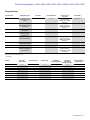
The 80E10, 80E08, and 80E04 are dual-channel Time Domain
Reflectometry (TDR) sampling modules, providing up to 12 ps incident
and 15 ps reflected rise time in the 80E10 (18 ps incident in 80E08 and
23 ps incident in 80E04). Each channel of these modules is capable of
generating a fast step for use in TDR mode and the acquisition portion of
the sampling module monitors the incident step and any reflected energy.
The polarity of each channel’s step can be selected independently. This
allows for differential or common mode TDR or S-parameters testing of
two coupled lines, in addition to the independent testing of isolated lines.
The independent step generation for each channel allows true differential
measurements, which ensures measurement accuracy for differential
devices.
The 80E10 and 80E08 are small form factor, fully integrated independent
2-meter remote sampler systems, enabling location of the sampler near the
DUT and ensuring the best signal fidelity. An optional 2-meter extender
is available for 80E04. The modules characterize crosstalk by using
TDR steps to drive one line (or line pair for differential crosstalk) while
monitoring a second line (or line pair) with the other channel (or another
module for differential crosstalk). The "filter" function on the 8200 and 8000
Series mainframes can be used with TDR or crosstalk measurements to
characterize expected system performance with slower edge rates.
All modules have independent incident step and receiver deskew to remove
the effect of measurement fixtures and probes, that enable faster and easier
de-embedding of test fixtures. The 80E10 sampling modules provide an
acquisition rise time of 7 ps, with up to 50 GHz user-selectable equivalent
bandwidth (with 50, 40, and 30 GHz settings). The 80E08 sampling
bandwidth is 30 GHz (user selectable with 30 and 20 GHz settings) and
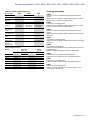
80E04 sampling bandwidth is 20 GHz. The 20 GHz P8018 single-ended
and 18 GHz P80318 differential variable pitch TDR probes provide excellent
performance and compliance, ensuring easy and accurate backplane and
package measurements.
2
www.tektronix.com
When the user employs these modules with Tektronix IConnect® TDR and
VNA software, he or she can acquire up to 1,000,000 data points and obtain
up to 50 GHz differential, mixed mode, and single-ended S-parameters.
IConnect also enables impedance, S-parameters, and Eye-diagram
compliance testing as required by various serial data standards, as well as
full channel analysis, Touchstone (SnP) file output and SPICE modeling for
gigabit interconnects.
Sampling Modules: 80E09, 80E07, 80E06, 80E03, and
80E01
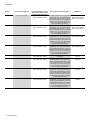
The 80E09 and 80E07 are dual-channel modules with remote samplers,
capable of 450 μVRMS noise at 60 GHz sampling bandwidth, and 300 μV
at 30 GHz sampling bandwidth. Each small form factor remote sampler
is attached to a 2-meter cable in order to minimize the effects of cables,
probes, and fixtures, allow close location of the sampler to the DUT, and
ensure best signal fidelity. User-selectable bandwidth settings (60/40/30 on
80E09 and 30/20 on 80E07) offer optimal noise/bandwidth trade-off.
80E06 and 80E01 are single-channel, 70+ and 50 GHz bandwidth sampling
modules. 80E06 provides the widest measurement bandwidth and fastest
rise-time measurements with world-class signal fidelity. Both 80E06 and
80E01 provide superior maximum operating range of ±1.6 V. Both of these
modules can be used with the optional 2-meter extender cable, which
ensures superior signal fidelity and measurement flexibility.
The 80E03 is a dual-channel, 20 GHz sampling module. This sampling
module provides an acquisition rise time of 17.5 ps or less. An optional
2-meter extender cable is available.
When used with Tektronix 80SJNB Jitter, Noise, and BER software, these
modules enable separation of both Jitter and noise into their components,
understand precise causes of Eye closure, and obtain highly accurate
extrapolation of BER and 3-D Eye contour. When used with 82A04 phase
reference module, time-base accuracy can be improved down to 200 fsRMS
Jitter, which together with the 300 μV noise floor and 14 bits of resolution
ensures the highest signal fidelity for the measured signals.