1
Annex 20: Visual deviations in quality in insulated glass units
Page 1
Quality assessment
As the European Standard for Insulated Glass Units, EN 1279-1, has not stipulated rules for
evaluating deviations in the quality of insulated glass units, the following requirements and
exemptions apply to glazing unit manufacturers supplying glazing units to DVV-certified
window manufacturers.
Requirements to purity and quality of glass
Glass is an industrial product which, among other things, consists of lime, silica, and soda.
Despite careful purification of the raw materials, minor impurities and scratches will – in rare
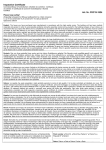
cases - occur in the glass on the inside of the glazing unit (cf. table page 3).
Butyl from double sealing is permitted max.. 2 mm into the unit from the spacer profile..
Complaints concerning impurities in glass will be evaluated according to the below procedure on
the basis of which it will be decided if they are immaterial i.e. inherent in the material and as such
not covered under the warranty – or if they are so material as to qualify for a replacement of the
glazing unit.
Assessment criteria
Glazing units, cf. Annex 21, must be assessed from the inside at a min. distance of 2 m in diffuse
daylight (e.g. a cloudy sky) with no direct sunlight or artificial light. Irregularities that are not
visible from a distance of 2 m are not considered as defects.
When checking reflection the distance from the outside must be at least 5 m..
Glazing units with coated glass
Coated glass may contain pinholes (small round spot with no coating) which is a phenomenon
that may occur from manufacturing.
The assessment criteria for pinholes is shown in the table on p. 3.
Assessment critieria in connection with reflection: shades, differences in nuances, and distortion
of reflection are accepted.
Patterned and wire glass
Distortions in the pattern are considered acceptable deviations. Deviations in wire parallism may
appear in wire glass.
Colour shades in glass
Standard window glass as used in glazing units is commonly perceived as being completely clear,
but it is actually green. The very own colour of the glass reduces the light transmittance.
Two pieces of glass of the same type but of different thickness may therefore be perceived as
having different shades of colour.
With coated or body-tinted glass this becomes even more clear.
The fast development in new types of glass may, however, make it difficult to obtain glass of a
quality similar to that of existing glazing units.
Even with coated or body-tinted glass produced by the same manufacturer and to the same
specifications but at different plants, there may be minor differences in nuances.
The below do not qualify for a complaint:
• interference phenomena (Brewster Stripes)
• double glazing effect
• anisotropies
• condensation on external glass pane areas
• formation of marks on glass surfaces
• misting
Technical Requirements, 7th Edition, Rev.4, 2013