1
2 SIMPLEXYS
An Expert System Toolbox
The SIMPLEXYS user interface is meant to be a tool for experienced and inexperienced
programmers who develop real time expert systems. Therefore real time expert systems
and the toolbox SIMPLEXYS are introduced in this section. The material presented in
this section is intended to serve as a review. For thorough treatment of the subject, see
[Blom,1990].
2.1 Introduction to SIMPLEXYS
Real time expert systems must be fast. Beside this, real time expert systems must be
safe. A set of tools has been designed that geared to both [Blom,1990]. The set of tools
provides speed, because a 'semantic network' has been chosen as the internal knowledge
representation technique (a semantic network can be used in a way that avoids
searching). It provides safety because several checks of the consistency of the stored
knowledge is possible, where many other expert system tools don't offer such checks.
The name of the developed set of tools is SIMPLEXYS, a contraction of 'simple' and
'expert systems'. SIMPLEXYS enables the creation of real time rule-based expert
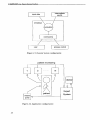
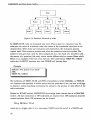
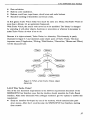
systems. In figure 2.1 a general system configuration is represented. The expert system
evaluates input data and intermediate results using the knowledge that is implemented.
After evaluation, it can derive some conlusions. The real configuration is dependent on
the application. An example is given in figure 2.2. This figure represents an expert
system in an operating room. The inputs consist of data (which can be validated and
preprocessed) from the patient monitors. The conclusions that can be drawn from the
input data, can directly indicate an alarm situation or can indirectly be used to control
some processes such as regulation of the blood pressure.
SIMPLEXYS Expert Systems have some features that are not present in many other
expert systems. These features are:
1. Both static and dynamic environments can be handled efficiently by SIMPLEXYS,
where most other expert systems can only handle static environments. In contrast
with dynamic environments, static environments can only process time-invariant
information. SIMPLEXYS handles a dynamic environment by regarding it as a
sequence of static environments.
11