1
FEDKIT
5 Addition: FEDKIT sender (PCI to Slink64)
FEDKIT user’s manual and programer’s manual
Version/Issue: beta 0.3c/1
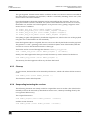
with index going from 0 to fedkit_suspended_get_handle_number (receiver) -1 included. This
function returns NULL if an invalid index is provided or if the receiver is not suspended.
After using those functions, fedkit_close can be called anytime.
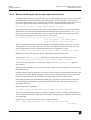
4.2.6 Self send functionality
A special version of the receiver board (special FPGA programming) generate data locally (see
Section 3.4, "Self send extension"). This extension is automatically supported in the fedkit API.
There just is an additional function, that fails if the hardware function is not present. This
function also sends back an error when the parameter FIFO is full. (No space left to send
parameters for events to be generated).
The function is:
int fedkit_autosend_generated (struct fedkit_receiver * sender, U16 word_count,
U16 seed, U32 event_trigger_number);
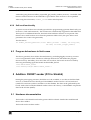
4.3 Program behaviours in limit cases
The driver gracefully frees all the allocated memory (including bigphys memory) event in
case of a segmentation fault. The driver sill keeps the board as allocated if the program
doesn’t free it by the fedkit_close call. If this was not done, the board can be recovered by
removing and loading again the kernel module fedkit_kernel:
/sbin/rmmod fedkit_kernel
/sbin/insmod packages/fedkit/fedkit_kernel.o
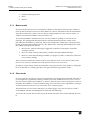
5 Addition: FEDKIT sender (PCI to Slink64)
During the prototyping activities, the FEDs won’t be available, so in order to feed the Slink
receiver, a sender board was developed. The FEDKIT sender board is a PCI 64/66 board
(small PCI form factor) able to send data over the Slink64. The data can be generated by the
board, send to the board (the FEDKIT sender is then a PCI slave), or the FEDKIT can pull the
data on the PCI bus (DMA).
5.1 Hardware documentation
The board is a PCI board based on the generic III FPGA board. Vendor ID is 0xECD6 and
device ID is 0xFE01.
The boards works in three modes:
Work version / subject to additions
page 13