1
EICAR 2000 Best Paper Proceedings
Preparing the Virus Collection
A malware collection should contain viruses, worms, Trojan horses and other malicious
code. The objective of sorting and structuring the virus collection is to find the “ minimal” set
of all relevant viruses which is applicable to meet the requirements of the test. There are
large numbers of viruses that exist now, however, most of them are simply unimportant,
like more than 14,000 viruses, which were generated using a virus construction kit (Ducklin
1999b). Definitions of it can be found in (Marx & Michl 1999; Marx & Günther 1999; Marx
1999b; Luckhard & Siering 1999) and future aspects of malware are discussed in
(Brunnstein & Schmall 1999). Malware is defined here as software which is made
intentionally for sabotage of operational software environments. Therefore, jokes are not
included in this definition. All sorts of malware have to be tested, because we want to test
anti-malware programs and not only anti-virus ones. This has been shown during
outbreaks of worms like Melissa or Explore_Zip. Trojan horses like Backdoors can be
found more often, too. However, malware, like worms, are not viruses at all but most
vendors call their products anti-virus programs and not anti-malware programs. For more
aspects on the identification problems see (Whalley 1999).
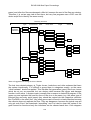
This section gives a brief overview on the complex and difficult task of preparing good
samples for testing and the (still unsolved) problems for sorting and structuring a virus test
set. A checklist for non-macro and non-script viruses can be found in (Bontchev 1993).
Getting “something”, maybe viruses are included.
There are different ways of getting and making a collection to test anti-virus programs. The
first idea - which will hopefully never be seen anymore - is to employ a Virus Simulator like
VS^2 by Boff Consulting or VirSim by Rosenthal Engineering and generate “ test viruses” .
These “ viruses” only contain a simple routine to print out a message or copyright notice
(host) and exit to the OS. Attached to these easy programs are some strings from known
viruses like Jerusalem or Vienna that can be found near the beginning of the viruses, but
they will never be executed in these “ test viruses” . Of course, it makes no sense to test the
detection of these files, because they are neither viruses, nor malware, nor contain other
malicious code and their design patterns are known and very simple, because the host
does not change in most cases. In other words, they do not show, if a program is able to
detect real viruses. These and other aspects are discussed in (Gordon 1995).
A second idea to discuss - and this will hopefully never be seen anymore, too - would be
the creation of new viruses using a virus construction kit, for example VCL, PS-MPC, IVP,
or to write new viruses or create new variants. It is a bad idea to use these kits to generate
new viruses in order to test anti-virus programs, because most of the products know the
design patterns and can find all variants easily. Second, still enough viruses exists and
there is no need to create more of them.
Third, a tester could ask the anti-virus companies to supply viruses. This will fail in most
cases, because they will not give samples to unauthorized persons. However, in some
cases, for example, if the tester has a high reputation in the anti-virus community, the
tester may be able to get parts of the required collections or at least some samples still
missing. Of course, to be fair against all producers of such security programs, the tester
224