1
cases of over-informedness as the information
needed to remedy under-informedness is not
available.
5 Modeling various degrees of
interactivity in TRINDI
We envision the following cases:
1. Traditional manual: no overt inter-
4 The TRINDI model
The TRINDI project has developed both a
framework and a toolkit to model various
types of interactions in terms of information
state updates. The framework, whose main
ingredients are information states, dialogue
moves and updates, is described in (Traum
et al., 1999). We use the term information
state to mean, roughly, the information stored
internally by an agent, in this case a dialogue system. A dialogue move engine updates the information state on the basis of
observed dialogue moves and selects appropriate moves to be performed. Information state
updates are formalised as information state
update rules. The importance of the framework is that new interactive hypotheses can
be modeled with minor extensions. The information state approach is implemented in the
TrindiKit (Larsson et al., 2000); (Larsson
and Traum, To appear), a toolkit for experimenting with the implementation of information states and dialogue move engines and for
building dialogue systems. It is used in the
experimental implementation described here.
Various instantiations of the framework
articulate further what information states,
moves, and update rules contain. In this paper we use one formal representation of information states that has been developed in
the TRINDI, SDS2 and INDI3 projects, and
implemented in the GoDiS dialogue system
(Bohlin et al., 1999). The central parts of the
information state in GoDiS are dialogue plans
and Questions Under Discussion (QUD), a
notion borrowed from Ginzburg (Ginzburg,
1998).
2
SDS
(Swedish
Dialogue
Systems),
NUTEK/HSFR Language Technology Project
F1472/1997, http://www.ida.liu.se/ nlplab/sds/
3
INDI (Information Exchange in Dialogue), Riksbankens Jubileumsfond 1997-0134.
action, we will consider this as the limit
case
2. Manual can ask yes/no questions and
understand two types of user responses:
{ yes/no
{ done/don't understand
{ how?
3. User can indicate whether she already
knows certain (sub)procedures
5.1 GoDiS/IMDiS information states
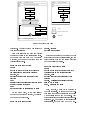
To model the types of interactions above, we
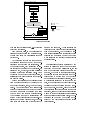
started from the GoDiS system which is designed to deal with information-seeking dialogue. The IMDiS information state type is
shown in Figure 1.
2
6
6
6
6
6
6
4
"
private
shared
:
:
plan
agenda
2
tmp
6
4
qud
bel
actions
lu
# 3
: StackSet(Action)
: Stack(Action)
7
: (same as shared) 3 7
7
7
: Set(Prop)
7
: StackSet(Question) 7 7
5 5
: Stack(Action)
: Utterance
Figure 1: IMDiS information state type
The main division in the information state
is between information which is private to the
agent and that which is shared between the
dialogue participants. The private part of the
information state contains a plan eld holding a dialogue plan, i.e. is a list of dialogue
actions that the agent wishes to carry out.
The plan can be changed during the course
of the conversation. The agenda eld, on
the other hand, contains the short term goals
or obligations that the agent has, i.e. what
the agent is going to do next. We have included a eld tmp that mirrors the shared
elds. This eld keeps track of shared information that has not yet been grounded, i.e.
conrmed as having been understood by the