1
88
89
________________________________________________________________________
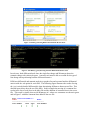
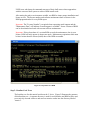
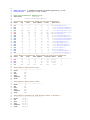
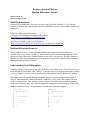
Figure 9: RSM Baseline Differential Report
Step 6: Understanding the Differential Report
The differential report shown in Step 5 starts with the RSM report header, lines 1 through 10.
The RSM license number is shown on line 6 and the expiration date for software maintenance is
shown on line 7. Any version of RSM with a build date prior to the maintenance expiration date
can be used with your RSM license file rsm.lic.
Lines 11 through 15 display the RSM command line used to create the report. This information
can be important if the report had to be reproduced.
Lines 15 and 16 show the configuration files used by RSM for the operation and report
generation. These files are in text format and can be opened with a text editor like WordPad.
They may be in UNIX text format so opening them with the Notepad program is not advised as
Notepad does not convert UNIX text format to a readable form.
The report title and format are shown in lines 18 to 20. The differential report can be sorted
using the -k switch at the command line. RSM switches are documented in the RSM users
manual or by using the -hs switch from the command line.
Work file names and creation dates are shown in lines 22 to 26. These files are the sources for
the differential metrics files. The creation date for the older work file should precede the
creation date for the newer work file, thus creating a position time differential between the work
files as shown in line 29 and 30. If the work files were created at the time of completion for the
baselines then this time differential represents the time required to build the newer baseline. This
time can be used with the RSM switch -wp to produce productivity values for the differential
metrics.
Line 32 begins the differential metrics between the two baselines.
State:
The state of the file to the newer baseline is shown in column 1 of the report
The "new" type identifies files which are new to the baseline. New files represent new lines of
code and metrics to the differential report. New lines in existing files are presented as "dif"
metrics because they represent differences between two existing files. There is no method for a
differential algorithm to determine new lines in existing files within the baseline.
The "rem" state represents lines and metrics associated with files removed from the newer
baseline. They existed in the older baseline but they no longer are present in the new baseline.
The "rem" state is the opposite of the "new" state.