1
Section Three – Using Arvert
3.1 Program inputs and outputs
Inputs. To work, Arvert requires
four text files to be present in the
same directory as the application;
they must retain their exact names.
Within these files it is best to delimit
same-line parameters with tabs.
What follows is a lengthy discussion
of the contents of these files and,
where needed, a discussion of what
the parameters do and what ranges
of values to use. A fundamental
description of each parameter is
given in bold face; additional
comments on the parameter are in
italics. The files are crs.in,
domains.in, goal.in, and
helium.in.
To repeat some critical advice: the
input text files must have the correct
line terminator, which for use in
Mac OS X is a line feed (LF) (some
text editors refer to this as ‘UNIX’
format). Input files in other formats
will not work and will lead Arvert to
crash because it will not read correct
inputs.
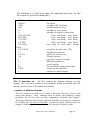
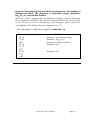
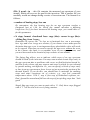
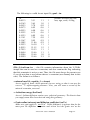
(File 1) crs.in – this file contains all the controlling parameters for the
inversion, and is the file you will be modifying between runs. The format is as
follows:
• String giving run info (maximum 100 characters)
• File suffix appended to output files (maximum 10 characters)
Not critical but very helpful in sorting output from different runs.
• Number of iterations for the CRS algorithm
Most runs will terminate based on this parameter. Usually it is not
worth doing fewer than 2000 iterations, but on the other hand resist the
urge to do too many iterations until you are ready, as you can always
keep restarting the model after having a quick check of results. Usually
a total of 5000 to 20000 iterations will be sufficient.
• Model duration in millions of years
Arvert 4X User’s Manual
Page 11