1
20
SRH Facilitators’ Training Manual: MODULE 3 Young Adolescents’ Sexual and Reproductive Health
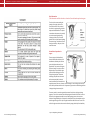
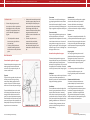
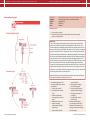
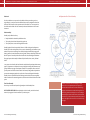
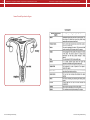
Menstruation cycle graph
SRH Facilitators’ Training Manual: MODULE 3 Young Adolescents’ Sexual and Reproductive Health
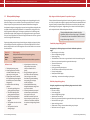
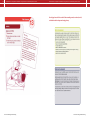
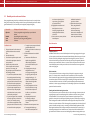
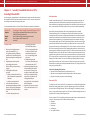
Exercise 5: Understanding menstruation and the situation of girls
Objective: Enable participants to better understand menstruation
Method: Large group work
Tools: Maria’s story
Time:
30
minutes
Facilitator’s tasks:
1. Ask the group to sit together
2. Read yourself or asks a trainee to read out Maria’s story, which is a personal experience with menstruation.
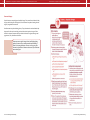
Maria’s story
“I was 14 when I experienced my first menstruation. I used to pull up my skirt and place
a plastic sheet on my bench so that the menstrual blood does not stain my skirt. I was so
stressed out about others realizing that I barely focused on my education. All I was worried
about was ‘What if it stains my skirt? What if the students see it?’ The next day, our maid gave
me a piece of cloth and I used it as a sanitary tissue. But as I was returning to class from the
break, the cloth dropped off my underwear. I walked off pretending that was not mine but it
was in vain as some students had watched it drop off my skirt. They embarrassed me asking
‘what is that smell?’ It took me a while before I got used to managing it properly. Even if I
was able to manage it, the period was always stressing me out. I did not want to go to school
when I was in my period. I did not want to socialize or study during those moments. My
younger sister’s menstruation started even earlier than mine. She was only 13 when she first
experienced menstruation. She would sit in the restroom for a very long time so that, as she
told me later, it would all flow out till the last drop before she went out of there. But because I
was already experienced then, I was able to help her.”
Maria also said that many of her friends had gone through the same troubles and that they
were sometimes ashamed of standing up from their seat.
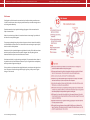
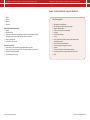
3. Ask the following questions to the entire group and discuss the answers and comments
a. Is Maria’s story realistic?
b. Can someone share a similar story?
c. When does menstruation start in a girl’s life, how does it begin?
d. What problem does it cause?
e. What are the existing cultural attitudes regarding menstruation?
f. What should be done when © Deutsche Stiftung Weltbevoelkerung
menstruation starts?
g. What can girls do to manage their menstrual hygiene?
h. How can we help each other to manage menstruation happily?
i. How can boys help? How can we help girls?
j. How can families, teachers, and elders help?
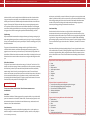
4. Share background knowledge, your own experiences and correct information with participants and encourage them to practice tolerance and understanding
© Deutsche Stiftung Weltbevoelkerung
21