1
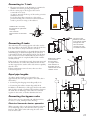
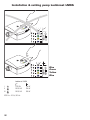
Connecting to 1 tank
1. The pipe-runs shown on the diagram are optimised to
minimise air-related operating interruptions.
2. The hot water pipe to the by-pass valve can be
connected in two ways.
A. Approx 30 cm from the top of the tank to prioritise
domestic hot water.
B. On the charge line connection to the tank to
prioritise heating. The connection is directed downwards to prevent air rising to the radiators.
Laddomat 21 can easily
be reversed for right-hand
mounting.
Just move the
thermometers to the other
side.
The pipe to the
bottom of the tank
must not be routed
through the roof.
This connection
removes the selfcirculation function.
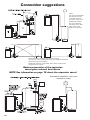
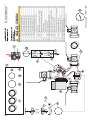
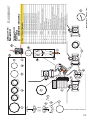
Connecting 2 tanks
The tanks must be located up against each other, and as
close as possible to the boiler. The pipe-runs from the bottom of the tanks are always laid close to the floor.
It is important that the flow to the tanks during charging
and discharging is distributed equally. If the system is
connected incorrectly, then charging will be cut off when
tank 1 is full of hot water which will reach the boiler before the other tanks are completely filled. Tank 2 will be
virtually unused.
If the system is connected incorrectly, the warm water and
the heat will run out earlier than estimated after the burner has stopped, since tank 1 will cool down more quickly
than the other.
If these requirements cannot be met, there are other
connection options.
NOTE If the radiator
is connected in
this way there
is a large risk of
heat retention in
the boiler and/or
reduced heat to the
radiator circuit.
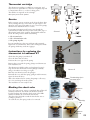
Equal pipe lengths
To achieve equal resistance, it is essential to use
approximately the same pipe-lengths to the tanks, this is
achieved by:
1. Connecting the charging circuit diagonally, A–A.
2. Connecting the radiator circuit diagonally, B–B.
In addition, the dimension of the pipes between the tanks
must be large enough to facilitate self-circulation between
the tanks. It is an advantage if the tanks are connected
together in the centre, to further distribute the heat.
Connecting the by-pass valve
The hot water port is connected at B, which prioritises
hot water, or at B1, which prioritises heating.
Electrical immersion heater operation
When operating solely on the electrical immersion heater,
it is an advantage only to heat the first tank to prevent
heat loss. Shut off the other tank using the valve at the
bottom of the tank.
17