1
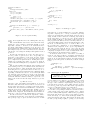
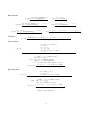
structure PointStr =
struct
_classtype Point(xinit, yinit)
with local
val x = ref xinit
val y = ref yinit
in
getX () = !x
and getY () = !y
and move (xinc,yinc) = (x := !x+xinc; y := !y+yinc)
and moveHoriz xinc = this.#move (xinc, 0)
and moveVert yinc = this.#move (0, yinc)
end
_classtype C ()
with
m () = this.#m2 ()
and m2 () = 0
end
_classtype D () : C ()
with local
val x = [this.#m ()]
in
m2 () = hd x
end
val dobj = D ()
_classtype ColouredPoint(x, y, c) : Point(x, y)
with
getColour () = c : java.awt.Color
and move (xinc, yinc) = this.##move (xinc*2, yinc*2)
end
end
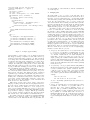
Figure 3: A small type loophole
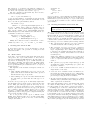
may make use of local identifiers not yet bound. Outlawing this completely is too strong a restriction (as many
classes set up initial state through methods in the superclass), and the weaker restriction of allowing only methods
in the superclass to be invoked does not fix the situation
as the example in Figure 3 demonstrates. The behaviour of
this program is ill-defined; in fact, it is likely that the exception List.Empty will be raised when m2 attempts to take
the head of a list that has yet to be defined. The root of
the problem is the combination of object initialisation and
dynamic method dispatch on the object being initialised.
The same problem exists in Java [8, §12.5], and enforcing
strong restrictions would have reduced expressivity without
completely closing the hole because of virtual method invocations inside an external superclass constructor.
As mentioned in Section 3.6, Java allows overloading of
methods. We support this in _classtype declarations in
order to extend existing Java classes that include overloaded
methods. No special syntax is required: the method name is
simply repeated in separate declarations, as in the example
below:
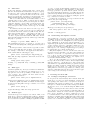
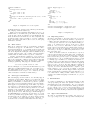
Figure 2: Coloured points in MLj
both to these arguments and to the bindings introduced by
local.
The ColouredPoint class derives from the Point class,
passing two of its constructor arguments straight on to its
superclass constructor. It has no local declarations and a
new method that simply returns its colour. In order to implement this method using Java’s class mechanism, the compiler will probably store c in a Java field, but note that the
only means of accessing it from MLj is through the method
provided.
Because the declarations are local to the class instance,
it is not possible to gain access to the corresponding declarations for other instances of the class. In Java, private
fields for other instances can be accessed directly, for example, to implement an equals method. In MLj, this can be
emulated by providing appropriate ‘get’ and ‘set’ methods
for the fields, then hiding these by a signature as explained
below.
The special identifier this has the same meaning as in
Java, referring to the object on which a method was invoked.
It is used in Point to define horizontal and vertical movement using the more general move method. However, we do
not support super as its semantics in Java confusingly differs
depending on whether it is used to access a field (in which
case it has the same meaning as a cast up to the superclass
and so is superfluous) or to invoke a method (where it has
a different run-time semantics, namely to ignore the overriding of the method in the subclass). Instead, we provide
a syntax
exp.##method-name
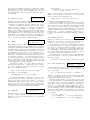
_classtype C ()
with
m(x:int) = ...process ints...
and m(x:string option) = ...process Strings...
end
5.3
Class types in signatures
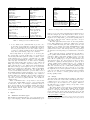
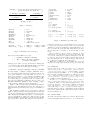
_classtype hcmodi class-name ty1 h: ty2 i
with method-spec end
Corresponding to the class type declaration there is a class
type specification construct for SML signatures. Here ty1 is
the type of the constructor argument(s) bound by the pattern expression pat in the corresponding class type declaration, and ty2 is the superclass. The method specifications
method-spec list function types for each method.
The types in the signature must correspond exactly to
those in the corresponding declaration, but methods can be
omitted in the same way as value bindings can be omitted
from an ordinary SML signature. This lets the programmer
hide methods from users of a class (corresponding to private
methods in Java), or to share methods amongst a number of
classes in a single module but to hide them from clients of the
module (corresponding roughly to package access in Java).
that can be used only within a class definition on objects of
that same class, and means “invoke method method-name in
the superclass, ignoring any over-riding of the method in the
current class”. It is used in ColouredPoint to redefine move
using the move method defined in Point, making coloured
points “faster movers” than plain points. By the magic of
virtual method dispatch, the moveHoriz and moveVert inherited by coloured points also inherit this speed increase.
We allow references to this in the superclass constructor arguments and in the local declarations. Unfortunately,
this opens up a type loophole as methods invoked on this
7