1
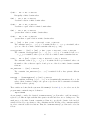
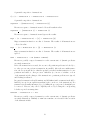
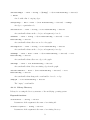
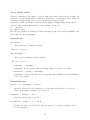
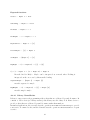
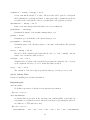
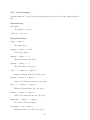
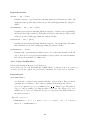
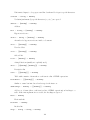
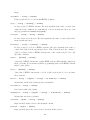
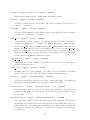
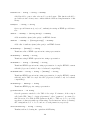
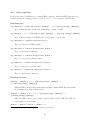
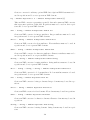
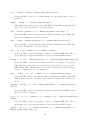
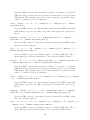
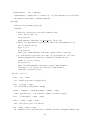
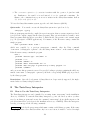
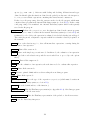
As an example, consider a constraint mortgage which relates the principal p, the lifetime of the
mortgage in months t, the monthly interest rate ir, the monthly repayment r, and the outstanding
balance at the end of the lifetime b. The financial calculations can be defined by the following two
rules in Curry (the second rule describes the repeated accumulation of the interest):
import CLPR
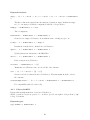
mortgage p t ir r b | t >. 0.0 & t <=. 1.0 --lifetime not more than 1 month?
= b =:= p *. (1.0 +. t *. ir) -. t*.r
mortgage p t ir r b | t >. 1.0
--lifetime more than 1 month?
= mortgage (p *. (1.0+.ir)-.r) (t-.1.0) ir r b
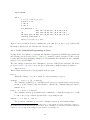
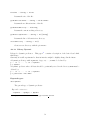
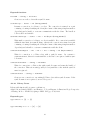
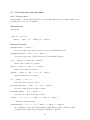
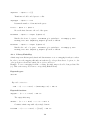
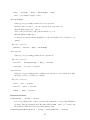
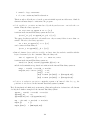
Then we can calculate the monthly payment for paying back a loan of $100,000 in 15 years with a
monthly interest rate of 1% by solving the goal
mortgage 100000.0 180.0 0.01 r 0.0
which yields the solution r=1200.17.
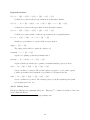
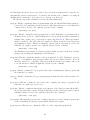
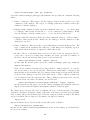
Note that only linear arithmetic equalities or inequalities are solved by the constraint solver. Nonlinear constraints like “x *. x =:= 4.0” are suspended until they become linear.
A.1.2
Finite Domain Constraints
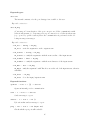
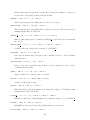
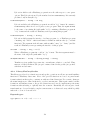
Finite domain constraints are constraints where all variables can only take a finite number of
possible values. For simplicity, the domain of finite domain variables are identified with a subset
of the integers, i.e., the type of a finite domain variable is Int. The arithmetic operations related
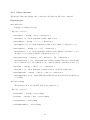
to finite domain variables are suffixed by “#”. The following functions and constraints for finite
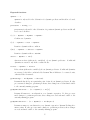
domain constraint solving are currently supported in PAKCS:6
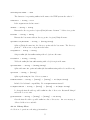
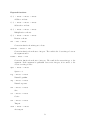
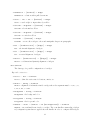
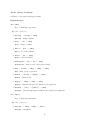
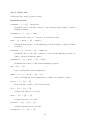
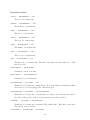
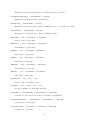
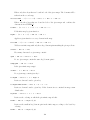
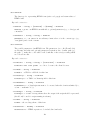
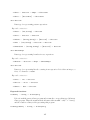
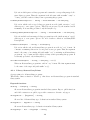
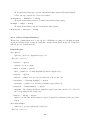
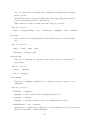
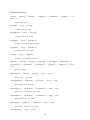
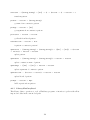
domain :: [Int] -> Int -> Int -> Success
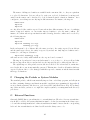
The constraint “domain [x1 , . . . , xn ] l u” is satisfied if the domain of all variables xi is the
interval [l, u].
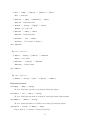
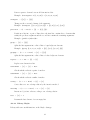
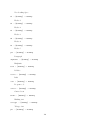
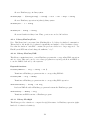
(+#) :: Int -> Int -> Int
Addition on finite domain values.
(-#) :: Int -> Int -> Int
Subtraction on finite domain values.
(*#) :: Int -> Int -> Int
Multiplication on finite domain values.
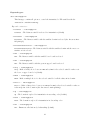
(=#) :: Int -> Int -> Success
Equality of finite domain values.
6
Note that this library is based on the corresponding library of SICStus-Prolog but does not implement the
complete functionality of the SICStus-Prolog library. However, using the PAKCS interface for external functions (see
Appendix G), it is relatively easy to provide the complete functionality.
32