1
Programming and Operation
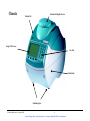
The combination of new keypad design and large screen display ensure user friendly programming and
operation. During programmed operation the display screens provide comprehensive information
relating to your protocol including sample temperature, number of cycles completed, estimated time
for completion, etc.
The Px2 can thus be programmed to perform all types of temperature controlled reactions, from
simple one step incubations, to complex multi-step temperature cycling protocols and temperature
gradient experiments*. Three additional temperature control software options are available to the user
in the Advanced Edit Menu: Temperature Ramping, Time Increment and Temperature Increment.
The unit has program space for up to 99 full cycling protocols including the pre-set protocols.
* With the gradient interchangeable block option.
Pre-set Programs
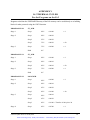
The Px2 is supplied with ten (non-editable) pre-set protocols, stored as programs 90-99 in the
F:THERMO directory, enabling users to run experiments immediately. These pre-set protocols cover
the most common thermal cycling techniques, and can be used to create customised protocols by
editing (see Appendix V).
Advanced Edit - Temperature Ramping
The temperature ramping (Ramp Rate) enables the rate of change of sample temperature (°C/second)
to be artificially slowed down.
Under normal circumstances the temperature cycling times are very rapid, which minimises nonspecific reactions. The rate of sample temperature change during temperature cycling is controlled so
that it is as fast as possible without affecting the block uniformity and accuracy. In some instances, it
may be advantageous to limit the rate of change of temperature, e.g. to allow limited extension of short
or degenerate primers between primer annealing and DNA synthesis steps to stabilise the
primer/template duplex.
Advanced Edit - Time/Temperature Increment
These features enable the time interval and/or the temperature of a specified programmed step to be
increased or decreased with successive temperature cycles. It may be advantageous to increment the
extension time interval to compensate for deterioration of enzyme activity in later cycles. Alternatively,
temperature decrements can be used, e.g. in Px2 cycling reactions where the annealing temperature is
decreased with successive cycles.
© Thermo Hybaid. Issue 1.0, January 2002
Artisan Technology Group - Quality Instrumentation ... Guaranteed | (888) 88-SOURCE | www.artisantg.com
3