1
EUDET-Memo-2010-01
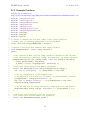
5. Data Conversion
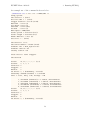
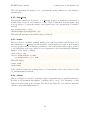
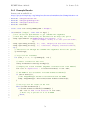
the value of the pivot pixel (or pivot row) for the plane. Further information about the
plane is available in:
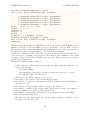
unsigned
unsigned
unsigned
unsigned
unsigned
unsigned
XSize() const;
YSize() const;
NumFrames() const;
TotalPixels() const;
HitPixels() const;
HitPixels(unsigned frame) const;
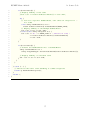
These return the full width and height of the sensor in pixels, the number of frames
stored for the plane, total number of pixels for the plane (i.e. full width × height), the
number of pixels over threshold (for zero-suppressed data) in the result frame, and the
number of pixels over threshold in a particular source frame.
Note that for the HitPixels method, there are two versions; the first takes no parameter
and returns the number of hit pixels in the result frame, while the second takes the frame
number as a parameter and returns the number of hit pixels in that frame from the
underlying source data. Normally the first version would be used, unless access is needed
to the raw data from the sensor. Similarly, the other methods for accessing the data all
have two versions:
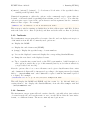
double GetPixel(unsigned index) const;
double GetX(unsigned index) const;
double GetY(unsigned index) const;
const std::vector<pixel_t> & PixVector() const;
const std::vector<coord_t> & XVector() const;
const std::vector<coord_t> & YVector() const;
These return the charge value, the x coordinate and the y coordinate of a particular pixel
(for the first three methods), or a vector of these values for all pixels in the frame (for
the final three methods.
Here, coord t and pixel t are both double, even though the values stored are usually
integers. This is in order to make the StandardPlane as general as possible, allowing it
to store, for example, clusters with non-integer coordinates instead of pixels, and it also
makes it easier to pass the values directly into Root histograms without first having to
convert them to double. All the above methods also have a version taking the frame
number (as the second parameter if they already have one parameter), which returns the
information from the underlying source frame instead of the result frame.
5.2. LCIO and LCEvent
Due to time constraints, the LCIO format is not yet described in this manual. If you
need to write a converter to LCIO, first check whether a newer version of this manual is
available, otherwise you can look at the other converters that are already implemented,
and if that is not enough, seek the help of an expert.
37