1
Freudling et al.: Data reduction workflows
based observatories. The reasons for this include the complexity
of general purpose instruments that are now routinely employed,
the rapid upgrade pace necessary to exploit advances in technology and science goals, and the variety of effects imposed by
varying atmospheric conditions. In many cases, supervision and
interaction with the data reduction process is, therefore, still essential to obtain sufficiently high quality results even from fairly
routine observations.
The general concept of astronomical data reduction that
does not employ a fully integrated pipeline has not substantially
changed in the past decades. Researchers organise their data,
and use a mixture of general purpose and highly specialized
tools, inspecting the results of each step. Such tools are available in environments such as MIDAS (Banse et al., 1983), IRAF
(Tody, 1993) and IDL1 , or as stand-alone programs. What has
changed is the number, complexity and interdependence of steps
needed to accomplish the data reduction. In this situation, the efficiency of the data reduction process can be vastly improved by
automating the previously manual workflow of organising data,
running individual steps, and transferring results to subsequent
steps, while still using the same routines to carry out individual
reduction steps.
The most commonly used approach to automate a data reduction workflow by individual researchers is to employ a scripting language such as Python (e.g. Nastasi et al., 2013). This
approach works well with a relatively small number of reduction steps, and in situations where the data organisation and
book-keeping are fairly simple. In more complex situations, such
scripts are themselves complex programs that cannot easily be
modified.
In this paper, we describe the usage of a general workflow
engine to automate the data reduction workflow for astronomical
observations. While this approach is relatively new for the field
of astronomy (e.g. Ballester et al., 2011; Schaaff et al., 2012), it
has been widely used in other fields of science including biology and chemistry (Abhishek and Sekharb,, 2007), meteorology
(Barseghian et al., 2009) and economics (Ludäscher et al., 2005).
For that reason, we discuss in detail the methods and functionalities that are necessary to use such a system for astronomical
data reduction, and present ESO’s new “Recipe flexible execution workbench” (Reflex) environment as a specific implementation of such a system.
The structure of the paper is as follows. In Sec. 2, we describe the main principles and architecture of our design independent of a particular implementation. In Sec. 3, we discuss
how these principles can be implemented in a specific workflow application, using our Reflex implementation as an example. Finally, in Sec. 4 we conclude with a discussion of the impact of performing data reduction in this way.
2. Architecture of astronomy data reduction
workflows
2.1. Data organisation
Astronomical data consist of collections of files that include both
the recorded signal from extraterrestrial sources, and metadata
such as instrumental, ambient, and atmospheric data. Such a collection of files is the raw output from one or several observing
runs, and consists of “science files” that contain the primary science observations to be analysed.
1
IDL is a trademark of Research Systems Inc., registered in the
United States
2
Dataset
science file
associated
calib ration
files
target
trigger
action 1
trigger
action 2
trigger
action 3
associated
files
action 3
product
associated
files
action 2
product
action 1
target action
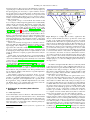
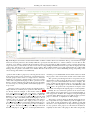
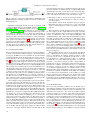
Fig. 1. Example of a simple data set and its organisation. The
data set contains all files necessary to produce the science data
product of the workflow. This includes the science associated
calibration files. These files are organised using a set of actions
that are shown as shield-shaped symbols. The target files are directly connected to the target action that is the root of the graph.
Files that are connected to an action with a solid line are the trigger for that action. Properties of the triggers are used to select
associated files for an action. The associated files are connected
to an action with dashed or dotted lines. To highlight files that
are connected to more than one action, a dashed line is used for
one of these connections, and a dotted line for the other one. The
purpose of a file is the connection between the file and the target
action. Symbols with tinted background indicate files that have
multiple purposes, i.e. there are multiple paths from the file to
the target action.
In addition, it might include files that are not directly related
to the current observations, such as calibration files that are routinely collected for a given instrument. Hereafter, we refer to the
input files for the data processing as “raw files”, as opposed to
files that are created during the data processing and that we will
refer to as “products”. We use the term “calibration file” for any
raw file that is not a science file.
In order to discuss data reduction in general terms, we introduce the following terminology. The goal of data reduction
is to process sets of files, which we refer to as the targets of a
data reduction workflow. The result of this processing is to create a target product. In most cases, the targets of a data reduction
workflow will be the science files, and the target product is then
the science data product to be used for scientific analysis. The
target files can be naturally grouped into sets that are reduced
together. Such a group of target files, together with other files
needed to process them, is referred to as a data set. A data set
is “complete” when it contains all necessary files to reduce the
targets, and “incomplete” if some of those files are missing.
“Data organisation” is the process of selecting data sets from
a larger collection of files, and recording information on the type
of files and the reasons for selecting them. This larger collection
of files might be the result of a pre-selection process that assures that low quality or defective data are not considered at this
stage. Organising data is a complex and time-intensive procedure that is typically among the first tasks of a data reduction
workflow (e.g. Scodeggio et al., 2005). Hereafter, we will refer
to the whole data reduction workflow including data organisa-