1
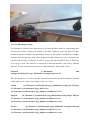
was left overnight to dry after cleaning, was carried out three times during the cruise (at the ice, at Marion and one day outside of PE). Filtered / unfitered BB9 The WetLabs BB9 instrument provides a backscatter measurement at 9 different wavelengths. The instrument was set up in underway mode, in a large volume black bin as the flow chamber with continual ships underway water supply. The residual time for sample water in the flow chamber is unknown but ought to be determined to assist with post cruise data processing and binning. The instrument was set up to record data for two minutes at 10 minute intervals. The large volume needed to fill the BB9 flow chamber >50L made it impossible to sample backscattering measurements from the three CTD depths. Acidified / non acidified Fiptered milli-q?? need to dokl 4.10 Coulter Counter Written by Emma Bone Key Participants: Emma Bine, Sandy Thomalla, Natasha Horsten The instrument was set up as per standard protocol Electrolyte was generated by first filtering seawater through a 0.8um polycarbonate filter/ or Whatman GF/F, followed by filtering through a 0.2um isopore polycarbonate filter. The 100um aperture tube was inserted and calibrated using 14 drops of 20um beads During the initial test runs the machine failed to analyse the correct volume of sample (40ml for 20 runs). It was soon after discovered that the Accuvette tube was not sealing properly and filtered seawater was being mistakenly acquired from the electrolyte jar. The problem was appeased upon fixing the seal. A specific SOP was created for the SOSCEx cruise, which standardly made use of the 100um aperture, sampling 20 runs at 2ml per run. At one stage the number of runs