1
US006507842B1
(12) United States Patent
(10) Patent No.:
Grey et al.
(54)
(45) Date of Patent:
SYSTEM AND METHOD FOR IMPORTING
6,397,378 B1 *
5/2002 Grey et al. ............... .. 717/128
6/2002 Grey et al. ................. .. 714/33
OTHER PUBLICATIONS
(75) InVeIlIOrSI James Grey, Cedar Park, TX (Us);
National Instruments Corporation TestStand User Manual,
S60“ RiChaI‘dSOIl, Cedar Park, TX
Limit Loader, pp. 10—21 thru 10—28, dated Dec. 1998.
(US); Patrick Williams, Cedar Park,
_
TX (Us)
_
* cited by exammer
Primary Examiner—Sanjiv Shah
(74) Attorney) Agent) Or Firm_Jeffrey C‘ Hood
(73) Assignee: National Instruments Corporation,
Austin, TX (US)
(57)
Notice:
Jan. 14, 2003
6,401,220 B1 *
VALUES FROM OR TO A DATABASE
(*)
US 6,507,842 B1
ABSTRACT
Subject to any disclaimer, the term of this
_
patent is extended or adjusted under 35
U_S_C_ 154(k)) by 289 days_
A system and method for importing and exporting test
executive values from or to a database. Atest executive may
_
_
provide the user various places, referred to as variables and
(21) Appl' NO‘: 09/613,341
properties, in Which data ‘values can be stored. These data
values may affect execution of a test executive sequence.
(22)
Filed:
Jul. 10, 2000
Variables may be global to a sequence ?le or local to a
7
(52)
particular sequence. Each step in a sequence can have
Int. Cl. .............................................. ..
properties‘ The user may include a Property Loader Step in
US. Cl. ................................ .. 707/5; 707/3; 714/33
of Search .............................. ..
3, 4, 1,
a Sequence, Which is Operable to dynamically, ie” at run
time, load property and/Or Variable Values from a database_
707/2, 102, 104; 714/33, 38; 717/128; 706/55;
324/158-1
The Property Loader step may be placed in a setup group of
the sequence, and the step(s) Whose properties are con?g
ured may be placed in a main group of the sequence, so that
(56)
References Cited
When the sequence is executed the steps in the main group
Us‘ PATENT DOCUMENTS
are con?gured With appropriate property values before run
nmg. The test executive may also enable a user to
interactively, e_g_, through a user interface menu item,
5,652,835 A * 7/1997 Miller ....................... .. 706/55
5,737,512 A
4/1998 Proudfoot et 315,781,720 A * 7/1998 Parker et al. ............... .. 714/38
5,910,895 A
6/1999 Proskauer et 211.
5,991,537 A
11/1999 McKeon et al.
6 002 868 A
12/1999 Jenkins et a1
6,047,293 A
4/2000 Blitz
6,249,882 B1 *
6/2001
6,353,904 B1 *
3/2002 Le ........................ .. 324/1581
request variable and property values associated With a
sequence to be imported from or exported to a database. For
example, after exporting values to a database, the values
may later be used to dynamically con?gure a test executive
Sequence
Testardi ..................... .. 714/38
37 Claims, 12 Drawing Sheets
create a test executive sequence
1
include a plurality of test executive steps in main
group of test executive sequence
&
include a Property Loader step in setup group of
test executive sequence
&
l
con?gure the Property Loader step
E
l
execute the test executive sequence
M
l
Property Loader step imports property and/or
variable values from database
l
test executive steps in main group execute, using
dynamically loaded values
&
U.S. Patent
Jan. 14, 2003
Sheet 1 0f 12
US 6,507,842 B1
J‘2:
cvtgz vnlhosi203. ‘
25:3
mumalz ovczsg
8
.
2
)
8
Kg:23:
U.S. Patent
Jan. 14, 2003
Sheet 2 0f 12
US 6,507,842 B1
Ej 30032222020
‘5230222.? Basia:
Mia-gag: Zmm'ikm
Lam‘ Uzzim&
Ema,
“mm 500512;, Edit 2:00;:
Hum.
230202120?‘
22.02pm
U.S. Patent
Jan. 14, 2003
Sheet 4 0f 12
create a test executive sequence
2%
include a plurality of test executive steps in main
group of test executive sequence
32
include a Property Loader step in setup group of
test executive sequence
%
V
con?gure the Property Loader step
Q2
execute the test executive sequence
m
Property Loader step imports property and/or
variable values from database
m
V
test executive steps in main group execute, using
dynamically loaded values
3_12_
FIG 4
US 6,507,842 B1
U.S. Patent
Jan. 14, 2003
Sheet 5 0f 12
US 6,507,842 B1
specify a database from which to load prop erty/
variable values
Q
i
specify a mapping from properties/variables to
database values
22
1
specify ?ltering infomiation for database values
22%
FIG 5
U.S. Patent
STEPNAME
=
=
Voltage at Pin A
Jan. 14, 2003
Sheet 6 0f 12
UMITS_
LIMITS_
LlMI'l‘S_
HIGH
LOW
STRING
9
:
ll
—
US 6,507,842 B1
SEQUENCE
POWEILON
COUNT
NAME
===
-——
Phone TCSLSIJQ
Voltage at Pin B
8.5
9.5
-
-
-
Phone TesLseq
Self Test Output
—
—
"SYS OK‘
—
-
Phone Tesmeq
<Locals>
—
—-
—
—
I00
Phonc Tesuscq
(Fit: Global»
—
—
—
—
99
Phone Tcst.seq
<S£atiun Global»
--
--
—
False
-
Phone TcsLscq
Frequency at Pin A
100,000
[0,000
—
--
—
Frequency Tesueq
Frequency :11 Pin B
90.000
9.000
—
—
—
Frequency TGSLsBq
-—
--
"0K"
—
-
Frequency Tesucq
Self Tcst Output
FIG 6
U.S. Patent
Jan. 14, 2003
Sheet 7 0f 12
US 6,507,842 B1
U.S. Patent
Jan. 14, 2003
Sheet 8 0f 12
US 6,507,842 B1
U.S. Patent
Jan. 14, 2003
Sheet 9 0f 12
F56 Q
US 6,507,842 B1
U.S. Patent
Jan. 14, 2003
Sheet 10 0f 12
Imp oil/Exp 0|! F’lopelliee
iQLStptgme?hoSdgot
i "SELECT '
i
4.
FHUM TEST LUADEH"
i
3i
1
U Q-awnlé E mslhg Fibcolds
FIG 10
US 6,507,842 B1
U.S. Patent
Jan. 14, 2003
Sheet 12 0f 12
R UnS P. a Inan .6.m
B
....0.......|..6..a.ig...._
C m
Sd
In. P
.W..‘__............“9mm-..”
T est s
‘SEQUENCE FILE
FIG 12
.EIL
US 6,507,842 B1
US 6,507,842 B1
1
2
Unit Under Test (UUT)—A device or component that is
SYSTEM AND METHOD FOR IMPORTING
AND EXPORTING TEST EXECUTIVE
VALUES FROM OR TO A DATABASE
being tested; may include softWare and/or hardWare ele
ments.
In many cases it is useful to provide users With the ability
to de?ne variables and properties Which affect the execution
FIELD OF THE INVENTION
behavior of a test executive sequence. For example, a
The present invention relates to test executive software
for organizing and executing test sequences, e. g., to measure
particular step may be used in testing a group of different
devices, but the step may need to use different limit values
for each device. In this example, properties for the limit
values may be de?ned for the step, and the property values
may be changed as necessary for each device, Without
requiring any modi?cations to the code module that the step
calls.
and/or control instrumentation systems, and more particu
larly relates to a system and method for importing/exporting
test executive properties from/to a database.
DESCRIPTION OF THE RELATED ART
As test executive sequences groW larger and more com
Atest executive is a program that alloWs a user to organiZe 15
plex and as the number of different units under test requiring
and execute sequences of reusable test modules to automati
different test behavior groWs, con?guring sequences and
steps With correct variable and property values becomes a
dif?cult task. Thus, it is desirable to provide a Way to
cally control a test, such as a test involving one or more
instruments or devices or softWare applications. The test
modules often have a standard interface and typically can be
automatically con?gure test executive sequences and steps
With appropriate variable and property values. In particular,
created in a variety of programming environments. The test
executive softWare operates as the control center for the
it is desirable to enable the values to be stored in a database
and automatically loaded as needed.
automated test system. More speci?cally, the test executive
softWare alloWs the user to create, con?gure, and/or control
test sequence execution for various test applications, such as
production and manufacturing test applications. Text execu
tive softWare typically includes various features, such as test
sequencing based on pass/fail results, logging of test results,
and report generation, among others.
Test executives include various general concepts. The
folloWing comprises a glossary of test executive nomencla
SUMMARY OF THE INVENTION
25
ing test executive values from or to a database. The test
executive values that may be imported and/or exported
include sequence variable values and step property values.
As used herein, a sequence comprises a series of steps,
ture.
Wherein the steps may be executed to perform a test of a unit
Code Module—A program module, such as a WindoWs
under test (UUT). A given step can do many things, such as
initialiZing an instrument, performing a complex test, or
Dynamic Link Library (.dll), Java class ?le, LabVIEW VI
(.vi), etc., that contains one or more functions that perform
a speci?c test or other action.
The problems outlined above may in large part be solved
by providing a system and method for importing and export
35
Test Module—A code module that performs a test.
Step—Any action, such as calling a test module to per
making a decision that affects the How of execution in a
sequence. Steps can perform these actions through several
types of mechanisms, including jumping to another step,
executing an expression, calling a sub-sequence or calling
form a speci?c test, that the user can include Within a
an external code module, etc.
sequence of other actions.
Step Module—The code module that a step calls.
A test executive may provide the user various places,
referred to as variables and properties, in Which data values
can be stored. These data values may affect execution of the
test executive sequence. Variables are properties that the
Sequence—A series of steps that the user speci?es for
execution in a particular order. Whether and When a step is
executed can depend on the results of previous steps.
Subsequence—A sequence that another sequence calls.
45
Each step in a sequence can have properties. For example,
a step might have an integer error code property. In one
The user speci?es a subsequence call as a step in the calling
sequence.
Sequence File—A ?le that contains the de?nition of one
embodiment, individual steps may be instances of “step
types” Which have associated properties.
or more sequences.
Values that are stored in variables and properties can be
Sequence Editor—A program that provides a graphical
user interface for creating, editing, and debugging
passed to code modules. When executing sequences, the test
executive may maintain a “sequence context” that contains
references to global variables and local variables and step
properties in active sequences. The contents of the sequence
sequences.
Run-time Operator Interface—A program that provides a
graphical user interface for executing sequences on a pro
user can freely create in certain contexts. Variables may be
global to a sequence ?le or local to a particular sequence.
55
context change depending on the currently executing
duction station. A sequence editor and run-time operator
interface can be separate application programs or different
sequence and step.
According to one embodiment of the present invention,
aspects of the same program.
Test Executive Engine—A module or set of modules that
Which is operable to dynamically, i.e., at run time, load
provide an API for creating, editing, executing, and debug
property and/or variable values from a database. For
ging sequences. A sequence editor or run-time execution
example, it may be desirable to automatically con?gure a
particular step With tWo different property values affecting
the user may include a Property Loader step in a sequence,
operator interface uses the services of a test executive
engine.
CVI, or Microsoft Visual C++, in Which the user can create
operation of the step, depending on Which of tWo different
devices are currently under test. The Property Loader step
may be placed in a setup group of the sequence, and the
step(s) Whose properties are con?gured may be placed in a
test modules and run-time operator interfaces.
main group of the sequence, so that When the sequence is
Application Development Environment (ADE)—A pro
gramming environment such as LabVIEW, LabWindoWs/
65
US 6,507,842 B1
3
4
executed the steps in the main group are con?gured With
Property Loader step to load desired property and/or vari
appropriate property values before running.
able values from a database; and
After including the Property Loader step in a sequence at
edit time, the user may con?gure the step to load the desired
variable and/or property values from the database. In various
associated With a particular embodiment of a test executive
embodiments, this con?guration process may require speci
erty and variable values from a database and supports
fying various types of information. For example, the user
may specify a particular database from Which to load the
values. The user may also specify a mapping of properties/
variables to database values. For example, specifying this
mapping may comprise specifying a database table and a
mapping of properties/variables to columns in the table. For
FIGS. 6—12 illustrate graphical user interface dialogs
application that supports dynamic runtime loading of prop
edit-time importing and exporting of property and variable
values from/to a database.
While the invention is susceptible to various modi?ca
10
are shoWn by Way of example in the draWings and are herein
described in detail. It should be understood, hoWever, that
the draWings and detailed description thereto are not
intended to limit the invention to the particular form
other types of databases, e.g., object-oriented databases, this
mapping may be speci?ed in any of various other Ways.
Exemplary user interface dialog boxes for specifying the
15
mapping are discussed. The user may also con?gure the
disclosed, but on the contrary, the intention is to cover all
modi?cations, equivalents and alternatives falling Within the
Property Loader step With ?ltering information specifying
spirit and scope of the present invention as de?ned by the
criteria Which the database values must satisfy in order to be
loaded. If the ?ltering criteria are not speci?ed, default
values for the variables/properties may be used instead.
appended claims.
DETAILED DESCRIPTION OF THE
PREFERRED EMBODIMENTS
It is noted that in alternative embodiments, a test execu
tive sequence may be con?gured to dynamically load
property/variable values from a database using methods
other than including a Property Loader step in the sequence.
For example, the test executive sequence may maintain
tions and alternative forms, speci?c embodiments thereof
Incorporation by Reference
The TestStand product user documentation, available
25
from National Instruments Corporation, is hereby incorpo
rated by reference as though fully and completely set forth
herein.
information regarding data values to be loaded as a portion
of the sequence data, Wherein this information may be
FIG. 1—Instrumentation System
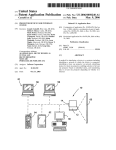
FIG. 1 illustrates an example instrumentation control
speci?ed by user interface dialogs that may be invoked via
a menu item accessible While editing a test executive
system 100. FIG. 1 is exemplary only, and the present
sequence. In other Words, the data import information is not
necessarily included in a sequence step but may be associ
ated With the sequence in any of various Ways, and When the
invention may be used in any of various systems, as desired.
The system 100 comprises a host computer 102 Which
connects to one or more instruments. The host computer 102
sequence is executed, the test executive application may be
comprises a CPU, a display screen, memory, and one or
operable to use the information to load the speci?ed
property/variable values from a database.
more input devices such as a mouse or keyboard as shoWn.
35
In addition to dynamically loading values at runtime, in
or process 150.
The one or more instruments may include a GPIB instru
various embodiments the test executive may also enable a
user to interactively, e.g., through a user interface menu
ment 112 and associated GPIB interface card 122, a data
item, request variable and property values to be imported
acquisition board 114 and associated signal conditioning
from or exported to a database. For example, after interac
tively setting desired variable and property values for a
sequence and steps in the sequence, respectively, the user
may request the test executive to automatically export the
values to a database. The exported values may, for example,
later be used to dynamically con?gure a test executive
The computer 102 connects through the one or more instru
ments to analyZe, measure or control a unit under test (UUT)
circuitry 124, a VXI instrument 116, a PXI instrument 118,
a video device 132 and associated image acquisition card
134, a motion control device 136 and associated motion
control interface card 138, and/or one or more computer
45
sequence, as described above. Exporting values to a data
base may comprise automatically creating any necessary
based instrument cards 142, among other types of devices.
The GPIB instrument 112 is coupled to the computer 102
via a GPIB interface card 122 provided by the computer 102.
In a similar manner, the video device 132 is coupled to the
database structures, such as tables, columns, etc.
computer 102 via the image acquisition card 134, and the
A better understanding of the present invention can be
motion control device 136 is coupled to the computer 102
through the motion control interface card 138. The data
obtained When the folloWing detailed description of the
preferred embodiment is considered in conjunction With the
optionally interfaces through signal conditioning circuitry
BRIEF DESCRIPTION OF THE DRAWING
folloWing draWings, in Which:
FIG. 1 illustrates an instrumentation control system
acquisition board 114 is coupled to the computer 102, and
55
124 to the UUT. The signal conditioning circuitry 124
preferably comprises an SCXI (Signal Conditioning eXten
sions for Instrumentation) chassis comprising one or more
SCXI modules 126.
according to one embodiment of the present invention;
FIG. 2 illustrates a test executive application softWare
architecture according to one embodiment of the present
The GPIB card 122, the image acquisition card 134, the
motion control interface card 138, and the DAQ card 114 are
typically plugged in to an I/O slot in the computer 102, such
invention;
FIG. 3 illustrates one embodiment of a test executive
as a PCI bus slot, a PC Card slot, or an ISA, EISA or
application interfacing With a database;
MicroChannel bus slot provided by the computer 102.
FIG. 4 is a ?oWchart diagram illustrating one embodiment
of a method that utiliZes a Property Loader step to dynami
cally con?gure a test executive sequence;
FIG. 5 is a ?oWchart diagram illustrating one embodiment
of a method for specifying information for con?guring a
HoWever, these cards 122, 134, 138 and 114 are shoWn
external to computer 102 for illustrative purposes. The cards
122, 134, 138 and 114 may also be implemented as external
devices coupled to the computer 102, such as through a
serial bus.
65
US 6,507,842 B1
6
5
The VXI chassis or instrument 116 is coupled to the
computer 102 via a serial bus, MXI bus, or other serial or
The test executive softWare also includes a sequence
editor 212 for editing sequences. The sequence editor 212
and the operator interface programs 202 interface to the test
parallel bus provided by the computer 102. The computer
102 preferably includes VXI interface logic, such as a VXI,
MM or GPIB interface card (not shoWn), Which interfaces to
executive engine 220. One or more process models 222
couple to the test executive engine 220. The test executive
engine 220 interfaces through an adapter interface 232 to
the VXI chassis 116. The PXI chassis or instrument is
preferably coupled to the computer 102 through the com
puter’s PCI bus.
A serial instrument (not shoWn) may also be coupled to
the computer 102 through a serial port, such as an RS-232
port, USB (Universal Serial bus) or IEEE 1394 or 1394.2
one or more adapters 240. The adapters shoWn in FIG. 2
10
bus, provided by the computer 102. In typical instrumenta
tion control systems an instrument Will not be present of
include the LabVIEW standard prototype adapter, the C/CVI
prototype adapter, the DLL ?exible prototype adapter, and
the sequence adapter. The LabVIEW standard prototype
adapter interfaces to programs having a .VI extension, i.e.,
LabVIEW graphical programs. The C/CVI prototype
one or more instruments of a single interface type, such as 15
adapter interfaces to programs having a .dll, lib, .obj, or .c
extension. The DLL ?exible prototype adapter interfaces to
programs having a .dll extension. The sequence adapter
only GPIB instruments.
interfaces to sequence ?le programs.
The instruments are coupled to the unit under test (UUT)
or process 150, or are coupled to receive ?eld signals,
a pivotal role in the test executive architecture. The test
each interface type, and in fact many systems may only have
As shoWn in FIG. 2, the test executive engine 220 plays
typically generated by transducers. Other types of instru
executive engine 220 runs sequences. Sequences contain
steps that can call external code modules. By using module
ments or devices may be connected to the system, as desired.
The system 100 may be used in a data acquisition and
adapters 240 that have the standard adapter interface 232,
control application, in a test and measurement application, a
process control application, an industrial automation
application, or a man-machine interface application, among
others.
25
the test executive engine 220 can load and execute different
types of code modules. Test executive sequences can call
The computer system 102 preferably includes a memory
medium on Which computer programs according to the
present invention are stored. The term “memory medium” is
intended to include an installation media, e.g., a CD-ROM,
or ?oppy disks 104, a computer system memory such as
DRAM, SRAM, EDO RAM, etc., or a non-volatile memory
such as a magnetic medium, e.g., a hard drive, or optical
storage. The memory medium preferably stores test execu
tive softWare for creating and/or controlling an automated
test system. The host computer CPU executing code and
API used by the sequence editor 212 and run-time operator
interfaces 202.
Test Executive Sequence Editor
The sequence editor 212 is an application program in
Which the user creates, modi?es, and debugs sequences. The
35
sequence editor 212 provides the user easy access to the test
executive features, such as step types and process models.
The sequence editor 212 includes debugging tools found in
application development environments such as LabVIEW,
LabWindoWs/CVI, and Microsoft Visual C/C++. These
include breakpoints, single stepping, stepping into or over
function calls, tracing, a variable display, and a Watch
WindoW.
data from the memory medium comprises a means for
creating and executing test programs according to the meth
ods described beloW. The test executive softWare alloWs the
user to create, con?gure, and/or control test sequence execu
tion for various test applications, such as production and
manufacturing test applications.
As described beloW, the test executive softWare is oper
able to interact With a database in order to import and/or
export property and/or variable values from/to a database.
The TestStand test executive softWare, available from
National Instruments, includes features such as described
sub-sequences through the common adapter interface 232.
The test executive may use a special type of sequence called
a process model to direct the high-level sequence ?oW. The
test executive engine 220 exports an ActiveX Automation
45
In the sequence editor 212, the user can start multiple
concurrent executions. Multiple instances of the same
sequence can be executed, and different sequences can be
executed at the same time. Each execution instance has its
oWn execution WindoW. In trace mode, the execution Win
doW displays the steps in the currently executing sequence.
herein for interacting With databases to import and export
When execution is suspended, the execution WindoW dis
plays the next step to execute and provides single-stepping
test executive values. The database may be stored on the
memory medium of the computer system 102 and may
options.
execute on the computer system 102, or the database may be
located on another computer system, such as a computer
system accessible to the computer system 102 via a netWork.
Test Executive Run-Time Operator Interfaces
In the example illustrated in FIG. 2, the test executive
includes three run-time operator interfaces 202 provided to
Test Executive SoftWare Components
FIG. 2 is a block diagram illustrating high-level architec
tural relationships betWeen elements of one embodiment of
a test executive softWare application. In one embodiment,
the elements of FIG. 2 are comprised in the TestStand test
executive product from National Instruments. It is noted that
FIG. 2 is exemplary, and the present invention may be
applied to any of various test executive applications. As
shoWn, the test executive softWare includes operator inter
face programs 202 for interfacing to various softWare pro
grams. The operator interface programs 202 shoWn in FIG.
2 are for interfacing to the LabVIEW, LabWindoWs CVI,
and Visual Basic programs. HoWever, additional operator
interface programs 202 may be included for interfacing to
other programs.
the end user in both source and executable form. Each
55
run-time operator interface 202 is preferably a separate
application program. The operator interfaces 202 differ
primarily based on the language and application develop
ment environment in Which each is developed. In FIG. 2,
run-time operator interfaces developed in LabVIEW,
LabWindoWs/CVI and Visual Basic are included.
Although the user can use the sequence editor 212 at a
production station, the runtime operator interfaces 202 are
simpler and are fully customiZable. Like the sequence editor
212, the run-time operator interfaces 202 alloW the user to
start multiple concurrent executions, set breakpoints, and
65
single step. Unlike, the sequence editor 212, hoWever, in the
present embodiment the run-time operator interfaces 202 do
not alloW the user to modify sequences, and they do not
US 6,507,842 B1
7
8
display sequence variables, sequence parameters, step
properties, and so on.
The user can customize one of the run-time operator
values can be stored. Variables are properties that the user
can freely create in certain contexts. Variables can be global
to a sequence ?le or local to a particular sequence. The
interfaces 202 by modifying the source code for the program
values of “station” global variables are persistent across
and the source documents for the manual. If the user desires
different executions and even across different invocations of
to Write his/her oWn run-time operator interface 202, the
source code of one of the run-time operator interfaces 202 is
used as a starting point.
the sequence editor 212 or run-time operator interfaces 202.
The test executive engine maintains the value of station
global variables in a ?le on the run-time computer.
Each step in a sequence can have properties. For example,
a step might have an integer error code property or proper
Test Executive Engine
The test executive engine 220 is used for creating, editing,
executing, and debugging sequences. In one embodiment,
10
the test executive engine 220 comprises a set of DLLs that
export an object-based or component-based API, preferably
an ActiveX Automation API. The sequence editor 212 and
run-time operator interfaces 202 use a Test Executive Engine
API (Engine API). The user can call the Engine API from
any programming environment that supports access to
are discussed beloW.
Test executive variables can be used to share data among
15
Engine API from test modules, including test modules that
are Written in LabVIEW and LabWindoWs/CVI.
Module Adapters
Most steps in a test executive sequence invoke code in
another sequence or in a code module. When invoking code
in a code module, the test executive must knoW the type of
all global variables and all local variables and step properties
in active sequences. The contents of the sequence context
change depending on the currently executing sequence and
25
1. Expressions
The values of variables and properties can be used in
numerous Ways, such as passing a variable to a code module
or using a property value to determine Whether to execute a
step. Sometimes the user desires to use an expression, Which
In the preferred embodiment, the test executive uses
module adapters 240 to obtain this knowledge. In one
embodiment, the test executive provides the folloWing mod
ule adapters:
is a formula that calculates a neW value from the values of
35
to call any LabVIEW VI that has the test executive standard
evaluates the expression. The folloWing is an example of an
G parameter list.
C/CVI Standard Prototype Adapter—AlloWs the user to
expression:
Locals. MidBandFrequency=(Step .HighFrequency+Step .LoWFre
call any C function that has the test executive standard C
quency)/2
The test executive may support all applicable expression
operators and syntax that are used in C, C++, Java, and
parameter list. The function can be in an object ?le, library
?le, or DLL. The C function can also be in a source ?le that
is in the project that the user is currently using in the
45
Sequence Adapter—AlloWs the user to call subsequences
With parameters.
The module adapters 240 contain other important infor
mation besides the calling convention and parameter lists. If
the module adapter 240 is speci?c to an application devel
opment environment (ADE), the adapter knoWs hoW to
Visual Basic. The test executive may also provide an expres
sion broWser dialog box that the user can access, if the user
is not familiar With expressions in these standard languages.
The expression broWser alloWs the user to interactively build
an expression by selecting from lists of available variables,
properties, and expression operators. The expression
broWser also lists a number of functions that the user can use
in expressions. The expression broWser has help text for
each expression operator and function.
bring up the ADE, hoW to create source code for a neW code
module in the ADE, and hoW to display the source for an
existing code module in the ADE. The DLL Flexible Pro
totype Adapter can query a DLL type library for the param
eter list information and display it to the sequence developer.
multiple variable or properties. An expression can be used
anyWhere a simple variable or property value is used. In
expressions, the user can access all variables and properties
in the sequence context that is active When the test executive
LabVIEW Standard Prototype Adapter—AlloWs the user
LabWindoWs/CVI development environment.
step. If the user passes a sequence context object reference
to the code module, the test executive ActiveX API can be
used to access the variables and properties in the sequence
context.
requires.
DLL Flexible Prototype Adapter—AlloWs the user to call
C functions in a DLL With a variety of parameter types.
tests that are Written in different programming languages,
even if they do not have compatible data representations.
Values that are stored in variables and properties can be
passed to code modules. The test executive ActiveX API is
useable to access variable and property values directly from
code modules. When executing sequences, the test executive
maintains a “sequence context” that contains references to
ActiveX Automation servers. Thus, the user can call the
the code module, hoW to call it, and hoW to pass parameters
to it. The different types of code modules may include
LabVIEW VIs, C functions in DLLs, and C functions in
source, object, or library modules that are created in
LabWindoWs/CVI or other compilers. The test executive
also must knoW the list of parameters that the code module
ties affecting execution of the step. A step may have step
speci?c properties, or the type of a step may determine the
set of properties that are associated With the step. Step types
Categories of Properties
55
Test Executive Building Blocks
The folloWing sections provide an overvieW of features
A property is a container of information. A property can
contain a single value, an array of values of the same type,
or no value at all. A property can also contain any number
of sub-properties. Each property has a name.
and building blocks that are used to create test sequences and
entire test systems in one embodiment of a test executive
application. It is noted that these sections describe one
Avalue is a number, a string, or a Boolean. Values are not
containers and thus cannot contain sub-properties. Arrays of
values can have multiple dimensions.
speci?c embodiment, but the ideas and features may be
The folloWing are examples of categories of properties in
applied to or are altered for many other test executive
one embodiment according to the kinds of values they
contain:
applications.
Variables and Properties
The test executive application provides the user various
places, referred to as variables and properties, in Which data
65
A “single-valued” property contains a single value, e.g.,
Number properties, String properties, and Boolean proper
ties.
US 6,507,842 B1
10
Built-In Step Properties
An “array” property contains an array of values, e.g.,
Number Array properties, String Array properties, and Bool
Steps have a number of built-in properties that the user
ean Array properties.
can specify using the various tabs on the Step Properties
dialog box. These built-in step properties include:
A “property-array” property contains a value that is an
Preconditions alloW the user to specify the conditions that
must be true for the test executive to execute the step during
the normal How of execution in a sequence.
Load/Unload Options alloW the user to control When the
test executive loads and unloads the code modules or
array of subproperties of a single type. In addition to the
array of sub-properties, property-array properties can con
tain any number of subproperties of other types.
An “object” property contains no values. Typically, object
properties contain multiple sub-properties. Object properties
subsequences that each step invokes.
are analogous to structures in C/C++ and to clusters in
LabVIEW.
Standard and Custom Named Data Types
Run Mode alloWs the user to skip a step or to force it to
When the user creates a variable or property, the user
speci?es its data type. In some cases, a simple data type such
as a number or a Boolean is used. In other cases, the user can 15
de?ne his/her oWn data type, by creating a named data type,
in Which subproperties are added to create an arbitrarily
complex data structure. When a named data type is created,
the user can reuse the named data type for multiple variables
or properties. Although each variable or property that the
after the step even though a run-time error occurs in the step.
Post Actions alloWs the user to execute callbacks or jump
user creates With a named data type has the same data
structure, the values they contain can differ.
The test executive may de?ne certain standard named data
types. The user can add sub-properties to the standard data
types, but cannot delete any of their built-in sub-properties.
The standard named data types are Path, Error, and Com
monResults.
to other steps after executing the step, depending on the
25
pass/fail status of the step or any custom condition.
Loop options alloW the user to cause a single step to
execute multiple times before executing the next step. The
user can specify the conditions under Which to terminate the
loop. The user can also specify Whether to collect results for
The user can de?ne his/her oWn custom named data types.
The user must choose a unique name for each of the custom
each loop iteration, for the loop as a Whole, or for both.
Pre Expressions alloWs the user to specify an expression
to evaluate before executing the step module.
Post Expression alloWs the user to specify an expression
data types. Sub-properties in each custom data type can be
added or deleted Without restriction. For example, the user
might create a “Transmitter” data type that contains sub
properties such as “NumChannels” and “Power Level”.
to evaluate after executing the step module.
When the user creates a variable or property, the user can
select from among the simple property types and the named
data types.
Built-In and Custom Properties
pass or fail Without executing the step module.
Record Results alloW the user to specify Whether the test
executive stores the results of the step in a list. This is
discussed further beloW With respect to Results Collection.
Step Failure Causes Sequence Failure alloWs the user to
specify Whether the test executive sets the status of the
sequence to “Failed” When the status of the step is “Failed”.
Ignore Run-Time Errors alloWs the user to specify
Whether the test executive continues execution normally
35
Status Expression alloWs the user to specify an expression
to use to set the value of the “status” property of the step
automatically.
Step Types
In the speci?c embodiment under discussion, each step
The test executive de?nes a number of properties that are
has a step type in a similar manner to Which each variable
or property has a data type. A step type can contain any
alWays present for objects such as steps and sequences. An
example is the step run mode property. The test executive
normally hides these properties in the sequence editor,
although it alloWs the user to modify some of them through
dialog boxes. Such properties are called built-in properties.
number of custom properties. (It is noted that other embodi
ments of test executive applications may not support step
types, but may still alloW properties to be associated With
individual steps.) Each step of a step type, also referred to as
The user can de?ne neW properties in addition to the 45
an instance of the step type, has the custom step properties
built-in properties. Examples are high and loW limit prop
in addition to the built-in step properties. All steps of the
erties in a step or local variables in a sequence. Such
same type have the same properties, but the values of the
properties are called “custom” properties.
properties can differ. The step type speci?es the initial values
of all the step properties. When the user creates the step in
Steps
A sequence comprises a series of steps. A step can do
the sequence editor, the test executive sets the initial or
many things, such as initialiZing an instrument, performing
default values of the step properties from the values that the
step type speci?es. The user can modify the values of the
a complex test, or making a decision that affects the How of
execution in a sequence. Steps can performs these actions
built-in step properties by using the Step Properties dialog
through several types of mechanisms, including jumping to
another step, executing an expression, calling a sub
box. Usually, the user can modify the values of custom step
55
sequence or calling an external code module. The term “step
module” is used to refer to the code module that a step calls.
step type does not have a dialog box for the custom
properties, the user can vieW the custom properties by
selecting “View Contents” from the context menu for the
Steps can have custom properties. For steps that call code
modules, custom step properties are useful for storing
parameters to pass to the code module for the step. They also
step. Although step modules typically do not modify the
values of the built-in step properties at run-time, they often
modify and interrogate the values of the custom step prop
serve as a place for the code module to store its results. The
test executive ActiveX API can be used to access the values
of custom step properties from code modules.
Not all steps call code modules. Some steps perform
standard actions that the user con?gures using a dialog box.
In this case, custom step properties are useful for storing the
con?guration settings that the user speci?es.
properties using a dialog box speci?c to the step type. If the
65
erties.
A step type essentially comprises a custom set of prop
erties and/or operations associated With a step. Stated
another Way, a step type de?nes common operations and/or
data that are associated With a test module in a similar Way
that a process model de?nes functionality associated With
US 6,507,842 B1
11
12
calling the main sequence. A step type is also similar to a
data type for a variable or property. The test module is hard
this functionality Was not in a modular form Which could be
erties associated With calling this test module. A step type is
a modular, identi?able unit con?gured by the user, prefer
reused or applied to a plurality of steps. The step type of the
present invention embodies this functionality, e.g., the pre
and post operations in a typical test, and places this in a
con?gurable and reusable form. Step types of the present
ably through a graphical user interface, e.g., dialogs.
invention are modular and user con?gurable and provide
In a test sequence With a number of steps, in many
instances the user Will desire a number of steps that have
tremendous savings in developer effort.
coded, and the step type represents operations and/or prop
There are basically three different types of step types: step
types that call code modules through any module adapter
like CVI or LabVIEW; step types that require a particular
module adapter; and step types that do not call code mod
some commonality of functionality and/or properties. A
primary purpose of a step type is to de?ne, in a single
location, common properties and/or operations associated
With a plurality of steps referred to as the step type, thereby
eliminating the need for the user to de?ne these common
properties and/or operations With each of the respective
steps. The user can thus incorporate this common function
15
ality and/or properties in a step type, rather than requiring
for a step besides calling the step module. The substeps of
a step type perform the same actions for every step of that
the user to hard code that functionality and/or properties in
each step. The functionality and/or properties de?ned by a
step type is generally peripheral or associated With the actual
test or the step being performed.
For example, it may be desirable to handle the return data
a certain Way, and the user desires this return data handling
functionality for a number of different steps. According to
the present invention, the user has the ability to create a step
type Which de?nes this commonality, i.e., de?nes a standard
Way that that step type Will handle the data. Therefore the
step type makes it easier to reuse return data handling code
for all the steps that Will have that same common function
type. The different types of substeps are as folloWs:
Edit substep
Pre-step substep
Post-step substep
The sequence developer invokes the edit substep by
selecting a menu item in the context menu for the step or by
25
in Which the sequence developer edits the values of custom
a dialog box in Which the sequence developer speci?es the
high and loW limits for a test. The edit substep might then
store the high and loW limit values as step properties.
The engine 220 calls the pre-step substep before calling
con?gurability. This is done by creating or con?guring a step
the step module. The user can specify an adapter and a
type for the class of steps, Wherein the step type de?nes the
35
for use by the step module.
The edit substep vs. the pre and post substeps are similar to
The engine 220 calls the post-step substep after calling the
the con?guration entry point vs. execution entry point in the
step module. The user can specify an adapter and a module
to invoke in the post-step substep. Apost-step substep might
call a code module that compares the values that the step
module stored in step properties against limit values that the
edit substep stored in other step properties.
45
erties in addition to built-in step properties. The step type
speci?es the initial values of the step properties. The step
The test executive contains a set of prede?ned step types.
These include:
Action
Numeric Limit Test
String Value Test
type can also de?ne standard behavior for each step of the
respective step type, preferably using sub-steps, e.g., an edit
sub-step, pre-step sub-step and post-step sub-step.
In creating the steps in a sequence, the user may Want to
select existing step types Which Will be common for one or
more steps he/she is using in his sequences or he/she may 55
Want to con?gure neW step types for a certain type of step
he/she Will Want to habitually use or use a plurality of times
Pass/F ail Test
Label
Goto
Statement
Limit Loader
Message Popup
Call Executable
Call Sequence
in a sequence.
Although the user can create a test application using only
the prede?ned step types, the user can also create his/her
oWn step types. By creating his/her oWn step types, the user
A step type has similar functionality to a type de?nition,
meaning that once the user has con?gured a step type and
used it throughout different steps of the sequence, if the user
later changes that step type, those changes propagate
can de?ne standard, reusable classes of steps that apply
speci?cally to the user’s application. For example, the user
through all of the steps (instances) Which are based on that
the step type of the present invention Was hard coded in the
test executive itself and Was not easily changeable. Further,
module to invoke in the pre-step substep. For example, a
pre-step substep might call a code module that retrieves
measurement con?guration parameters into step properties
ality by de?ning an edit substep and pre and post substeps.
step type.
In prior art test executives, the functionality performed by
The step type speci?es the name of the menu item and the
step properties. For example, an edit substep might display
ality of handling data. Thus steps (instances) of this type are
process model.
The edit substep alloWs the user to con?gure the pecu
liarities of a particular instance of a step type. For instance
the edit substep can be con?gured to display or pop up a
message to request user input regarding the number of
buttons desired on a dialog. This message is displayed at
con?guration time, not run time.
As discussed above, step types can contain custom prop
clicking a button on the Step Properties dialog for the step.
caption of the button. The edit substep displays a dialog box
easier to con?gure, since the common functionality does not
need to be re-coded for each step. The user also may Want
to de?ne properties around a class of steps to provide more
common properties.
As discussed beloW, step types de?ne common function
ules.
Astep type can also de?ne standard behavior for each step
of that type. The step type does this using a set of “substeps”.
Substeps are actions that the test executive engine performs
might de?ne a SWitch Matrix Con?guration step or a Trans
65
mitter Adjacent Channel PoWer Test step.
The sequence developer creates a neW step by selecting
the “Insert Step” item in the context menu that appears When
US 6,507,842 B1
13
14
the user right click on a sequence WindoW. The “Insert Step”
types available on the computer. When the user creates a
of Whether the sequence completes successfully or a run
time error occurs in the sequence. If a Setup or Main step
causes a run-time error to occur, the How of execution jumps
neW step type, the user speci?es its name and position Within
the submenu.
even if some of the Setup steps do not run. If a Cleanup step
Source Code Templates
causes a run-time error, execution continues at the next
item brings up a hierarchical submenu containing the step
to the Cleanup step group. The Cleanup steps alWays run
Cleanup step.
When the user creates a step type, the user can also de?ne
source code templates for that step type. When the sequence
developer creates a neW step of that type, the developer can
engine 220 reports the run-time error to the calling sequence.
use a source code template to generate source code for the
Execution in the calling sequence jumps to the Cleanup
step module. For a particular step type, the user can specify
different source code templates for the different module
group in the calling sequence. This process continues up
through the top-level sequence. Thus, When a run-time error
occurs, the test executive engine 220 terminates execution
after running all the Cleanup steps of the sequences that are
If a run-time error occurs in a sequence, the test executive
adapters.
Sequences
In one embodiment, a sequence may comprise:
Any number of local variables
Any number of parameters
A main group of steps
A group of setup steps
A group of cleanup steps
Built-in sequence properties
active at the time of the run-time error.
15
Built-in Sequence Properties
Sequences have a feW built-in properties that the user can
specify using the Sequence Properties dialog. For example,
the user can specify that the How of execution jumps to the
Cleanup step group Whenever a step sets the status property
of the sequence to “Failed”.
Sequence Files
Sequence Parameters
Sequence ?les can contain one or more sequences.
Each sequence has its oWn list of parameters. The user can
specify the number of parameters and the data type of each
parameter. The user can also specify a default value for each 25
parameter. When the sequence developer creates a step that
calls one sequence from another, the developer can specify
the values to pass for the parameters of the subsequence. If
the developer does not specify the value of a parameter, the
test executive engine 220 passes the default value. The user
Sequence ?les can also contain global variables. Sequence
?le global variables can be accessed by all sequences in the
sequence ?le. Sequences ?les have a feW built-in properties
that the user can specify using the Sequence File Properties
dialog. For example, the user can specify Load and Unload
Options that override the Load and Unload Options of all the
steps in all the sequences in the ?le.
Sequences contain steps that conduct tests, set up
can use the test executive ActiveX API to access sequence
instruments, or perform other actions necessary to test a
parameter values from code modules that steps in the
sequence call.
UUT. Sequence ?les also contain the de?nitions for the data
types and step types that are used by the sequences in the
Sequence Local Variables
?le. The sequence editor is used to create and edit sequence
The user can create an unlimited number of local vari 35 ?les. Sequences can be executed from the sequence editor or
ables in a sequence. The user can use local variables to store
from any other test executive operator interface program.
data relevant to the execution of the sequence. The user can
The various types of sequence ?les include normal
use the test executive ActiveX API to access local variables
sequence ?les, model sequence ?les, station callback
from code modules that steps in the sequence call. The user
can also pass local variables by value or by reference to any
step in the sequence that calls a subsequence or that calls a
sequence ?les, and front-end callback sequence ?les. Nor
mal sequence ?les contain sequences that test UUTs, and
DLL using the Flexible DLL Prototype Adapter.
Lifetime of Locals Variables, Parameters, and Custom Step
contain process model sequences. Station callback sequence
?les contain station callback sequences, and front-end call
back sequence ?les contain front-end callback sequences.
FIG. 3—Exemplary Interface to Database
The test executive softWare may be operable to interface
With a database in order to import property or variable values
from or export the values to the database. In various
embodiments, the test executive may interface With any of
these are the most common type. Model sequence ?les
Properties
Multiple instances of a sequence can run at the same time. 45
This can occur When the user calls a sequence recursively or
When a sequence runs in multiple concurrent executions.
Each instance of the sequence has it oWn copy of the
sequence parameters, and local variables, and custom prop
erties of each step. When a sequence completes, the test
various types of databases, including relational and object
executive engine 220 discards the values of the parameters,
local variables, and custom properties.
may be utiliZed to communicate With the database. As
oriented databases. Any of various models or methodologies
Step Groups
described above, a database may be located on the same
A sequence can contain the folloWing groups of steps:
Setup, Main, and Cleanup. When the test executive executes
computer system on Which the test executive runs or on a
55
different computer system.
a sequence, the steps in the Setup group execute ?rst. The
steps in the Main group execute next. The steps in the
FIG. 3 illustrates one particular embodiment, in Which the
test executive uses the ActiveX Data Objects (ADO) model
Cleanup group execute last. Typically, the Setup group
to interface With a database. As shoWn, ADO is built on top
of the Object-linking and Embedding Database (OLE DB).
contains steps that initialiZe instruments, ?xtures, or a UUT,
launches necessary applications, etc. The Main group usu
ally contains the bulk of the steps in a sequence, including
the steps that test the UUT. The Cleanup group contains
steps that poWer doWn or de-initialiZe the instruments,
?xtures, and UUT, or perform softWare-related cleanup if
the UUT comprises a softWare application.
One of the reasons for having separate step groups is to
ensure that the steps in the Cleanup group execute regardless
Applications that use ADO, such as the test executive engine
220 shoWn in FIG. 3, use the OLE DB interfaces indirectly.
The OLE DB layer interfaces to databases directly through
a speci?c OLE DB provider for the DBMS or through a
generic Open Database Connectivity (ODBC) provider,
65
Which interfaces to a speci?c ODBC driver for the DBMS.
Speci?c databases shoWn in FIG. 3 include Oracle,
Microsoft SQL Server, and Microsoft Access.