1
their mother tongue, that they often cannot conceive how other sounds are
produced. Thus when they attempt the pronunciation of new sounds demanded
by other languages, they have trouble both in conceptualizing such new and rare
sounds and in producing them. Apart from ingrained habits that are hard for
individuals to break, a great amount of the novices difficulty stems from their
inability to hear accurately the new sounds of the target language and to be able
to discriminate subtle sound differences (phonemes and allophones). They can
neither attain the fine tuning required nor see inside the mouth to distinguish the
sounds. The unfortunate result is that many students still cannot pronounce such
sounds, even after repeated classroom drill. This becomes a critical problem for
both the teachers and the students. But with Babel as a teaching aid, the viewer
can see the correct places of articulation on the computer screen and can hear
words and sentences pronounced correctly by a speech synthesizer.
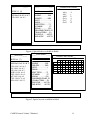
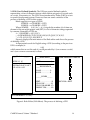
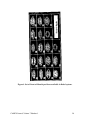
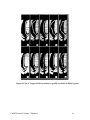
On the screen, Babel displays two animated projections of the human face:
the first graphic is a front view of a face and the second is a traditional
phonetician's cutaway side view of the throat and jaw. At the bottom of the
screen on a text line, the user types in words to be pronounced. In response to the
user's keyboard input Babel also reproduces acoustically the text typed onto the
screen. In other words, Babel reacts to the user input by speaking those words
typed, and by displaying in screen windows both frontally and laterally (by
showing moving lips as well as cross-sectioned speech organs) just how that
sound is correctly produced.
The first part of this article presents Babel in general terms; then for those
who would like more information regarding artificial intelligence and how Babel
operates, the last part of the article will discuss programming concepts and will
describe Babel's components: a rule-editor and a rule-interpreter.
Babel began as a graduate computer project and masters thesis in the
Institute of Artificial intelligence at the University of Missouri. Spanish is the
Natural Language we selected as a model for all the examples and illustrations,
because Spanish presented a clear-cut, workable phonology. Also the authors
have a solid background in Spanish. Moreover, Babel is also adaptable to
English, German, French, and other western languages which use the Latin
alphabet. Only the "knowledge base" of the new FL has to be developed using
the rule editor to allow the expert system to make a successful phonetic
transcription of the new target language.
Human phonetics is complicated but limited at the same time. The
number of sounds which human beings are potentially capable to emit using
their speech organs is immense. However, each language has a unique pattern of
sounds. Tomas Navarro Tomas asserts that: "Some phonemes are of universal
extent; others are found only in certain languages. Phonemes of a general
character do not appear in the same proportion in all languages. The sound
image of a language depends greatly on the proportion it uses the phonemes
CALICO Journal, Volume 7 Number 3
4