1
Circulating DNA from plasma
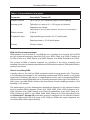
Table 1: Kit specifications at a glance
Parameter
NucleoSpin® Plasma XS
Sample material
Up to 240 μL EDTA plasma (single column loading)
Average yield
Typically in a range of 0.1–100 ng per mL plasma,
depending on sample
(depending on kind of patient samples, yield can be much higher).
Elution volume
5–30 μL
Preparation time
High sensitivity procedure: 22–27 min/6 preps
Rapid procedure: 15–20 min/6 preps
Format
XS spin column
DNA yield from human plasma
DNA amounts from less than 0.1 ng DNA per mL of plasma up to several 100 ng DNA
per mL of plasma have been reported (Chiu et al. 2006; Chun et al. 2006; Fatouros et
al. 2006; Lazar et al. 2006; Rainer et al. 2006; Rhodes et al. 2006; Schmidt et al. 2005).
The content of DNA in plasma depends on: condition of the donor, sampling and
handling of the blood, plasma preparation and DNA isolation method, DNA quantification
method, and others.
Size of circulating DNA
A good portion of the cell-free DNA in plasma results from apoptotic cells. Therefore,
a considerable percentage of this circulating nucleosomal DNA is known to be highly
fragmented. However, the degree of fragmentation and the ratio of fragmented DNA to
high molecular weight DNA depends on several parameters like origin of the DNA (e.g.,
fetal, tumor, microbial DNA), health of the blood donor, blood sampling procedure, and
handling of the sample.
The performance of many downstream applications depends on the efficient isolation
even of smallest DNA fragments (Chan et al. 2006, 2005, 2004, 2003; Deligezer et al.
2006; Giacona et al. 1998; Hanley et al. 2006; Hromadnikova et al. 2006; Jiang et al.
2006; Koide et al. 2005; Li et al. 2006, 2005, 2004; Wang et al. 2004). According to this
the NucleoSpin® Plasma XS purification system is designed for the efficient isolation
of highly fragmented DNA in a range of 50–1000 bp. Within this range fragments are
recovered with similar high efficiency.
MACHEREY-NAGEL – 11 / 2012, Rev. 03
7