1
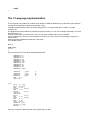
The pointer can point only to variables (global or local) and to array.
You can't have pointer to pointer.
For example:
char ** p; // This is illegal
When you point at an array be sure to use a syntax like: pointer = &array, (see example above) else the
compiler gives not working code.
I never wrote code like: p=&pp[i]; I think is horrible! So I don't think that is a big issue for everybody.
Bu just keep in mind that is not allowed to point at generic element of an array.
Casting between different types
When you have two or more variable of different type that must be added or divided (for example) between
them you should use the casting operator first. The casting is very useful and you can cast from:
1.
2.
3.
4.
char -> int
char -> unsigned int
unsigned char -> int
unsigned char -> unsigned int
The points 1, 3 and 4 doesn't need any precaution.
The point 2 it need some precaution, because the signed number (char can be consideted us a signed integer
on 8 buts) of -1 is “11111111” that is 255.
example :
char a;
unsigned int b;
void main(){
b = 0;
a = -1;
b = (unsigned int) a;
}
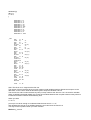
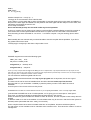
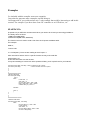
When we compile this code with PCCOMP and see the psm file we can notice that b is 255 now!
This is not a fault of the compiler, this is just bad coding. So, when you need casting, just be careful.
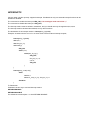
CONSTANT
CONSTANT
CONSTANT
LOAD
YL , fd
JUMP _main
_a
_b_high
_b_low
,
,
,
fe
fd
ff
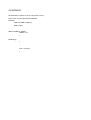
;char a;
;unsigned int b;
;void main(){
_main:
;b = 0;
LOAD ZL,00
LOAD ZH,00
OUTPUT ZL,_b_low
OUTPUT ZH,_b_high
;a= -1;
LOAD ZL,ff
OUTPUT ZL,_a
;b = (unsigned int) a;
INPUT
ZL ,_a
OUTPUT ZL,_b_low
OUTPUT ZH,_b_high
;}
LOAD
XL , ZL
LOAD
XH , ZH
RETURN
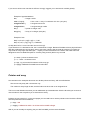
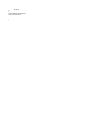
You may fall in a similar problem in expressions like:
unsigned char a;
char b;