1
Chapter 6
Hazards, Precautions and Limitations of Use
•
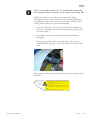
Rotor installation: verify that the rotor is locked in position before
use.
•
Cleaning of the accessories and of the rotor chamber is particularly
necessary when corrosive products are present in the samples
(saline, acids, bases).
•
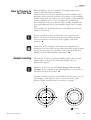
Load balancing.
IF ANY DANGEROUS EVENT OCCURS, KEEP YOURSELF FAR
AWAY FROM THE INSTRUMENT AND SWITCH OFF THE
MAIN POWER SOURCE
Rotor Maintenance
Cleaning
Contamination Hazards
Ideally, rotors should be washed after every use and at least weekly in
warm water containing a few drops of mild non alkaline detergent
(domestic liquid soap is ideal) and every time a spill has occurred.
Do not forget to wash the core of the rotor that comes into contact
with the drive spindle.
Each pocket of the rotor must be washed thoroughly using a small
nylon brush.
Do not use metal wire brushes.
Once the rotor is clean, rinse it in running water, preferably distilled
water.
Dry the rotor with a soft absorbent non-woven cloth or tissue. Drying
may be finished off with a warm air jet (e.g. a hair dryer).
Make sure that the pockets are well dried.
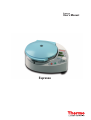
The Thermo Espresso is likely to be used in medical research where
hazardous substances, including
radioactive chemicals, are frequently found.
ALWAYS USE THE APPROPRIATE DECONTAMINATION
PROCEDURES WHERE THE ROTOR IS EXPOSED TO THESE
CHEMICALS. L
Examples of commonly used techniques are outlined below. The
information is given as a guideline only.
It is the responsibility of the owner to use the most suitable procedure.
If decontamination procedures require the use of warming (i.e.
autoclave) the rotating equipment should always be completely
disassembled before being subjected to heat and after external chemical
cleaning. Seals should be decontaminated with the method most
suitable for them, which might not be the same as for the body of the
rotating equipment.
Thermo Electron Corporation
Espresso
6-2