1
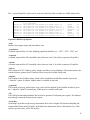
Knowledge Sources
Source
URL
Summary
BioGRID
http://thebiogrid.org
NCBI dbSNP
http://www.ncbi.nlm.nih.gov
/snp
NCBI Gene
http://www.ncbi.nlm.nih.gov
/gene
Gene
Ontology
http://www.geneontology.org
NHGRI
GWAS
Catalog
MINT
http://www.genome.g
ov
NetPath
http://www.netpath.org
OregAnno
http://www.oreganno.org
/oregano
Pfam
http://pfam.sanger.ac.uk
PharmGKB
http://www.pharmgkb.org
Reactome
http://www.reactome.org
/ReactomeGWT/entrypoint.html
UCSC
genome
browser
http://genome.ucsc.edu
BioGRID is a repository with genetic and protein interaction data
from model organisms and humans used by Biofilter for linking
position and region data to interaction information.
A database of SNPs and multiple small-scale variations including
insertions, deletions, microsatellites and non-polymorphic
variants. This resource includes a complete list of known human
SNPs and their base pair positions relative to the human
reference genome. Biofilter uses the data of dbSNP in two ways:
connecting SNP identifiers (RS numbers) of dbSNP to genomic
positions and connecting retired identifiers to current identifiers.
Entrez is a search engine that allows users to search many
discrete health sciences databases at the NCBI. The database
provides an extensive list of known human genes, their beginning
and ending base pair positions, and many alternate names and
cross-referenced database identifiers. This data is used to connect
gene symbols to their genomic regions, and to connect equivalent
gene symbols and identifiers to each other.
The Gene Ontology database defines terms representing gene
product properties, such as cellular components, molecular
function, and biological processes, within a hierarchical tree of
ontology groups and related proteins.
The NHGRI GWAS Catalog provides associations between SNPs
and various phenotypes which were discovered via genome-wide
association studies (GWAS).
The Molecular Interaction database contains experimentally
verified protein-protein interactions from the scientific literature,
which are used in Biofilter for linking position and region data to
interacting protein pairs.
The NetPath database consists of curated human signaling
pathways which are used by Biofilter.
The Open REGulatory ANNOtation database is used by Biofilter
for curation information about known regulatory elements from
the scientific literature.
The Pfam database is a large collection of protein families. The
annotation of data respective to proteins within Biofilter is based
on the information from Pfam.
Biofilture currently uses this database for pathway based data,
future releases of Biofilter will also include gene-drug
associations and pharmacological association study results.
Biofilter uses the information contained in Reactome to establish
pathway and network relationships between genes.
This source provides access to a growing database of genomic
sequence and annotations for a wide variety of organisms,
currently we use the UCSC for location information for
evolutionary conserved regions (ECRs) for Biofilter and to acess
OregAnno’s regulatory region data.
/gwastudies
http://mint.bio.uniroma2.it
/mint/Welcome.do
7