1
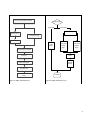
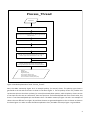
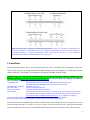
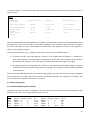
Process_Thread Input Data Select CG site greater than the coverage value Identify Hemi-‐methylated CG sites by the high and low cut-‐off values Add annotation for HM sites Identify Singleton (G0) and clusters (G1+G2+G3) Identify reverse clusters (G2+G3) and non-‐reverse clusters (G1) from all clusters(G1 + G2 + G3) Identify consecutive reverse (G2) and non-‐consecutive reverse (G3) from all reverse clusters(G2+G3) by using initial input and all reverse clusters(G2+G3) Output: All HM sites, Singletions (G0), non-‐reverse clusters (G1), consecutive reverse pairs (G2), non-‐consecutive reverse pairs (G3) Figure 4. Detailed explanation of each “Process_Thread”. Note, the HMPL manuscript Figure 1B is an example polarity (or reverse) cluster. The polarity type cluster is generated as the G2 and G3 clusters as shown in the above Figure 4. The G2 polarity cluster only includes two consecutive CpG sites that have a polarity (or reverse) hemimethylation pattern, while G3 polarity cluster consists of two CpG sites that are not consecutive; these two CpG sites are hemimethylated and close to each other, but there is a non-‐hemimethylated CpG site between them. The HMPL manuscript Figure 1 A and C are examples of clusters that are different from Figure 1B, and these clusters are generated together as the G1 cluster as shown in the above Figure 4. In order to make the above explanation clear, the HMPL manuscript Figure 1 is given below. 4