1
CX-9_8CA9-EC-11G_Edition1 Page274
Wednesday, June 29 2011 5:16 PM
Black plate (274,1)
Interior Comfort
Audio System
qRadio Reception
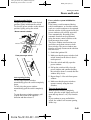
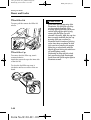
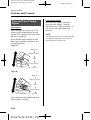
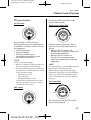
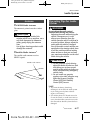
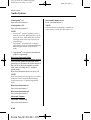
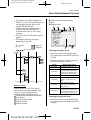
AM characteristics
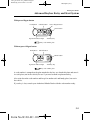
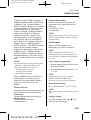
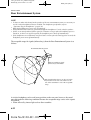
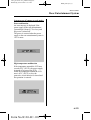
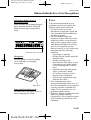
AM signals bend around such things as
buildings or mountains and bounce off the
ionosphere. Therefore, they can reach
longer distances than FM signals. Because
of this, two stations may sometimes be
picked up on the same frequency at the
same time.
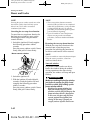
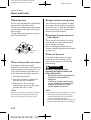
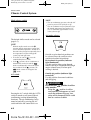
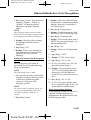
Signals from an FM transmitter are similar
to beams of light because they do not
bend around corners, but they do reflect.
Unlike AM signals, FM signals cannot
travel beyond the horizon. Therefore, FM
stations cannot be received at the great
distances possible with AM reception.
Ionosphere
FM wave
AM wave
Ionosphere
FM wave
100—200 km (60—120 miles)
Station 1
Station 2
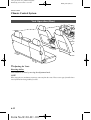
FM characteristics
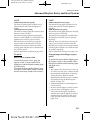
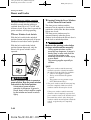
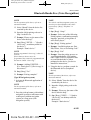
An FM broadcast range is usually about
40―50 km (25―30 miles) from the
source. Because of extra coding needed to
break the sound into two channels, stereo
FM has even less range than monaural
(non-stereo) FM.
FM Station
40—50km
(25—30 miles)
Atmospheric conditions can also affect
FM reception. High humidity will cause
poor reception. However, cloudy days
may provide better reception than clear
days.
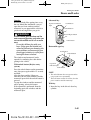
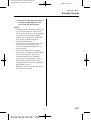
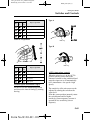
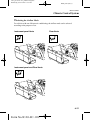
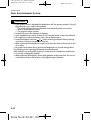
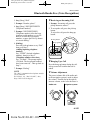
Multipath noise
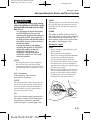
Since FM signals can be reflected by
obstructions, it is possible to receive both
the direct signal and the reflected signal at
the same time. This causes a slight delay
in reception and may be heard as a broken
sound or a distortion. This problem may
also be encountered when in close
proximity to the transmitter.
Reflected wave
Direct
6-18
Form No.8CA9-EC-11G