1
MASTERGUARD Series D
UPS Systems from 60 to 200 kVA
14 Parallel Configuration
14.1 Paralleling principle
The Series D series of uninterruptible
power supply systems shall be connectable in parallel for multi-module
configurations between units of the
same rating. The maximum number of
UPS in parallel configuration shall be
eight. The parallel connection of UPS
shall increase reliability and power.
Reliability.
If the installation requires more than
one unit in redundant configuration the
power of each UPS should not be
lower than Ptot/(N-1) where:
Ptot = Total load power
N = Number of UPS units in parallel
1 = Minimum coefficient of redundancy
Under normal operating conditions,
the power delivered to the load shall
be shared between the number of
UPS units connected to the parallel
bus. In case of overload the configuration may deliver PovxN without transferring the load onto the reserve,
where:
Pov = Max overload power of a single
UPS
N = Number of UPS units in parallel
In the event of failure by one of the
UPS units, the faulty unit shall be disconnected from the parallel bus and
the load shall be supplied from the
remaining units without any break in
supply continuity.
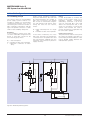
UPS 1
BATT
UPS 2
Power.
It shall be possible to increase the
power of the system using a nonredundant
parallel
configuration
(redundancy coefficient = 0). In this
case all connected UPS units shall
deliver the rated power and, in the
event of a unit failure or overload, the
system shall transfer the load to
reserve. A maximum of eight UPS may
be connected in parallel.
Performance features.
The performance features of the parallel system are related to the UPS systems employed. The distribution of the
load is divided equally between the
individual UPS systems.
UPS n
BATT
SBS
Load
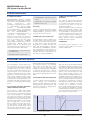
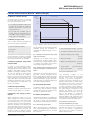
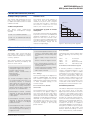
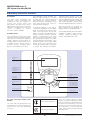
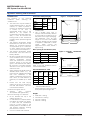
Figure 6. Modular parallel systems
19
MKA4CAT0UKD/Rev. 4-07/2008/UK