1
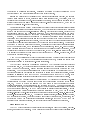
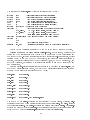
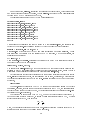
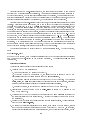
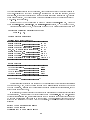
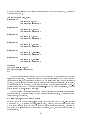
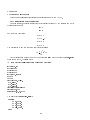
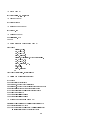
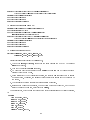
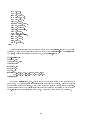
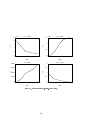
Hitting a carriage return at this prompt begins execution of the Newton method. A sample of
the execution follows.
the initial error is 8.14201
step size = 1
the error is 3.66657
the iteration number is 1
step size = 1
step size = 1
step size = 1
step size = 1
step size = 1
the error is 0.508319
the iteration number is 2
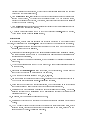
the error is 0.220737
the iteration number is 3
the error is 0.0100028
the iteration number is 4
the error is 7.62849e-06
the iteration number is 5
the error is 2.0227e-12
the iteration number is 6
CONVERGED
Total run time is 20.5638
Now is your chance to save yout
K>>
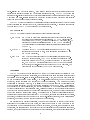
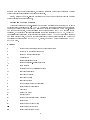
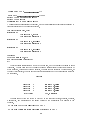
The given initial estimate converged with the Newton method in six iterations and required
20.5638 sec of run time. The step size listed in the left column refers to the Newton method
line search step size. If the error is not reduced with the current step size , then the step size is
reduced. The step size is continually reduced until the error improves (decreases). In this case,
all iterations improved the error. Convergence is obtained when the error is less than 1 2 1009,
unless another value is set by the user in vtotsinfo.m with the variable converge. (See the
section entitled \Finite-Element Variables.")
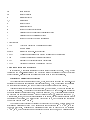
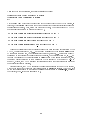
The output after a problem converges should be saved because many successful initial estimate
les are generated by slight changes to output les from similar problems. A descriptive name
is also helpful. For example,
K>> save bhofix5.dat yout /ascii /double
saves the output in the le bhox5.dat (named for the Bryson and Ho xed-time problem
with jbcv = 5). The format is double-precision ascii. Usually, a good procedure is to start
with a small value for jbcv and build up until the desired resolution is reached. After saving
the output, type return <cr> at the K prompt to continue. Next, the code gives the option of
changing jbcv.
27