1
DOC-AN20046-1.1
Application Note
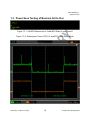
2. STA goes to sleep. AP notes the STA has gone to sleep and buffers
packets for the STA.
3. STA wakes up at every DTIM to check the AP beacon frame for an
indication of buffered packet(s).
4. If the AP has buffered packet(s) for the STA, the STA sends a Null
Function data frame, or a data packet if available, to the AP with the
Power Save bit cleared.
5. The AP notes the STA is awake and sends buffered packets.
6. STA returns to sleep as described in Step 1
Note:
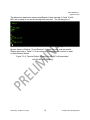
These steps are handled by the AT Command ZP.
If a WiFi Station does not expect to receive directed packets from the AP
asynchronously, and it is not interested in receiving broadcast or multicast traffic,
then further power savings may be achieved.
Since AP’s generally have an Association Timeout Limit with a default value of 60
seconds, a Power Save WiFi Station must wake before the expiry of the Association
Timeout to send or receive a directly addressed packet, and to inform the AP that
the WiFi Station is still Associated. Failure to comply, will results in Disassociation
or De-authentication of the WiFi Station by the AP. Some AP’s allow the
Association Timeout Limit to be set to a higher value than 60 seconds but the higher
limit is not signaled to the WiFi Station and must be manually configured.
The WiFi Alliance is currently working to adopt various new Power Save features
that are in the 802.11v standard.
6.
Power Consumption
Despite the fact that 802.11 transmit power consumption is at least five times higher
than receive power consumption, for even medium transmit duty cycle applications,
much of the energy in a battery powered WiFi Station is consumed by the WiFi
Radio Receiver. Unless Power Save techniques are used, the 802.11 Receiver may
be powered on for significant periods of time while the WiFi Station waits for
network clients to respond to requests. It does not take too long for 150mW of
receiver power consumption to drain a battery.
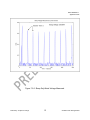
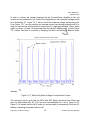
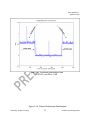
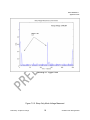
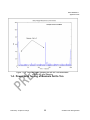
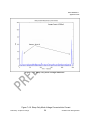
The key to minimizing power consumption is to minimize the ON duty cycle of
the system. Minimizing the integrated area under the current consumption
curve is critical to obtaining maximum life from a battery.
Preliminary - Subject to change
8
eS-WiFi Power Saving Modes