1
to build the problem-defining arrays for CPXcopylp directly. The result would be less
coding and a faster, more efficient application. These observations suggest that formatted
files may be useful when prototyping your application, while assembling the arrays in
memory may be a useful enhancement for a production application.
Choose an Optimizer
After a problem object has been instantiated and populated, it can be solved using one of the
optimizers provided by the ILOG CPLEX Callable Library. The choice of optimizer
depends on the problem type.
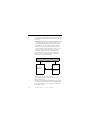
◆ LP and QP problems can be solved by:
●
the primal simplex optimizer;
●
the dual simplex optimizer; and
●
the barrier optimizer;
◆ LP problems can also be solved by:
●
the sifting optimizer; and
●
the concurrent optimizer.
LP problems with a substantial network, can also be solved by a special network
optimizer.
◆ If the problem includes integer variables, branch & cut must be used.
There are also many different possible parameter settings for each optimizer. The default
values will usually be the best for linear programs. Integer programming problems are more
sensitive to specific settings, so additional experimentation will often be useful.
Choosing the best way to solve the problem can dramatically improve performance. For
more information, refer to the sections about tuning LP performance and trouble-shooting
MIP performance in the ILOG CPLEX User’s Manual.
Observe Good Programming Practices
Using good programming practices will save development time and make the program
easier to understand and modify. A list of good programming practices is provided in the
ILOG CPLEX User’s Manual, in Developing CPLEX Applications on page 129.
Debug Your Program
Your program may not run properly the first time you build it. Learn to use a symbolic
debugger and other widely available tools that support the creation of error-free code. Use
118
ILOG CPLEX 10.1
— GETTING STARTED